



 5 min. read
Summary
- The Ontario government has released its final plan to amalgamate 36 conservation authorities into nine
- The new plan removes an earlier proposal to merge authorities on Lake Superior and Lake Huron
- A new agency created to oversee the consolidation will have a $20-million budget to put the plan in place, and $3 million annually once it’s up and running
We’re trying out staff-written summaries. Did you find this useful?
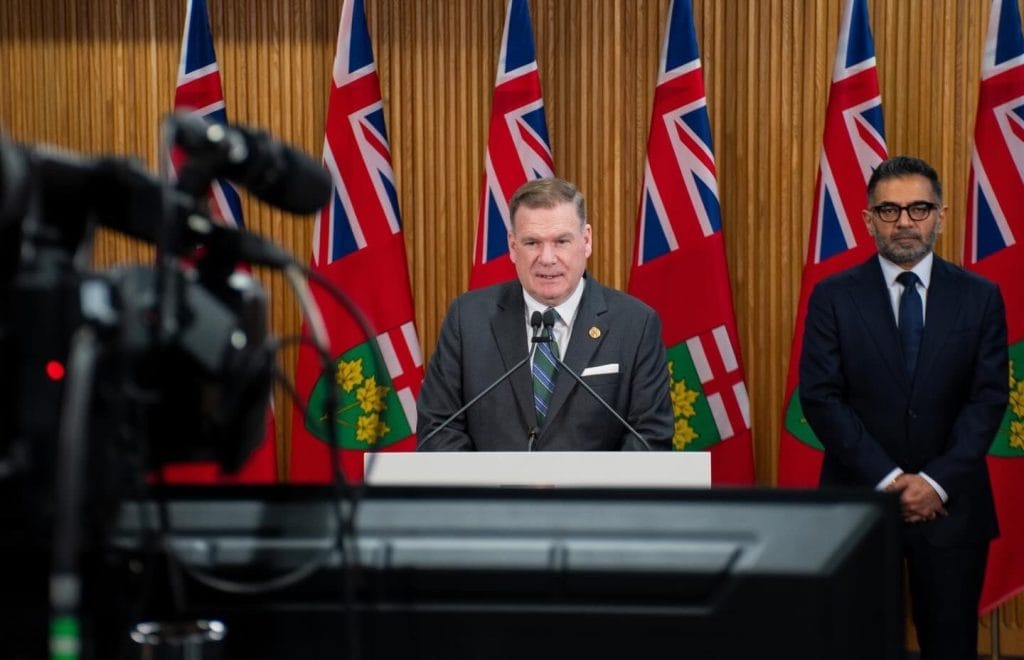
The Ford government is moving ahead with its plan to merge 36 conservation authorities into nine, two more than originally proposed. And it has created an agency with a $20-million budget to see it through.
Ontario Environment Minister Todd McCarthy said he consulted with more than 500 people in making this change. The proposed plan also received more than 14,000 comments on the Environmental Registry of Ontario, where the government is legally mandated to post changes to environmental and energy policy for public feedback (though the Ford government has previously created loopholes for that requirement).
“Ontario currently has a fragmented system of conservation authorities, each of which have different policies, different standards, different fees and different levels of staffing and technical capabilities,” McCarthy told reporters on March 10.
“These inconsistencies have hampered the ability of conservation authorities to perform their duties. This has led to unpredictable and inconsistent turnaround times for approvals, creating uncertainty and delays for farmers, homeowners, landowners, builders and anyone seeking permits.”
The government’s proposed fix to consolidate authorities has been received with a lot of trepidation and concern from conservation authorities, the municipalities that fund them and use their services and other groups that rely on their expertise.
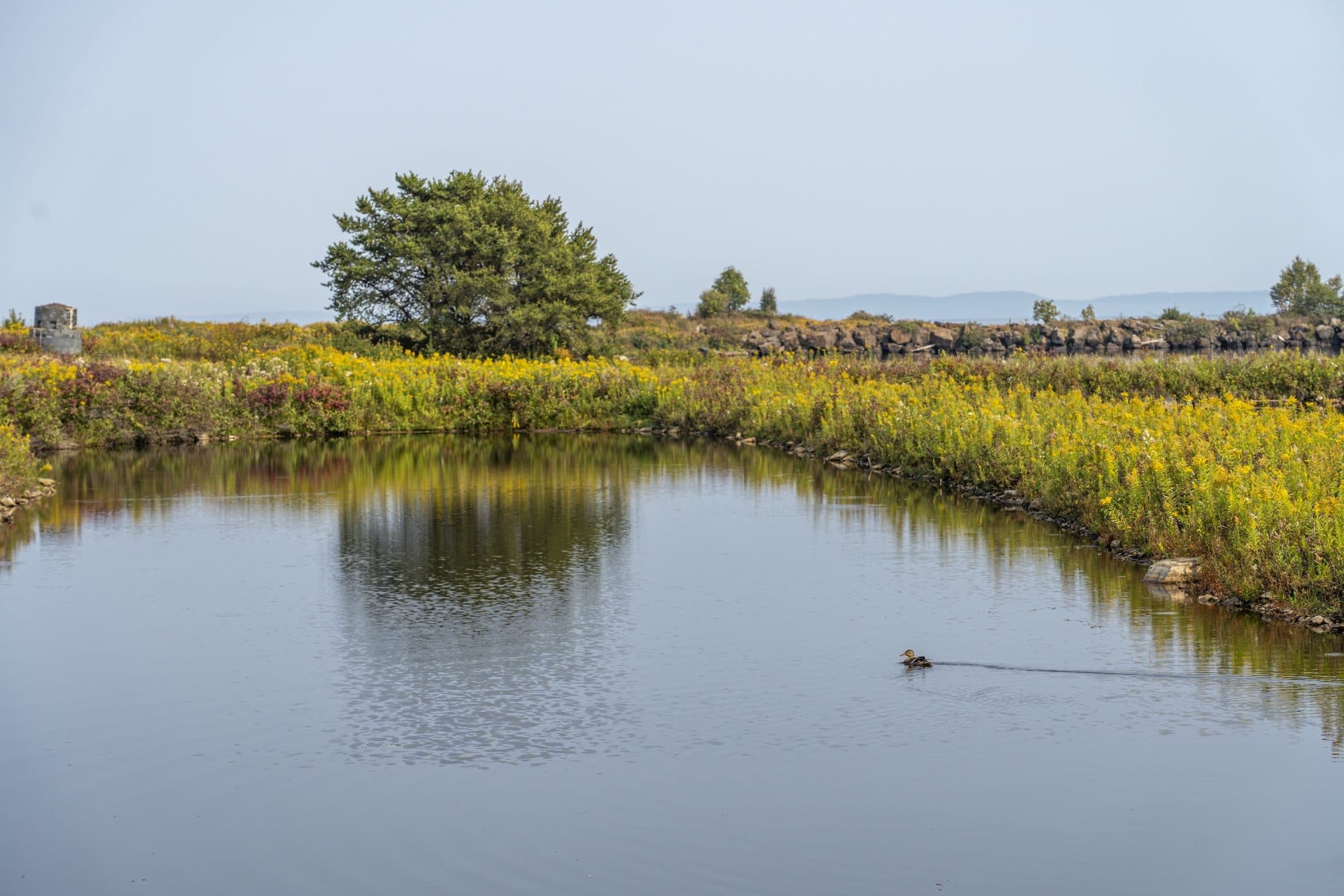
For nearly 80 years, the provincial agencies have been tasked with protecting public health and safety related to the province’s watersheds. That means safeguarding local drinking water sources and working to reduce the risks from natural hazards like flooding, erosion and drought. As Ontario’s population has grown, they have also been responsible for regulating development to minimize those risks, issuing permits only to those who pay attention to sustainable construction and growth.
“Conservation authorities don’t just ‘approve’ things; they provide the technical rules of the game that make projects workable and protect people and water,” Paola Cetares, director of public affairs for the Ontario Society of Professional Engineers, told The Narwhal when the consolidation plan was first announced. That includes creating criteria for stormwater management and collating flood maps, erosion data and hydrologic studies to guide development.
McCarthy insists the core mandates of the unique Ontario agencies will not change. Consolidation, he said, will mean “stronger flood resilience, clear processes for municipalities and permanent applicants and better support for housing and infrastructure projects, all while maintaining the science-based decisions that people and businesses expect.”
“Regional conservation authorities would continue to be independent, municipally governed organizations,” McCarthy said, emphasizing that there will be no layoffs, no changes in the funding and governance structure and that the agencies would continue to have control over their land.
The government will table legislation to make these changes when Queen’s Park is back in session later this month, with the consolidation set to take effect in 2027.
Here are the key takeaways from the final consolidation proposal.
What does the final conservation authority consolidation look like?
When the Ford government first discussed consolidation, they considered as few as six regional conservation authorities, McCarthy said. After the consultation period — in which at least one member of caucus voiced her concern — the government has landed on nine.
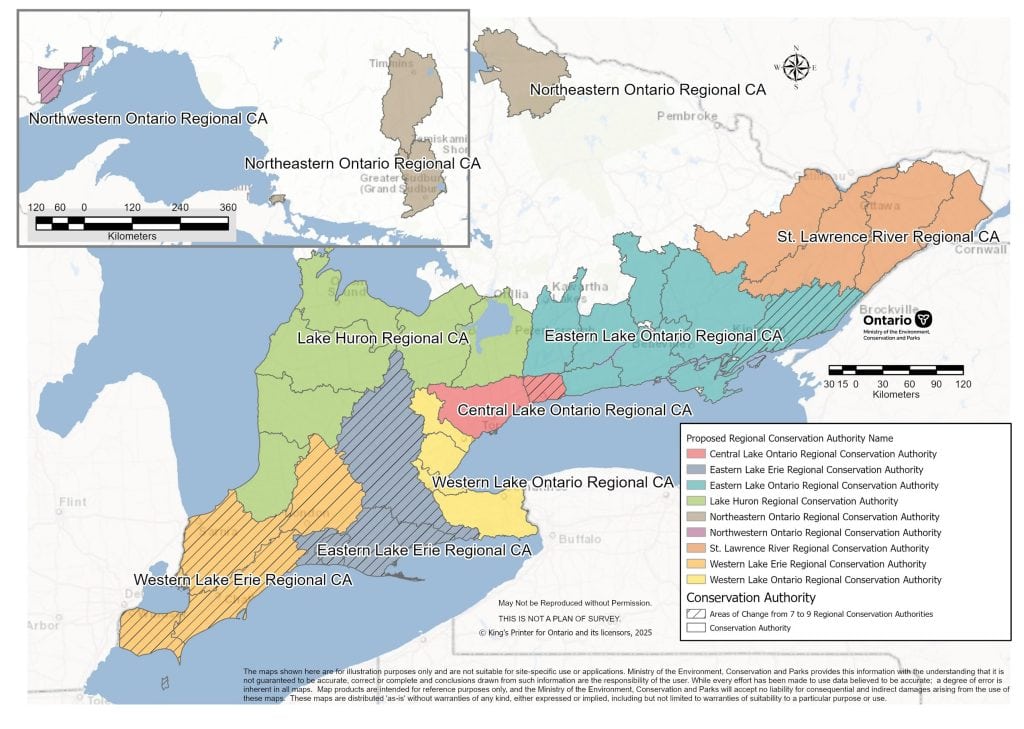
The final boundaries of the regional authorities’ structure include a handful of significant changes from the original proposal.
Notably, the Lake Erie Regional Conservation Authority and a Huron-Superior Regional Conservation Authority have each been split into two. The latter was initially controversially proposed to merge the authority in Thunder Bay, Ont., on Lake Superior, with that of one on Lake Huron, but the government has walked back on that — a decision that has been welcomed by the northern agency.
Members of the impacted authorities in this region previously told The Narwhal the original boundaries were too large and connected too many differing landscapes. “We listened, we acted,” McCarthy said.
Additionally, the Central Lake Ontario Regional Conservation Authority has been enlarged to include both the current Toronto Region Conservation Authority and the smaller neighbouring Central Lake Ontario Conservation Authority.
And the conservation authority managing the lands around the city of Kingston, Ont., has been moved from the St. Lawrence River Conservation Area to the Eastern Lake Ontario Regional Conservation Authority.
Who will manage the conservation authority consolidation and how much will it cost?
In 2025, the Ford government created the Ontario Provincial Conservation Agency to help lead this transformation. The agency has been given $20 million to usher through the consolidation. At the March 10 press conference, McCarthy pledged an additional $3 million annually to the agency, which would continue after the consolidation was complete.
The government intends to create transitional committees for the nine new regional organizations with representatives from each of the existing conservation authorities under them. The chair of each of these committees would become the chief administrative officer of the regional authority for up to two years.
The government is also instructing regional authorities to create “watershed councils” made up of members of municipalities and Indigenous communities to identify local priorities and “ensure that watershed management continues to be informed by the people who know their watersheds best,” McCarthy said.