

 7 min. read
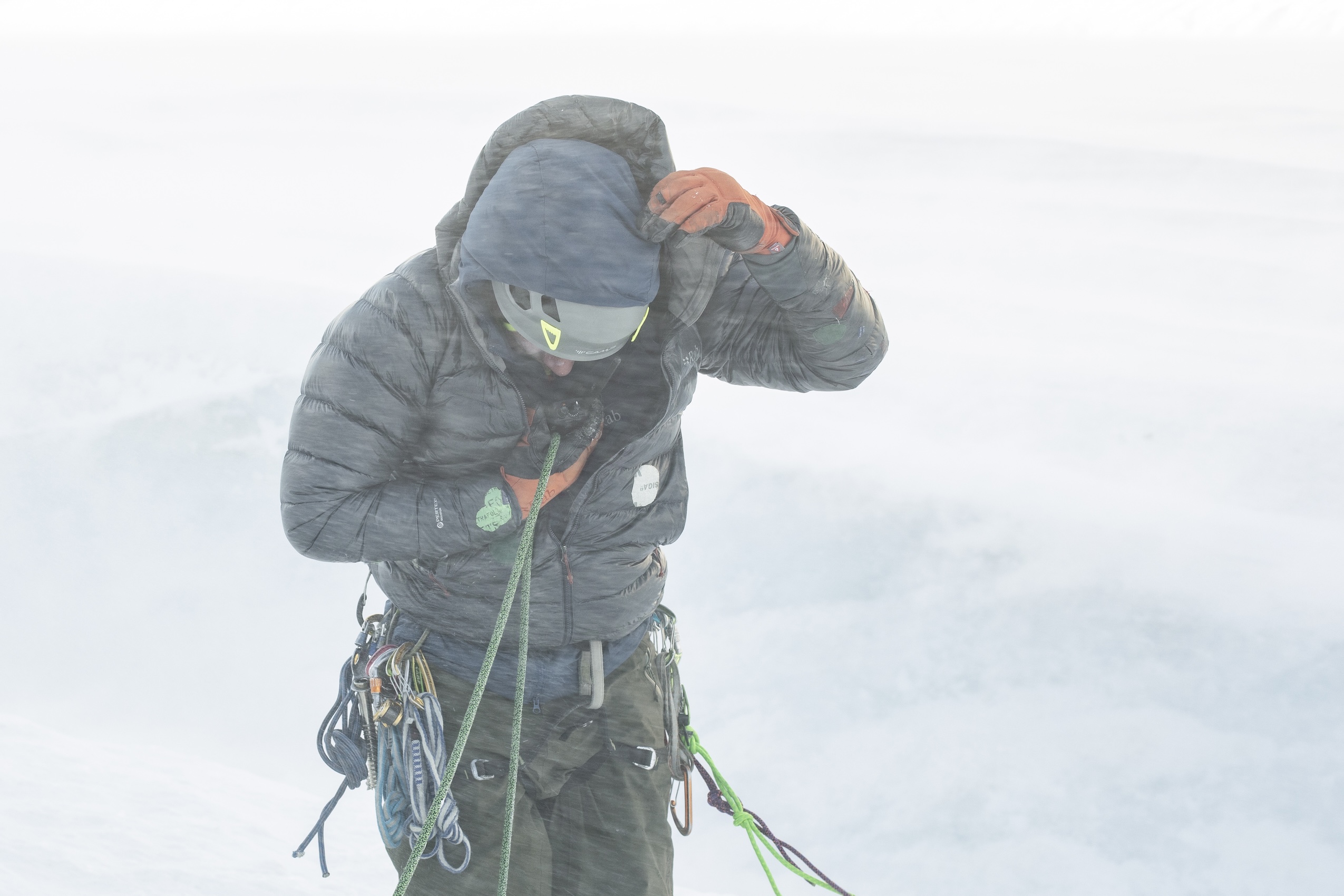
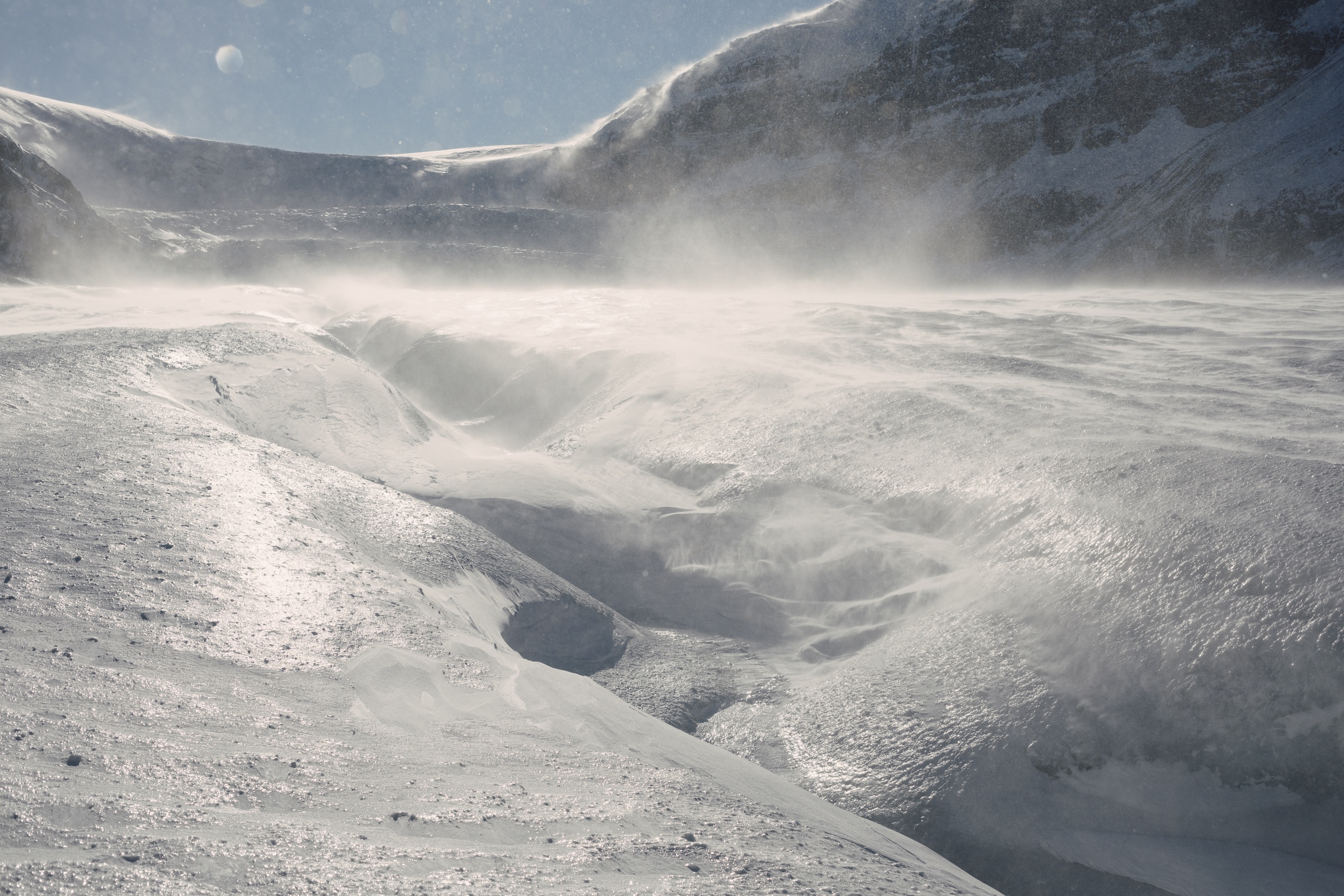
Standing on the Athabasca Glacier in Jasper National Park, Alta., the wind picks up with an icy bite.
It will be a lot warmer down there, our guide tells me, pointing to a moulin, a hole in the glacier formed by meltwater.
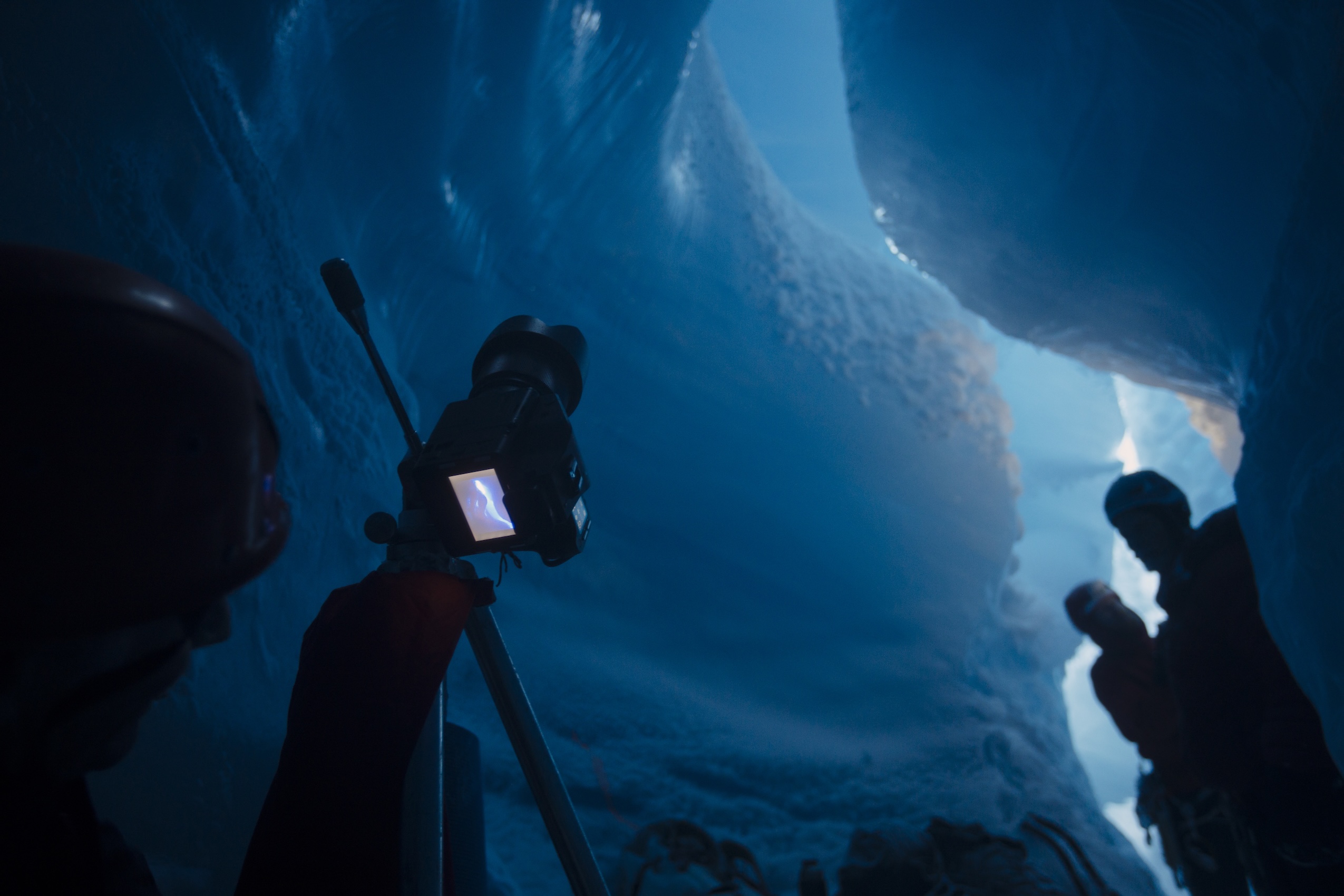
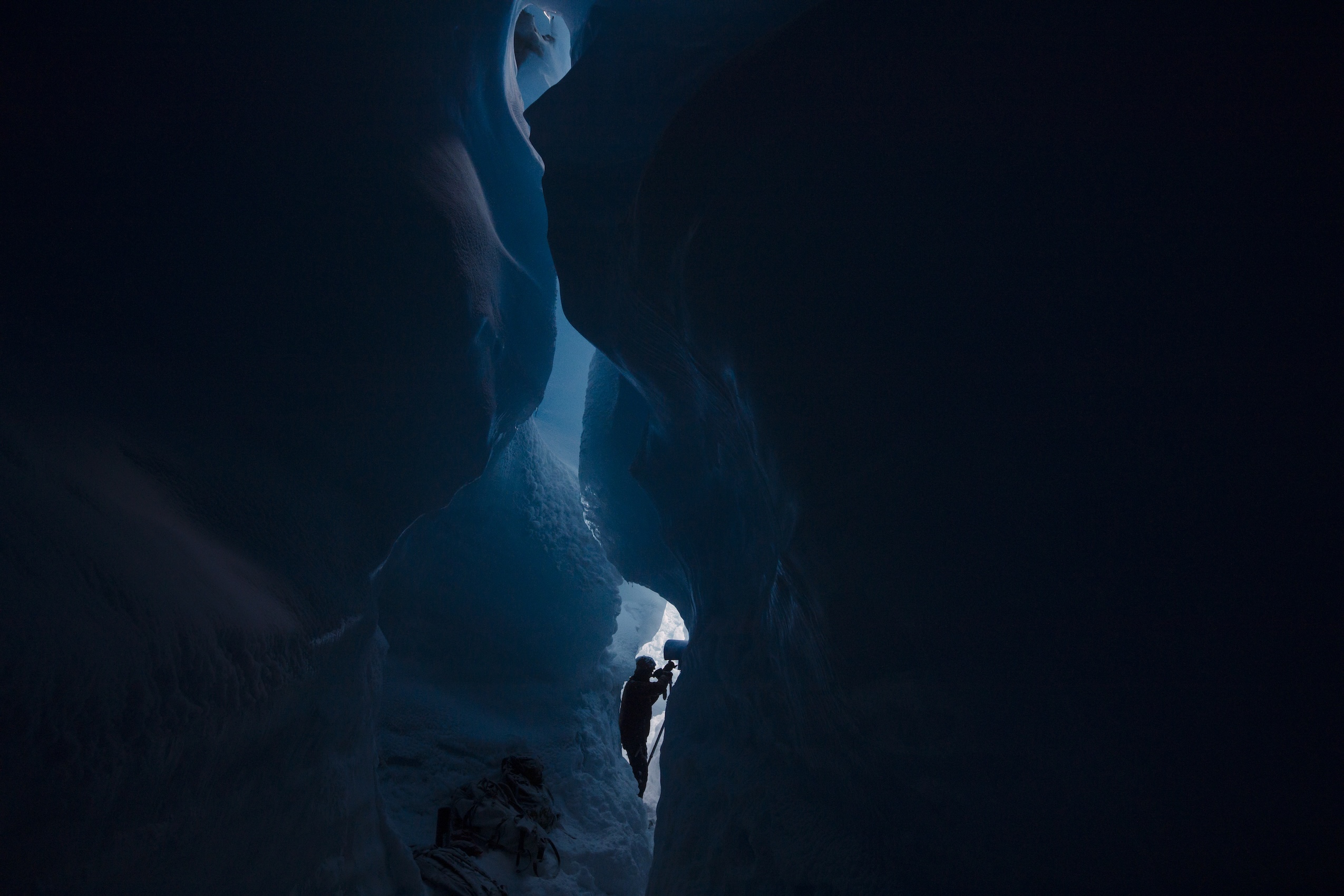
Trusting my rope, I, like the others, lean back and descend 35 metres down until my spiked feet land inside a sculpture of perfect blue ice.
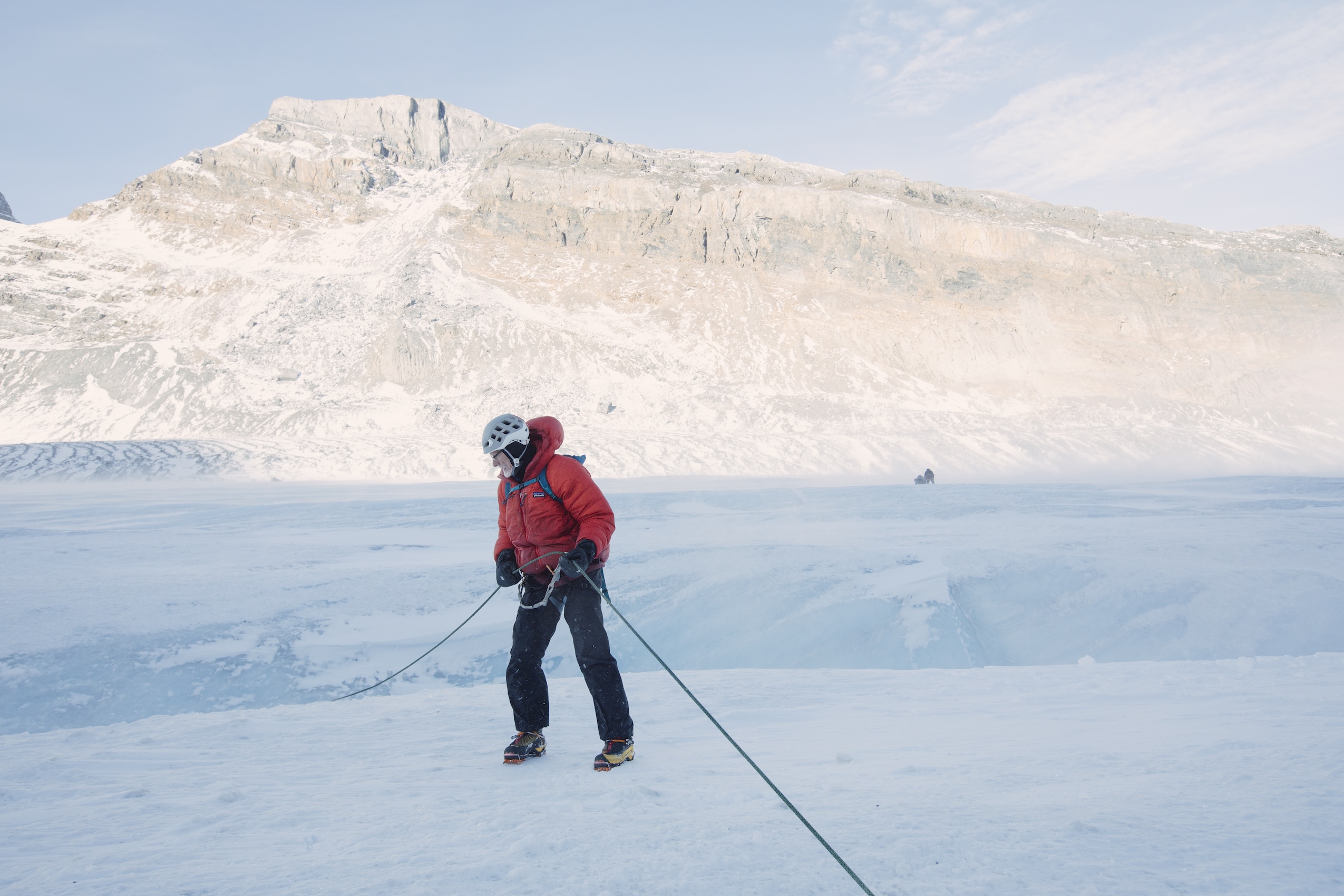
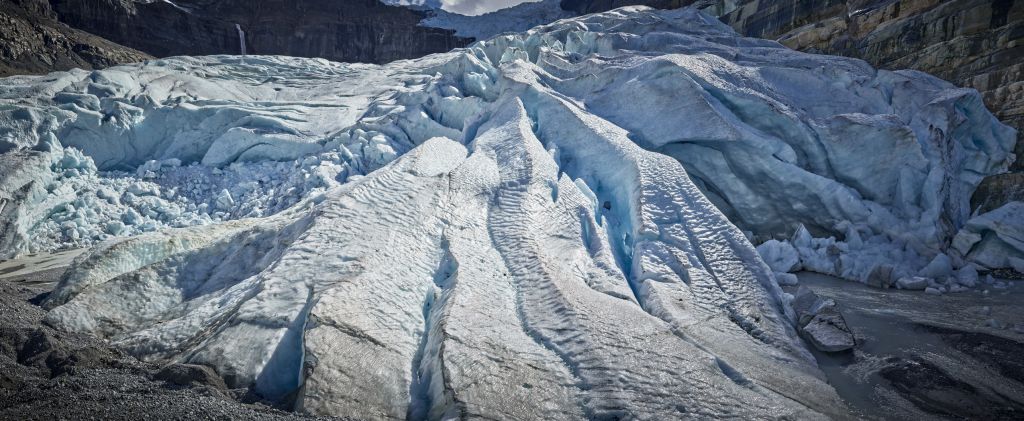
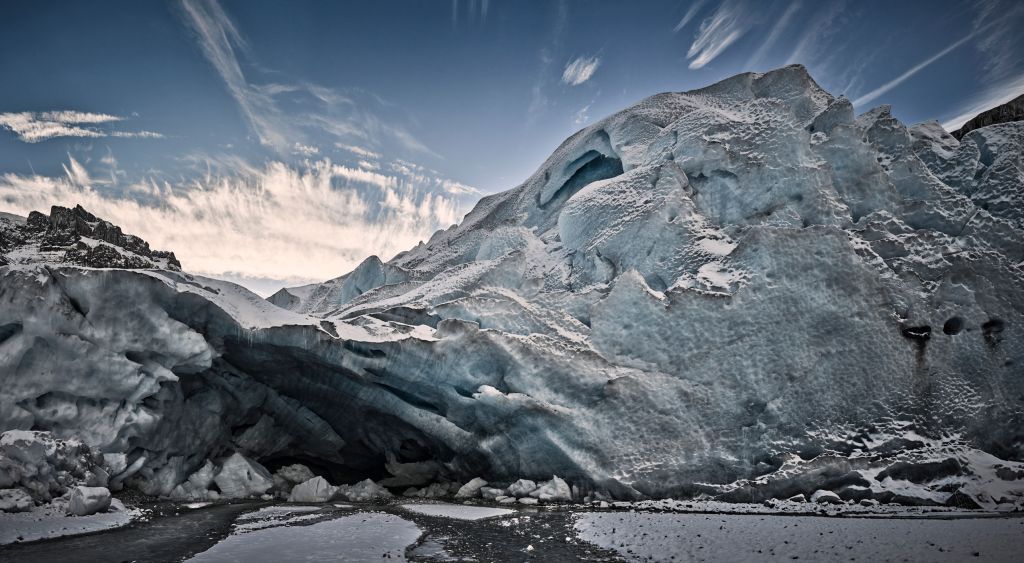
Every spring and fall since 2022, photographers Jim Elzinga and Roger Vernon, with mountain guide Dylan Cunningham, venture to the Columbia Icefield. Their mission is to capture the vast glacial expanse straddling the Alberta and British Columbia border before it’s gone.
“This is the beauty,” Elzinga says. “But this is what we’re potentially going to lose.”
Glaciers in Western Canada are melting faster than ever, and the last four years have been particularly devastating. From 2021 to 2024, glaciers receded twice as fast as in the last decade due to low snow, high temperatures and wildfires darkening glacial ice as ash and soot on the surface absorb heat, according to recent research published in Geophysical Research Letters.
On our current trajectory, Environment and Climate Change Canada predicts glaciers in the Canadian Rockies are likely to all but vanish by 2100, according to a statement emailed to The Narwhal. The consequences are far-reaching, impacting everything from water security to infrastructure to ecosystems and contributing to sea level rise.
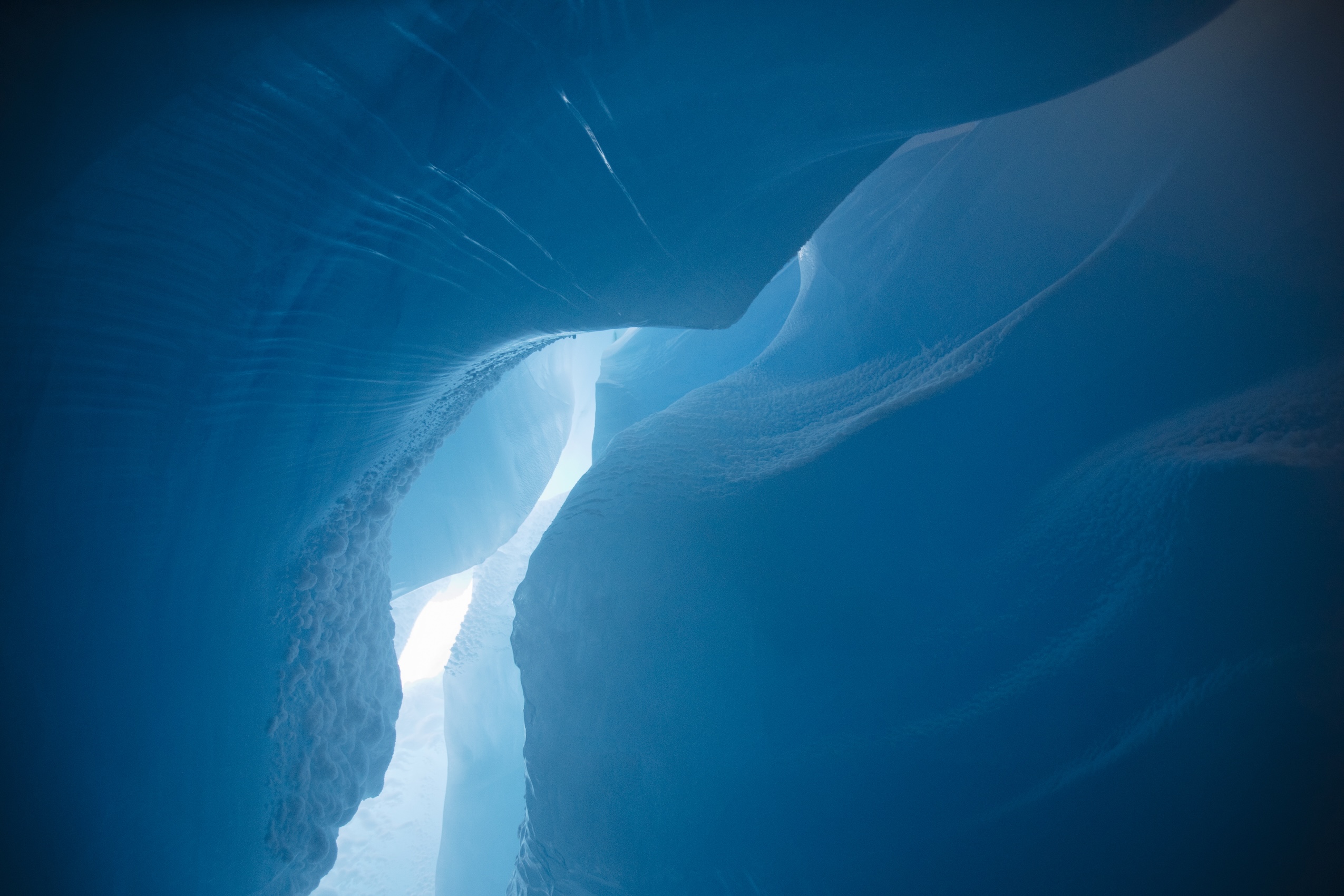
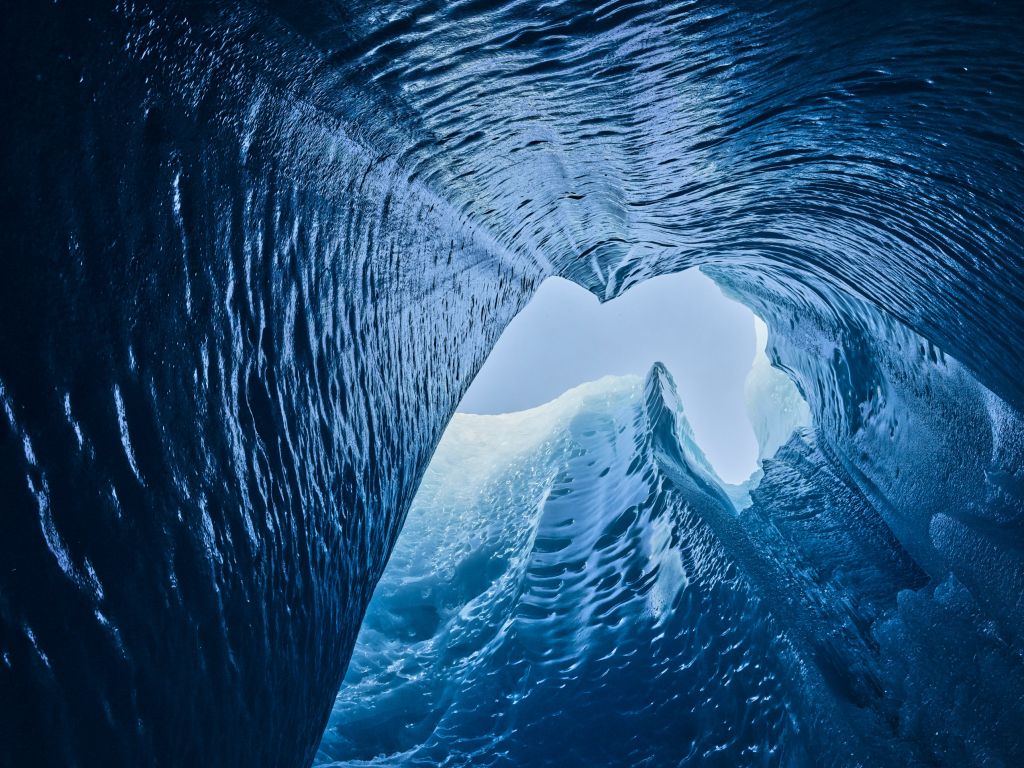
But below the surface of the Athabasca Glacier, encapsulated in its water-sculpted walls, that’s easy to forget. The ethereal blue seems endless, engulfing our senses and filling our peripheral vision.
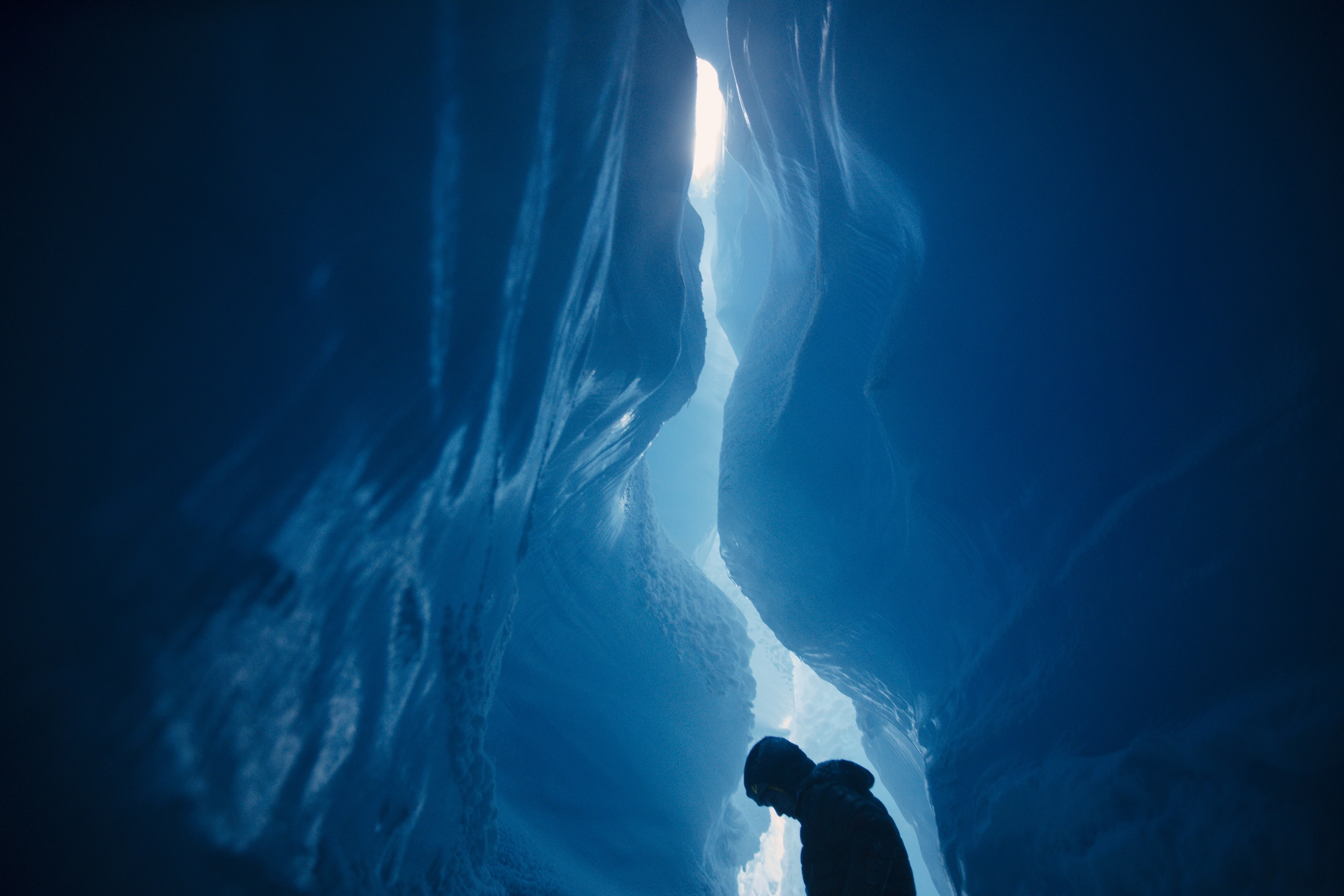
It’s inescapable — a feeling Elzinga and Vernon strive to replicate with their photography.
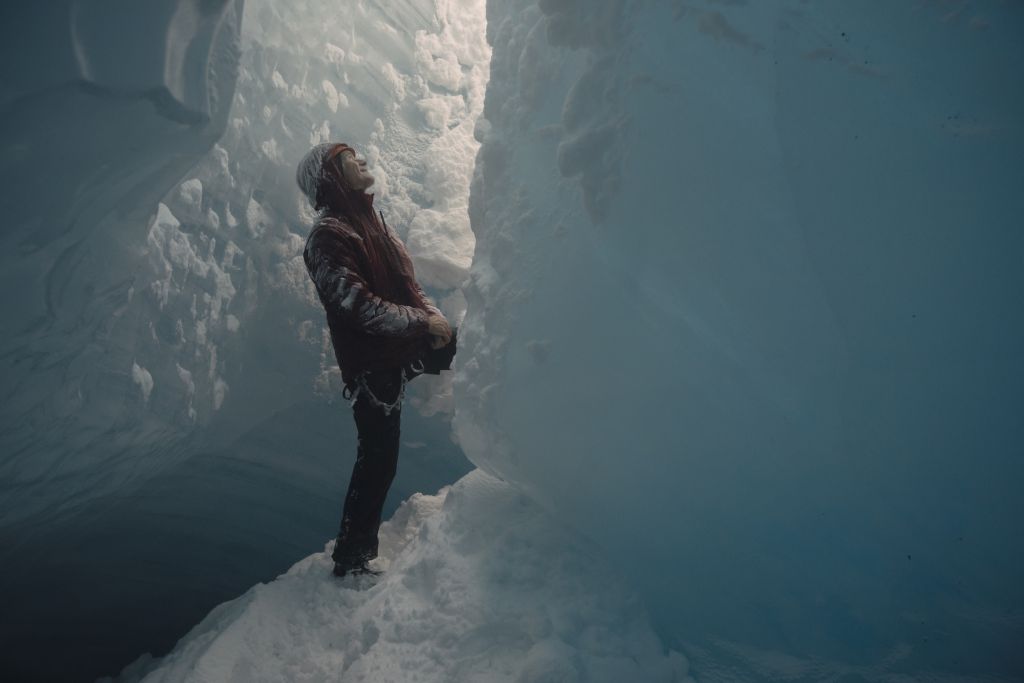
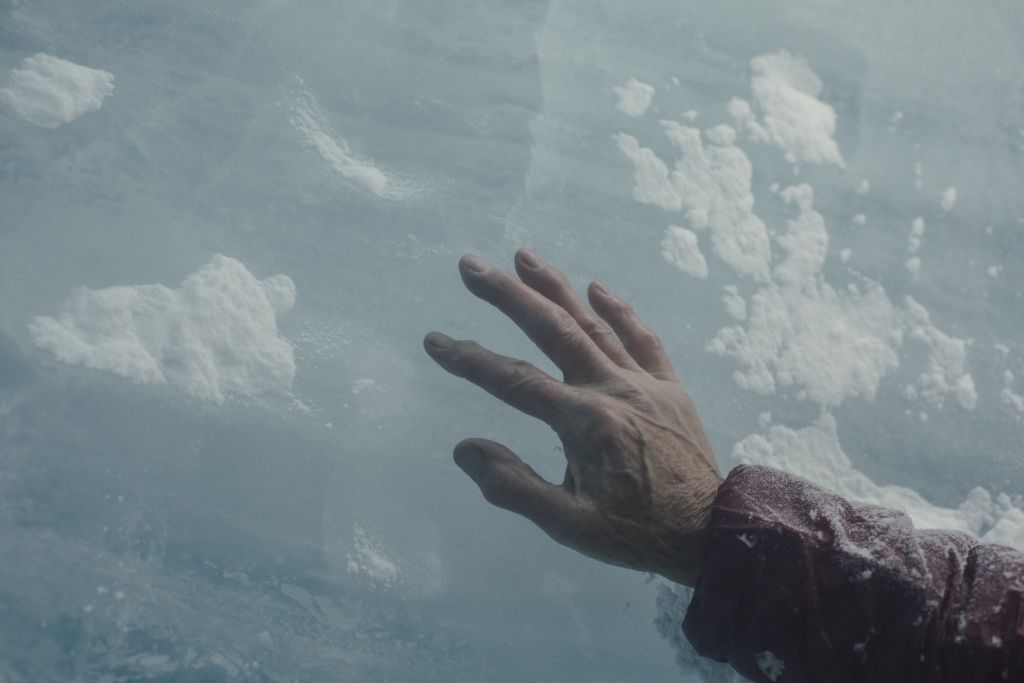
Vernon made sure everyone touched the ice with their bare hands to experience the smooth texture.
Capturing the beauty of the Columbia Icefield glaciers
For three decades, Elzinga and Vernon were in the same social circles in the mountain community of Canmore, Alta. But it wasn’t until 2021, when Vernon got a call from Elzinga asking to collaborate on a glacier project, that the pair got to know each other. It was a natural pairing.
“When we came together there was such a common language,” Vernon says.
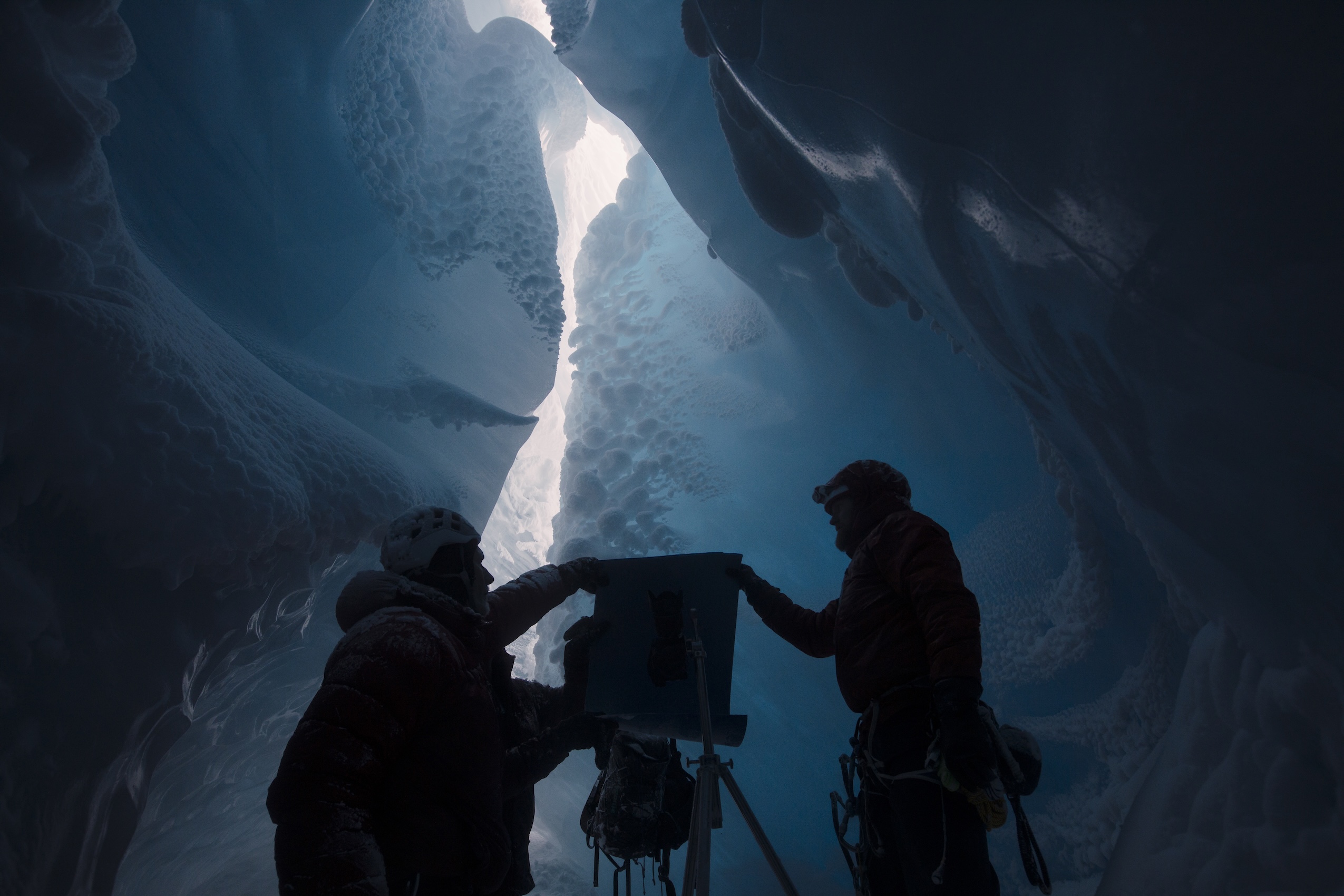
Their goal too, was shared. In a world inundated with images, they want to take photos that grab people’s attention at a scale that’s difficult to ignore.
“We wanted to have our images so big that if you stood back at this distance,” he says, holding his arm out wide, “it still smacked you in your face, commanded your presence.


That shared vision led to Meltdown — a photography project exhibited in large scale at galleries and museums capturing the beauty of the Columbia Icefield glaciers before they are gone. It’s part of a larger initiative by an educational non-profit called Guardians of the Ice which Elzinga cofounded. The group aims to raise awareness of the consequences of losing Western Canada’s glaciers by marrying art and science.
For Vernon, it’s a bit of a shift from his other life behind the camera on the big screen, where he has a long history as a cinematographer, including documentary films and Academy Award–winning movies.
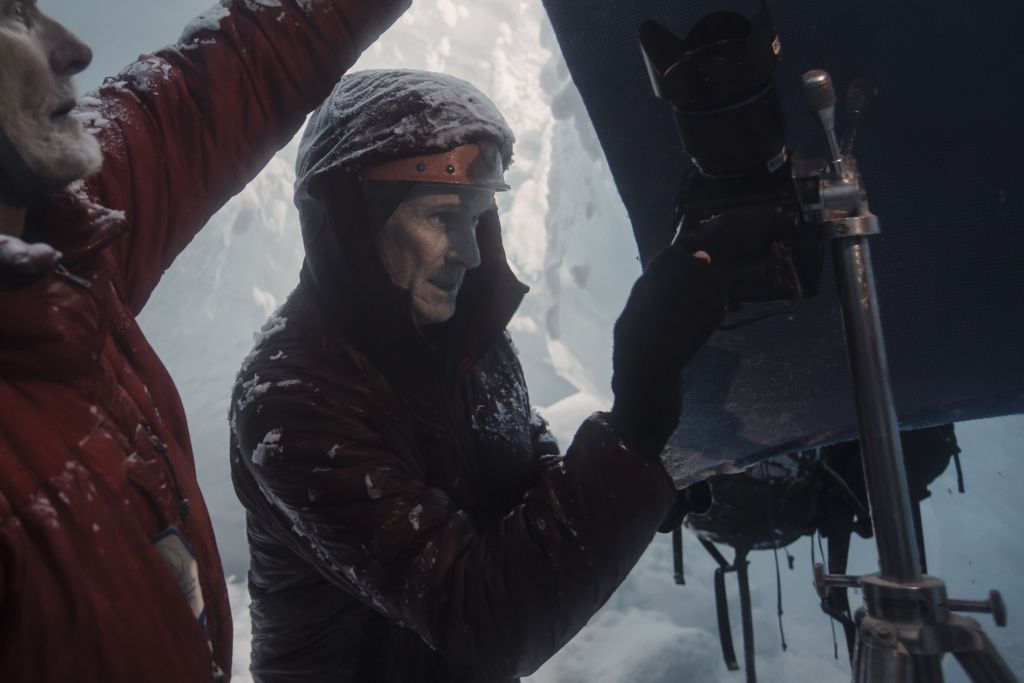
Elzinga, meanwhile, is an accomplished alpinist who has spent a lifetime guiding and exploring in the mountains at high altitudes. In 1986, he led an expedition when the first North American woman summitted Mount Everest.

While both Elzinga and Vernon have accomplished much in their careers, they brush it off when we talk. The current mission takes centre stage — they are living and breathing glaciers.
Vernon first became aware of the impact of glacier melt when volunteering with a Calgary-based non-profit focused on water security. His work there took him around the world, to Zambia, Ethiopia and Congo. When Elzinga approached him for Guardians of the Ice, Vernon saw an opportunity to have an impact on water security locally.
“Imagine 50 years from now when we don’t have our glaciers. … Those folks aren’t going to have the water,” Vernon says, pointing to downstream Alberta communities. “That’s our food production.”
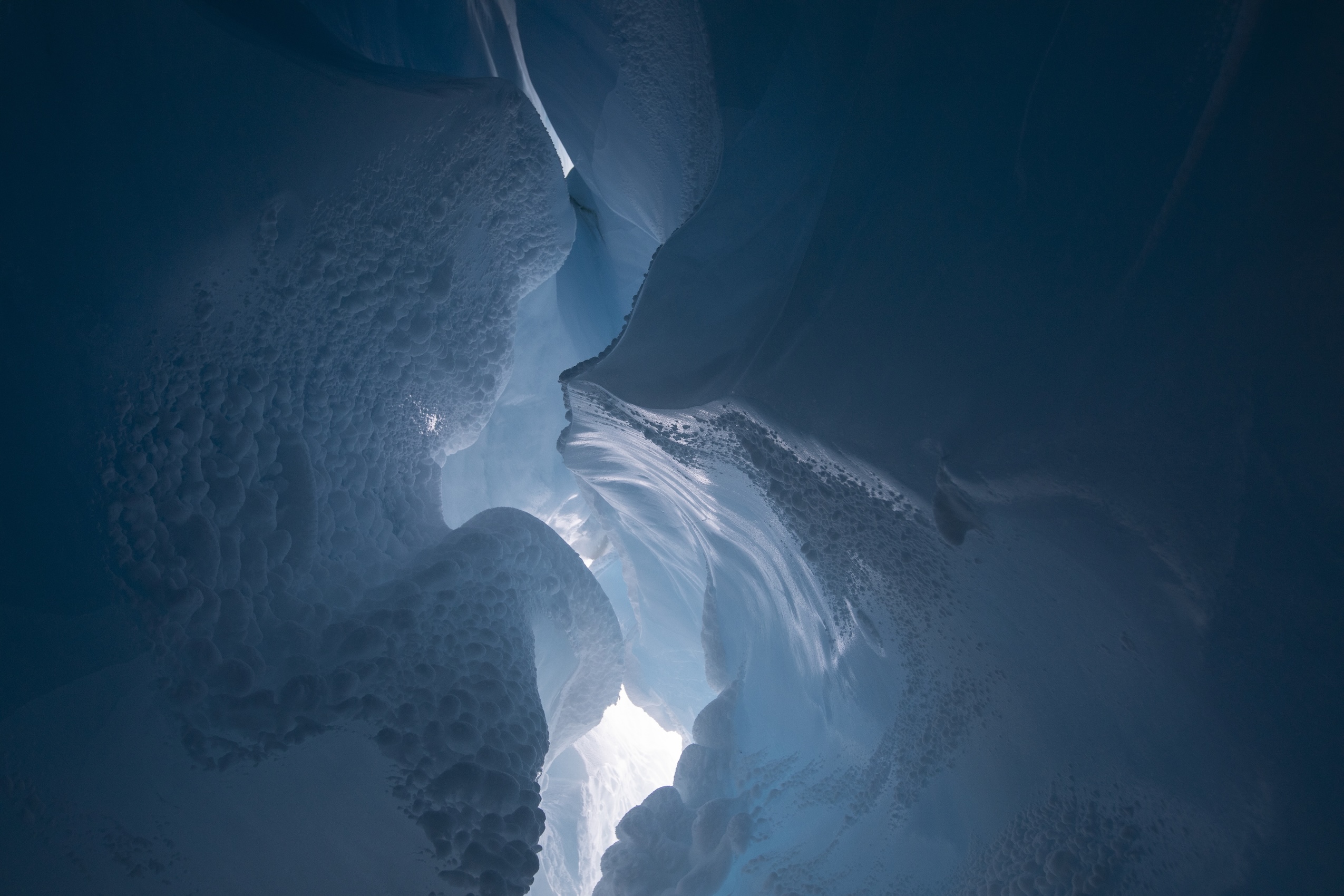
Water from glaciers in the Columbia Icefield joins rivers, streams and eventually the Pacific, Arctic and Atlantic oceans. As glaciers retreat, declining meltwater supply may impact freshwater availability as early as 2050, according to Environment and Climate Change Canada.
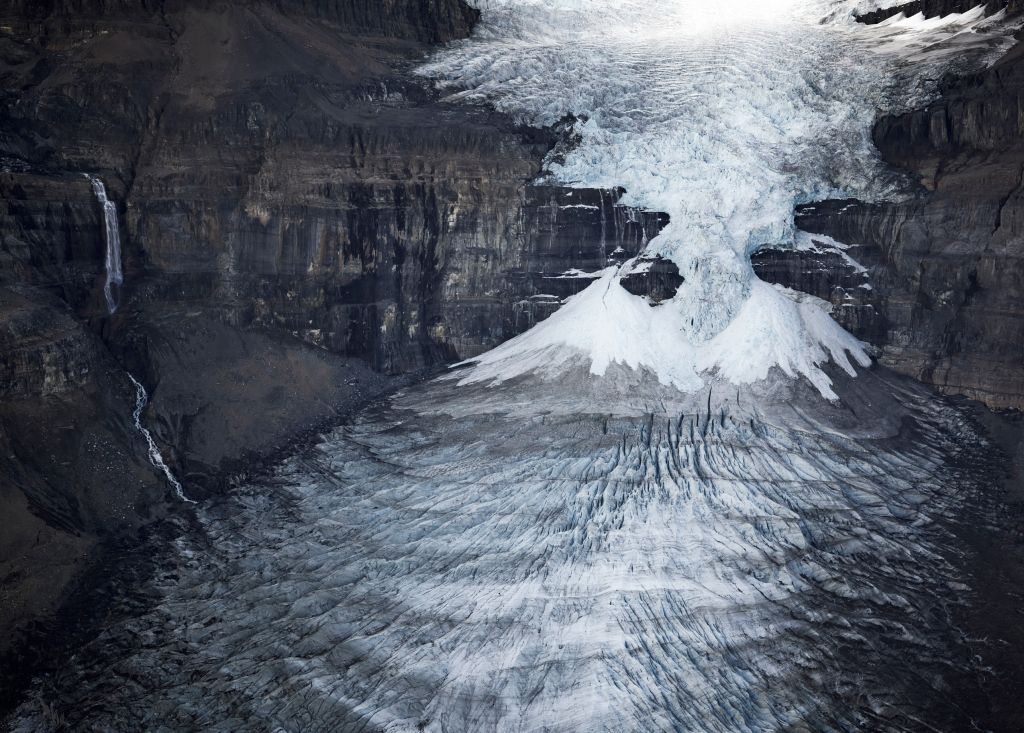
Elzinga, who studied photography in university, dreamt of photographing mountains since the 1980s but had to wait for technology to catch up with his vision. Elzinga and Vernon use a high-resolution camera capable of aerial mapping and space quality imagery to capture the detail and scale of their photography.
The team uses a Phase One camera, a high-resolution camera that allows Elzinga and Vernon to capture the scope of the mountains and glaciers without sacrificing fine details.
Elzinga and Vernon use a technique called photo stacking which combines multiple images to increase the quality of their photos. The technique has been useful for capturing moulins, in particular.

Witnessing glaciers disappear
Before everyone ventures into the moulin, Elzinga and Vernon stand to the side of the opening, looking at their phones. They wait for Cunningham, the mountain guide who supports their work, to text photos to the pair so they can preview the spot and make sure the imagery is what they’re looking for.

Together, Elzinga and Vernon have the mountaineering experience required for the project, but they’re now in their 70s, so they enlisted Cunningham to focus on safety and technical requirements while they focus on the art.
“We get wrapped up in the minutia of what’s in our eyes,” Elzinga says.
Today we’re also joined by alpine guide and long-time climbing partner of Elzinga’s, Ian Welsted, who volunteered his time to facilitate bringing a reporting team on the shoot. While Elzinga and Vernon take photos, Welsted explores the darker reaches of the moulin.
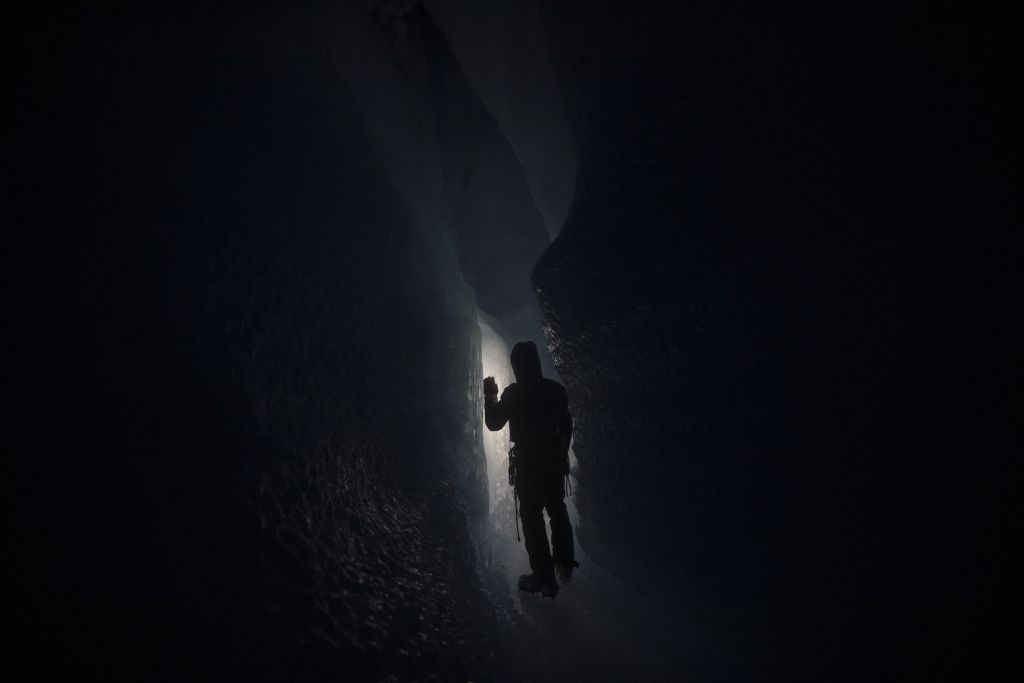

Behind the camera, Elzinga and Vernon can work together almost wordlessly, an important skill when conditions get rough, they say, like the cold winds and snow when I visit.
While finding the exact image is a know-it-when-you-see-it scenario, the areas photographed are very intentional.
A few days after the photoshoot, at Vernon’s home base in Canmore, Alta., he unfolds a map with mountain peaks marked one through 12, the starting point four years ago, when the duo was planning where to photograph.
The mountains flanking the icefields are known as the “guardians of the ice,” he says, the origin of the non-profit’s name.“Now all that glacier is gone,” Vernon says, pointing to different spots on the map. He points to another area — “gone.” And another, gone.
Features the photographers planned to capture had vanished or receded remarkably year over year, like the Columbia Glacier, which they estimate to have receded 100 metres from one photograph to the next.
The art of changing people’s minds
While Cunningham has always felt a responsibility toward the environment, working with Elzinga has had a “profound” impact on his outlook, he says.
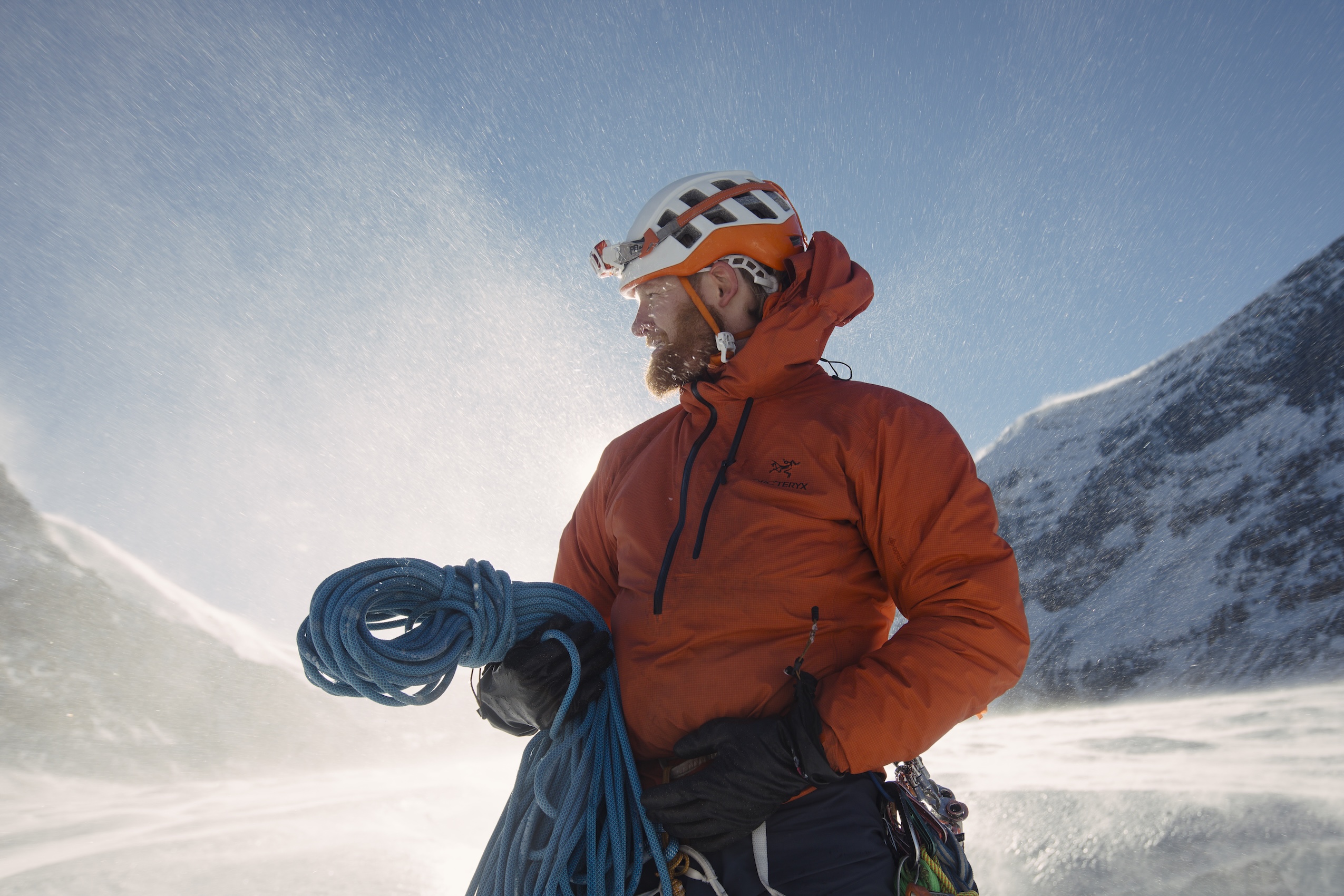
When Cunningham gets cynical about climate change, Elzinga’s optimism has the power to pull him back.
“You can’t think that way,” Elzinga will tell him. “We can solve this, we’re making a difference, and we’re going to keep pushing.”
Giving up isn’t an option for Elzinga.
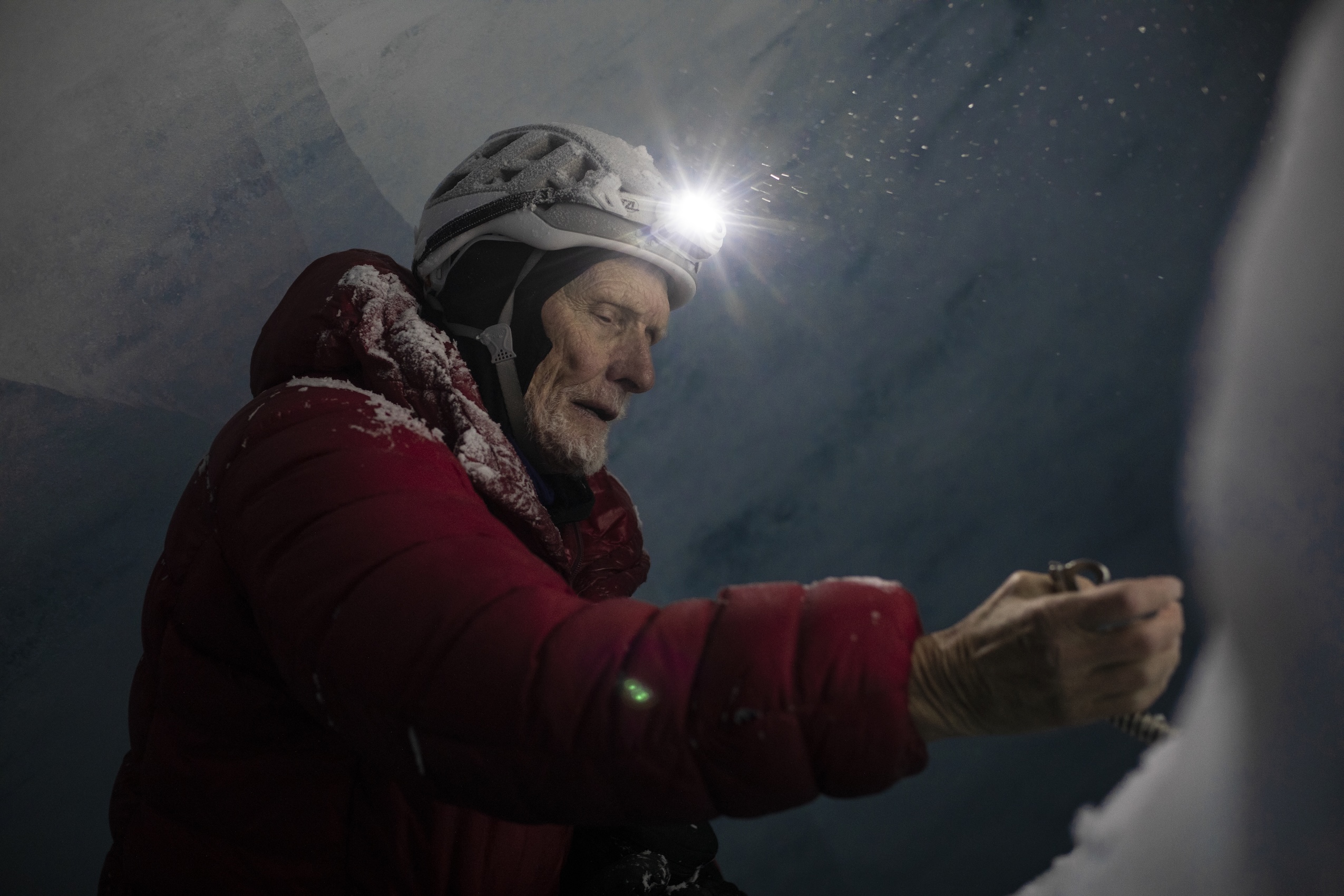
“It’s really easy to look at this stuff and be overwhelmed by it,” he says. “My attitude is, well, at least you’ve got to try and do something.”
The non-profit supplies Alberta Tomorrow, a free educational platform, with their materials from the icefields, and plans to expand to the university level as well as experiment with other mediums, like virtual reality.
Elzinga hopes that awareness will then ripple through every aspect of people’s lives, including the ballot box. “It’s at government levels that you can get policy change,” he says.
The climate crisis is like a virus, Elzinga says. Even if people are aware of it, they can’t really see it. And as the urgency increases rapidly, maybe art can help show people what’s at stake.
Among the photographs displayed in the Columbia Icefield Glacier Discovery Centre, where Meltdown is exhibited across from the Athabasca Glacier from May to September until 2027, a wall titled “no action too small” encourages visitors to be mindful of their environmental impact through pledging to take small actions such as eating less meat or divesting from fossil fuel.
Not everybody who sees the images will make choices for the planet, but some might, and for Vernon and Elzinga, that’s what counts.
“Sometimes people say, ‘Well, what I do is not going to make a big difference,’ ” Elzinga says. His comeback is to flip the concept of a drop in the bucket on its head.
“A lot of raindrops go into a rain barrel and then eventually that rain barrel is overflowing.”
As he sees it, if 75,000 people see the images at the gallery, not everybody will make a change — but the percentage of them that do, he says, will “go out and within their circle, they can make a difference.”