

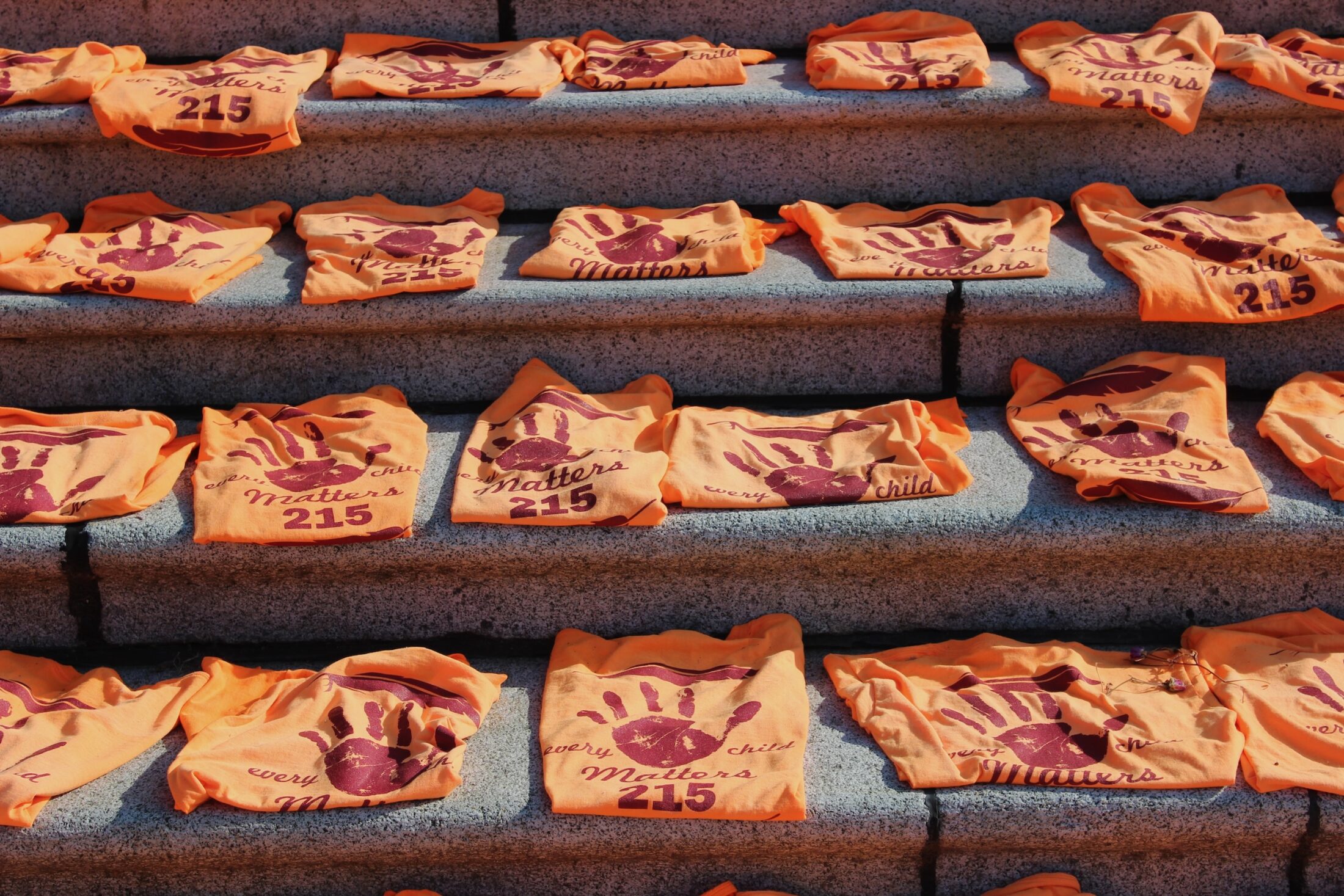
On Sept. 30, 2021, Canada marked the first National Day for Truth and Reconciliation — a day to remember the legacy of the federal residential school system, honour its survivors and mourn those who never came home. Sept. 30 is also Orange Shirt Day, a movement that grew from a residential school commemoration event in 2013 in Williams Lake, B.C. At that gathering, Secwépemc founder Phyllis Webstad shared the story of the treasured new orange shirt that was taken from her when she first arrived at a B.C. residential school at the age of six.
For non-Indigenous people, it’s a day for learning about and reckoning with the ongoing trauma inflicted by the residential school system. For many Indigenous people, the orange shirt symbolizes the lands, language and culture they were stripped of — and also the healing that comes from reclaiming what was lost.
It’s impossible to report on the natural world in Canada — lands and waters that were stolen from Indigenous Peoples since the violent inception of this state — and not find links back to residential schools and the legacy of colonization.
As we reflect on all that was taken, we also see how connections to the land have persisted — and how those relationships are critical tools in the fight for survival amid a rapidly changing climate.
 5 min. read