


PaulGains-snowy owls-DSC_2059 copy-WEB

Winter brings snowy owls south — for now

Many snowy owls migrate for the winter months, bringing them to farm fields in Ontario, and across Canada. A photographer eagerly awaits their arrival, and wonders about their future

For the past 12 winters I have been photographing and observing snowy owls in farmers’ fields northwest of Elmira, Ont. — with permission from the landowners, and a pocketful of dog treats to befriend off-leash farm dogs.

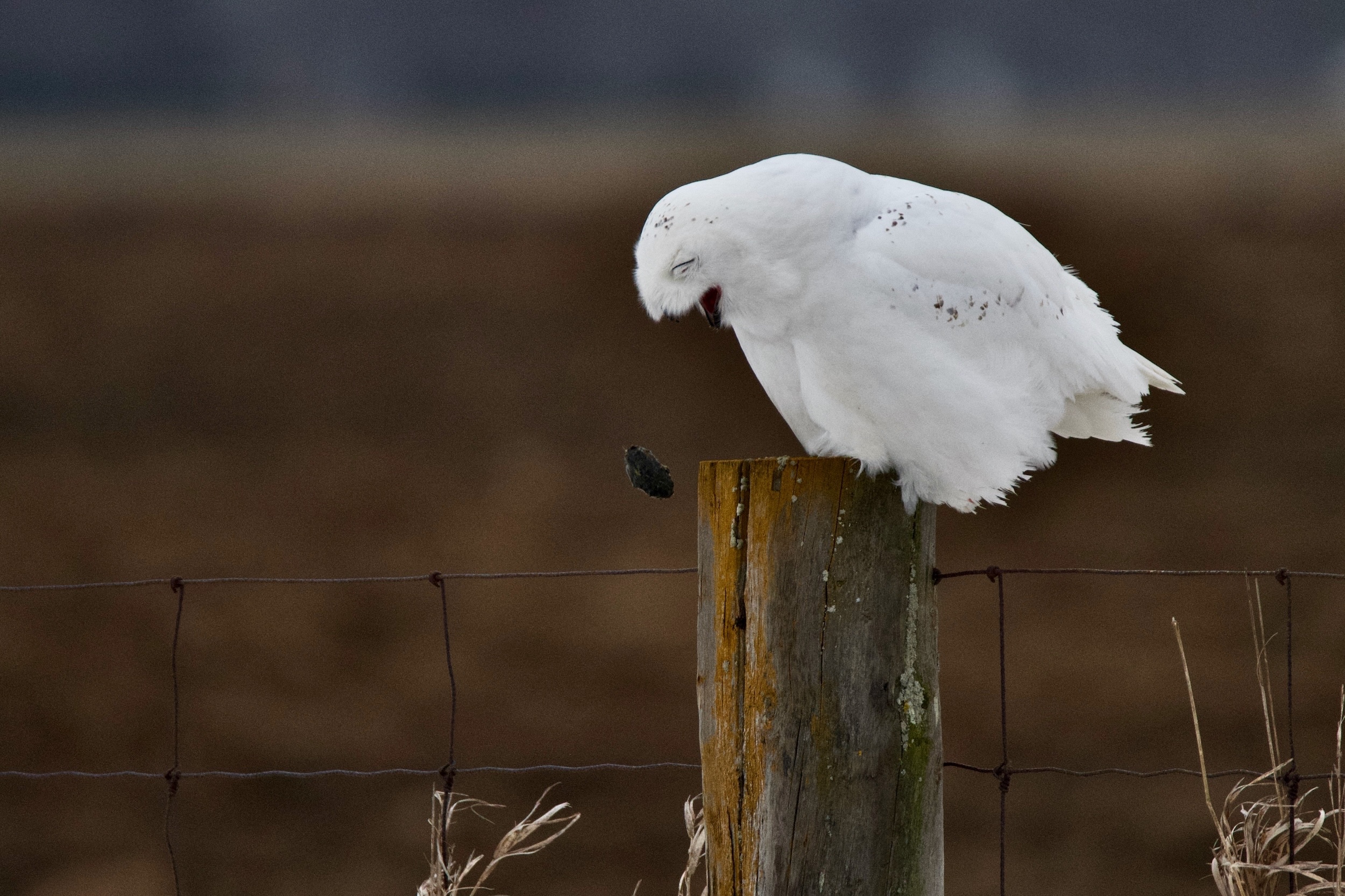
While snowy owls typically roost on the ground, they prefer a higher perch — a tree, a fencepost or hydro pole from which to hunt prey.

To witness a hunt is truly a memorable sight.
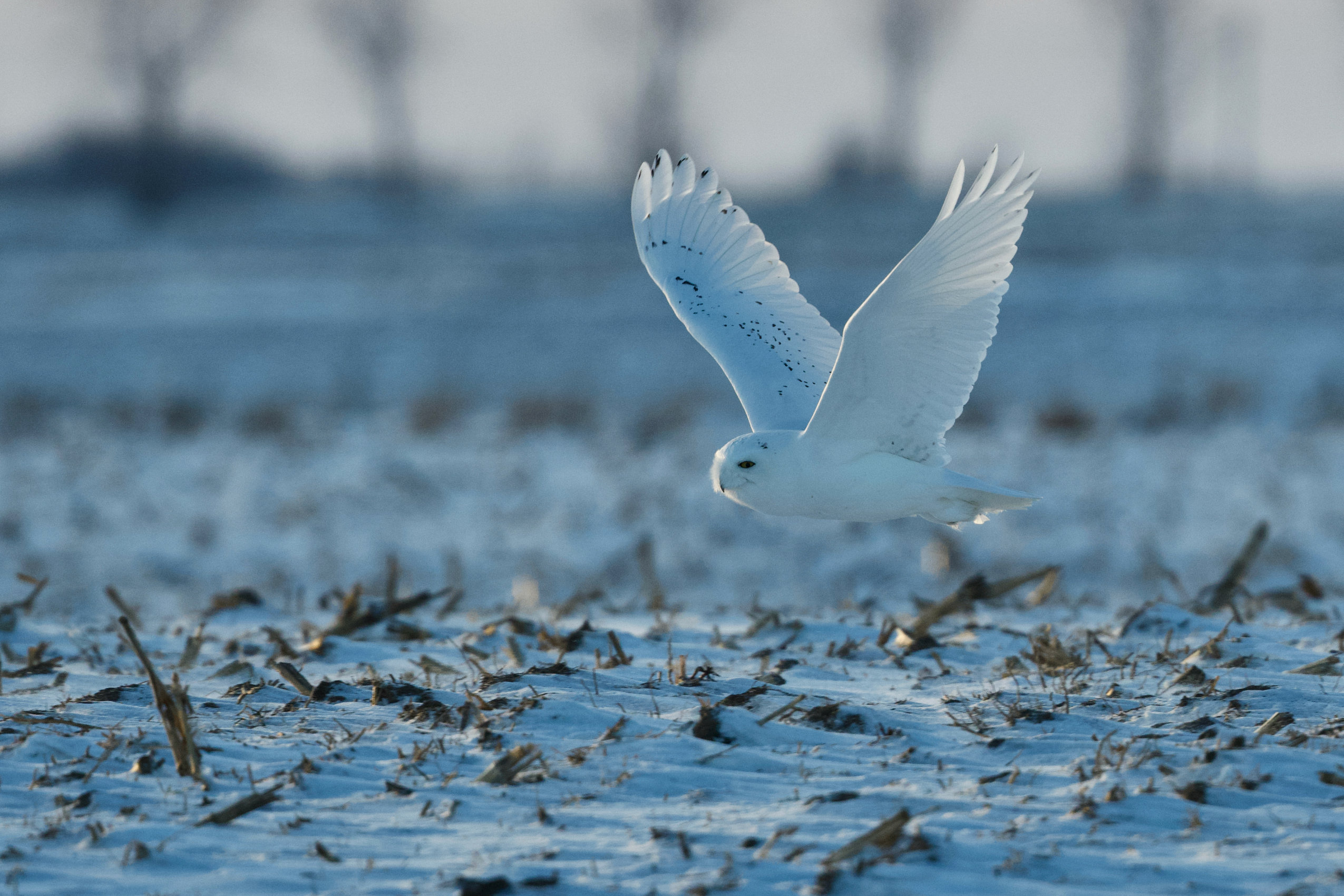
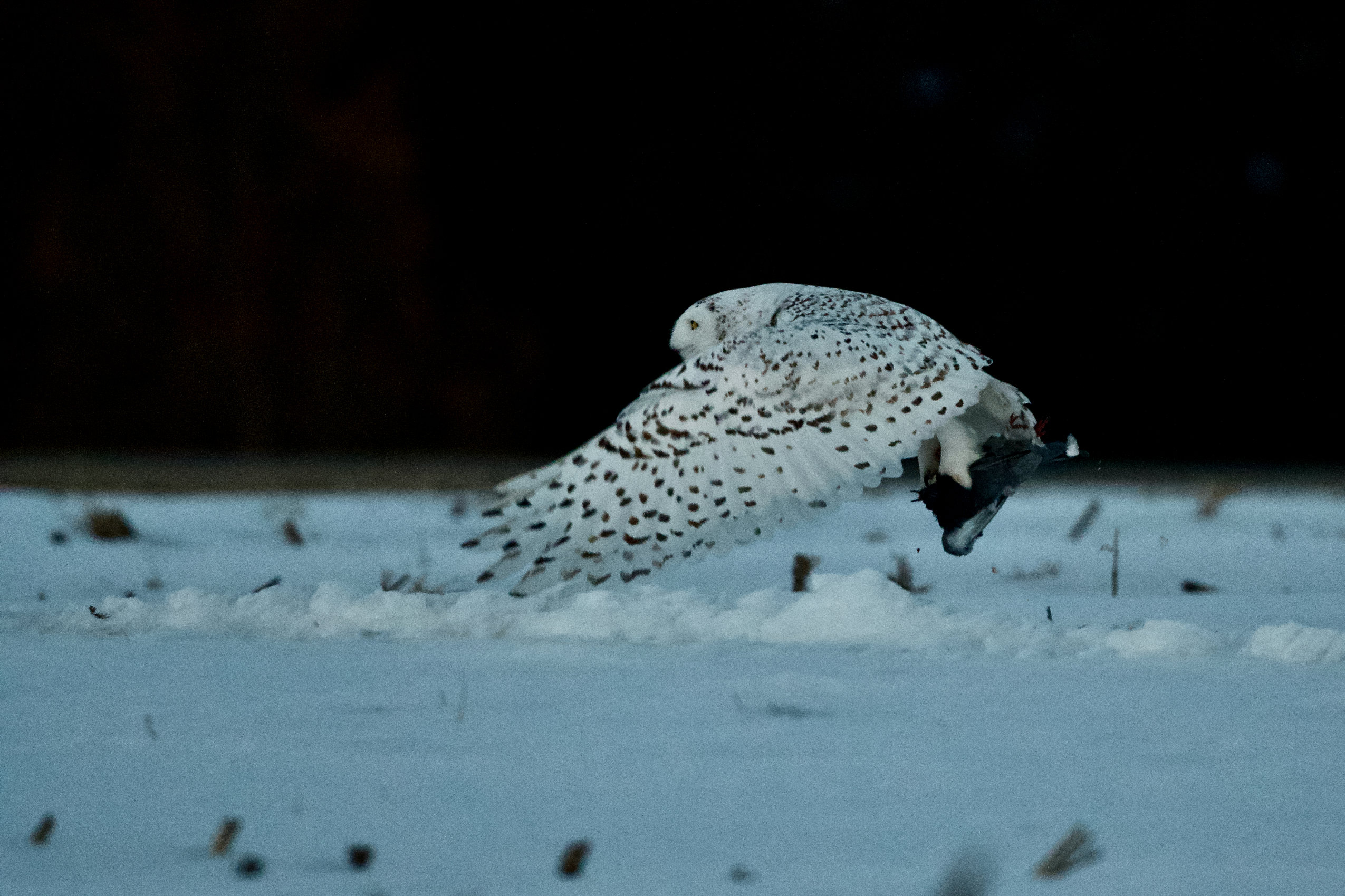
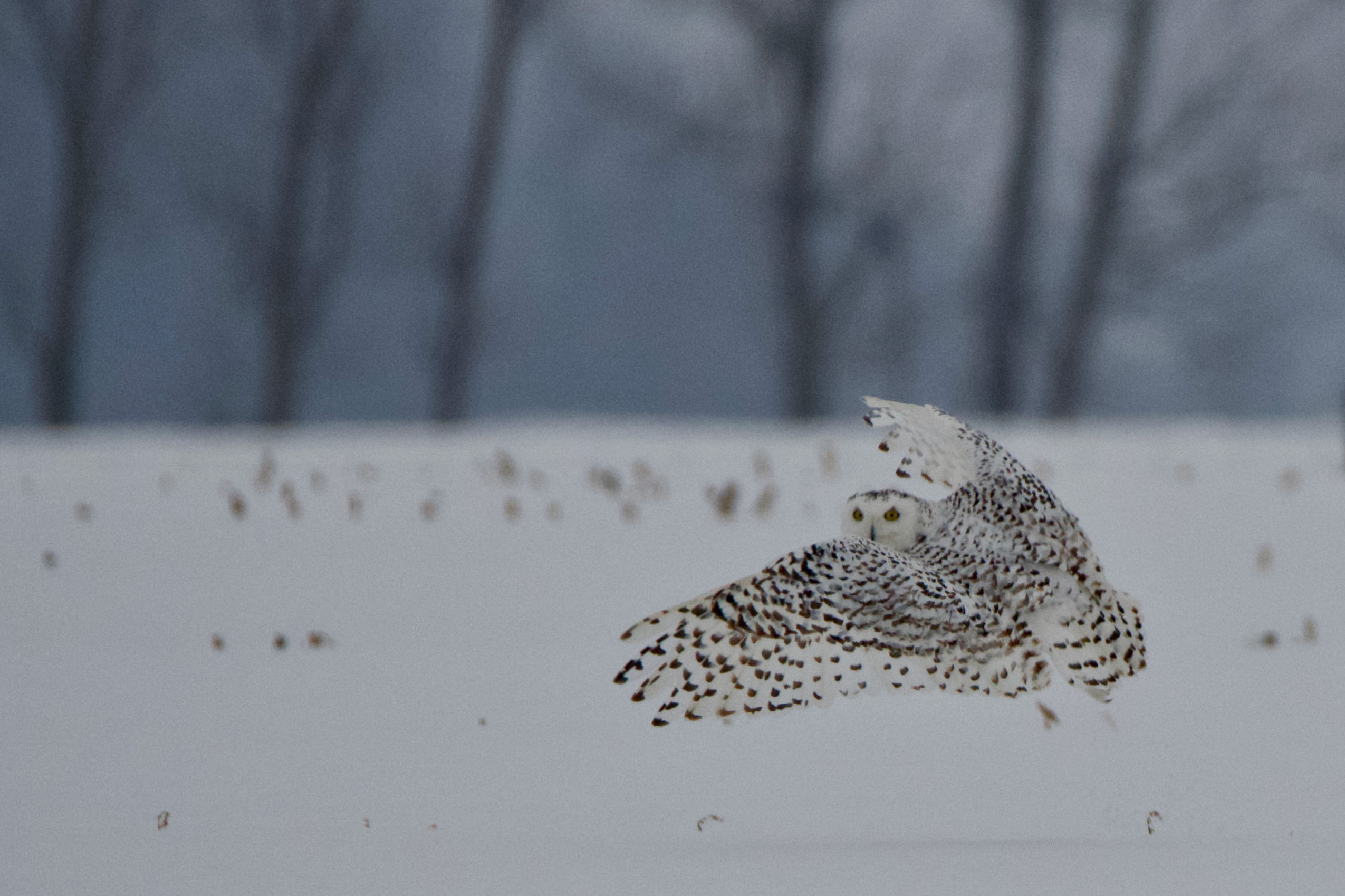
A snowy owl flies low over snowy ground

Their feathers allow near-silent flight as they swoop down to attack their prey, such as meadow voles, mice and birds. But it takes practice; I’ve witnessed inexperienced young owls chase pigeons round and round a grain silo and fail. Meanwhile, a mature female I encountered one winter targeted a pigeon 300 metres across a field and snatched it out of the sky.
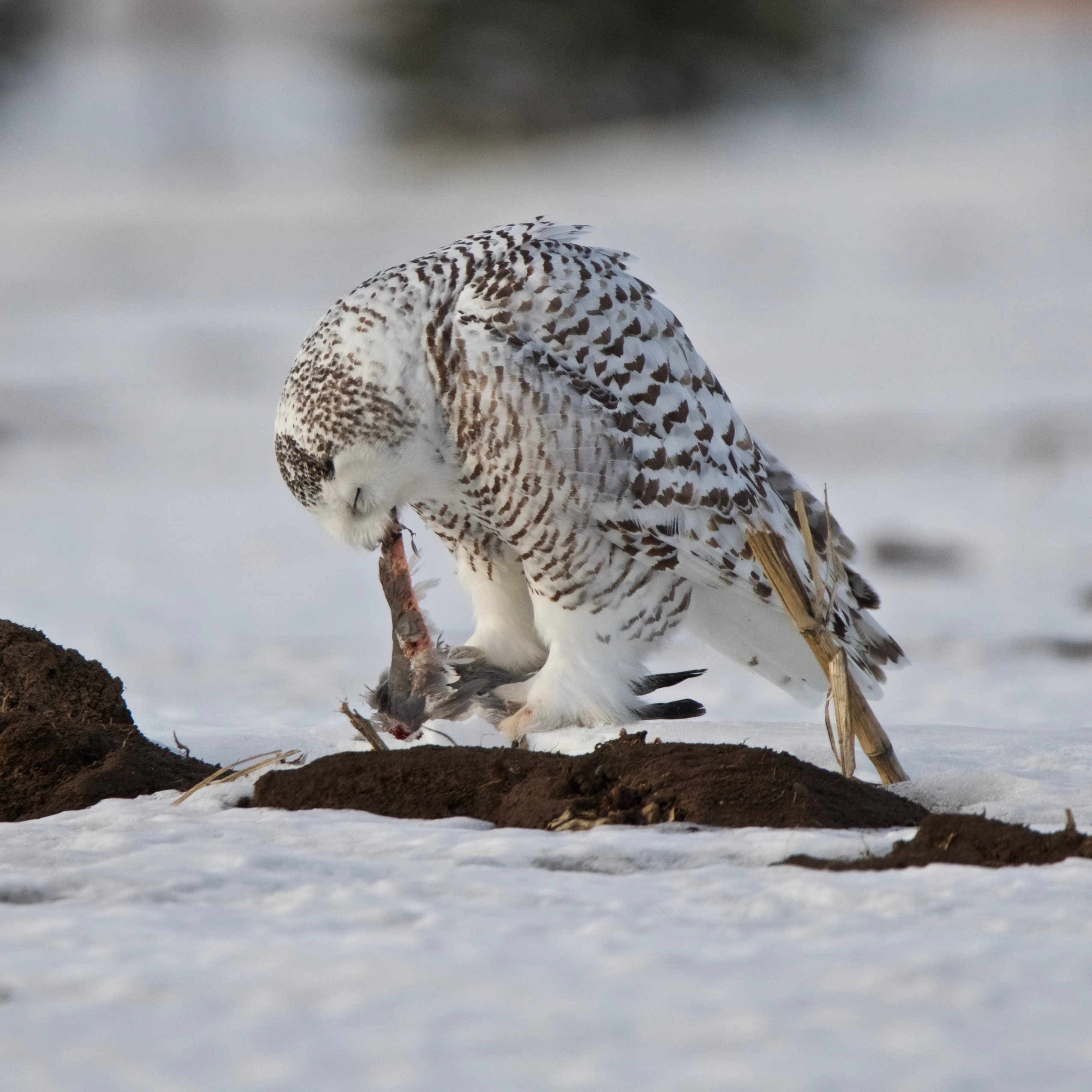
A snowy owl stands on the ground, hunched over a small bird it's eating
A female snowy eats her prey. Her appearance frightened off a young male owl I had been photographing. No sooner had he fled than she caught a kestrel and devoured it.
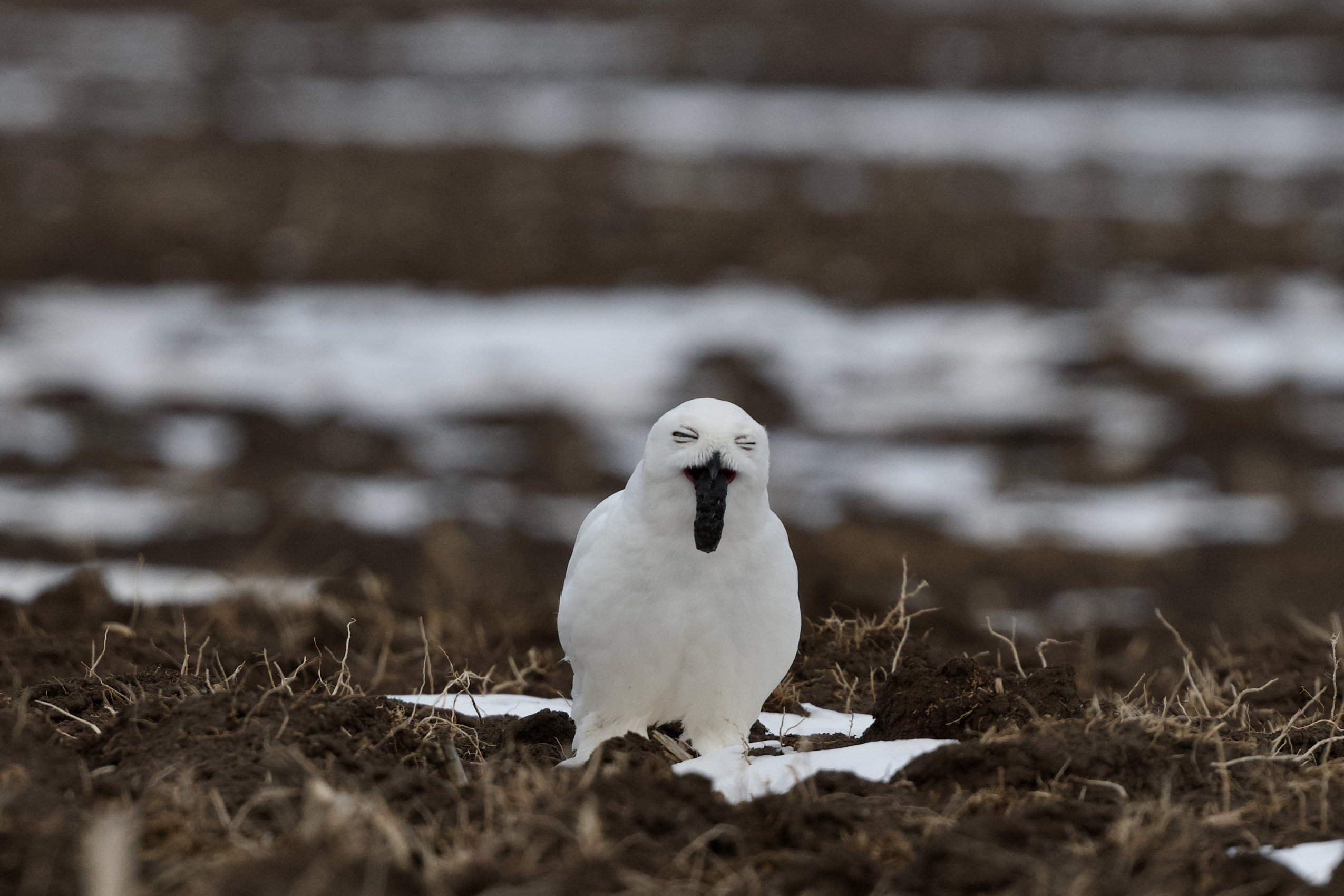
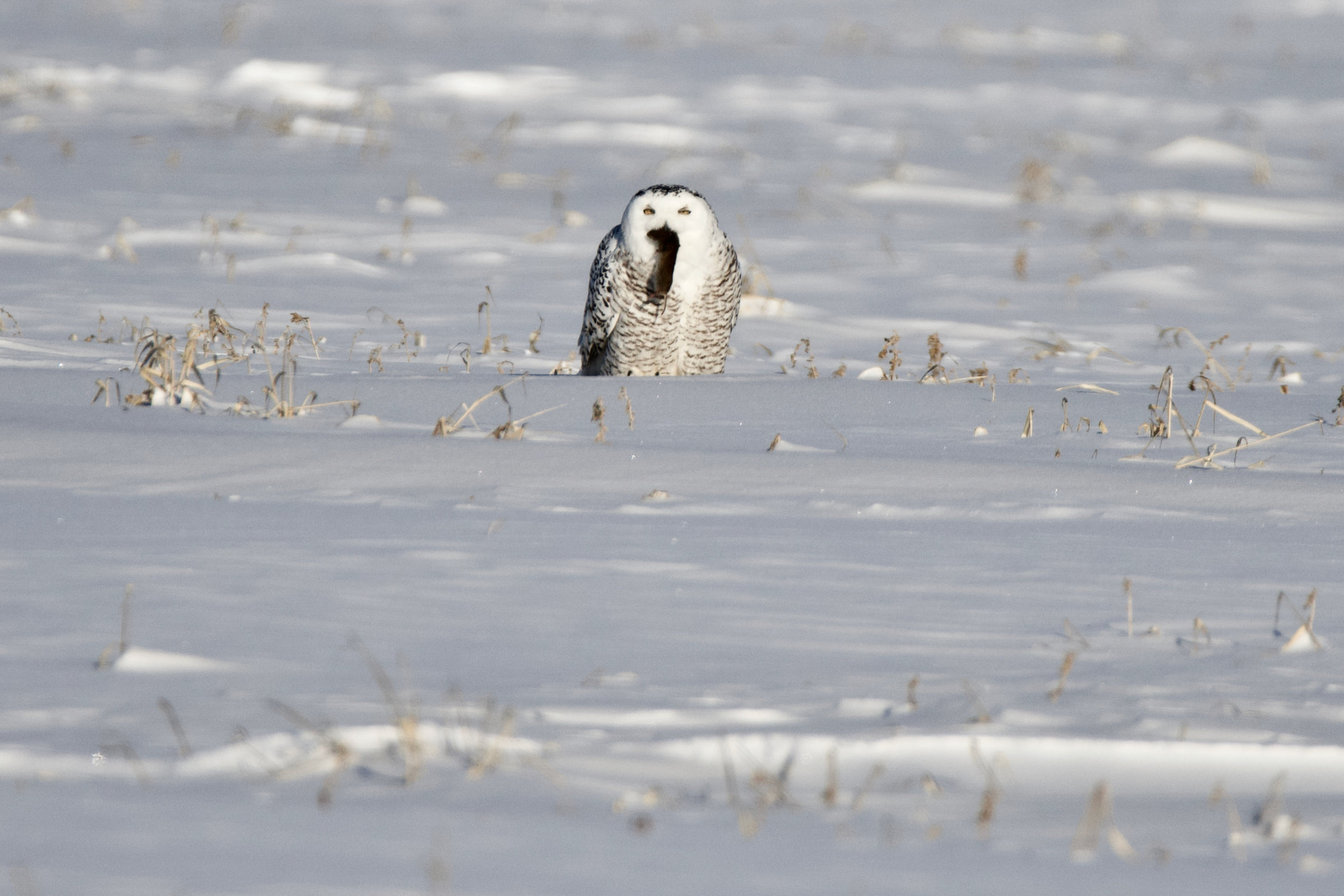
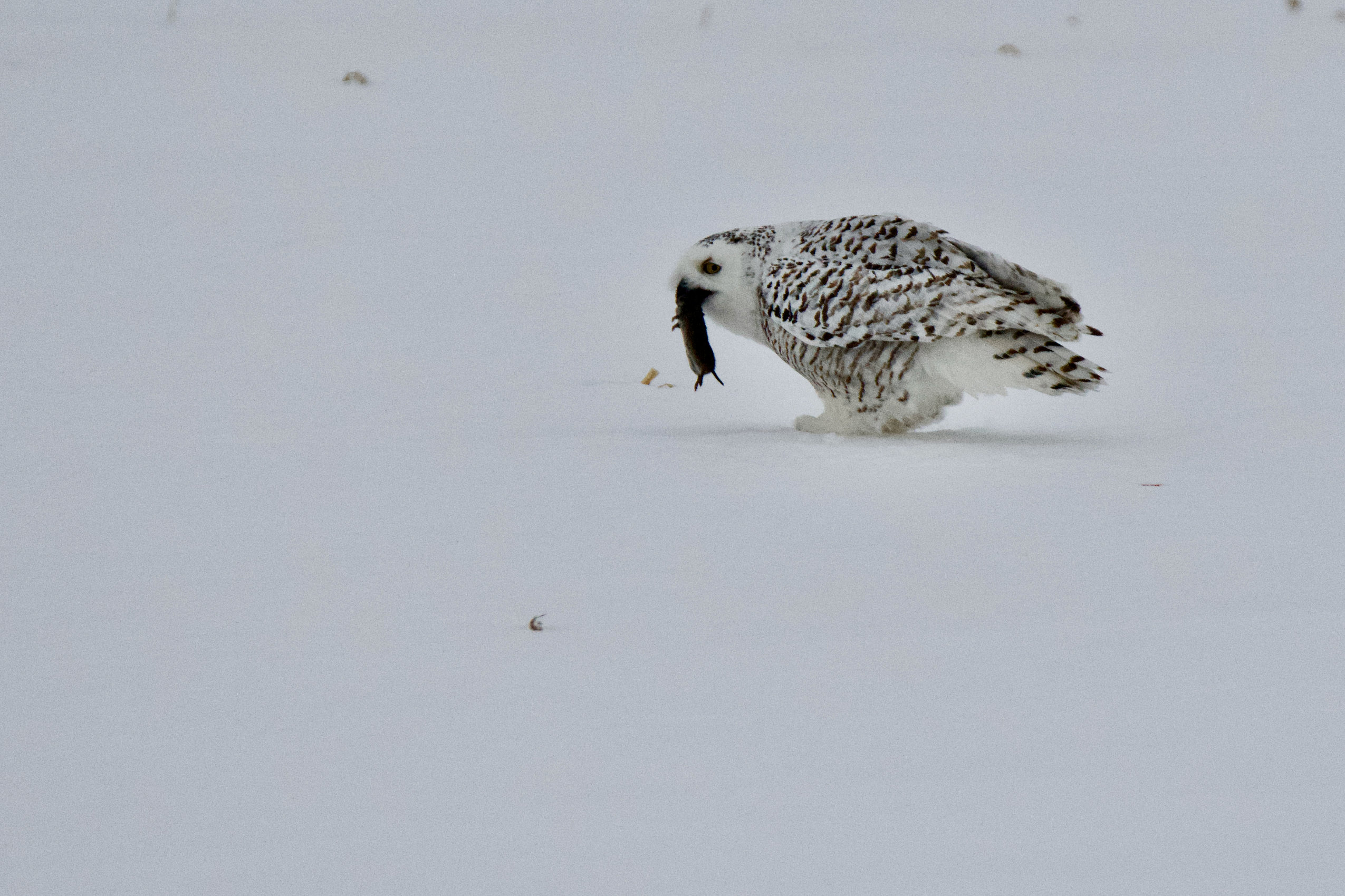
A snowy owl sits in a field eating a rodent
The same young female snowy owl with a meadow vole she has just caught. She would swallow it in front of me with three gulps.

In a good year, I might have seen as many as 10 snowy owls in the roughly 10-square kilometres I routinely cover. But in the past two years, only two or three have made their way to these fields for the winter, after spending the summer on the Arctic tundra. Birders and ecologists across Ontario and Quebec have also reported fewer sightings in recent years. 
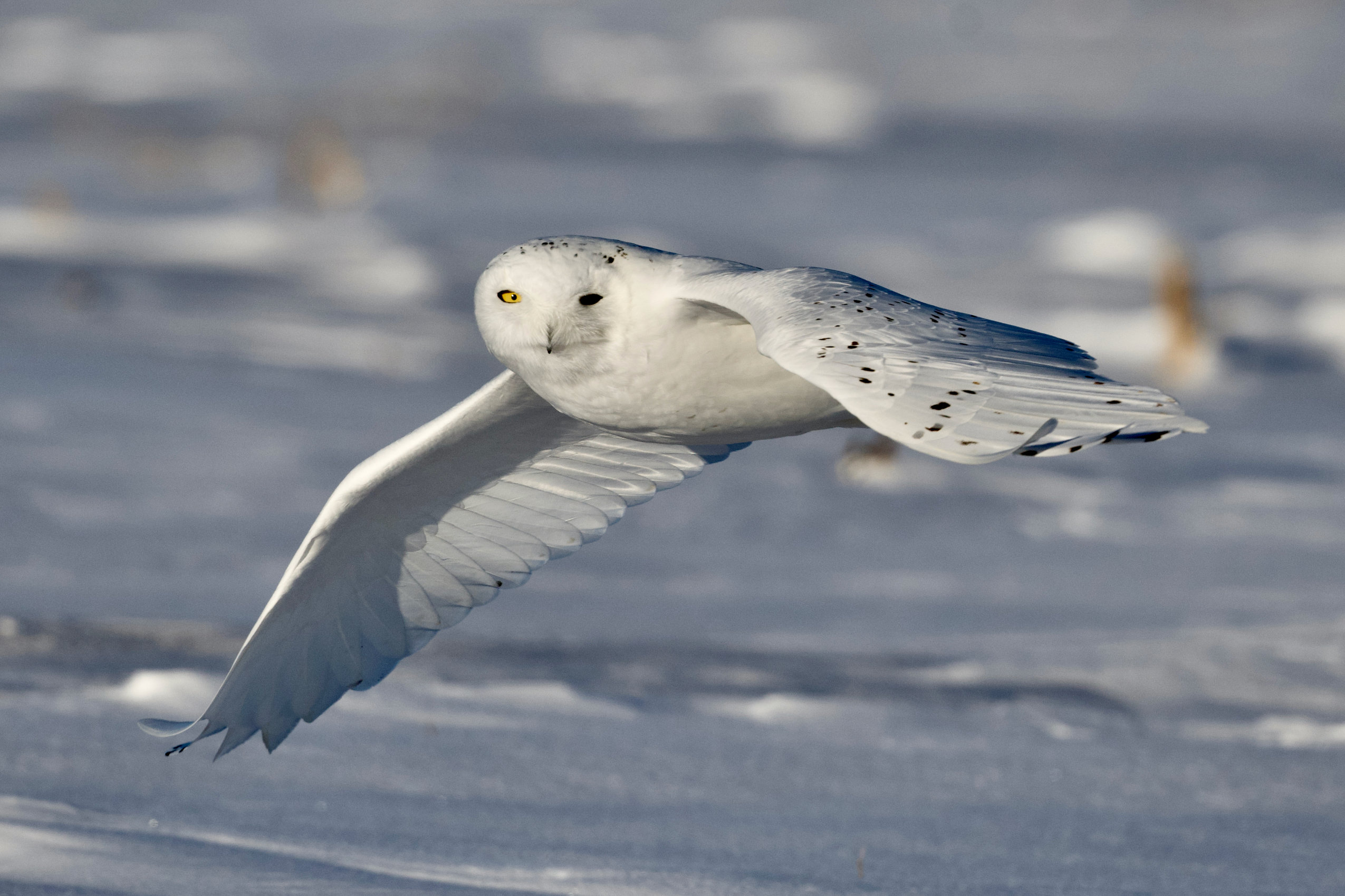
A snowy owl flies low over snowy ground
The dark brown patches on a snowy owl’s feathers are known as barring. Young males and females are virtually indistinguishable, but as they age, and go through annual molts, the males gradually lose their barring at a faster rate than females.

Although some snowy owls remain in the Arctic year-round, many begin migrating southward in late autumn. In years when an abundance of lemmings can be found on the tundra, the number of chicks born — or the clutch size — can be larger. The young owls aren’t ready to compete with experienced hunters, meaning they are pushed south.
Investigating problems. Exploring solutions
The Narwhal’s reporters are telling environment stories you won’t read about anywhere else. Stay in the loop by signing up for a weekly dose of independent journalism.
Investigating problems. Exploring solutions

Some migrants enjoy wintering in Ontario’s lake country, where waterfowl are abundant, while many prefer flat, open farmland that resembles tundra. With incredible eyesight, the ability to turn their heads about 270 degrees and phenomenal hearing, they are able to home in on mice and voles across a field.
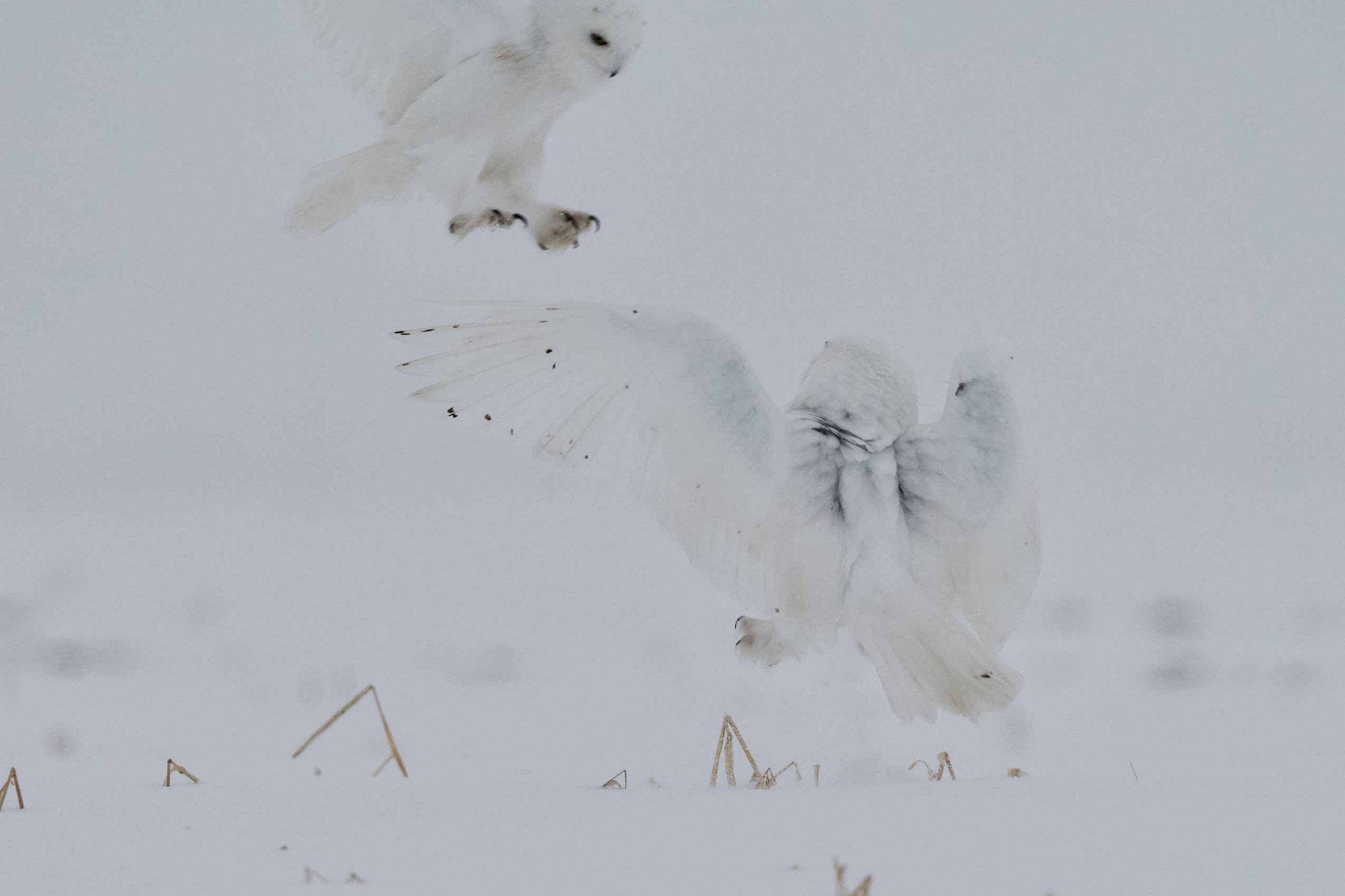
A snowy owl takes off from the ground as another flies above
During a blizzard, an adult male snowy owl suddenly spun around to defend himself from another male that made claim to the field.

But snowy owls that find their way south face human-related threats such as electrocution from power lines and rodenticide poisoning in the mice and voles they eat. Automobile collisions, though, appear to be the most common cause of death among snowy owls wintering in eastern North America.
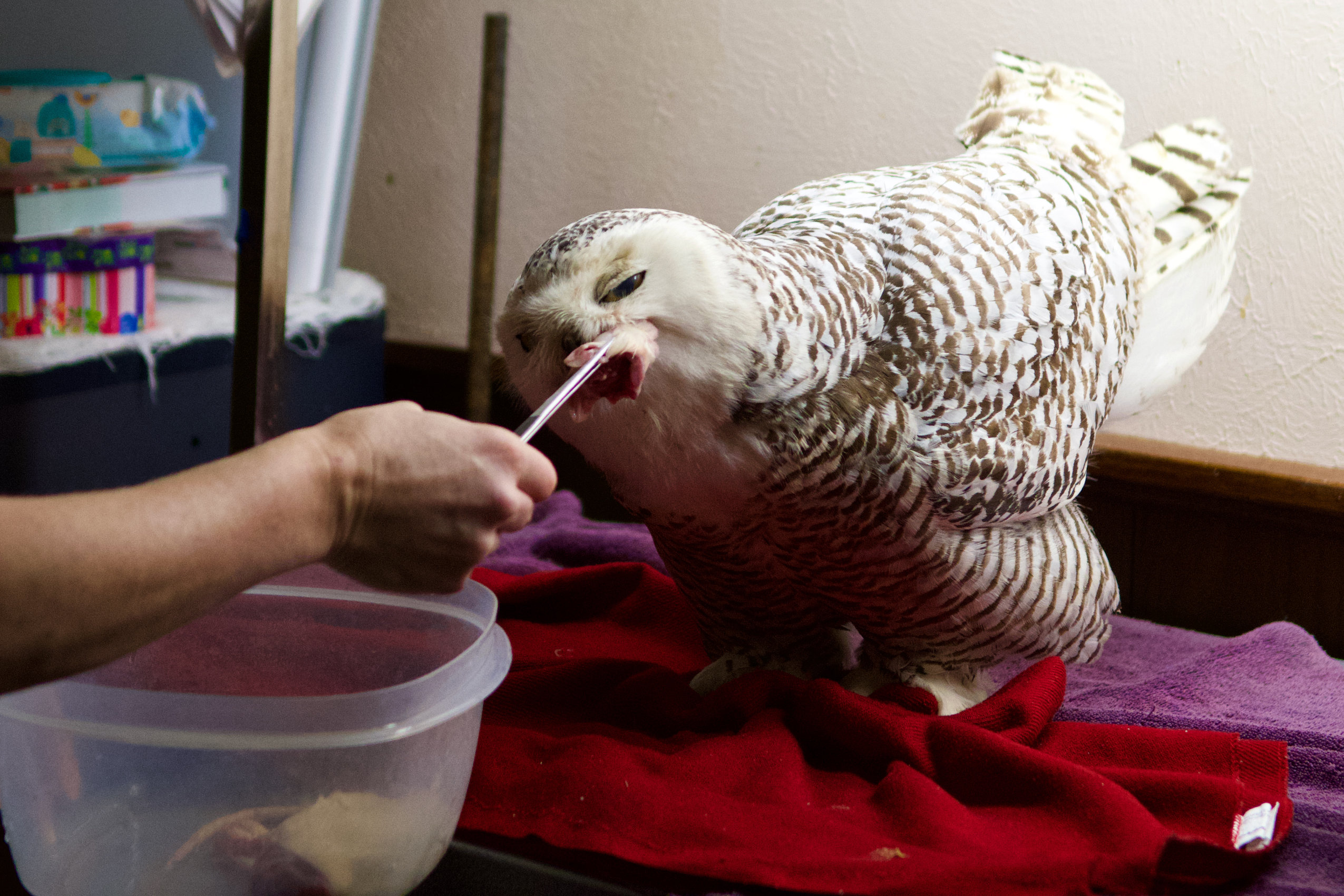
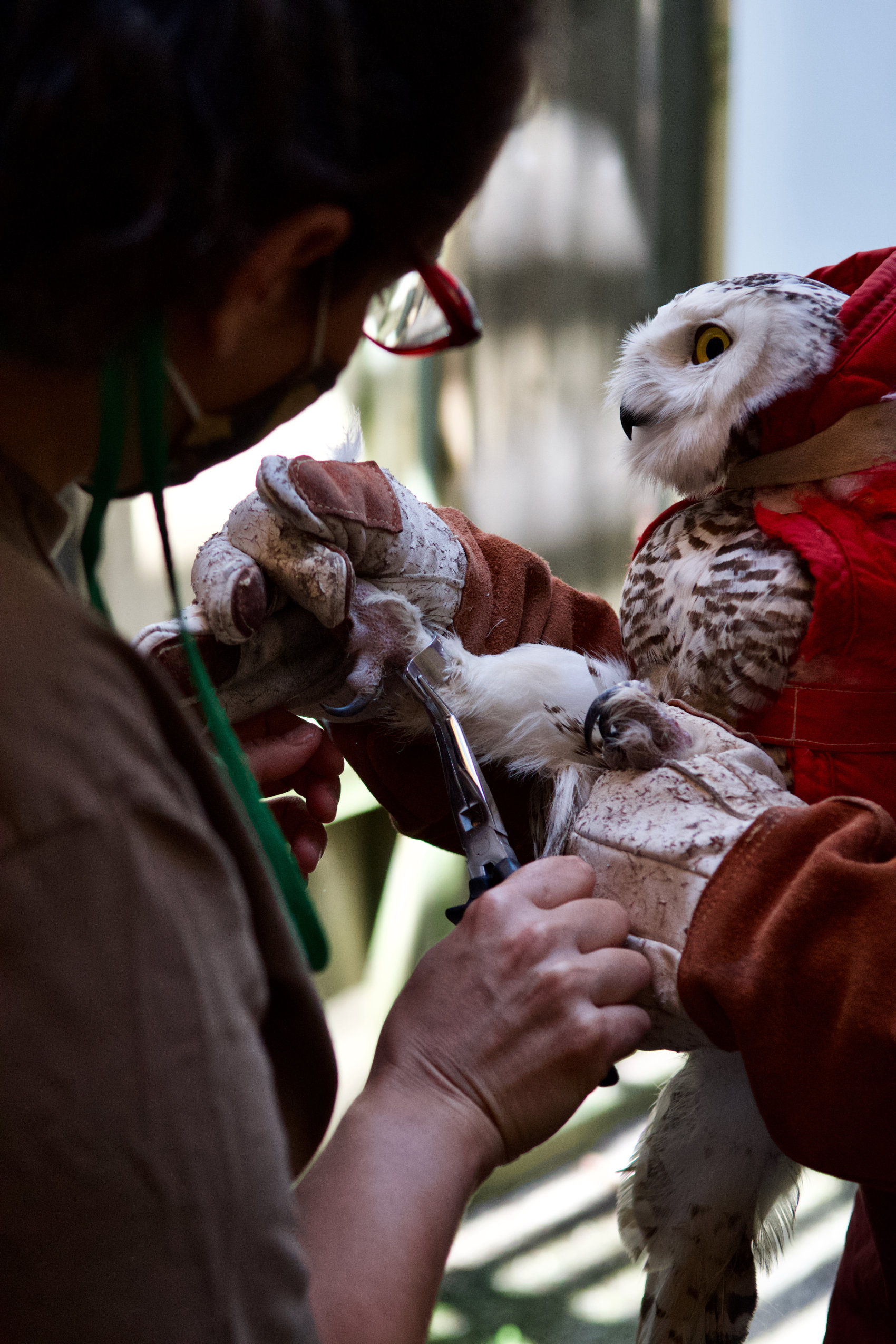
A snowy owl flies low out of an open cage, above brown grass
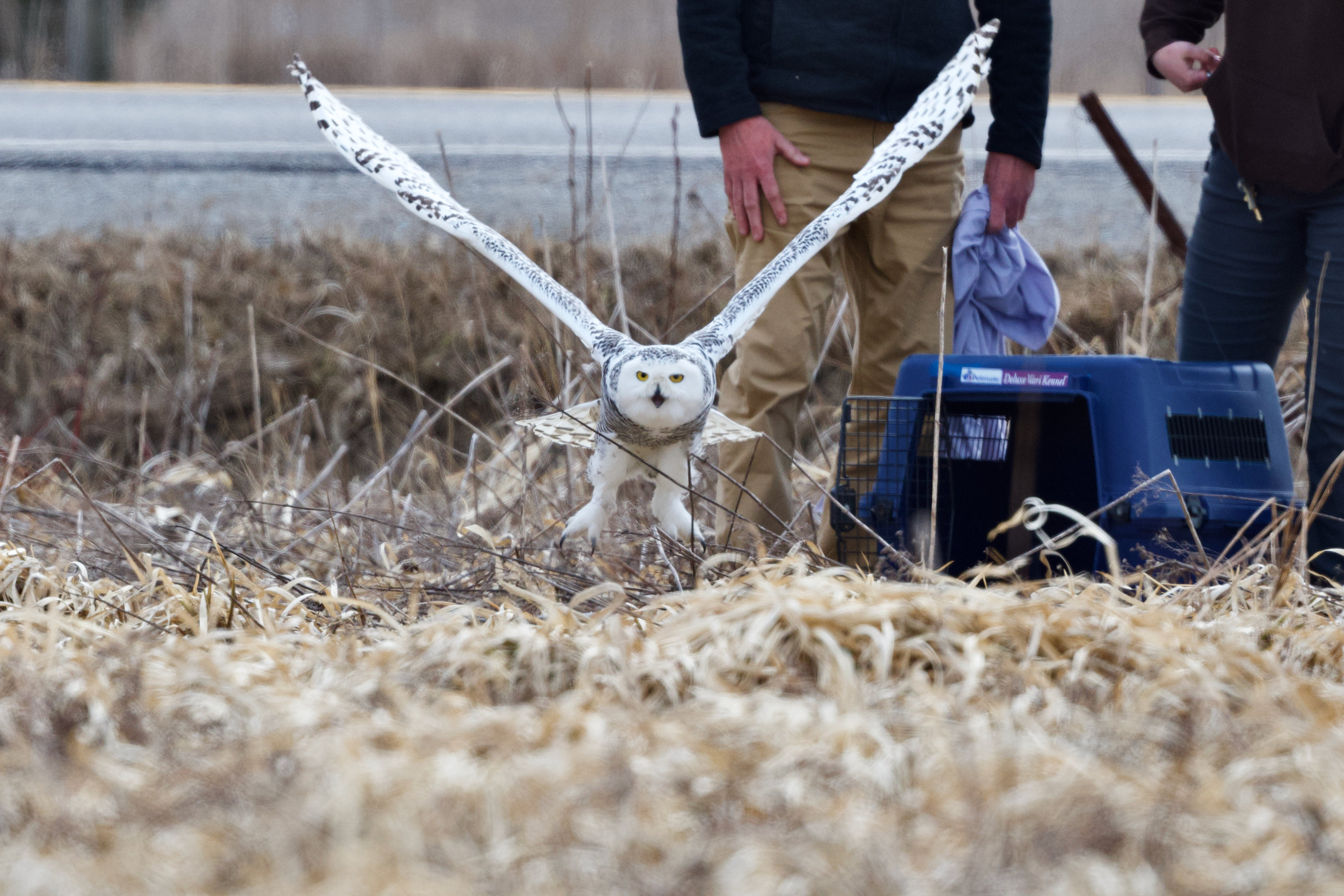
After a few months of rehabilitation at The Owl Foundation, this young snowy owl was released near Midland, Ont., in April 2022.

In the North, climate change has severely impacted Arctic ecology, with the region warming three times faster than the global average, threatening the survival of many plant and animal species including the snowy owl. As the treeline creeps north in the warming climate, the snowy owl’s tundra is also giving way to forest.
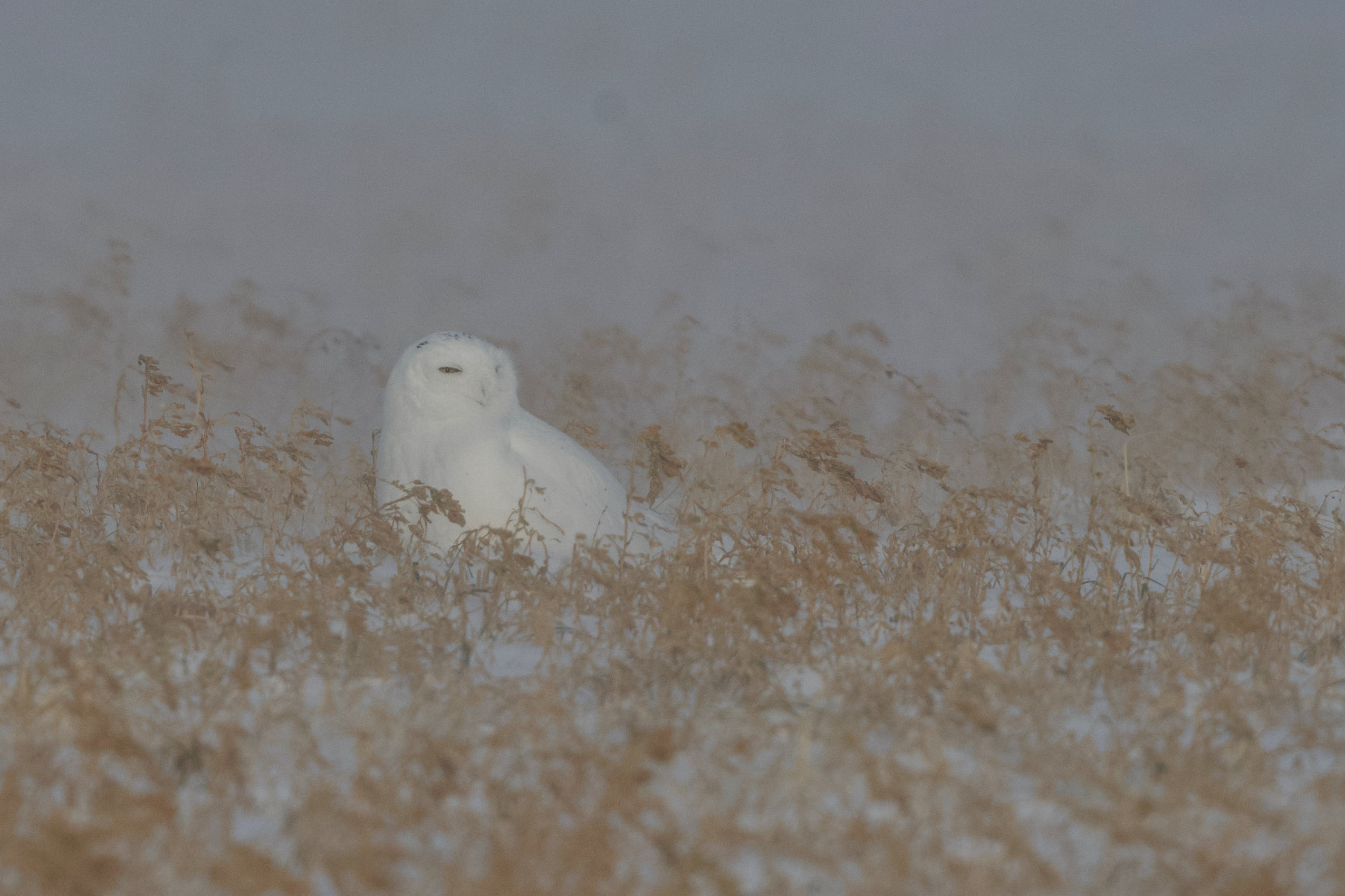
A snowy owl sits on snowy ground with brown grasses around it
During a snow squall, an adult male owl waits for the clouds to part, remaining there for more than an hour before flying to his favourite tree.

Lemmings are their main source of food in the Arctic, and breeding success is intertwined with any fluctuation in the population of these rodents. A healthy number of lemmings generally means more “snowies.” The opposite is also true. As snow cover thaws and refreezes amid warmer temperatures and rainfall, lemmings — who can forage plants and lichen through snow — are prevented from reaching their food sources by the ice. 
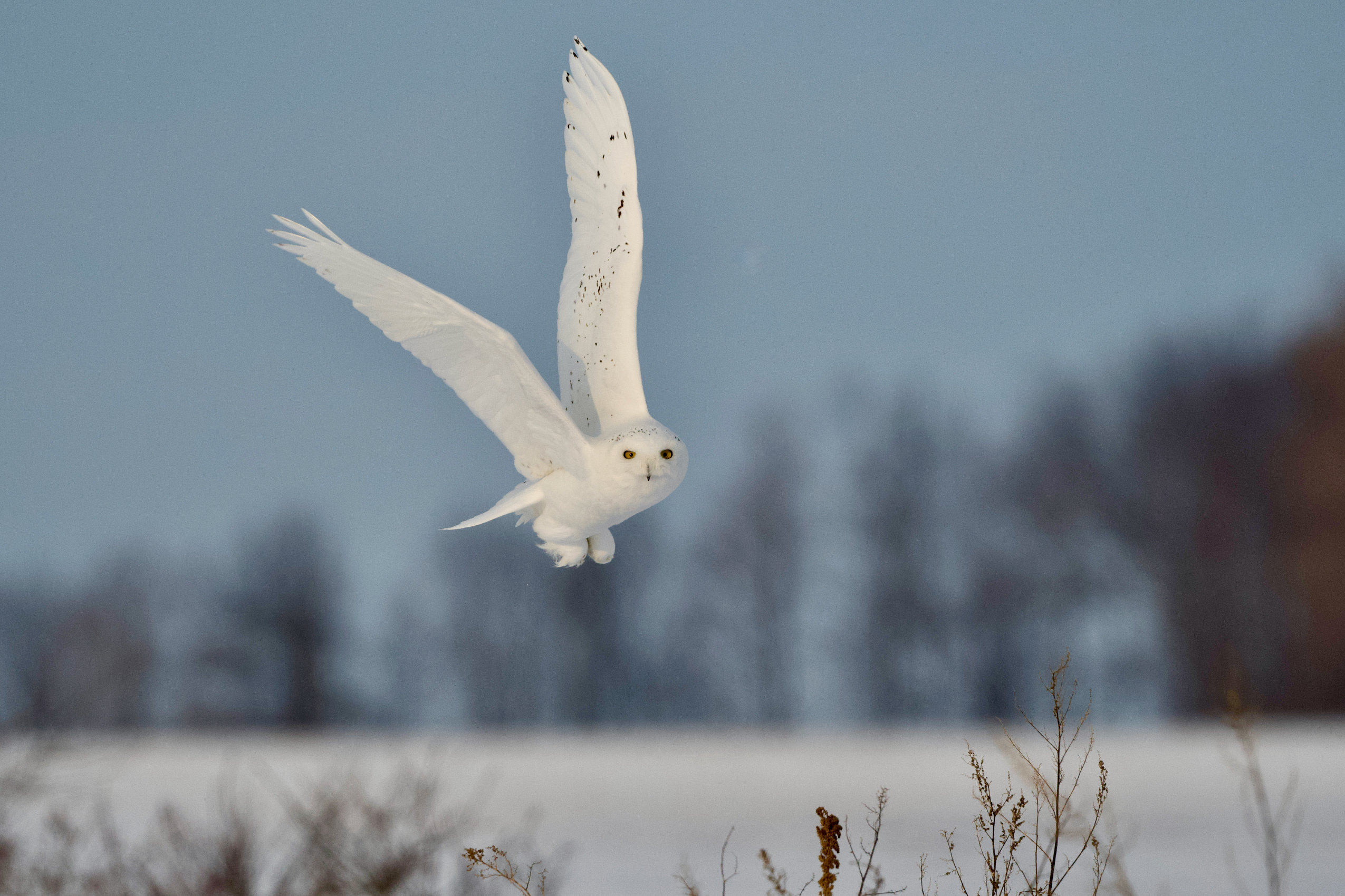
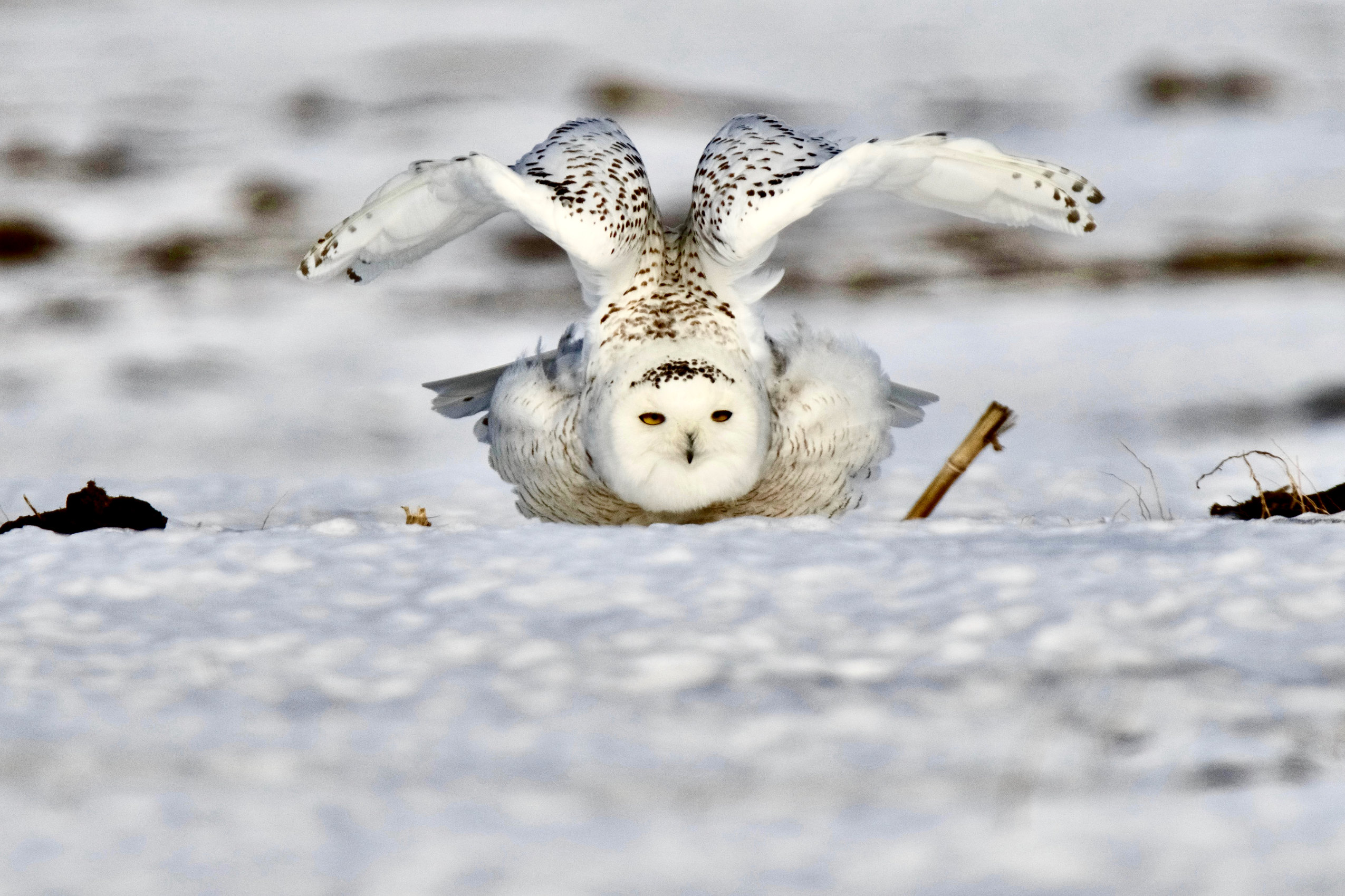
One snowy owl flies up from the ground while another flaps its wings above
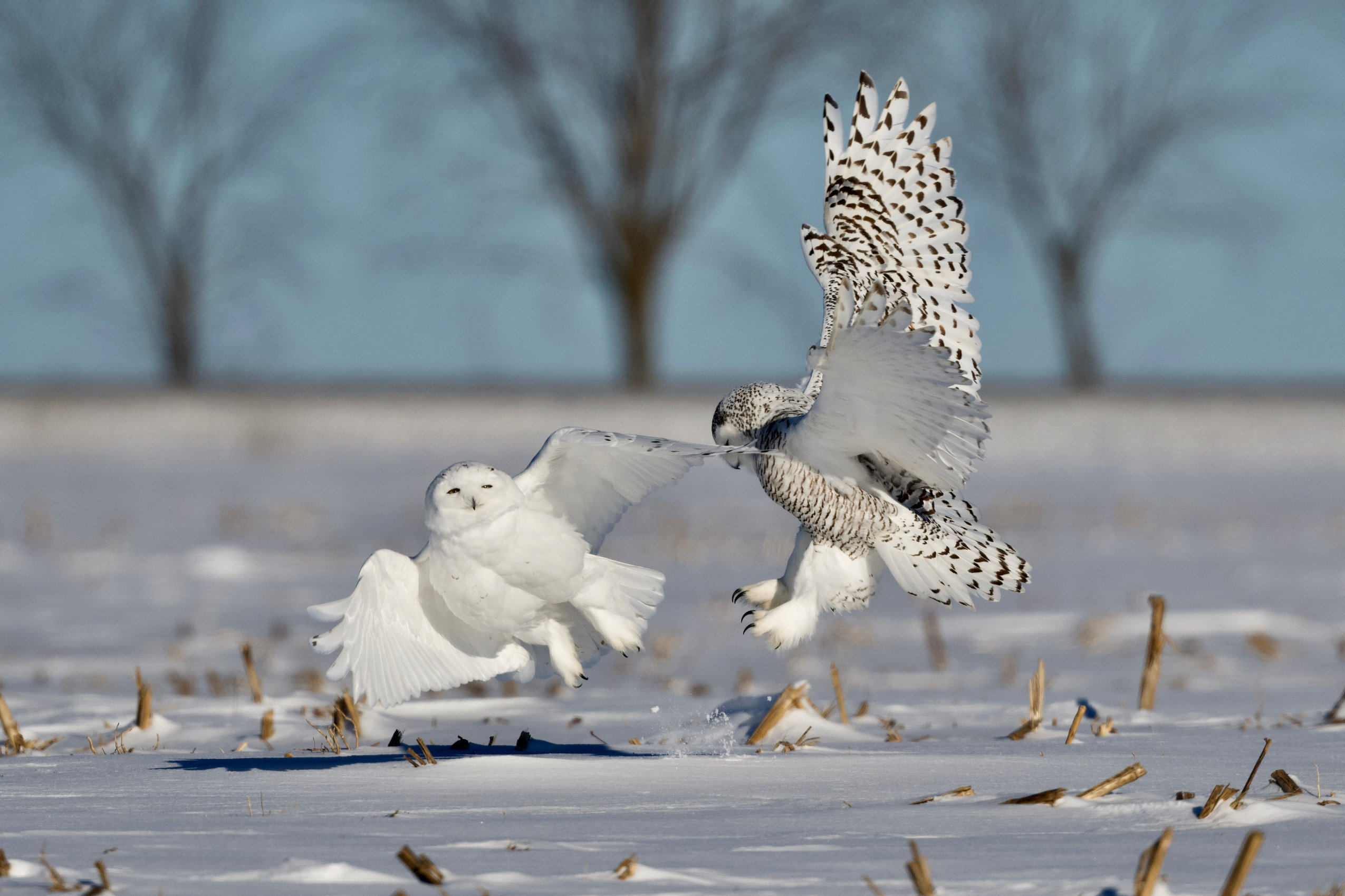
Female snowy owls are bigger than males. This is known as reverse sexual dimorphism. This adult male had been sitting on the ground for an hour when the female, which had been perched on a nearby fencepost, suddenly attacked him.

Warmer temperatures could also see the northward advance of insect borne diseases such as West Nile virus, which has been found in migrating snowy owls. Snowy owls are also gradually losing their circumpolar habitat as mining interests grow in the Canadian North and oil and gas interests take up space, such as along Alaska’s northern slope. The massive oilfield in Prudhoe Bay is 300 kilometres east of a traditional snowy owl breeding site in Utqiagvik, Alaska. And there is also the looming threat of legacy oil spills in the area, south of Utqiagvik, the town formerly known as Barrow. 
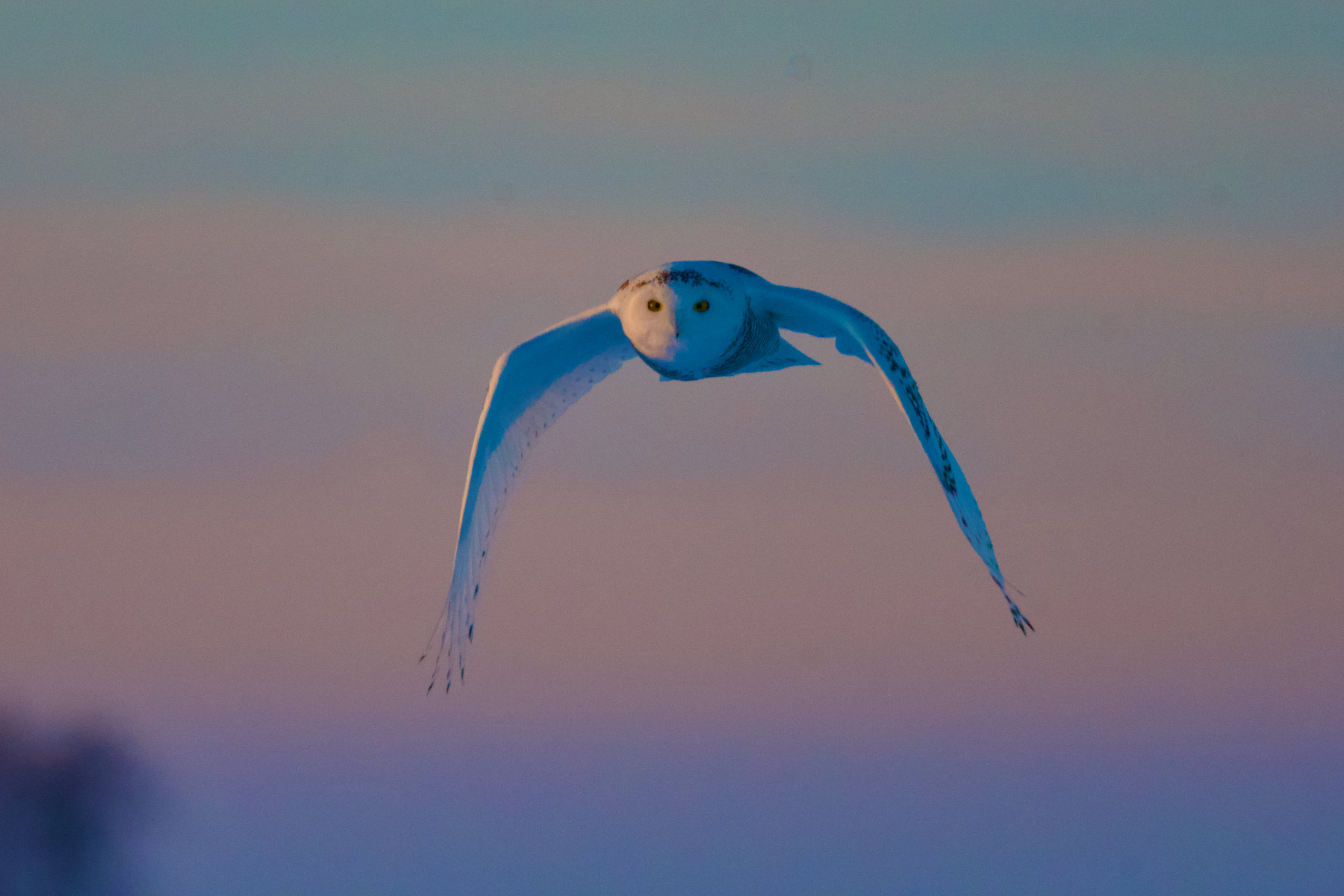
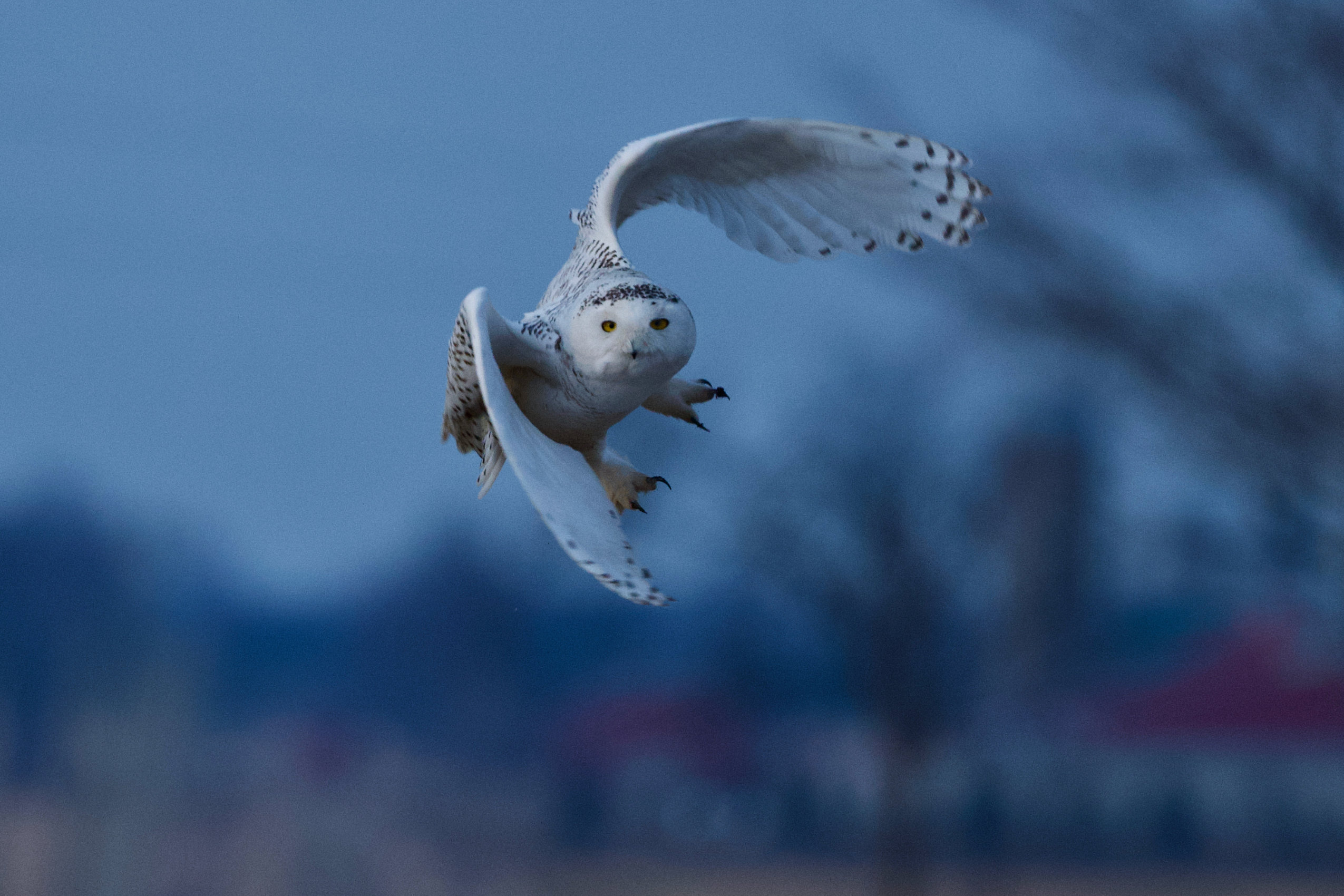
A snowy owl flies under pink and blue skies
At sundown this female snowy flew across a field towards me and landed on a nearby hydro pole. Her level of comfort with me caused me to wonder if she was my favourite from two years earlier. Some snowies will return to winter locations and her flight feathers showed clear signs of molting, meaning she was a couple of years old at least.

There has been a 30 per cent reduction in the breeding snowy owl population over three generations, according to the International Union for the Conservation of Nature. Since 2017, the International Union has classified snowy owls as vulnerable to extinction. The Committee on the Status of Endangered Wildlife in Canada reported in May that, with a population decrease of more than 40 per cent over the past two decades, snowy owls are now threatened — one step away from endangered. 

The winter still brings snowy owls south. But for how much longer?

Another year of keeping a close watch
Here at The Narwhal, we don’t use profit, awards or pageviews to measure success. The thing that matters most is real-world impact — evidence that our reporting influenced citizens to hold power to account and pushed policymakers to do better.

Our stories have been raised in legislatures across the country and cited by citizens in their petitions and letters to politicians.

In Alberta, our reporting revealed Premier Danielle Smith made false statements about the controversial renewables pause. In Manitoba, we proved that officials failed to formally inspect a leaky pipeline for years. And our investigations on a leaked recording of TC Energy executives were called “the most important Canadian political story of the year.”

We’d like to thank you for paying attention. And if you’re able to donate anything at all to help us keep doing this work in 2026 — which will bring a whole lot we can’t predict — thank you so very much.

Will you help us hold the powerful accountable in the year to come by giving what you can today?
Another year of keeping a close watch
Here at The Narwhal, we don’t use profit, awards or pageviews to measure success. The thing that matters most is real-world impact — evidence that our reporting influenced citizens to hold power to account and pushed policymakers to do better.

Our stories have been raised in legislatures across the country and cited by citizens in their petitions and letters to politicians.

In Alberta, our reporting revealed Premier Danielle Smith made false statements about the controversial renewables pause. In Manitoba, we proved that officials failed to formally inspect a leaky pipeline for years. And our investigations on a leaked recording of TC Energy executives were called “the most important Canadian political story of the year.”

We’d like to thank you for paying attention. And if you’re able to donate anything at all to help us keep doing this work in 2026 — which will bring a whole lot we can’t predict — thank you so very much.

Will you help us hold the powerful accountable in the year to come by giving what you can today?

Cartoon title: Risks of reading The Narwhal. Illustration of a woman sitting with a computer that has a Narwhal sticker on a park bench. A narwhal sitting next to her reads her computer screen over the shoulder. Text reads: "Wait — the government did WHAT?"
Will you join the 10,000 readers who give generously each year to make our investigative journalism possible? Help us gear up for more big stories in 2026 and get a charitable receipt!
Every new member between now and midnight Friday will have their contributions doubled by two generous donors.
Let’s match
Every new member between now and midnight Friday will have their contributions doubled by two generous donors.
Let’s match
Cartoon title: Risks of reading The Narwhal. Illustration of a woman sitting with a computer that has a Narwhal sticker on a park bench. A narwhal sitting next to her reads her computer screen over the shoulder. Text reads: "Wait — the government did WHAT?"
Will you join the 10,000 readers who give generously each year to make our investigative journalism possible? Help us gear up for more big stories in 2026 and get a charitable receipt!