





 9 min. read
Piping plovers have returned to Wasaga Beach, as they have done every spring for nearly 20 years. This time, their beachfront home has undergone some major changes, as a court case pressuring the federal government to ensure the plover is kept safe develops.
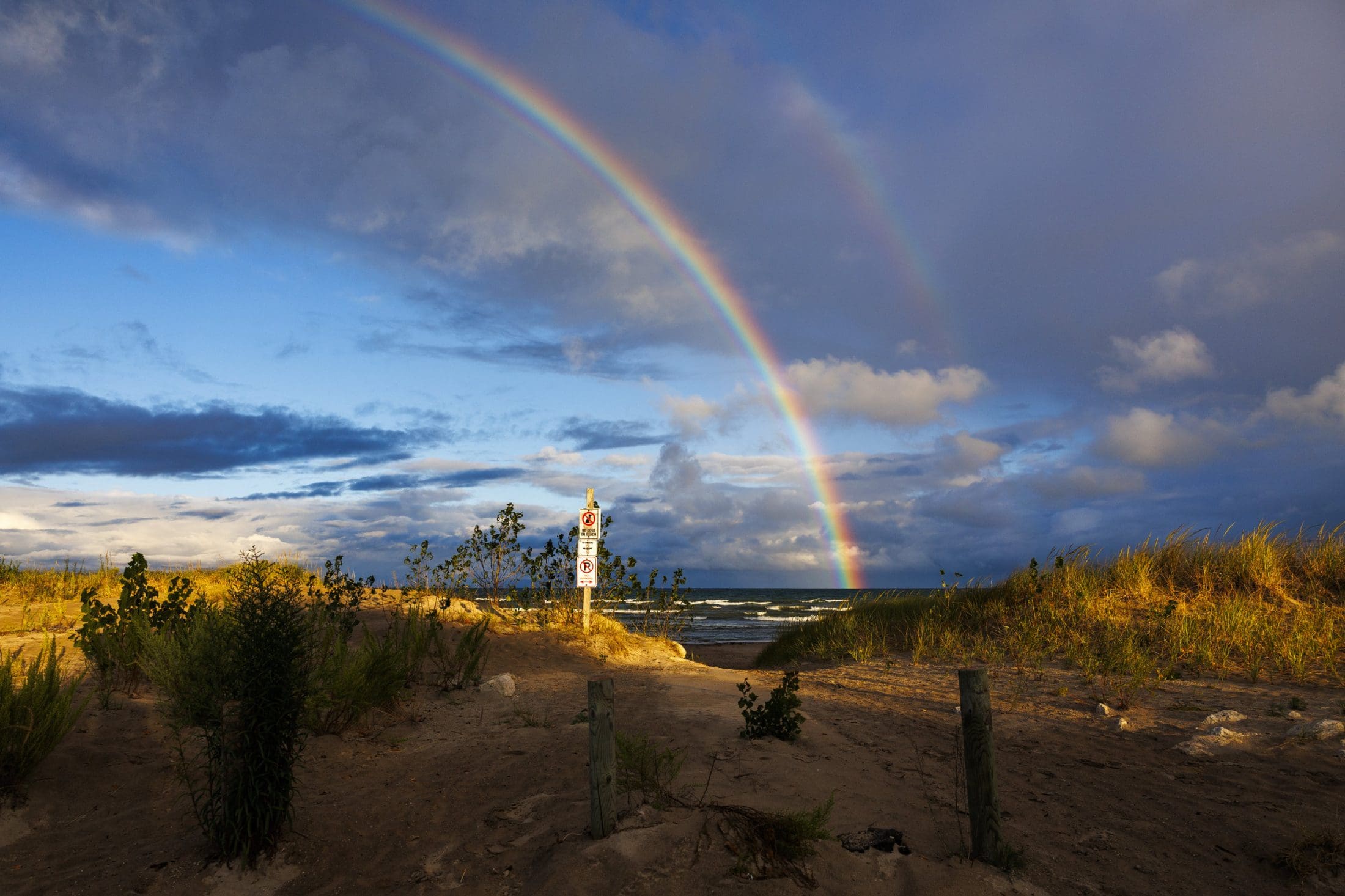
That case was filed in April by Ecojustice, on behalf of Environmental Defence and Ontario Nature. Now, Environment and Climate Change Canada says it has begun an imminent threat assessment to determine whether an emergency order is needed to protect the tiny endangered birds and the habitat they love — natural sand dunes and shrubbery make for perfect nesting ground — on the world’s longest freshwater beach.
For decades, both the Georgian Bay beach and the plover have been protected by the Ontario government through two main tools. First, the designation of Wasaga Beach as a provincial park, which meant development and disruption of the sandy shore was off-limits. Second, the plover was offered extra protection under the provincial Endangered Species Act.
Neither of those protections stand anymore.
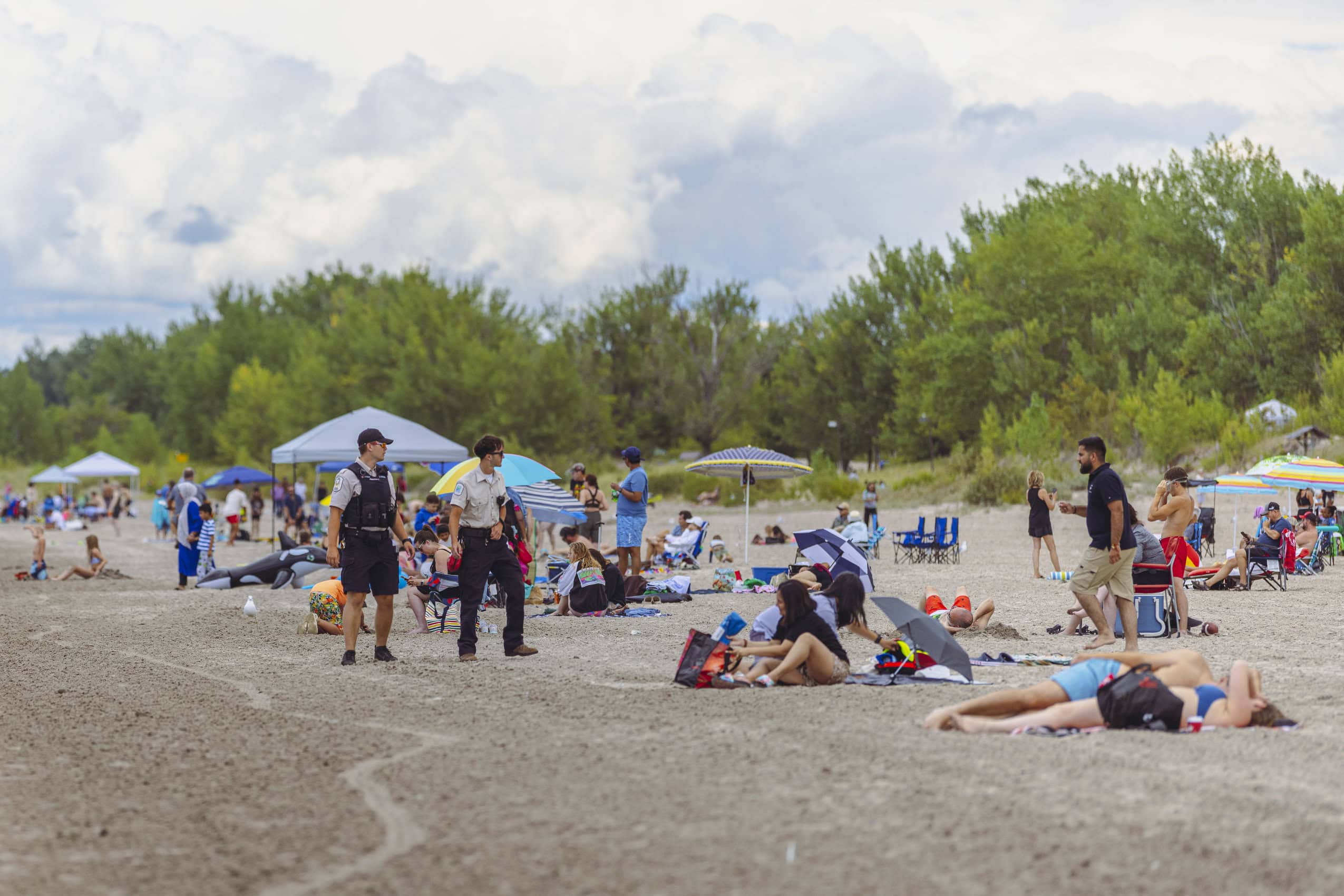
Last fall, the Doug Ford government removed a majority of the beachfront from Wasaga Beach Provincial Park and transferred it to the local municipality in an effort to boost tourism development. And in March, the government officially repealed the Endangered Species Act and replaced it with much weaker legislation that no longer recognizes the plover in its list of protected species.
The town has promised it will protect the plover after the transfer — and has begun working with Birds Canada on its habitat protection — but residents are not convinced. Two local officials agreed to speak to The Narwhal on the condition their names be kept confidential, for fear of retribution. They said on April 13, a tractor owned by the municipality was seen raking more beachfront than was previously permitted — an action that could damage habitat and destroy plover nests. Though the raking hasn’t been repeated, many are concerned the beach is unprotected. The town did not respond to The Narwhal’s request for comment by the time of publication.
As a result, environmental groups are taking the matter to federal court.
In January, Ecojustice, on behalf of Environmental Defence and Ontario Nature, petitioned the federal government for an emergency order to offer protections for the piping plover by March, before machines are usually brought in to clear the beach after winter, and the birds begin migrating back.
The federal government did not respond by that deadline. In April, the groups asked the Federal Court of Canada for a judicial review into the delay and to compel Environment Minister Julie Dabrusin to make a recommendation to cabinet to issue the emergency protection.
The groups also asked the court for an urgent, temporary order — or an injunction — to prohibit any raking or harmful development on the beach, which is federally recognized as a critical habitat.
An official from Environment and Climate Change Canada told The Narwhal the federal government is assessing whether the piping plovers face an imminent threat. “At this time, we are unable to comment further due to litigation,” Keean Nembhard, the minister’s press secretary, wrote in a May 29 email.
The ministry-led assessment is an option offered to Canada’s environment minister under a little-used provision in the federal Species At Risk Act. The minister is obliged to recommend to cabinet an emergency order if the assessment shows a species faces imminent threats to its survival or recovery. The last time the government employed this option was in February 2023 to save Canada’s last spotted owls.
In his email, Nembhard said the government “remains committed to working collaboratively across jurisdictions to advance the protection and recovery of at-risk species such as the piping plover.”
Concerned citizens received a letter dated May 7 from a regional director at the federal environment ministry informing them of the assessment, noting this assessment would be done “in a timely manner.”
Here’s what you need to know about the tiny bird and its fate in Wasaga Beach.
What are piping plovers? And why are they endangered?
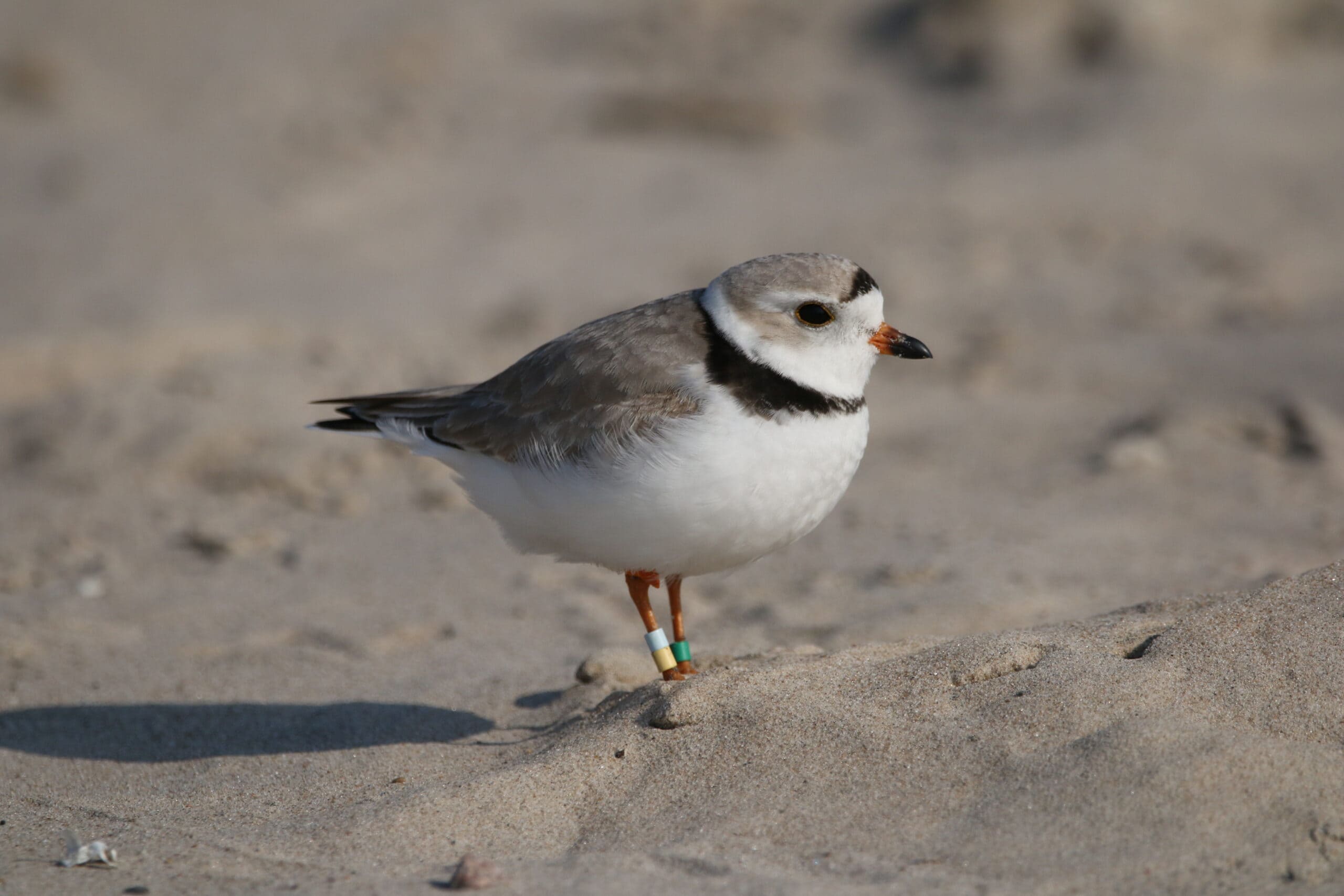
Piping plovers are sprightly shorebirds, each no bigger than a cotton ball, that can sometimes be seen bounding over Great Lakes beaches in the summertime. But seeing them isn’t easy — their sandy colour blends into their surroundings and they’ve become extremely rare in Ontario due to human encroachment.
“The main threat to the piping plover is human disturbance,” according to the Government of Ontario, “since the sandy beaches where plovers live are also popular for human recreation which can destroy nests.”
Plovers generally spend winters in the United States and Mexico, but return to more northern climates to nest for the summer.
For a long time, the Great Lakes were a prime destination for would-be plover parents. It’s been estimated that the region was once home to up to 800 breeding pairs. But the Great Lakes plover population cratered in the 1960s and ’70s, and the bird was considered extinct in Ontario by 1986.
But in recent decades, plovers have been staging a tentative comeback in the Great Lakes. A breeding pair returned to Sauble Beach (now Saugeen Beach) in 2007, sparking hope and enthusiasm among bird watchers and conservationists in the area. The birds have been spotted in the region annually since then.
But plovers’ hold is anything but secure. Some years pass with only a handful of breeding pairs observed, and other years come and go with no fledglings reaching maturity.
Why is Wasaga Beach important to plovers? And what do they like about it?
“Wasaga Beach is the most important and most productive nesting site for piping plovers in our province.”
That’s what Sydney Shepherd, the Ontario piping plover coordinator for Birds Canada, told The Narwhal last summer. The beach has been home to 59 nests and 87 fledglings since the birds returned about two decades ago, according to Birds Canada, a national conservation group.
While plovers have been observed on other beaches in the Great Lakes region, none are anywhere near as popular with plovers as Wasaga Beach. The plovers that have been born on Wasaga Beach make up nearly 50 per cent of all fledglings in Ontario, and many of them have gone on to establish their own nests elsewhere in the region.
Plovers tend to value Wasaga Beach for different reasons than human beachgoers. While tourists might prefer a well-groomed beach for lounging, plovers require naturalized shorelines: shrubbery and sand dunes offer cover from predators. That means of all the 14 kilometres of beachfront at Wasaga, only a small fraction near the northeastern tip of the park is suitable plover habitat.
What’s happening at Wasaga Beach?
The fortunes of the Town of Wasaga Beach have long been tied to the sandy shoreline that gives the town its name. Tourism to the area is the main economic driver, drawing more than 1.6 million visitors a year according to the municipality’s website.
But while tourism brings opportunity to the residents of Wasaga Beach, it also puts pressure on plover habitat. Until recently, that tension was managed by staff at Wasaga Beach Provincial Park, who were mandated to preserve and protect the sand dunes and other beach areas that plovers frequent.
The vast majority of the beachfront had long been within the boundaries of Wasaga Beach Provincial Park, and some in the town believed the park hindered efforts to spruce it up and develop new amenities and attractions to boost tourism revenue.
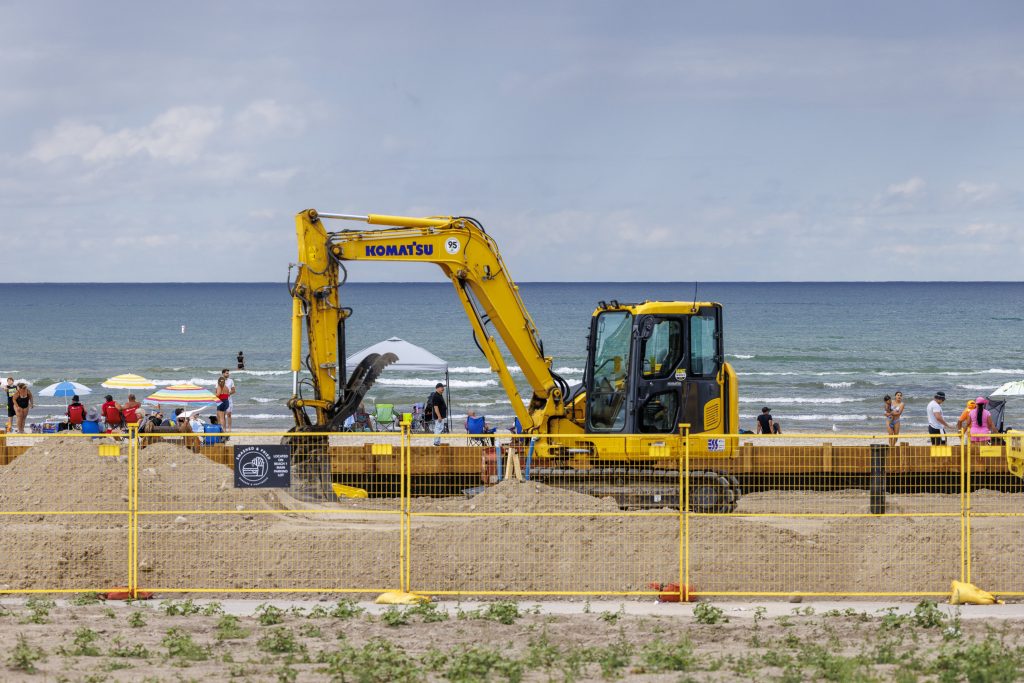
The Doug Ford government heard those concerns and acted on them. Ontario would sever more than half of the beachfront from the park and hand it over to the town to manage, Ford announced in 2025. Earlier this year, the province confirmed its intention to move forward with that plan, despite 98 per cent of formal citizen feedback on the plan being negative.
The Narwhal confirmed that transfer has now happened.
All of the suitable plover habitat on Wasaga Beach is within the land set to be removed from the provincial park, meaning the habitat will no longer be protected by a provincial park designation.
The town, for its part, says it’s committed to protecting piping plovers. But it has yet to release its full redevelopment plans, and that leaves conservationists worried that the beach’s plover habitat is threatened.
Shepherd told The Narwhal this week that Birds Canada is in the process of formalizing their role with the Town of Wasaga Beach. The group is “seeking a committed partnership” to support the long-term protection and recovery of piping plovers that would enable them to monitor and protect the nests and the birds, and also increase education and awareness of the species.
“So far, we have collaborated for one training session for [town] staff to begin to introduce what piping plover conservation entails,” she said in an email.
Are piping plovers otherwise protected?
The removal of provincial park designation from plover habitat on Wasaga Beach comes on the heels of other policy changes that weaken species protection in Ontario.
In 2025, Ontario repealed its Endangered Species Act and replaced it with new legislation called the Species Conservation Act, a weaker set of rules that drops some key protections.
One difference between the two acts is the newer one adopts a more narrow definition of “habitat” than the former act. When it comes to legal protections for the habitats of endangered species, the new legislation’s scope is limited to the specific area an animal nests or dens in, rather than the larger area it uses to travel or find food.
But even that limited protection doesn’t stand for piping plovers, which have been removed from Ontario’s list of protected species. With the loss of provincial park status, the plover habitat has been stripped of another protection that could have restricted the beach grooming activities that render Wasaga Beach unsuitable for plovers — and appear to have already begun.
That’s why environmental groups are now turning to the federal government to fill the gap. Nationally, there is a species-at-risk law that can be invoked for the protection of an endangered species and the broader habitat it needs to survive. The question is whether the federal government will use it to save the piping plover’s favourite Ontario beach.
Updated on May 29, 2026 at 2:52 p.m. ET: this story has been updated with new information about the federal government’s imminent threat assessment and to note the plovers’ most recent arrival at Wasaga Beach.
Updated on April 22, 2026, at 2:55 p.m. ET: this story has been corrected to note that piping plovers have been removed from the Government of Ontario’s list of protected species, meaning even the individual and its nest are not provincially protected.