




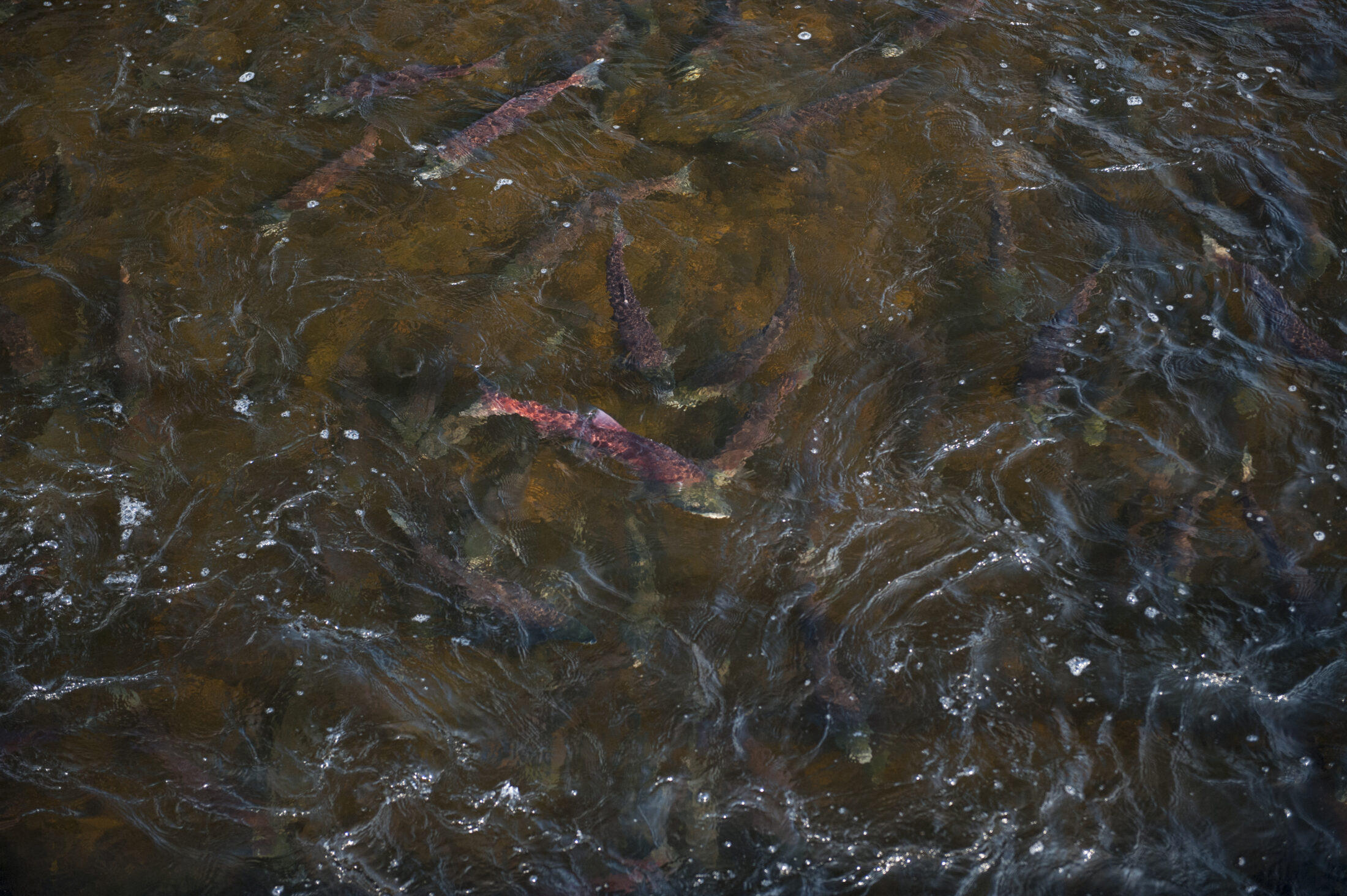


 13 min. read
Summary
- Alaska-caught salmon are more likely to be found in B.C. grocery stores than salmon caught in-province, partly because the Alaskan fishery is so much bigger than B.C.’s.
- Alaskan fisheries have also been more successful at obtaining certification as sustainable operations, even though some experts claim Alaskan fisheries are depleting salmon populations.
- Indigenous fisheries in B.C., such as the one owned and operated by Lake Babine Nation, prioritize sustainable harvests, and their products can still be purchased — though maybe with a little extra effort.
We’re trying out staff-written summaries. Did you find this useful?
Walk into a grocery store in British Columbia and you’ll likely see bright red sockeye salmon for sale, one of the province’s most iconic foods. You might assume the sockeye was caught fresh in B.C. — but it’s far more likely the fish was caught by Alaskan fisheries, and frozen before it reached this store.
Buying Canadian products is a top priority for many people, especially in the face of U.S. tariffs and annexation threats. Some Canadian conservation groups argue Alaska fisheries are unsustainable. So why is salmon from Alaska so much more common?
A major challenge is volume: Alaska caught 194.8 million salmon in 2025 and 103.5 million in 2024. Some of those salmon would have spawned in B.C., Washington and Oregon — though it’s hard to say exactly how many of those would have returned to B.C. specifically. The catch includes all five species of wild Pacific salmon: sockeye, coho, Chinook, chum and pink.
Meanwhile, B.C. caught 2.9 million salmon in 2025 and 2.4 million in 2024.
Those are just commercially caught and retained salmon. Critics are concerned about how many fish are caught in commercial bycatch — those unintentionally caught while targeting other species. Recreational fisheries have an impact, too; catch-and-release can kill significant numbers of fish.
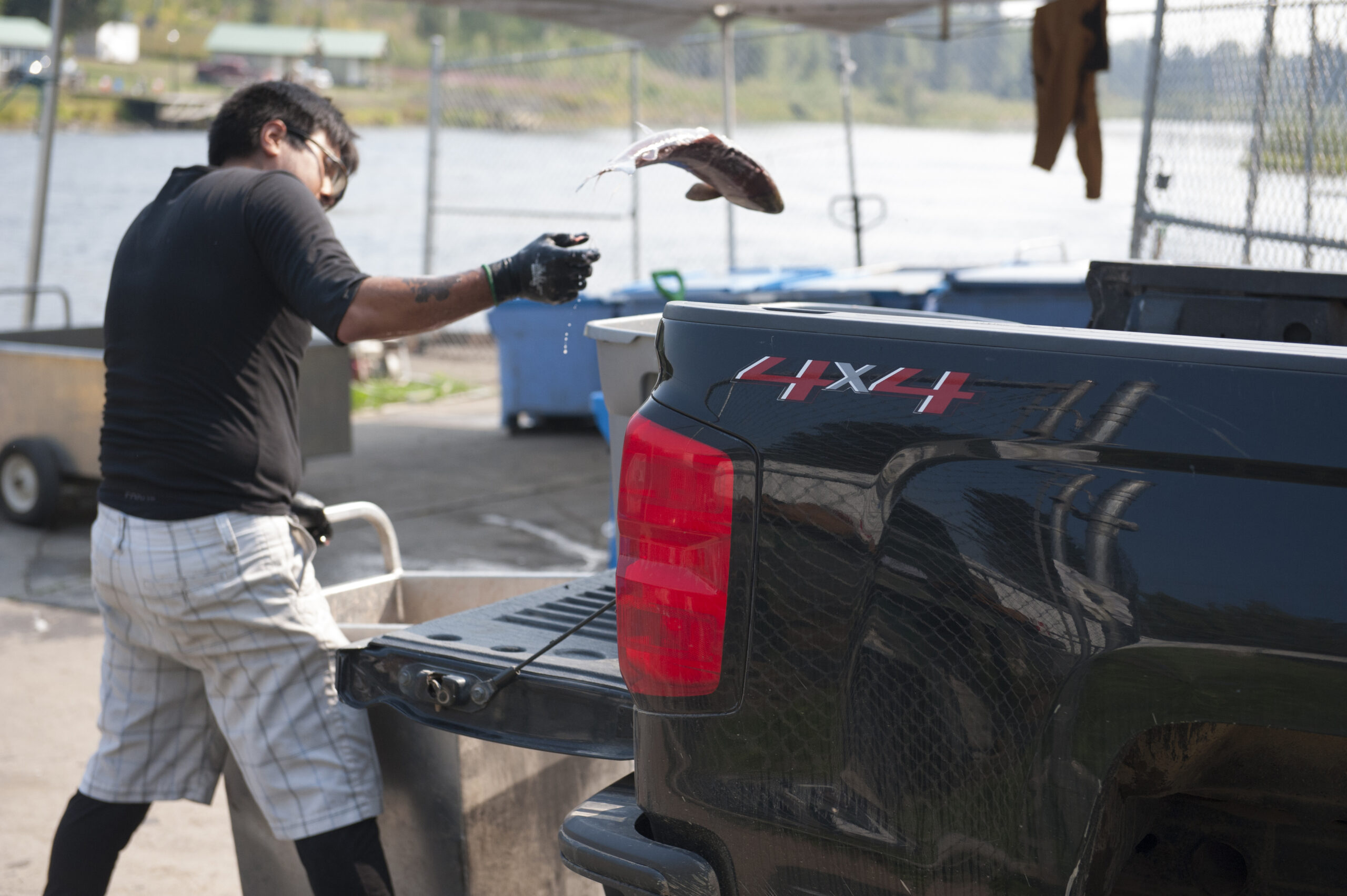
Alaska’s salmon fisheries also have something B.C. salmon fisheries don’t: a globally recognized certification that tells stores and consumers its fish are caught sustainably. The Marine Stewardship Council certification faces some criticisms from conservation groups, but having it helps get fish on shelves and into shopping baskets.
So, why don’t B.C. salmon fisheries have it? How do we find B.C. salmon in stores, and how could there be more of it? What’s the most sustainable? Read on.
Why does Alaska have a leg-up on B.C. in selling salmon?
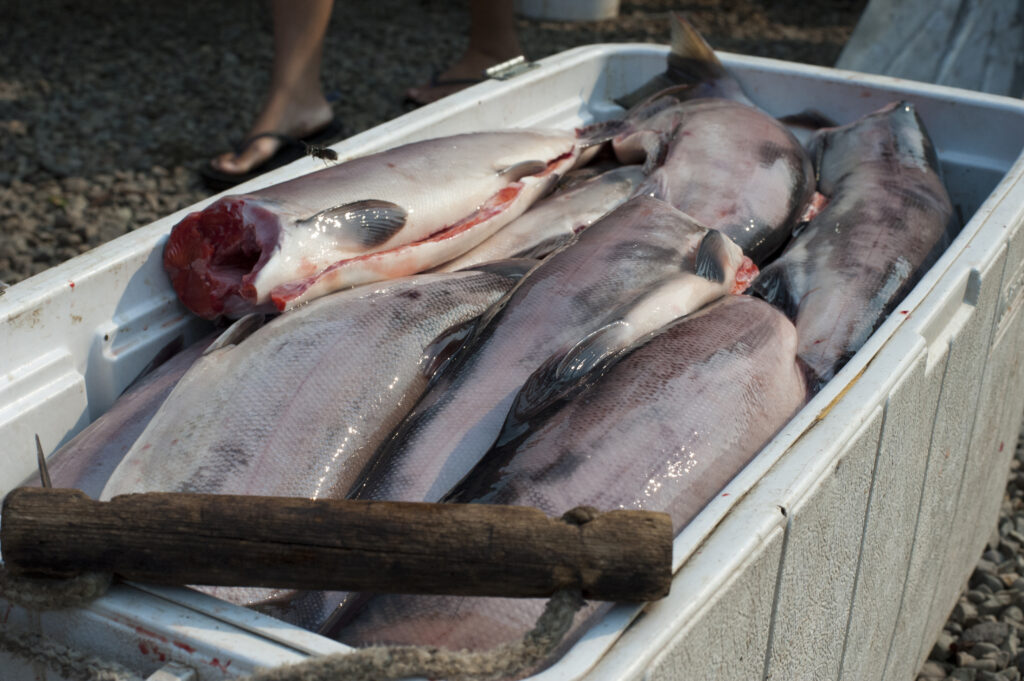
Alaska catches more salmon, which means it can sell them for less. Smaller fisheries pay more to process and ship fish to the store. The sheer volume also means frozen Alaska-caught salmon is available all year.
Big grocery stores “don’t necessarily care about the story,” Brittany Matthews, chief executive officer of Talok Fisheries in central B.C., says. “Price is going to win every time.” And Talok, owned and operated by Lake Babine Nation, can’t compete on price alone. “That’s what we’re fighting with, to add that care, to add that story, to add the power of an Indigenous product on the shelves and make people think about it versus just grabbing the Alaska fillet,” Matthews says.
And Alaska’s Marine Stewardship Council certification can act as a golden ticket, selling the message to stores and consumers that the fish is sustainably caught. “Major retailers, almost bar none, want [that] certification,” Greg Taylor, fisheries advisor to Talok, explains.
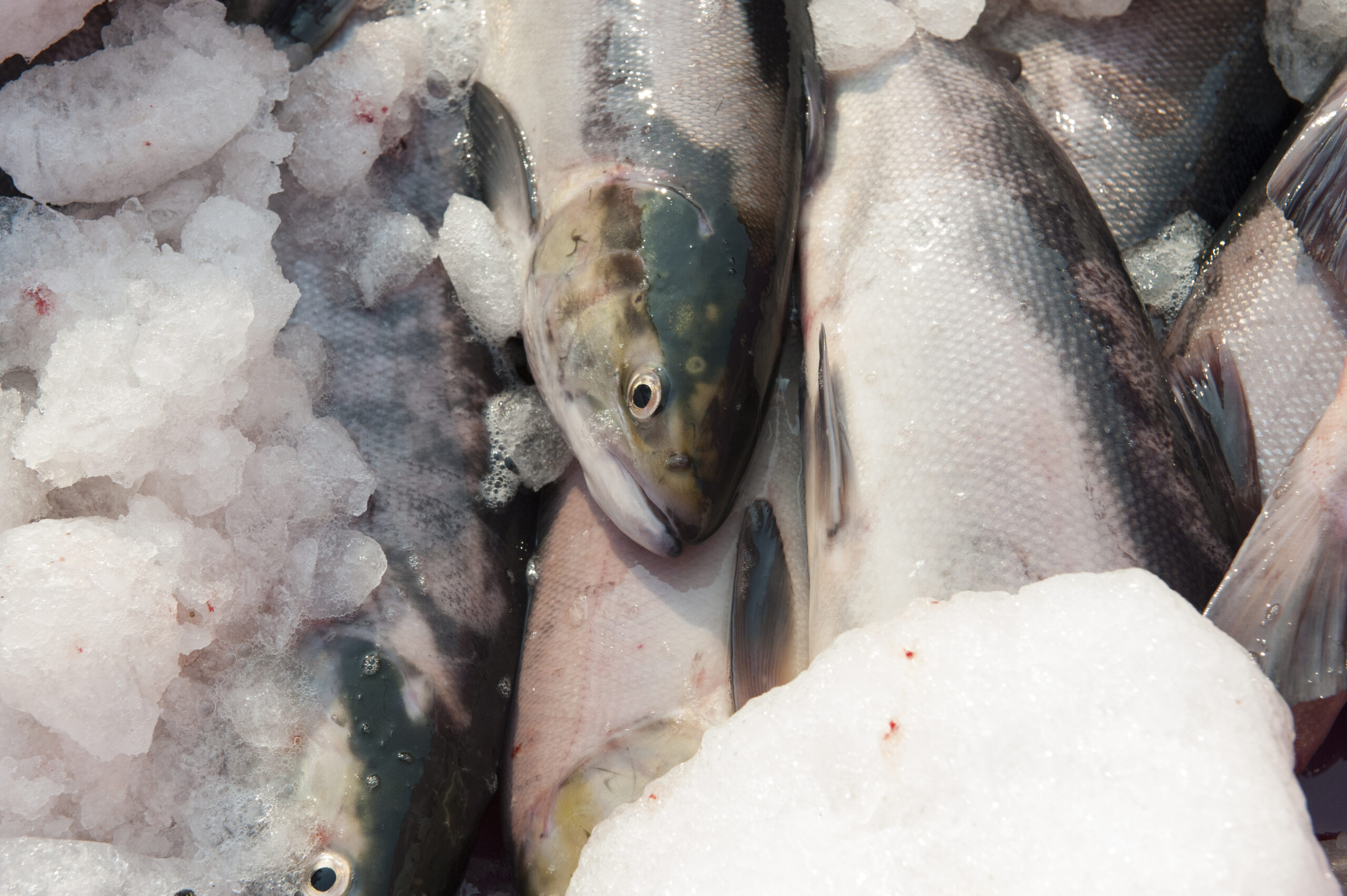
The Marine Stewardship Council says, globally, fisheries responsible for 19 per cent of the world’s total marine catch have its certification. Getting it requires fisheries to go through a rigorous auditing process.
Due to climate change, forestry and overfishing, B.C. salmon fisheries “no longer produce the volumes to satisfy the Canadian market,” Taylor says.
The fact no B.C. salmon fisheries are certified “says a lot about how poorly our fisheries are managed,” Taylor argues.
Conservation groups have pointed out flaws in the Marine Stewardship Council certification program.
Smaller B.C. fisheries may choose not to take on the task and additional costs of meeting stringent reporting requirements — meaning they are less likely to be stocked in stores.
In 2019, the Canadian Pacific Sustainable Fisheries Society pulled the B.C. fisheries it represented out of the program, since it was likely to fail an upcoming audit, largely because of a lack of good data on the health and abundance of salmon.
Separately, conservation groups have argues the Marine Stewardship Council sometimes certifies unsustainable fisheries. In 2024, a group of Canadian conservation groups formally objected to Alaska salmon fisheries being recertified, but were unsuccessful. They argue that while Canada has been cutting down allowable salmon catch, Alaska is catching too many.
“Alaska’s indiscriminate harvest is preventing the recovery of vulnerable Chinook, chum, sockeye, coho and steelhead that are headed for Canada,” Aaron Hill, executive director of Watershed Watch Salmon Society, said in a statement about the objection.
Misty MacDuffee, biologist and wild salmon program director with Raincoast Conservation Foundation, argues the Alaskan Chinook fishery “deprives endangered southern resident killer whales of their primary food source.”
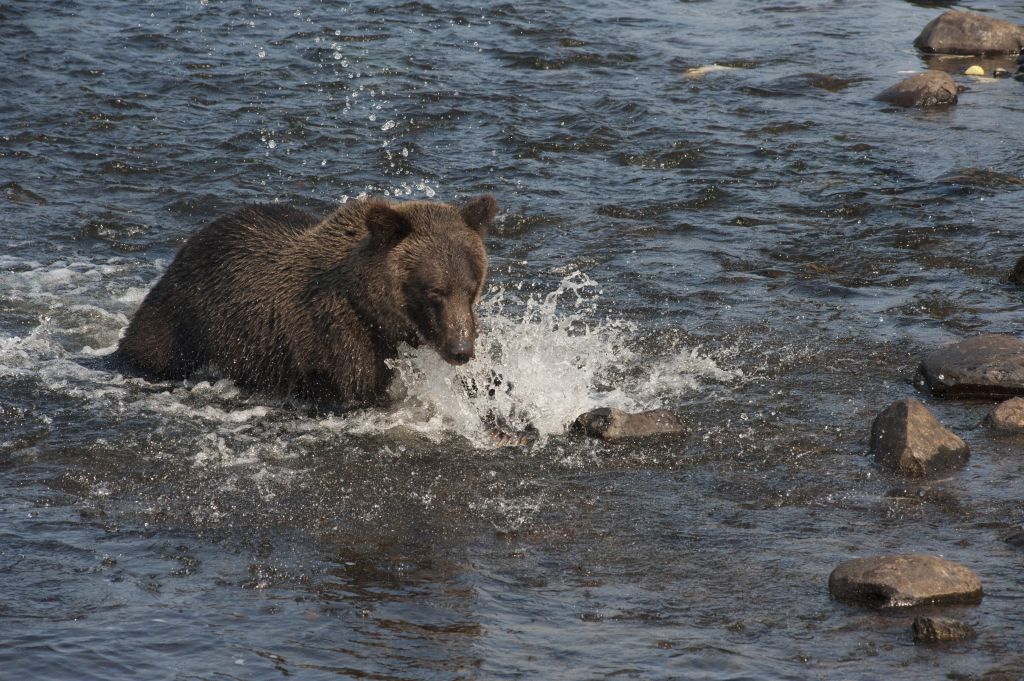
Broadly, salmon are struggling. Lake Babine Nation paused its Ts’etzli food fishery in 2024 due to salmon struggling in shallow, warm water of the Babine River. “They’ve had a food fishery there for 8,000 years, and they stopped it two years ago because of climate change,” Taylor says.
Concerns about the Marine Stewardship Council’s certifications go beyond salmon: in March, the Antarctic and Southern Ocean Coalition objected to the Marine Stewardship Council’s decision to recertify the Antarctic krill fishery.
The council’s Canada program director, Kurtis Hayne, says certifications are led by independent experts and include stakeholder input and peer review. The council itself does not lead assessments. Certification requirements include effective management and responsiveness to environmental conditions.
“We are confident in the credibility and outcomes of [our] assessment process,” he said in an emailed statement.
Where do these sustainability concerns about commercial practices come from in the first place?
In the open ocean, most commercial salmon is caught using purse seines and gillnets, which can scoop up non-targeted species, including from endangered stocks. Marine fisheries often catch salmon when they are still far away from their spawning grounds, and in B.C., operate on Canada’s best projections of what returns may be — but in reality, returns can be lower or higher than expected. If they’re lower, there’s no way to un-catch those fish.
Salmon have lost habitat due to development and are impacted by flooding, drought and warming water temperatures. Meanwhile, federal monitoring has declined, leaving spotty data for many populations.
Scientists and conservationists see the value in what First Nations have done for millennia: selectively fishing close to spawning grounds, a sustainable management practice called a terminal fishery. These in-river fisheries enable close monitoring of how many have returned to spawn.
Talok Fisheries, where Matthews is chief executive officer and Taylor is an advisor, is a terminal fishery that is preparing to apply for Marine Stewardship Council certification with support from Fisheries and Oceans Canada, Matthews says.
“Indigenous-produced, sustainably harvested, selectively caught — they hit all the buttons to what a sustainable fishery should be,” Taylor says.
The council told The Narwhal the Quinsam River pink salmon in-river fishery has nearly finished its assessment to be certified as well.
So how can a B.C. fishery compete with Alaska?
Talok salmon is stocked at Costco, Sobeys and Thrifty Foods, thanks to its partnerships with distributors North Delta Seafoods and Premium Brands. It also sells fish through Authentic Indigenous Seafood, a collective that shares processing and shipment costs across Indigenous fisheries. These partnerships have been essential and gave Talok the chance to explain its selective practices, Taylor says.
Otherwise, “for small producers to get into Loblaws or Sobeys is next to impossible,” he says, because the fees are too high and it’s hard to compete with bigger fisheries that can beat them on pricing.
Talok is one of the biggest commercial sockeye operations in B.C., but it still relies on just a couple boats and a beach seine net hauled by the nation’s members who remove fish by hand traditionally. That means a smaller carbon footprint than a fleet of fishing vessels on the ocean, Taylor argues.
During roughly the first two weeks of the season, Talok sees the brightest red salmon. They “have beautiful meat colour early on in our lake harvest,” Matthews says. When processed for the store, they don’t have the “shiny silver skin” buyers love. Alaska “floods the market” with silver-skinned, whole fillets, and has ample fish caught early “before any other B.C. inland fisheries have the opportunity,” she explains. Top that with the price, grocery stores are “going to take the Alaska fish — hand over fish,” she says.
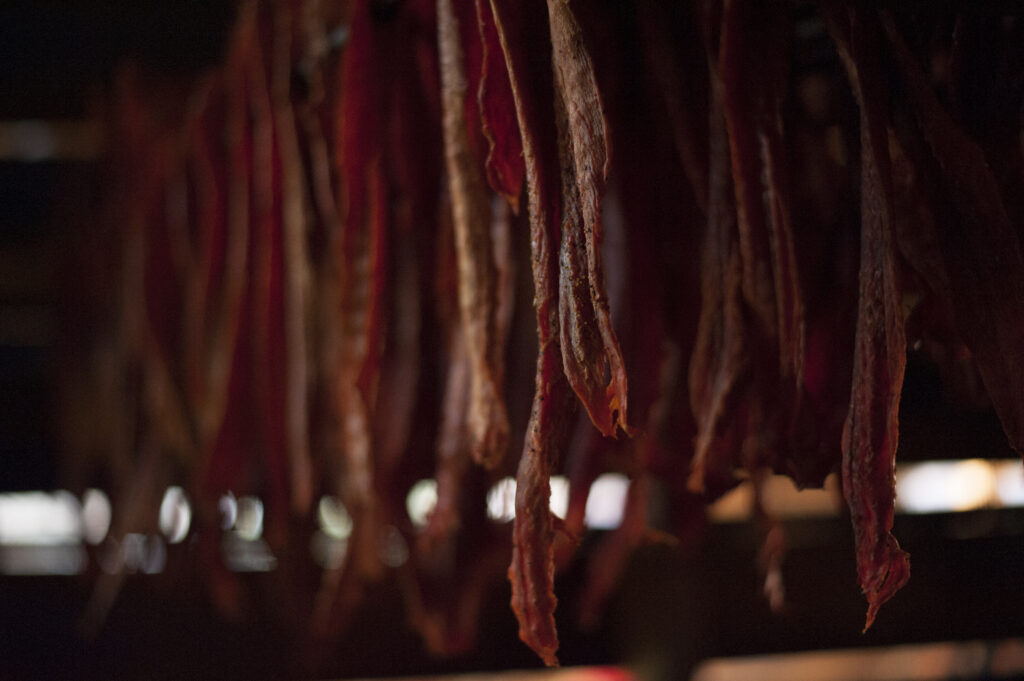
After two weeks at Talok, the fish gets paler. Matthews explains those pale fish are harder to sell to grocery stores but are great for smoking.
The paler fish are sold internationally to be processed into food like fish flakes. The roe from these fish is also good quality, but there’s a limited market for it in B.C., Taylor says.
Alaska’s Bristol Bay sockeye fishery, which is Alaska-origin, is the world’s largest sockeye run. “Even in weaker years, Alaska still dwarfs B.C.’s total output,” Matthews says, and that “sets the tone for pricing, market expectations and buyer relationships.”
Meanwhile, B.C. has smaller, more variable runs, “chronic” conservation issues and time restrictions. “Markets hate inconsistency — Alaska offers the opposite,” she says.
Talok targets enhanced stocks, which are boosted through hatchery programs, not sensitive wild stocks. Those enhanced stocks return to specific spawning channels.
“If you reduce harvest rates on the coast, all those surplus fish end up at the spawning channels,” Taylor says. This means Talok can target different stocks appropriately, which is good for populations, and also efficient: “like shooting fish in a barrel.”
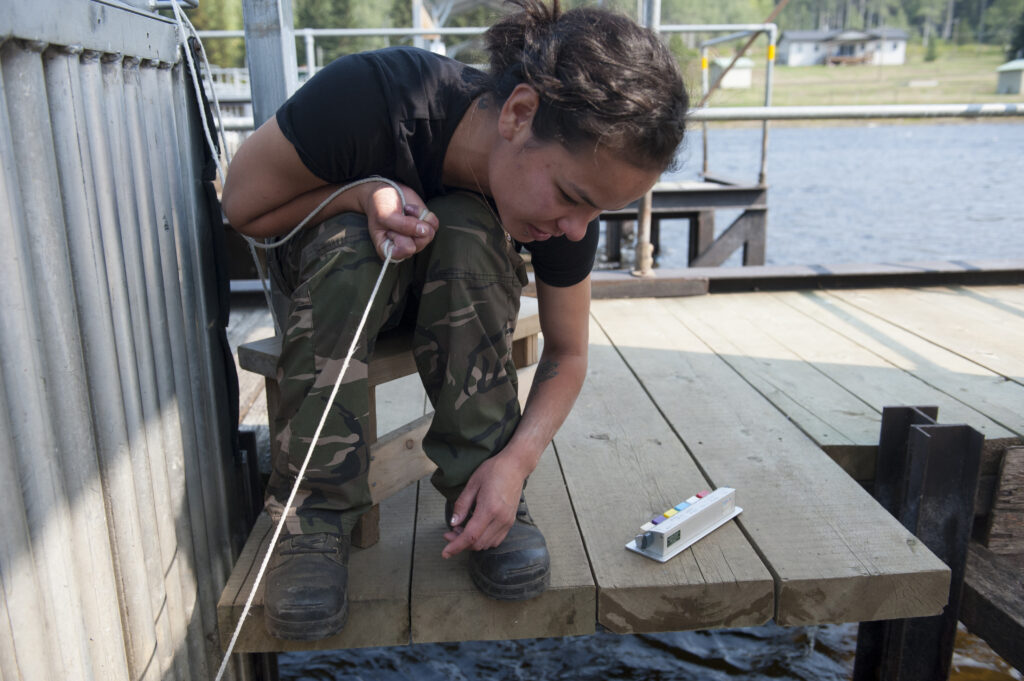
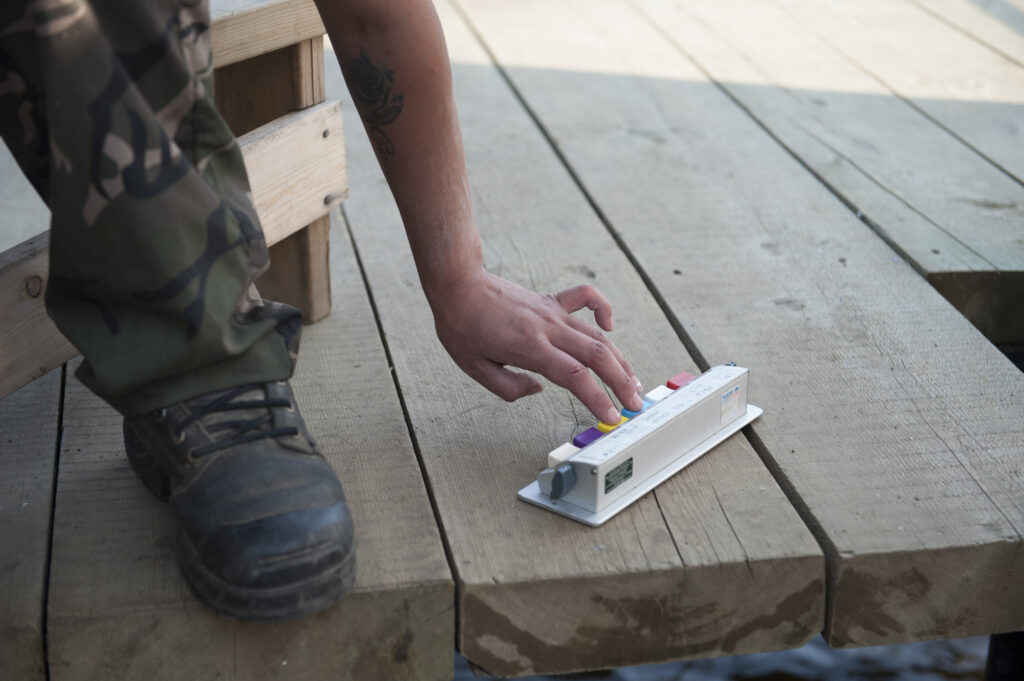
People count the fish passing the Babine fish fence. Once a million fish pass the fence, they get the green light to fish commercially. It’s prep, wait, then “fish like crazy” in the roughly four weeks they have, Matthews says. Last year they caught 191,872 salmon, according to Taylor.
“We will never fish until we know we have a healthy number to sustain the channels,” Matthews explains. Fisheries and Oceans Canada allows a specific number of these enhanced salmon to enter the spawning channels to maximize productivity in the habitat, and then closes a gate to the channel. Talok harvests fish still heading to that channel, which would have died with their spawn in them if they weren’t harvested. Matthews says the fishery leaves enough for the eagles, the bears and the river system while preventing too many from going to waste.
There’s some debate around spawning channels, since surplus stranded fish can affect productivity of the surrounding habitat. Taylor believes they ultimately should be removed, but it’s best to catch the surplus fish while they’re there. If removed, resources in those spawning channels, like flow control, could be directed to recovering wild streams instead, and Talok could catch a smaller yield.
So why do Alaska fisheries have this designation if B.C. fisheries have found it hard?
First is the capacity to meet monitoring and auditing requirements. Then comes the contention over whether the designation is applied fairly. Alaska and B.C. have interception fisheries, meaning they catch fish in the ocean before they reach their home waters in another country, not in their own jurisdiction.
Alaska’s constitution requires fish to be maintained on a “sustained yield principle” in its own state, basically meaning “don’t deplete it.” But it allows a fishery to intercept fish returning to Canadian rivers where salmon stocks are experiencing depletion.
“It’s frustrating to see them wipe out the stocks that we have — and then also in the grocery store chain market, to compete against the Alaska fisheries is tough,” Matthews says.
Taylor says “it’s appalling” for Alaska to apply a different standard to B.C. fish and the Marine Stewardship Council “is letting them get away with it.”
Though Taylor objects to this discrepancy he sees, he compliments Alaska for setting escapement goals for its own salmon stocks (meaning how many adults “escape” being caught and return to spawn). Most B.C. salmon stocks don’t have escapement goals.
“You have to give Alaska credit for managing their own fishery. They do a much better job than Canada does — except when it comes to fishing our populations that are passing through their waters,” he says.
What does Alaska say?
Forrest Bowers, the Alaska Department of Fish & Game’s director of the division of commercial fisheries, says Alaska sells more fish partly because it has more salmon generally, and the vast majority of salmon caught spawn in Alaska. He agreed the Marine Stewardship Council certification helps get Alaska’s fish sold worldwide. He also points to the state’s escapement goals — the same ones Taylor commends — which prioritize sustaining populations into the future “over all other uses of salmon, including harvests.”
Bowers adds that Canada transferred allocation from commercial to recreational fisheries. In some parts of B.C., the recreational fishery catches more than the commercial.
In an emailed statement, Bowers said the cross-boundary fisheries are managed under the Pacific Salmon Treaty, and “a minute amount” of Alaska’s harvest would spawn outside the state. He says Alaska carefully monitors catches of Canadian-origin salmon to meet treaty requirements, “often forgoing harvest opportunity on our own stocks.”
Alaska’s commercial sector is made up of marine fisheries, though they can still be close to a river’s mouth. Pink and chum are its biggest catches. Bowers says in-river fisheries are not viable for Alaska because salmon spawn in thousands of waterways that aren’t connected by roads and would require airplane access.
“Attempting to harvest millions of pink and chum salmon in-river is not only impractical, but it would also lead to lower quality food products since pink and chum salmon sexually mature quickly in fresh water,” he says. He adds commercial operations in-river could lead to conflict with recreational and subsistence fisheries.
How many Canada-origin fish is Alaska actually taking?
Taylor says the reality is “no one knows what that number is.” It takes several years to finalize annual estimates, and even then, specific numbers are difficult to obtain because they would require extensive genetic testing to be completely sure, he explains. Alaska gave The Narwhal a preliminary catch estimate of 260,000 B.C. salmon in 2025 (excluding some fisheries managed separately under the treaty) but said it doesn’t typically generate those estimates. Other observers think it could be much higher.
The Pacific Salmon Commission, which implements the treaty, told The Narwhal “there are no straightforward answers” in tallying a cumulative number of how many fish each nation intercepts from the other. Estimates of each salmon run are made separately because they “come with important caveats that make summing them together across fisheries and species problematic.”
What does Canada’s fisheries department say?
Fisheries and Oceans Canada (commonly called DFO) was not able to arrange an interview, despite repeated requests made several weeks in advance of publication. In a statement the department said it’s up to fisheries to apply for the Marine Stewardship Council certificate, but it supports applicants by providing data on stocks and compliance and explaining conservation measures.
The department says that while no B.C. salmon fisheries currently have the designation, B.C.’s groundfish trawl fishery has the certification for 16 groundfish species and the offshore hake and halibut fisheries are certified as well.
While the certification affects grocery store decisions, Fisheries and Oceans Canada says it “does not alter [the department’s] regulatory authority or consultation obligations.”
I want to support B.C.-caught salmon — what can I do?
Smaller, locally-owned shops may be more likely to carry B.C. salmon, and you can search and ask around for what B.C. fish is carried by bigger stores. You can find local fisheries in your area and see how you can support in-river operations. Fisheries and Oceans Canada responds to questions from civilians, and the Pacific Salmon Foundation and Pacific Salmon Commission have lots of public data so you can find out which stocks are doing well and which are struggling.
On the larger scale, protecting Pacific salmon relies heavily on co-operation between Canada and the U.S. The two countries signed an agreement in 2024 to suspend fishing of Yukon River Chinook for seven years, so such agreements are possible. Contacting your elected representative is one way to add your voice to the issue. You can also decide how you’re able to support local initiatives to restore salmon habitat and improve monitoring and share information among your peers.