





 14 min. read
It’s been five years since an atmospheric river dropped a month’s worth of rain on Princeton, British Columbia, in a matter of days. But even with a herculean recovery and rebuilding effort, the impacts of those 2021 floods still mar the landscape.
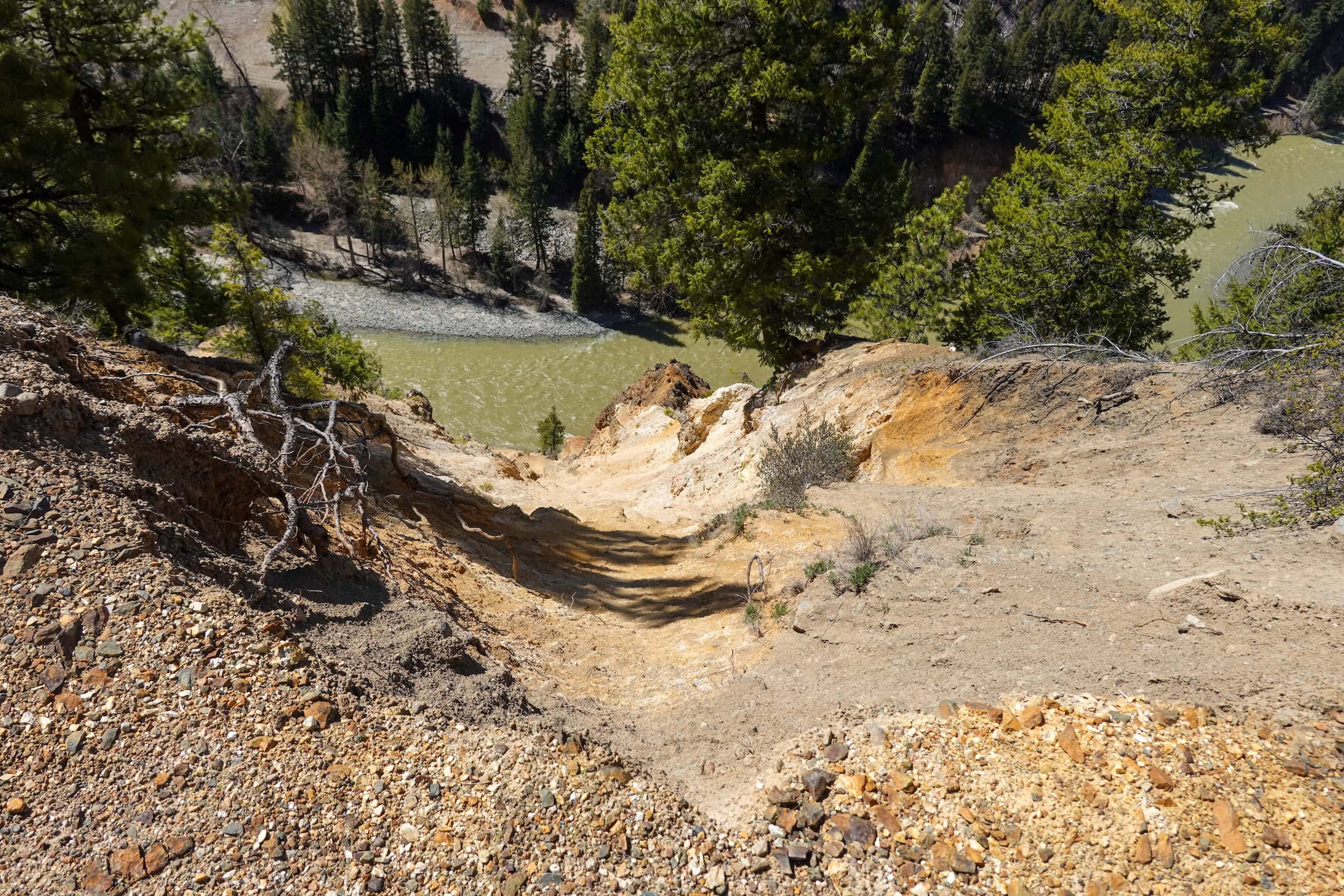
Hills are scarred by landslides, and buildings are abandoned. Sun-bleached logs sit far from the river as a reminder of how far the water spread. Then, there’s the old train bridge.
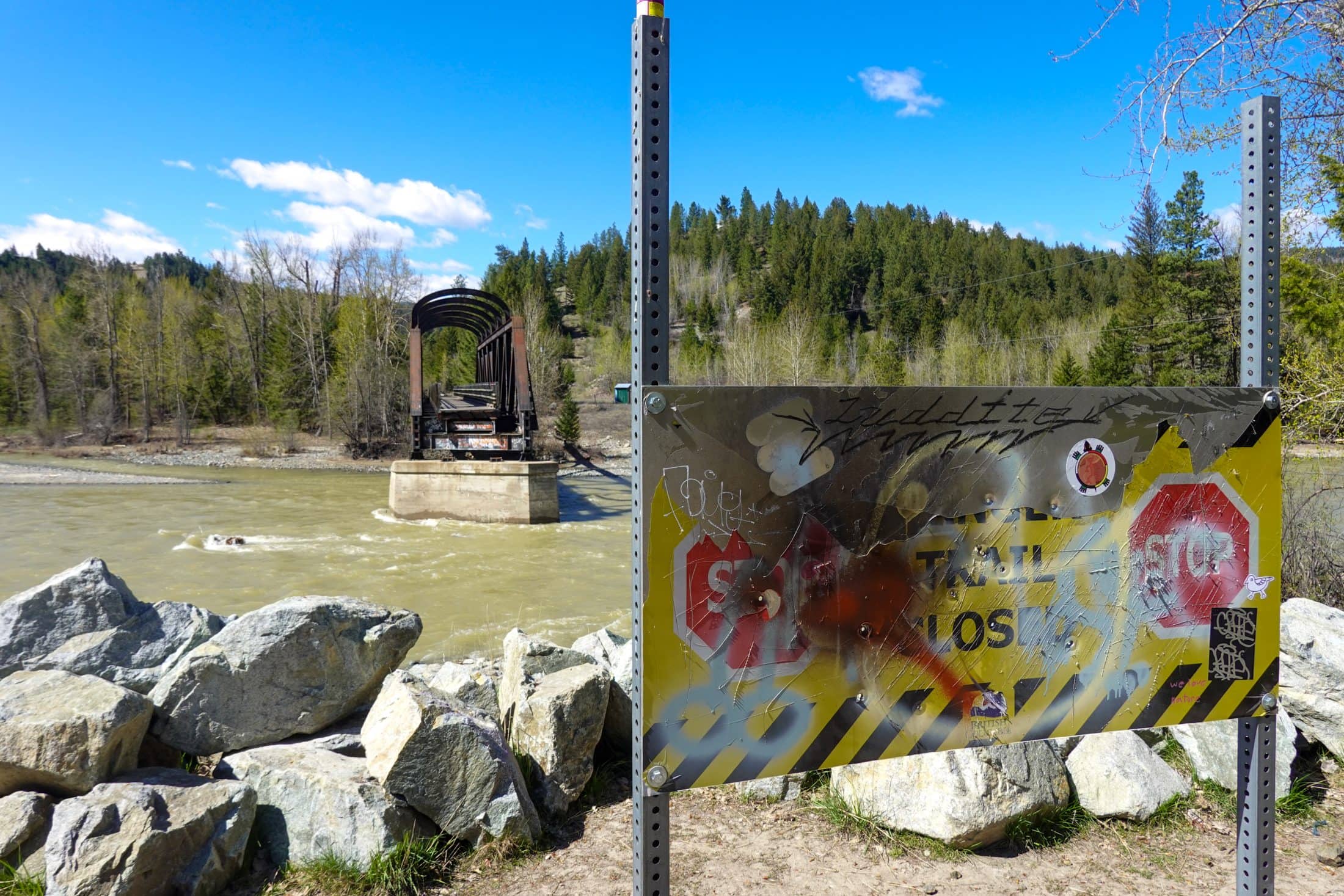
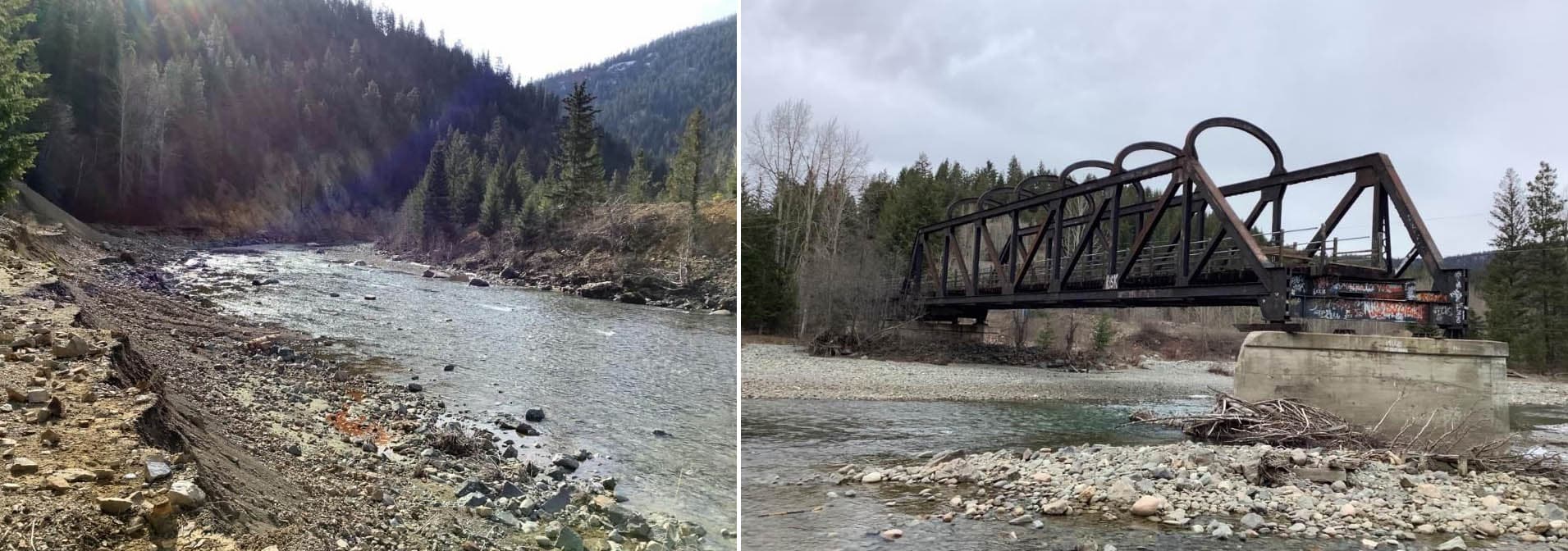
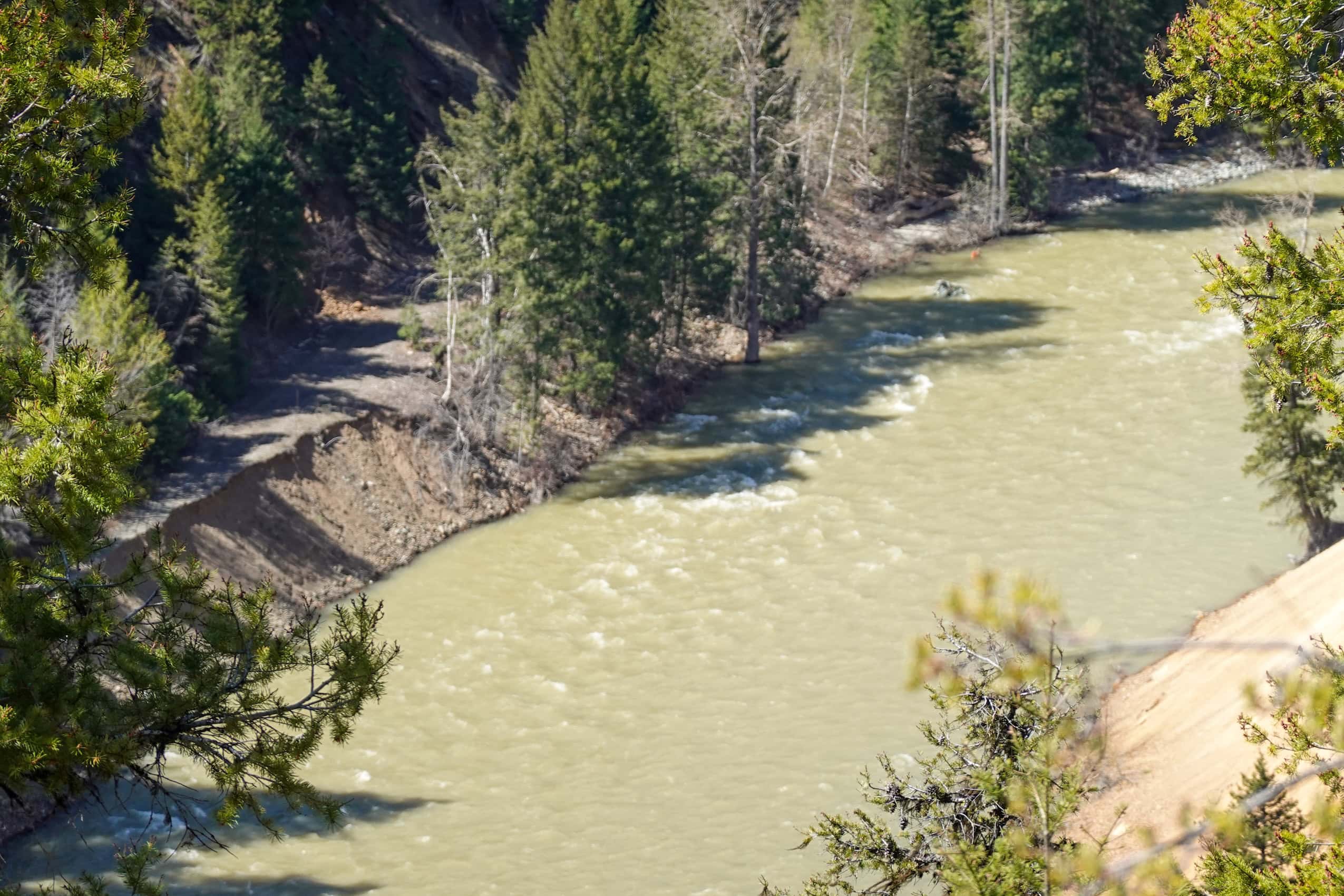
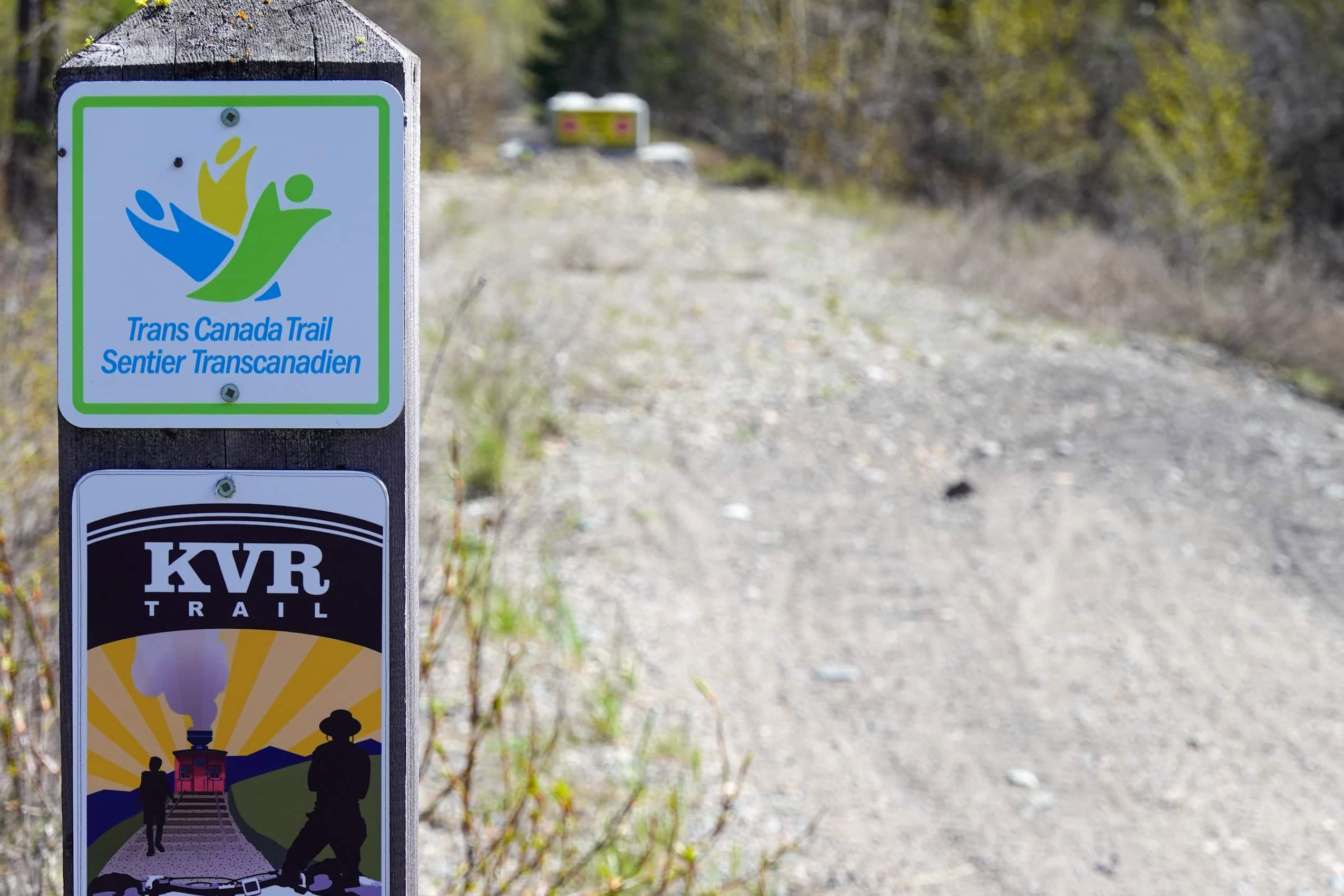
Part of the Kettle Valley Rail Trail, a 500-kilometre abandoned rail line turned multi-use trail between Hope and Midway, B.C., the bridge was one of more than 60 locations where the 2021 floods washed out the trail. About 20 metres of steel, concrete and timber on its eastern end were swept away by the surging waters. Today, the Tulameen River flows beneath the gap between Princeton and what’s left, with a faded, graffiti-covered “trail closed” sign standing on the shore.
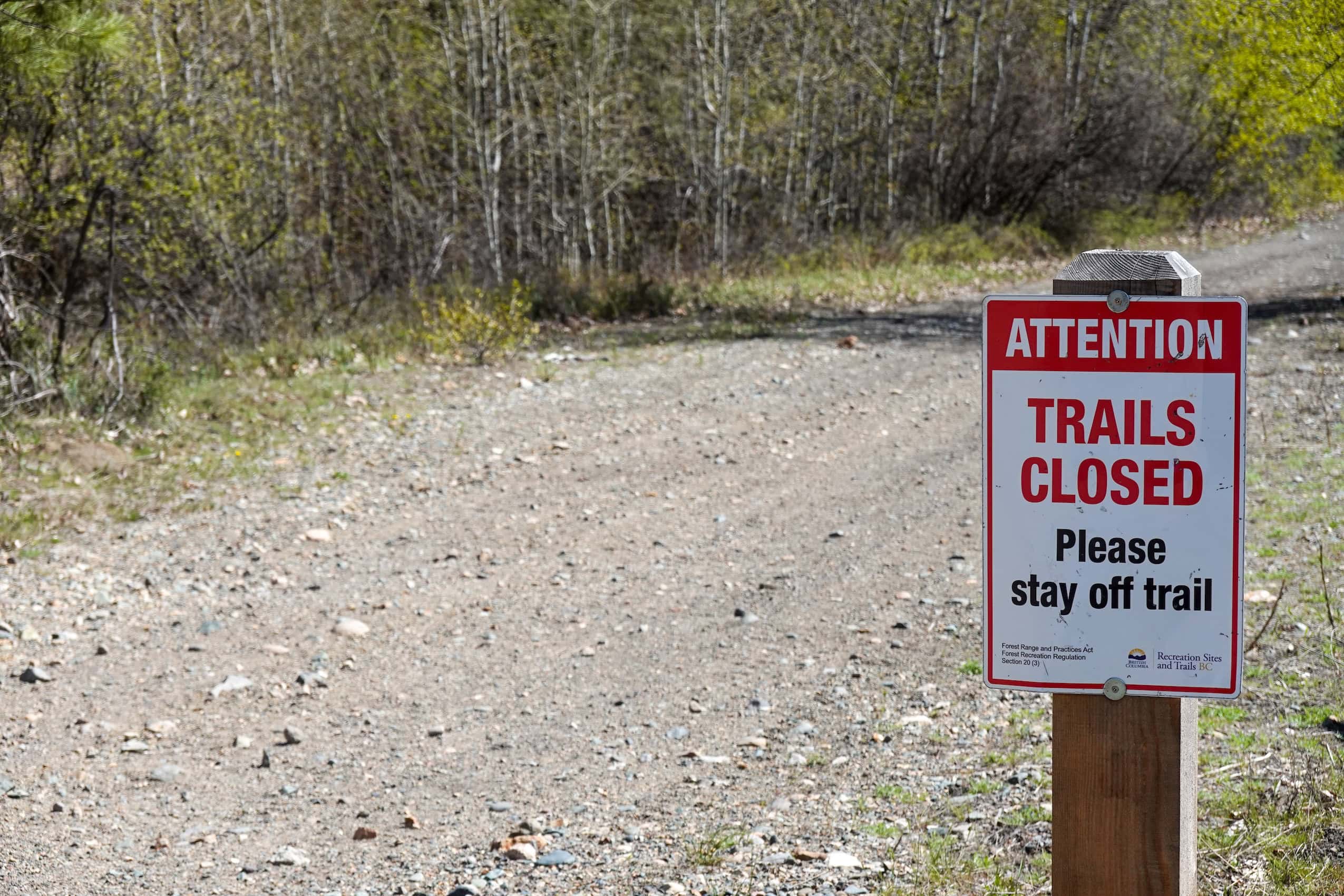
For years, many Princeton locals were hopeful the bridge and trail would be rebuilt. But in early February, they learned the province was planning to not only scrap the bridge, but to decommission the entire 67-kilometre stretch of trail connecting Princeton to the Coquihalla Highway.
In an announcement, the province said repairing that segment “would cost an estimated $60 million,” while “the cost of decommissioning the damaged Princeton section is estimated at $20 million.”
“The decision to decommission a section of the Kettle Valley Rail Trail near Princeton exemplifies the harsh realities of climate-impacted management,” the Ministry of Environment and Parks explained.
It’s a decision that’s left locals and outsiders who care about the Trans Canada Trail reeling.
At more than 29,000 kilometres, the Trans Canada Trail is the longest multi-use trail network on the planet. In 2017, it was officially “connected” across the entire country, making it possible to traverse Canada by a combination of foot and paddling trails. The decommissioning of the Kettle Valley segment will be the first permanent break in that connection. That’s a big part of why Stacey Dakin, the Trans Canada Trail’s chief program officer, thinks there has been concern about this decision outside of Princeton.
“With the Trans Canada Trail, there’s a sense of national pride and unity,” Dakin says. “We’ve heard more and more that people are connecting to each other just because they’re on the trail.
To Dakin, the Kettle Valley decision was “shocking.” But it reflects the growing risk that climate change poses to trails across the country, as jurisdictions must weigh the cost of repairs against the likelihood of future disasters.
More than just a trail
For Princeton mayor Spencer Coyne, the town at the confluence of the Tulameen and Similkameen rivers has always been home. A member of the Upper Similkameen Indian Band, he remembers when trains still ran on the Kettle Valley line.
“There was a dirt bike and bicycle trail beside the tracks,” he says. “We would ride our bikes out to Tulameen and go swimming in the summer. It’s just a part of who we are.”
Coyne, who was first elected in 2018, decided to run for mayor after a massive 2017 wildfire opened his eyes to just how vulnerable Princeton was to climate change.
“We’ve been in a state of emergency every single year since,” Coyne explains. “The trail is kind of a microcosm.”
The decommissioning decision stunned Coyne. Especially given all of the work the community was doing to rebuild and recover after the 2021 floods.
“[I was] super disappointed in the way that unrolled … It took a bunch of people by surprise.”
One of those people is Todd Davidson, manager of the Princeton Museum.
“When the news about decommissioning the Kettle Valley Rail Trail first came out, we were all kind of surprised and shocked,” he says.
He describes the trail as a tourist draw, with visitors using it for day trips and multi-day expeditions. In winter, he says, locals relied on it as a snowmobile route to get supplies from town. He also thinks the trail should be preserved for historical reasons, as the remnants of a rail line that moved minerals, timber and people between the coast and the Interior for nearly a century.
It’s a history that still lives in people like Tom Reichert. He worked on the line for the decade before it was shut down in 1989. Today, he and his wife, Kelly, own Reichert Sales & Service, an off-road vehicle shop in Tulameen. “The closure has definitely had an impact on our business,” he says. “It’s impacted both sales and service.”
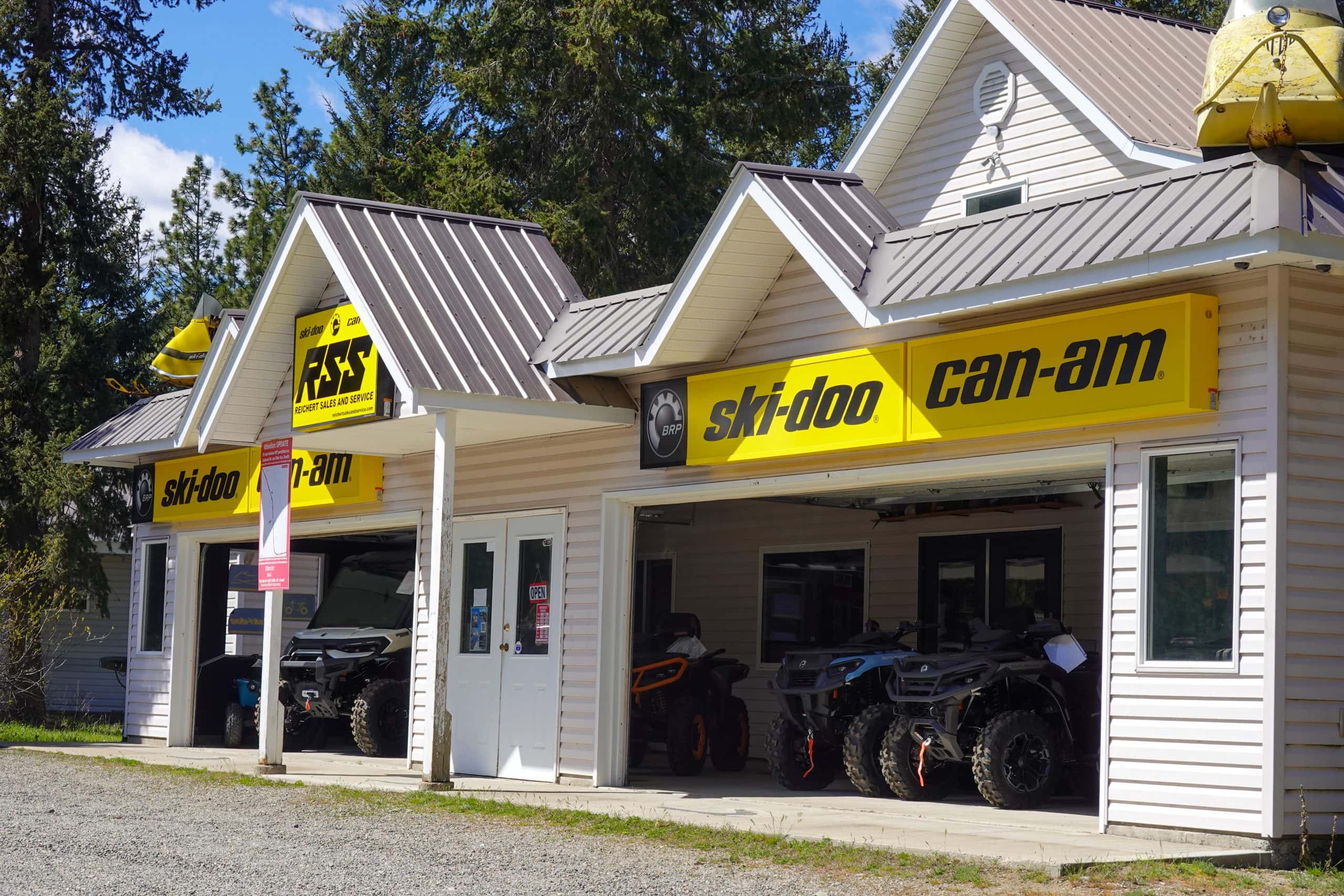
They’ve also shut down an off-road vehicle rental program they estimate brought in around $30,000 a year before the floods.
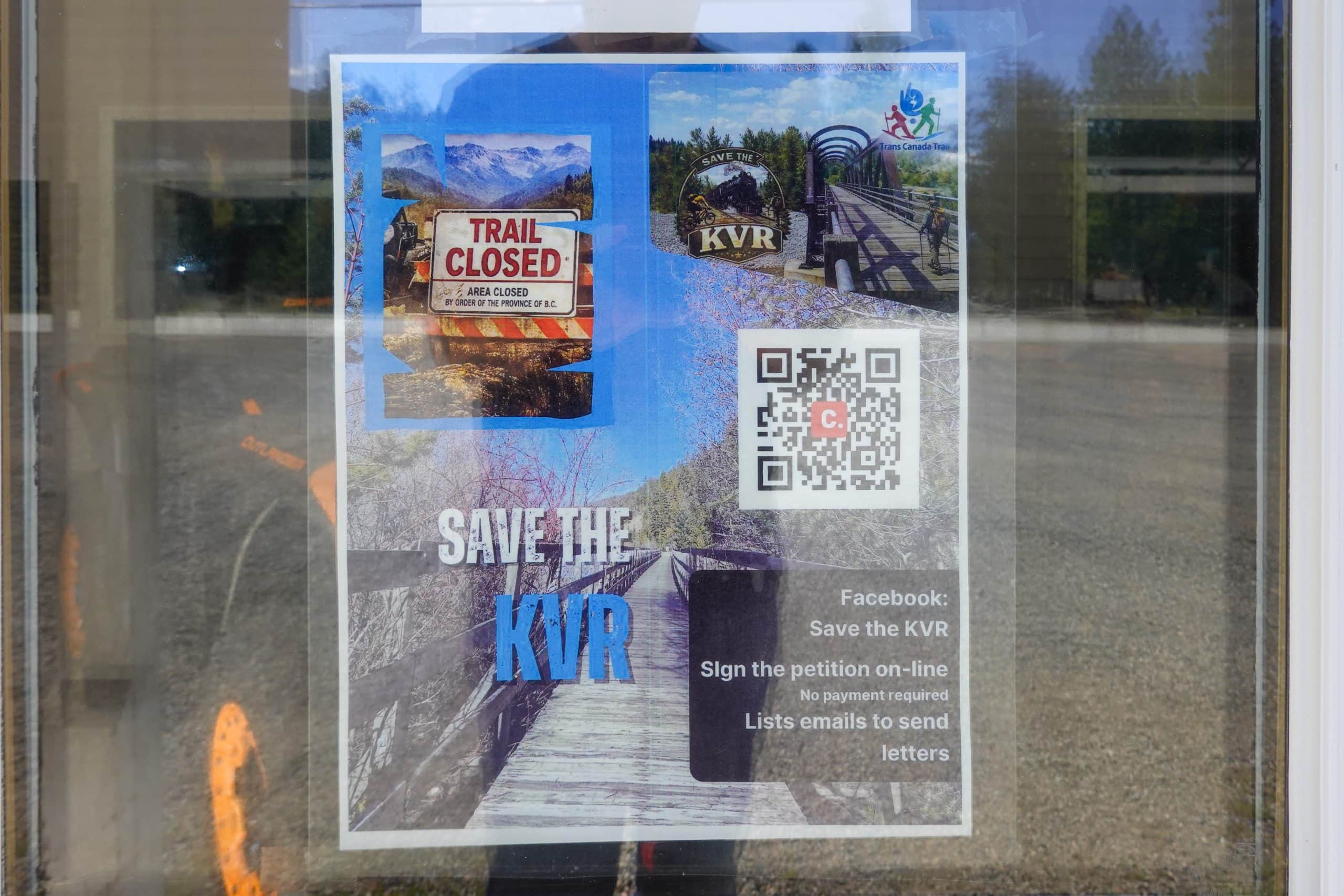
But beyond the business impact, the Reicherts worry what losing the trail will mean for the community. They remember when the trail was busy with hikers, cyclists and all-terrain vehicle users. It’s a big part of why they’ve gotten involved in efforts to oppose decommissioning. Now, there’s a large sign on the front door of Reichert Sales & Service promoting a “Save the KVR” Facebook group and a petition that, as of writing, has more than 12,000 signatures.
The Reicherts, Coyne and Davidson all point out that many of those petition signers have never even been to Princeton, but care because the Kettle Valley is part of the Trans Canada Trail.
Managed retreat
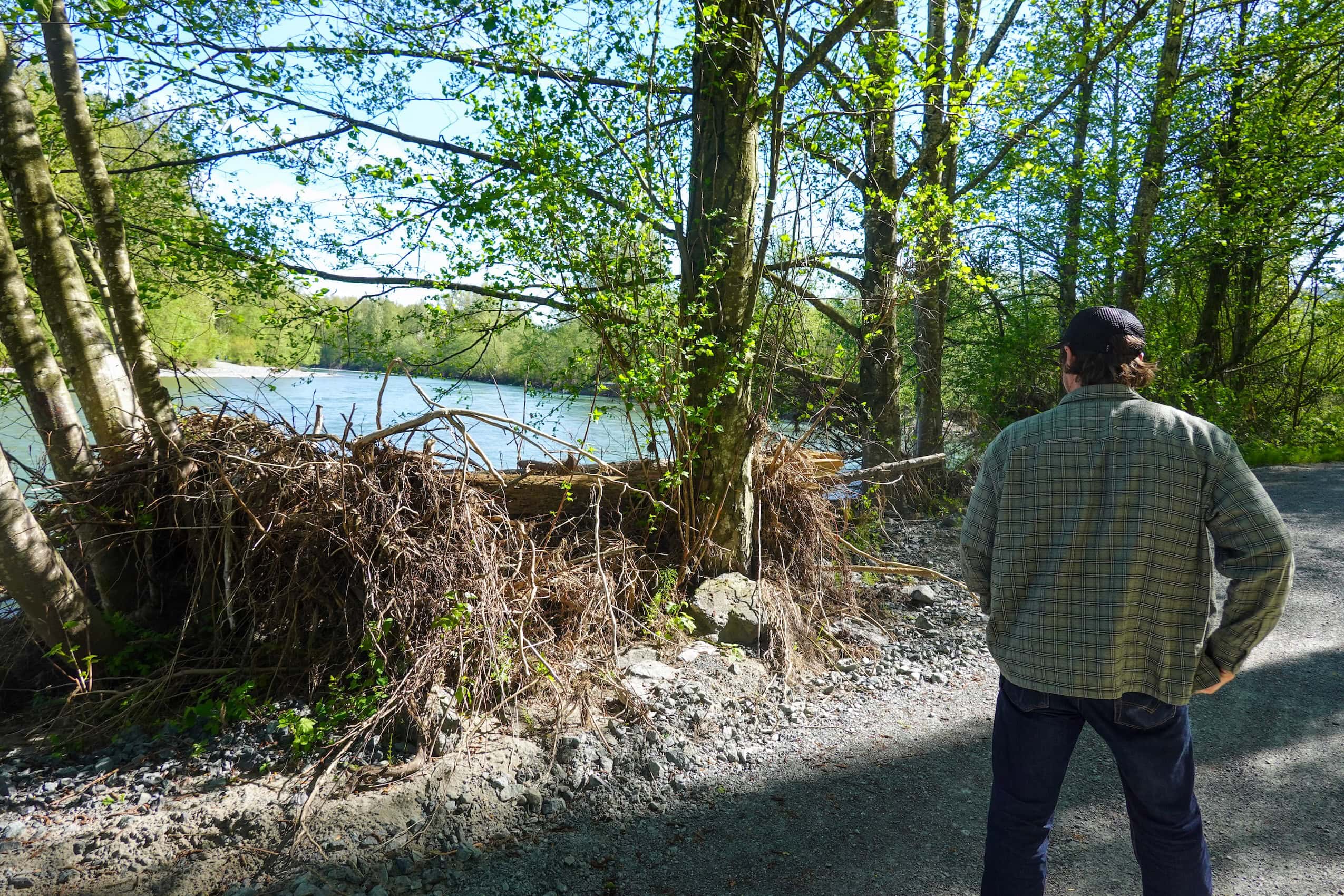
Most of the time, the Vedder River is a calm, azure blue ribbon that flows from Chilliwack into the Fraser River. But when it rises, it transforms into a raging torrent, a pale brown rush of water that inundates the forest and ravages the trails that run along its banks.
“We had three 50-year storms within four months, back to back to back,” Drew Pilling says. “Which really took a toll on our system.”
Pilling, the senior parks and trails operations technician for the City of Chilliwack, is talking about three atmospheric rivers that hit Chilliwack between December 2025 and March 2026, with each one damaging the same stretch of the Vedder Rotary Loop Trail.
“It’s quite a cost,” says Pilling. “It’s a lot of gravel that comes back in, it’s a lot of machine time, a lot of man-hours.”
This wasn’t the first time this trail had washed away. The same 2021 storm that ripped through the Kettle Valley trail also ravaged the Vedder Rotary Loop Trail. And although Chilliwack has so far been willing to bear the cost of repairs, Pilling thinks there may come a point where, year after year, flooding and trail repair become an issue.
“That’s for sure gonna be a topic of conversation with the council and the mayor,” he says. “Depending on their decisions, it might change the nature of the trails.”
This changing nature is top of mind for Thomas Schoen. The chief executive officer of First Journey Trails, Schoen has been building trails across British Columbia since 1998. But it wasn’t until 2017, when a cross-country mountain bike trail he helped build connecting Williams Lake First Nation to the local trail network burned in a wildfire, that the situation really hit him.
“It was a multi-year project,” Schoen says. “We started by training Indigenous trail builders and trail maintenance crews. It was a really successful project.”
For a few years, the trail’s popularity grew, with both locals and visitors from further afield. Then it was engulfed by a wildfire that Schoen says “absolutely destroyed that trail.”
He and others tried to rebuild it, but the landscape was fundamentally different.
“You had tens of thousands of burnt, standing dead trees along this open trail corridor,” he explains. “The amount of tree falls on this trail was, and still is, so significant that it’s almost impossible with volunteer efforts to keep this trail open.”
Losing that trail was “extremely emotional” for Schoen, and changed the way he thinks about trails and climate change.
“Some trails can’t be revived,” he says. “Some trails, we just don’t have the manpower or the financial power to rebuild them or open them back up again.”
Climate policy experts might categorize Schoen’s comments and the province’s decision to abandon the Kettle Valley trail as “managed retreat.”
It’s a strategy for dealing with climate change impacts that a provincial planning document describes as the “strategic relocation of people and structures out of harm’s way, often accompanied by ecological restoration and a permanent change in land use.”
But when done properly, it’s a strategy developed with communities, not for them.
“These decisions cannot just be made by the government or by one ministry,” Schoen says. “[They] need to be made in partnerships between many different groups … First Nations at the table with trail user clubs.”
Hundreds of thousands of kilometres of trails
For Ryan Stuart, community engagement lead with the Outdoor Recreation Council of BC, the biggest issue with the Kettle Valley trail decision was the voices that were left out.
“Where was the conversation beforehand?” he asks. Conversations that he argues are even more important given the growing challenge of maintaining trails in a changing climate.
And the province has a lot of trails to maintain. According to the province’s 2013 trail strategy, the province has at least 30,000 kilometres of formally recognized trails and “hundreds of thousands of kilometres” of informal trails.
And while the strategy didn’t discuss climate change, a 2020 progress report on it listed an “increase in climate-related events such as wildfires and flooding, which can damage the trail systems,” as a top challenge. It’s a sentiment echoed by another 2025 report by Climate Data Canada exploring how climate change impacts trails across the country.
Stuart worries that the cost and effort issues are particularly challenging due to long-standing issues with trail funding in the province.
Among applications to the Outdoor Recreation Fund of BC, a $10-million, multi-year grant to support trail building and maintenance overseen by the Outdoor Recreation Council, he says “lots of the funding requests are for rehabilitation of damaged infrastructure from fires or floods.”
And the fund just isn’t big enough to support everything. Earlier this year, the council described the fund as “heavily oversubscribed” and able to “support only about 15 per cent of grant requests.”
And it’s not like the province isn’t aware of the challenges.
“Many of British Columbia’s provincial parks, recreation sites and trails are experiencing a climate-driven transformation,” the Ministry of Environment and Parks wrote in a statement to The Narwhal.“As extreme weather events like the 2021 and 2024 atmospheric rivers become more frequent, the province is navigating a difficult balance between preserving historic recreation opportunities and ensuring long-term environmental and fiscal sustainability.”
Stuart understands “the provincial government is in tough financial shape and needs to look at everything,” but thinks there still needs to be more transparency in how decisions are being made. He points out that the government spent millions rebuilding both the Berg Lake Trail in Mount Robson Provincial Park and the Juan de Fuca Trail on Vancouver Island, while abandoning the Kettle Valley.
“I’ve heard members of the Outdoor Recreation Council ask, ‘How was that decision made?’ ” he says.
The ministry didn’t directly answer questions about those decisions. Instead, they called Berg Lake “a blueprint for ‘building back better.’ ”
“Following catastrophic weather damage, the trail’s multi-phase reopening has a climate resilience focus,” the ministry statement explained. That focus involved moving trails out of vulnerable flood-plains, relocating bridges to places better able to “withstand heavy flow,” and hardening tent pads.
They also said the Juan de Fuca trail would need some of “these same resilient engineering strategies.”
‘No new trails’
How the Kettle Valley decision was made also frustrates people in Princeton.
“What they want to do here is just throw in the towel,” Todd Davidson says. “We feel really quite ignored.”
It’s a sentiment that Coyne understands all too well.
“The fact that the three … main municipalities that were impacted in 2021 didn’t get a lick of funding from the province or from the [federal government] speaks volumes,” he says, referring to Abbotsford and Merritt, which like Princeton were denied support from the federal Disaster Mitigation and Adaptation Fund.
He sees the Kettle Valley decision as a “mirror image of what we’re trying to deal with” around broader flood recovery and climate adaptation. And while he understands the idea of managed retreat, he questions how it’s being applied.
“Ultimately, would we like to look at putting the river back to a more natural state? Of course, but nobody wants to pay for it,” he says. In 2022, Coyne applied for $55 million in federal funding to support a new diking plan for the town. Two years later, that application was rejected.
“Nobody’s coming to help us with that,” he says.
That lack of funding also worries Pilling. While Chilliwack was able to access some funding to rebuild after 2021, he’s not sure this latest round of trail work will qualify.
“A lot of that funding is for infrastructure that is deemed necessary,” he says. And while trail advocates will argue that trails are necessary, providing benefits for physical and mental health, serving as travel corridors and, in some cases, being used for wildfire resilience, Pilling thinks most of the costs of trail repairs will “end up on the city’s bill.”
For Coyne, this comes with an added sting. While he’s been fighting to try to reverse the decommissioning decision, he’s also been in meetings about marketing Princeton’s outdoor recreation.
“We have a branch of the province actively marketing this entire trail network, and we have other departments that are cutting the funding and cutting the feet out from under them,” he says.
The province released its Tourism Sector Action Plan in March. The plan promised to grow B.C.’s outdoor recreation economy, which it claimed “generates approximately $17 billion annually in participation-based revenue, contributing $4.8 billion to provincial GDP.”
But the strategy didn’t include any new funding for trails or recreation infrastructure. That’s a problem not just because of the new challenges posed by climate change, but also because of the province’s long-standing maintenance backlog.
In 2015, BC Parks estimated they had “approximately $700 million of investment in infrastructure that requires maintenance.” The province hasn’t updated this number since it was released, but the ministry did say they have further invested “approximately $200 million in campground expansions, accessibility upgrades and improvements to trails, parking and facilities since 2017.”
For Schoen, this calls for a radical rethink of how we approach trail building.
“My philosophy is no new trails, period,” he says. “It’s unbelievable how much money we need for trail maintenance, and that money simply isn’t there.”
An uncertain future for the Kettle Valley
When it comes to the future of the Kettle Valley trail, Coyne is torn. He understands the threat that climate change poses to the region, but he also knows how important the trail is to his community. That’s why he keeps fighting for it, and after multiple meetings with the province, he’s starting to see a path forward.
“We’re not going to get everything we’re asking for, we’re not going to get a total rebuild of the trail,” he says.
But in early April, the Regional District of Okanagan-Similkameen passed a motion supporting a new regional trails strategy.
What the province will say is yet to be seen, but Coyne feels clear on one thing: if the community wants to keep the trail, the onus will be on them to make it happen.
“At the end of the day, if local government or regional government isn’t willing to shoulder this burden, then your trail is probably going to go away,” he says.