



 11 min. read
Summary
- Last week, the Alberta Energy Regulator announced thousands of oil and gas wells and pipeline segments, belonging to Long Run Exploration Ltd., had officially become orphans, meaning they have no solvent owner.
- Long Run Exploration had tried to salvage its financial situation through a deal to sell all its shares to a Chinese company for $22 million, which fell through.
- Court documents show the total cost to safely seal and clean up all of Long Run’s wells and other infrastructure is estimated to be $476 million.
A beleaguered oil and gas company has left a multimillion-dollar cleanup bill in Alberta, The Narwhal has learned. Experts worry at least some of that bill could ultimately be passed on to taxpayers.
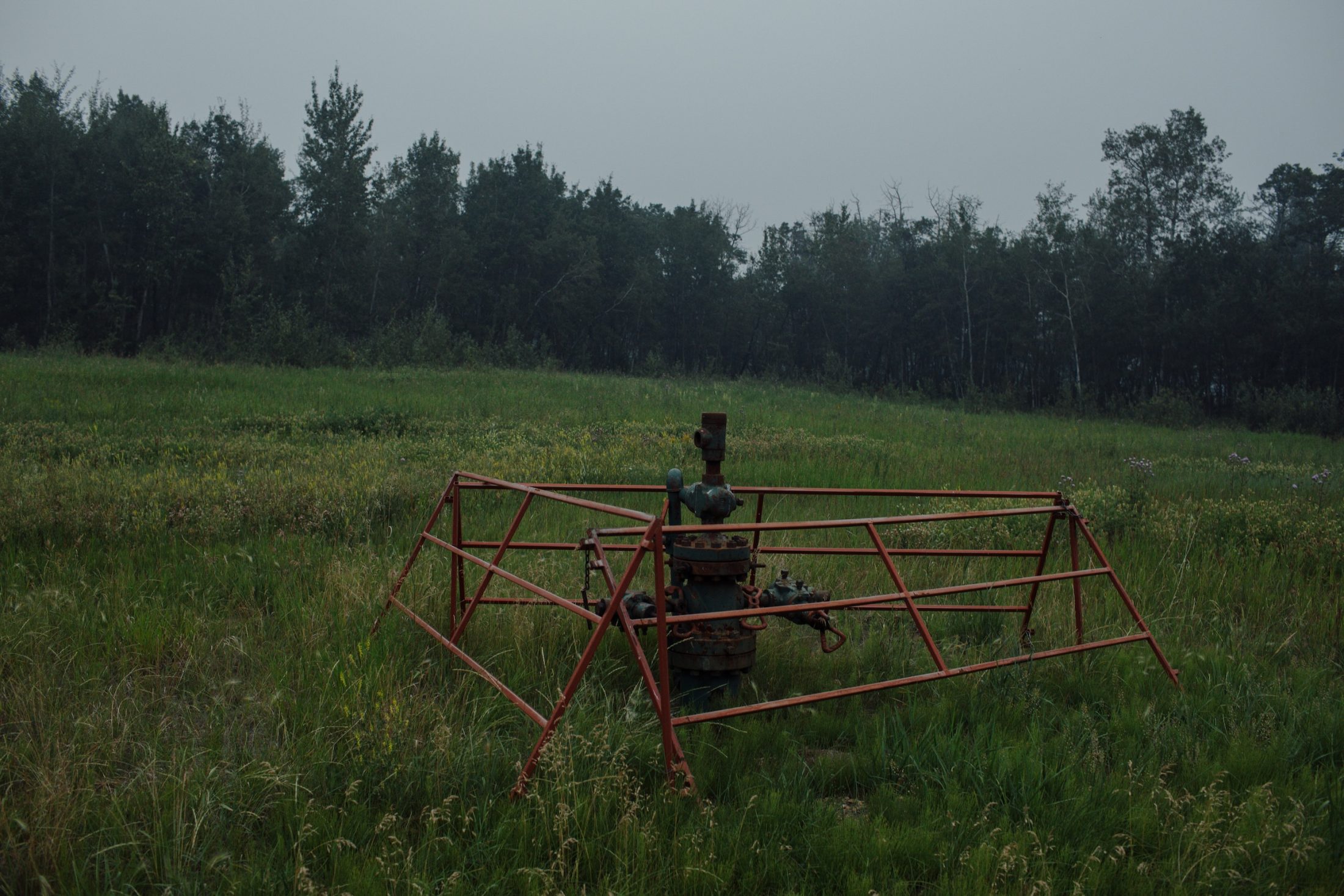
Last week, the Alberta Energy Regulator announced 4,031 wells, 383 facilities and 2,121 pipeline segments previously owned by Long Run Exploration Ltd. had officially become orphans, meaning they no longer have a legal or financial owner. The announcement did not specify a price tag for decommissioning or cleaning up any of the infrastructure.
But in a sworn affidavit filed early last year, the total liability of Long Run’s various assets was estimated at $476,834,036.95.
That means the Orphan Well Association, which is funded by an annual levy on industry and spent just under $130 million decommissioning and cleaning up old oil and gas infrastructure last year, now has a huge new liability on its hands.
In one court document, they’re described as “mammoth environmental liabilities.”
According to the affidavit, Long Run’s oil and gas infrastructure ended up as orphans after a 2024 deal with a Chinese company fell through. That deal would have seen all of Long Run’s shares purchased for $22 million.
It wasn’t the first time the company had looked to Chinese investors when it faced financial troubles. In 2016, a financially struggling Long Run was purchased by Calgary Sinoenergy Investment Corp., its sole voting shareholder.
David Chem, reached by phone at Calgary Sinoenergy Investment Corp., told The Narwhal that Calgary Sinoenergy is a holding company and most of its shareholders are in China. “Actually, nobody calls,” he said. “I was surprised somebody called.”
Chem, who declined to share his title, said the company’s investors in China were not familiar with the concept of environmental liability regulation when they invested in Alberta oil and gas, as much of China’s oil and gas industry is state owned and private companies are not responsible for cleanup.
“A lot of Chinese investors put money into Alberta before they fully understood environmental liability because there’s no environmental liabilities in China,” he said. “They are trapped by environmental liability.”
He said the Chinese shareholders have paid for their mistake, and the blame rests on the original owners of Long Run.
“How can you blame the Chinese owner? How can you say, ‘Oh, you guys didn’t take care of the orphan wells?’ ”
“They’re the guys who lost the most,” Chem said. “They’re the guys who lost all the money.”
Bill Andrew, who was the chairman and chief executive of Long Run Exploration at the time of that sale, pushed back on Chem’s assessment.
“They came in with their eyes wide open,” he said by phone. “They went through a two-to-three month due diligence process,” he said, adding Long Run supplied well lists and information about all the company’s working interests.
“We didn’t sell them a pig in a poke.”
‘The result of regulatory failure’: law professor
Meanwhile, even before Long Run’s assets were added to its inventory, the Orphan Well Association already had 4,200 wells on its list for decommissioning in Alberta.
“In one swoop, it’s a huge jump,” University of Calgary law professor Shaun Fluker said in an interview. “It increasingly looks very likely these bets, these liabilities, will only ever be addressed with public money.”
Alberta’s Orphan Well Association is a not-for-profit organization that is theoretically funded by industry in the form of an annual levy, but has received government grants in the past and gets an annual interest-free loan from taxpayers.
“All of these problems are the result of regulatory failure,” Fluker said, describing the Orphan Well Association as an “industry-funded insurance system never designed to handle anything close to the size of these sorts of assignments.” Funding for the association, set by the regulator and paid by industry in the form of an annual levy, he said, is “wholly inadequate.”
Lars De Pauw, president and CEO of the Orphan Well Association, referred questions about the current cost of Long Run’s environmental liabilities to the Alberta Energy Regulator. “We have a multi-year plan to deal with all orphan assets including those from Long Run,” De Pauw said by email. “The plan is based on the amount provided from the orphan fund levy and other sources of revenue.”
In response to questions from The Narwhal, the Alberta Energy Regulator said by email it “does not have any further information to provide regarding Long Run’s total estimated liability.”
An unnamed spokesperson said the regulator uses tools within its liability management framework to ensure a company that takes over wells can eventually clean them up, and said it may “impose terms and conditions to mitigate any ongoing risks” and ensure regulatory obligations are met.
Andrew, who has been in the oil and gas industry for 52 years, points to the increasing number of wells falling to the Orphan Well Association. “You have to wonder who the hell was on top of them from a regulatory point of view,” he said. Andrew says when he ran Long Run, he made sure the company stayed on top of sealing old wells every year, ensuring a percentage of older wells were decommissioned each year.
Chinese investors lost millions in deal to save Long Run from financial ruin
Andrew oversaw Long Run back when it was called Galleon Energy and the company had a “nasty reputation on Bay Street and with public investors,” he said. Under his watch, the company was refinanced and its name was changed to Long Run in 2012.
In 2016, Long Run narrowly avoided financial ruin. That year, under Andrew’s leadership, the company was sold to China-based Sinoenergy Investment Corp. in a $780-million deal that included a $100-million purchase price and an agreement to take on hundreds of millions of the company’s debt, according to the Calgary Herald.
“The deal was dubbed a Christmas miracle, reflecting Long Run’s precarious finances,” according to the Globe and Mail at the time.
Andrew told the Herald the sale was the best option for the heavily indebted company. “The alternative was grim,” he said then. The Canadian Press reported at the time that Long Run had faced a net earnings loss of $305 million in the most recent third quarter.
“The banks were all over us. It was receivership or sell,” Andrew told The Narwhal, adding the bank facilitated an introduction with the investors.
Chem, with Calgary Sinoenergy Investment Corp., said the Chinese investors “bought from a local guy, right from the local owner.”
“Who’s laughing? The previous owner,” he said. “They take the money and walk away.”
Andrew pushed back on that assessment. “We didn’t walk away, we sold the company,” he said.
“I did it the best I could do. I did it as fair as I could be,” he said. “When we sold Long Run, we didn’t sell it with a whole bunch of unpaid bills,” he said, adding the company was up to date on what it owed to landowners and counties.
To Chem, the big loser is the investors.
“They lost all their investment,” Chem said of shareholders in China, who he said he meets with annually. “All their investment, $800 million, is all gone.”
“Their mistake is they should learn more about the system.”
According to Insolvency Insider Canada, “Calgary Sinoenergy is a holding company with no operation or assets other than its investment in Long Run.” All of its shares are held by another company, Sinoenergy Oil, which is based in the British Virgin Islands.
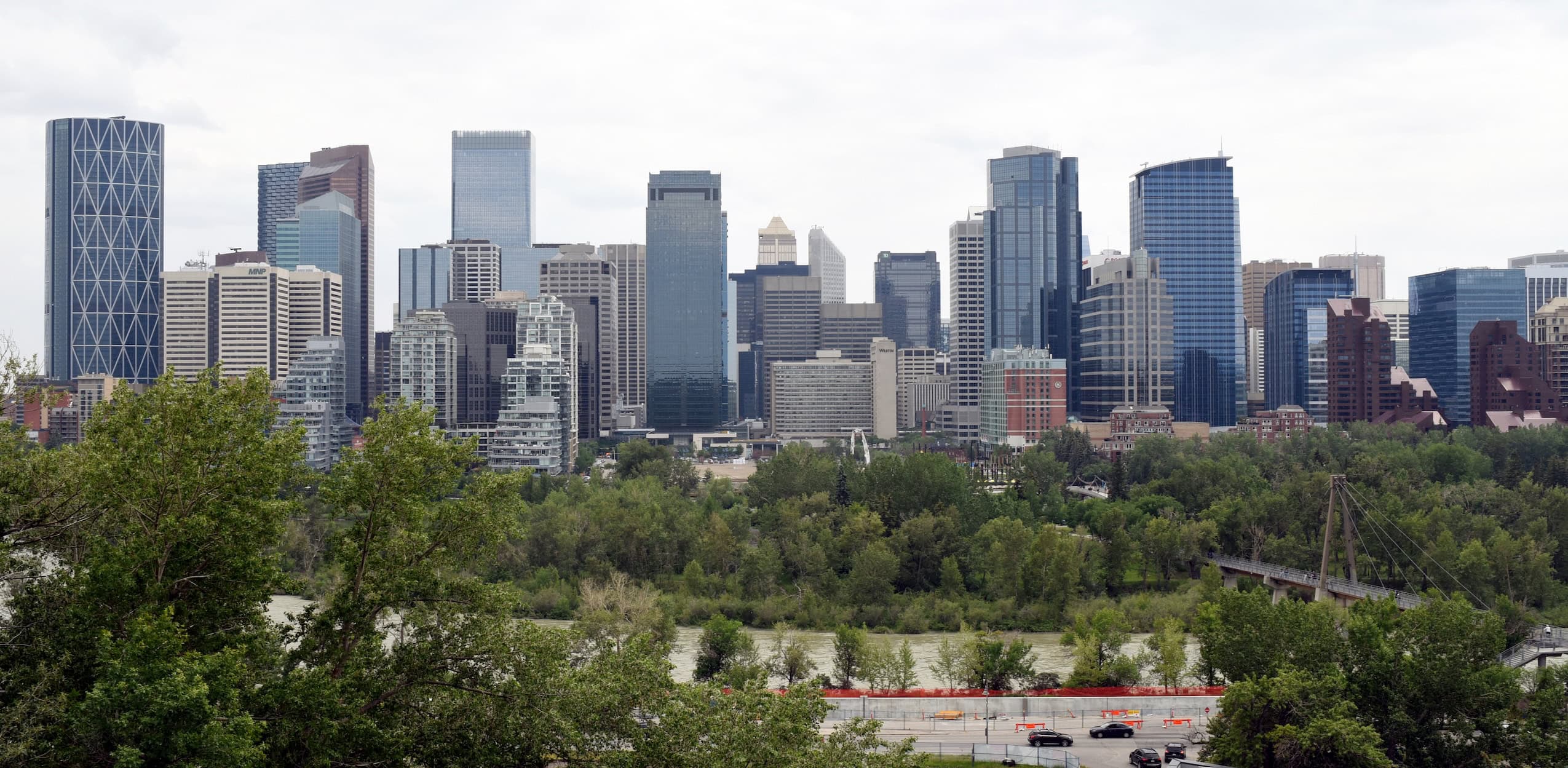
Chem said the Chinese investors he works with are less interested in investing in Alberta oil and gas after seeing how it has played out with Long Run. “A lot of people lose money in Alberta. So I think they just say ‘no more.’ They walk away,” he said.
The Narwhal could not independently verify Chem’s assertions.
Fluker points to the massive 2015 oil price drop that saw a mad scramble for companies, many of them backed with foreign investment, to pick up Alberta oil and gas assets. “There were a number of these transactions at that time,” he said, pointing the finger at the Alberta Energy Regulator which would have approved the transfer of wells. “The regulator doesn’t appear to have scrutinized those transactions sufficiently.”
“That was really the beginning of the problem now we’re watching before our eyes.”
A last-ditch attempt to sell Long Run for $22 million in 2024 falls apart
In 2024, Long Run faced significant financial troubles again. It attempted to secure its financial footing with an agreement with a Chinese-based company, Hiking Group Shandon Jinyue Int’l Trading Corporation. That would have seen Long Run’s shares purchased for $22 million, but the company “faced challenges … transferring money out of China due to regulations of the Chinese State Administration of Foreign Exchange.”
In March 2025, Long Run entered into receivership. This is when a court-appointed third party acts as a custodian for a company facing serious financial troubles.
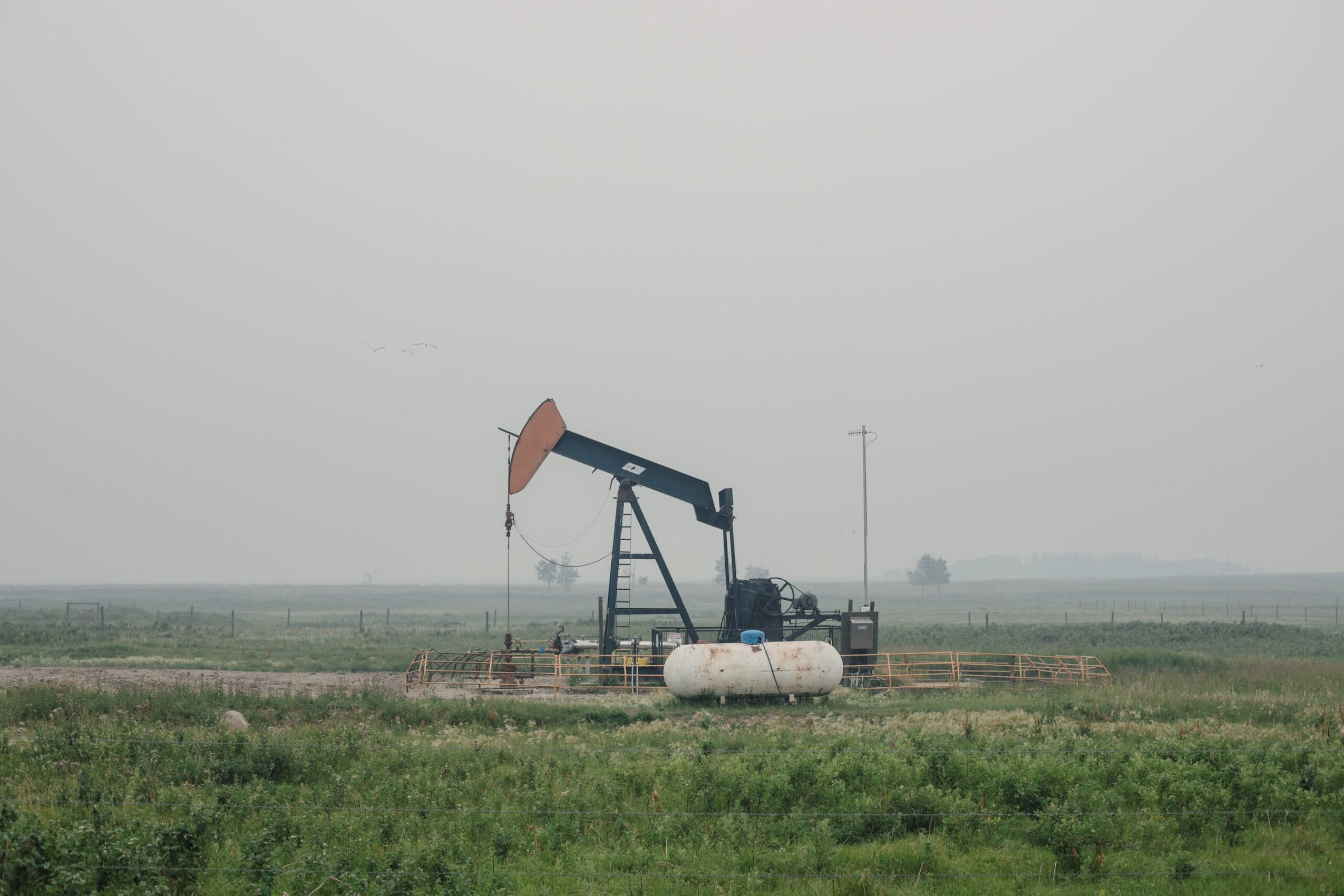
Attempts to reach Long Run Exploration Ltd. went unanswered. PricewaterhouseCoopers, which is its receiver, confirmed it is acting as “manager of all current and future assets, undertakings and properties of Long Run Exploration Ltd” but declined to comment further. “The receivership proceedings are ongoing and as such, [PricewaterhouseCoopers] does not publicly comment on aspects of active receivership proceedings in the media,” spokesperson Anuja Kale-Agarwal said by email.
As is noted in documents filed by PricewaterhouseCoopers, any funds left over in Long Run’s accounts must be put toward cleaning up its mess. This requirement stems from the Redwater decision in 2019, when the Supreme Court ruled the money left over from a bankrupt oil and gas company must be used to clean up the wells it left behind before other debts, including bank loans, were prioritized.
As of February, the receiver noted it held approximately $26 million in its Long Run accounts, compared to the hundreds of millions in estimated costs to clean up its mess.
In March, it put $10 million of those funds toward clean-up.
Fewer than 500 wells were decommissioned by the Orphan Well Association last year
In 2025, Alberta’s industry-funded Orphan Well Association estimated the total cost to properly seal and clean up oil and gas on sites under its watch to be about $1.12 billion.
As of the end of March, the Orphan Well Association reported its inventory included 4,200 orphan wells that need to be safely sealed and more than 8,000 sites that need to be reclaimed.
These numbers have increased substantially. In 2013, the Orphan Well Association had just 387 orphan sites in its inventory of sites that needed to be reclaimed.
Susanne Calabrese, managing lawyer at the Alberta office of Ecojustice, is concerned what the increase means for the future. “Increasingly, profits are privatized, but cleanup is left behind — burdening landowners, municipalities and taxpayers. Companies are more than willing to take Albertan resources for profit, only to avoid the cost of cleaning up their contaminated sites through bankruptcy. This isn’t an anomaly — at this point, it seems to be their business model,” she said in an emailed statement.
“Long Run Exploration Ltd. … is not the first case of an oil and gas company walking away unscathed from costly cleanup obligations, nor will it be the last,” she added.
According to the association’s most recent annual report, fewer than 500 wells were decommissioned — meaning safely sealed — in the fiscal year ending in March 2025, while more than 2,000 new wells were added to its inventory during that time.
Andrew says it’s bad actors that contribute to the problem. He doesn’t think he’s one of them. “The properly run oil and gas companies are conscientious. They have staff and the resources to identify what needs to be done,” he said. “We don’t want to finish our lives and our careers thinking we make a mess of our country.”
“If you’re not putting a portion of your cash flow towards cleaning up your wells and cleaning up your properties, you should be lined up against the wall and shot,” he said. “Who has that sense of disregard to their country, that they leave a mess like that behind?”
According to the Government of Alberta, there are an estimated 466,000 oil and gas wells in the province. More than half of those are no longer producing, some of which have been properly plugged, while others are in a state of temporary suspension.
“It’s a bit scary when you think about it,” Fluker said. “It makes you wonder what else is out there. What’s next?”
Updated Friday, April 17, 2026, at 11:29 a.m. MT: This story was updated to include comment from the Alberta Energy Regulator that was received after publication.
Methodology
The Narwhal spoke by phone with David Chem, who responded to a voicemail left for Calgary Sinoenergy Investment Corp., which is based in Calgary and is the sole voting shareholder of Long Run. He declined to share his job title. The Narwhal also spoke by phone with Bill Andrew, former chairman and chief executive of Long Run Exploration Ltd.
The Narwhal emailed Long Run Exploration Ltd. but did not receive a response. The Narwhal also phoned Long Run’s emergency line, and was told to call Long Run’s main office. A message left at that number did not receive a response by publication time. An email sent to Wendy Barber, listed in court documents from March 2025 as Long Run’s interim chief executive officer, also did not receive a reply.
The law firm Dentons, listed in court documents as legal counsel for Long Run, replied by email to say it no longer represents Long Run and that questions should be directed to the court-appointed receiver, PricewaterhouseCoopers.
PricewaterhouseCoopers declined to respond to specific questions, citing ongoing receivership proceedings.