




 7 min. read
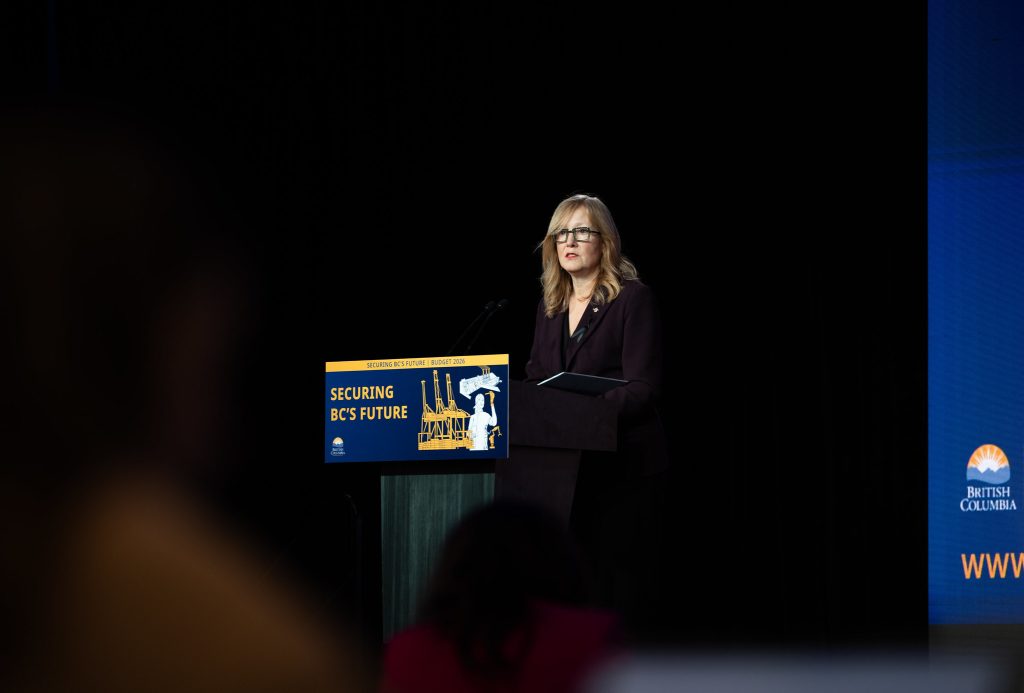
The B.C. government has big plans to tackle the $13.3-billion deficit racked up in recent years. The key to getting the province back in the black, according to Finance Minister Brenda Bailey, is stoking B.C.’s economic engine. The fuel? More money from the natural resource sector, especially mining and natural gas.
The new budget banks on significant increases in revenues from minerals and metals as the province courts critical minerals projects. Meanwhile, natural gas revenues are also expected to boom as liquefied natural gas (LNG) export projects get off the ground.
“Six major LNG projects are complete, underway or reaching final investment decisions this year,” Bailey said in her budget speech. “We’re doing all this in partnership with First Nations, moving projects forward with confidence and clarity.”
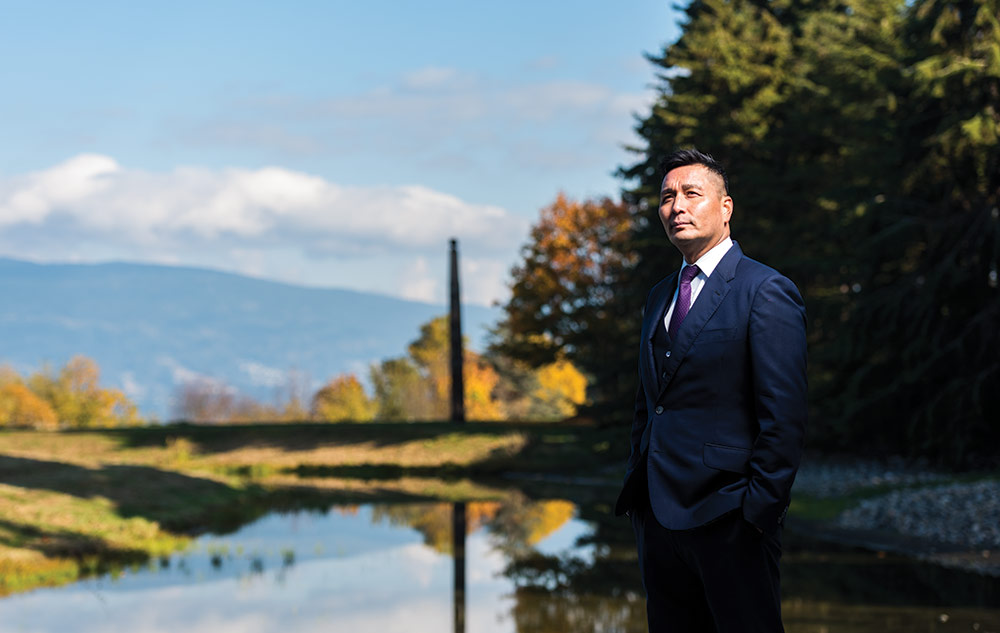
The current B.C. government’s interest in fast-tracking natural resource projects kicked into high gear last year as U.S. President Donald Trump imposed tariffs on Canadian goods and threatened Canada’s sovereignty. In May 2025, Bill 15, which granted cabinet broad powers to fast-track infrastructure projects, prompted vocal opposition from many, including Don Tom, Chief of the Tsartlip First Nation and vice-president of the Union of B.C. Indian Chiefs. Bill 15 became law on May 28, though its fast-tracking powers have yet to be brought into force, pending public consultation.
As those economic development efforts continue, Premier David Eby has also made altering the Declaration on the Rights of Indigenous Peoples Act (DRIPA) — a landmark law meant to guide reconciliation efforts between the province and First Nations — a top priority for the spring sitting of the legislature.
The government’s goal, according to a statement issued by Eby’s office on Feb. 6, is to “avoid the uncertainty court decisions create” by barring judges from applying the Declaration Act in their rulings.
“The Declaration Act sets out work our province has committed to do together with First Nations governments, not work for First Nations to do with courts without us,” Eby said in the statement.
But critics say blocking First Nations from appealing to the courts to hold the government to its reconciliation commitments could create less certainty and more court cases.
“They might make nice noises about negotiation or collaboration, but the sad history is that without being able to hold the Crown accountable in court, we risk denial, delay and further conflict,” Jessica Clogg, executive director of West Coast Environmental Law, told The Narwhal in an interview.
Eby’s plan to alter the Declaration Act also seems to ignore “the fact that the whole evolution of modern Crown-Indigenous relations exists because, effectively, the courts forced the Crown to come to the table kicking and screaming,” she said.
The Law Society of British Columbia has urged Eby “to reconsider making any proposed legislative changes that would limit access to independent courts.”
More than 100 First Nations leaders and chiefs have signed a statement calling on the premier to abandon the amendments, as well as his government’s appeals of two recent court rulings. B.C. is challenging the Cowichan decision, which found that Quw’utsun Nation has Aboriginal Title to their village site at the mouth of the Fraser River. It is also seeking leave to appeal the Gitxaała decision, which concerns consent for mining claims, to the Supreme Court of Canada.
“DRIPA establishes minimum standards of survival and dignity for Indigenous Peoples and has contributed to greater trust, stability and economic certainty across the province,” the statement from First Nations leaders reads. “It is landmark legislation — and one British Columbia should be proud of.”
Expect the Declaration Act amendments to loom large over this spring’s sitting of the legislature.
How did we even get here?
In 2019, B.C. unanimously passed the Declaration on the Rights of Indigenous Peoples Act, commonly referred to as DRIPA or the Declaration Act. At the time, the government described the act as “a path forward” for relations between First Nations and the province, and a way to avoid long and costly court battles.
The idea was the legislation would hold the government accountable, in law, to its stated commitments on reconciliation.
“[The Declaration Act] was a tacit agreement between the B.C. government and B.C. First Nations that the status quo wasn’t working and an agreement that we were going to change things together,” Merle Alexander, a lawyer with Miller Titerle + Company who specializes in Indigenous law, told The Narwhal in December.
The act was also intended to help guide the province through the process of aligning its laws with the principles of the United Nations Declaration on the Rights of Indigenous Peoples (UNDRIP). The declaration affirms the inherent human rights of Indigenous Peoples worldwide, covering a range of basic rights that represent the “minimum standards for the survival, dignity and well-being” of Indigenous Peoples. It acknowledges historical and ongoing persecution, genocide, cultural erasure and marginalization, as well as disproportionate impacts from resource extraction and climate change.
Among the rights acknowledged in both UNDRIP and B.C.’s equivalent legislation is the right to “free, prior and informed consent” about decisions that affect their lives and well-being, especially major projects.
When he was attorney general in 2021, Eby introduced changes to B.C.’s Interpretation Act — a law that helps courts understand how provincial laws should be read and applied. At the time, Eby said the update would make it clear that the province wants its laws and regulations interpreted in line with the United Nations declaration.
That same year, the Canadian government passed its own law to use the United Nations declaration “as an international human rights instrument that can help interpret and apply Canadian law.” Northwest Territories followed suit in 2023.
For a few years, the work of aligning B.C.’s laws with the United Nations declaration continued mostly behind the scenes. The Ministry of Indigenous Relations and Reconciliation documented progress in annual reports quietly released each summer.
But after the B.C. Supreme Court ruled in December that the Declaration Act is legally enforceable, Eby vowed to change the law.
“They’re just sort of unilaterally attempting to amend the most co-developed statute in the history of British Columbia,” Alexander, who helped draft the legislation, said. “They’re going to do it by not just unilateral amendment, but in opposition to their supposed Indigenous partners.”
The lawsuit over mining claims that started it all
In 2023, as part of a legal challenge to the province’s mineral claim staking system, B.C.’s Supreme Court was asked to interpret the Declaration Act for the first time.
The suit brought by the Gitxaała Nation and Ehattesaht First Nation argued that, by granting anyone the right to stake mineral claims on public land without notice, the province failed to uphold their rights under the Canadian Constitution as well as DRIPA.
The nations essentially argued that the Declaration Act required the province to harmonize its existing laws, including the Mineral Tenure Act, with the principles of the United Nations declaration.
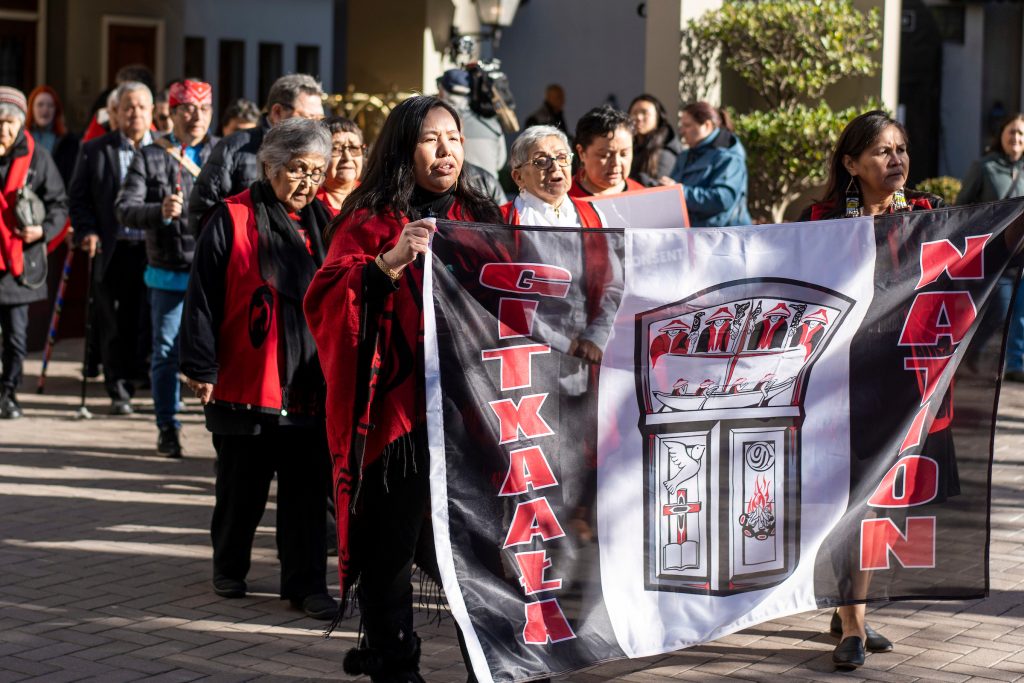
In September 2023, the B.C. Supreme Court ruled the province had failed to uphold the nations’ rights under the Constitution, but disagreed that the Declaration Act required the province to change existing laws.
The Gitxaała and Ehattesaht appealed the court’s ruling on the application of the Declaration Act and, in December 2025, the B.C. Court of Appeal ruled in their favour. DRIPA does have legal implications, the majority of judges ruled, and the province is required to fulfill them.
Days after the ruling, Eby said at a luncheon hosted by the B.C. Chamber of Commerce that his government would make changes to the Declaration Act in the spring. The premier castigated B.C. judges for issuing “dramatic, overreaching and unhelpful” decisions, naming both the Cowichan and Gitxaała cases.
On Feb. 3, lawyers for B.C. filed an application to appeal the Gitxaała and Ehattesaht case to the Supreme Court of Canada.
“The act’s purpose is to be a roadmap to stay out of court and try to find constructive resolution of shared concerns,” Eby said in a statement on Feb. 6. “It reflects that reconciliation is a two-way street.”
The premier’s plans to alter the Declaration Act seem to contradict that statement, noted Alexander.
“They’re sort of saying, ‘We’re going to make it illegal for you to access the courts on this’ — on the most relevant international obligation to Indigenous Peoples,” he said.
“So they’re denying access to justice specifically for First Nations.”