A deer jumps to graze from a tree in the Gulf Islands, where endangered Garry oak woodlands are suffering from over-grazing.
Photo: Supplied by Sofie McComb
The Gulf Islands around Vancouver Island are beautiful — full of lakes and sheltered bays, and dotted with meadows and deer grazing along the road.
At first glance, most walking through these islands would believe what they see is natural and healthy — but the environment is actually “highly degraded,” Tara Martin, professor in the department of forest and conservation sciences at the University of British Columbia, explains.
Those meadows were once filled with food and medicine plants and trees. But since the 1970s, the deer population on these islands has exploded and many native plants and trees can’t thrive. Native black-tailed deer, along with invasive fallow deer, have grazed these ecosystems into decline, one nibble at a time.
“[It’s a] very slow, gradual loss — so slow that most people don’t even recognize it,” Martin says.
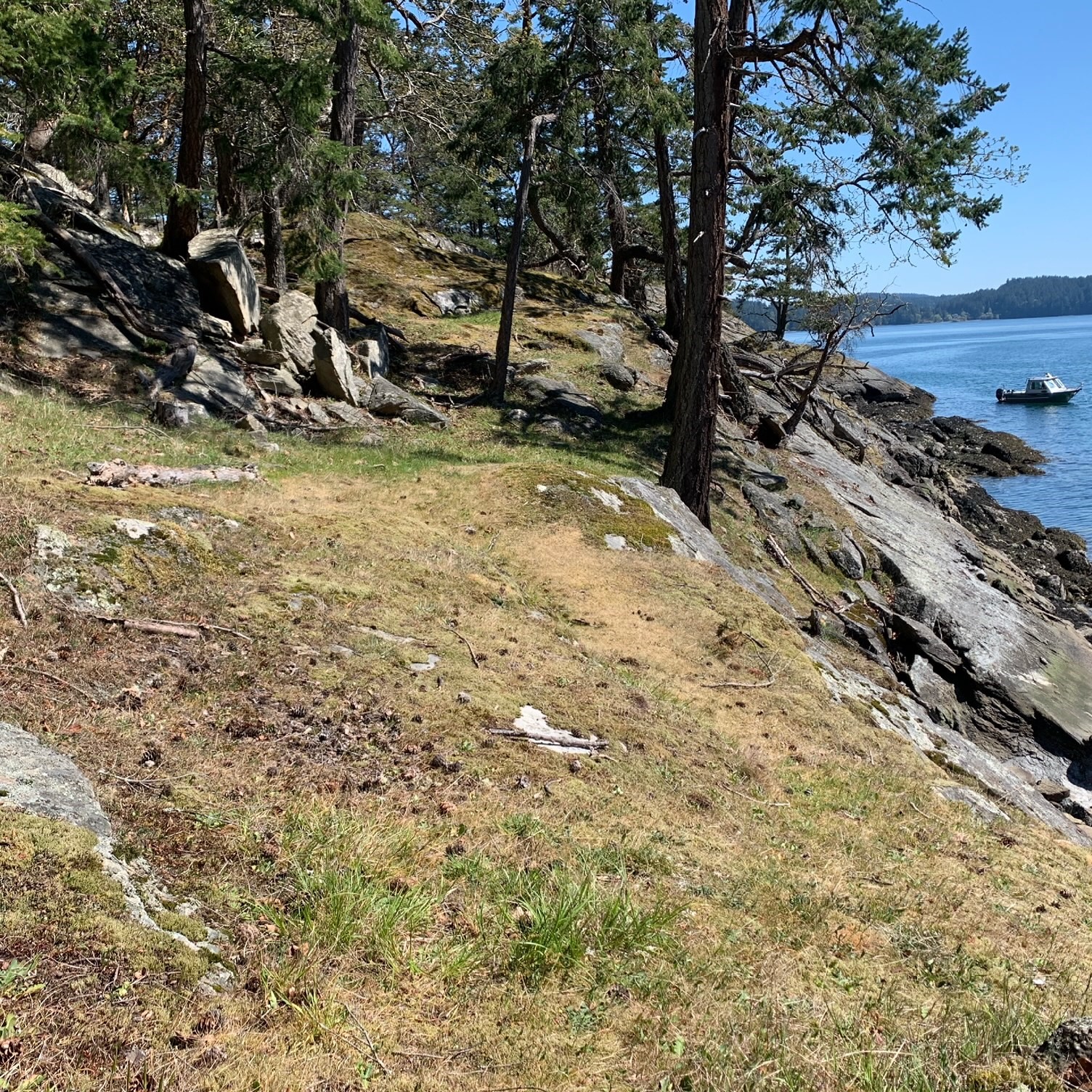
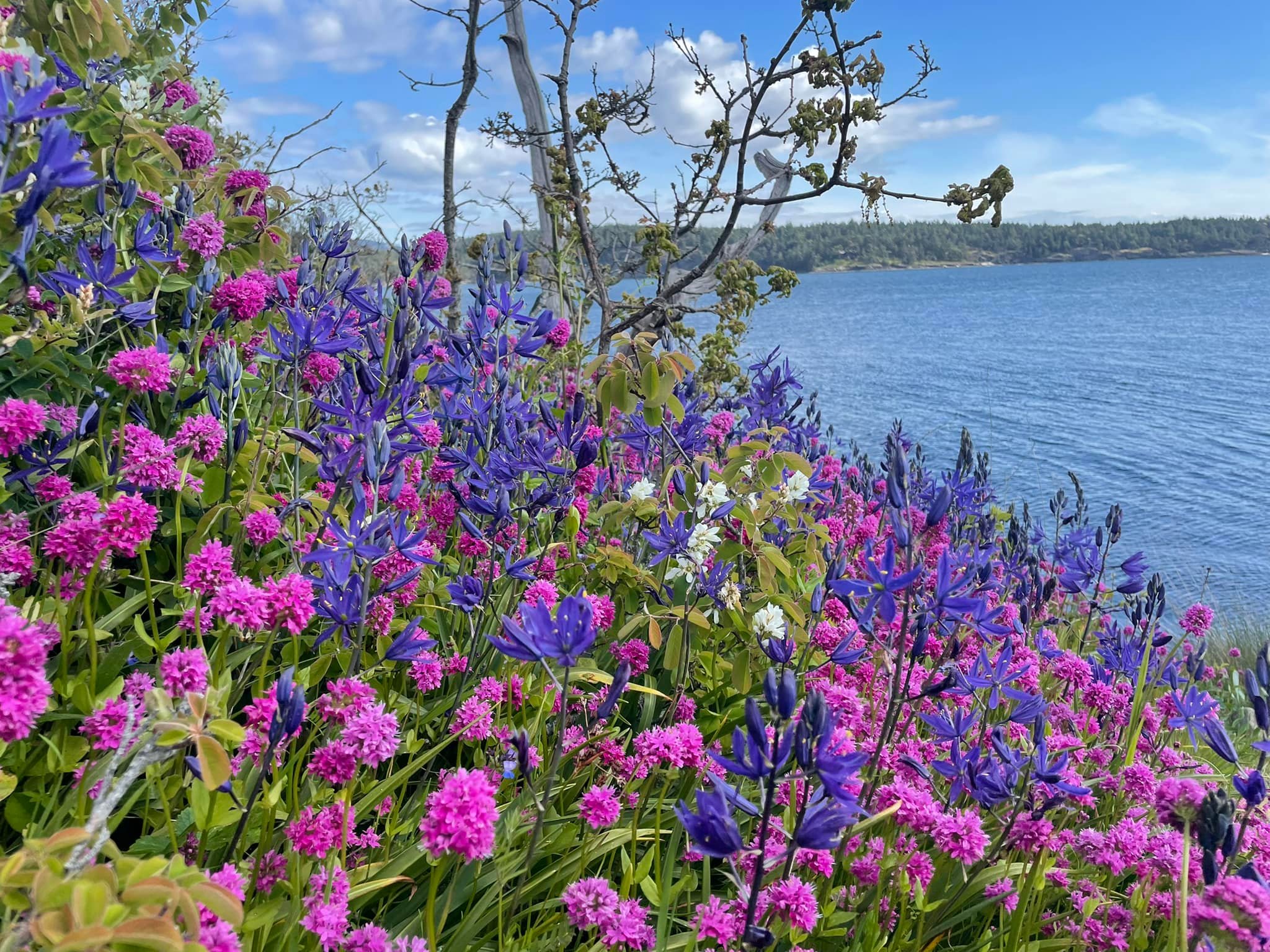
The landscape of Prevost Island has been heavily impacted by deer grazing. Just to the south, the smaller Channel Islands show what these ecosystems look like when no population of deer is present. Photos: Supplied by Sofie McComb
Martin has been investigating the issue for 15 years. She co-authored a study published this month in People and Nature, which concludes Indigenous hunting is the most cost-effective and efficient solution to reduce “hyperabundant deer” — a population that has grown so large as to be environmentally unsustainable — on the Southern Gulf and San Juan Islands, bringing balance to a stressed ecosystem and benefit human well-being.
University researchers worked with First Nations knowledge-holders and provincial and federal scientists on this study to create models of a range of solutions and their costs, and predicted success and uptake. They also predicted Indigenous hunting would have the highest chance of achieving objectives within 10 years on bigger islands.
Investigating problems. Exploring solutions
The Narwhal’s reporters are telling environment stories you won’t read about anywhere else. Stay in the loop by signing up for a weekly dose of independent journalism.
Investigating problems. Exploring solutions
The Narwhal’s reporters are telling environment stories you won’t read about anywhere else. Stay in the loop by signing up for a weekly dose of independent journalism.
“At the moment, what we’re seeing is we are putting a higher value on deer than everything else. And so we are losing hundreds of incredible plants — plants that pollinators, bumblebees, rely on,” Martin says.
“We’re losing Garry oaks, these amazing trees. We’re losing arbutus. … Ultimately, we’re heading towards an ecosystem that is much more simple and uninteresting and less biodiverse.”
To Tsawout Hereditary Chief W̱IĆKINEM Eric Pelkey, a co-author, the findings reaffirm the W̱SÁNEĆ goals to revitalize the Garry oak ecosystem — unique, highly biodiverse and critically endangered — and promote food sovereignty. Garry oak woodlands, which in Canada are found only in southwest B.C. and are one of the rarest ecosystems in the province, are crucial habitats for many native plants and animals, but have been threatened by urban development and invasive species.
“This is for the benefit of everyone. We’re trying to save our ecosystem,” Pelkey told The Narwhal.
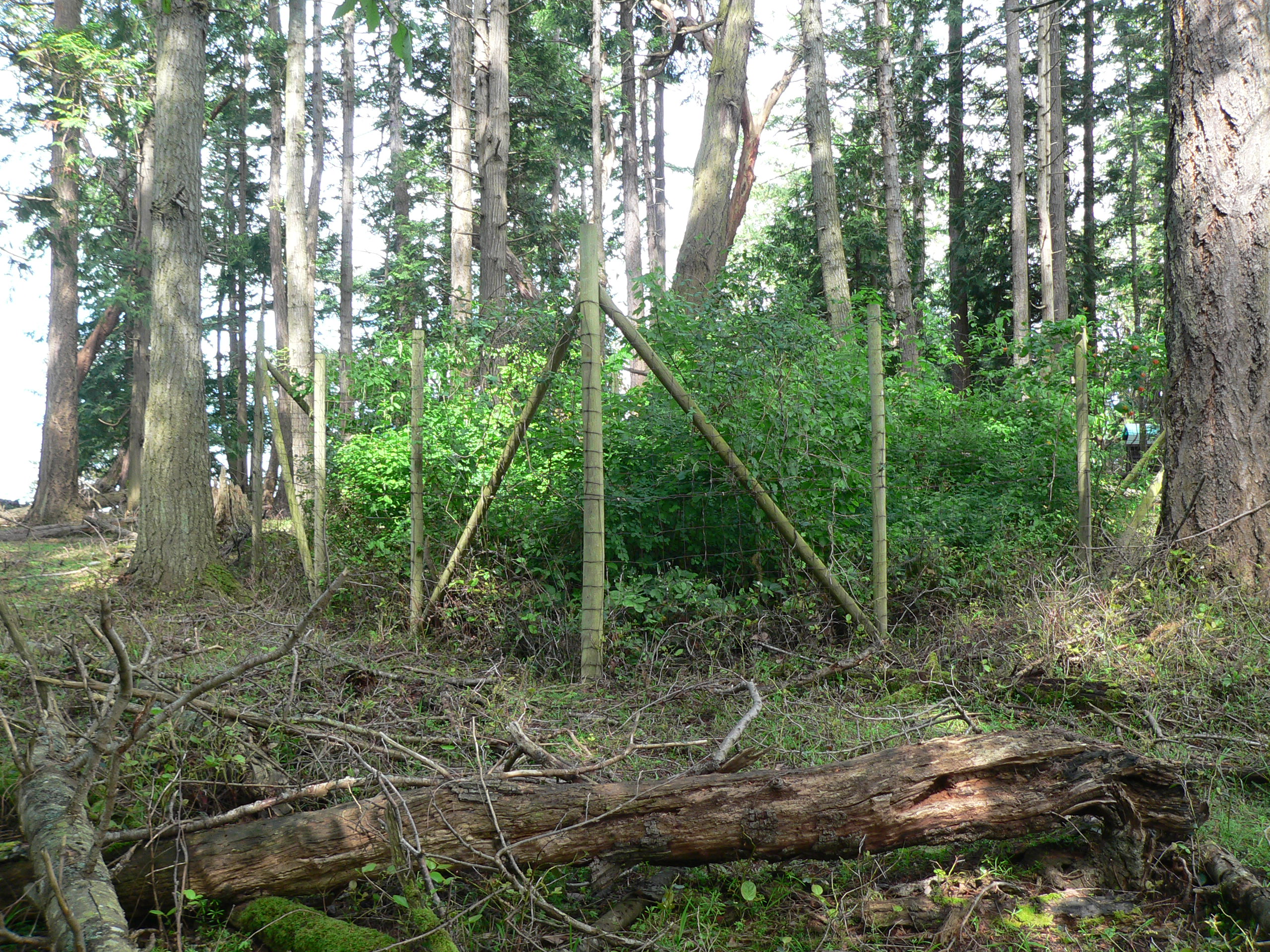
An enclosure blocks deer from accessing native plants, showing how much they would grow if it weren’t for so much grazing. Photos: Supplied by Sofie McComb
Less hunting, deforestation and eradicating predators made perfect conditions for deer to spread
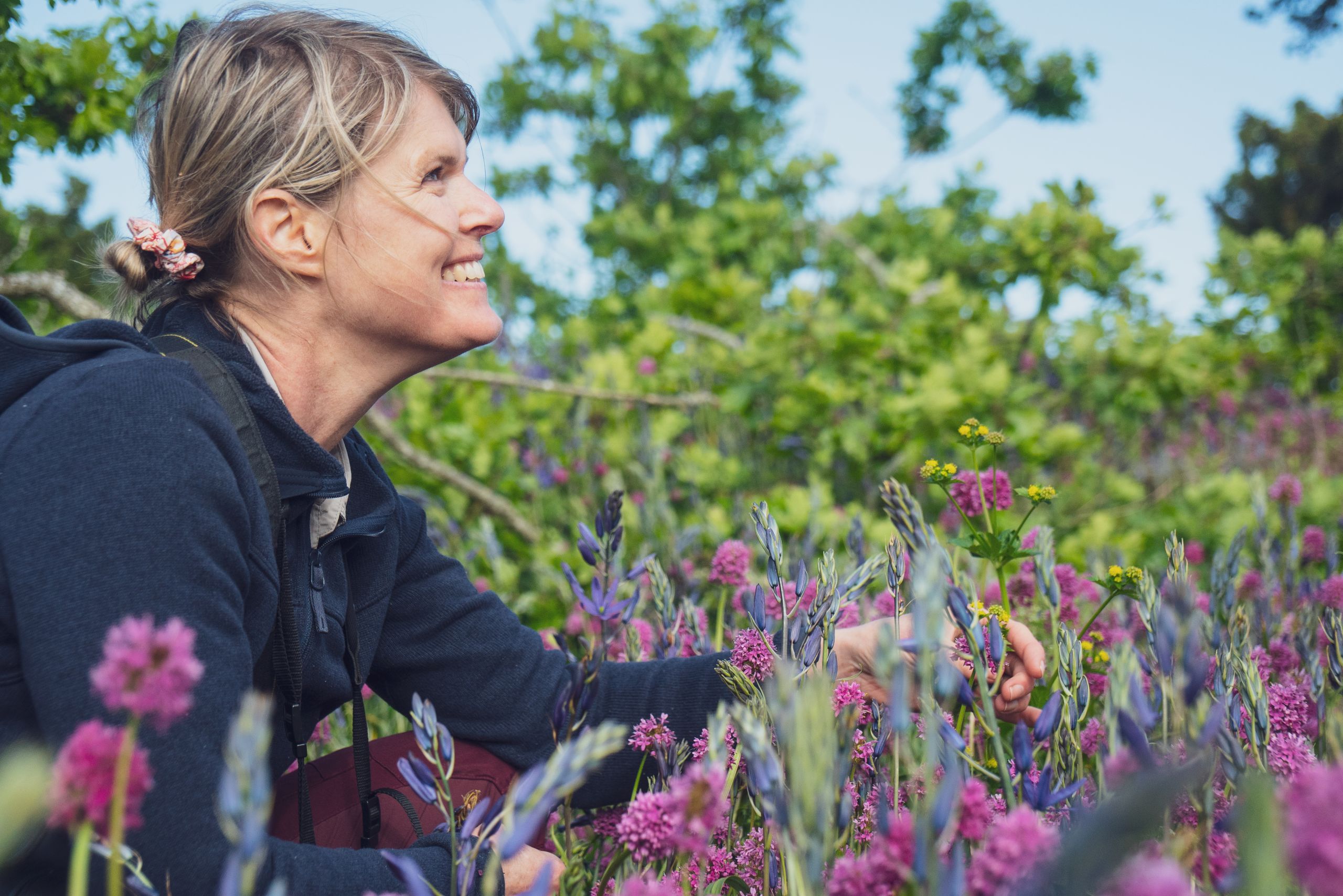
Even as a child on Salt Spring Island in the 1970s, Martin recalls walking through fields “almost shoulder-deep in wild flowers” like camas, biscuit root, desert parsley and chocolate lilies. It was a “kaleidoscope of colour,” she remembers.
Hyperabundant deer can graze until little remains, also impacting tree seedlings, shrubs and pollinators that depend on them.
Settlers cleared a lot of forest in the 20th century, and introduced gardens and pushed out predators. All these conditions created a welcoming environment for deer to increase unfettered. While native black-tailed deer increased, so did invasive fallow deer introduced by settlers. Some evidence suggests there are 10 times more deer on these islands than there were 100 years ago, Martin says.
UBC professor Tara Martin recalls being “almost shoulder-deep in wild flowers” as a child on Salt Spring Island in the 1970s. Flowers like that can still be found on Gulf Islands that don’t have deer on them, such as the nearby Channel Islands. Photo: Supplied by Sofie McComb
The Garry oak ecosystem is one of the most endangered in Canada, with only three per cent estimated to remain. Even if what remains is protected from further development, Martin and Pelkey worry about the already-diminished habitat’s ability to bounce back due to hyperabundant deer.
“Even little shrubs — as soon as they come out of the ground, they eat them,” Pelkey says about the deer. On Sidney Island, they are seeing less wild rose, trailing blackberry, or ocean spray — a plant W̱SÁNEĆ people have long used as an indicator for when salmon will start running.
“Sidney Island used to be a place of medicines and foods and so forth. … Everything’s gone. That was really disturbing to our medicine people and to our Elders,” he says.
“Sidney Island used to be a place of medicines and foods and so forth,” Tsawout Hereditary Chief W̱IĆKINEM Eric Pelkey says. Because of heavy grazing by deer, “everything’s gone.” Photo: Taylor Roades / The Narwhal
Even deer suffer when they are overpopulated, the study’s lead author, Sofie McComb, told The Narwhal. When the landscape is cleared, it’s harder for them to find nutritious food. “They are eating so many starvation foods right now,” she says. “These places are not looking like, or functioning how they’re supposed to. They’re just not functioning in a healthy manner at all.”
Giving predators more room is part of the hyperabundant deer puzzle
In the study, the research team compared several other strategies like enabling predators to return, bringing in deer reduction specialists, increased licensed hunting and birth control. They also considered scenarios that brought multiple strategies together.
When only Western perspectives were considered, increasing licensed hunting and hiring professional deer reduction specialists were ranked most cost-effective. But Indigenous hunting ranked highest for improving well-being for both the ecosystem and for humans, supporting Indigenous food sovereignty and cultural practices and reducing the population of deer.
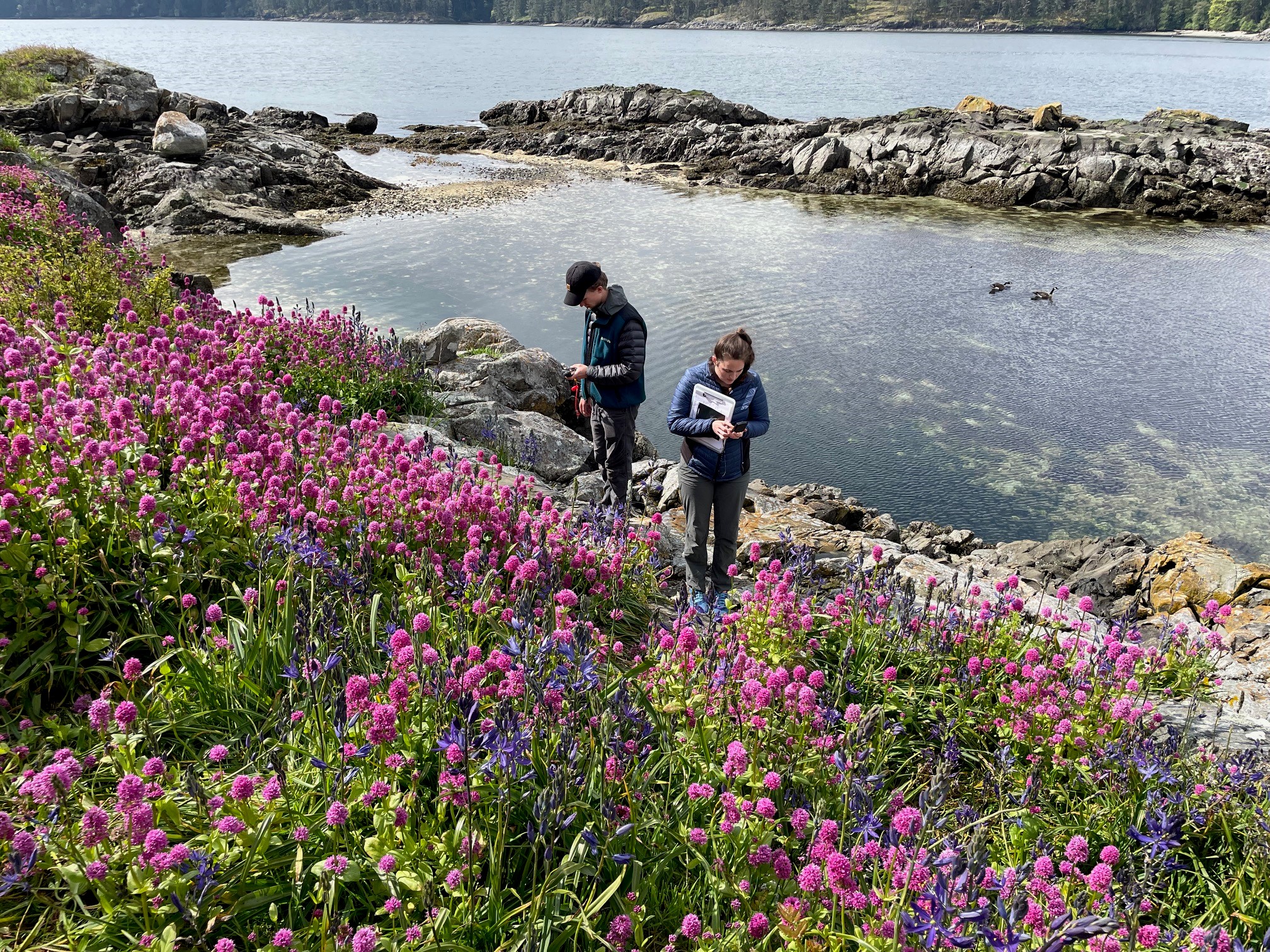
Lead author of the deer study Sofie McComb (right) and a fellow researcher look at island habitat not grazed over by hyperabundant deer. Photo: Supplied by Sofie McComb
For bigger islands, hunting led by local Indigenous communities was the only strategy with a high chance of bringing deer populations back down to a manageable size within a decade. To ensure uptake, hunters would be compensated for their work; increasing the number of hunting licences available does not ensure uptake, researchers said. For smaller islands, Indigenous hunting still had a high chance of success, but so did deer reduction specialists, and a combination of Indigenous hunting, deer reduction specialists and improving predator viability.
Cougars and wolves naturally do still swim to these islands — but they are often shot pretty quickly, Martin says. By improving predator viability they don’t mean actively reintroducing them to the islands, but improving human-predator coexistence.
Public opinion on hunting, funding identified as challenges to Indigenous hunting
The Douglas Treaty protects W̱SÁNEĆ rights to hunt and fish as they did before contact. But Pelkey pointed out Indigenous hunters can still face interference and racism when trying to execute those rights.
“We’re trying to get our people back to our native foods, but there’s a lot of impediments in our way to be able to harvest fish or hunt for our native meats,” he said. “It’s a challenge for us. Even though we have a Douglas Treaty right to hunt, we have always run into problems with people who object to that.”
Pelkey sat on a committee to reduce deer on Sidney Island. They worked with Parks Canada, the SPCA and residents of the island for years, but they were met with public outcry from some people who didn’t want to see the deer hunted. People were concerned with deer getting caught in fencing and wanting to see a solution that didn’t include killing deer. The government was quick to succumb to public pressure, Pelkey says.
“They pulled the rug out from under the whole project,” he says.
But Indigenous hunting passes on ancestral skills, connects Elders and youth, supports food sovereignty and ensures the entire animal is used sustainably, he explains, while bringing balance to an area suffering from over-grazing.
“We don’t just hunt them for sport. We actually hunt them for food … the fur, the skins, the hooves and the antlers. We use all of that,” he said. “It’s against our laws to be wasteful.”
In the study, experts identified societal uptake and funding as bigger challenges than technically implementing any of the strategies. The researchers will be travelling to communities in 2026 to share the findings, and Martin hopes to share with more people what the healthy baseline for these empty meadows actually looks like.
“I want to live in a place where there’s an abundance of all species,” Martin says.
Another year of keeping a close watch
Here at The Narwhal, we don’t use profit, awards or pageviews to measure success. The thing that matters most is real-world impact — evidence that our reporting influenced citizens to hold power to account and pushed policymakers to do better.
Our stories have been raised in legislatures across the country and cited by citizens in their petitions and letters to politicians.
In Alberta, our reporting revealed Premier Danielle Smith made false statements about the controversial renewables pause. In Manitoba, we proved that officials failed to formally inspect a leaky pipeline for years. And our investigations on a leaked recording of TC Energy executives were called “the most important Canadian political story of the year.”
Here at The Narwhal, we don’t use profit, awards or pageviews to measure success. The thing that matters most is real-world impact — evidence that our reporting influenced citizens to hold power to account and pushed policymakers to do better.
Our stories have been raised in legislatures across the country and cited by citizens in their petitions and letters to politicians.
In Alberta, our reporting revealed Premier Danielle Smith made false statements about the controversial renewables pause. In Manitoba, we proved that officials failed to formally inspect a leaky pipeline for years. And our investigations on a leaked recording of TC Energy executives were called “the most important Canadian political story of the year.”
Your access to our journalism is free, always. Sign up for our newsletter for investigative reporting on the natural world in B.C. — and across Canada — you won’t find anywhere else.
Your access to our journalism is free, always. Sign up for our newsletter for investigative reporting on the natural world in B.C. — and across Canada — you won’t find anywhere else.


 7 min. read