






 15 min. read
Summary
- In 2024, an extreme cold event caused many B.C. wineries to lose most of their grapes. In response, the province allowed wineries to join a program allowing the import of U.S. grapes, a practice usually reserved for larger commercial labels.
- The full rules about how sales of wine made with U.S. grapes would be taxed were released months after wineries had already bought foreign fruit. Each winery got a sales tax exemption on a specific quantity of wine — after that, taxes could reach as high as 89 per cent.
- These taxes apply to all sales for as long as wineries sell any wine made with U.S. fruit, even if the actual bottle in question is made with 100 per cent B.C. grapes. The result, winemakers say, is losing out on years of profits and, possibly, going out of business.
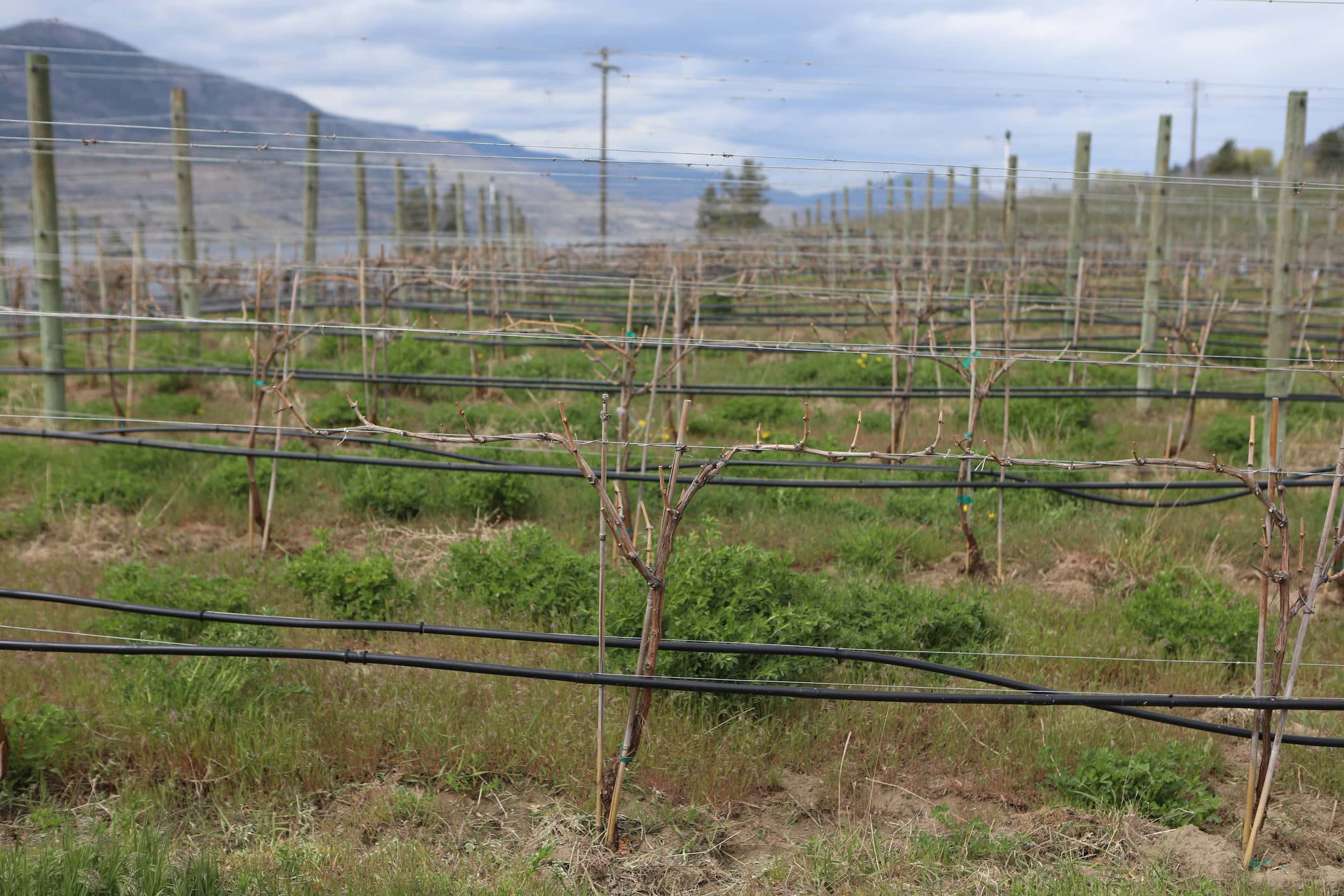
The program offered a lifeline when the forecast was unequivocally dire. In January 2024, temperatures dropped below -25 C in B.C.’s Okanagan, Thompson and Similkameen Valleys — the province’s agricultural breadbasket.
The cold snap in the Interior came right after unseasonable daytime highs of 10 to 13 C. The weather whiplash hit the area’s fruit trees hardest: acres of peaches, pears, plums, apples and nectarines were damaged, with the plants’ buds dead come spring. The ripe, juicy produce tourists flock to the Okanagan for in summer and fall never arrived.
The deep freeze also crushed one of B.C.’s most prized commodities: wine grapes. More than 90 per cent of the Interior’s annual harvest was lost, which meant nearly 90 per cent of the province’s total vineyard acreage. Suddenly, a $3.75-billion industry was in crisis.
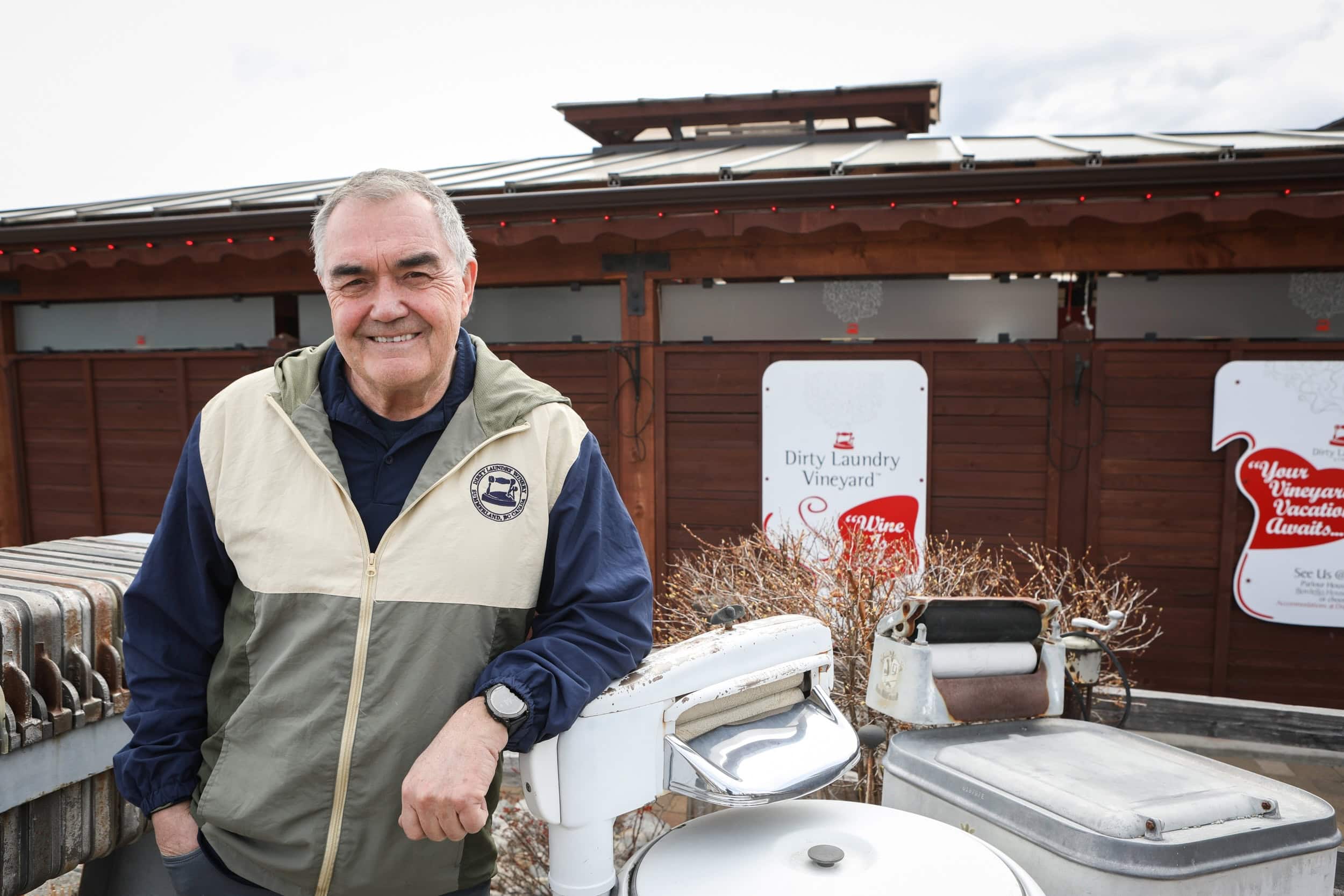
“There were zero grapes,” Paul Sawler, vice-president and general manager of Dirty Laundry Winery, a mid-sized winery in Summerland, B.C., recalls. The winery’s 100 acres of vineyards produced almost no fruit.
“Where we would normally see 300 to 400 tonnes [of grapes], we got less than half a tonne from all the vineyards combined,” Sawler says.
The solution seemed clear at the time: “There was no way to survive except to buy Washington State grapes.”
In British Columbia, alcohol is regulated by the BC Liquor Distribution Branch, a government body long assigned to the Ministry of Public Safety and Solicitor General. In July 2025, it was transferred to the Ministry of Agriculture and Food — a nod to the realities of producing a weather-dependent consumer good in an increasingly volatile 21st-century climate. For winemakers and grape growers, who had seen several difficult years of damage to their vineyards from extreme weather, it was a welcome move.
Under the liquor branch’s policy, certain wineries — mostly larger operations that hold a commercial winery designation — are allowed to import foreign grapes to complement their B.C. fruit. Often acquired from the U.S., these grapes produce wines that the liquor branch taxes at high sales mark-ups — the dollar amount the branch charges a winery when it sells its wines directly to consumers, restaurants or other distributors.
Regulations normally prevent most small and mid-sized B.C. wineries from purchasing foreign grapes. This is part of the liquor branch’s complex policy, which involves different regulatory and taxation systems not just for different types of wineries, but also for direct-to-consumer sales versus sales through the liquor branch. The short version is that independent, “land-based” wineries are required to use exclusively B.C. fruit, in exchange for which a good chunk of their sales are tax-exempt.

This is part of Who Pays?, a series at The Narwhal looking at the intersection of the environment and the economy
After the 2024 freeze, the liquor branch relaxed these rules, allowing a wider range of wineries to import grapes to salvage their businesses. But bringing in foreign grapes meant signing on to a program that limited each winery’s tax-exempt sales.
“We really had no choice,” Sawler says of his decision at Dirty Laundry. Though most Okanagan wineries were committed to making B.C. wines with B.C.-grown grapes, the weather had decided for them.
“If we didn’t buy the grapes, we would have had to lay off half our staff,” Sawler says. “We probably would have had wine to sell at the winery, but we would have lost our whole outside market — a market that we spent the last 20 years building.”
So, Dirty Laundry and 91 other wineries in the area rolled the dice and brought in foreign grapes to make their 2024 wines.
“I don’t regret buying them,” Sawler reflects. “The quality was good; the pricing was good. It worked out well.”
But the decision has come with a latent — and significant — unanticipated cost. The limit on wineries’ tax-exempt sales was based on a complicated calculation many did not understand at the outset. In fact, some didn’t understand they’d be subject to mark-ups at all. Now that the program is in its second year, some wineries have wine they can’t sell without a significant financial hit.
“A program that was basically designed to help wineries, in some cases may actually kill some wineries,” Sawler tells The Narwhal. “Those are extreme cases … but it is happening”
“We know how devastating the 2024 freeze event was for grape growers and wineries in the Okanagan and we’ve worked together with the B.C. wine industry to help them recover,” Minister of Food and Agriculture Lana Popham told The Narwhal in an emailed statement.
“The Liquor Distribution Branch will continue to work closely with wineries and Wine Growers BC.”
A program that brought wine flowing back into B.C. has soured
The vintage replacement program, or just “the program,” as many in the industry refer to it, was first announced in July 2024 and laid out in fine print in a liquor branch memorandum that October. Importantly, this was after most wineries had already purchased U.S. and foreign grapes.
For the 2024 vintage, the BC Liquor Distribution Branch would permit wineries that opted in to the program to purchase foreign grapes or a partially fermented product known as unfinished juice, and would treat any wine produced from those products the same as B.C.-grape wine. That meant the liquor branch would offer the tax exemption usually reserved for certain types of 100 per cent B.C. wine to all B.C. wineries using foreign grapes.
This main component of the program was a success. Wineries like Dirty Laundry and many smaller, newer wineries kept their staff, juiced their grapes and made wines they were proud of. The wider industry, which supports a substantial economy of restaurants, hotels, hospitality workers, supply companies, migrant agricultural workers and small family businesses remained afloat.
But the details were a shock to many.
The exemption wasn’t a blanket exemption. Each winery had what was known as a “support cap,” or a limit on tax-free exemptions. Wineries’ individual caps were based on an “Olympic average” of five years of previous mark-up exemption totals — for land-based wineries, of their B.C.-grape wines; for commercial wineries, of B.C.-grape wines certified by the BC Wine Authority’s Vintner’s Quality Alliance, or BCVQA. This was a dollar value calculated by taking the mark-up exemption on sales numbers from the past five years, dropping the highest and lowest numbers, and averaging the three remaining years.
Sales over that limit were taxed at the liquor branch’s standard rates for foreign-grape wines — as high as 89 per cent on the first $11.75 of the wine’s per-litre value, and 27 per cent after that.
The calculation didn’t pose a problem for many commercial wineries used to importing foreign grapes — and selling huge volumes. It was also doable for many established wineries that had relatively steady sales over the period in question and dedicated accounting departments. It did pose an issue for many newer, growing independent wineries, though.
Another surprise was how long a program meant to help with one bad year was going to last. The ability for wineries to buy foreign grapes for tax-exempt wine was extended for the 2025 vintage, to account for any lingering cold snap effects on the province’s vineyards. Additionally, once participating wineries brought in foreign grapes, they were tied to the vintage replacement program until they’d sold every last bottle of wine containing U.S. grapes.
This all means the support cap will remain in effect until March 2028, to account for the added year of foreign grapes, and sales of wines that take longer to produce, like reds or sparklings.
All that, and the mark-up exemption limit each participating winery received was not exclusive to its U.S.-grape wines. Post-limit taxes would be applied to all the wine a participating winery sold.
Let’s say a winery had 5,000 cases of U.S.-grape wine — “replacement” wine — left to sell, starting this year. That newer stuff would likely share shelf space with bottles of carefully cellared, 100 per cent B.C.-grape wine from years past, too. Signing onto the program meant this B.C.-grape wine would count toward the winery’s annual mark-up exemption limit. Which means that once the winery hit the annual limit set by its Olympic average, this 100 per cent B.C.-grown-and-produced wine would be taxed the same way as malbec from Argentina: at up to 89 per cent.
In an emailed statement on behalf of the liquor branch, the Ministry of Agriculture said that “to ensure revenue neutrality and fairness across the sector, the annual support cap … includes all wines sold within the fiscal year, including vintage replacement wines, BCVQA and 100 per cent B.C. grape wines.”
The ministry added that a support cap based on historical sales data was recommended by Wine Growers BC.
“From the outset, there were very clear guidelines communicated to the wine industry about eligibility and annual support caps, and it was intended to help the industry keep the lights on during a very serious agricultural emergency,” Minister Popham told The Narwhal.
“It is in everyone’s interest to return to producing 100 per cent B.C. wine production.,” the liquor branch-attributed statement concluded.
Small, new B.C. wineries suffering the most under program’s limits
Paul Sawler’s neighbour in Summerland, Ron Kubek, started Lightning Rock, a small, family-owned business just up the road from Dirty Laundry, in 2017. It’s grown steadily ever since.
“I think the problem in the wine business is that too many people in ownership or in the tasting room want to show how smart they are,” he says. His greatest pride is his winery’s consistent five-star ratings on Google, which show that everyday people appreciate Lightning Rock’s approach.
“Wine is supposed to be something that’s enjoyed among friends and family. Some of my favourite reviews are, ‘It was my first time in the tasting room and they didn’t make me feel dumb.’ We can talk about the technical stuff, but we’d rather just have fun.”

Kubek hasn’t shied away from sharing his views on the program, which his winery also opted into after losing its 2024 harvest.
“We’re still small, but we’ve experienced tremendous growth, from just a few bottles in 2018 and 2019 to [when] the pandemic hit and wine sales went through the roof,” he tells The Narwhal.
But that initially promising upward trajectory is now proving an impetus to further growth. The program calculated Lightning Rock’s mark-up limit using the low sales volumes of its early years, and now the winery isn’t eligible to sell much tax-exempt wine.
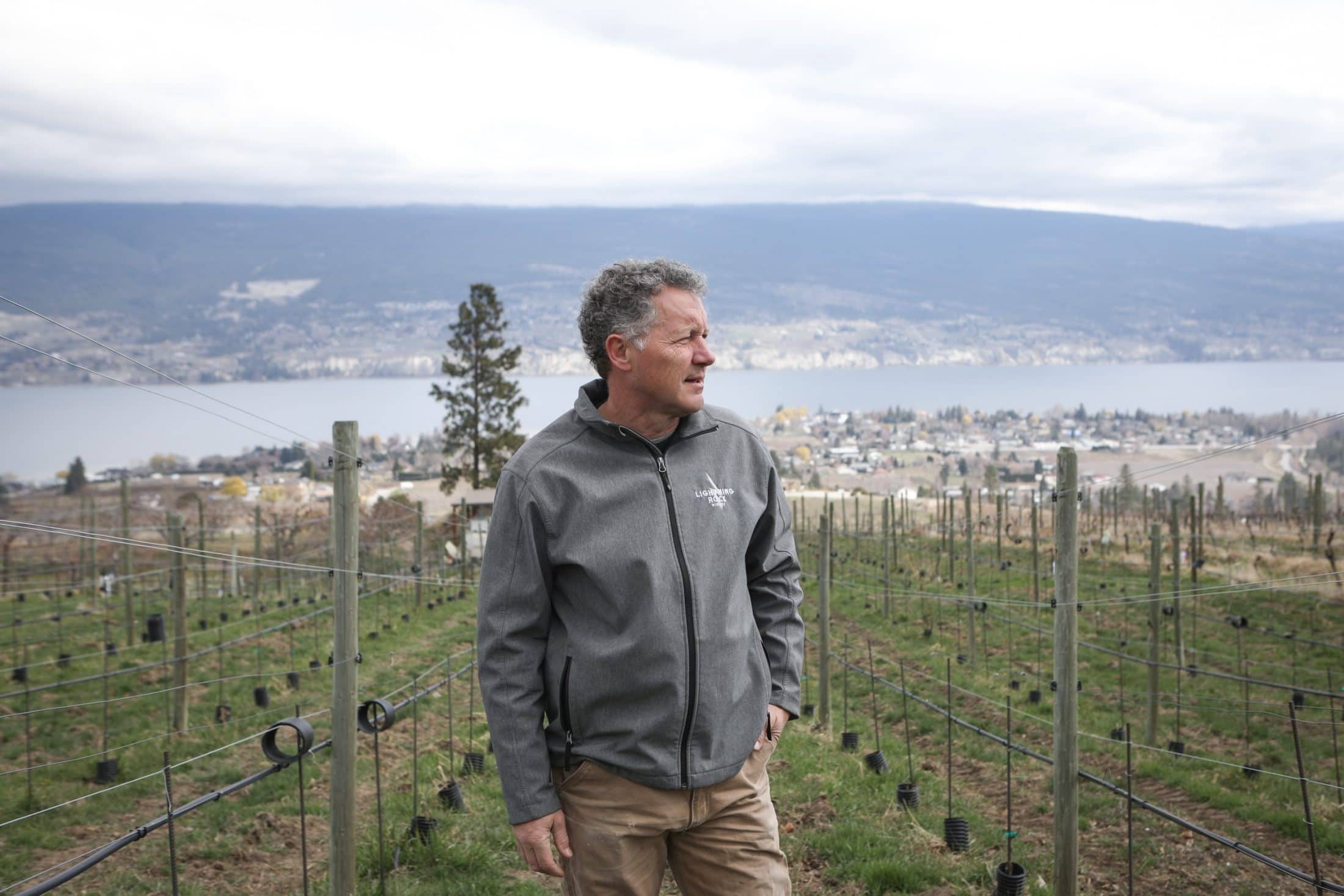
Kubek says his situation is “not because we brought in too many grapes from the U.S. — we brought in about 60 per cent of what we would normally do in a year after the catastrophic [harvest] loss — but because … [the liquor distribution branch] took what was a simple program and misapplied the Olympic average to help jack up revenues and get their bonuses.”
Lightning Rock’s speciality is single-varietal wines, a large portion of which are reds and sparklings that take several years to age. That means Kubek will likely have to remain in the program until 2028. As a result, he has to carefully calculate the amount of wines from previous B.C. vintages he can sell each year without losing too much profit.


“The problem is that my previously B.C. [tax-]exempt wines are now being taxed or in danger of being taxed,” he says. “So I’m trying to grow, but I have a limitation, because if I do grow, I’m suddenly hit with an 89 per cent tax.”
So Kubek, like many Okanagan winery owners, was holding back sales in March when he spoke with The Narwhal — waiting anxiously for the liquor branch’s fiscal-year turnover of April 1 to reset his mark-up limit. For a small winery with hard-won personal relationships with restaurants and other distributors, the cost is significant.
“I’m having to tell my sales agents, ‘Hey slow down on sales,’ because I’m very, very close to going over my Olympic average and then suddenly I’m going to be paying 89 per cent tax on a bottle of wine.”
Kubek says he would have been able to sell an additional 1,000 cases of wine in the last fiscal year if it weren’t for his mark-up cap.
In response to The Narwhal’s questions about these limitations, the agriculture ministry noted, “While some wineries accessing the temporary supports have exceeded their annual cap and are facing payment obligations, many other wineries planned their operations around the annual support cap or chose not to access the temporary supports. Any changes to the policy directives or requirements mid-stream would not be fair to these businesses.”
Kubek feels frustrated. “I lost all my fruit. I had to pay for fruit to come in and now the government’s penalizing me if I try to grow.”
He believes the program has hurt wineries like his the most.

The support cap clause in the vintage replacement program was meant to prevent some of the Okanagan’s biggest wineries from bringing in more cheap foreign grapes than they normally would while paying below-normal sales taxes, Kubek says. It was supposed to prevent these grapes from flooding the B.C. market, which could have changed the industry’s local fingerprint and provided an unfair advantage to some.
But what the government feared never happened, and the little guys are the ones now being hurt, Kubek says. He pointed to two wineries under the same ownership — Kelowna’s Mt. Boucherie Estate winery and Rust Wine Co., a smaller winery in Oliver — which confirmed they have had to lay staff off as a result of tax bills currently exceeding $500,000.
The agriculture ministry told The Narwhal, “In recognition of the payment obligations for those that exceeded their cap last fiscal, the [BC Liquor Distribution Branch] will continue to work with wineries to explore flexible payment arrangements within reasonable timelines.”
B.C. wine industry is pushing for solutions to a complex situation
Jeff Guignard is the CEO of Wine Growers BC, the primary industry marketing and lobbying organization for B.C. wines. He has heard his fair share of complaints about the vintage replacement program, including from Kubek, who he speaks to nearly daily. He also speaks with the provincial government every week, trying to find a solution for wineries who say the taxation approach has pushed them to the financial brink.
“This program was an essential lifeline to industry in a moment of generational crisis,” Guignard says. “It literally saved people’s businesses. There are wineries in B.C. that would not be in operation without this program. So we’re immensely grateful to government for that.”
But, he adds, “It’s now clear — because things were rushed, and though everyone was doing their best — that the program has had some unintended consequences.”
Guignard says the constraints built into the program for good reason are now injuring the very people and businesses the program was designed to support.
“The constraint is acting as a limit on sales,” he says. “You could be selling, right now, a 100 per cent made-and-bottled-and-grown-in-B.C. wine, that was bottled years ago, prior to the freeze, and prior to the program being developed. But it counts against your business as though it were part of the program.”
Guignard says the problem with the program is its one-size-fits-all approach, when the province’s wine industry ranges from huge, established players like Arterra Wines Canada or Andrew Peller Ltd., which both own multiple wineries, to medium-sized operations like Dirty Laundry and smaller newcomers like Lightning Rock.
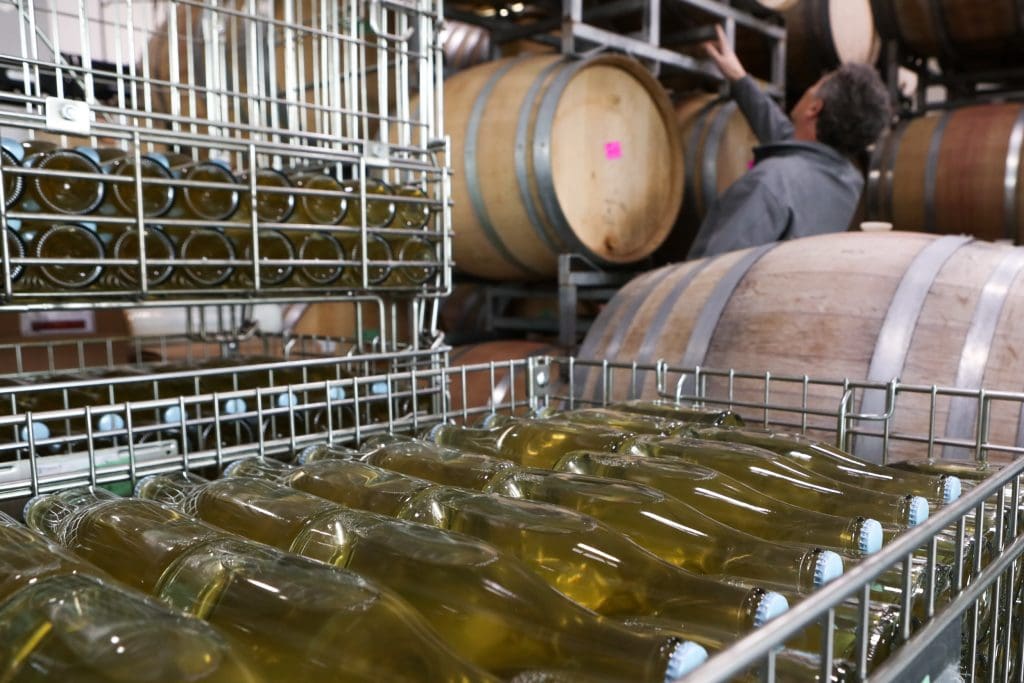
He says he knows of over a dozen wineries that have gone over their support cap and received invoices from the provincial government — businesses being treated “as though they were importing foreign wine into the province.”
“The program was designed to help you not have to do that,” he says, adding that one person told him, “ ‘I wish I hadn’t brought any fruit in. I would have had no wine, and I would have had to lay off all my staff, but my business would actually be in a better place, financially.’ ”
Adding to the challenge is the fact that the 2025 grape harvest in the Okanagan and Similkameen was — to everyone’s surprise — highly productive. Many of the vines that had survived the cold freeze produced abundant fruit, but grape growers unattached to specific wineries were left without customers. Businesses trapped in the “golden handcuffs” of the program, as Guignard terms it, weren’t buying, because they weren’t looking to make new wines they couldn’t turn a profit on.
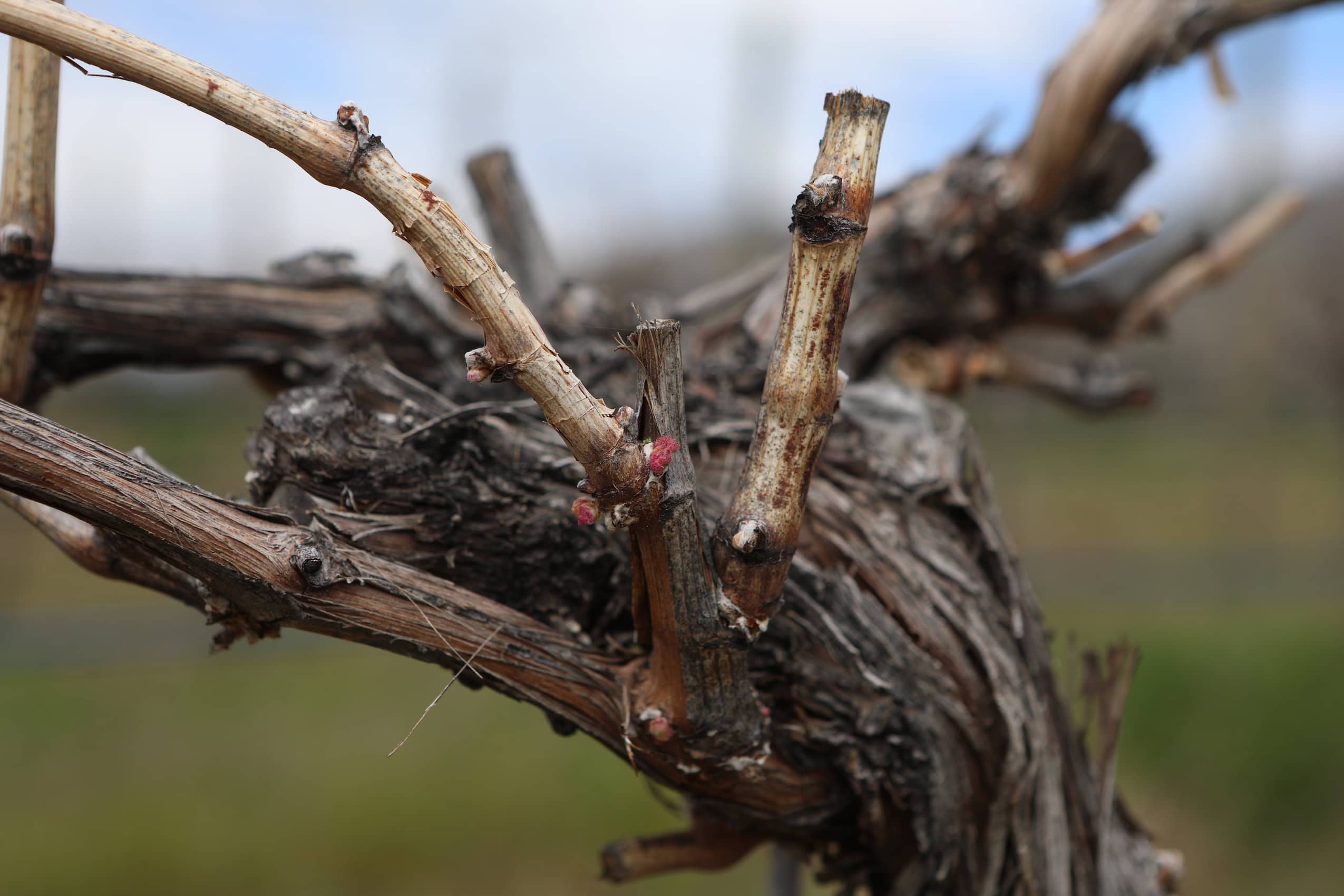
With growers, too, facing financial hardship, the program has in some ways simply deferred the crisis it was trying to prevent. The crucial support the program offered when the industry seemed on the brink of collapse has turned into an albatross hanging over some winemakers’ necks.
“From a Dirty Laundry perspective, I’ve taken the position that if I had 1,000 cases of imported wine left over at the end of March next year, I’d dump it before I’d stay in the program another year,” Sawler says. “That’s the amount of impact it’ll make on our winery. We’d be better off to throw the wine away or to sell it for nothing … to make it go away.”