Highway 413, Vancouver port expansion have the eye of the feds, newly released documents show
Controversial initiatives appear among an internal list compiled by federal officials in March, showing 17 ‘major projects,’ some of which have already been deemed in the ‘national interest’
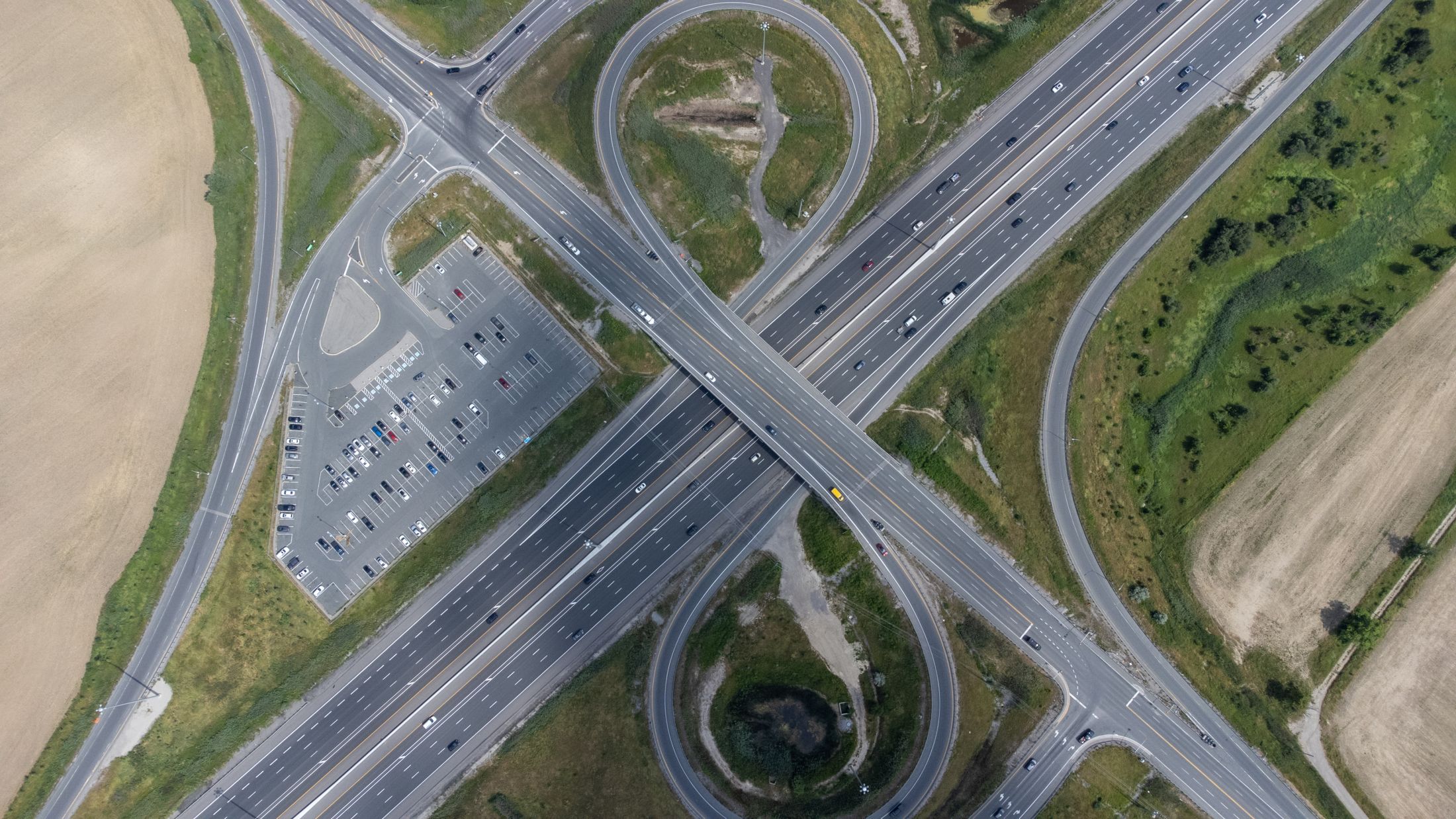
Highway 413, to be built through the protected Greenbelt in the Toronto area, is on a list of 'major projects' compiled by federal officials in March that also includes proposals to double the size of a Vancouver port and develop or expand northern mines.
Photo: Katherine Cheng / The Narwhal
With Prime Minister Mark Carney’s government still tight-lipped about the exact projects on its nation-building wishlist, a newly released internal document from the early days of his leadership adds to the speculation.
Proposals to double the size of a Vancouver port, build Highway 413 in Ontario and develop or expand mines in Yukon and Nunavut were among the list of 17 “major projects” compiled by the Carney government in March.
The list is included in federal briefing notes prepared by Fisheries and Oceans Canada for its deputy minister, and was obtained by The Narwhal under access to information law. Amongst the projects identified for “permitting and regulatory efficiency” are six related to ports and harbours, five involving mining, three that deal with electricity generation and three concerning highways. In October, Carney said developing ports and exporting minerals are key parts of his economic plan.
The rest have not yet been selected for fast-tracking, although some are already high-profile, controversial developments. Roberts Bank Terminal 2, a plan to double the size of the Port of Vancouver, has attracted opposition due to its location in a sensitive estuary. Highway 413, a new highway in the Toronto area to be built through the protected Greenbelt, was at one point scrutinized by a federal agency over its potential harm to species at risk. And last year a court found the Yukon and Ottawa governments did not properly consult Indigenous nations over the Kudz Ze Kayah mining project, proposed on the traditional territory of the Kaska First Nations. All three appeared on the March list.
The briefing notes were prepared for a meeting that had been scheduled for March 26, about two weeks after Carney was sworn in. They laid out the proposals in a section titled “Update on Major Projects.” Government officials were expected to review them and “identify roadblocks.” The Narwhal has not confirmed the meeting itself took place.
Get The Narwhal in your inbox
Independent, investigative journalism you won’t find anywhere else. Stay in the loop by signing up for our newsletter.
Get The Narwhal in your inbox
Independent, investigative journalism you won’t find anywhere else. Stay in the loop by signing up for our newsletter.
The briefing note’s title, “Permitting and Regulatory Efficiency — Major Projects including Clean Growth” resembles the name of a Trudeau-era Cabinet directive issued in 2024 meant to speed up federal decision-making and get projects “built faster.” That effort was related to the Trudeau government’s Clean Growth Office. Under Carney, this office has now been absorbed into the new Major Projects Office.
The Major Projects Office is handling “national interest” projects and is part of the administrative arm of the prime minister and Cabinet, the Privy Council Office. In a response received after publication time, a spokesperson for the Privy Council Office told The Narwhal the list “was not prepared specifically” under the Trudeau-era cabinet directive on clean growth, and said there are “a number of projects at various stages of consideration for potential referral to the [Major Projects Office]. These projects are currently being assessed. To avoid influencing potential decisions and to respect sensitive ongoing discussions, the Government of Canada will refrain from publicly commenting on the status of assessment of these projects. Announcements will be made in due course.”
According to a separate internal government list of projects revealed by The Globe and Mail, the government has been considering a number of other oil and gas industry proposals to be fast-tracked, including a new oil pipeline. The head of the Major Projects Office, former Trans Mountain oil pipeline CEO Dawn Farrell, has said she’s assessing more unnamed proposals that may be part of the next tranche of priority projects the government will reveal in November.
Here’s a look at the list of proposals federal public servants identified in March.
This list of 17 “major projects” was compiled by federal government officials and included in internal deputy minister briefing notes from March. Graphic: Shawn Parkinson / The Narwhal
1. Kudz Ze Kayah
Proponent: BMC Minerals Location: South of Ross River, Yukon Description: Open pit and underground zinc, silver, copper, gold and lead mine, in the traditional territory of the Kaska First Nations. In December 2024, the Yukon Court of Appeal found the Yukon and federal governments did not consult properly with the nation over the project. The court ordered the governments to carry out more consultations.
2. Eskay Creek
Proponent: Skeena Gold and Silver Location: Northwest B.C. Description: Open pit gold mine. The company says it’s expecting to obtain the permits it needs for construction by the end of the year and for the mine to start producing in 2027.
3. Roberts Bank Terminal 2
Proponent: Vancouver Fraser Port Authority Location: Metro Vancouver Description: New marine container terminal that would be built in the Fraser River estuary. The port authority says more capacity is needed but First Nations, conservation groups and others have opposed the development in part because the estuary is key habitat for orcas and salmon.
4. Ring of Fire
Proponent: Wyloo Metals / various Location: Northern Ontario Description: Approximately 8,000 square kilometres of land on Treaty 9 territory that is suspected of holding vast critical mineral deposits. The region is remote and lacking year-round road access, with several roads currently proposed. On Oct. 29, the Ontario government announced it had signed a deal with Webequie First Nation to “speed up” road construction. Ontario Premier Doug Ford said construction would begin next June as long as the federal government dropped a regional environmental assessment of the area first. But a day earlier, Neskantaga First Nation submitted a request to Environment and Climate Change Minister Julie Dabrusin for a federal assessment of a prominent nickel mine project in the Ring of Fire called Eagle’s Nest, by Australian mining company Wyloo Metals.
5. Mary River mine expansion
Proponent: Baffinland Iron Mines Location: North Baffin Island, Nunavut Description: Expansion of Canada’s northernmost mine. Baffinland has proposed building a railway from the iron ore mine site to the coast as part of the expansion. Local hunters have asked for the project to be reassessed. Baffinland spokesperson Peter Akman told The Narwhal the project “aligns directly with Canada’s clean growth and Indigenous participation goals” and would “create hundreds of additional Inuit jobs, and expand royalties and training opportunities for northern communities.” He said adding rail would reduce emissions and other impacts.
6. Bruce C project
Proponent: Bruce Power Location: Near Kincardine, Ont. Description: New nuclear generating station within an existing plant. Bruce Power is considering several nuclear reactor technologies for the project, which is undergoing a federal impact assessment.
7. Highway 413
Proponent: Government of Ontario Location: Greater Toronto Area Description: New highway proposed north and west of Toronto that would cut through the Greenbelt and endangered species habitat. The provincial government says it’s needed to help with congestion, but the highway is facing stiff opposition from locals and conservationists.
8. Rose Lithium-Tantalum mining project
Proponent: Critical Elements Lithium Corporation Location: North of Nemaska, Que. Description:Open pit lithium and tantalum mine in the traditional territory of the Crees of northern Quebec, with a waste and tailings area and ore processing facility.
9. Port of Montreal expansion
Proponent: Port of Montreal Location: Northeast of the Island of Montreal Description: Project to expand the port’s capacity. The federal government has picked this project in the “national interest,” saying it’s key to “meet growing demand and diversify trade routes” in eastern Canada. Some local residents and experts argue the plan is harmful to the environment and public health.
10. Mactaquac Life Achievement project
Proponent: New Brunswick Power Corp. Location: Central New Brunswick Description: Refurbishment to extend lifespan of New Brunswick’s largest hydro dam. In June, the province granted the New Brunswick Power Corp. permission to proceed with the project after a two-year environmental assessment. New Brunswick Power spokesperson Elizabeth Fraser told The Narwhal the organization “continues to look at opportunities to work with both the provincial and federal governments for funding opportunities” to help support the project.
11. Highway 101 twinning
Proponent: Province of Nova Scotia Location: Near Windsor, N.S. Description: Twinning a stretch of highway that has been stalled over a section that spans the Avon River. Some residents want to see a solution that allows for fish passage at the Avon River causeway.
12. Chignecto Isthmus resiliency project
Proponent: Provinces of New Brunswick and Nova Scotia Location: New Brunswick and Nova Scotia border Description:A new dyke system for a strip of land threatened by rising sea levels that is home to the only road and rail connection between the two provinces.
13. Wood Islands dredging
Proponent: Transport Canada Location: South shore of Prince Edward Island Description: Dredging to deepen the Wood Islands Harbour. Low tides have meant ferries have cancelled sailings and fishing vessels have had issues with the shallow water. Transport Canada said in October dredging is well on its way and expects to finish this year.
14: Dartmouth Cove infill
Proponent: 4197847 Nova Scotia Ltd. Location: Halifax Description: Proposal to infill part of Dartmouth Cove to provide more waterfront access and create land for development. In October, Halifax City Council voted to restrict the infill project following complaints about its potential to harm wildlife and block public access to the waterfront. Transport Canada recently approved an amended version of the plan.
15. Boat Harbour Remediation project
Proponent: Build Nova Scotia Location: Near Pictou, N.S. Description: Remediation of a harbour next to Pictou Landing First Nation, and expansion of an on-site waste facility to hold the hazardous industrial waste that is removed. The project was given the green light by Canada in January, subject to conditions that include measures to limit the effects on Pictou Landing and the Mi’kmaq of Nova Scotia. Build Nova Scotia declined comment to The Narwhal.
16. Regional assessment of offshore wind development in Nova Scotia
Proponent: Government of Nova Scotia Location: Off Nova Scotia’s eastern shore Description: This regional assessment was completed in January 2025 and recommended five potential wind energy areas, four off Nova Scotia’s eastern shore and a fifth northeast of Cape Breton. Since then, Nova Scotia Premier Tim Houston has proposed hundreds of turbines to be built as part of a project called “Wind West.” The prime minister named the “Wind West Atlantic Energy” project as one of his potential national-interest proposals in September.
17: Cooper Cove Marine Terminal expansion
Proponent: Port of Argentia Location: Town of Placentia, Nfld. Description: Expansion of a seaport, meant to increase cargo storage and speed up vessel loading. In 2023, the Trudeau government committed $38 million to this $100-million project.
The Narwhal requested comment from the proponents of all projects that have not yet been listed as in the “national interest.” The responses received have been included.
Updated on Nov. 4, 2025, at 1:38 p.m. ET: This story has been updated to correct a line stating the Port of Montreal expansion had been chosen by Prime Minister Mark Carney for fast-tracking under the One Canadian Economy Act, as it has only been identified for consideration for fast-tracking.It has also been updated to include comment from the federal government, received after publication time.
Another year of keeping a close watch
Here at The Narwhal, we don’t use profit, awards or pageviews to measure success. The thing that matters most is real-world impact — evidence that our reporting influenced citizens to hold power to account and pushed policymakers to do better.
And in 2024, our stories were raised in parliaments across the country and cited by citizens in their petitions and letters to politicians.
In Alberta, our reporting revealed Premier Danielle Smith made false statements about the controversial renewables pause. In Manitoba, we proved that officials failed to formally inspect a leaky pipeline for years. And our investigations on a leaked recording of TC Energy executives were called “the most important Canadian political story of the year.”
Here at The Narwhal, we don’t use profit, awards or pageviews to measure success. The thing that matters most is real-world impact — evidence that our reporting influenced citizens to hold power to account and pushed policymakers to do better.
And in 2024, our stories were raised in parliaments across the country and cited by citizens in their petitions and letters to politicians.
In Alberta, our reporting revealed Premier Danielle Smith made false statements about the controversial renewables pause. In Manitoba, we proved that officials failed to formally inspect a leaky pipeline for years. And our investigations on a leaked recording of TC Energy executives were called “the most important Canadian political story of the year.”
Your access to our journalism is free, always. Sign up for our newsletter for investigative reporting on the natural world in B.C. — and across Canada — you won’t find anywhere else.
Your access to our journalism is free, always. Sign up for our newsletter for investigative reporting on the natural world in B.C. — and across Canada — you won’t find anywhere else.

 9 min. read