





 6 min. read
Summary
- In briefing notes, officials with Canada’s natural resources department compared a federal office to a White House council tasked with stewarding energy projects forward.
- Canada’s Major Projects Office is meant to speed up developments including natural gas and mining.
- A First Nations leader noted Canada’s different constitutional framework, while environmental experts and advocates cautioned against following Trump’s push for “energy dominance.”
Prime Minister Mark Carney’s special office for speeding up major projects “operates similarly” to U.S. President Donald Trump’s energy “tiger team,” according to internal Canadian government records.
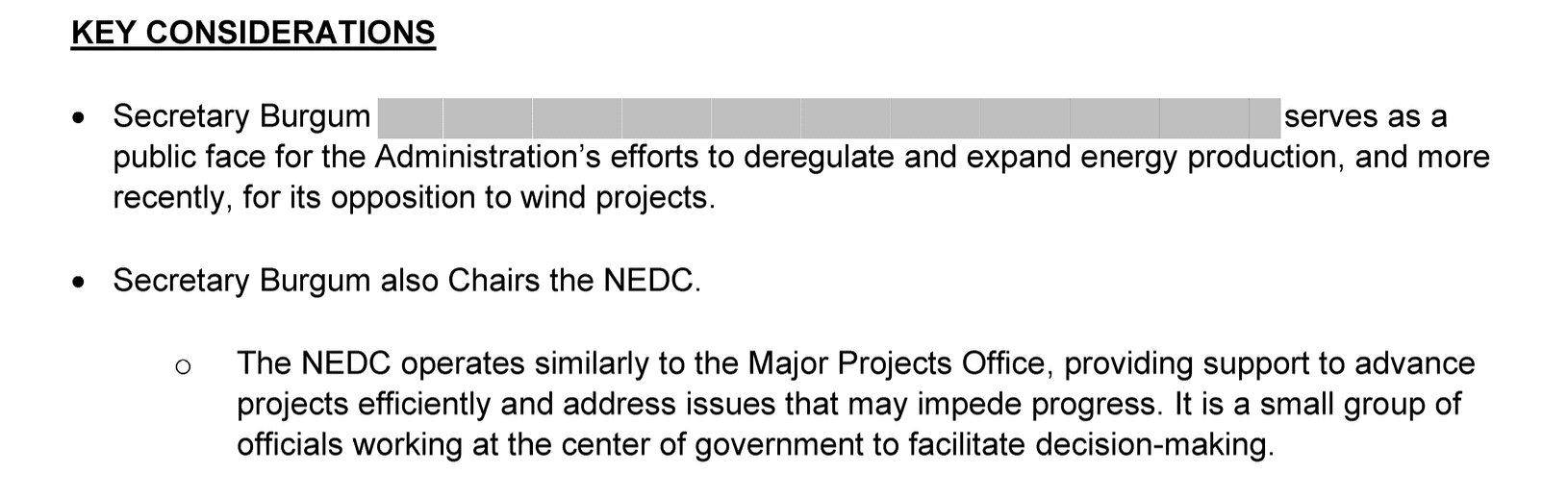
The comparison between Carney’s Major Projects Office and the president’s National Energy Dominance Council, or NEDC, are contained in a briefing note for Canadian Energy Minister Tim Hodgson that was obtained by The Narwhal through an access to information request.
“The NEDC operates similarly to the Major Projects Office,” the briefing note from Natural Resources Canada reads, “providing support to advance projects efficiently and address issues that may impede progress. It is a small group of officials working at the centre of government to facilitate decision-making.”
According to a description by one of its senior advisers, the U.S. council, which was created within the Executive Office of the president, is conceived as a “tiger team,” or a group of specialists hired to solve a specific problem. It offers “concierge, white glove service” to get mining and fossil fuel projects approved fast, the advisor said.
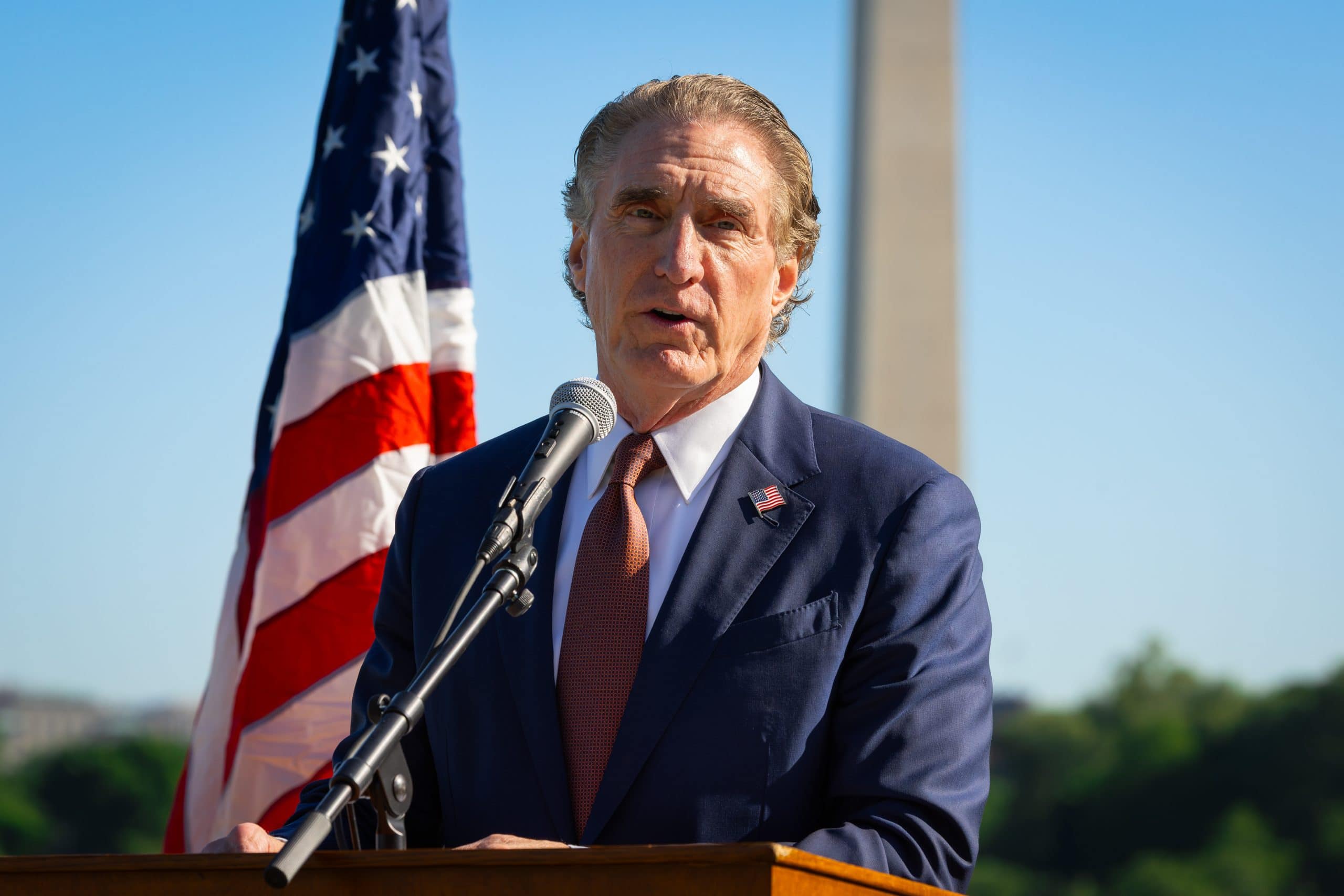
It’s chaired by U.S. Interior Secretary Doug Burgum, who has close ties to oil and gas producers, and the team has been involved in promoting mining, natural gas and a pipeline in Alaska. The briefing note shows Hodgson was scheduled to meet with Burgum last October.
Six months after Trump’s council was formed, Carney launched the Major Projects Office with a mandate to “streamline and accelerate” regulatory approvals for “nation-building” projects. The office is backed by the Privy Council Office, the department that supports the prime minister and cabinet.
So far, the prime minister has referred five mining projects and two natural gas projects to the office, as well as others in nuclear, electricity, ports and roads. He put Dawn Farrell, the former CEO of the oil pipeline company Trans Mountain, in charge.
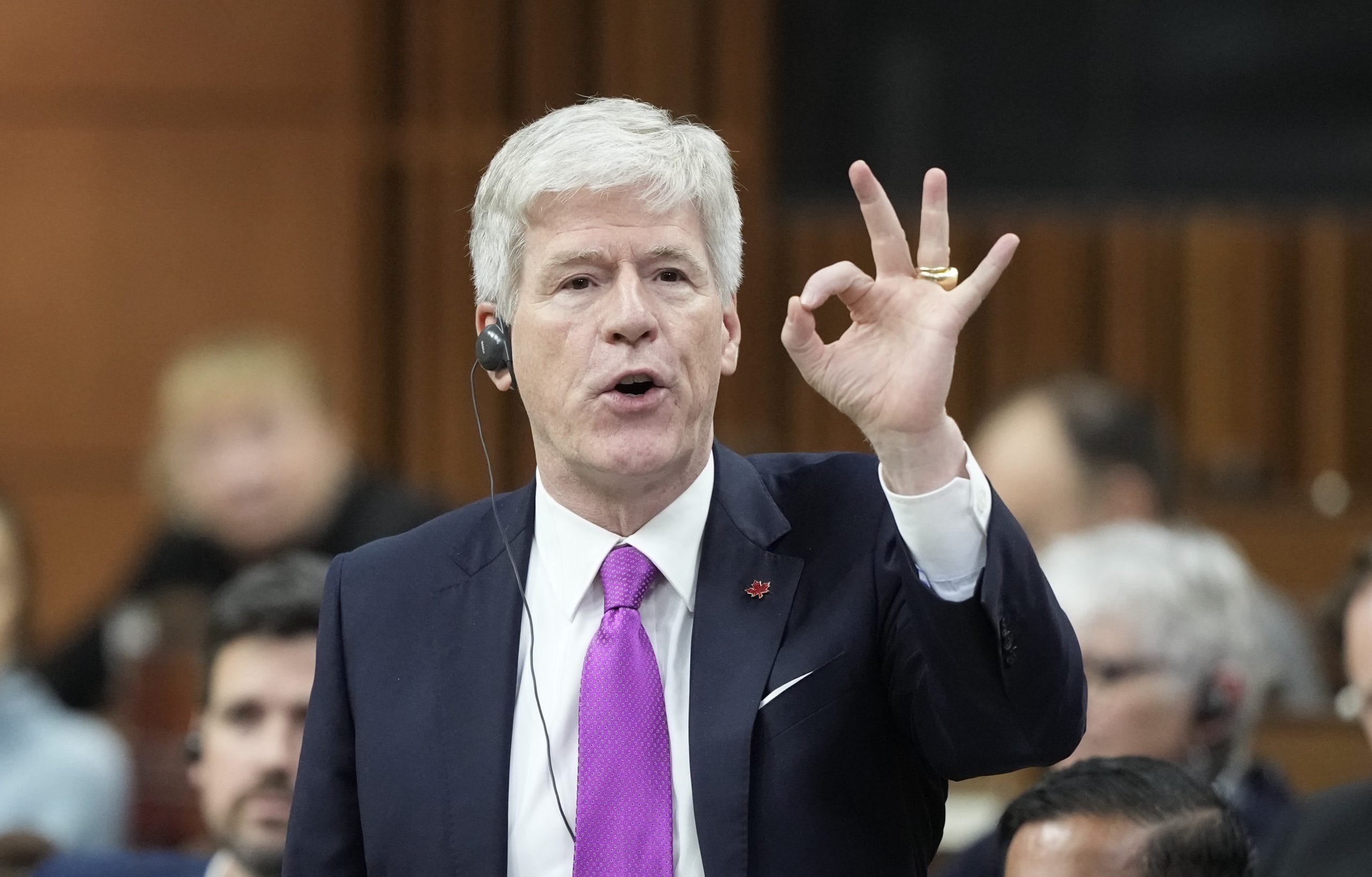
During a visit to an energy conference in Houston in March, Hodgson remarked on the closeness of his office’s relationship with Burgum, and said, “the U.S. wants to achieve energy dominance. We support you in that view.”
The Narwhal approached Hodgson after he gave a speech at a First Nations Major Projects Coalition conference in Toronto on April 30, to ask about the comparison his department made with Trump’s team. The minister, while walking through the conference and chatting with an attendee, twice avoided taking questions, saying he was too busy. Another official suggested contacting his office.
A spokesperson for Natural Resources Canada said the comparison between the Major Projects Office and the U.S. council “was intended as a high-level description of function — not a statement of equivalence in mandate, governance or approach.”
The department also noted Canada’s “distinct constitutional, legal and policy framework that reflects our values and obligations” and said Canada’s office is “not limited to a single industry or sector.”
Treaty 8 Grand Chief says comparisons between Canada and U.S. approaches to development should be ‘treated very carefully’
Carney has pitched the Major Projects Office as working “in partnership” with Indigenous Peoples. He held summits last year with First Nations, Inuit and Métis rights holders. The office’s Indigenous Advisory Council is meant to help guide its work.
Grand Chief Trevor Mercredi, of Treaty 8 First Nations of Alberta, sits on the Major Projects Office’s Indigenous Advisory Council. He reacted to the comparison by noting that Canada’s different constitutional framework, including the Crown’s obligations to First Nations, means “speed cannot come at the expense of Treaty Rights.”
“What I can say is that any comparison between the Major Projects Office and a U.S. energy permitting model has to be treated very carefully. Canada operates within a different constitutional framework,” Mercredi said, including Treaty Rights, land claims and the duty to consult. “The Crown’s obligations to First Nations cannot be treated as permitting issues or obstacles to be managed around.”
He said there is value in the Major Projects Office if it improves government transparency and coordination and ensures First Nations are meaningfully involved in decisions that affect their lands, waters and Treaty Rights.
“But if the purpose is to simply move projects faster by narrowing, bypassing or compressing Crown obligations, that would be a serious concern,” he said.
Mercredi said his role on the Indigenous Advisory Council does not replace direct consultation with rights-holding nations and doesn’t satisfy the Crown’s legal obligations.
For Treaty 8 nations, he said, the issue isn’t whether Canada can build major projects — it’s whether Canada will honour treaties, respect First Nations jurisdiction and ensure decisions are made with “proper consultation, accommodation, environmental protection and real participation by the nations whose territories are affected.”
Canada’s Bill C-5 faces strong opposition, and a lawsuit
The government passed the Building Canada Act, part of Bill C-5, in June 2025, cementing a process in law to name projects in the “national interest.”
It has seen strong opposition from some Indigenous communities, as well as public interest groups, who argue it paves the way for the government to circumvent oversight that’s meant to protect the environment, public health and scientific integrity.
The Quebec Environmental Law Centre has launched a legal action asking the courts to strike down the law. The group announced April 27 it had gathered 11 other organizations who seek to intervene in the lawsuit.
The law centre’s executive director Geneviève Paul, reacting to the documents from the natural resources department, said decisions made behind closed doors are not in the interest of Canadians.
“The government of Canada needs to act responsibly and defend our institutions, not follow authoritarian trends and copy the jurisdictions which are dismantling the protections we need to move forward safely,” she said.
Keith Stewart, senior energy strategist at Greenpeace Canada, said it was “telling” that the federal department itself was comparing the two offices.
“I think many Canadians who voted for an ‘elbows up’ agenda would be surprised to learn that our natural resources minister went to Houston [in March] to tell Americans that he wants to help the Trump administration achieve energy dominance, which is code for expanding fossil fuels at any cost,” Stewart said.
Updated on May 5, 2026, at 11:30 a.m. ET: This story has been updated to include a statement from Natural Resources Canada that was sent after the given deadline.