





 8 min. read
Premier David Eby’s plan to amend B.C.’s landmark Indigenous Rights legislation is a threat to the province’s economic stability and likely to land the province back in court, First Nations leadership organizations are warning.
“It’s important to acknowledge that British Columbia is facing real economic challenges, and First Nations are essential and equal partners in addressing those challenges,” Terry Teegee, B.C. Assembly of First Nations regional chief, said in a press release last week. “We stand united in our opposition to any amendments to gut the Declaration Act, which seeks to affirm and protect our rights.”
The government began the process of consulting First Nations at the end of January on proposed changes to the Declaration on the Rights of Indigenous Peoples Act (DRIPA) and the Interpretation Act — the legislation that instructs courts on how to interpret provincial law.
The First Nations Leadership Council — a political organization made up of elected leaders from the Assembly of First Nations, the First Nations Summit and the Union of British Columbia Indian Chiefs — described the consultation process as “expedited” and noted First Nations leaders wishing to participate were required to sign non-disclosure agreements.
As those discussions continue behind closed doors, the council has launched a public campaign to defend the Declaration Act, including a website aimed at countering misinformation about the legislation and highlighting its successes.
“We are presenting the facts on the Declaration Act in order to cut through the disappointing and divisive misinformation being peddled by opportunistic politicians,” Shana Thomas, Laxele’wuts’aat Huy’wu’qw (hereditary chief) of the Lyackson First Nation, said in a statement.
A resolution endorsed by the Union of British Columbia Indian Chiefs “unequivocally opposes” any amendments to the Declaration Act or Interpretation Act.
And it’s not just First Nations leaders voicing opposition to the government’s plans. A public letter signed by dozens of prominent Canadians also calls on the province to abandon the amendments and “recommit to meaningful implementation of the [United Nations] Declaration and the Declaration Act.”
Signatories include Green Party of Canada leader Elizabeth May, environmental advocate David Suzuki, journalist and author John Vaillant and former B.C. chief human rights commissioner Mary-Woo Sims alongside dozens of labour and faith leaders, academics and social justice advocates.
As opposition grows, the province is pushing ahead with a hasty consultation process in its bid to change historic Indigenous Rights law at a speed rarely seen in the legislature. Critics say the consequences could be severe.
‘I guarantee there will be somebody who will litigate it’
Other laws introduced in the first few days of the spring session have been in development for several months but the Declaration Act amendments are set to go from Eby’s mouth into law in less than six months.
The tight consultation timeline and insistence that the legislation will be passed this spring raise questions for Jessica Clogg, executive director of West Coast Environmental Law and one of the signatories to the open letter.
“This is not meaningful co-development of legislation in any way,” Clogg, who was part of the legal team representing the Gitxaała Nation in its case against the province, said. “It’s essentially holding a gun to people’s heads.”
Proposed laws often undergo multiple rounds of consultation and revision before they are introduced in the legislature. That process can take months or even years. But the B.C. government is planning to pass its changes to the Declaration Act less than six months after announcing them.
“It’s moving at warp speed,” Merle Alexander, a lawyer with Miller Titerle + Company who specializes in Indigenous law, said. “Almost never has legislation moved this quickly.”
Alexander was involved in drafting the Declaration Act and estimated it took about 18 months. At the time, the process was considered a speedy one, he recalled.
Clogg said the government’s timeline for amending the Declaration Act is “extraordinary,” especially compared to the way it has handled calls to change the Mineral Tenure Act, the law that governs mineral rights claims in B.C.
“Despite calls over decades and decades to overhaul this colonial-era law, it was only when Gitxaała filed their case that we saw it prioritized,” she said.
Clogg and Alexander believe that by rushing to get its desired changes passed by May 28, before the legislature breaks for the summer, the province could be setting itself up for further legal challenges.
“If B.C. proceeds on its current pathway, they remain vulnerable to legal challenge because there is no scenario in which the time frames and the tone of these supposed consultations meet the legal standard demanded by the [United Nations] Declaration on the Rights of Indigenous Peoples,” Clogg told The Narwhal.
“I guarantee there will be somebody who will litigate it,” Alexander said.
Eby says the Declaration Act is helping deliver major projects
There is one point on which Eby’s government and First Nations leaders seem to agree: the Declaration Act helped reopen the Eskay Creek mine on Tahltan Nation territory.
In 2022, the B.C. government and the Tahltan Nation signed an agreement under Section 7 of the Declaration Act. The section allows the government to undertake a joint decision-making process with First Nations regarding industrial projects on their traditional territories.
In December 2025, Tahltan Nation members voted in support of the Eskay Creek revitalization project and the province announced its approval of permits for the mine in January 2026.
Both Eby and Indigenous Relations and Reconciliation Minister Spencer Chandra Herbert have referenced the government’s collaboration with the Tahltan while defending the planned Declaration Act amendments.
“Part of this act enabled us to do the work with the Tahltan First Nation around Eskay Creek and other First Nations around expediting environmental assessment processes and working with companies,” the premier said at an event hosted by the Greater Vancouver Board of Trade on Feb. 20. Eby insisted that only government processes — not court rulings — “can deliver the predictability” the province needs.
The First Nations Leadership Council’s website notes the province has similar agreements with the Tahltan Central Government related to the Galore Creek mine project and the Red Chris mine project, as well as a mining-related agreement with the Tŝilhqot’in National Government. Both the Tahltan and Tŝilhqot’in governments have signed a joint statement calling on Eby to abandon the amendments.
Instead of building on these types of agreements, amending the Declaration Act would “grind projects to a halt as First Nations are once again forced to defend our rights and interests through the courts,” the joint statement reads.
Amid calls to repeal the Declaration Act, Eby’s changes will likely pass with little challenge
For some B.C. politicians, changing the Declaration Act is not enough. The BC Conservatives — the official opposition party in the legislature — have called for the law to be repealed and even for the government to cease all discussions and negotiations with First Nations in the meantime. Still, the government intends to pass legislation to amend the Declaration Act this spring.
Eby has said the changes will make it clear courts have no business interpreting how the act applies or what the provincial government must do to make sure existing laws comply. To make those changes, the bill that is eventually put forward will alter, remove or add language to either or both the Declaration Act and Interpretation Act.
Once the amending bill has been introduced, it will be put to the legislature for debate. Opposition MLAs — the BC Conservatives, BC Greens, One BC and independents — can share their thoughts on the amendments in the house for the historical record and question the government on how the changes will work. They can also propose tweaks to the proposed amendments, but it’s unlikely there will be substantive changes.
The NDP currently holds 46 seats in the legislature and strictly enforces caucus discipline, meaning NDP MLAs always vote for the government’s legislation. At committee stage — the part of legislative debate where opposition MLAs can ask questions about and propose changes to legislation — NDP MLAs consistently vote down amendments proposed by the opposition.
The BC Conservatives have called for the full repeal of the Declaration Act, making them unlikely to support the government’s plan to only alter the legislation.
“I still hold the position that we need a full repeal,” Á’a:líya Warbus, the BC Conservative house leader, told reporters at the legislature on Feb. 10. As house leader, Warbus leads the 36-person BC Conservative caucus’ approach to bills and other legislature business.
“We need to go back to brass tacks.”
Meanwhile, the two BC Green MLAs — who recently ended the party’s co-operation agreement with the NDP, claiming the governing caucus failed to fulfill its promises — have been critical of the government’s plans to change the Declaration Act.
Dallas Brodie, the lone remaining MLA representing One BC, opposes reconciliation and the recognition of Indigenous Rights, making her a likely “no” vote on the amendments.
Whether the passage of the Declaration Act amendments comes down to a tie vote may hinge on where four Independent MLAs land on the legislation. If the final vote is tied, the speaker will cast the deciding vote. Traditionally — and legislatures are nothing if not traditional — the speaker votes with the government.
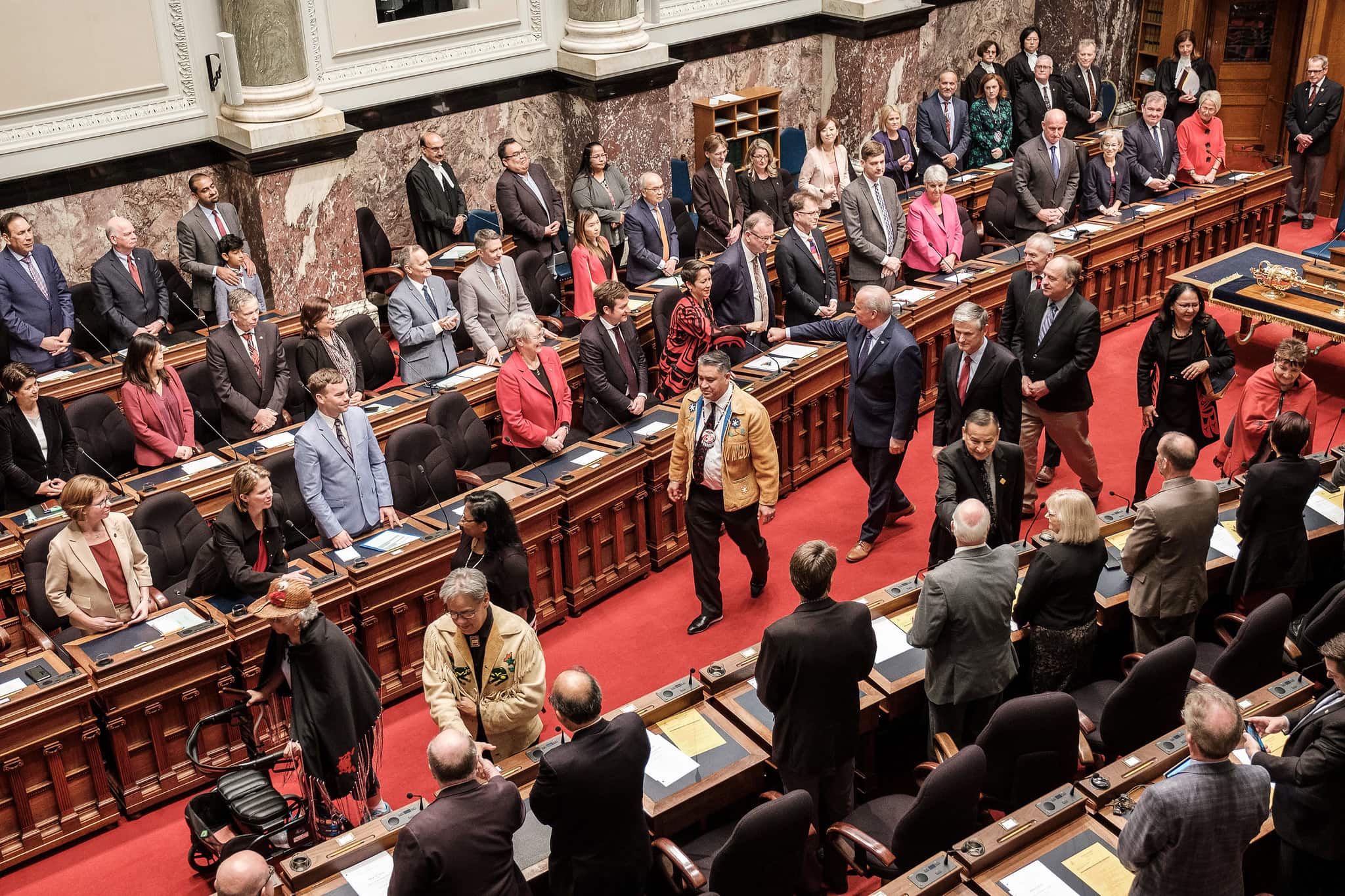
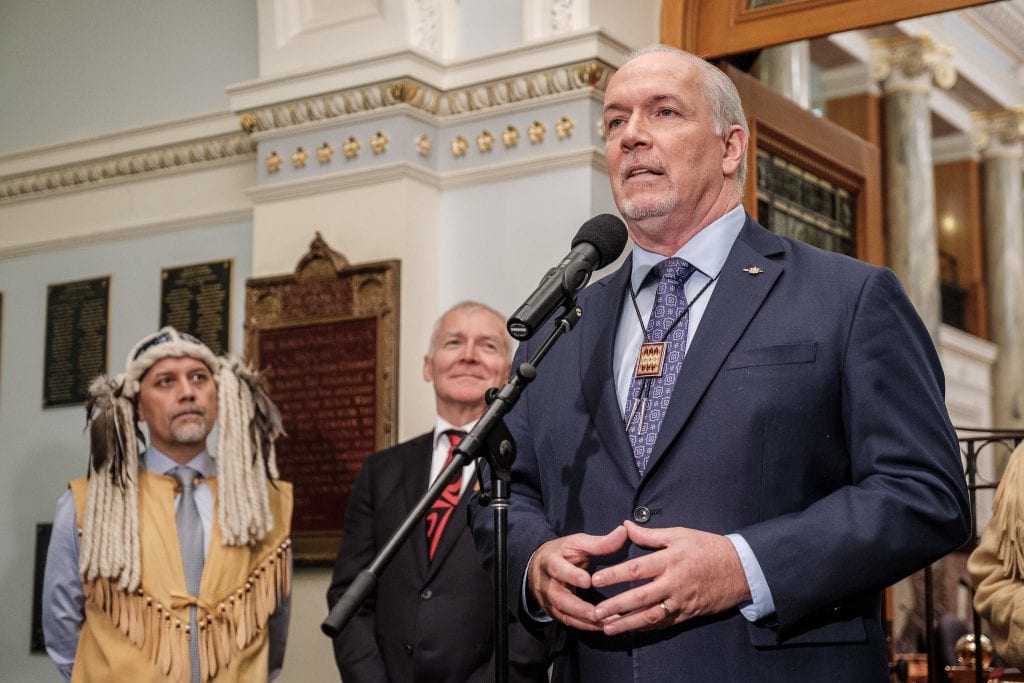
On the day of that vote, B.C.’s relationship with First Nations will enter a new chapter very different from the one begun in November 2019, when former premier John Horgan celebrated the unanimous passage of the Declaration Act.
“Eby is basically destroying Horgan’s legacy,” Alexander said.