





 4 min. read
In the wake of a devastating wildfire season and severe drought year, a group of more than two dozen organizations is calling on the Manitoba government to step up its investments in climate solutions in its upcoming budget.
Representatives from some of the organizations gathered at the legislature on Thursday to present a letter calling for increased investment in energy efficiency initiatives, public and active transportation and land and water protection in the upcoming spring budget.
“Manitoba is facing some of the worst climate impacts that we’ve ever seen,” Manitoba’s Climate Action Team director Laura Cameron said Thursday, referencing the devastating 2025 fire season and the droughts that have strained Manitoba Hydro’s bottom line.
“We know that these impacts are only going to get worse the longer the world, and Manitoba, delays transitioning off of fossil fuels.”
The letter, organized by Climate Action Team Manitoba, was signed by 26 groups representing a range of sectors, including labour, health, transportation and business, and was addressed to Premier Wab Kinew, Finance Minister Adrien Sala and Environment and Climate Change Minister Mike Moyes.
When the province first unveiled its climate strategy in October, outlining a plan to reach net-zero emissions by 2050 through decarbonization, electrification and conservation projects, environmental advocates celebrated the vision but criticized the lack of funding commitments and firm timelines.
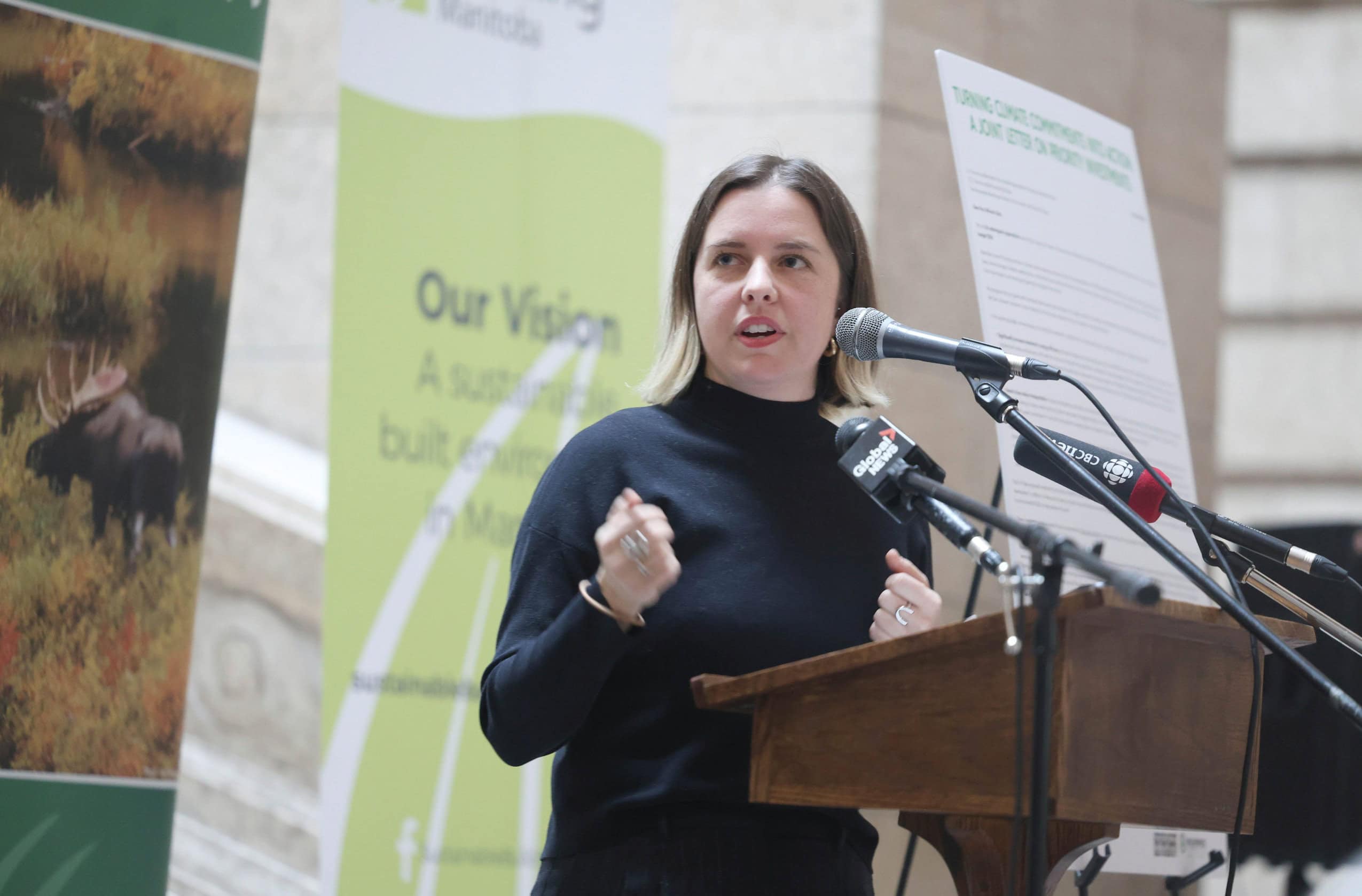
Since then, the province has spent just $72 million on its emissions-reduction projects, Cameron said, a fraction of the nearly $1.5 billion it’s spent extending the provincial gas tax holiday and building highways, or the $3 billion Manitoba Hydro plans to spend on a new gas-fired power plant.
“If we are serious about reducing emissions significantly by 2030 — which is now less than five years away — and getting to zero by 2050, we need to be operating at a different scale,” Cameron said.
The letter recommends boosting investment in Efficiency Manitoba and other programs that can help slash household energy bills and create job opportunities in the green building sector while cutting into one of Manitoba’s largest sources of pollution: natural gas heating.
“Building retrofit investments create more local jobs, dollar for dollar, than almost any other investment in the energy system,” Niall Harney, senior researcher at the Canadian Centre for Policy Alternatives, said.
According to Elizabeth Kaggwa, representing Sustainable Building Manitoba, the building sector is responsible for about one-third of provincial energy use and a similar proportion of carbon emissions. While Efficiency Manitoba has made progress toward addressing household energy use, expanding these programs will reduce strain on the power grid, cut costs for homeowners and support construction, manufacturing and trade sectors.
“That’s why we’re calling on the province to make energy efficiency and demand response a cornerstone of budget 2026 — not as a pilot, not as a side program, but as a core investment in Manitoba’s future,” Kaggwa said.
The groups also recommend the province increase permanent and long-term operating funding for urban, intercity and rural transit — including restoring the 50-50 transit funding partnership with the City of Winnipeg — and increase funds for active transportation.
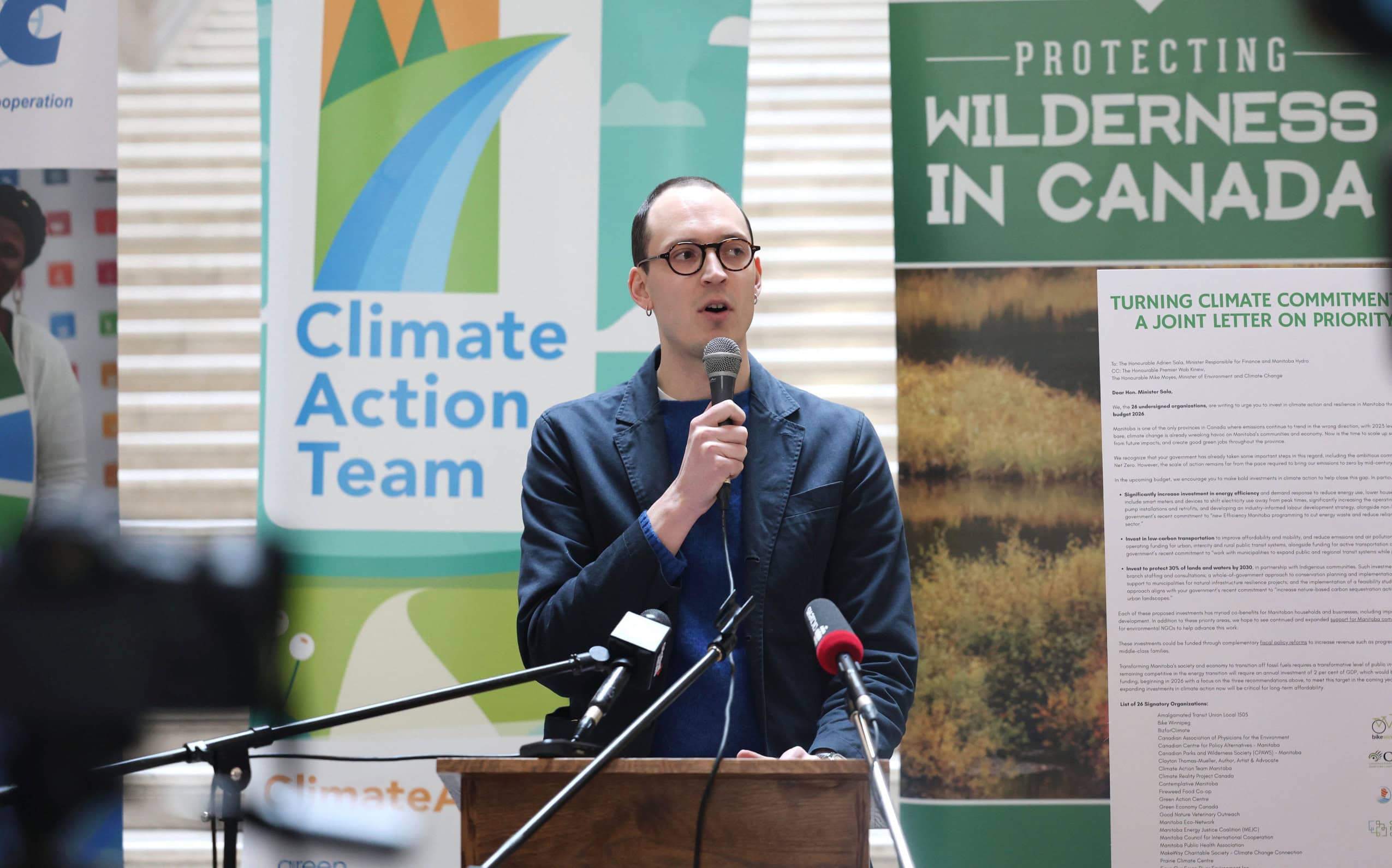
“Public transportation is one of the most effective tools that we have to reduce emissions and air pollution while making daily life more affordable,” James Van Gerwen, president of Amalgamated Transit Union Local 1505, representing the city’s transit workers, said.
Finally, the letter recommends the province increase staffing in the Parks branch and create a fund to support Indigenous nations working on land and water protection as it works toward conserving 30 per cent of lands and waters by 2030.
“Protecting nature is not a luxury, it is a smart, long-term investment,” Ron Thiessen, executive director of the Canadian Parks and Wilderness Society’s Manitoba chapter, said. “Healthy ecosystems safeguard drinking water, reduce climate risks, support tourism and recreation and sustain cultural and local livelihoods.”
While Thiessen lauded the government’s ongoing work to establish a conservation area in the Seal River Watershed and its interest in a marine conservation area in Western Hudson Bay, he said previous budgets have fallen short of the resources needed to reach 30 by 30 goals.
Manitoba’s environment minister listened as climate groups presented budget recommendations Thursday. Moyes said afterwards he looks forward to working with the groups, and noted staffing has already increased within his department.
Manitoba’s 2026 budget will be tabled in the spring. Around that same time, Moyes said, the environment department will begin rolling out legislated emissions reduction targets, and detailed action plans promised under the net-zero pathway.
Julia-Simone Rutgers is a reporter covering environmental issues in Manitoba. Her position is part of a partnership between The Narwhal and the Winnipeg Free Press.
Updated Feb. 3, 2026, at 10:20 a.m. CT: A previous version of this story used an incorrect surname for Elizabeth Kaggwa, who was representing Sustainable Building Manitoba.