





 6 min. read
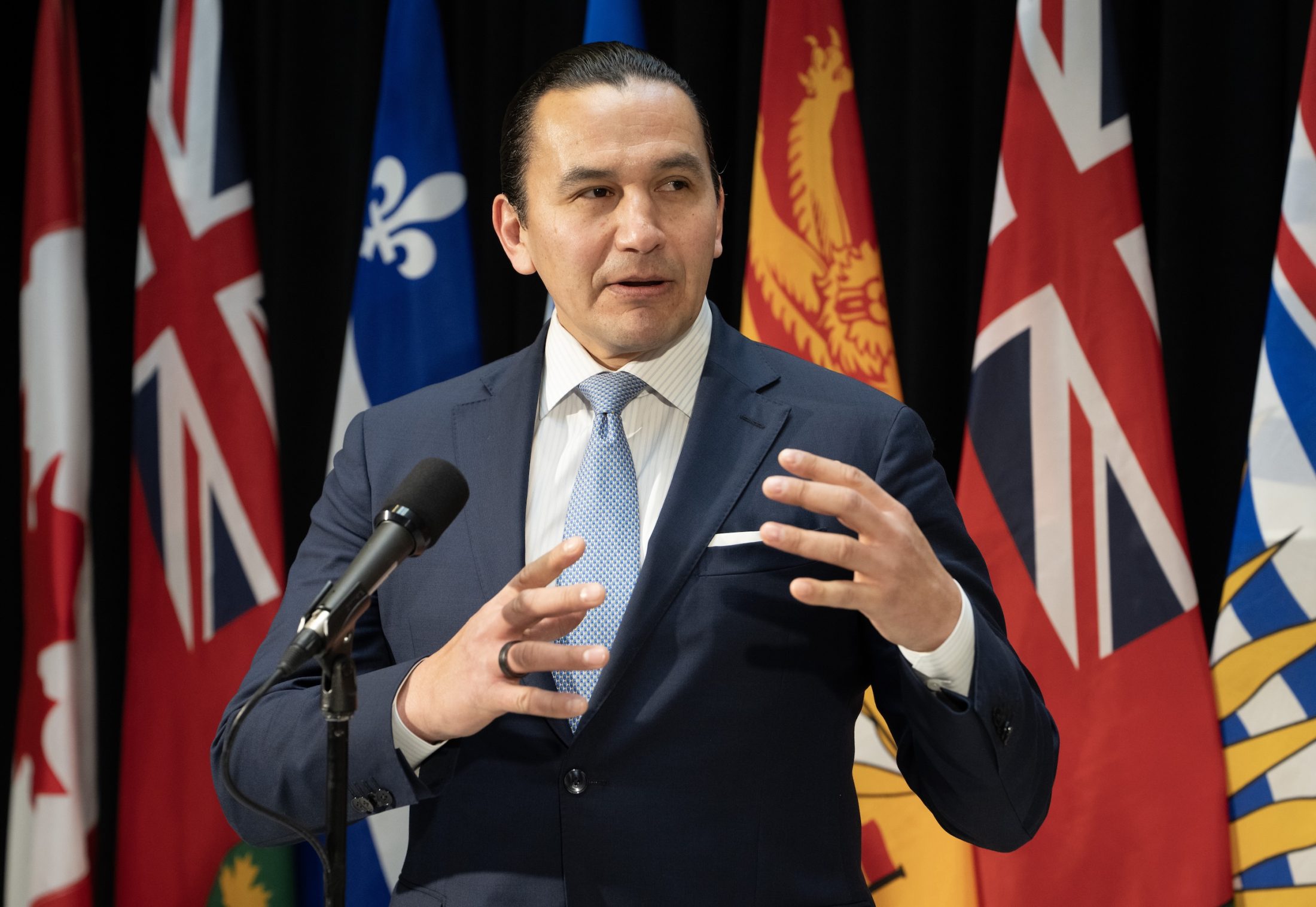
Several companies, including at least one Canadian energy giant, are “kicking the tires” on a long-touted vision to export oil, gas, minerals and agricultural products through Churchill, bringing the dream of a trade corridor to the Hudson Bay coast closer to reality, Premier Wab Kinew says.
The details of Manitoba’s conversations with these private sector players are under wraps; at the end of January, Kinew announced the province would sign a non-disclosure agreement (NDA) with one of the interested parties.
That announcement came as a delegation of provincial and federal leaders converged on Churchill for press conferences and community consultations centred on Churchill Plus — a federally backed plan to expand Manitoba’s 95-year-old former grain port into an all-season trade hub for Canadian energy and natural resources.
While Democracy Watch co-founder Duff Conacher said the decision to disclose the non-disclosure agreement was “unusual,” Kinew remains bullish, saying in an interview he hopes the announcement will spark urgency across government and the private sector while convincing Manitobans that “the Churchill project is real, and we should get ready.”
Churchill Plus expansion is backed by the federal government
Kinew first announced the emerging talks with “one of Canada’s biggest energy companies” after a meeting between premiers and the prime minister in late January. While he won’t specify which company, he said the province had spent time evaluating the opportunity and decided to sign a non-disclosure agreement to allow for further conversations.
“There’s definitely a number of companies who have expressed interest, but a couple who are pretty far along in terms of wanting to make the most of the Churchill opportunity,” Kinew said in an interview this week.
The investments would “lead to infrastructure being built to do more export on Hudson Bay, which would be huge for our provincial economy,” he added.
But that’s as specific as the premier was willing to get.
“At this point we’re not necessarily making announcements or talking about investment decisions,” he said.
“But I do think it’d be realistic to look at a trade corridor going toward a terminal near the Port of Churchill, maybe not necessarily at the existing port site … but maybe in the general area there.”
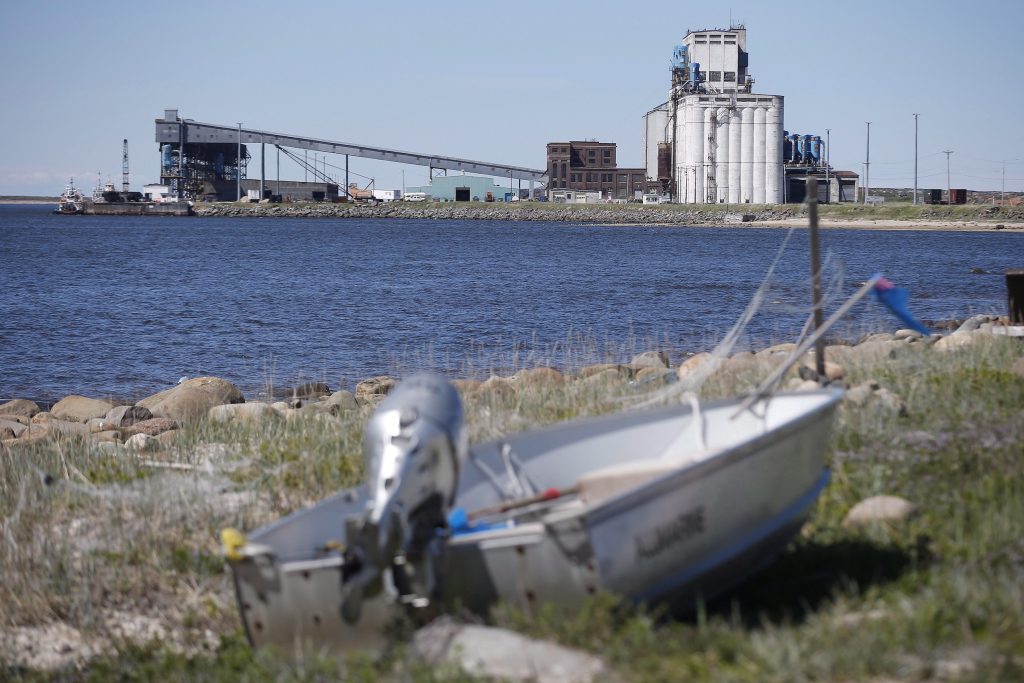
A trade corridor is central to the Churchill Plus expansion, which Kinew has touted as way to reduce reliance on the United States and bolster national security while finding an alternative route for Canadian goods — notably oil and gas — to reach international markets. The proposal was listed as a “transformative project” by the federal government’s Major Projects Office in September. The governments have already agreed to spend more than $260 million on upgrades to the port and associated rail line, a new all-weather road, an icebreaker feasibility study and a study of marine conservation potential in the bay.
The energy corridor could include a pipeline, transmission line, fibre optic connections and a shipping terminal, Kinew said. He’s particularly interested in the possibility of liquefied natural gas (LNG) exports and an associated liquefaction terminal in the Churchill area, but noted a successful port expansion would need to work for “a mix of products,” including critical minerals, agricultural goods, manufactured products and northern re-supply for Nunavut.
For now, the federal government has commissioned a “market sounding” study, Kinew said, to evaluate which options the private sector is most interested in. The results are expected in the spring.
NDAs are common, talking about them less so
Conacher said it’s not often political leaders publicize off-the-record discussions with private companies.
As an organization that monitors government transparency, particularly in its dealings with corporations and private interest groups, Conacher said it’s difficult to tell how often these kinds of deals are made. Details of government conversations with private companies are often protected by privacy laws that allow the government to withhold sensitive business information from the public.
“It’s unusual for a government to disclose it,” Conacher said. “It’s usually further along when the government has decided to actually fund something.”
From his perspective, announcing a non-disclosure agreement is “a bad idea,” as it can give the impression of bias or a lack of transparency.
But according to Bruce Curran, an associate professor in the faculty of law at the University of Manitoba, non-disclosure agreements are “fairly common” under these circumstances.
The agreements are a kind of contract where at least one — usually both — parties agree not to share certain confidential information. They have a negative reputation because of high-profile cases where non-disclosure agreements have been used to effectively “buy people’s silence,” Curran said, but they’re also commonly used to protect proprietary data during business negotiations.
“These are very legitimate uses, even though there may be heightened concerns of a government wanting a non-disclosure agreement versus a private entity, because they have more of an eye to the public good,” Curran said.
Non-disclosure agreements are not unprecedented between governments and corporations.
In 2024, The Narwhal reported the federal government had signed a non-disclosure agreement with members of the Pathways Alliance, a group of Canada’s largest oil companies, to hold back information being discussed at a series of private meetings. The government did not disclose details of its non-disclosure agreement until it was compelled to do so through access to information requests made by The Narwhal.
In the case of Churchill, Kinew said the non-disclosure agreement is meant to protect information the company gathered after “spending time and resources to evaluate this opportunity.” He views the agreement as equivalent to the province’s freedom of information laws that protect similar corporate data from disclosure.
Kinew wants to ‘think through the issues like climate change mitigation, conservation areas for wildlife’
Félix Proulx-Giraldeau, interim executive director at advocacy group Evidence For Democracy, called Kinew’s choice to disclose the agreement “interesting” from a public trust and transparency perspective.
“The feeling I got … is that this was an attempt at being transparent as much as possible without breaking a potential deal, or making something fall apart,” he said.
“From our point of view, transparency is never an end goal, it’s a first step that people take when they want to foster public trust, so I think this is fairly encouraging, but I’m still very cautious about it, because as a whole, the [non-disclosure agreement] is a pretty opaque and closed agreement.”
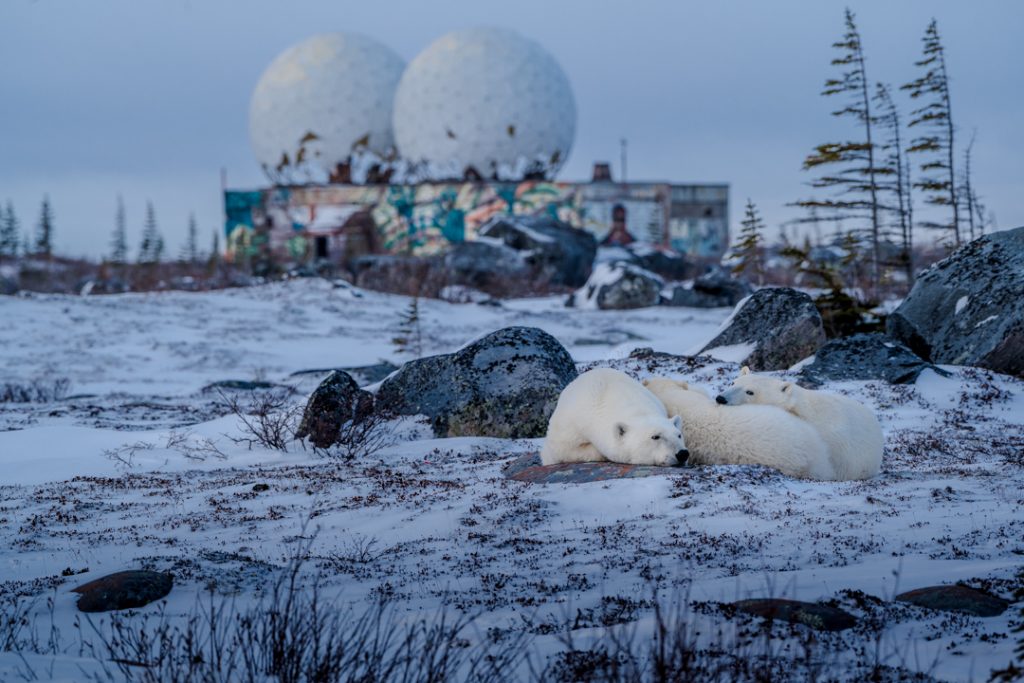
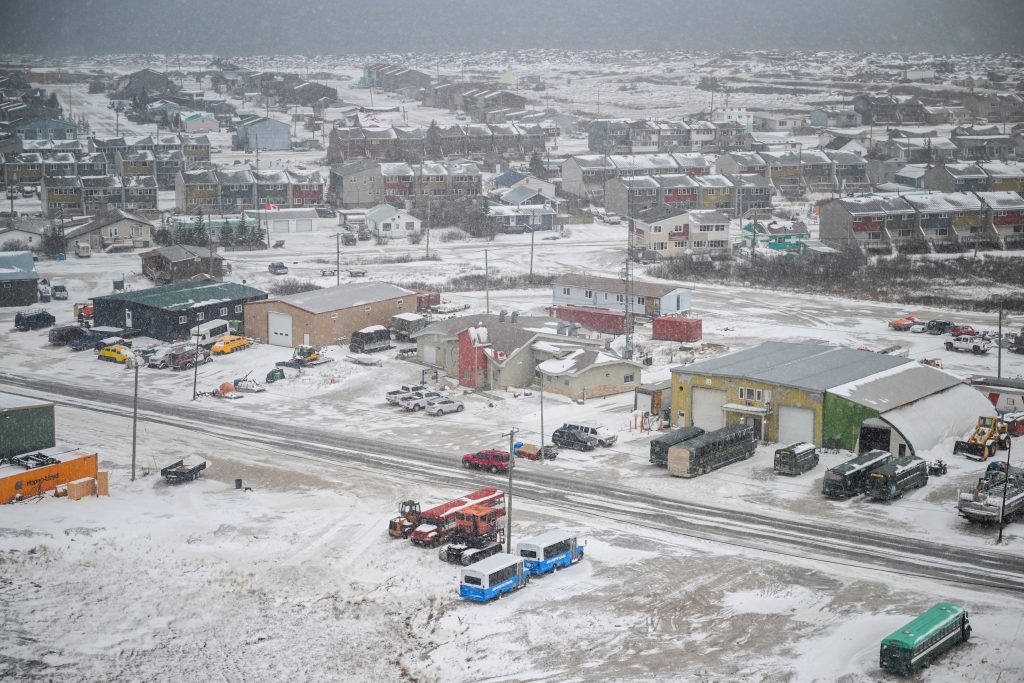
Kinew said his intention with the announcement was “getting the private sector dollars off the sidelines” and preparing all sectors of Manitoba’s economy to start planning for the potential opportunity.
“Let’s think through training tradespeople and engineers and environmental technicians to monitor this, let’s think through the issues like climate change mitigation, conservation areas for wildlife and conservation for sea and ice,” he said.
“If we didn’t talk about these energy companies potentially being interested, would the same urgency be there on the conservation side or on the workforce development side?
— With files from Carl Meyer
Julia-Simone Rutgers is a reporter covering environmental issues in Manitoba. Her position is part of a partnership between The Narwhal and the Winnipeg Free Press.
Updated Feb. 11, 2026, at 4:27 p.m. CT: A previous version of this story misquoted Premier Wab Kinew. He said “The Churchill project is real and we should get ready,” not “we need to get ready,” as previously stated. This quote also appeared in an earlier version of the headline.