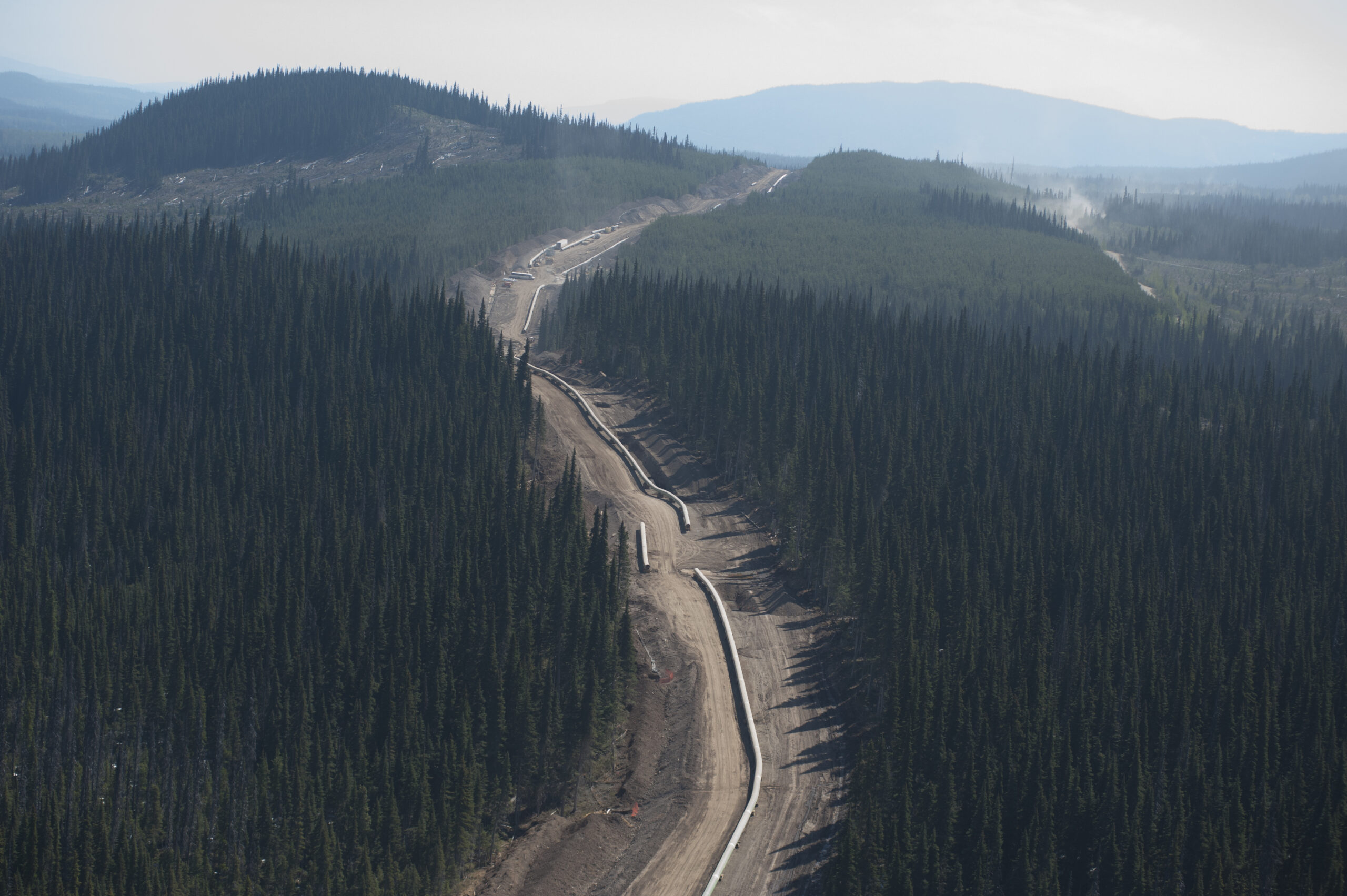
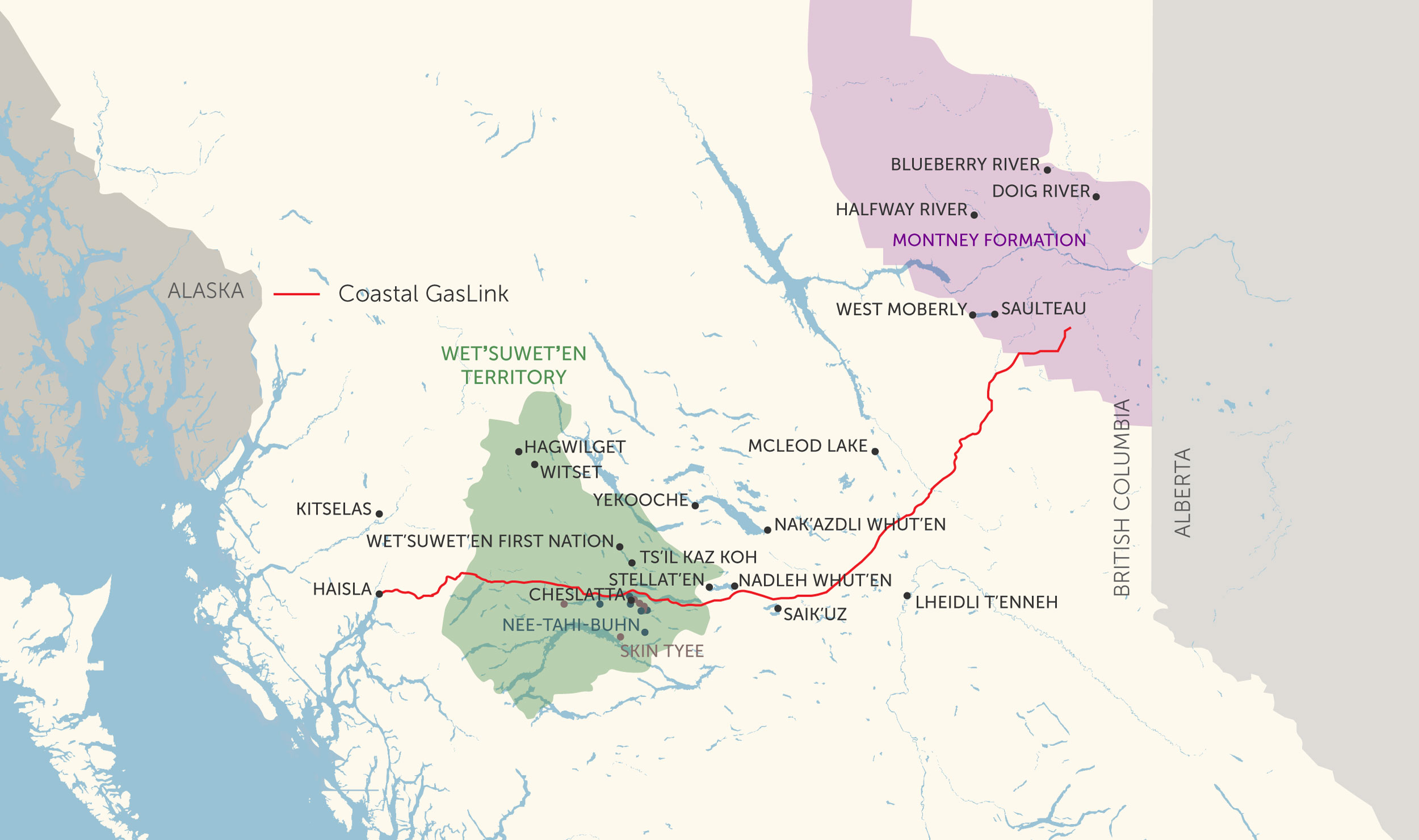
The 670-kilometre Coastal GasLink pipeline (CGL) project connects underground shale gas formations in B.C.'s northeast to the LNG Canada liquefaction and export facility in Kitimat. The contentious project crosses more than 700 creeks, streams and rivers and spans numerous First Nations' territories.
Photo: Matt Simmons / The Narwhal
Trending Topic
Coastal GasLink pipeline
Approved by the British Columbia government in 2014, Coastal GasLink (CGL) is a 670-kilometre pipeline that connects underground gas resources in B.C.’s northeast to the LNG Canada liquefaction and export facility in Kitimat on the province’s west coast. It is used to transport natural gas, which is mainly composed of methane (a powerful greenhouse gas that officially represents at least 13 per cent of Canada’s overall carbon pollution).
The pipeline crosses several Indigenous territories, including Wet’suwet’en lands in the northwest. To gain support for the project, the province and TC Energy, the Calgary-based pipeline builder, secured agreements with 20 elected First Nations along the route, including five of six elected Wet’suwet’en bands. But neither the government nor the company received free, prior and informed consent from the Wet’suwet’en Hereditary Chiefs, who oppose the project. An injunction issued by the B.C. Supreme Court in 2019 against Wet’suwet’en land defenders and their supporters set the stage for years of conflict and led to the arrests of more than 80 individuals, including Chiefs, Elders and Matriarchs.
Against a backdrop of conflict, delays and cost overruns, TC Energy divested part of its ownership of the contentious pipeline. Initially estimated to cost $6.2 billion, the project’s final price tag ballooned to $14.5 billion. In 2020, the company sold 65 per cent of Coastal GasLink to KKR, an American global investment company with headquarters in New York City, and the Alberta Investment Management Corporation. Two years later, TC Energy inked an agreement with 16 of 20 First Nations along the route for the option to purchase 10 per cent of the project in equity shares — a process that’s scheduled to get underway in September 2025.
Coastal GasLink is now operational
During its construction, the pipeline project was continually found to be violating environmental laws and received almost $1.4 million in financial penalties, mostly levied by the B.C. Environmental Assessment Office. A majority of the fines were issued for the company’s failure to prevent sediment from entering sensitive ecosystems, including wetlands, creeks and rivers. One such set of fines was levied over erosion incidents documented by The Narwhal during an Indigenous-led monitoring flight over the pipeline.
The Coastal GasLink pipeline achieved “mechanical completion” — meaning it was ready to transport gas — in November 2023, according to TC Energy.
With the full length of the pipeline installed, the company is responsible for reclamation work along the entire 670-kilometre right-of-way, which cuts through endangered caribou habitat, sensitive salmon ecosystems and Indigenous hunting, fishing and harvesting areas. TC Energy will also need to manage invasive species, weeds and other vegetation along the pipeline route, and the company’s plan to use potentially toxic herbicides for that job was the subject of criticism in 2024.
LNG Canada, meanwhile, began operations at its Kitimat liquefaction and export facility in 2025, with its first shipment of LNG departing in a tanker for global markets in June. Coastal GasLink will also supply gas to Cedar LNG, a Haisla Nation-led liquefaction project in Kitimat that was approved by the B.C. government in 2023.
The 670-kilometre Coastal GasLink pipeline (CGL) project connects underground shale gas formations in B.C.'s northeast to the LNG Canada liquefaction and export facility in Kitimat. The contentious project crosses more than 700 creeks, streams and rivers and spans numerous First Nations' territories.
Photo: Matt Simmons / The Narwhal
Your access to our journalism is free — always. Sign up for our weekly newsletter for investigative reporting on the natural world in Canada you won’t find anywhere else.
Your access to our journalism is free — always. Sign up for our weekly newsletter for investigative reporting on the natural world in Canada you won’t find anywhere else.






 3 min. read