


 13 min. read
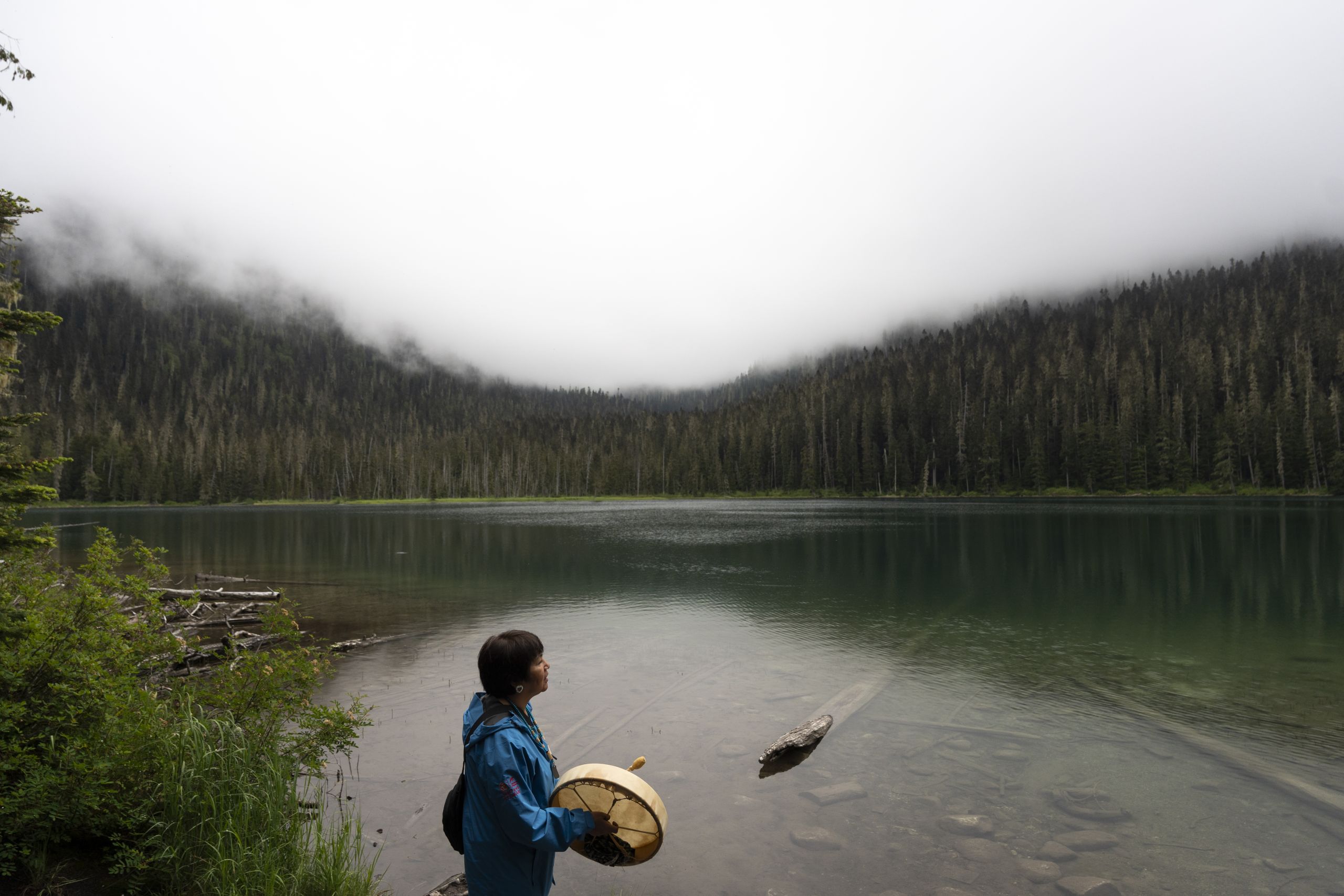
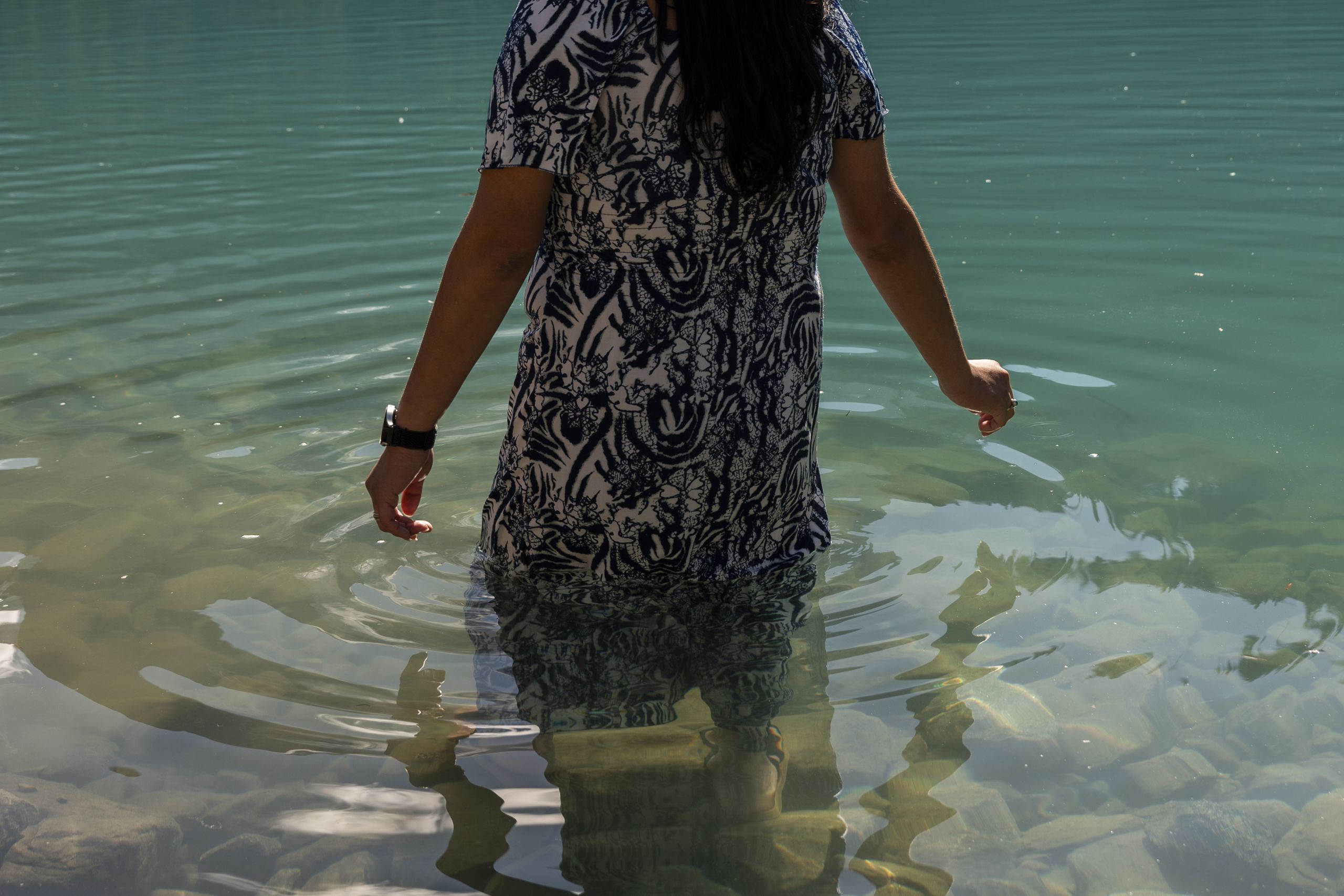
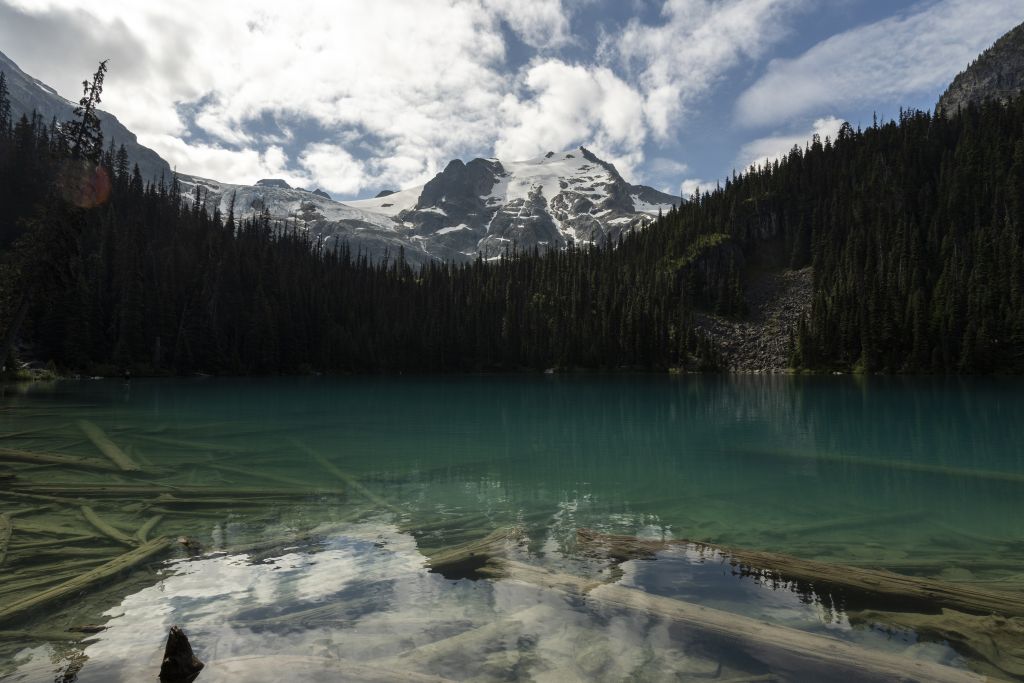
The first lake at the famous Joffre Lakes Park is quiet and empty. Usually, the viewpoints are clamouring with people. But on this cool spring morning, Lhpat (Maxine Bruce) stands alone at the shore, holding her drum. No cameras, no crowds.
When she sings, her voice and the beat of the drum travel uninterrupted across the calm water. A bird is perched on a branch behind her, and its trills also cut through the still air. Between silent trees, only the songs of Lhpat and the bird can be heard.
A few years ago, this peaceful moment couldn’t have happened. The area’s original name is Pipi7íyekw in Ucwalmícwts, the language spoken by the Líl̓wat (Lil’wat) and N’Quatqua nations. For generations, their people have been in relationship with the area, gathering plants and practicing ceremony. But ever since the park got Instagram-famous around 2018, community members have barely been able to access the area. The parking lot fills up and the paths are packed.

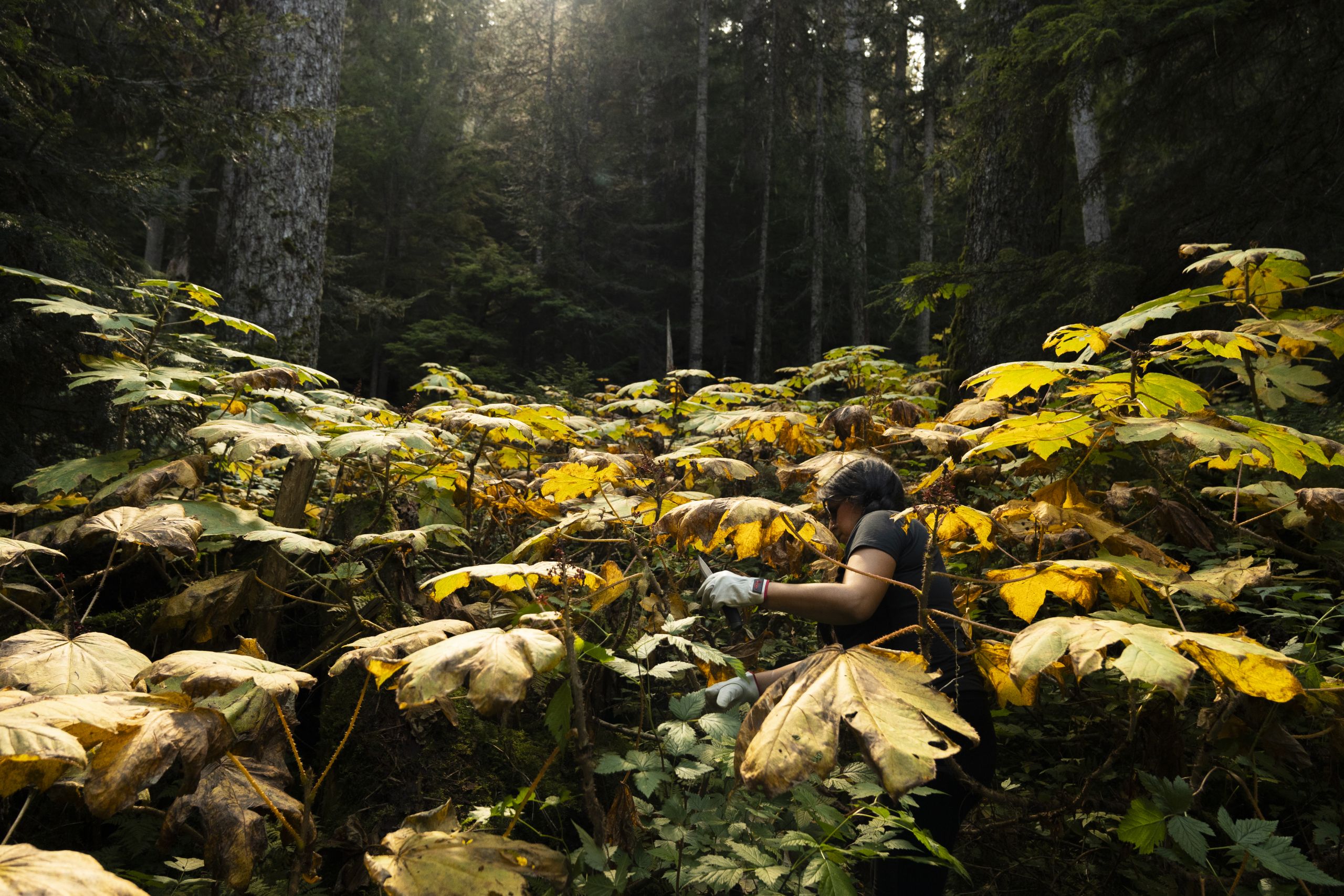
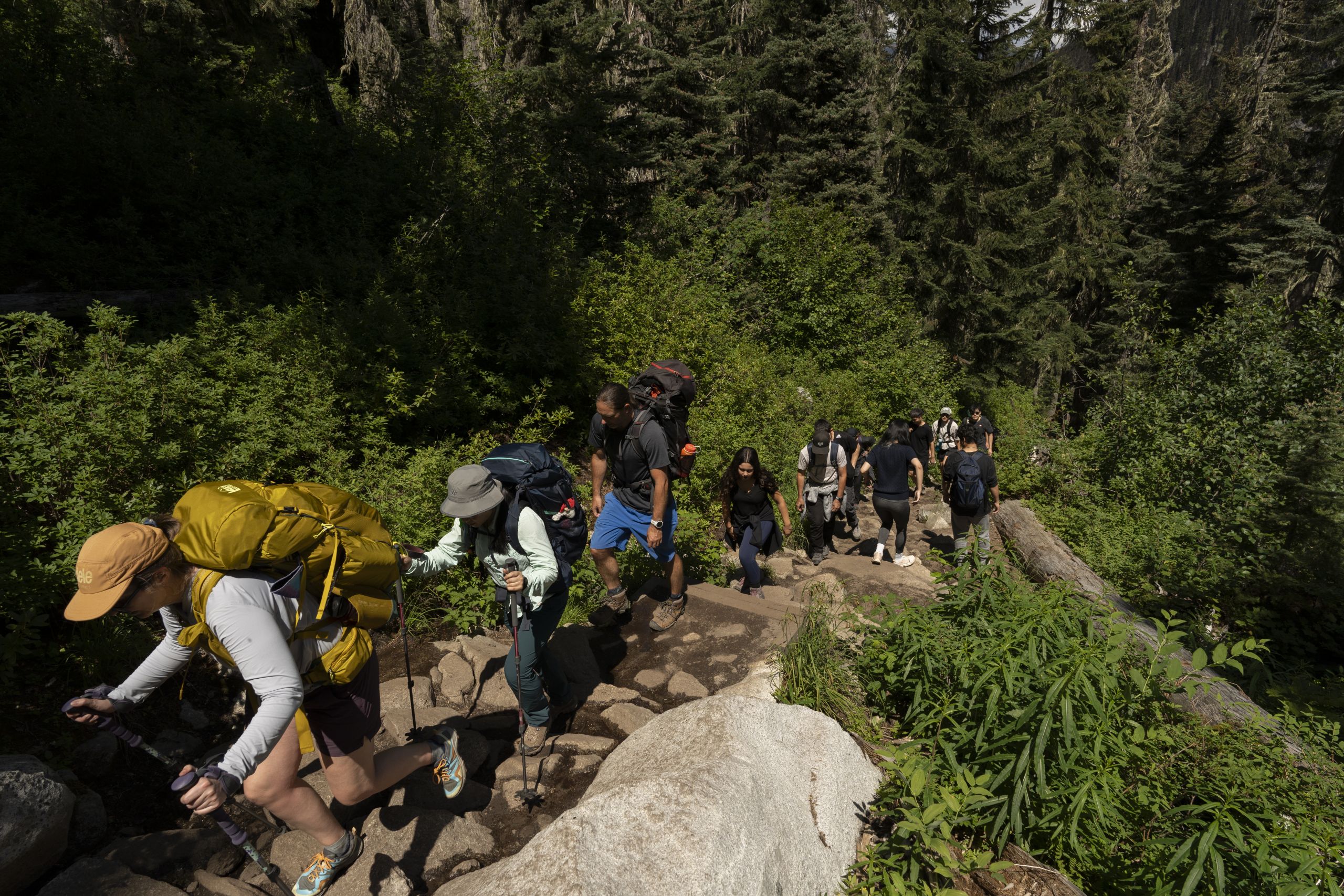
British Columbia and the nations are implementing periodic closures to allow the park to rest from the feet and noise — and allow the nations to care for the area, harvest and connect. For three weeks over April and May, two weeks in June and one month in early autumn, the park was closed to everyone except members of Líl̓wat and N’Quatqua.
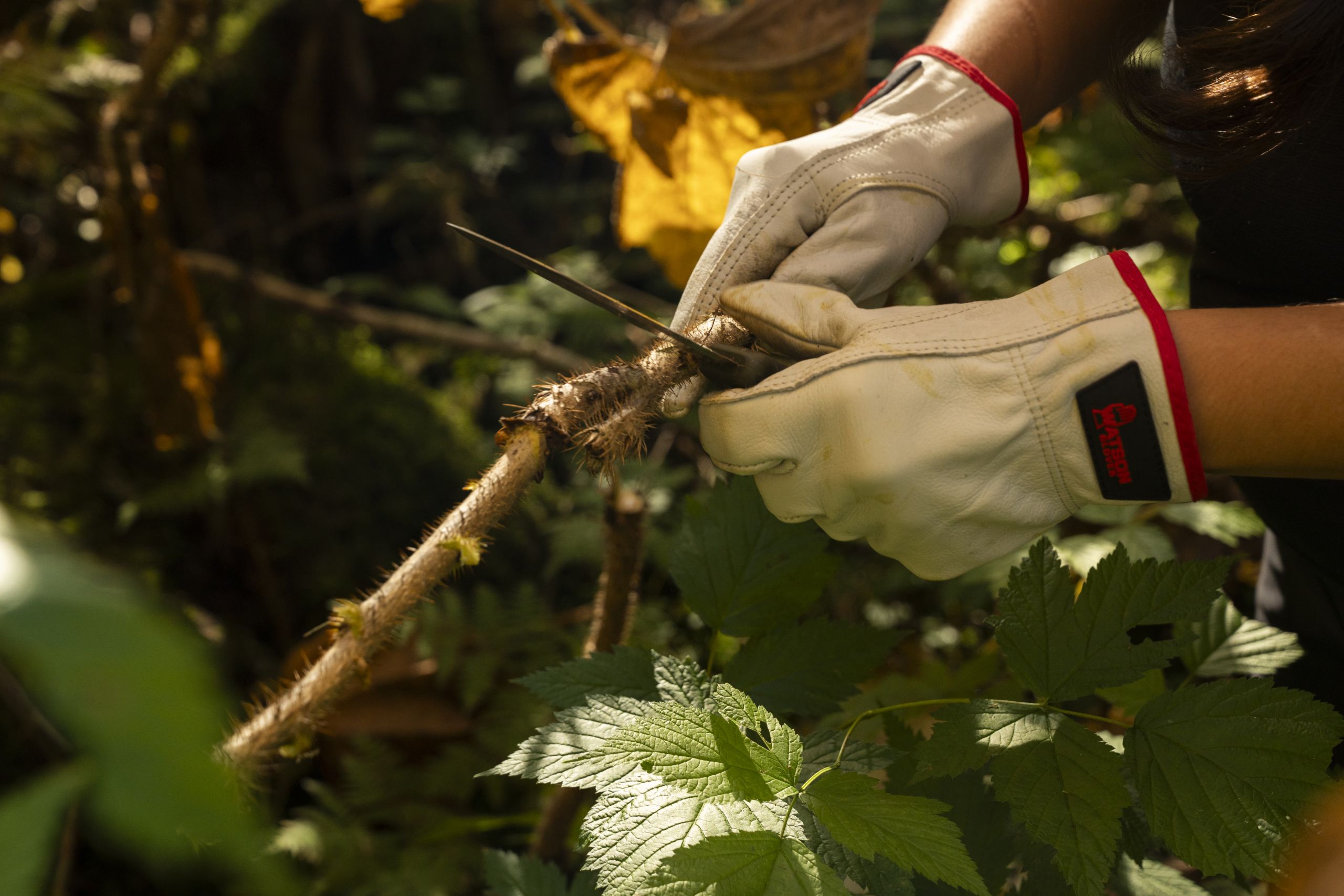
During the spring closure, the nations set up a sweat lodge in the parking lot. In the fall closure, between Sep. 2 and Oct. 3, people are busy picking berries, mushrooms, swamp tea and other medicines. They call these closures reconnection periods.
“Nature needs a rest,” Lhpat explains. “Mother Earth loves us every day … Every day, we need to love Mother Earth too, and give back.”
Because of the park’s popularity, a day pass system was implemented in 2022 to deal with overcrowded trails. But the free passes are gone within minutes of being posted at 7:00 a.m. two days in advance, and aspiring park-goers are frustrated. Sometimes, people try to sneak in while the park is closed, or without passes during opening hours. During the reconnection period, some have asked for special permission to enter the park anyway; others have gone online to vent their frustration about the nations’ members exercising their rights.
The nations are frustrated too — not only because of the challenges they’ve experienced while executing their co-management agreement with B.C., but also because of the hate and misinformation that has been directed at them online.
Amid the combative discourse, some of it led by B.C. politicians, the nations’ intentions can get lost in the conversation.
“B.C. sees this as recreation,” Casey Gonzalez, director of k̓wezúsmin̓ (title and rights) for Líl̓wat, says at Pipi7íyekw. “We see this as medicine, as cultural.”
Líl̓wat didn’t make the decision to allow photographer Paige Taylor White and me into the park during the reconnection periods lightly. But with so much disinformation and hate swirling online, community members wanted to show people directly why the closures matter. With the fall closure ending this Friday, Oct. 3, they wanted people to see the space at rest.
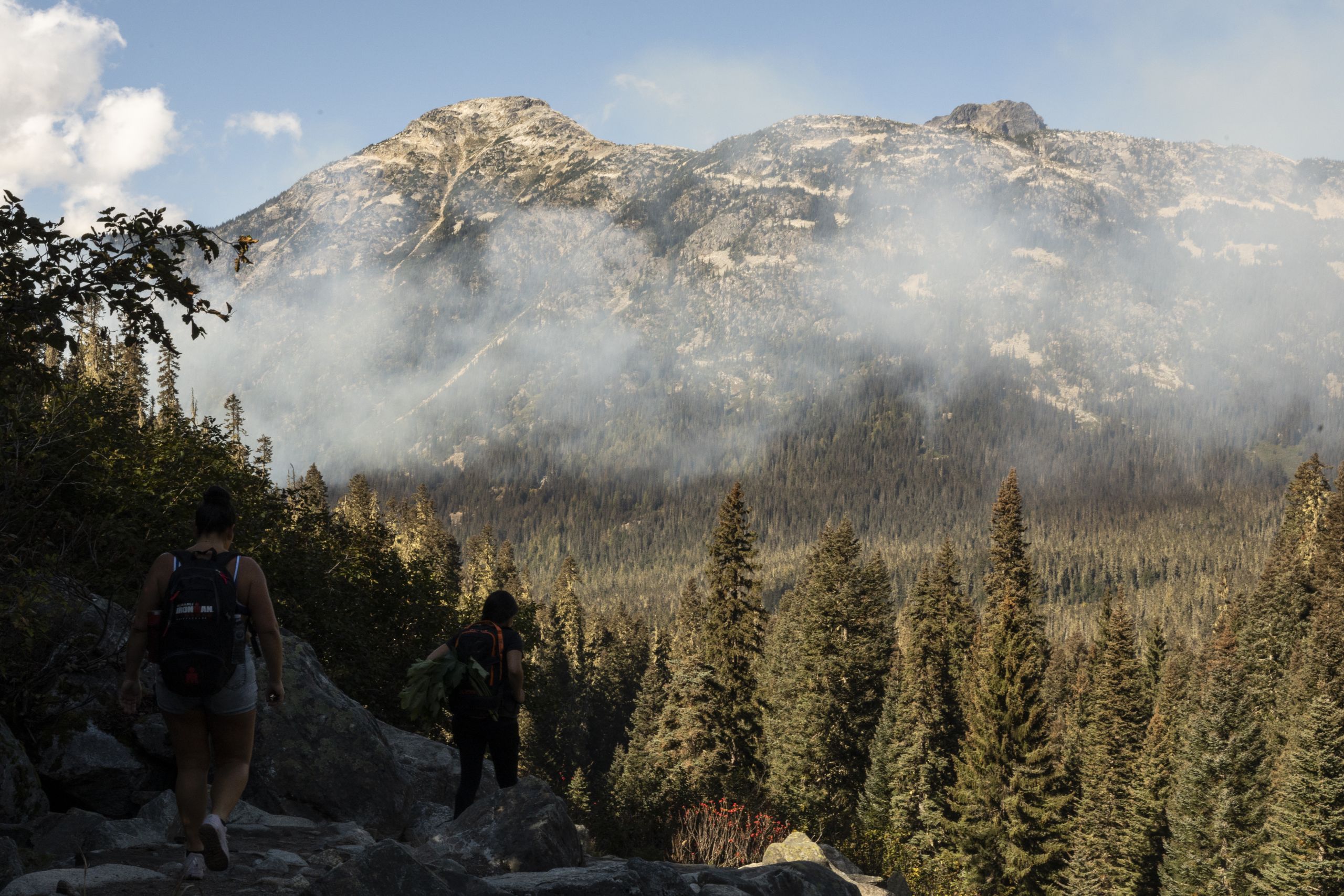
‘Heaven on Earth’
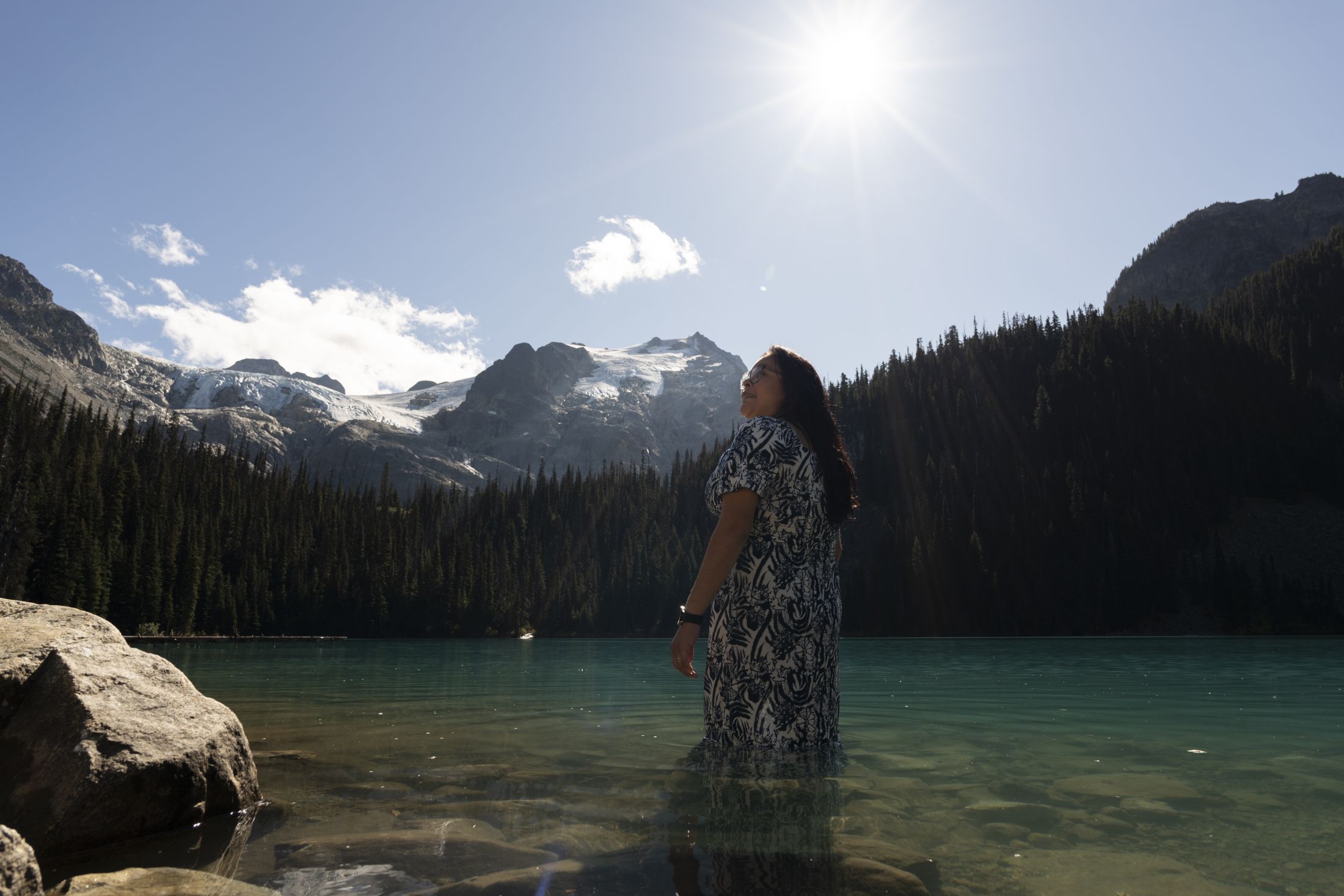
“It’s peaceful up here,” Terry Jameson says, looking out at the third and final lake on the hike. It’s his first time here.
The water is turquoise under the sun. He and his wife, Lightning Rose Jameson, are thinking of renewing their vows at Pipi7íyekw because the turquoise matches their wedding colours.
“It feels really amazing,” she says. “I honestly feel like this is a heaven on Earth, for sure — and this is only our backyard, you know? I’ve been here before, but this is my first time making it to the third lake and … I’m just happy.”
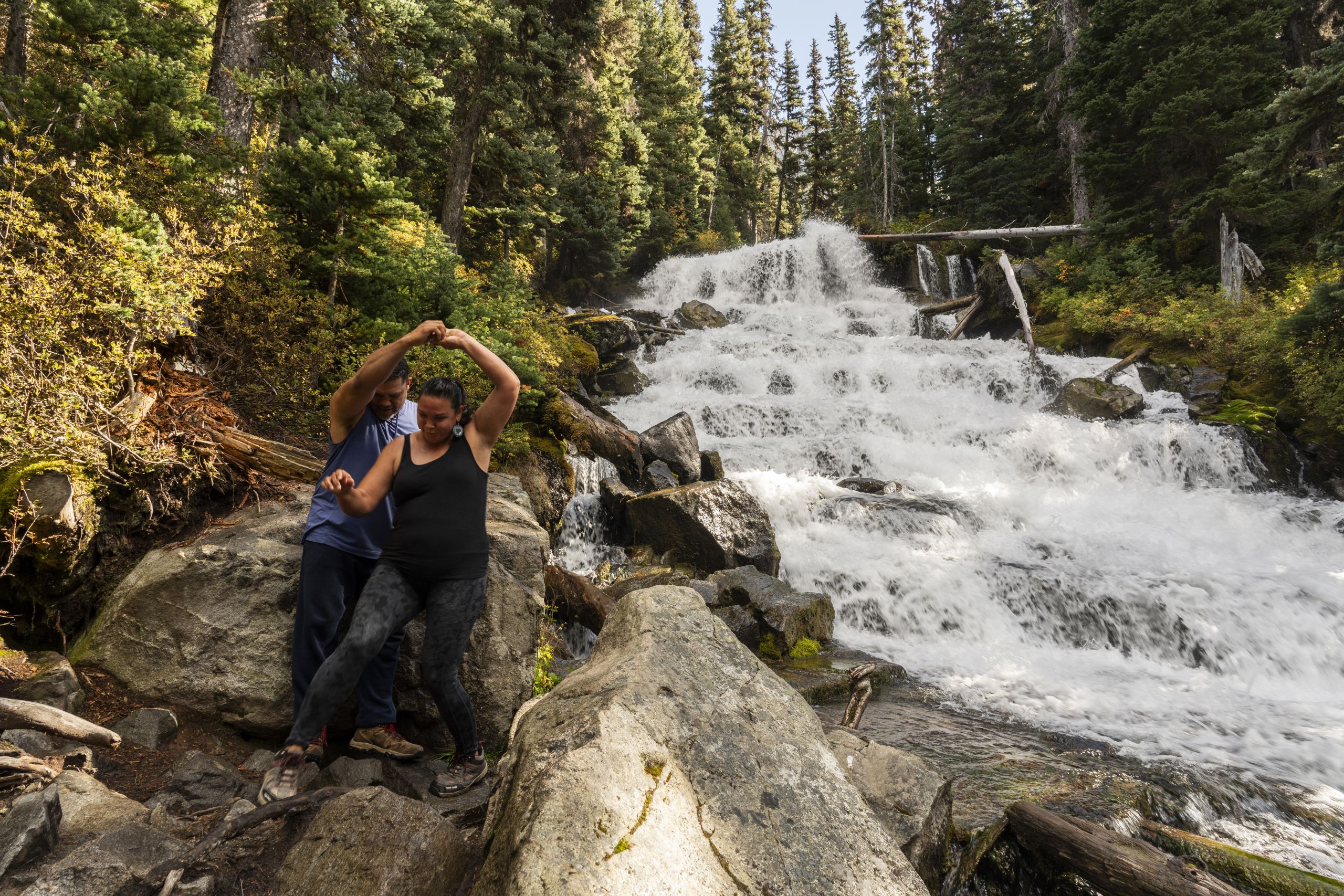
They are exploring the area in September, the last closure of the year. Líl̓wat members are running into each other excitedly, laughing and chatting, in between quiet stretches of having the trail to themselves.
Crowds have deterred Jessie-Lynne Joe from visiting before — it’s her first time, too. Now she wants to come back.
“I’m pretty happy that I made it,” she says.
Hearing about the crowds and seeing the traffic the rest of the year, “it’s kind of intimidating to even think of coming,” community member Lisa Peters says after finishing the hike.
“I feel really good I was here on our territory and with family.”
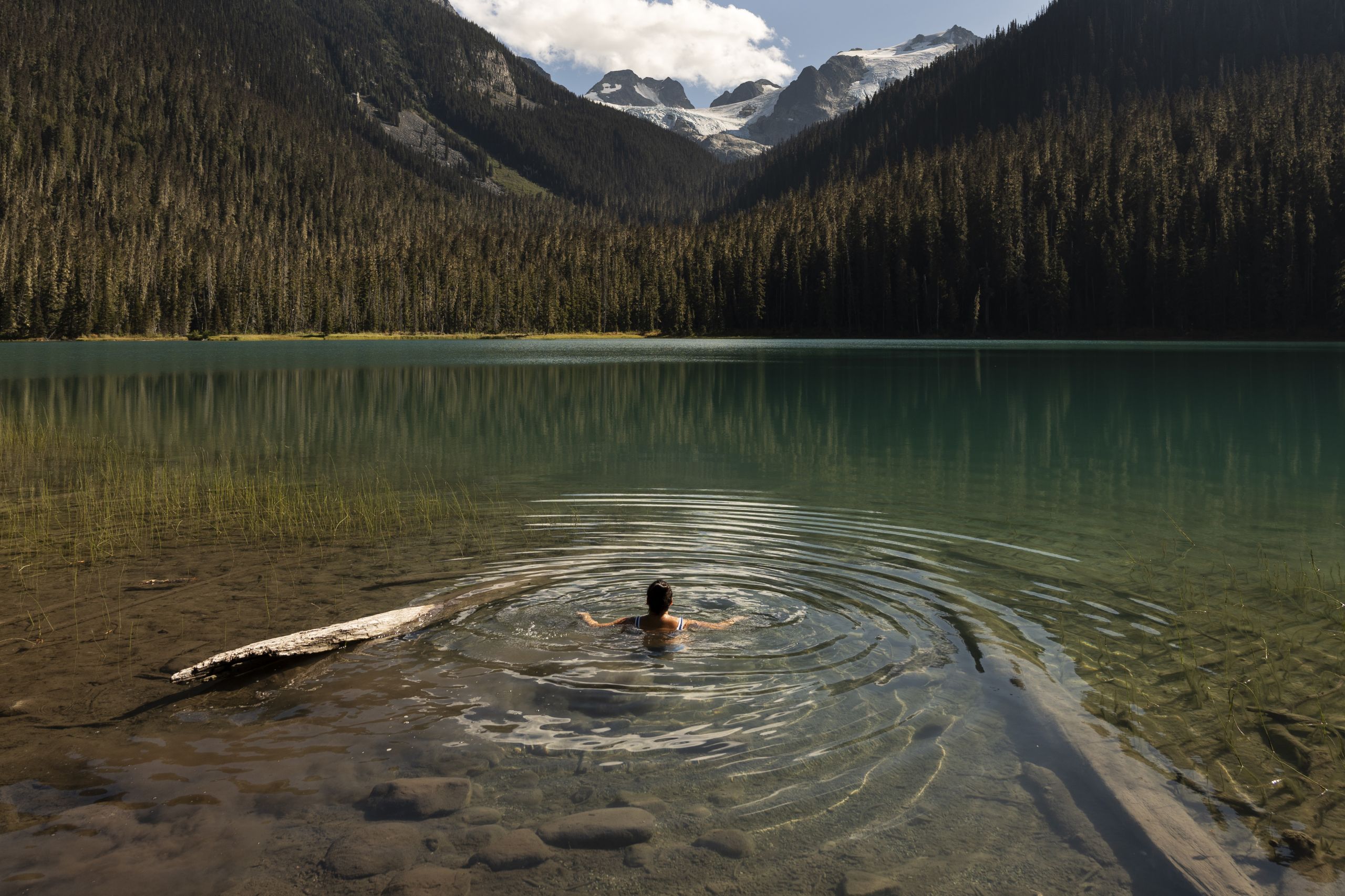
Instagram fame put pressure on ecosystem and community services
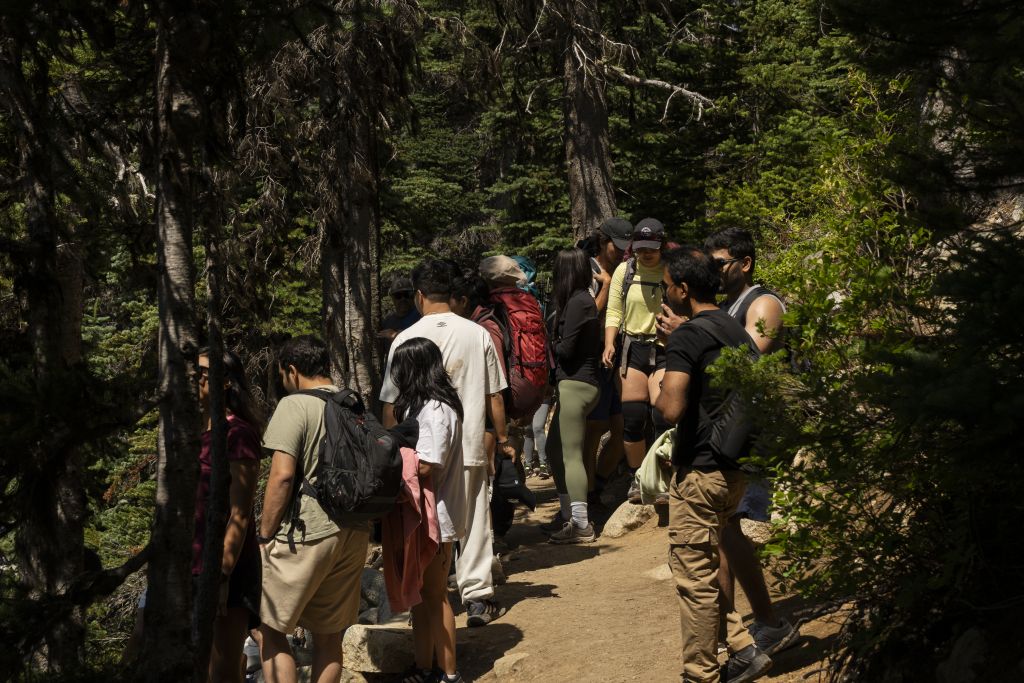
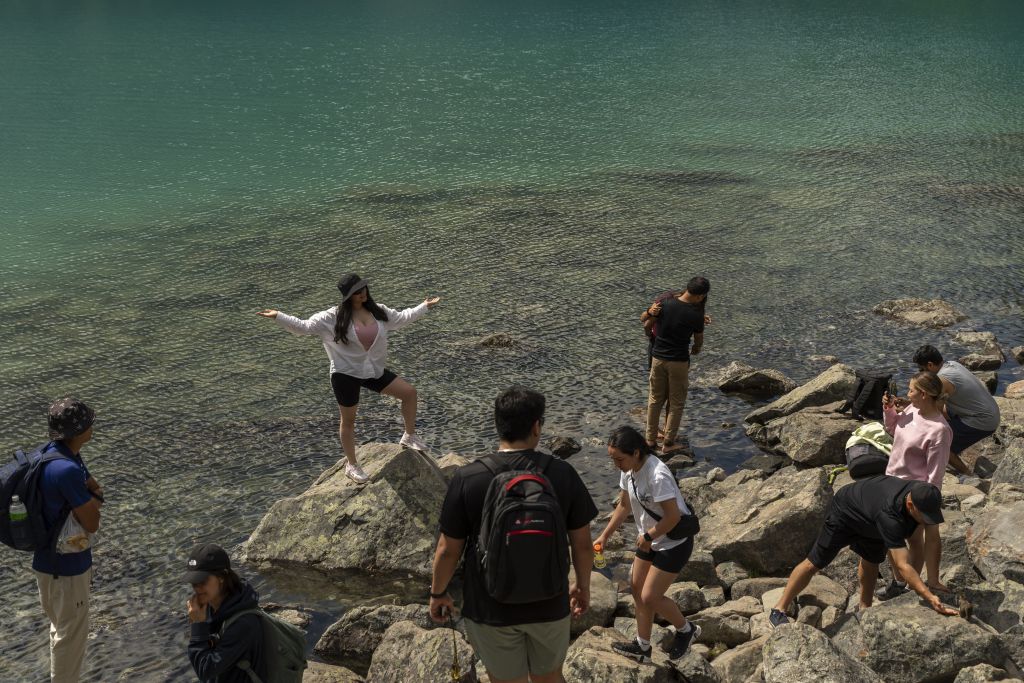
After it got online-famous, Joffre Lakes stayed busy. The trail became hectic, with people parking illegally along the highway and spilling onto the road.
“It was ridiculous,” Lightning Rose says. “The traffic was blocking the road pretty much.”
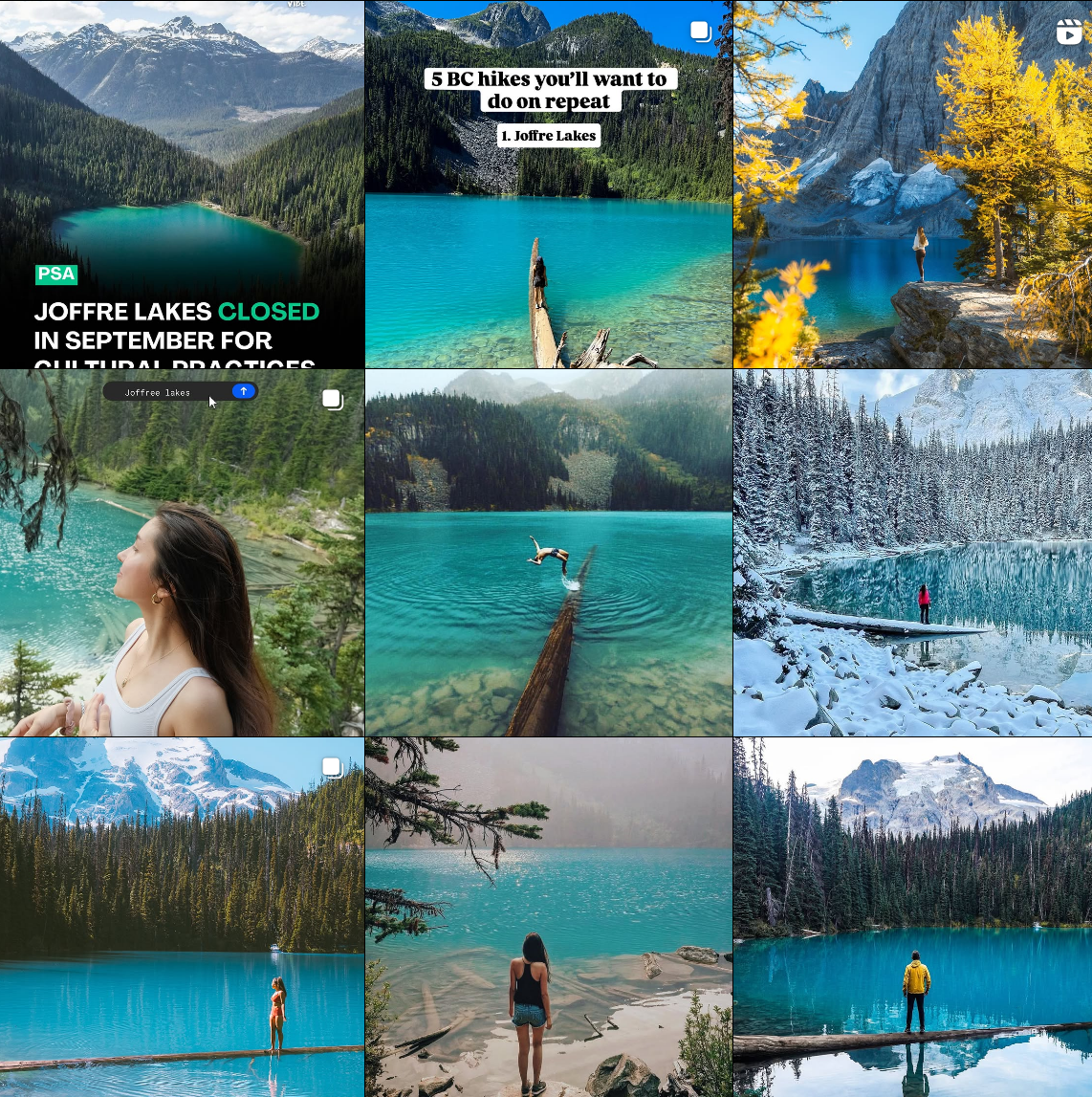
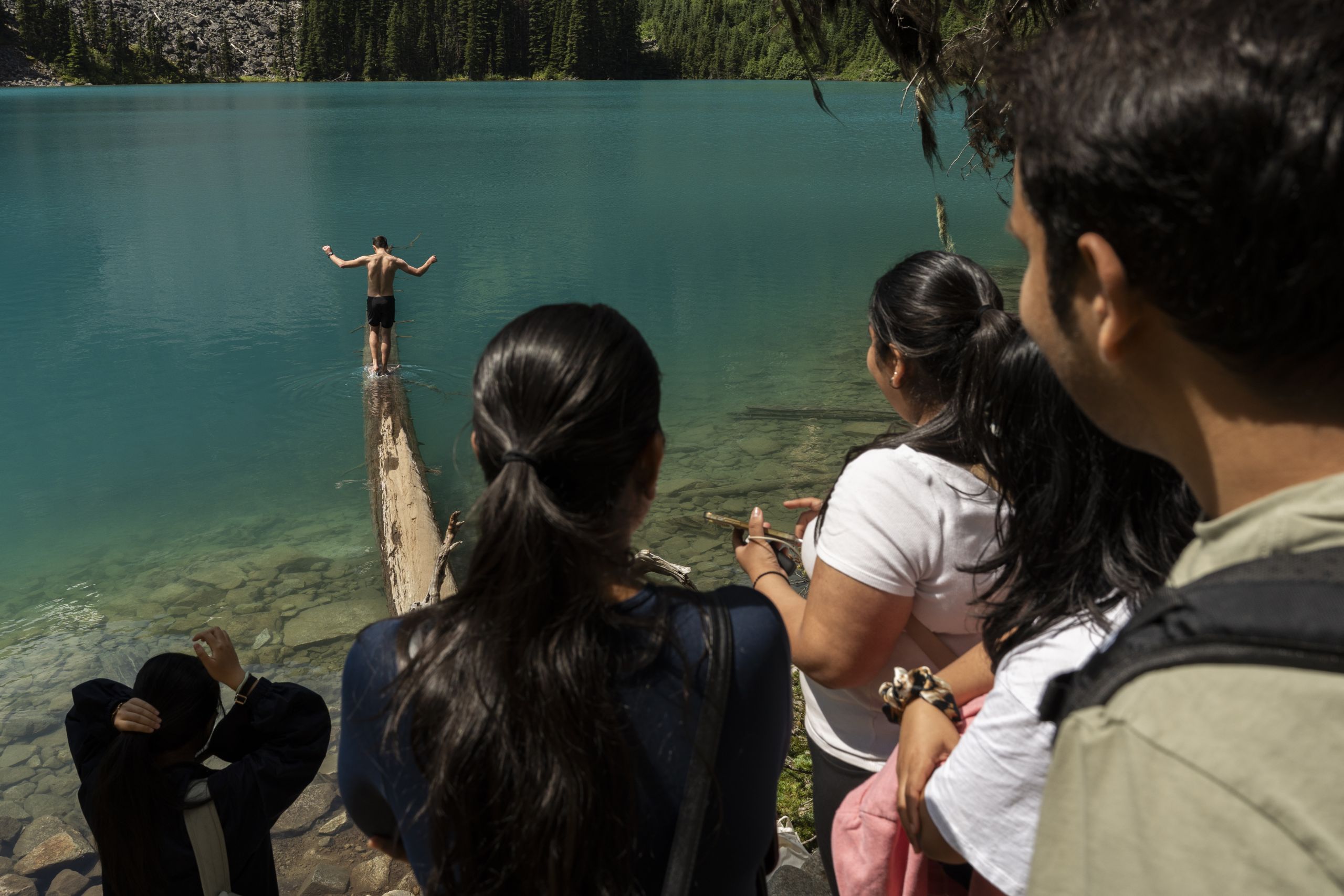
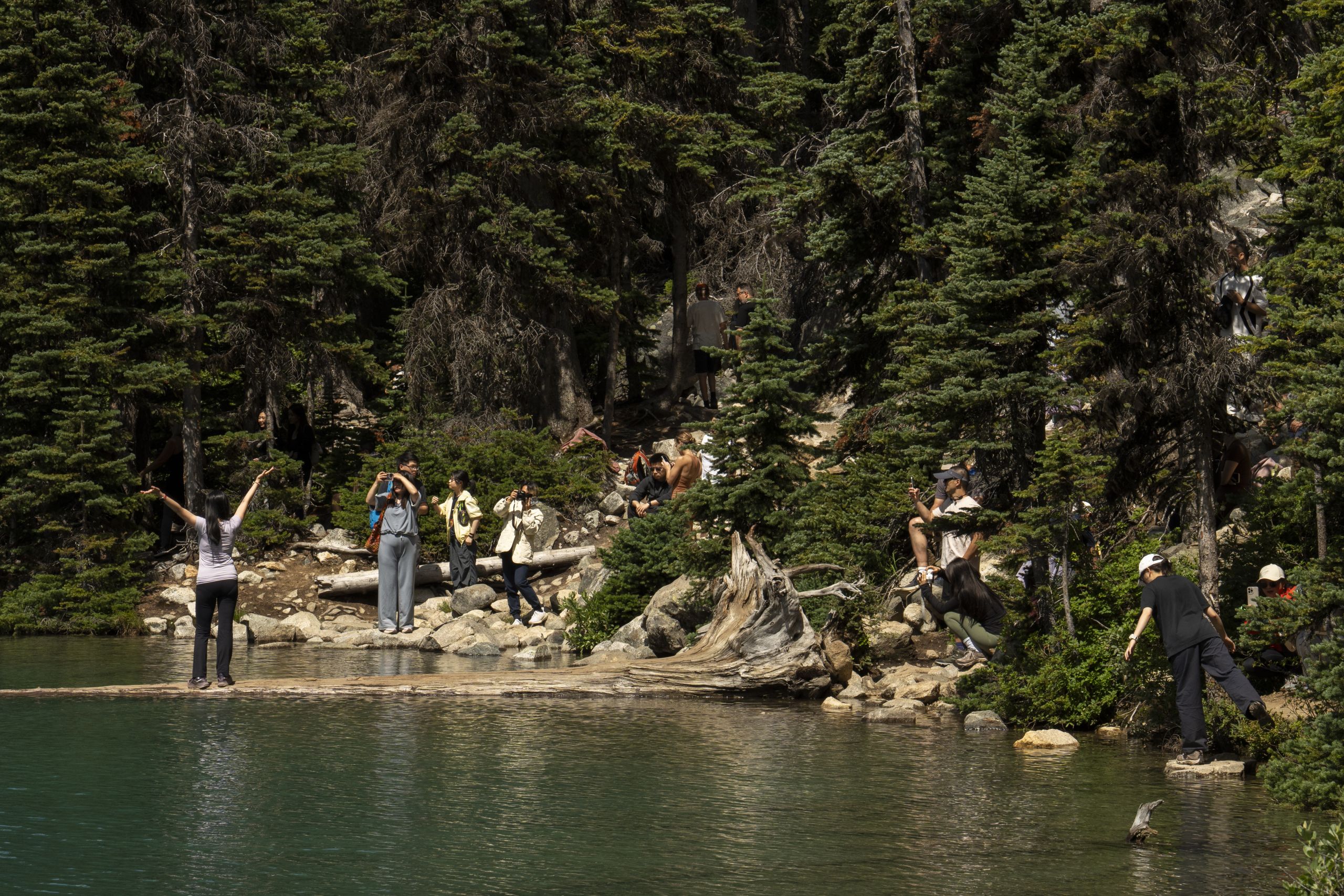
Gonzalez, whose ancestral name is Pasít, saw an Instagram video of someone taking the classic photo everyone wants — standing on a log at the second lake — before panning behind to the line-up of people waiting to take a near-identical picture.
“That doesn’t look like fun in nature,” she says.

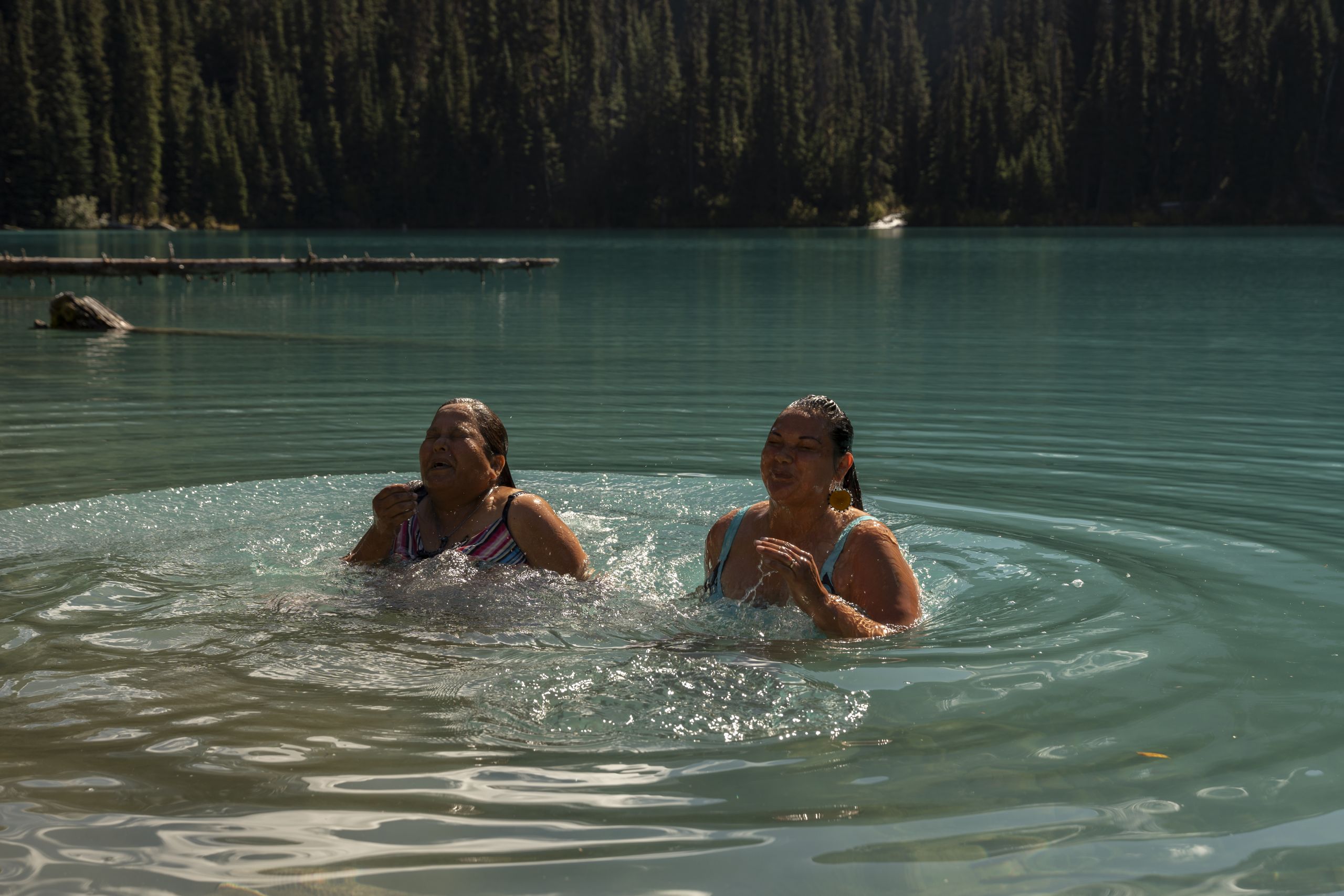
In 2018, Líl̓wat, N’Quatqua and B.C. signed an agreement to co-manage the park. It was a joint priority, since annual visits more than tripled between 2010 and 2019.
After COVID-19 hit and many urban residents went looking for uncrowded areas, the nearby forest road became overrun with campers, Lhpat and Gonzalez say, and the affordability and housing crises in the years since have kept people living out there.
The small community became anxious about what the influx of people could mean for its limited emergency and medical services. Now, there were people camping long-term — not always legally — and showing up ill-equipped for the hike or sneaking in when no staff were around.
It’s not just Joffre Lakes. People have breached safety closures in other areas as well. When a road was closed in Líl̓wat territory due to landslide risk, Gonzalez says people brought a cutting torch and plywood to run their ATVs over the gate.
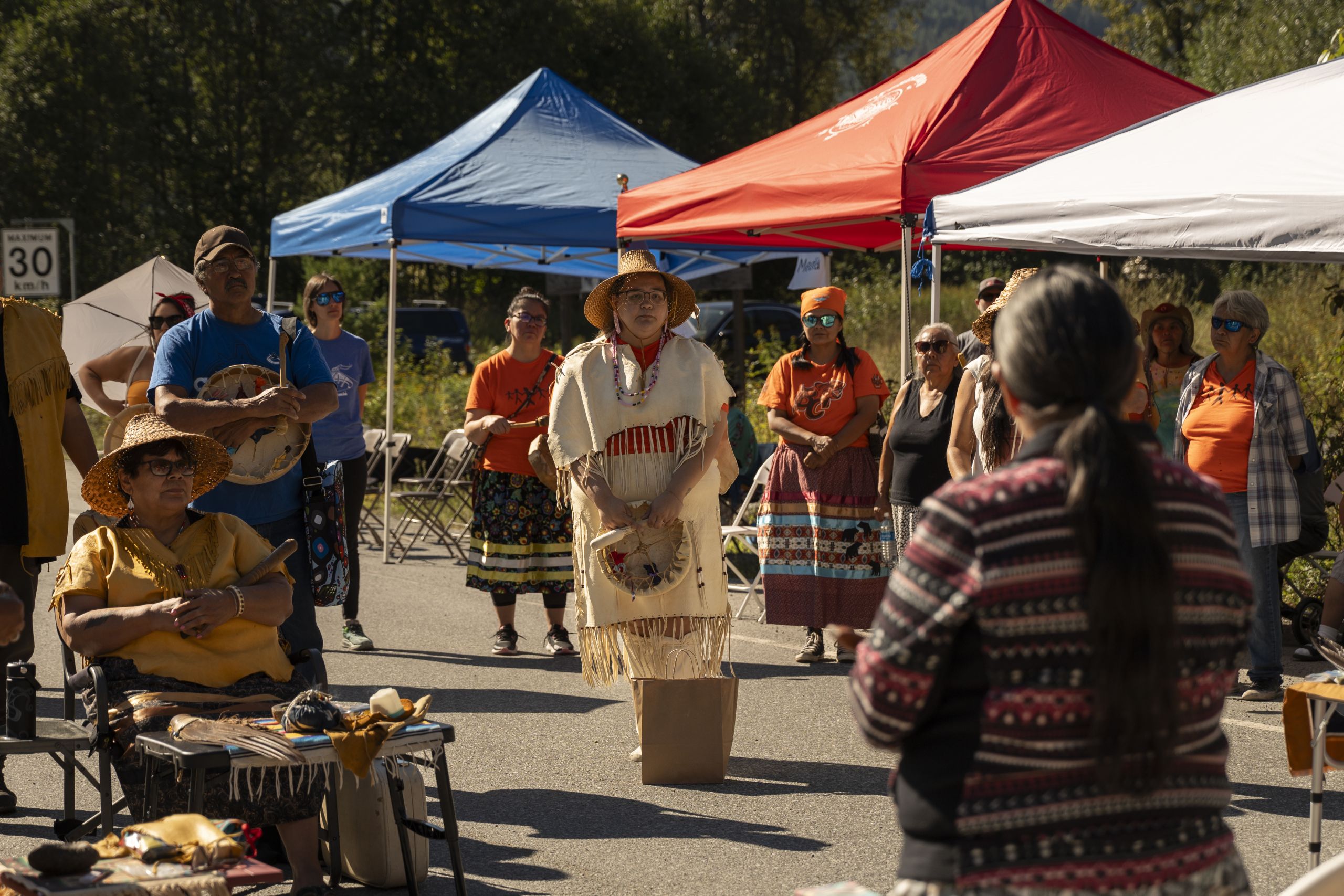
The Joffre closures bring privacy to Líl̓wat and N’Quatqua folks who have to go off the trail to pick berries, but don’t want hundreds of strangers “thinking they can do the same,” Gonzalez says.
The nations are concerned about the trail, which has begun to widen, spilling further into the ecosystem. They’re also worried about wildlife being driven out of the area and busier roads further limiting animals’ movements.
B.C. and the nations introduced the first closures in 2023.
The visitor use management strategy aims to improve visitor experience by reducing crowds, protecting the area from being overworked and giving nation members access.
“These reconnection periods are not to exclude people from Pipi7íyekw,” Gonzalez says. “They’re for Pipi7íyekw to regenerate and heal.”
‘Our communities need this’
The spring closure was aligned with Declaration Day, a celebration in May shared by Líl̓wat, N’Quatqua and the nine other St’át’imc communities that commemorates when their chiefs signed a declaration in 1911 asserting their sovereignty. Feather runners and horseback riders go from nation to nation, spreading the word about which nation is going to host the celebration that year. Gonzalez explains they imagined the runners being able to fulfill their journey without being surrounded by so many cars, and people able to stop at the lakes while travelling between communities.
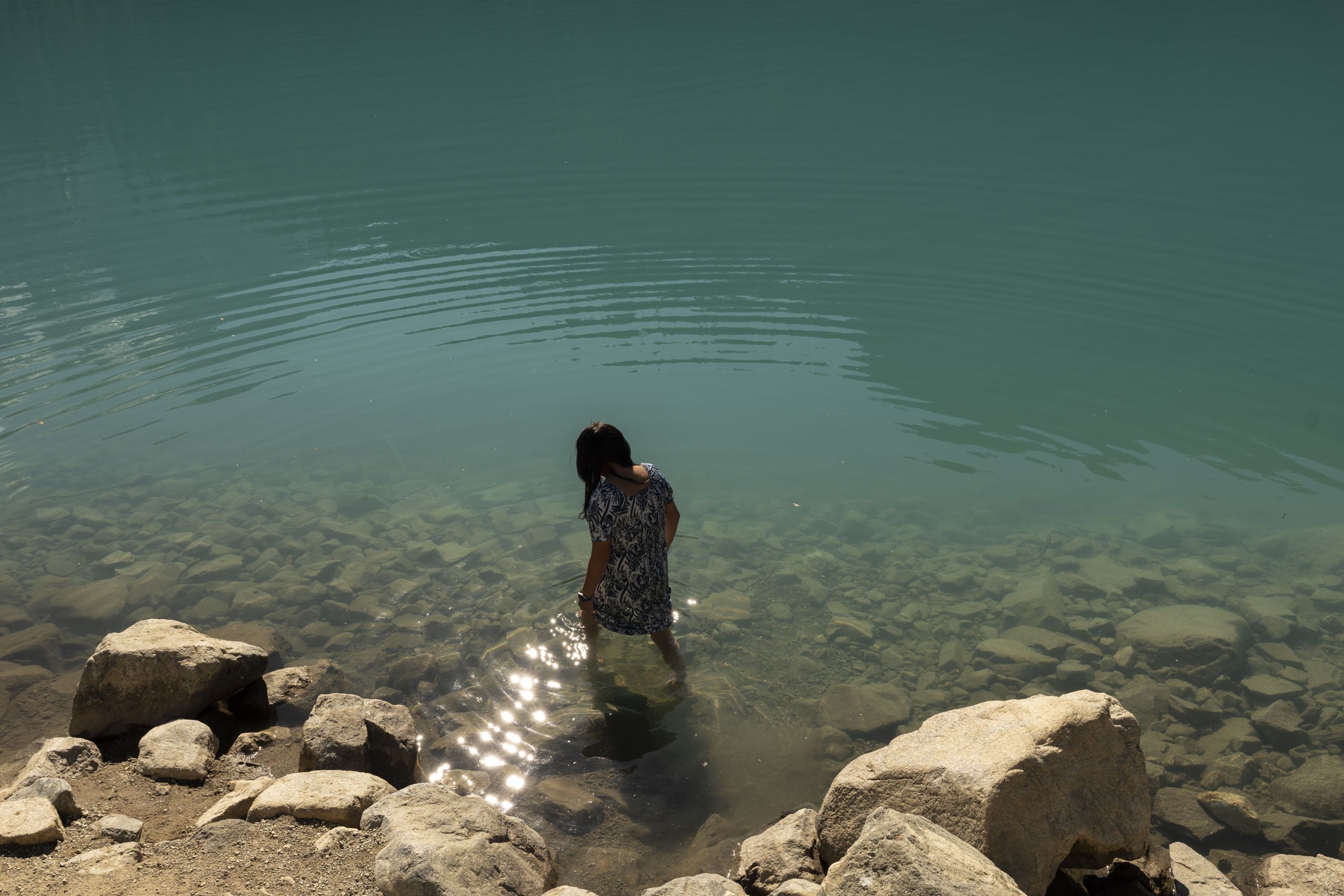
Gonzalez says the park brings important spiritual and mental health benefits, especially for young people facing mental health and addiction issues due to interwoven socioeconomic factors. She says giving them time and space in important cultural places brings feelings of empowerment.
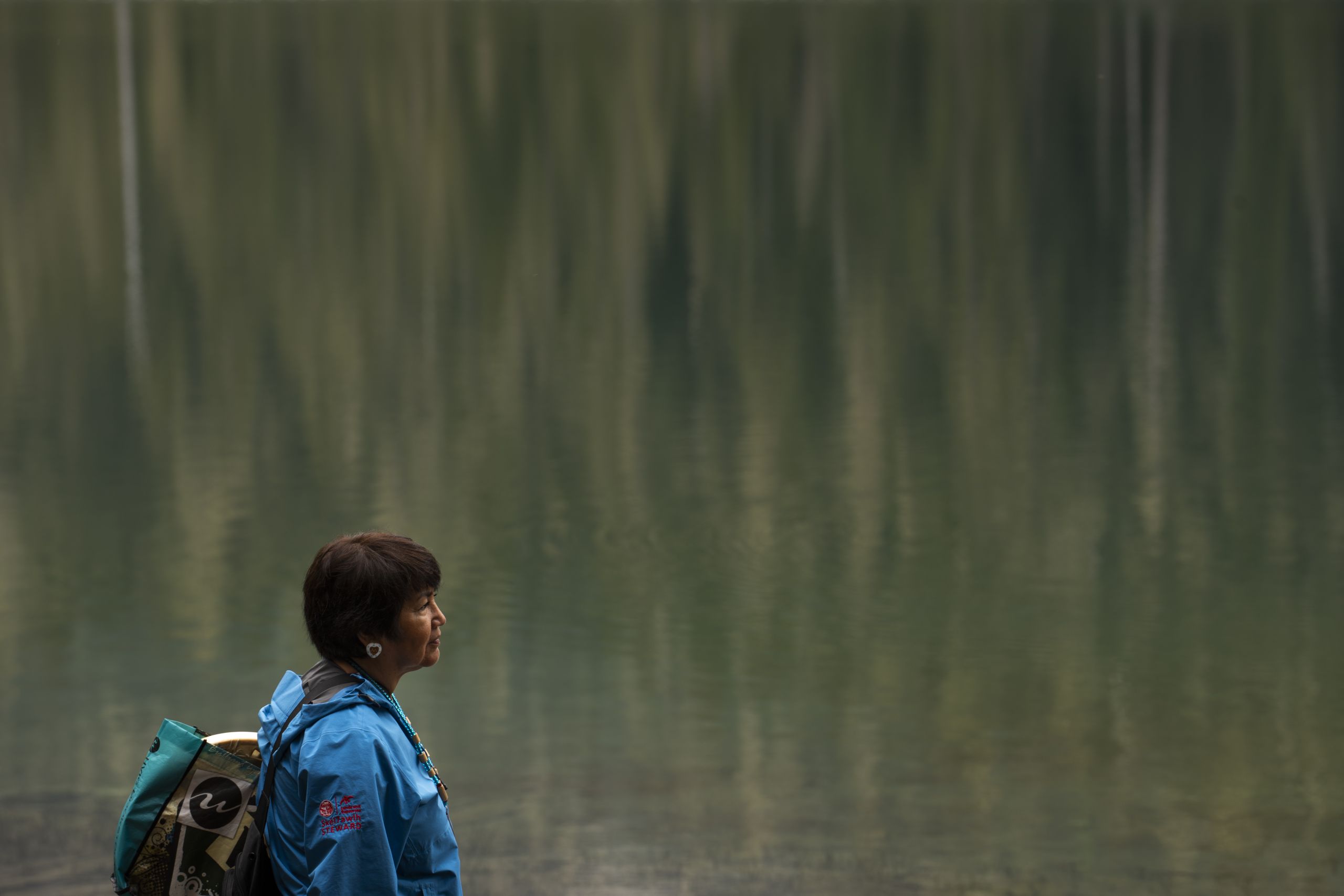
“For us to be up here … It lifts the hearts of the people,” Lhpat says.
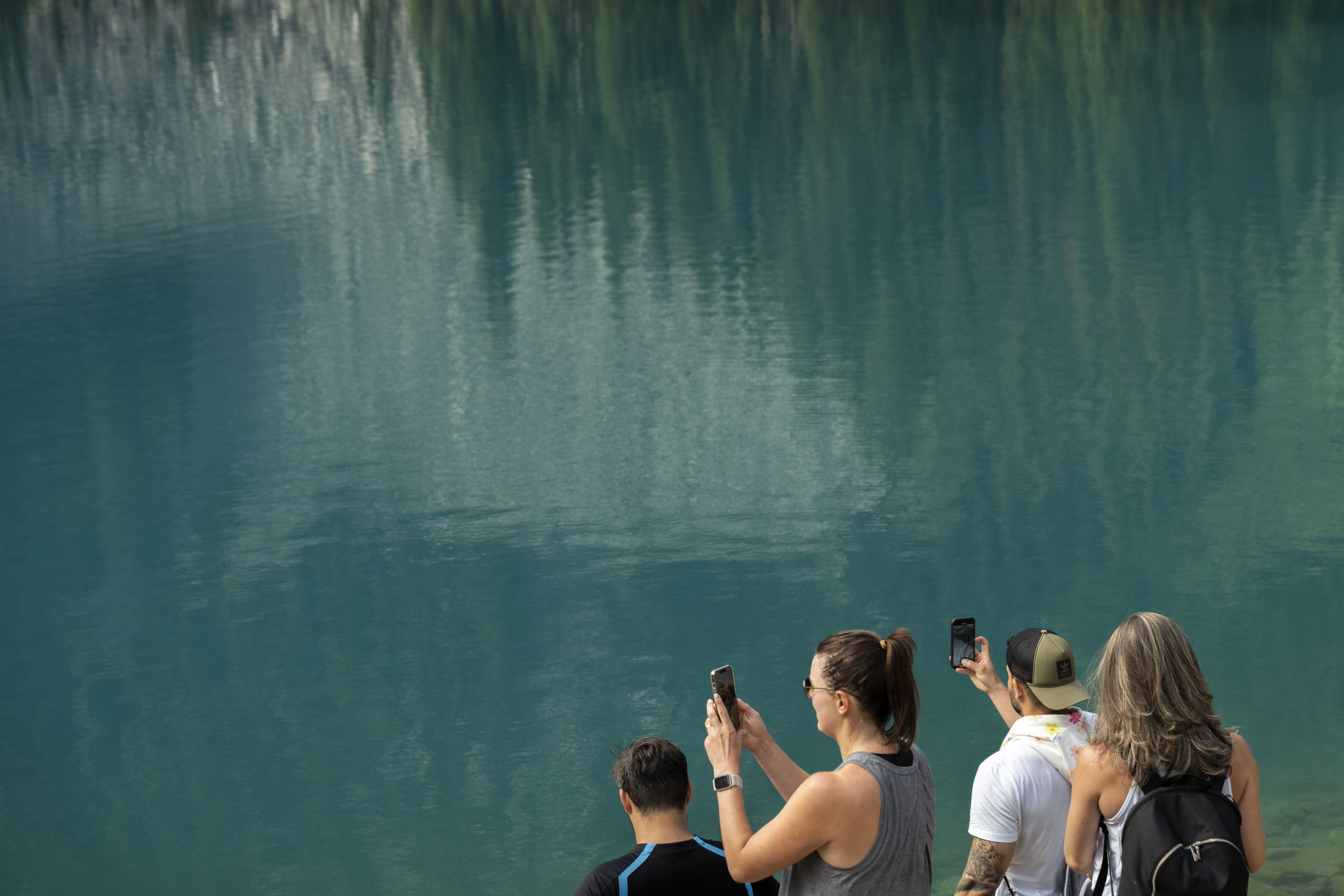
There was one economic trade-off — less business at the nation’s gas station during the closures. Gonzalez says Líl̓wat leadership is considering how to counteract that effect. But the closures bring benefits that are harder to quantify than numbers.
“Our communities need this,” Gonzalez says. “Our communities are suffering hugely by the toxic drug crisis, by mental health. It all leads back to colonization, and our communities really need to reconnect with the land and our teachings.”
Many aspiring visitors want to be an ‘exception’ to the rules
During the closure in June, a group of people came out of the trees at Joffre Lakes Park, heading to their car — but they were not from the community.
“We did have a group of sneaker-inners,” BC Parks ranger Alexandra Beech tells us. “We had nation members show up, and I made [the group] apologize.”
It’s not a one-time occurence: people regularly try to sneak in outside the park’s open hours and that’s continued during the reconnection periods.
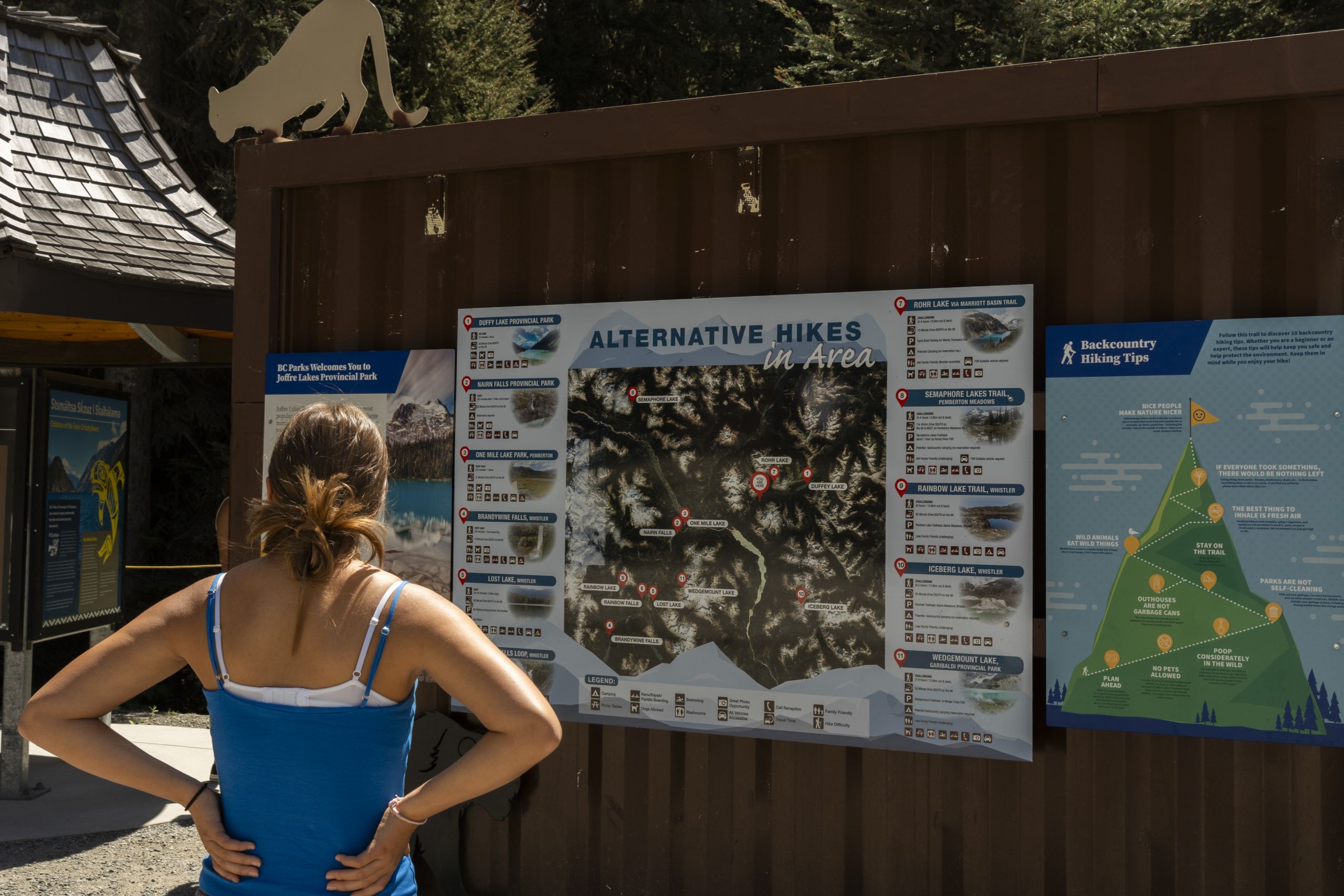
Again and again, people say they want to be the exception. They say they understand the park is really busy, but think they are a worthy, special case.
I travelled so far to be here. I flew in for this place.
Can I take wedding photos while it’s empty?
Can I just go to the first lake?
We only got five passes online. Can the nation give us permission to bring two more people? (“We don’t issue the day passes,” Gonzalez says.)
Still, Gonzalez says the vast majority of interactions are positive. Many people are interested and want to respect the reconnection periods. But there’s a loud and noticeable minority — mostly “keyboard warriors,” Lhpat says, who are angry about the closures. She believes educating the public can bring “positive change,” but it takes conscious effort that can leave her feeling overwhelmed.
“We need to open our minds and hearts to each other — because we’re going to be here,” she adds.


‘Figuring out what reconciliation actually is’
Lhpat shows us the spot in the parking lot where a sweat lodge was set up earlier this year.
“We paved paradise and put up a parking lot,” she says, referencing Joni Mitchell’s song Big Yellow Taxi. “Every now and then, that song comes out on the radio and, man. It really hits home for me.”
The nation has been working with B.C. since 2018 in a significant effort at collaboration, but the partnership still hasn’t been perfect. The nations were upset this summer when the province chose closure dates without their buy-in, making them a full month shorter than the nations requested. Despite their opposition. B.C. made the call to allow public access over Labour Day weekend.
On a Friday morning in August, the nations held a ceremony and blocked traffic on Highway 99 to bring attention to what they saw as the province’s betrayal of their partnership.
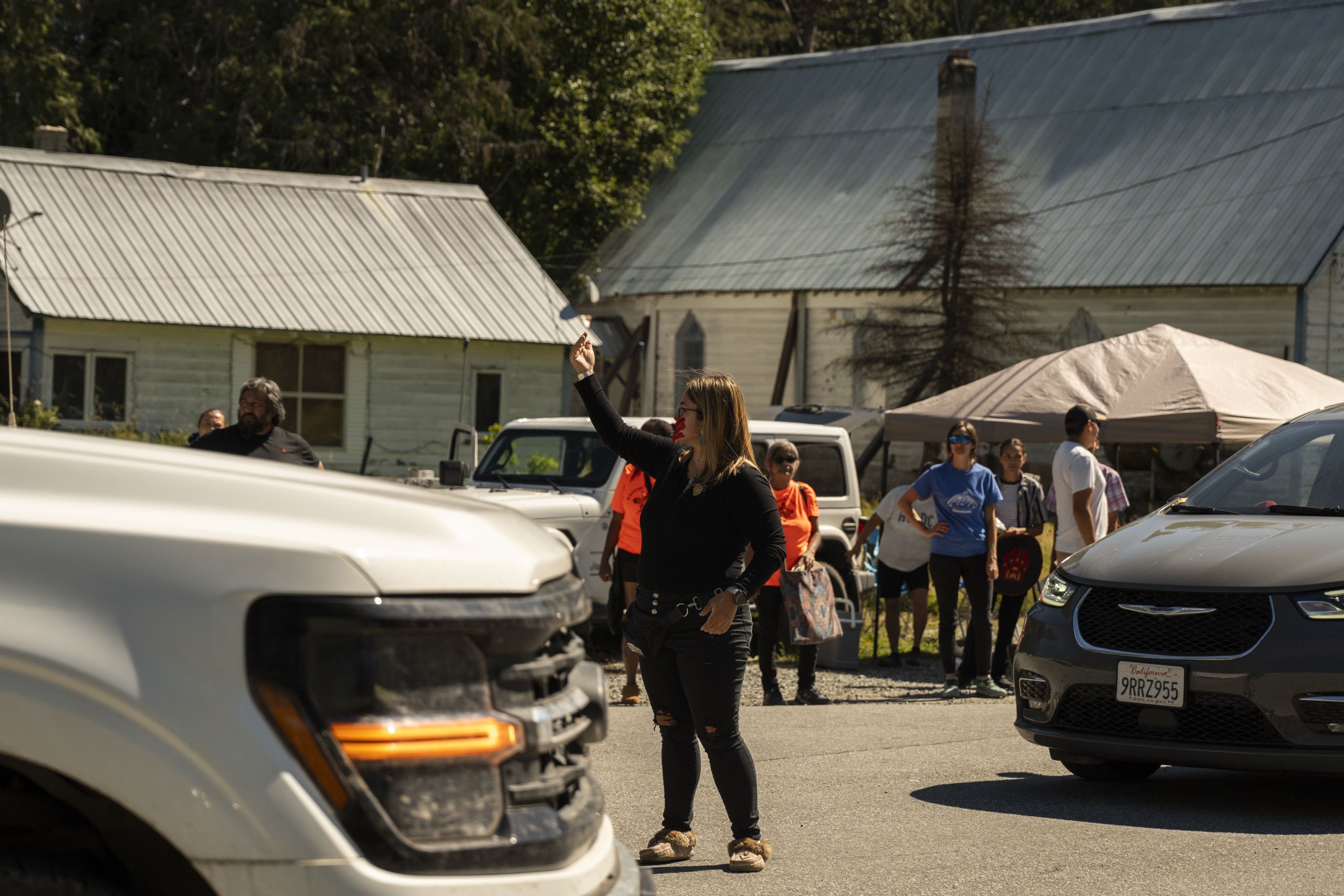
To Gonzalez, BC Parks announcing new closure dates without the nations’ buy-in meant they were holding onto a “back-minded mentality that they are the ultimate decision-makers of our unceded territories,” she says.
In an emailed statement, B.C. told The Narwhal the shorter closure still “allows the park to recover from a busy summer” and time for nation members to carry out cultural practices.
“We acknowledge that the Nations had requested additional closure dates beyond what the province was prepared to agree to,” it said. “Although a final agreement for 2025 was not reached, this year’s closure schedule honoured the approach agreed to for the 2024 season.”
“We have a responsibility to support public access to parks while also respecting First Nations cultural practices and conservation goals,” the ministry continued. “We greatly value our relationship with the Líl̓wat Nation and N’Quatqua, and are committed to a continued collaborative planning process.”
Historically, parks were created without consent from Indigenous Peoples, sometimes forcibly displacing people from their homes, erasing villages and expelling people from their harvesting and hunting areas. These nations are among many that want to ensure true collaborative management for the future.
Legally enshrined Indigenous Rights include the right to access traditional territories and engage in activities such as harvesting, fishing and gathering medicines. Canada’s adoption of the United Nations Declaration on the Rights of Indigenous Peoples in 2021, and B.C.’s own Declaration on the Rights of Indigenous Peoples Act in 2019, require the federal and provincial governments to uphold those rights. But also, there were 20.8 million parks visitors across the province from 2013 to 2014; a decade later, that figure had grown by nearly 30 per cent to just over 27 million. Balancing Indigenous Rights to access these places with demand from Canadians and visitors alike is a challenge — and leads to thorny conversations.
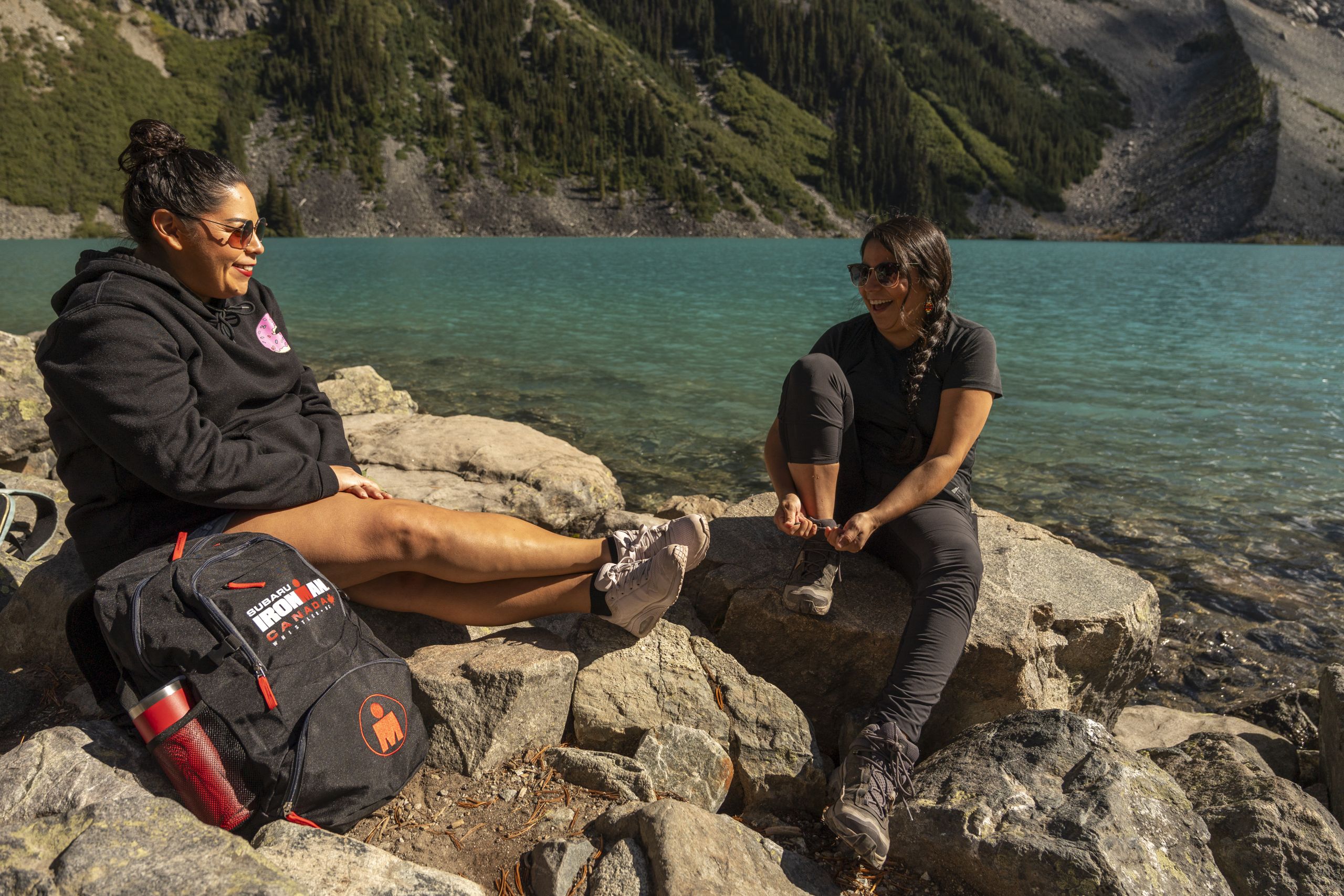
“I think there’s also this level of fear and unknown … [and] discomfort while we go through figuring out what reconciliation actually is,” Gonzalez says.
“I’m just as unsure what to say … I feel uncomfortable. But if I don’t say it, then I’m complacent with where we’re at.”
But Gonzalez is not content with where things are at. She wants to see big changes. She wants Indigenous Peoples to be included equally in early planning of all management decisions around parks. She wants Indigenous Peoples to have safe, protected access to their territories that have been disrupted in so many ways.
For her part, Lhpat would like to see a Guardians program launched in Joffre Lakes Park. She’d also like more jobs at BC Parks to be prioritized for nation members.
She wants everyone, non-Indigenous as well, to feel love and responsibility to care for the land, not just use it.
“Look at what we’ve done,” she says, referring to the destruction of ecosystems. “But if we leave it alone for a while, the land will forgive us and recoup itself.”