



 7 min. read
Summary
- Every three years, the Labrador Winter Games draws athletes from communities across the region to Happy Valley-Goose Bay to compete in events that reflect Labrador’s distinct culture and history, like snowshoe biathlon and dog team races.
- Several athletes in the 2026 games found increasingly volatile winter conditions — which swung between severe cold and sudden warmth — are impacting how they train.
- A climatologist at Environment and Climate Change Canada says climate change is a contributing factor in unpredictable winter temperatures.
Sherri Wolfrey has competed in the Labrador Winter Games for 10 times now — but this winter, she says extreme weather made training difficult. An experienced athlete training in her hometown of Rigolet, Nunatsiavut, she endured some weeks of temperatures plunging below -30 C with high winds.
“Practicing was really hard on the lungs, like trying to chisel a hole [in the ice], and you gotta be fully dressed in extra layers,” Wolfrey, who competes the Labrathon, snowshoe biathlon and target shooting, says. But the following week might be too warm.
“We had a few mild days when [the snow] was almost too sticky to go with snowshoes on, because it will stick to your moose hides,” Wolfrey explains.
The Labrador Winter Games, held every three years, took place between March 8 and 14 in Happy Valley-Goose Bay. Events like snowshoe races, skiing and dog team races are all games that require athletes to compete in Labrador’s winter elements. But athletes from all across Labrador are voicing their concerns about the conditions they trained in leading up to the 2026 games.
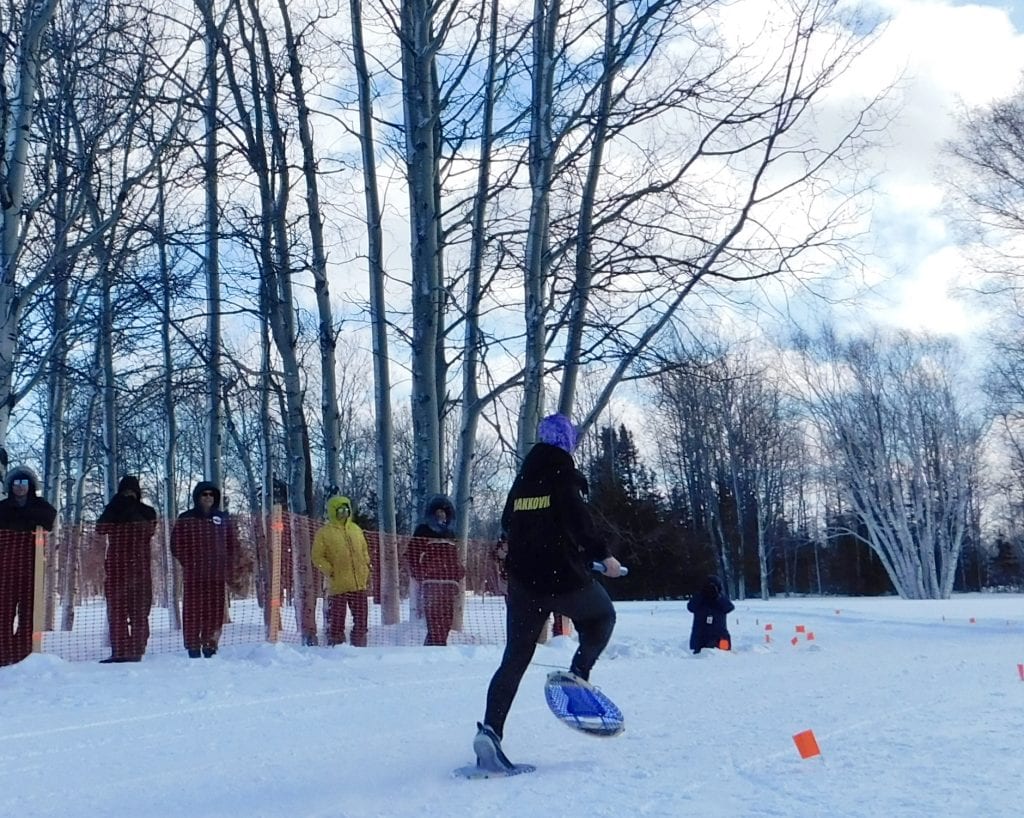
Wolfrey is a school secretary and mother to four children in Rigolet, located on the north coast about 160 kilometres from Happy Valley-Goose Bay. And she was also one of many athletes that experienced the cancellation of the Labrathon at the 2023 Labrador Winter Games.
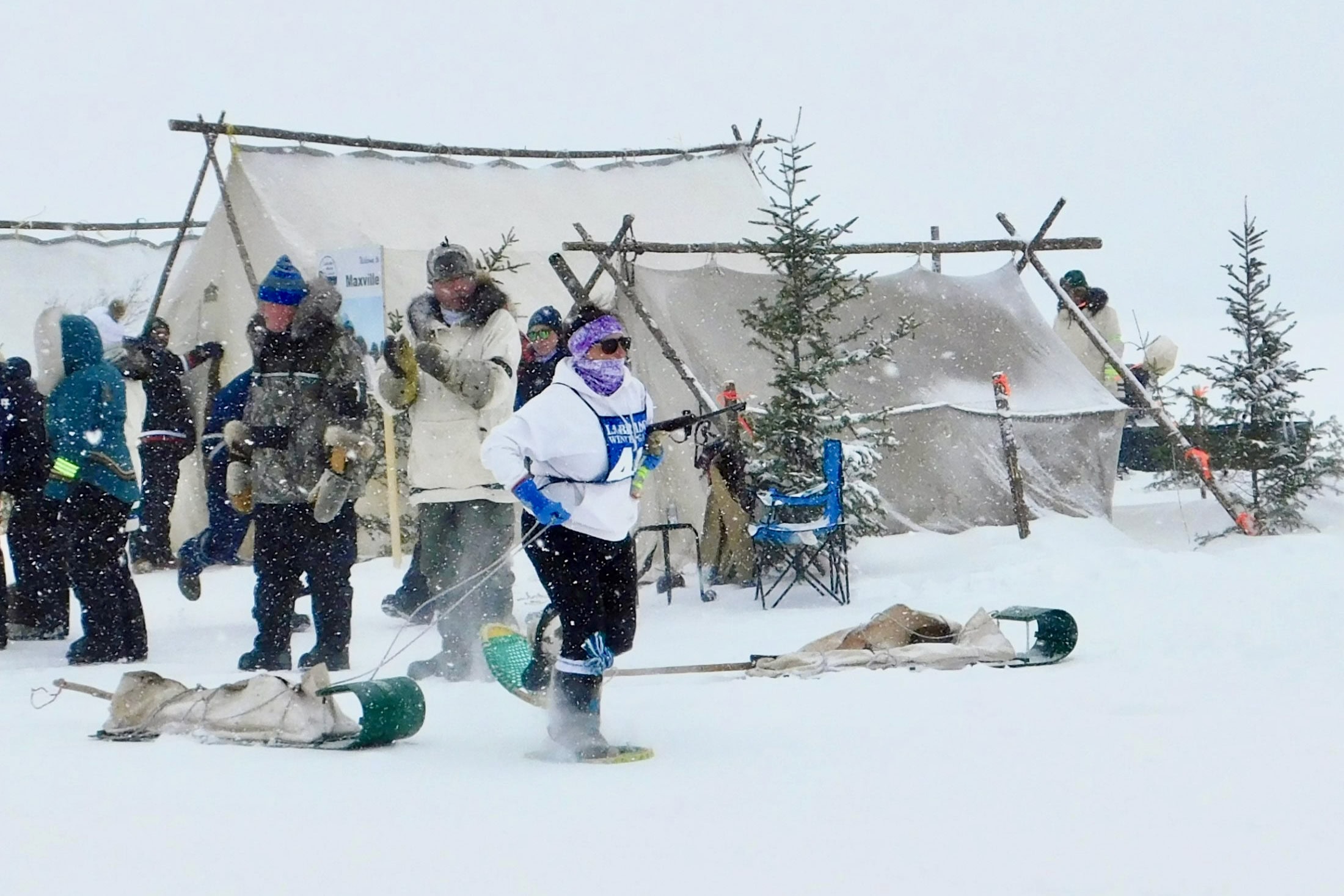
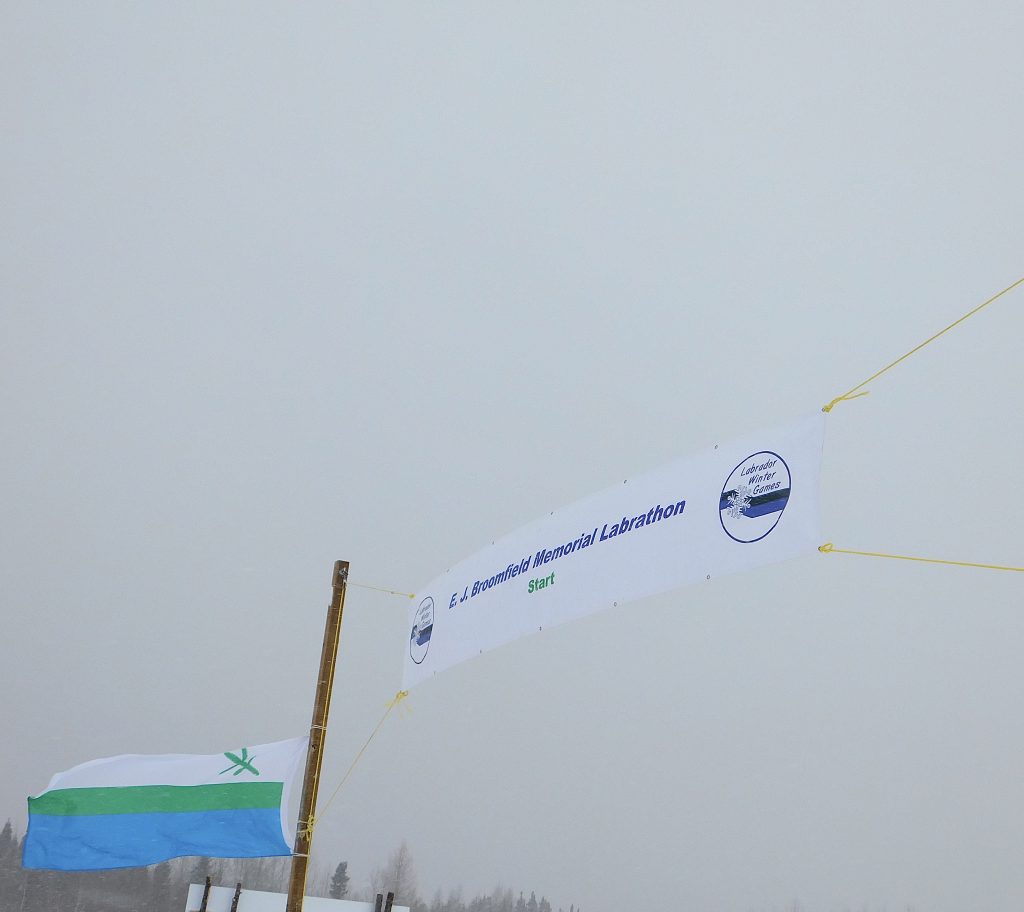
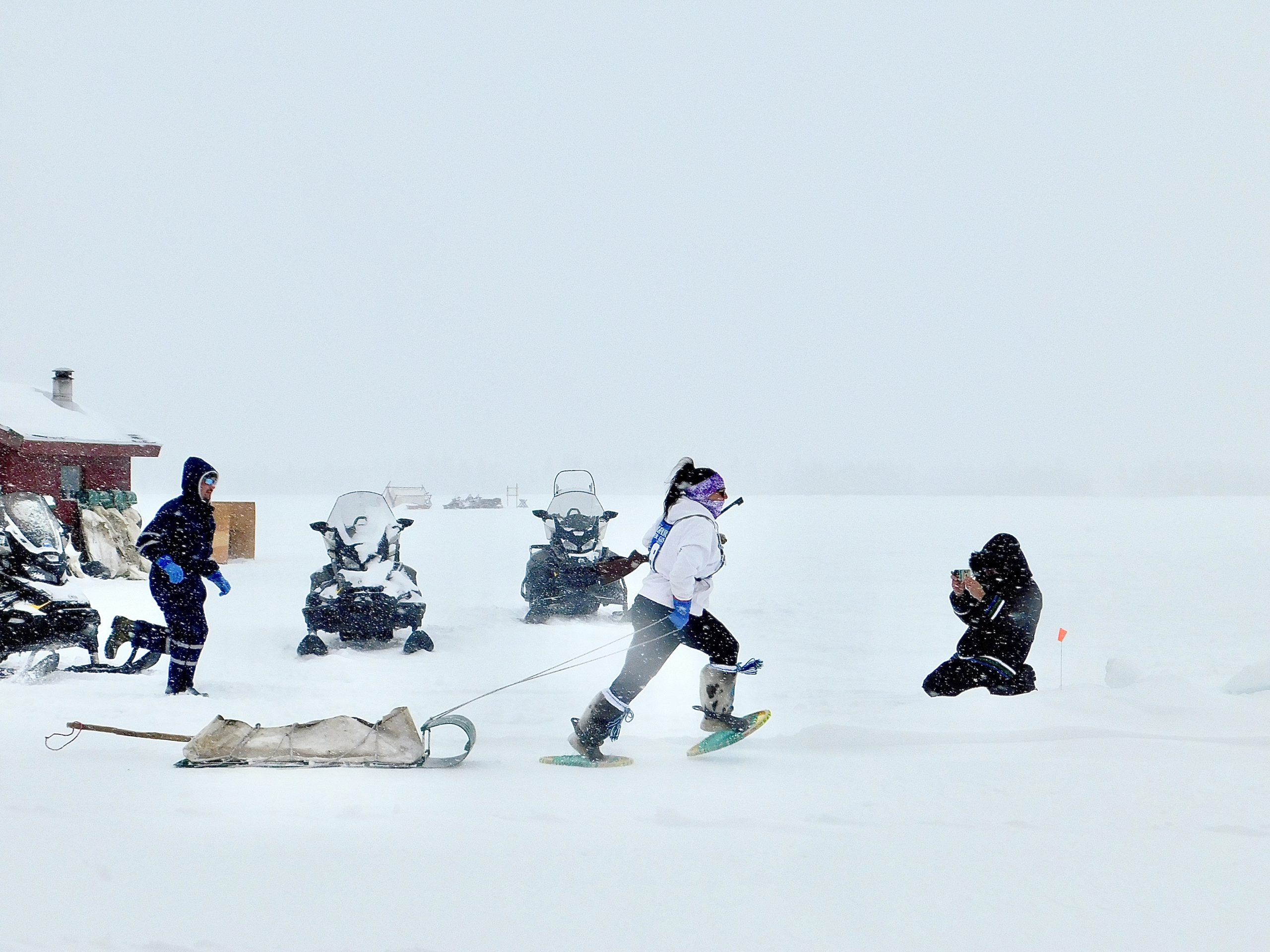
The E.J. Broomfield Memorial Labrathon is one of the main events that athletes and spectators look forward to. The race tests athletes’ ability to live like trappers once did, as they race in snowshoes while pulling a toboggan. Along the course, they must light a fire to boil a kettle, shoot five targets, set a trap and saw a log of wood and chisel a hole through the ice, before racing to the finish line with their toboggan full of tools.
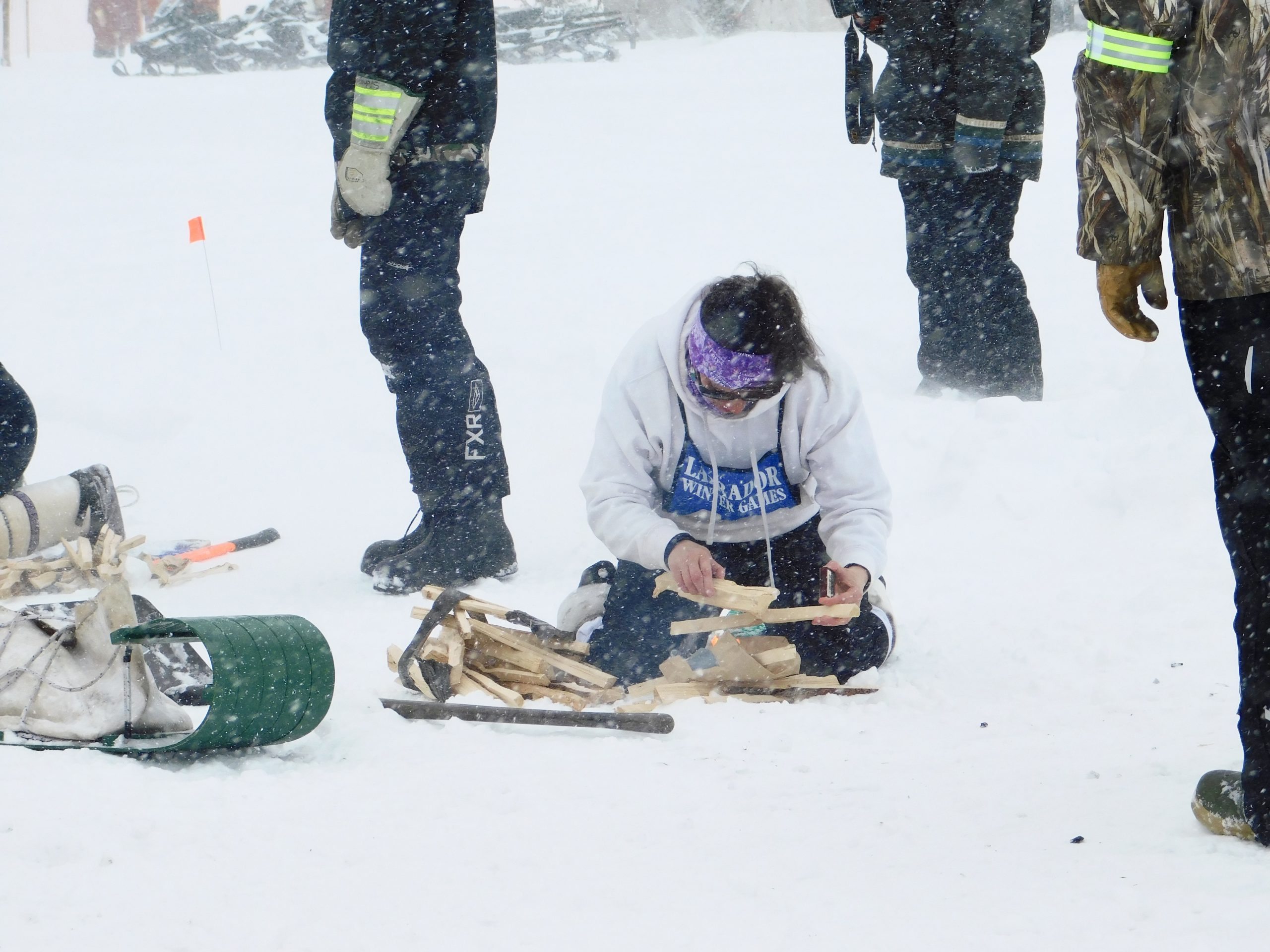
But the board of directors for the 2023 games cancelled the Labrathon due to “unprecedented weather conditions” that raised safety issues.
Wolfrey says that the cancellation of the 2023 Labrathon was “so disappointing, especially after all that training.” She and a few other athletes participated in their own Labrathon to prove that it could be done in the weather.
Athletes experience extreme temperature changes and high winds while training
Jessica Roberts, a returning athlete from Labrador City near the Quebec border, says she believes the adverse weather that impacted her training for the 2026 Labrador Winter Games was caused by climate change.
“This year was a bit challenging as we had temperatures over -20 to -25 degrees Celsius, with wind gusts up to 50 and 80 kilometres an hour,” Roberts says. “The last two weeks [before the games] most of us haven’t been able to train at all.”
Roberts competed in outdoor games such as the snowshoe relay race and individual female snowshoe race this year, and previously competed in the 2019 games.
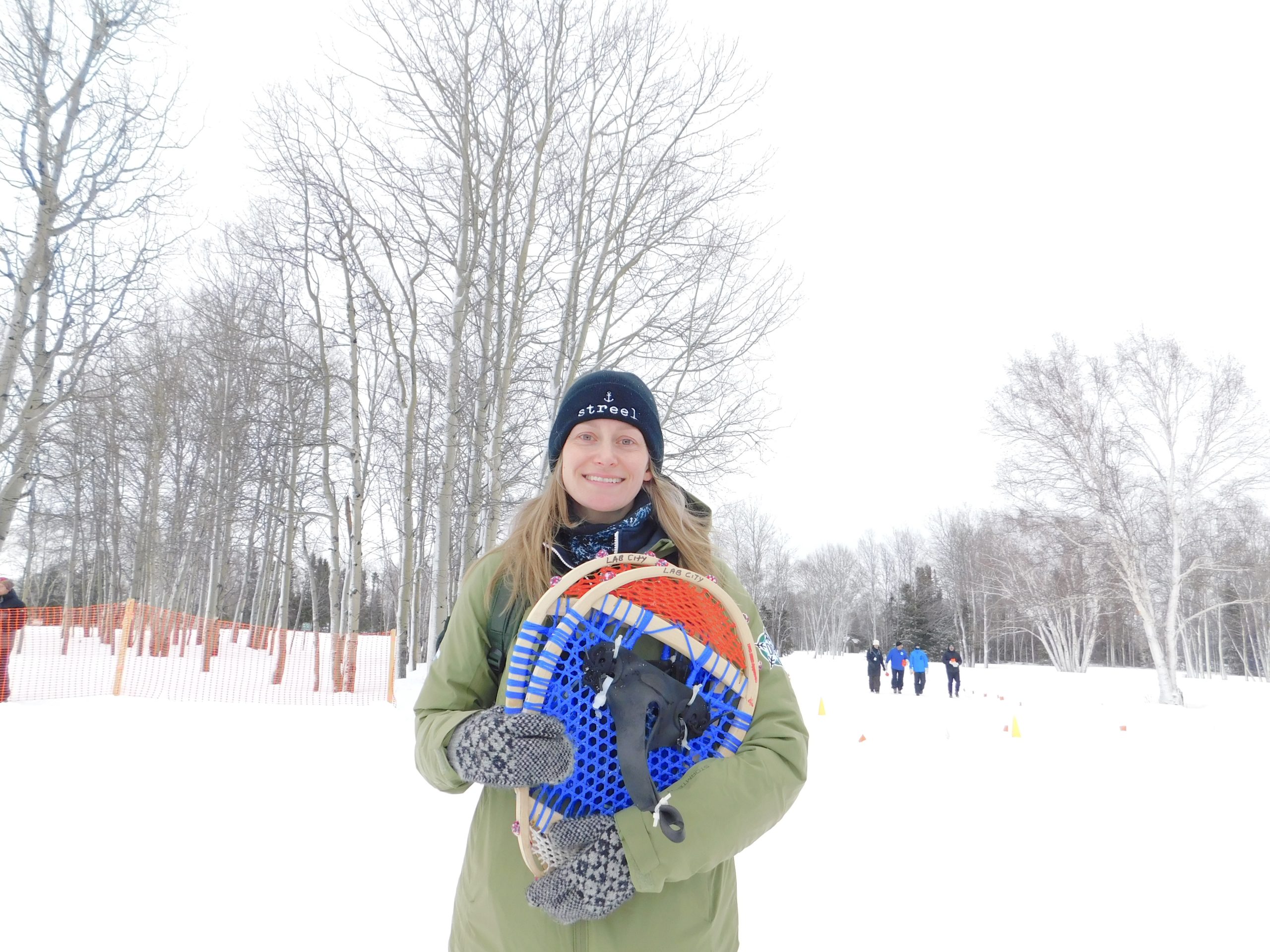
She’s used to Labrador winters, but the high winds were the culprit in stopping her from training for the 2026 games multiple times.
“I can handle the cold, and you can dress for the cold, but like the wind — it just takes the absolute breath completely from you,” Roberts says. She adds the temperature changes were also challenging. “Sometimes you’d get -14 and then the next week you’d have like -43,” she says.
While Roberts experienced difficulty training in the weather for the outdoor games, she and her team won gold in the snowshoe relay race, and she finished fourth overall in the individual female snowshoe race.
With the harsher temperatures and high winds, Shane Winters, from the north coast community of Makkovik, Nunatsiavut, trained indoors on a treadmill, without snowshoes, for the running part of the snowshoe race.
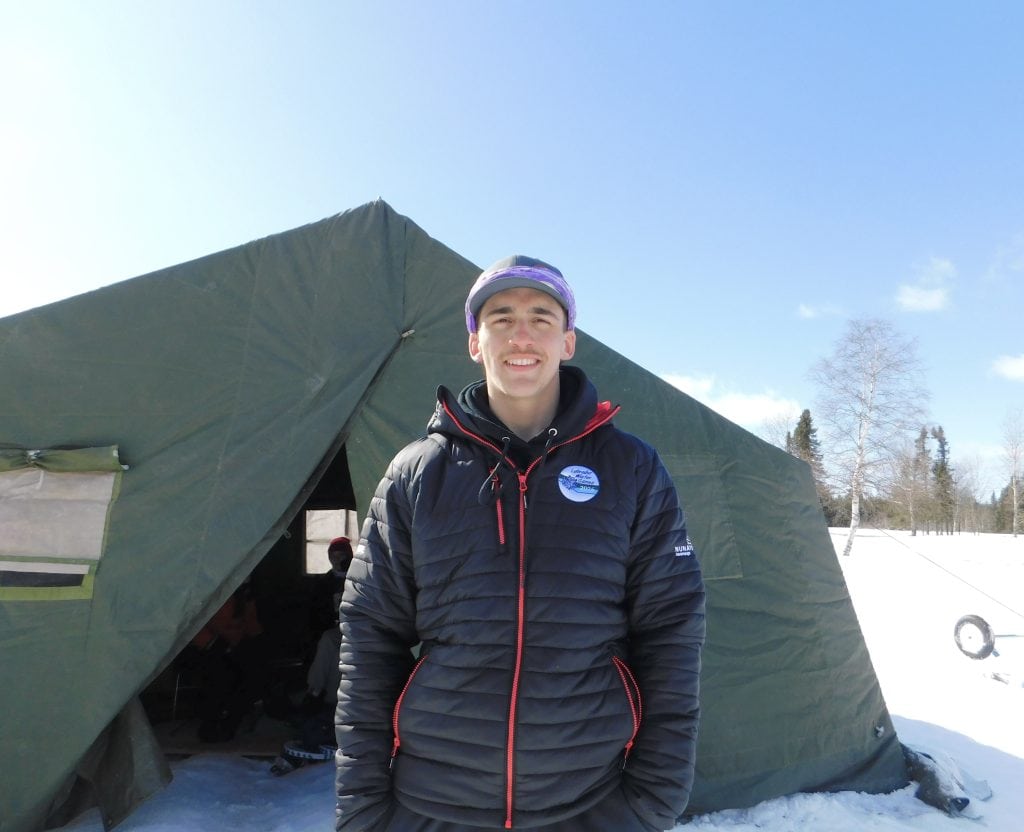
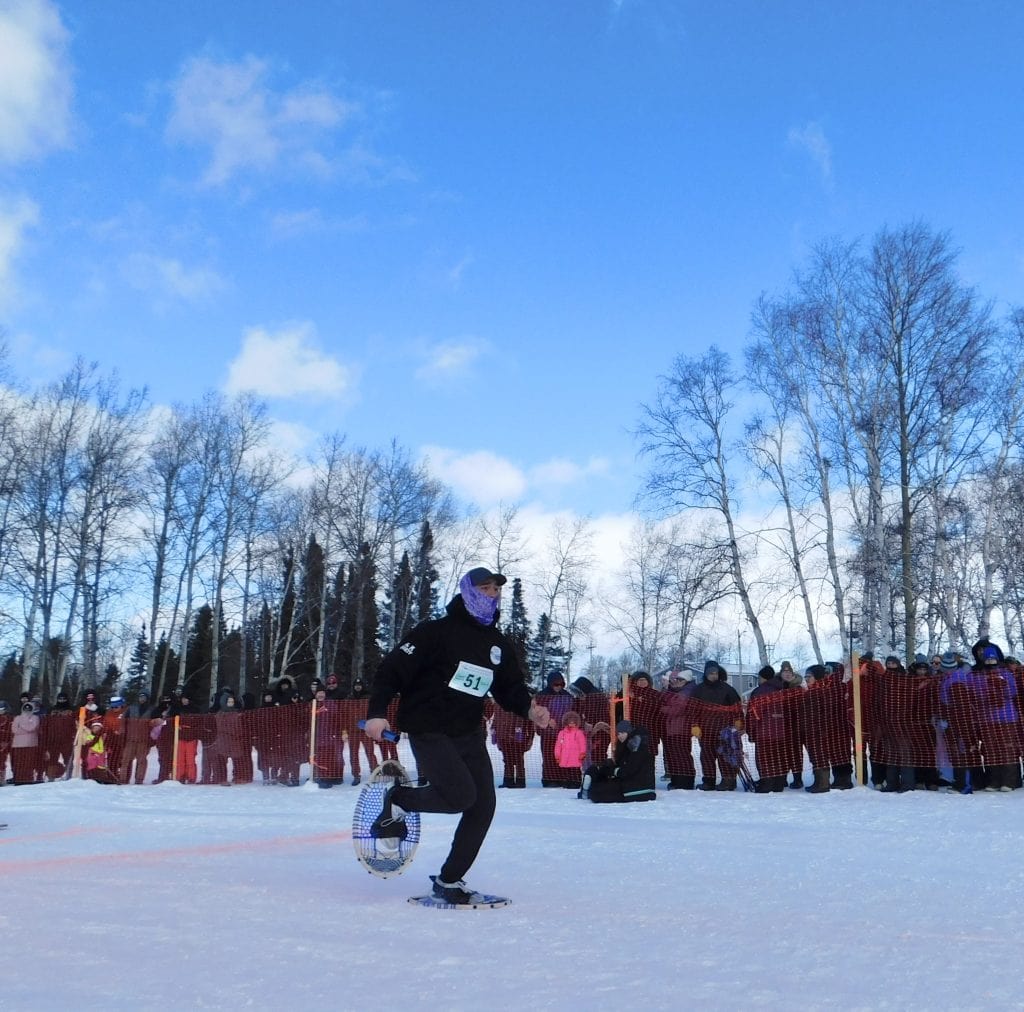
“It’s the hardest part about it,” Winters says. “It’s easy to run a fast 1.2 kilometre without snowshoes, but certainly when you put the snowshoes on, it’s 10 times harder.”
He previously competed in the 2023 Labrador Winter Games, and says recent winters have been highly variable, with some delivering little snow and others bringing too much snow. “It was hard to get a good track, hard to get a good routine” to train for the 2026 Labrador Winter Games, he says.
But his team from Makkovik still brought home silver medals in the snowshoe relay race.
The science behind the extreme weather changes
Bob Whitewood, a climatologist at Environment and Climate Change Canada, says climate change is contributing to the weather variability that Labrador Winter Games athletes have faced in recent years.
Whitewood’s work focuses on historical trends in temperatures and precipitation compared to recent climate data.
“The major change that you’ll see is average temperatures going up, but what happens when average temperatures go up, there is this band of high winds that go across the northern part of the country,” he explains, which in turn pulls frigid cold air down from the Arctic.
These are Rossby waves, or planetary waves: huge oceanic and atmospheric waves that occur naturally due to Earth’s rotation. Rossby waves affect the climate and weather.
“If you have a lot of differential between temperatures in high north and lower latitudes, this jet stream of air is pretty straight across the country. But as the temperature goes up in the north, and kind of gets closer to the temperatures that you’re seeing in the south, that straight line becomes kind of a wavy line,” Whitewood says.
As a result,the Rossby waves’ jet stream “pulls cold air from the Arctic, and then as this loop goes past you, it pulls warm air up from the south,” which Whitewood says creates a fluctuation in temperature, as Labradorian athletes experienced while training this past winter.
Across Canada, Whitewood says, temperatures are generally getting warmer over time due to climate change. But in northern regions, like Labrador, the temperatures are changing more rapidly. Compared to historic winter temperatures over a 78-year reference period, Whitewood says the Labrador region was around three and a half degrees warmer than average. He predicts that the next winter will be warmer than average as well.
Snowmelt impacting Labrador Winter Games training
“We tried to train in all of the weather, it was just a bit more blustery this year than other years,” Nikki Brown-Dyson, a returning athlete from Cartwright, says. “There was a lot more water on the ice and everything at home.”
Brown-Dyson is a mother of four and a paramedic. Her community of Cartwright is about 225 kilometres east of Happy Valley-Goose Bay, on the south coast of Labrador.
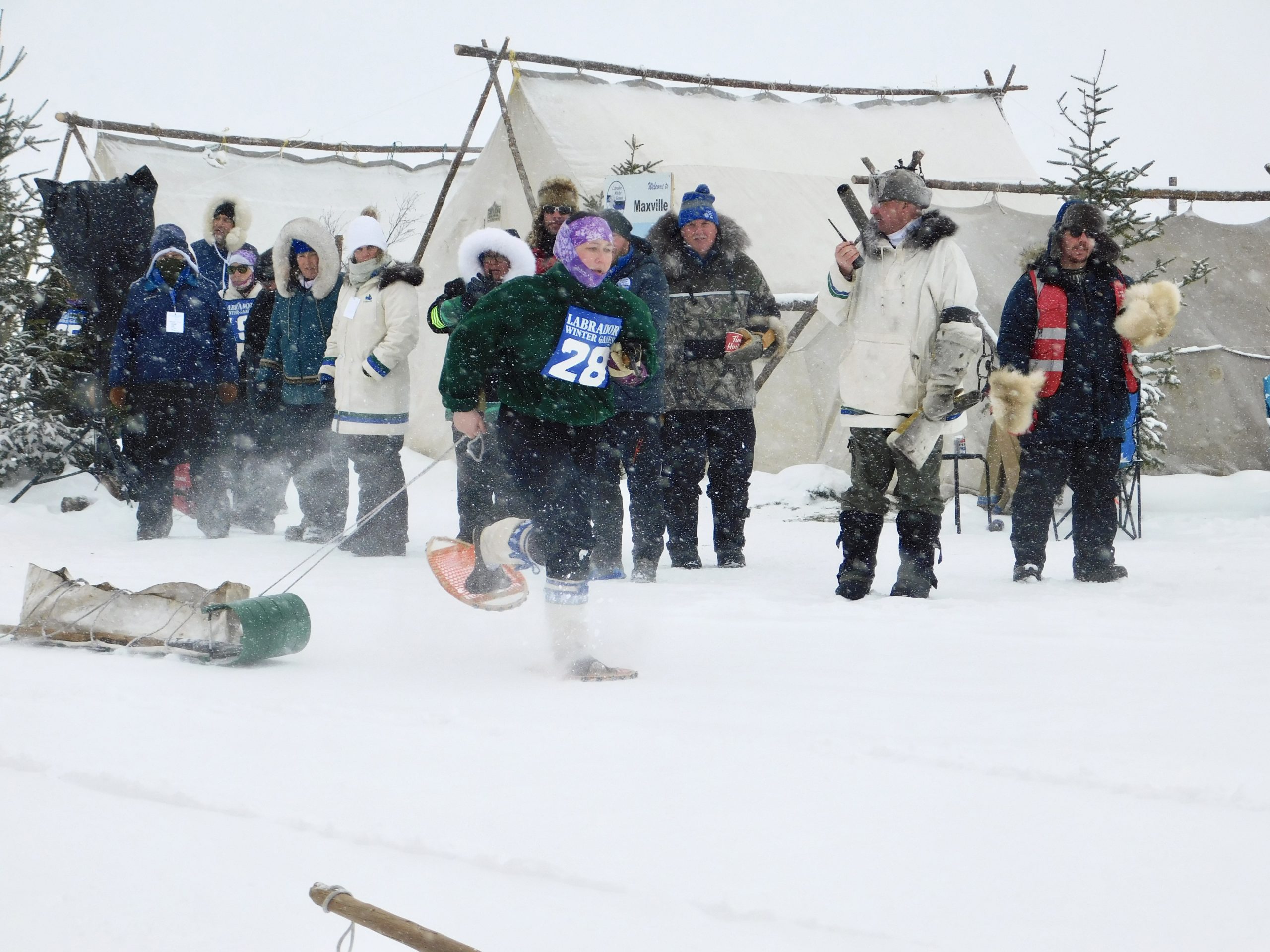
While she was training for the ice-chiselling part of the Labrathon, the snow would melt in unseasonably warm temperatures.
“Some people like the chisel hole with the water,” Brown-Dyson says. “I do not. I find it harder to see where you’re chiselling.”
Despite the challenges of training, she took home the gold medal for the 2026 Labrador Winter Games women’s Labrathon for the second straight time after her gold medal win in 2019.
Still, the 2023 cancellation of the Labrathon was in the back of Brown-Dyson’s mind while training for this year’s Labrador Winter Games. “I think it was just a fear [that] because it was cancelled before, it was gonna happen again.”