



 7 min. read
Summary
- Historically, First Nations in B.C. who lived near floodplains respected tides and lived nomadically, until settlers disrupted water flow, creating dikes to pursue agriculture and urban development.
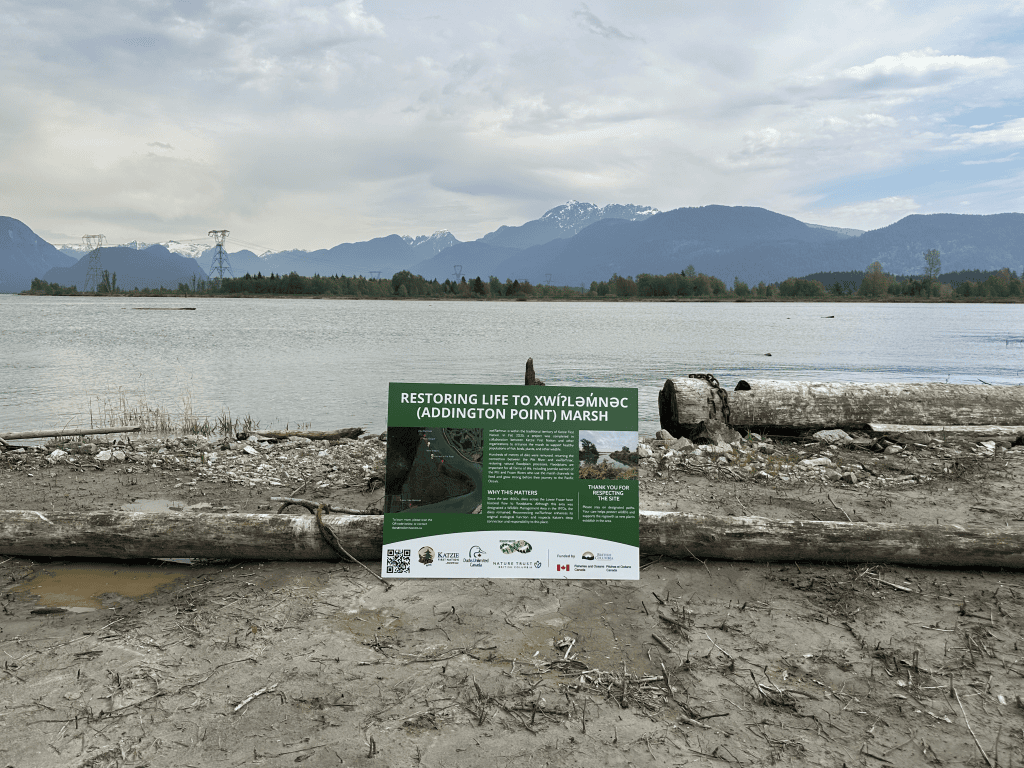
- Xwíʔləm̓nəc, or Addington Point Marsh, has been restored to a wetland after three years of collaboration led by Katzie First Nation.
- Restoring wetlands brings life to countless species and helps restore Indigenous people’s connection to their traditional territories. The marsh is part of Canada’s largest salmon-bearing watershed.
Listen to Mike Leon, lead guardian for Katzie First Nation, pronounce “Xwíʔləm̓nəc.”
They gather in the First Nation’s Lower Mainland territory to celebrate the long-awaited completion of a wetland restoration project connecting to the Stó:lō (Fraser River).
Mike Leon leads Katzie’s team of eight guardians, and has been involved with the marsh restoration project from the beginning. After everyone bypasses a locked gate — there to reduce the risk of bear-human encounters — they stop by the water, and he addresses the group.
“I would really like to raise my hands to all of you, to the hard work and willingness to work with us, to be with us, to be with this land,” he said.
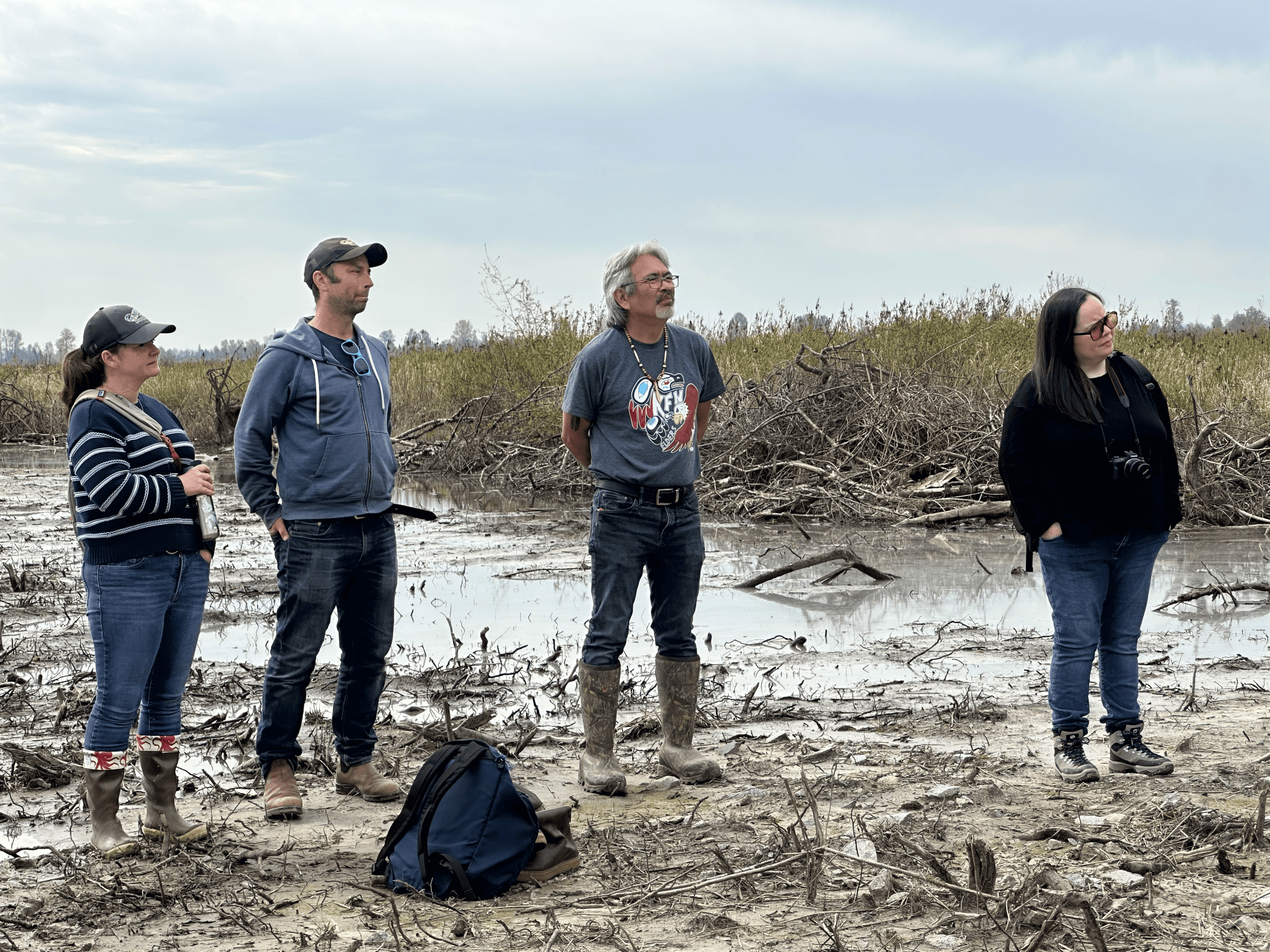
The restoration project was funded by the B.C. government and the federal Department of Fisheries and Oceans, implemented by Katzie First Nation, Resilient Waters, Ducks Unlimited Canada and the Nature Trust of British Columbia, with many helping hands involved.
For three years the partners worked together to reestablish waterflow in the marsh. The wetlands connection to the Pitt River and South Fraser River system was disconnected when early settlers installed a dike, which has since been removed.
“I love doing the work. I love being on our territory and helping the environment,” Mackenzie Adams, another Katzie guardian, added. Adams monitored the site throughout the project, and collected water and bird surveys to compare data before and after restoration.
According to the B.C. Wildlife Federation, wetland monitoring is just as important as the initial restoration during a project. “Monitoring, maintenance, and data collection help us evaluate the effectiveness of restoration techniques and improve the performance and function of future projects,” it reads on their website.
Xwíʔləm̓nəc is now letting nature take its course, and with the area being home to one of the country’s largest salmon runs and smallest sandhill crane populations, monitoring the wetland is critical work for Katzie Guardians.
“I was there one of the first days … comparing the first day to the last day was pretty eye opening because you can already see the differences from the river water coming in. It will be an awesome habitat for all birds and salmon fry,” Adams said.
While the exact impact is currently unknown, wetland restoration benefits are well documented. Leon’s team will be on top of that data, working with partners to restore and conserve native plants and animals in the area.
Relationships between Katzie Guardians and partners in the project have flourished. A local property owner who attended the celebration shared their initial concerns after seeing excavation equipment clearing a path to the dike, and their relief after learning more about the endeavour. Beyond its environmental impacts, the project has brought people together from all walks of life who want to see salmon and wildlife in and around the Fraser River thrive.
Restoration project had many partners, but Katzie had final say
Dan Straker, the manager for the Resilient Waters project, was a lead organizer under the direction of Katzie Guardians and leadership.
“With Katzie First Nation, it was determined early on they would have final decision making and be informing the project along the way. All the partners fell in line with that idea and thinking,” Straker told the Narwhal.
“What we ended up with was this really nice blended way of doing things, from a more two-eyed seeing approach.”
Leon added that, throughout the endeavour, Katzie brought in their customs, culture and laws.
“It’s really important and special to us to know our place names in our territory. When we have our guardians come out, we’re honored to be on those place names such as Xwíʔləm̓nəc,” Leon said.
It’s a sentiment shared by Katzie’s guardian coordinator April Pierre. In a quiet moment of emotion in the circle, she addressed a reality shared by many First Nations people: growing up away from her homelands.
The Xwíʔləm̓nəc restoration project gave Pierre an opportunity to spend time on land she had never been to — the land of her ancestors. It’s one emotional moment of many that were shared during the celebration, as others reflected on the marine and wildlife already making appearances in the marsh.
Dikes were built to create flat land for agriculture in the area since the late 1800s. Restoring the marsh’s connection to the river has immense ecological benefits and cultural benefits for local First Nations.
“Conservation organizations in previous decades had a different approach to conservation land management that I think sometimes excluded other organizations and nations,” Ducks Unlimited senior restoration biologist, Eric Balke, said.
“I think we are learning new and better ways of moving forward, more collaborative ways, and this project is a great example of that.”
Balke has been involved with restoring Xwíʔləm̓nəc since brainstorming and planning days, eventually passing the reins to his colleague Alison Martin.
“What excites me about this project is it’s all about restoring relationships,” he said. “You’re restoring the relationship between the river and these wetlands that were formerly alienated by dikes. You’re restoring the relationship between Xwíʔləm̓nəc and juvenile salmon that previously were prevented from accessing the site … it’s also restoring the relationship between Katzie and their kin.”
Wetland restoration benefits salmon
In the Pacific Northwest, both people and the ecosystem know how important salmon is. Xwíʔləm̓nəc is connected to Canada’s largest salmon-bearing watershed, the Fraser River.
According to the Pacific Salmon Foundation, “floodplains provide critical, food-rich habitat for juvenile salmon. These low-lying areas adjacent to stream channels allow young salmon to grow healthy and strong before their journey to the ocean.”
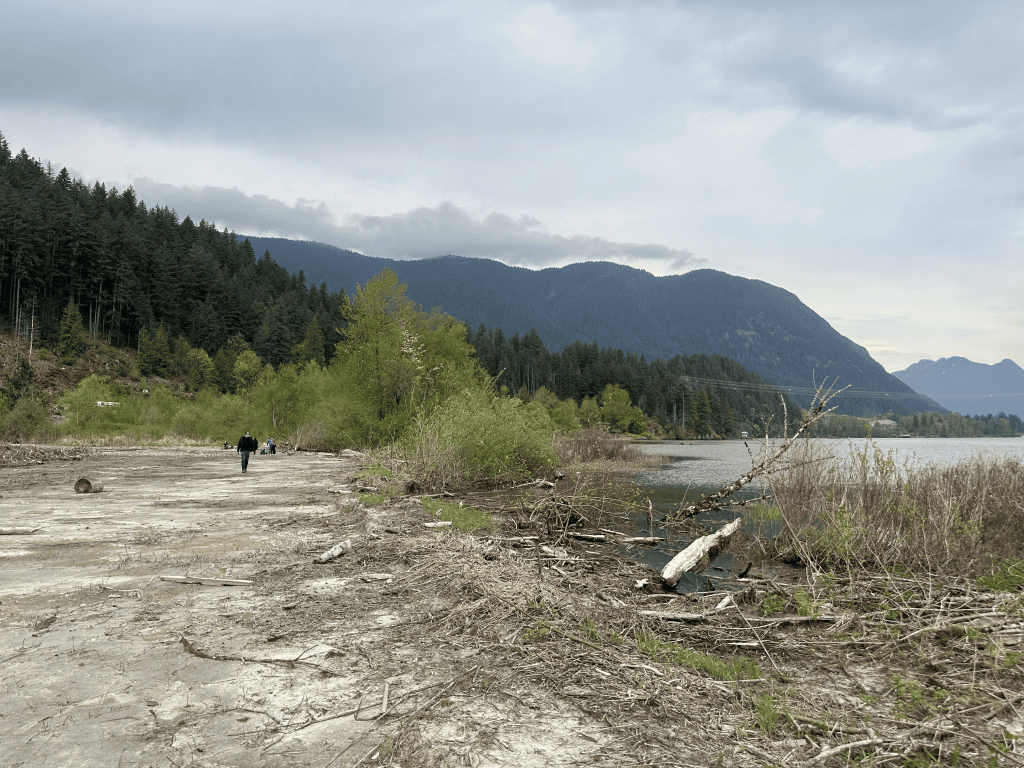
But dikes disrupt the river’s connection to the marsh, blocking valuable nutrients and harming the salmon and other species.
“Wetlands, such as tidal marshes, help to collect sediment that build up the marsh platform, helping to protect our communities from flooding,” Balke said.
“This land that settlers found is super valuable for farming and agriculture, it was valuable because of the sediment that was delivered, because of the nutrients that were delivered by the river,” he said.
“When we construct dikes we disconnect the river from its floodplain. The river can no longer deliver those critical ingredients.”
A huge benefit of restoring tidal marshes is that they are one of the most effective ways of capturing and storing carbon, contaminants and pollutants that flow downstream.
Further, Xwíʔləm̓nəc is home to wapoto and tule, two traditional plants for Katzie First Nation that have been impacted from dikes. Restoring the wetland is giving members of the nation hope that these plants can be harvested for food and mat-making once again.
The marsh is also home to sandhill cranes, whose local population has hovered around 30 to 35 birds for decades, Myles Lamont told the Narwhal. He was brought into the project by Katzie as a sandhill crane consultant.
“The remaining birds seem to nest in golf courses and some very small regional parks … Unfortunately they’ve been getting struck by golf balls. Quite commonly over the last 10 to 15 years, I’ve had to rescue a few birds that have had broken legs or injuries as a result of golf ball strikes, particularly in Richmond,” Lamont said.
He is hopeful that restoring Xwíʔləm̓nəc to a wetland will bring in enough water to create a nesting habitat for the birds, drawing them away from golf courses. As folks went around the sharing circle, Lamont spotted one overhead, calling out, “Crane!”
“It’s really cool being a part of it. Just knowing that we’re making a difference, I’m making a difference,” Adams said.“The salmon habitat has a place to go throughout the winter and so do the sandhill cranes and birds. It’s a good feeling … I feel accomplished.”