
 6 min. read




Canola is making headlines again. It became the centre of trade negotiations with China last year, when that country instituted 100 per cent tariffs on the crop in retaliation for Canadian tariffs on electric vehicles, instituted at the behest of the United States.
As Prime Minister Mark Carney heads to China this week, it’s top of the agenda for many — especially the 40,000 farmers whose crops contribute part of the $43.7 billion the Canola Council of Canada said the industry generated in 2024. Now that the U.S. and Canada are frenemies, Carney is trying to expand our trade network, including by rejuvenating a long-icy relationship with China.
But even if dropping vehicle tariffs to restart the flow of canola oil makes sense geopolitically, it would be a problem at home, where the trade value of Ontario’s auto industry is pitted against that of Prairies canola growers.
All this over a — seed? What is canola, exactly? And how worried should you be about this massive Canadian crop that blankets so much of the Prairies and is being seemingly hobbled by global trade wars?
Here’s what you need to know.
What is canola?
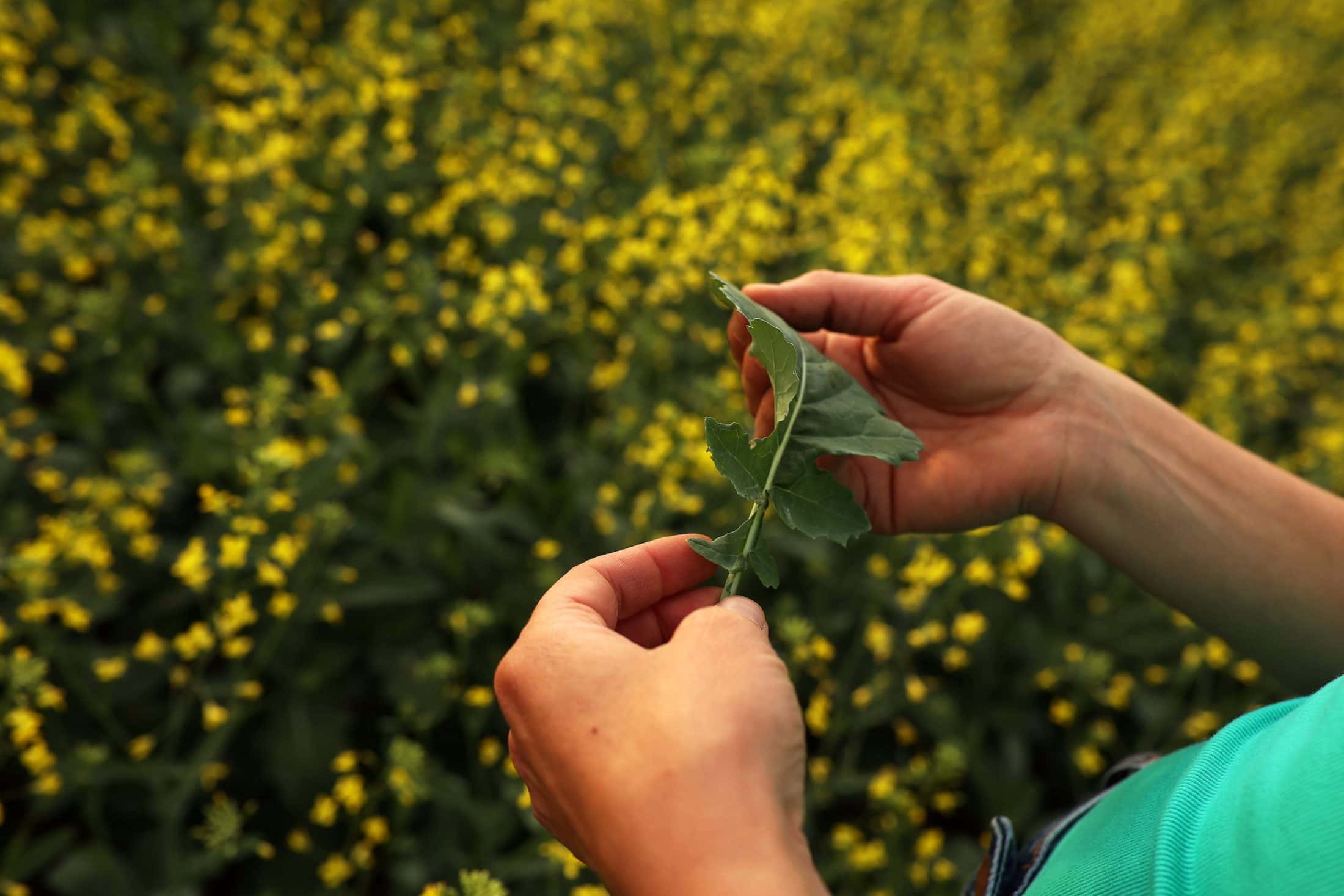
Put simply, canola is a plant that produces yellow flowers and oil-rich seeds.
If you’re old enough, you might remember a time when canola was called rapeseed. And if you’re really old enough, you’d remember that rapeseed was first grown in earnest in Canada during the Second World War, for its oil to be used as an emergency replacement for lubricants in naval ships.
Then, at some point along the line, we decided to start eating it.
But there was one hurdle: rapeseed in its naval engine lubricant form wasn’t all that desirable to ingest.
So, according to a federal government report called “Canola: a Canadian success story,” plant breeders in the Prairies did some tweaking, and in the 1960s, voilà, canola (that’s CAN-ola, short for Canadian oil) was born.
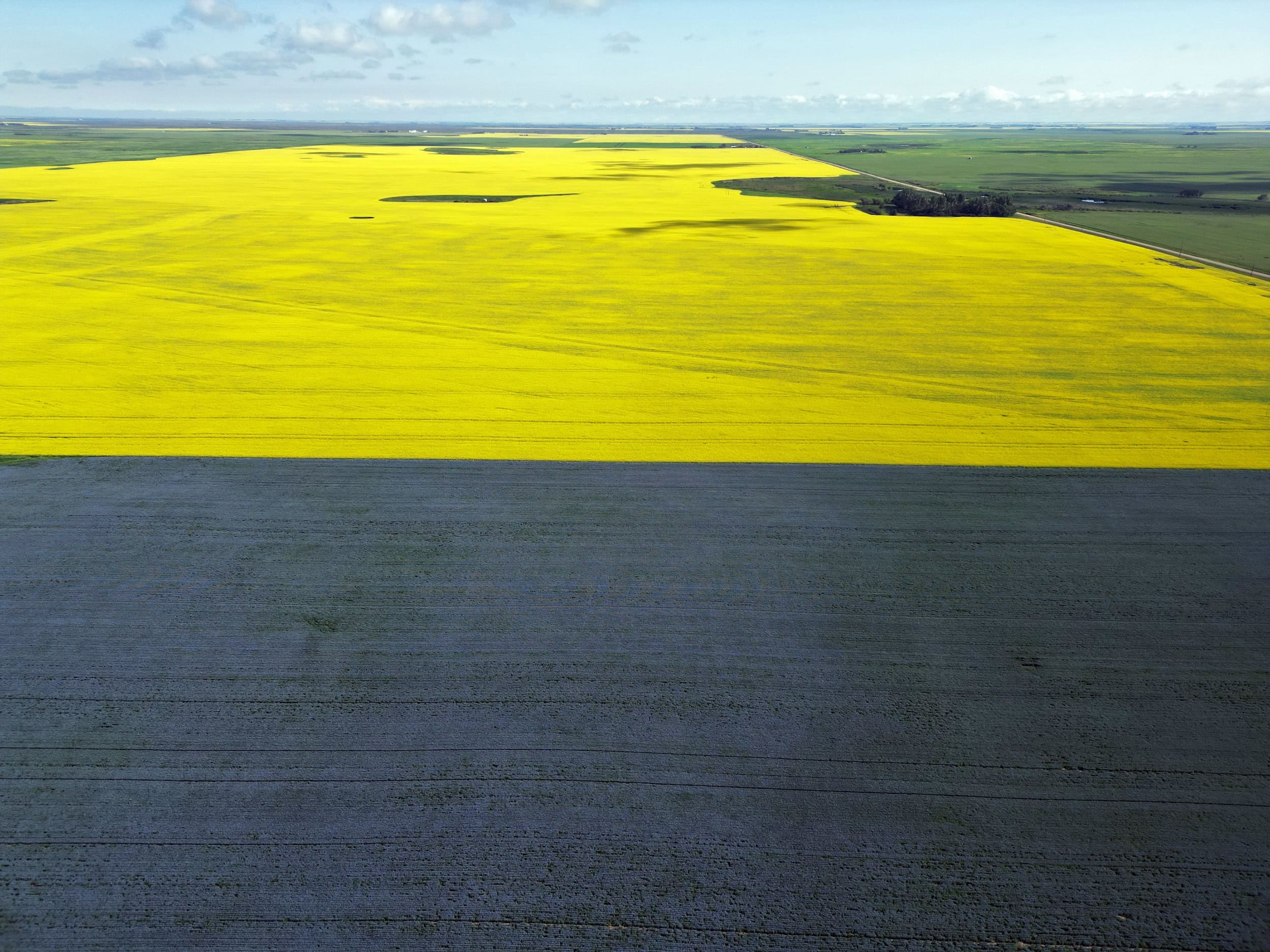
If you’ve ever flown over the Prairies, canola crops are among the most distinct sights. In the patchwork quilt of massive fields, canola is the bold, bright yellow patch — a burst of colour among more subdued fields of wheat or oats.
What is canola used for?
Canola is a versatile crop. You’re likely most familiar with it as an oil used for deep-frying and other cooking, but it can also be used in not-so-tasty-treats including fungicides, sunscreen and something called “mold releasers.”
A canola education website run by the Alberta Canola Producers Commission lists many uses. The same oil used in margarine, cooking sprays, mayonnaise, crackers and cookies (and, of course, a lot of fried stuff) can also be found in plastic wrap, biodiesel, printing inks, lipstick and other cosmetics and as a softening agent for applying plastic casings on window panes.
How big is the canola industry in Canada?
Canola was harvested on more than 21 million acres of Canadian Prairie last year — far exceeding many other well-known crops like oats, barley and soybeans, according to Statistics Canada. Wheat, in all its forms, is the only crop that takes up (slightly) more space on the Prairies landscape.
The conversion of native grasslands and wetlands into cropland, including for canola, has contributed to much wildlife habitat loss on the Prairies, according to the federal government, and “many areas are of concern.” This threatens animals including the burrowing owl, ferruginous hawk, swift fox, greater sage grouse and long-billed curlew, according to the Canadian Wildlife Federation.
How much glyphosate is used on canola crops?
Modern canola is a product of what’s known as agricultural technology or agri-tech — the big business of maximizing yields (and profits) in farming. By some estimates, 40 per cent of canola grown in Canada is what’s known as “Roundup Ready,” meaning it is genetically engineered to survive the spraying of the popular glyphosate-containing herbicide Roundup.
Roundup is a weedkiller, which made news recently when a 25-year-old report — dubbed a “landmark study” that deemed glyphosate to be safe for human health — was retracted by the scientific journal that published it over concerns that scientists from the company that manufactures Roundup, Monsanto, had played a key role in the study’s conclusions.
According to The New York Times, that study was “for decades cited by other researchers as evidence of Roundup’s safety. It became the cornerstone of regulations that deemed the weedkiller safe.”
In 2015, the World Health Organization said glyphosate is “probably carcinogenic to humans.”
Roundup is still applied on a wide variety of crops using ground sprayers or airplanes that cover an entire field with the herbicide to ensure no other plants can compete. Data on the exact amounts of Roundup used on Canadian canola crops don’t exist, but CBC reported in December that 50 million kilograms of it are sold in Canada each year.
How is canola’s sustainability being improved?
There are ways to decrease the environmental impact of bringing tens of millions of acres of Prairies land into cultivation. One big one is what’s called “zero-till.”
In essence, instead of tilling the soil every year to prepare for seeding a new crop as farmers have done for centuries, farmers opt to leave the remnants of the previous crop in place. Rather than a freshly cultivated field of exposed dirt, the “stubble” of the last crop is left in the soil, along with its roots. Minimizing soil disturbance improves its carbon storage potential.
So, about all this tariff talk. What’s the gist?
Last March, China imposed a 100 per cent tariff on Canadian canola oil and canola meal, as well as tariffs on other products. Then, a few months later, it imposed a 75.8 per cent duty on Canadian canola seed shipments.
Canadian canola farmers — and Prairie governments — were mad. Saskatchewan Premier Scott Moe called for “immediate action” and, along with Alberta Premier Danielle Smith, called on Prime Minister Carney to make a deal with China, including dropping our tariff on Chinese-made electric vehicles. But on Jan. 12, as Carney and Moe got set to head to China, Ontario Premier Doug Ford said he was “100 per cent dead set against” any easing of the electric vehicle tariffs.
Meanwhile, Canadians haven’t forgotten China’s nearly three-year detention of Michael Spavor and Michael Kovrig between 2018 and 2021, a significant blow to diplomatic relations between the two countries.
All of this is at play as Canada attempts to widen its import-export net to move away from an increasingly unpredictable United States.
What’s next, you might ask? No tariffs? Smaller tariffs? Bigger tariffs? It all remains to be seen as Carney, Moe and Xi Jinping make nice (or not) in China this week.