



 9 min. read
Canadian outdoor guides, whose lives are dedicated to getting people out in nature, feel the impacts of climate change acutely. It makes sense: Canada is warming twice as fast as the global average — three times in the North.
Melting ice, unpredictable weather, wildfires and more make it challenging for guides to keep people safe, whether they’re taking clients rock climbing, skiing, scaling frozen waterfalls or performing search and rescue operations.
The changing environment can also create an emotional tug-of-war for people who have built their lives around the mountains.
“As guides, it’s an interesting position. We experience the full spectrum of [climate change], from the consequences to the cause, in a really intense way,” mountain guide Dylan Cunningham told The Narwhal.
“I have almost died from hazards that are largely because of how climate change has affected the mountains. On the other hand, I experience the joy of doing things dramatically bad for our climate on a different level than [most].”
“People heli-ski for a week, or once in a lifetime. I do it all winter. It’s an amazing job — but there’s an intense conflict with that. Some heli-ski guides are getting to the point where they’re going, ‘This feels hard to justify.’ ”
The Narwhal spoke to mountain, ski and alpine guides in British Columbia and Alberta, like Cunningham, about how climate change has altered their reality. Here’s what they said.
Mike Adolph, Nordegg, Alta.
Mike Adolph has been guiding professionally since 1995. He’s a certified mountain guide through the International Federation of Mountain Guides Associations and technical director for the Association of Canadian Mountain Guides, the organization that trains and certifies guides while upholding professional standards. In that time, he’s seen first hand the impacts of climate change.
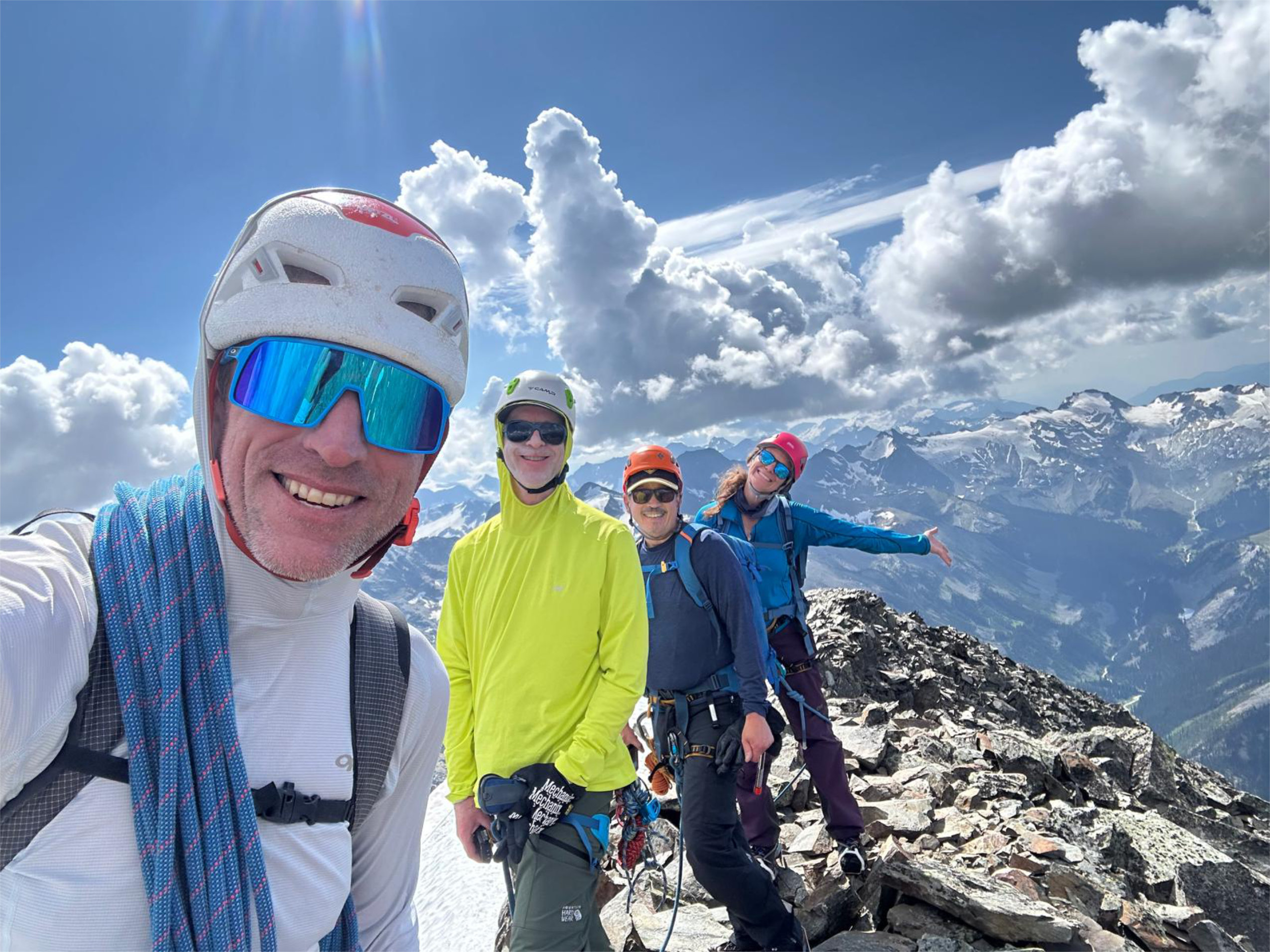
“It’s one of those things where it seems to be kind of slapping us in the face. And we adapt, and we’re changing, but what action are we taking?
I think there’s been more of a conscientious effort amongst guides to look at ways to reduce our footprint. We all look at the mountains and go, ‘Things are changing. We need to do something about this.’ But I think everybody feels like, ‘What can I do about it?’
We might not be able to change the course where things are going, but we can slow it down.
It needs to be part of a bigger movement that everybody’s participating in. We’re not slowing it down to the point where things are ever going to be as they were.
But if everybody does a little bit to reduce our footprint, that’s all steps in the right direction. And I think that’s the best that we can hope for.”
Ian Welsted, Golden, B.C.
Alpine guide Ian Welsted started guiding professionally six years ago after an accomplished career climbing peaks around the world. As an alpine guide, a certification specific to climbing year-round in the mountains, Welsted specializes in trips up prominent peaks, like Mount Robson, the highest mountain in the Canadian Rockies.
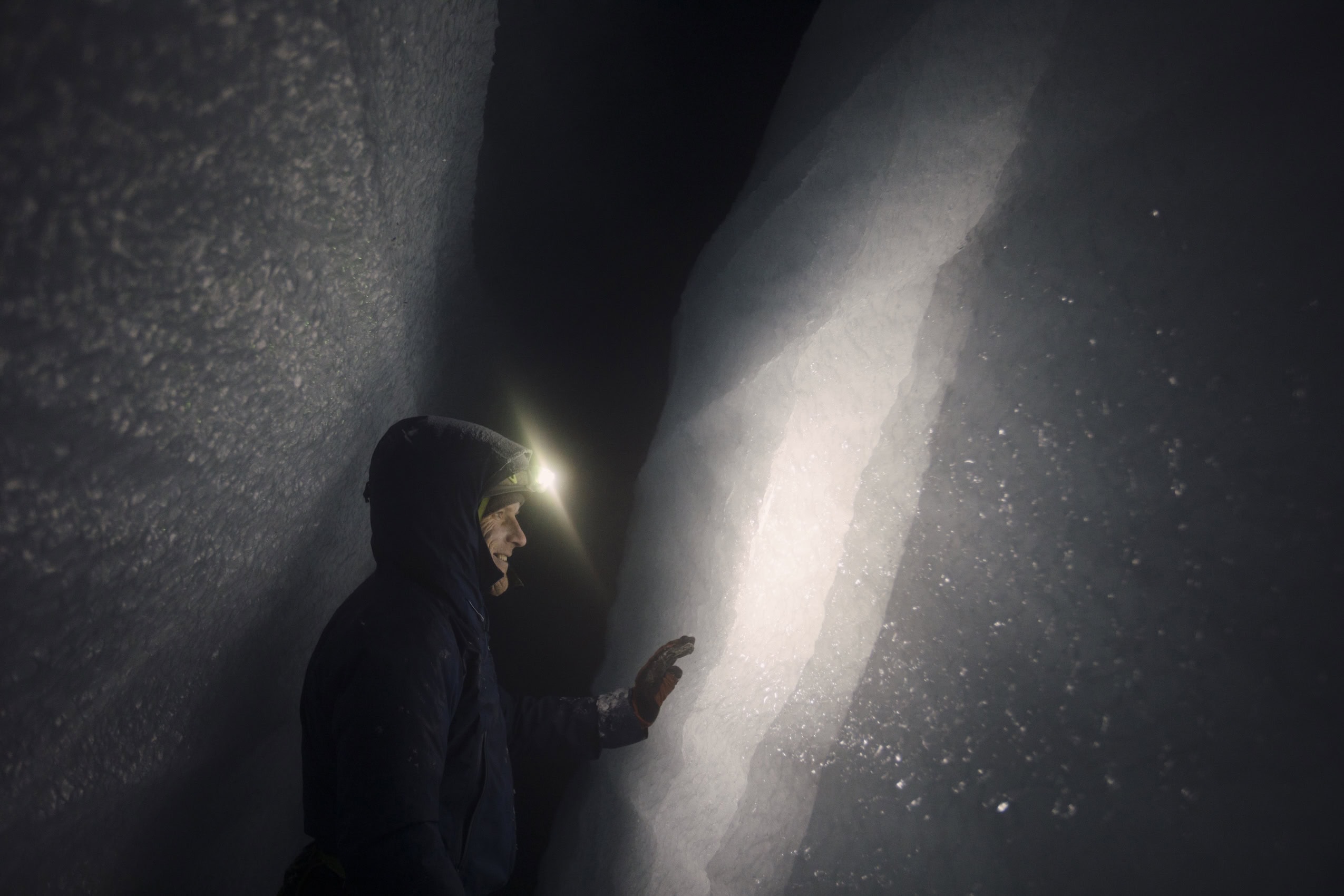
“Climbing had a big impact on my life. I grew up in a conservative farming town in Manitoba, and wasn’t happy there. [When] I discovered climbing, it made me come out of my shell.
That’s partly why I got into guiding. I wanted to show other people how climbing can bring something constructive to your life.
If people live in the city and have no tie to the natural world, then when they’re sold this weird lie that [climate change doesn’t matter] — if you’ve literally never experienced the natural world, then you probably don’t have any basis to make any kind of value judgment.
It’s not a magic pill. I’m going to take someone ice climbing and they’re suddenly going to buy an electric car, or lobby against opening the [Arctic] National Wildlife Refuge. But marginally — you never know.”
Jordy Shepherd, Canmore, Alta.
Jordy Shepherd has been guiding and performing search and rescue in Western Canada for more than 25 years. Shepherd became an internationally certified mountain guide in 2000. Among many other hats, Shepherd guides professionally, hosts a podcast about mountain safety and volunteers with Columbia Valley Search and Rescue.

“These glaciers are our freshwater reserves. We’re using our reserves. You can’t just spend, spend, spend your savings. You’ve got to make back the buffer or you run out.
Time is of the essence, and anyone who has expertise and experience to pass on needs to.
As ice recedes, there are all these unstable boulder fields — dirt and sand that haven’t seen the light of day in 10,000 years. Support is being taken away.
I’m finding I have to be more open to making the obvious decision, which is the tougher decision, to not go certain places. Just carve it off the menu.
I think about [the impact on the next generation of guides] all the time.
People raring to go, looking to make their mark. With the way things are changing, it’s hard to predict how that is going to go for them when trade routes [commonly guided trips] are not accessible.
There’s certain stuff that you want to have in your repertoire for the ability to take people to. If you can’t take them there, it’s a big loss.”
Christian Schlumpf, Golden, B.C.
Christian Schlumpf began guiding in 2016 and became an internationally certified mountain guide in 2024. Before guiding, Schlumpf pursued engineering physics and worked on solar installations in Switzerland, where he fell in love with the mountains. During the winter, Schlumpf’s work is a mix of backcountry ski guiding, around Golden and internationally, and in the summer he guides rock climbing out of Squamish, B.C.
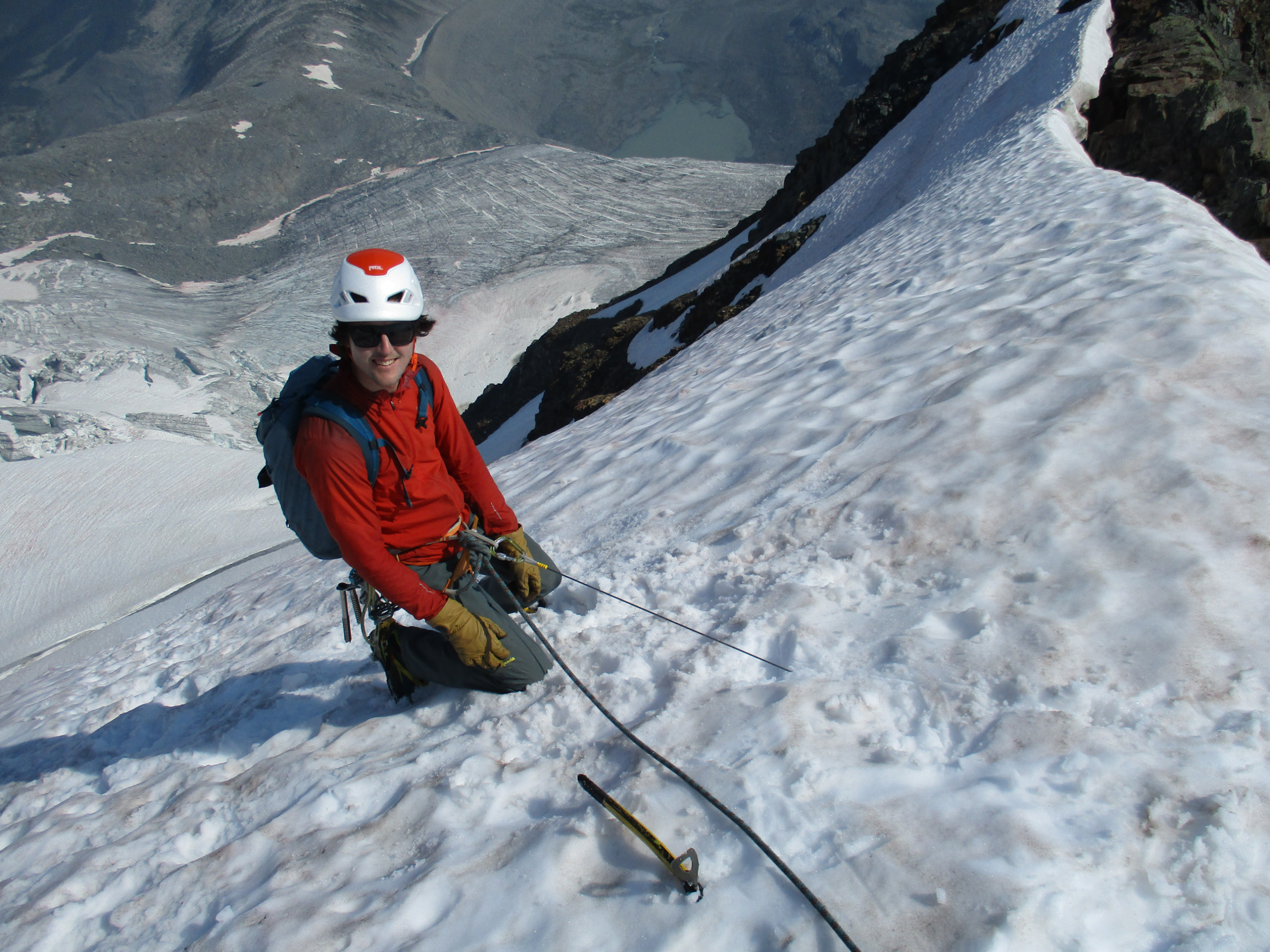
“For someone who’s a bit younger, like myself, [climate change] has always been a thing.
I didn’t really think too much about [it]. I just wanted to be in the mountains. I wanted to do this as a profession.
I don’t feel too nervous about it at this point. It’s just something to manage.
The important part of guiding is how you communicate that. Just getting to a summit is not necessarily the goal of a day in the mountains.
If anything, I think it’s become more accepted to not put pressure on yourself.
We’re more accepting of deciding to turn around for whatever reason it may be. Because I think we also realize that things are changing, and things are more unpredictable than they were in the past, and we don’t always have the answers that we think.”
Dylan Cunningham, Golden, B.C.
Dylan Cunningham started guiding in 2015 and became an internationally certified mountain guide in 2022. Cunningham splits his time between heli-ski guiding in B.C., where clients ski from remote locations accessed via helicopter, and guiding internationally and supporting Guardians of the Ice, a non-profit raising awareness of Western Canada’s melting glaciers.

“[The mountains] hold a very special place to me in the way they add so much value to my and other people’s lives.
That we’re having a profound impact on that space is moving for me. But it’s pretty hard to detach myself from thoughts of ‘what are the downstream effects of this?’
That cost is going to be disproportionately borne by people who are vulnerable, not by affluent people [with] social and geographic mobility.
I try to think of it not as how is [climate change] going to impact my career. But how does this impact future generations?
Sometimes that can tap into something a little bit more powerful than, ‘How much convenience and opulence do you want for yourself?’ ”
Kevin Hjertaas, Banff, Alta.
Ski guide Kevin Hjertaas explored the Canadian Rockies on skis his whole life before he began guiding professionally 12 years ago. Formerly a competitive skier and avalanche controller, Hjertaas is based in Banff National Park and cohosts monthly snowpack discussions sharing ski and avalanche conditions across B.C. and Alberta.

“It’s hard not to get depressed. You’re walking for hours up this glacier with your thoughts for most of the day. Your nearest partner is 15 metres away, there’s no conversation.
It’s really cool to bring your guests [to snow caves that form at the bottom of glaciers], a magical spot where there’s beautiful ice and you’re underneath it.
You get there and realize that was only two years ago, but now the glacier is a full 60 metres back, and there is no cave.
But if [they haven’t] been there before, they’re still awed by it. If you’ve seen it before, it’s so diminished. So if I can just drop my expectation, there are still magical places.
It’s hard. I try to bite my tongue [when] I want to say, ‘It used to be like this,’ but it happens. I try to get off it quickly. You don’t want to diminish that experience.
I grew up with the expectation glaciers were receding before we recognized global warming had such a human element to it. As a child, we thought it was part of the natural cycle. The fact it’s so accelerated now — I don’t know how you reconcile that.”
Jasmin Caton, Nelson, B.C.
Before becoming a ski, rock and apprentice alpine guide, Jasmin Caton studied hydrogeology and thought she might become an environmental scientist.
The lead guide and owner of Valhalla Mountain Touring strives to operate her off-grid ski lodge in B.C.’s Selkirk Mountains with as little environmental impact as possible. But climate change may be plotting against her.
Most remote ski lodges use helicopters to transport guests. To burn less fossil fuel, Caton offers catskiing, transporting guests by tracked land vehicles called snowcats. From wildfires to drought, Caton has experienced the impacts of climate change first hand.

“I’m a happy, optimistic person. I guard myself against getting dragged down by this stuff. But it’s hard. It’s really sad.
[When I hear news like] ‘carbon dioxide levels are higher than scientists were predicting,’ this heaviness sets in.
I think about taking my kids to glaciers, because what are glaciers going to look like when they’re my age? So many of the iconic glaciers in this area will not exist in decades. It’s heavy.
I think it’s just good to be able to say it, and also to find joy in life. Because otherwise, what’s the point?
I’m flying to Greece to go rock climbing with my family. There are all the hypocritical things we do to keep going and find [joy in] life.
It’s the balance I’ve chosen to strike with my career. Owning a business where I take people into the mountains and they can feel more connected to nature, and using my business as a bit of a soapbox, or supporting environmental activities where I feel like I’m doing something meaningful.”