





 14 min. read
Since early October, the rural municipalities of Pipestone and Two Borders — agriculture and oil-dominant communities about three hours southwest of Winnipeg — have found themselves at the heart of a techno-futuristic buzz seemingly pulled from science fiction pages.
A Montreal-based, venture-capital-funded startup called Deep Sky has its sights set on the region as a “promising” location to build North America’s largest commercial carbon removal facility.
Digital renderings of the Deep Sky Manitoba facility show rows of high-tech machinery nestled in the idyllic, sun-kissed fields of the Manitoba countryside.
On this 145-acre site, the company’s promotional materials say, state-of-the-art technology will scrub carbon dioxide straight out of the atmosphere and bury it in a rock formation two kilometres underground, where it will remain for 1,000 years.

This direct air carbon capture technology, according to Deep Sky’s website, will help “save our planet” and “reverse climate change” by sequestering decades worth of pollution.
As Deep Sky has begun promoting the project, residents of the Pipestone region have started coming together. More than 250 people attended a mid-November town hall organized by a local group called Grounded in Truth — The Deep Sky Awareness Committee; another 200 showed up at an open house hosted by the company in early December.
At each meeting residents have come with questions about the project’s potential impacts on land, water, wildlife and property values. They’ve asked how the carbon can be stored safely, and who will be responsible if it leaks. They’ve wondered aloud how an industrial development of this scale will affect their rural way of life.

After each meeting, residents say they’re left with more questions than answers.
“It does sound like a really promising, exciting technology; sort of the silver bullet that could save us from catastrophic climate change,” said James Wilt, policy development manager with Climate Action Team Manitoba, who presented at the November meeting.
“But it’s just so unlikely to be that.”

Direct air carbon capture is an emerging technology that some climate experts expect will eventually play a role in net-zero pathways, but is considered a “wild card” given its extreme costs and energy demands. There are about two dozen facilities worldwide, which collectively capture about 0.01 megatonnes of carbon dioxide per year, equivalent to the annual emissions from about 1,300 homes. None are considered a full-scale example of direct air capture, and all have so far failed to capture as much carbon as initially projected.
But Deep Sky CEO Alex Petre believes the proposed Manitoba facility is different, and could help Canada emerge as a leader in carbon capture technology.
“I think it’s a really exciting time for Canada right now. … I think we have the perfect mix of resources, workforce, geology, energy to be able to actually lead the way in developing this new technology,” Petre said in an interview.
“I’m very confident that with this, we can actually get the industry to a place where, to community members, to everyone else looking at it, we are actually maturing this new industry.”
As Deep Sky continues its quest to put Pipestone “on the map,” The Free Press and The Narwhal set out to understand exactly what the company is planning for southwestern Manitoba.
Who is Deep Sky and what are they proposing?
Deep Sky is a carbon capture tech startup based in Montreal and founded by Fred Lalonde and Joost Ouwerkerk — who co-created the travel app Hopper — and Laurence Tosi, a former executive at Airbnb.
The company is planning to build a direct air carbon capture facility in southwestern Manitoba where it will scrub carbon dioxide from the air and inject it into a saline aquifer two kilometres below the surface for permanent storage.
In its first phase, the project would capture 30,000 tonnes of carbon dioxide each year, with the eventual goal of storing one million tonnes annually.

The company plans to finance the project by selling carbon credits to companies looking to offset emissions.
The construction process, which Deep Sky anticipates will kick off in 2026, is projected to generate between 700 and 1,000 jobs; operating the rows of advanced carbon capture technology will create between 50 and 100 permanent jobs, and the project overall will generate $500 million in investment for the region, the company said.
Why southwestern Manitoba?
Deep Sky is looking at a couple locations in the Pipestone and Two Borders region.
Unlike traditional carbon capture projects, the company said its facilities don’t need to be built near polluting industries, given its plan to pull carbon pollution directly out of the atmosphere. Instead, Deep Sky is looking for a site with the right geological conditions so it can capture and inject the carbon on the same plot of land.
In particular, Deep Sky is looking for an area with both “very deep, porous rock” that can hold billions of tonnes of carbon dioxide and enough thick, impermeable caprock to seal that carbon underground.
Petre said Manitoba has “the right mix of natural advantages,” including geologic formations with “hundreds of gigatonnes of space to store [carbon dioxide],” a low-emission hydroelectric grid and a workforce familiar with energy, oil and gas projects.

The company is currently “working with Manitoba Hydro to understand the availability of power … and analyzing different sub areas within Manitoba to understand which location would be ideal,” she said.
The project is expected to be located on Dakota territory, and the company has signed an agreement to explore investment and partnership opportunities with the Dakota Nations of Manitoba.
So how does it work?
Carbon capture, utilization and storage technology has been in the works since the 1970s as a means of separating carbon dioxide from natural gas products, with the captured carbon dioxide used to improve oil recovery.
In the decades that followed, as the world became more aware of climate change, companies began investing in the technology as a way to capture emissions. In its simplest form, it’s the process of separating carbon dioxide from the air, and either storing it underground or using it as feedstock for industrial processes like fertilizer production.
There are two ways to go about it. Carbon capture from a point source involves capturing, or “scrubbing,” emissions from an industrial waste stream (exhaust pipes or smokestacks, for example) where carbon dioxide concentrations are highest. The Canadian Climate Institute considers this technology a “safe bet” to help address emissions, and the process is already used widely by oil and gas producers and other heavy industries.
Deep Sky’s proposal delves into the lesser-studied direct air capture, where carbon dioxide is scrubbed from the open atmosphere.
The process involves using large fans to suck air through an absorptive material — like a sponge — that can separate the carbon dioxide and allow the rest of the air to pass through, effectively acting like a filter. These sponges are called sorbents or solvents, and can be either solid or liquid.
From there, the spongy material is heated or electrically charged to release carbon dioxide gas, which can be transported to an injection well. It is then deposited more than a kilometre below ground, typically in locations where the geology provides both porous space for the injected carbon and a crust of rock that can seal it.
Deep Sky plans to build just one well — on the same land where it plans to capture carbon — to limit the amount of transportation involved.
Deep Sky has already built a facility in Innisfail, Alta., where it’s testing “various” direct air technologies and burying the captured carbon at an injection well north of Edmonton. It views the Alberta project, named Project Alpha, as a tech accelerator, where it can evaluate the efficacy of the emerging technology in harsh winter and hot summer conditions. Tech startups with names like Airhive, Skyrenu, Phlair and Skytree have installed (or plan to install) direct air capture machinery on Deep Sky’s five-acre plot. The most successful of these systems, Petre said, will be used at the Manitoba facility.
We’re suing the RCMP to fight for press freedom
In November 2021, photojournalist Amber Bracken was arrested by the RCMP while on assignment for The Narwhal. So we launched a lawsuit to take a stand for press freedom. The trial recently concluded. Learn more.
Does this technology actually work? What are the risks?
Pieces of this tech puzzle are already well understood, but that doesn’t mean it’s been feasible thus far.
Of the roughly two dozen direct air capture facilities already operational worldwide, none have been able to achieve the emissions reductions targets they proposed, several have created more emissions than they’ve sequestered and others have shuttered as funds ran dry.
The limited results have not deterred governments and energy agencies from factoring this technology into long-term climate plans. In 2023, the Canada Energy Regulator projected the country will use direct air capture to remove between 46 and 55 megatonnes of carbon dioxide each year by 2050. Manitoba Hydro’s projections say the province will be able to capture 10 to 12 megatonnes each year in that time with direct air technology — approximately a third of Manitoba’s annual emissions.
Critics are less optimistic.
“There really is no example of this kind of project working at the scale that Deep Sky is proposing anywhere in the world,” Wilt said.
That’s in part because carbon capture is easier and cheaper at high carbon dioxide concentrations. At a chimney, carbon dioxide can represent between four and 30 per cent of the molecules in the air. But in the open atmosphere, carbon dioxide makes up just 0.04 per cent of the air — about 400 parts per million.
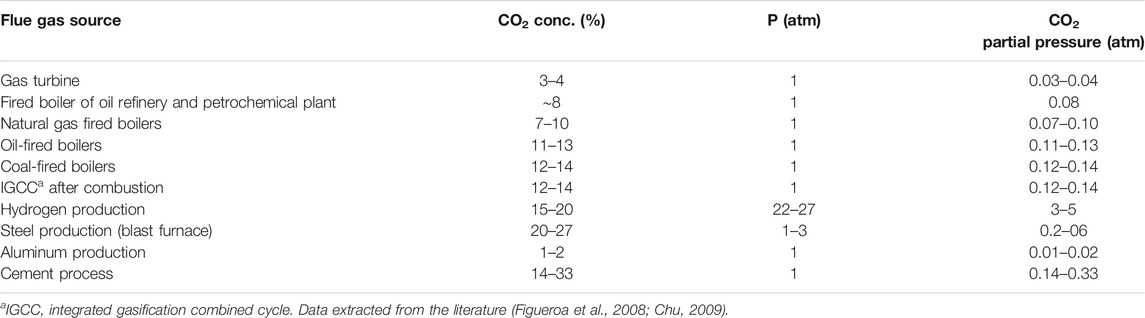
Extracting carbon dioxide at these low concentrations is a much bigger technical challenge with much higher costs. The International Energy Agency projects that direct air capture could eventually cost between US$125 and $335 per tonne of carbon dioxide, while Deep Sky’s carbon capture projects currently cost about US$1,000 per tonne, according to research by the Climate Action Team.
A big part of that cost is driven by energy use.

Early load projections for Manitoba Hydro’s 2025 integrated resource plan predict direct air capture projects will consume about 20,000 gigawatt-hours annually by 2050 — approximately the same energy load needed to electrify transportation, space heating and industrial processes combined.
Deep Sky is not deterred by the uncertainties and costs. Petre said while the company is supportive of “a whole number of pathways” to reduce global emissions and reach net-zero targets, Deep Sky is “focused on cleaning up what’s already there.”
While she understands the technology for direct air carbon capture is still emerging, “it’s not a science experiment anymore,” Petre said.
“We’ve proven the technology, we have a facility which is operational in Alberta, and we’re taking the best of that facility and trying to bring it to Manitoba.”
Petre believes the Deep Sky model, which does not create its own capture technology, but will evaluate a wide range of tech options and choose the most efficient and cost-effective to scale up, will help it succeed where others have faltered.
When it comes to the required power, she said the first phase of the project will draw 15 megawatts at maximum capacity — roughly the power draw of 10,000 homes — and can be turned down when demand on the grid is highest. As the project grows, Petre said Deep Sky would look to build its own renewable energy infrastructure to meet additional demand.
In recent years, Manitoba Hydro has made no secret of the fact its current generating capacity will not be able to keep up with the pace of electrification, and more generation will be needed as early as 2029 to meet rising demand.
“It’s certainly something we’re concerned about, that this huge load is going to be added and a lot of electricity is going to be used when it could be used to electrify transportation, buildings and industry,” Wilt said.
In an interview, Business, Mining, Trade and Economic Development Minister Jamie Moses said Manitoba’s progress toward its net-zero and affordable energy targets will rely on a host of initiatives, including electrifying key polluting sectors, building new generating capacity — and testing out new technologies.
“Part of that is making sure we support innovative projects like Deep Sky where they are taking direct air capture, reducing emissions and growing our economy at the same time,” Moses said. “It’s not, for us, an either-or question.”
Where is the money coming from?
The first phase of the project comes with an estimated $200-million price tag.
According to Deep Sky, the company will not receive funds from the Manitoba government or any municipality, and will instead finance the facility “through its own means.” Moses confirmed the province will not provide any financial support for the proposal, either in funding or tax credits.
So far, the company said it has secured $130 million from a variety of investors, including major banks and venture capital funds. One of those funders is the Bill Gates–backed Breakthrough Energy Catalyst, which provided $40 million in support of Deep Sky’s Alberta facility. The company also received $25 million from Investissement Québec, a provincial Crown corporation, in 2023.
The company’s business model relies on selling what it calls “high-quality carbon credits” to major industries. Each credit represents one tonne of captured and stored carbon dioxide, and is often sold to companies looking to offset hard-to-abate emissions and reach net-zero targets.

In November 2024, Deep Sky announced its first credit buyers, RBC and Microsoft, purchased a combined 10,000 tonnes of carbon dioxide removals over a 10-year period.
In an interview with The Logic in November, former Deep Sky executive Phil De Luna — who left the company in July after two years as head of engineering and chief commercial and science officer — warned that the company lacked a reliable revenue stream, adding: “The only revenue-generating model [for direct air capture] is carbon credits, which are a tough sell in today’s environment.”
Deep Sky will also look to benefit from federal investment tax credits, announced in 2021, which offer a credit of up to 60 per cent for investment in direct air carbon capture projects.
What’s Manitoba’s role?
While the province won’t provide funding for the project, it has signalled its support.
When the company announced in October it had decided to build its facility in Manitoba, its press release included words of encouragement from Moses.
“Manitoba is proud to be advancing a new frontier in industrial innovation — one that strengthens our position as a global leader in climate action,” Moses said.
“Deep Sky’s selection of Manitoba for one of its first commercial carbon removal and storage facilities highlights our province’s commitment to cutting-edge technologies like direct air capture.”
In an interview with CBC, Premier Wab Kinew called the project “a real win for the economy,” and noted the province would change its regulations to help Deep Sky qualify for federal tax credits.
Manitoba passed the Captured Carbon Storage Act in May 2024, outlining the province’s legal ownership of underground pore space and setting guidelines for companies looking to inject carbon below the surface.
In a legislative session, Moses explained the bill had been under development since 2023, when the Progressive Conservatives were in power, and had involved consultation with major Manitoba businesses including fertilizer company Koch Industries, Tundra Oil & Gas, New Flyer Industries and Canadian Kraft Paper.
Manitoba is currently in the process of developing regulations to accompany the law, which will provide further detail about corporations’ responsibilities when capturing and storing carbon.

Documents obtained through freedom of information requests show Deep Sky has lobbied the province to draft regulations that limit corporate liability and consultation.
In a letter dated Jan. 17, 2025, Jason Vanderheyden, Deep Sky’s vice-president of policy and government affairs, asked Moses to consider rules that pass liability for the storage sites to the province after projects close, limit the companies’ responsibility to consult with — and compensate — potentially affected landowners and allow carbon to be stored below protected areas.
The letter suggests these “refinements” to the legislation would be necessary to “ensure its viability and appeal for investments.”
Petre said the suggested regulations would bring Manitoba’s carbon storage laws in line with those in Alberta, which the company considers a gold standard.
In a response to the company, the province said it would review best practices from other jurisdictions and continue consulting with stakeholders, Deep Sky included. In an interview, Moses said the regulations are likely to be completed in spring 2026.
What’s next?
Nothing about Deep Sky’s southern Manitoba facility is set in stone just yet.
The company is finalizing an environment act proposal, Petre said, which will need to pass through the province’s environmental approvals branch before a licence is issued. The company will also need to decide where it plans to build, buy land, secure hydroelectric resources and conduct a lot more consultation with local community members — something Petre said Deep Sky is eager to do.
The company has set a target to break ground in late 2026.
Julia-Simone Rutgers is a reporter covering environmental issues in Manitoba. Her position is part of a partnership between The Narwhal and the Winnipeg Free Press.