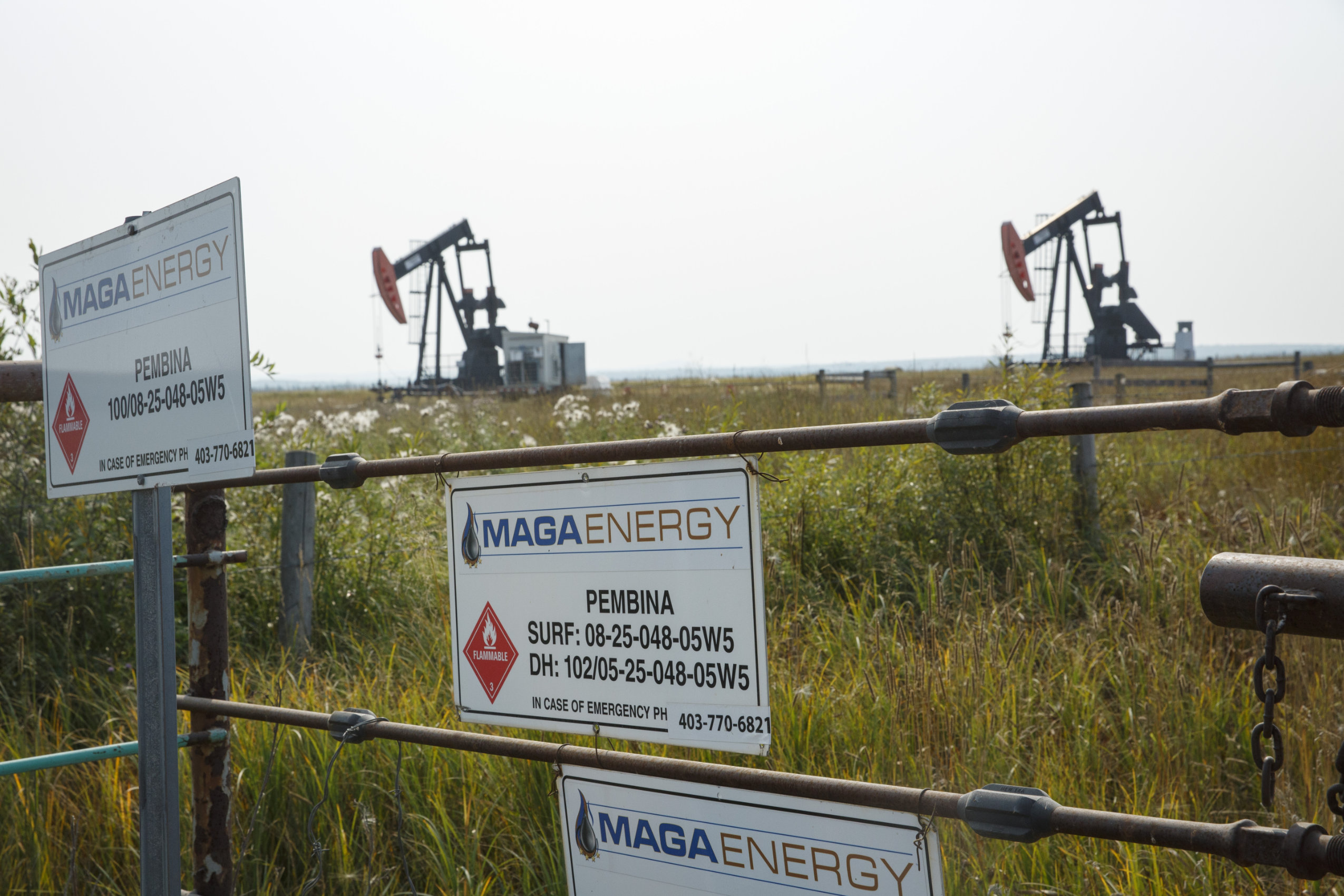
Accessing government records in Alberta is tougher than ever. If you want to find how much an oil and gas company owes in unpaid taxes, it helps to be stubborn
Before I get to the latest on my investigation into delinquent oil and gas company MAGA Energy (yes, that’s Make Alberta Great Again), an update:
A HUGE thanks to the 339 people who stepped up this week to support The Narwhal’s investigative journalism. Because of you, we’re a third of the way to our goal of raising $200,000 this month to keep this work going!
But what can The Narwhal actually do with that money? I’m so glad you asked …
A thousand dollars. One hundred and forty-two kilometres. Weeks of research and back-and-forth.
That’s what it took to get my hands on information for the story I published today. And all I wanted was some tax documents from a rural municipality in Alberta.
It might sound dull. But as it turns out, they’re pretty damning tax records.
In theory, accessing public records like these should be straightforward. But it wasn’t: we sent a researcher to Morinville, a small town in Alberta, as that’s the only way the county would release the data. We paid $1,000 to receive the documents.
And here’s the kicker: this kind of challenge to getting information is increasingly common in investigative journalism in this province.
Here’s an example: at the beginning of October, I filed several freedom of information requests for info on Alberta’s plans to get a pipeline to the West Coast. The government’s own rules suggest I should have received the documents by the beginning of November. I’m still waiting. It’s hard not to feel like they’re hoping you’ll just forget about it. But I won’t.
Another example? Two of those October requests did come back. I learned that some government officials say thank you with exclamation marks in their emails — but almost everything else was redacted.
Why? In part because last year, the day after Donald Trump was elected president of the United States, Smith’s government announced Bill 34, which laid out new rules for freedom of information in Alberta. It became law late last year.
In short, the rules make it easier for the government to suppress more factual information, more often, and to release it more slowly — all while limiting the powers of the province’s independent watchdog.
The Alberta government also continues to try and prevent us from following through on requests by imposing exorbitant fee estimates. Another of those requests about the pipeline will cost almost $2,000.
But that’s not going to stop us. Throw up an obstacle to finding the truth, and we’re just going to double down our efforts. We’re like that. I’m like that. And the nearly 10,000 people who give to The Narwhal each year make it possible.
It’s not cheap or easy to get your hands on the truth, but my colleagues and I are a real stubborn bunch.
Major highways connecting B.C.’s Lower Mainland to the rest of Canada have been closed since Wednesday, after the region was battered by record-breaking rainfall. It felt like a frightening reminder of 2024 and 2021, when previous atmospheric rivers caused multiple deaths.
As rivers across the region swell, we’re focused on reporting stories that respond to the mounting crisis. What do you want to know about floods in B.C.? Let us know by replying to this email, and we’ll do our best to answer your questions. And keep an eye out for stories in the days and weeks to come.
— Michelle Cyca, bureau chief, conservation and fellowships
This week in The Narwhal
Cut through a wetland: how Ontario is losing a critical ecosystem By Leah Borts-Kuperman
Neighbours cried foul when a developer built a trail through a marsh near Orillia, but there was little residents or the township could do. Across Ontario, wetlands are getting harder and harder to protect.
Your access to our journalism is free, always. Sign up for our newsletter for investigative reporting on the natural world in Alberta — and across Canada — you won’t find anywhere else.
Your access to our journalism is free, always. Sign up for our newsletter for investigative reporting on the natural world in Alberta — and across Canada — you won’t find anywhere else.








 6 min. read