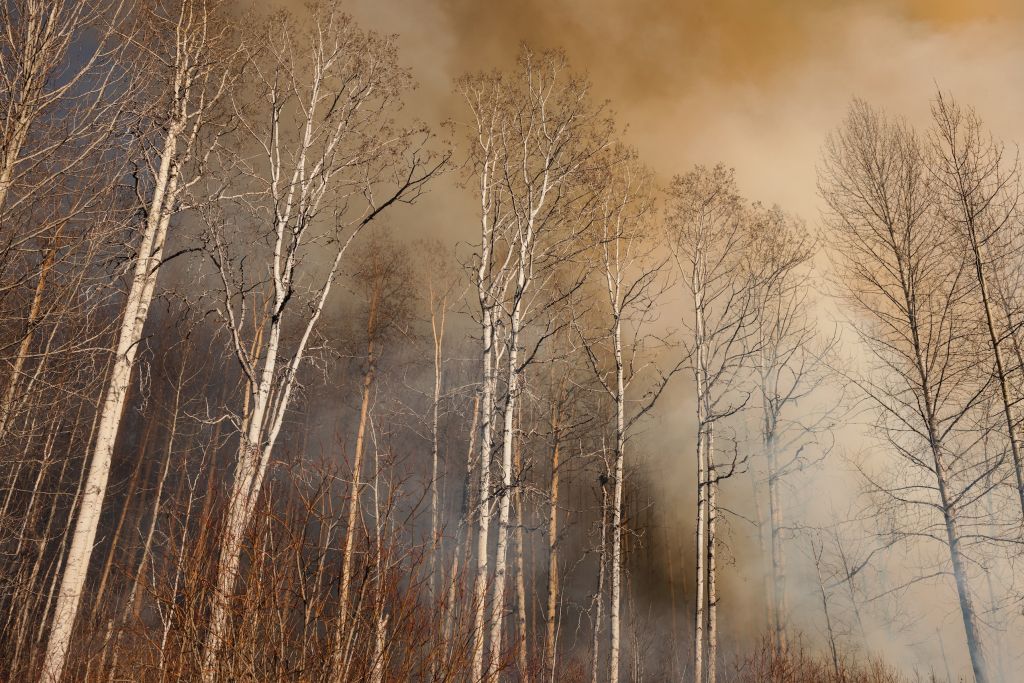
A Gitanyow-led fire stewardship program in northern B.C. demonstrates how burning forests intentionally can be a powerful tool to regenerate a healthy landscape.
Photo: Marty Clemens / The Narwhal
My daughter, Franny, started kindergarten this week. The first day of kindergarten feels, in a way, like the first day of her future. But as I sift through school supplies and figure out new routines, I am also regularly checking air quality forecasts. Will she even use her outdoor shoes for recess if the health risk hits 19 — on a scale of one to 10+?
Every time I look out at the smoky, hazy skies, the risks of sending Franny into the world are literally staring me in the face. Here in Alberta and in many other parts of the country, it’s clear: summer vacations may be wrapping up, but wildfire season isn’t.
It’s hard not to lean into dread, but I’m holding on to key lessons from The Narwhal’s extensive wildfire reporting. Aggressively putting out fires isn’t the solution; it’s part of what got us into this mess. Fire isn’t always bad; it’s often critical to restoring ecosystems. And there is so much we can do to better manage the landscape and build a healthier relationship with fire.
Speaking of aggressively putting out fires, you’ve probably seen images of a plume of red stuff being dropped by a plane or helicopter over a wildfire — that’s a long-term fire retardant, used to dampen the flames.
There’s new research out of Alberta on its environmental impacts, as Prairies reporter Drew Anderson writes this week. The retardant is not supposed to end up in waterways, but accidents happen.
Yes, wildfires are a big problem — and getting worse. And, across the country, there are people working on solutions, including the many Indigenous nations working to reclaim fire as a cultural practice and way to manage the landscape.
“The boreal forests and other forests in Canada are fire-dependent,” Amy Cardinal Christianson, the senior fire advisor for the Indigenous Leadership Initiative, told Rebecca. “No matter how much we try to control that or change that, that doesn’t change the relationship that that forest has with fire.”
We’ve got a long way to go, but the path to get there does not need to be entirely shrouded by wildfire smoke. Better forest management reduces the need for fighting wildfires, and that’s a good thing.
Join The Narwhal for a free Zoom event for more insights from Habitat, our series on housing and climate, featuring B.C. reporters Steph Kwetásel’wet Wood and Shannon Waters. Michelle Cyca, bureau chief for conservation and fellowships, will moderate the conversation.
The online panel discussion will take place on Tuesday, Sept. 16, at 12 p.m. PT / 1 p.m. MT / 3 p.m. ET.
B.C.’s long-promised watershed security strategy is done. It’s just not public By Ainslie Cruickshank
The province has sat on the completed strategy for more than a year, despite calls from Indigenous leaders for public release.
Watch: Chef Michael Smith takes the Moose Questionnaire Videography by L. Manuel Baechlin
Did you know? The Narwhal serves up fresh videos every week on YouTube and TikTok.
In our latest, P.E.I. chef Michael Smith reveals which iconic Canadian animals he would kiss, marry and kill — and dishes on why he now thinks organic farming is barely a starting line. Please ‘like’ and ‘subscribe!’
What’s going on in Wasaga Beach? Profit, piping plovers and an Ontario town’s complicated future By Fatima Syed READ MORE
Make a new friend this September by letting them know about The Narwhal’s newsletter. With fresh reporting on the natural world that doesn’t take a summer vacation, it’s the gift that keeps on giving!