Before I get to this week’s big story on Ontario municipalities pushing back on free access for natural gas pipelines, an exciting update:
The Narwhal is 80 per cent of the way to our goal of raising $200,000 this month! Hundreds of readers like you are standing up to support independent journalism that holds governments and powerful corporations accountable —will you join them?
And now, here’s the lastest scoop on energy in Ontario:
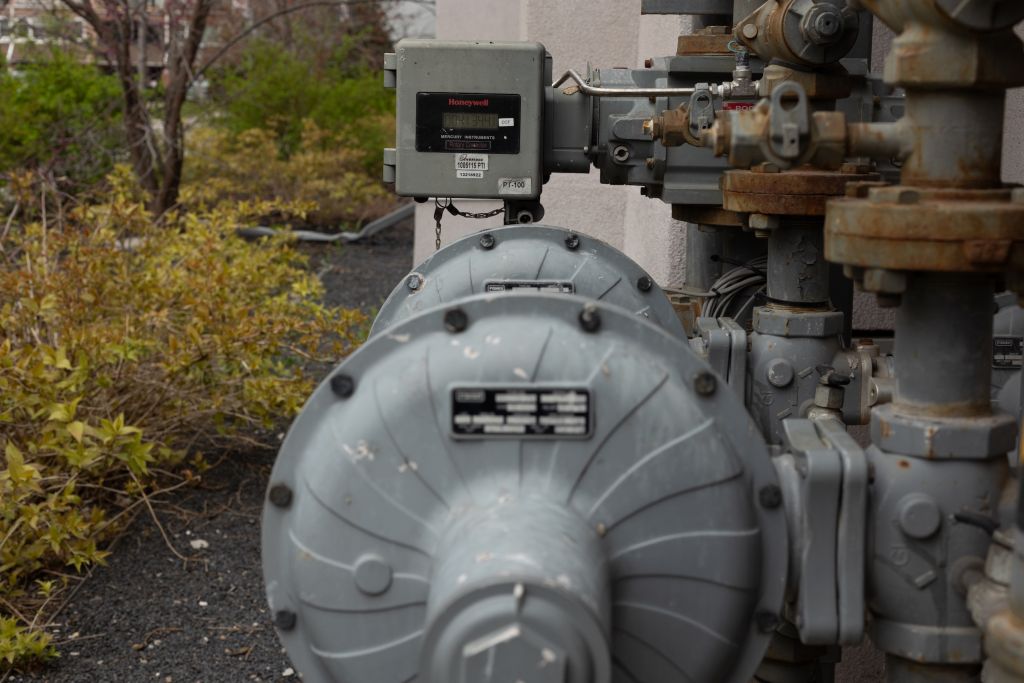
A few months ago, Ontario reporter Fatima Syed mentioned she’d been looking into “kind of complicated agreements” that the vast majority of municipalities in the province have signed with Enbridge Gas.
It’s not like that everywhere. Many Canadian provinces, including British Columbia and Alberta, permit municipalities to levy fees for this access, which can bring in tens of millions in annual revenue.
Ontario still has a law that prohibits this — it considers providing natural gas to heat homes a “public good.” But as home heating options expand and the world moves away from fossil fuels, at least two municipalities in the province are pushing back.
Fatima has been investigating energy issues in Ontario since 2019: cultivating sources, filing freedom of information requests and poring over opaque technical agreements.
Her persistence earned her this week’s scoop: the Waterloo Regional Municipality, which includes the cities of Waterloo, Kitchener and Cambridge, recently declined to renew its agreement with Enbridge, which would have locked in 20 more years of free access for gas pipelines.
Municipalities have “signed these agreements like zombies because we have been led to believe we must,” Leanne Caron, a Guelph city councillor, told Fatima. “But it’s a kind of historical hangover from a past era where the utility was actually public, and it made no sense to charge a public utility for the public right of way.”
Fatima’s story has already been republished by The Record in Waterloo and Cambridge Today — ensuring more people know about what could lead to a major shift in Ontario energy policy.
The Narwhal’s Ontario bureau is tiny — just me and two reporters — and I marvel at all the team has accomplished since we began this work in 2021. The team has doggedly tracked the province’s moves on energy and the environment, and held Premier Doug Ford’s government to account.
Last year, The Narwhal won Canada’s most prestigious journalism prize, the Michener Award, for our joint investigation with the Toronto Star into Ford’s push to develop parts of the Greenbelt — a decision he reversed after we revealed that developers with Progressive Conservative ties would have benefited most.
Alongside her energy reporting, Fatima has closely followed changes impacting the province’s conservation authorities. The latest and most dramatic shift is still in progress: the window for public input on the Ford government’s proposal to consolidate conservation authorities from 36 to seven closes Dec. 22. We’ll have a lot more on this in the new year.
Today, Ford and Prime Minister Mark Carney inked an agreement to streamline environmental approvals for major projects. They hope to speed up the Darlington Nuclear Generating Station’s expansion, using small modular reactors, and build a road to pave the way for mining in the Ring of Fire, on Treaty 9 territory in northern Ontario.
The Narwhal knows it’s imperative to continue holding this government accountable, and we have no intention of slowing down. You can bet on us to keep exposing the machinations behind the Ford government’s decisions, and what it means for the people of Ontario.
Speaking of scoops: biodiversity reporter Ainslie Cruickshank reported this week that senior Alberta government officials stalled the public release of research on coal mine pollution by a government scientist. They also prevented the scientist from speaking with journalists and the public about the research findings.
Ainslie gleaned the details from internal emails, contained in more than 600 pages of documents she received through a freedom of information request. Find the full story, including what the research revealed about pollution from coal mines in the Rockies, on our website.
Despite the stall tactics, Alberta government science on coal mine pollution is, in some ways, ahead of the curve. In a follow-up story, Ainslie reported that B.C. government scientists aren’t producing peer-reviewed research on the issue at all. Read more here.
This week in The Narwhal
‘We need clean water’: logging blockade brewing in Alberta’s Rocky Mountains By Drew Anderson
Photos and reporting by Amber Bracken
Defenders of the Eastern Slopes say their civil disobedience, in response to planned logging in a protected area, can unite Albertans across political divides.