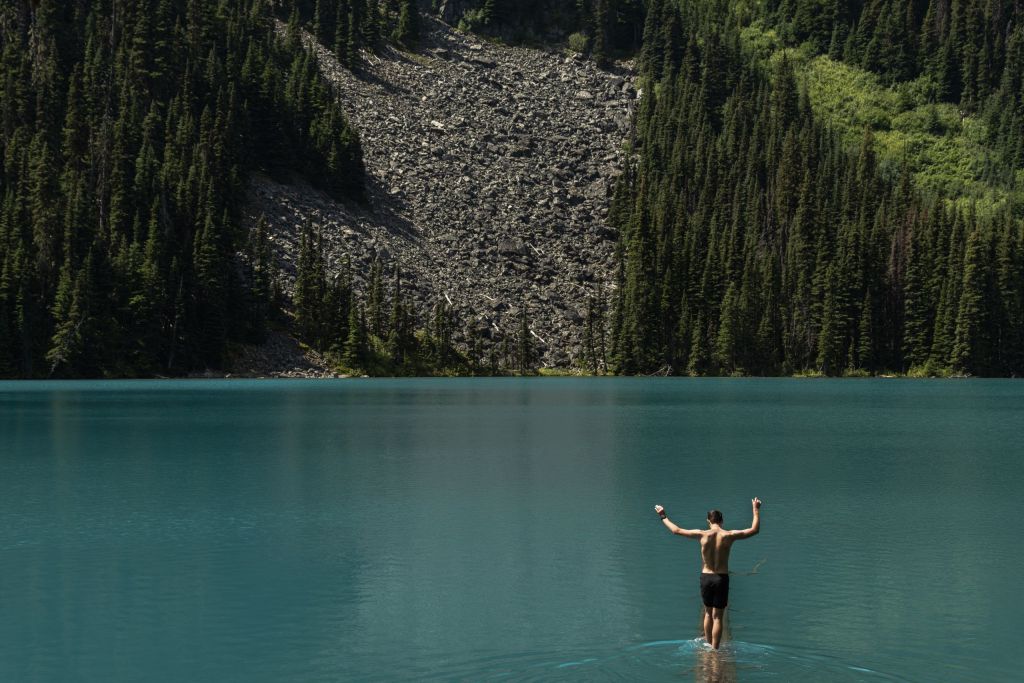
Day passes to visit Joffre Lakes Provincial Park are released for online booking two days in advance. They are typically scooped up within minutes.
Photo: Paige Taylor White / The Narwhal
Reconciliation takes a hike in a picturesque B.C. park
Líl̓wat and N'Quatqua nations learned the limits of their partnership with BC Parks when the province insisted on keeping Joffre Lakes open through the Labour Day long weekend
We’re heading into the last long weekend of summer, and soon your social media feeds will be overflowing with people sharing photos of their outdoor adventures: fishing, camping, swimming and hiking. Some of those people will be posting from Joffre Lakes, a B.C. provincial park famous for its turquoise-blue waters — and lately, the focal point of a conflict over Indigenous Rights, conservation and public access.
Temporary closures began at Joffre Lakes in 2023, as part of an agreement between the Líl̓wat and N'Quatqua nations and BC Parks. The goals behind the closures were twofold: to give the land a break from heavy traffic (visits to Joffre tripled between 2010 and 2019); and to provide the nations’ members with opportunity for harvesting and ceremony on their unceded lands.
Fast forward to last week: Líl̓wat and N’Quatqua were under the impression that Joffre Lakes would close for the final time this year between Aug. 22 and Oct. 21. But just three days before the closure window, the nations learned the limits of their partnership as BC Parks publicly announced Joffre Lakes would stay open through the Labour Day long weekend, and the fall closure would be reduced from two months to one.
To understand the heart of these tensions, reporter Steph Kwetásel’wet Wood and photographer Paige Taylor White travelled to the park’s entrance — about an hour north of Whistler, B.C. — to speak to members of Líl̓wat and N’Quatqua as they protested the province’s decision, blocking the highway for two hours.
(It’s worth noting that while outrage over the looming closure seemed to win the day on social media, on the ground things were much different — many drivers honked in support of the nations’ action after the road re-opened to traffic.)
For the two nations, the park isn’t just a weekend destination — it’s part of their traditional territories, stewarded for countless generations before their people were confined to reserves. “The community wants to be in Pipi7íyekw to harvest in the fall season, harvest our medicines and our food for the winter,” Casey Gonzalez, director of land, resources and infrastructure for Líl̓wat, told Steph.
Joffre’s temporary closures have become a flashpoint in an increasingly politicized provincial dialogue surrounding Indigenous Rights and public parks. Often lost in the debates are the parks themselves, many of which are straining under the weight of so many visitors. But so too is the fact that these lands have meaning beyond their value as a weekend destination and memorable photo backdrop.
As I wrote back in May: we are threatening the survival of the places we love so much, one hike and selfie at a time. It’s long past time we stop thinking about what we deserve from the Earth, and start thinking about what it deserves from us.
“Education needs to continue on who we really are and what we stand for,” Linda Dan, Líl̓wat citizen and former councillor, told Steph. “We don’t mean to hurt anybody. We come in peace. We’re trying to do reconciliation.” Read the full story on our website today.
Take care and tread gently,
Michelle Cyca
Bureau chief, conservation and fellowships
Trouble in the Headwaters, a powerful 25-minute documentary that explores the root causes behind the devastating 2018 floods in Grand Forks B.C., is going on tour this September!
Created by filmmaker Daniel J. Pierce, the film follows Dr. Younes Alila, a professor of forest hydrology at the University of British Columbia, as he investigates the upstream impacts of clear-cut logging in the Kettle River watershed. It premiered in partnership with The Narwhal earlier this summer.
The film is showing in several B.C. communities next month, with a chance to join Pierce and Alila in person for a discussion of local watershed issues. Screenings are scheduled in Kelowna, Grand Forks, Nelson, Penticton, Vernon and Prince George. Find more info and reserve a seat here.
This week in The Narwhal
Carney touted oil and gas ‘partnerships.’ CEOs wanted to talk Trudeau’s climate plan By Carl Meyer
Update to Canada’s Emissions Reduction Plan is coming that will take ‘evolving global and economic context’ into account, government says.
Breakfast time at Vancouver’s baby seal nursery By Ainslie Cruickshank READ MORE
Watch your step: a silent killer in the soil By Maude Lipsett READ MORE
With Super Team Canada, these cartoonmaking brothers celebrate their Rocky Mountain roots By Denise Balkissoon READ MORE
Mousey, honorary cat-editor for The Narwhal, wants you to close your laptop and go enjoy the long weekend — after you’ve reminded your friends to subscribe to our newsletter for reporting on the natural world they just won’t find anywhere else!