



 7 min. read
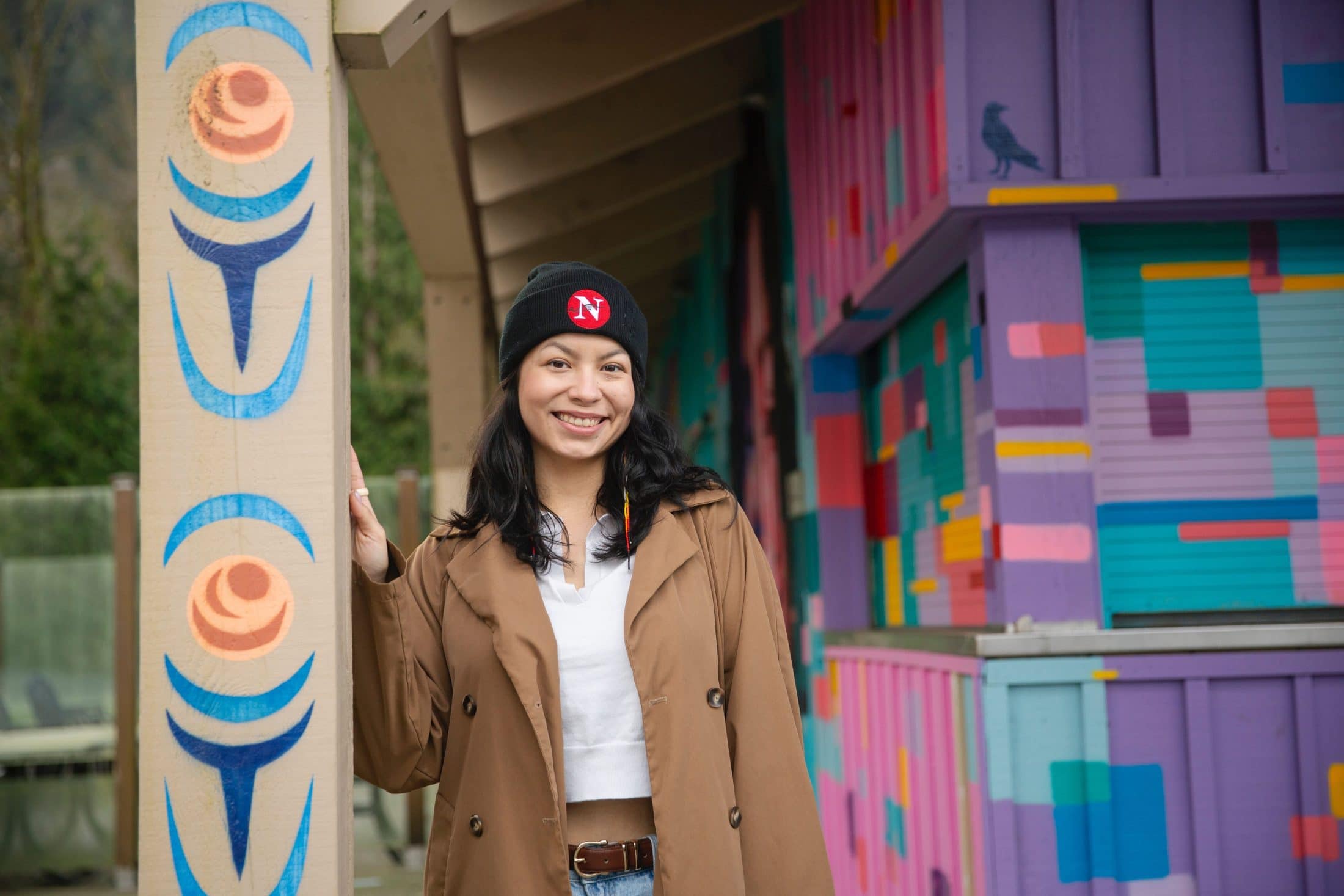
Though she grew up in Saskatchewan, Santana Dreaver stood out when The Narwhal began looking for a B.C.-based Indigenous Journalism Fellow. For one thing, Santana had spent time at CBC learning the fundamentals of journalism through its Indigenous Pathways program, accruing bylines and skills. But she also had a passion for journalism and a clear vision of the kinds of stories she wanted to tell: centring youth, grappling with ecological disasters and industry impacts, and rooted in sovereignty and traditional practices.
Here at The Narwhal, Santana will be spending 2026 learning about in-depth feature writing and reporting, and telling stories from across the province. You’ll see her byline on IndigiNews as well, which is a partner in this fellowship, and she’ll be receiving training and mentorship from the Indigenous Journalists Association. Santana has already racked up a few bylines at The Narwhal — covering B.C.’s critical minerals push and the women leading natural disaster response across Canada — but we’re thrilled to formally introduce her to you. You’ll be seeing a lot of her in the year ahead!
What inspired you to go into journalism?
There were a few moments growing up that inspired me to be a journalist. I must have been five or six when my photograph and interview made the local newspaper — a group of us from the Kinistin Saulteaux Nation went to the Tisdale, Sask., airport to go on mini-airplane rides. My grandma was the school receptionist and had the newspaper clipping hung up in the staff room. I remember feeling pride seeing it there.
When I was eleven, I competed in the Saskatchewan First Nation winter games, hosted in Saskatoon that year. I won two gold medals in badminton, in under-12 singles and doubles — my first big competition in the sport. Between matches a news crew came to the courts and my coach told me to go and interview. Being on TV for playing a sport I loved made an impact on me.
Lastly, I grew up around storytelling my entire childhood. Stories are how culture is passed down from generation to generation. As a Gen Z Saulteaux and Plains Cree person, journalism always felt like a modern way for me to tell stories and practise that aspect of my culture.
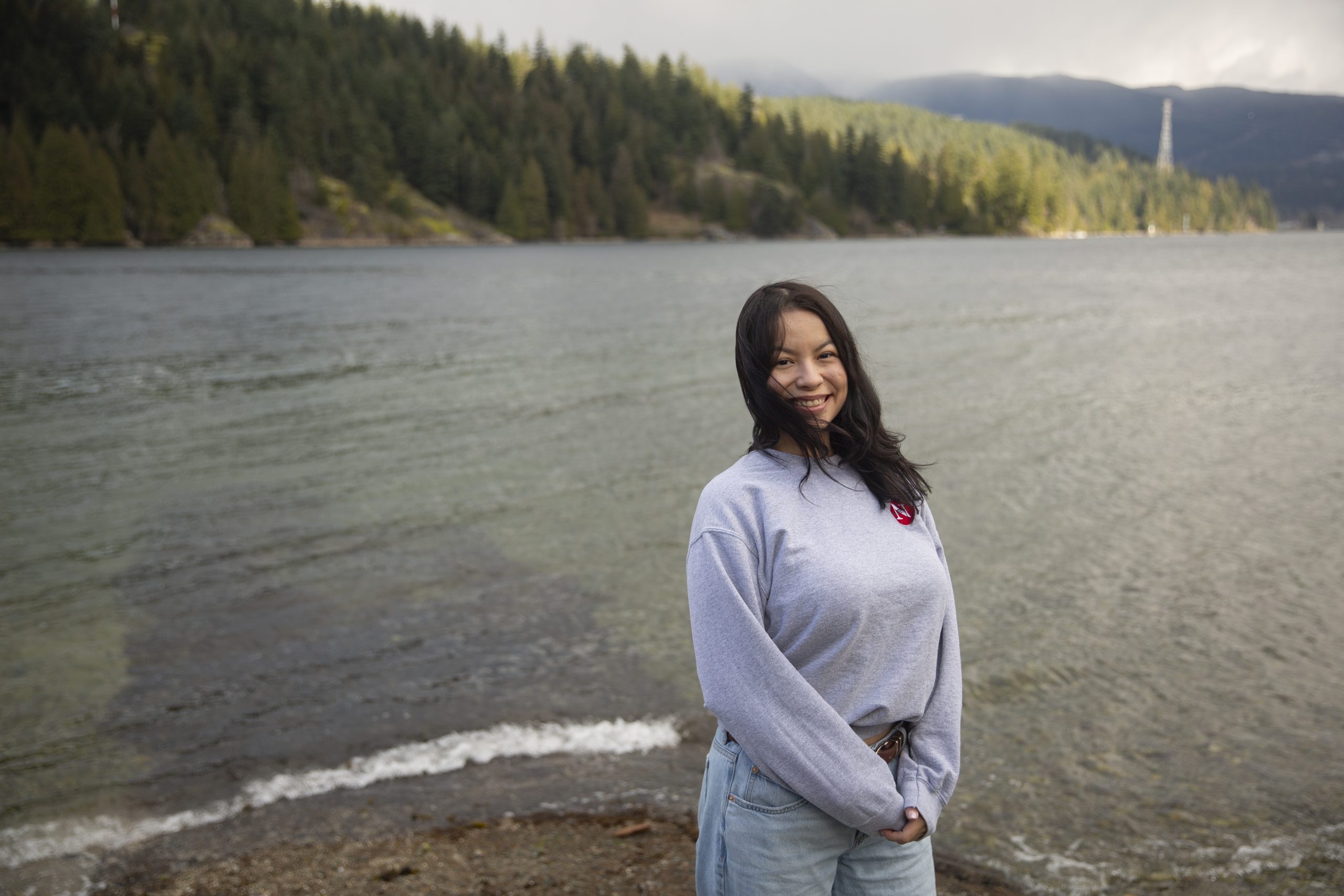
You grew up in northern Saskatchewan on Kinistin Saulteaux Nation, and you’re a member of Mistawasis Nêhiyawak. Now that you’re in B.C., what’s something you miss about the Prairies?
Without stating the obvious that I miss my family, what I often find myself missing is open and quiet spaces. The Lower Mainland can sometimes feel congested for someone who grew up in rural and northern Saskatchewan.
I miss my connection with the sky — thunderstorms, the bright sunlight nearly everyday, star constellations, moon cycles and the Northern Lights are harder to see with the light and air pollution here.
Something I never expected to miss is being around bison. My community has had bison since I was a child, housed in the fields behind our house, and my appreciation for these relatives only grew the more I learned about salmon in Coast Salish lands, reflecting on my own values and culture throughout the years.
You served on former prime minister Justin Trudeau’s youth council — what was that experience like?
Advising the former prime minister Justin Trudeau and his cabinet for 2.5 years was a rewarding and challenging experience. In my personal life, I was branded as a Liberal when the position was non-partisan, and on the council I can say confidently I was one of the most vocal members to speak about issues affecting Indigenous people in Canada and overseas.
I felt immense pressure to use my access in government to push forward Indigenous Rights, and found myself wanting to quit from time to time. All of that said, I learned how to say the hard things when it mattered and my confidence grew realizing how much knowledge I carried forward to roundtables and consultations.
Two highlights were attending an online safety symposium, surrounded by journalists and hosted by the Right Honourable Mary Simon, Canada’s first Indigenous Governor General, at Rideau Hall in Ottawa, where I ended up at dinner with people from TikTok Canada. The second was being invited to the Prime Minister’s Office for an invitation-only meeting following ongoing efforts to advocate for Palestine with fellow council member Ganiyat Sadiq.
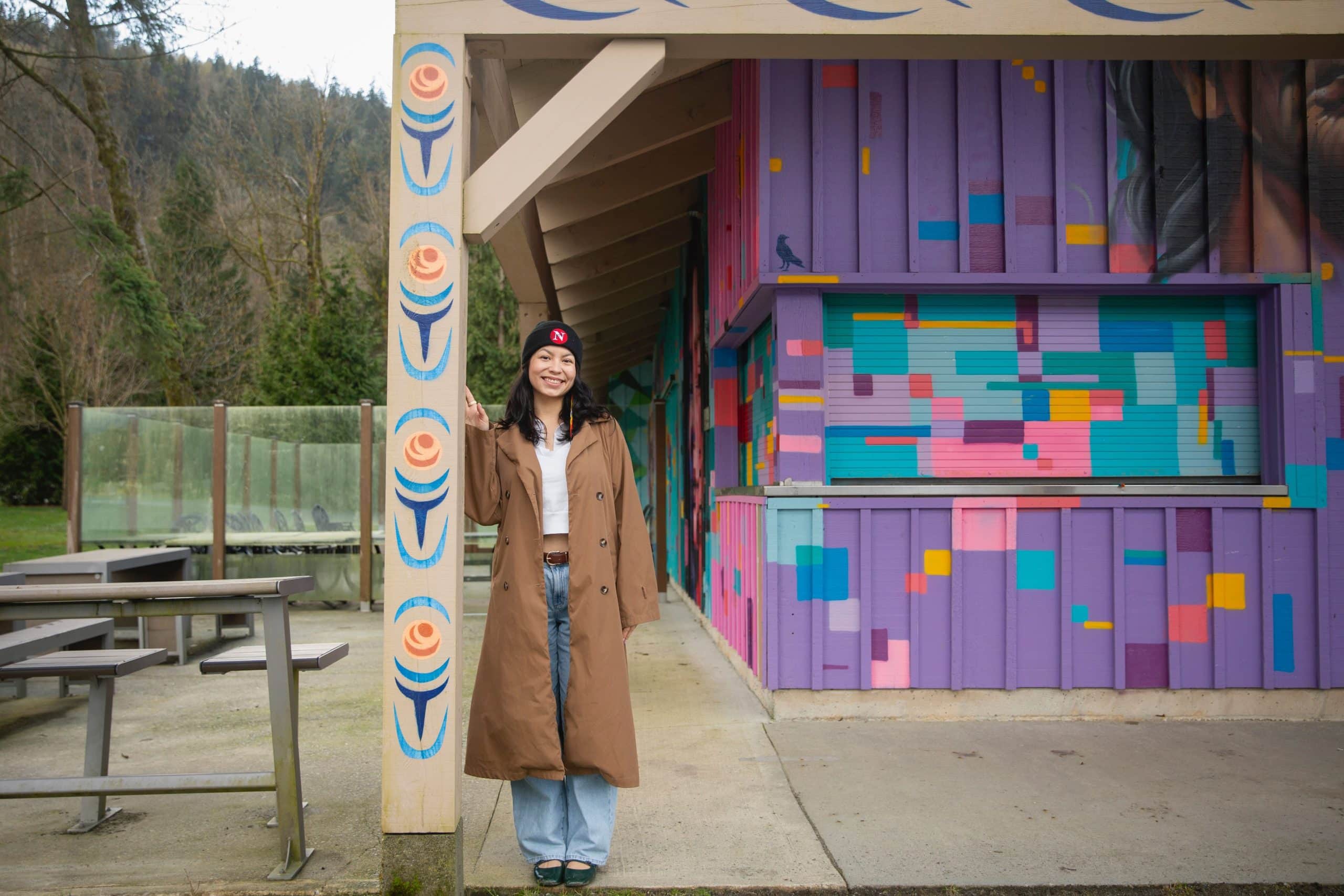
You have a lot of experience in emergency preparedness work, including as an advisor to the Ministry of Emergency Management and Climate Readiness, and a board member for Preparing Our Home, which is focused on emergency readiness for Indigenous youth. What drew you to that work?
Just before the pandemic I attended Preparing Our Home in Osoyoos, B.C., as a youth participant. I was supposed to fly to New York City after the gathering to attend a conference at the United Nations when the city declared a state of emergency, cancelling what would have been my first time at the U.N.
While the cancellation was disappointing, I felt grateful to be in Canada during the outbreak of COVID, and it made everything I learned at Preparing Our Home stick with me as one participant spoke about pandemic protocols in her Northern Ontario community.
After moving to B.C. by myself in 2021, disaster after disaster happened in the province. I lived on my own and had no emergency contact at the time, so educating myself about the lands I had moved to and how to prepare for its potential dangers became critical when I realized no one else was going to do it for me.
What are your favourite stories to report?
My favourite stories to report on are emergency management stories, anything related to the land and Indigenous Rights, governance and policy. As for my favourite story thus far, it changes often, but one that stays top of mind is an Okanagan salmon restoration story that I wrote for CBC.
I could feel how happy everyone involved was, and it stayed the top story on the CBC B.C. website for a few days. I don’t want to associate ratings with a personal favourite story, but that shows it was a special moment in the province for a lot of people, including myself.
You spent a year at CBC in the Indigenous Pathways program, but before that, you worked for Sacred Earth, an Indigenous women-led organization focused on climate justice and energy transitions. What did you learn in that role about the challenges of tackling fossil fuel dependency?
Working for Sacred Earth, I learned that governments in Canada subsidize oil and gas companies, not leaving much incentive for corporations to transition to cleaner energy methods. General misinformation about clean energy, and oil and gas being the status quo for a century in the country is also a barrier in tackling fossil fuel dependency. The start-up and maintenance costs of transitioning is also a barrier, especially in rural and remote communities.
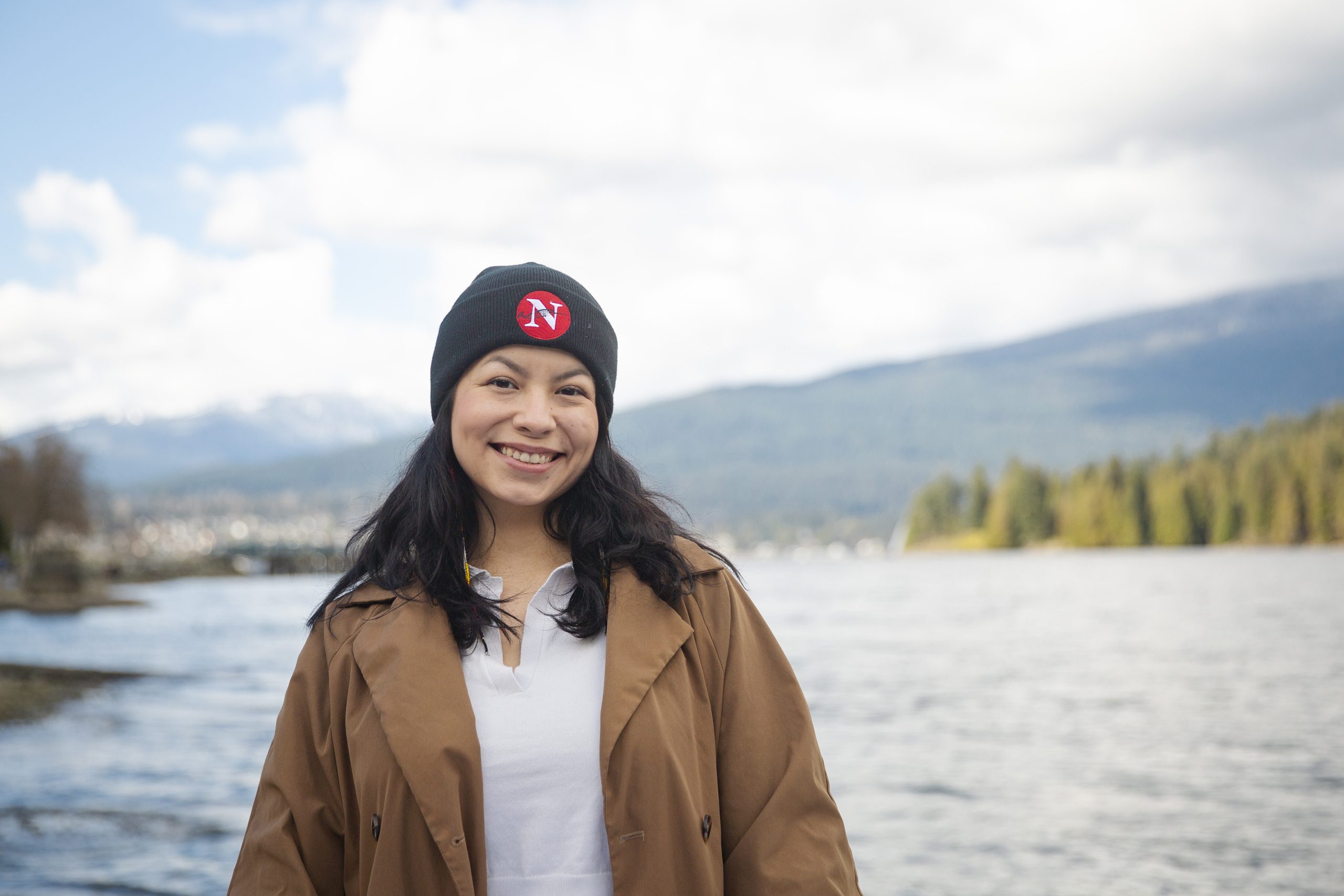
You’re spending all of 2026 at The Narwhal. What’s one story you hope to tell before you leave?
During my time with The Narwhal I hope to tell stories that matter to B.C. First Nations people. I am always thinking about the land I reside on, how British Columbia obtained it and how I, as a guest, can be back in a way that feels good to me, which I hope to do with my reporting. Early on after moving here I learned about the concept of witnessing in Salish culture, and I hope as a journalist I can be a witness to what local nations are doing and comfortable sharing.
The Narwhal’s 2026 Indigenous Journalism Fellowship is possible with support from the Sitka Foundation. As per The Narwhal’s editorial independence policy, no foundation or outside organization has editorial input into our stories.