


 6 min. read
Summary
- The Alberta Energy Regulator announced Thursday that more than 4,000 additional wells will be added to the inventory of the Orphan Well Association.
- The association currently has 4,200 wells on its list to be properly sealed.
- The number of orphan wells in the province has increased dramatically in the last decade. Orphan wells are those left behind by bankrupt companies.
On Thursday, the Alberta Energy Regulator announced more than 4,000 additional oil and gas wells are now officially orphans, meaning the industry-funded Orphan Well Association’s list of old wells to properly seal has nearly doubled.
According to the regulator, 4,031 wells, 383 facilities, 2,121 pipeline segments and 38 pipeline installations belonging to Calgary-based Long Run Exploration Ltd. have now been turned over to the Orphan Well Association.
Before Long Run’s assets were added to its inventory, 4,200 wells were already on the Orphan Well Association’s list of wells that needed to be decommissioned.
According to the association’s most recent annual report, fewer than 500 wells were decommissioned — meaning safely sealed — in the fiscal year ending in March 2025, while more than 2,000 new wells were added to its inventory during that time.
Lars De Pauw, the president of the Orphan Well Association, said by email not all the Long Run wells need to be sealed. “Our initial review indicates that about one-third of the wells are already decommissioned but we are anticipating close to 3,000 new wells in addition to our current 4,200,” he said by email.
Organizations had already been ringing alarm bells about the issue earlier this month. At the end of March, the Alberta Energy Regulator announced it was increasing the orphan well levy — a fee charged on oil and gas licences to cover the costs of cleaning up orphan wells — by seven per cent. But as watchdogs were quick to point out, the orphan count increased 29 per cent last year.
“This is not good enough, plain and simple,” Ecojustice lawyer Susanne Calabrese said in a statement at the time. “The shortfall is already being felt in the province, and taxpayers are paying the price for the gap — all while the risks and costs continue to climb.”
A spokesperson for the Alberta Energy Regulator said by email the new levy amount was endorsed by the Government of Alberta, adding it “will support the Orphan Well Association’s operating budget for the 2026/27 fiscal year.”
As of 2025, the Orphan Well Association estimated total costs to properly seal and reclaim orphan oil and gas sites in Alberta that were on the inventory at the time was approximately $1.12 billion.
That doesn’t include the thousands more on the list now.
“This is the largest single transfer in history, and it almost doubles the [Orphan Well Association’s] inventory overnight,” Janetta McKenzie, director of the oil and gas program at the Pembina Institute, told The Narwhal by email.
“While this single insolvency means the number of orphan wells will spike by nearly 100 per cent this year, the amount of industry funding required by the provincial government to clean these wells up has risen by only seven per cent. This is clearly inadequate for the scale of the problem,” she added. “It leaves Albertans to bear the harms associated with unremediated wells near their homes and businesses.”
So what’s this all about? Here’s what you need to know.
What is an orphan well anyway?
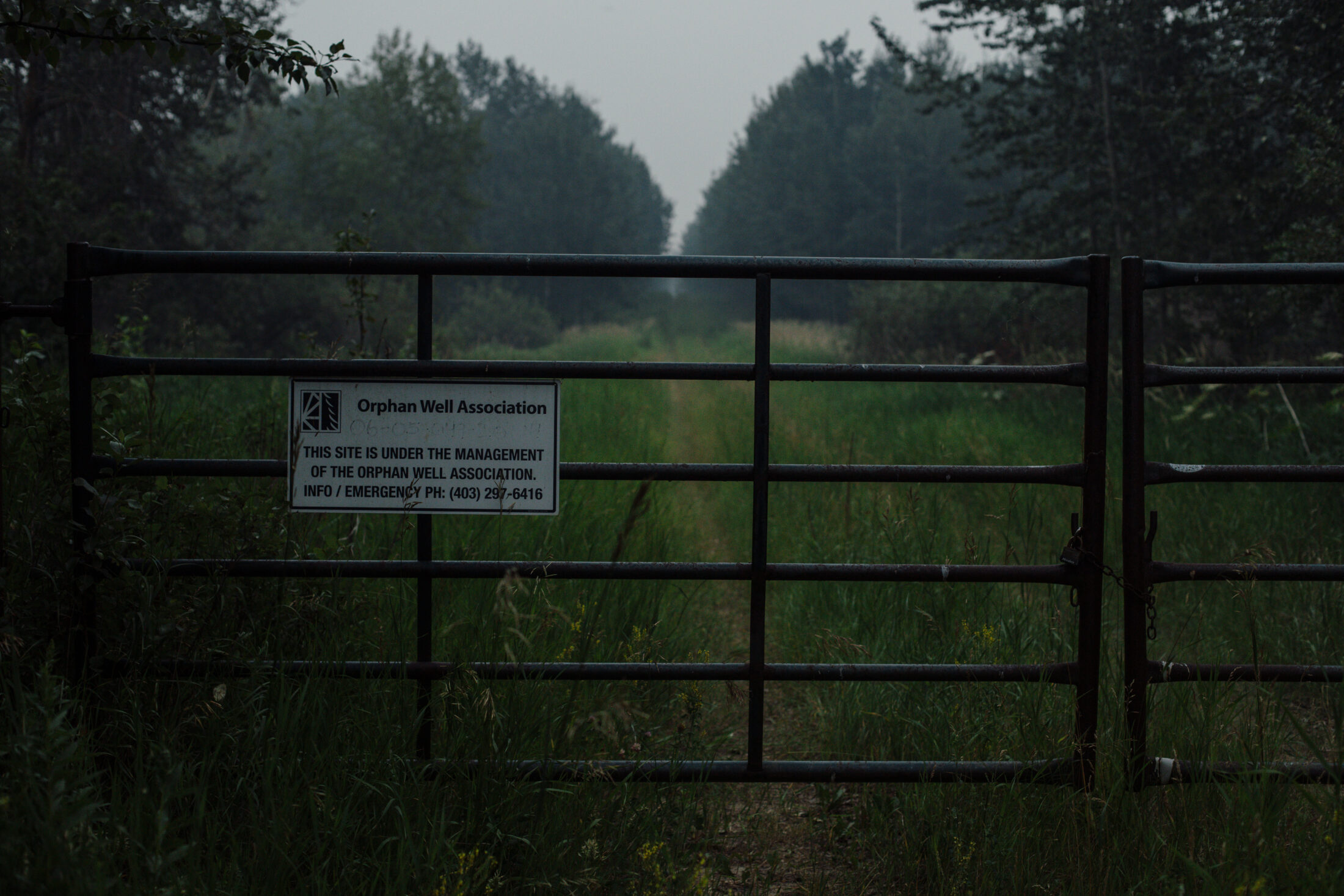
An orphan well is one that no longer has a legal or financial owner.
Most often, an oil and gas company that has gone bankrupt has left behind a long list of wells that were never properly decommissioned or cleaned up — and someone has to pay for that. In the meantime, the well, or pipeline or other related facility, becomes an “orphan.”
But even without an owner, it still needs to be properly plugged and reclaimed, according to provincial rules.
How many orphan wells are there in Alberta?
As of the end of March, Alberta’s Orphan Well Association reported its inventory included 4,200 orphan wells that need to be safely sealed and more than 8,000 sites that need to be reclaimed.
These numbers have increased substantially in recent years. In 2013, the Orphan Well Association had just 387 orphan sites in its inventory of sites that needed to be reclaimed.
But a lot of the concern about orphan wells comes not just from the current inventory, but from the potential for thousands more to be added to the list.
According to the Government of Alberta, there are an estimated 466,000 oil and gas wells in the province. More than half of those are no longer producing, some of which have been properly plugged, while others are in a state of temporary suspension.
Either way, once a well is no longer active, it’s no longer making a company any money.
In fact, it does the opposite. Oil and gas companies have to pay costs associated with sites they’re no longer using.
For example, they’re supposed to pay rent to the owner of the land where the well is located, as well as taxes to the local government. That said, it has been more and more common in recent years that companies don’t pay landowners or their tax bills.
All of this means an inactive well can be a costly burden to a company, especially one that’s already struggling financially.
What is the Orphan Well Association?
Alberta’s Orphan Well Association is a not-for-profit organization that is theoretically funded by industry, but actually has received government grants in the past and gets an annual interest-free loan from taxpayers.
It takes over responsibility for cleanup when no company is legally or financially responsible for a well or related pipeline or facility.
According to the association’s most recent annual report, it spent nearly $130 million on cleaning up and sealing orphan wells, pipelines and related facilities in the fiscal year that ended in 2025.
The Orphan Well Association is overseen by a board of directors made up of industry representatives from the Canadian Association of Petroleum Producers, Cenovus, Canadian Natural Resources Limited (CNRL) and others, as well one representative of the Alberta Energy Regulator.
Who’s supposed to pay to clean up orphaned wells?
The short answer: industry.
The idea is that all companies pay into the orphan well fund, to make a pool of money available for when companies go bankrupt, or otherwise walk away from their liabilities. Last year, the orphan well levy added up to $144.45 million.
In theory, this fund should be enough money to fund orphan well cleanup in the province. But as clean-up bills have ballooned, the auditor general and other critics have warned this may not be the reality.
“Every year that we underfund this cleanup is another year contaminants remain in the ground, water and air — putting landowners’ health, property values and livelihoods at risk. Meanwhile, taxpayers are left picking up the tab,” Ecojustice said in a statement earlier this month.
Updated at Friday, April 10, at 4:12 p.m. MT: This story was updated to include information received by email after publication time from the Orphan Well Association.