



 6 min. read
An investigation by The Narwhal published earlier this week details how the Alberta government allows millions of dollars of taxpayer money to wind up in the hands of ranchers grazing cattle on public land.
It’s a complicated issue, involving ranchers, oil and gas companies, a broken regulatory system and — in many cases — taxpayers.
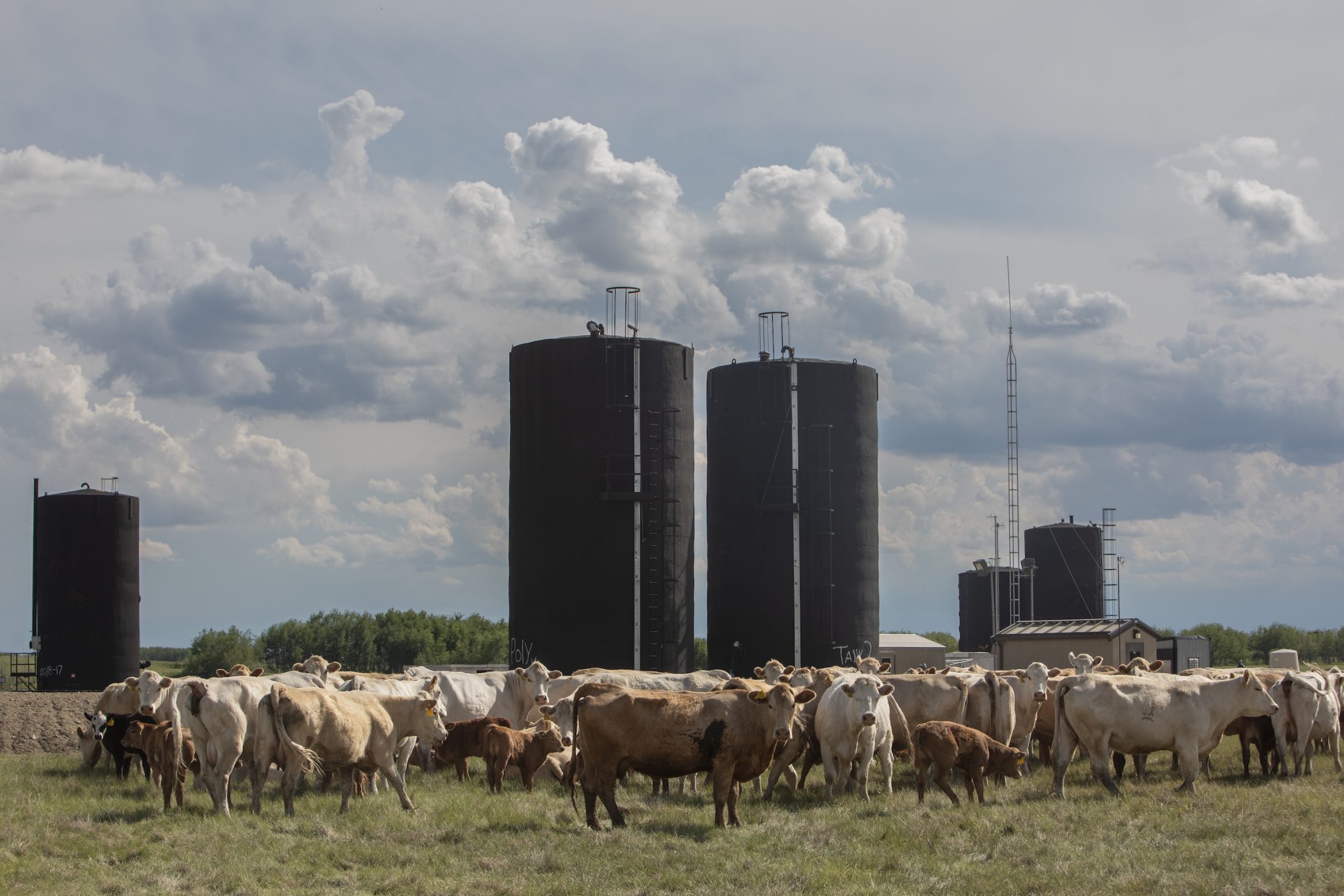
Here’s the gist. In Alberta, ranchers can lease public land at below-market rates to graze their cattle. At the same time, oil and gas companies with wells on that public land must pay for yearly compensation for loss of the land and impacts from their operations. The catch? In Alberta, that money doesn’t go to the provincial government, which owns the public land, but to the rancher who leases it.
There’s no cap on how much ranchers can receive in this way, and some receive compensation for hundreds of oil and gas wells. That means some ranchers are making a windfall — and not from raising cattle.
This is part of Who Pays?, a series at The Narwhal looking at the intersection of the environment and the economy
Ranchers say it’s fair compensation for the hassles of wells in a grazing area. But as the auditor general put it back in 2015, “current legislation allows an unquantified amount of personal financial benefit to some leaseholders over and above the benefits of grazing livestock on public land.” Some dubbed this “cowboy welfare,” when the report came out.
We set out to quantify it — and, crucially, to pinpoint how often taxpayers foot the bill.
You can read the full investigation here, but in the meantime here are five key takeaways about the broken regulatory system a former environment minister described as a “free-for-all.”
1. Ranchers leasing public land to graze cattle can earn six figures in compensation from oil and gas companies — every year
There are approximately 5,700 grazing leases across Alberta, covering roughly 5.2 million acres, or about five per cent of the province’s land base.
The Narwhal drew on estimates and data gathered from public sources to estimate both the cost of leasing land to graze cattle and the amount ranchers are paid per oil and gas well on the public land where they graze.
The Narwhal’s analysis found some ranchers are earning well over $100,000 per year from oil and gas payments.
According to The Narwhal’s analysis, one leaseholder with 233 wells spread across a grazing area is earning $349,500 each year in oil and gas leases alone. Another rancher, with 164 oil and gas wells, is earning $250,000.
2. $5 million in taxpayer money has been paid to grazing leaseholders in one region of Alberta — on behalf of delinquent oil and gas companies
Albertans cannot refuse oil and gas wells when a company comes knocking. In return, they’re owed compensation from the oil and gas company for the hassle. And — crucially — if the oil and gas company fails to pay, the Alberta government foots the bill on its behalf.
To get a clearer picture of the issues in 2026, The Narwhal focused on Cypress County, the County of Newell and the Special Areas in southeastern Alberta, sourcing public records, including leaseholder maps and government payments to landowners when oil and gas companies fail to pay what’s owed.
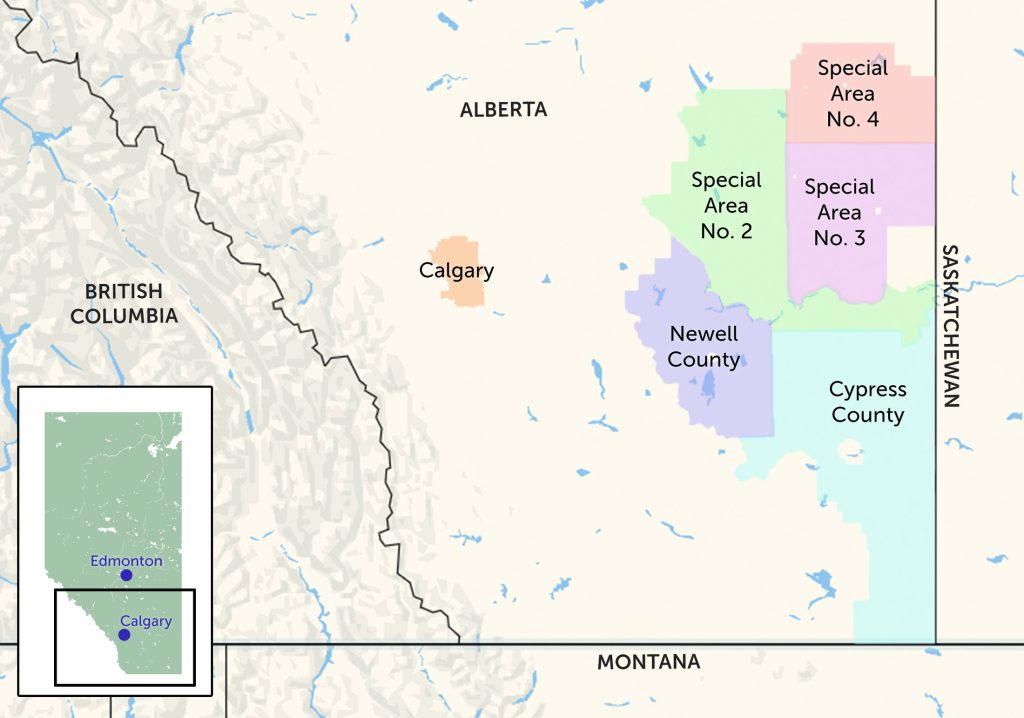
Data from the Land and Property Rights Tribunal, a government body that directs tax dollars to landowners and leaseholders when oil and gas companies don’t pay their rent, found that since 2021, $5 million in taxpayer money has been paid to grazing leaseholders in the region to cover company debts.
The Narwhal found one leaseholder received almost $600,000 in tribunal payments over that period. One grazing association was paid almost $1 million — all taxpayer money.
The government is supposed to recoup those funds from delinquent companies, but previous reporting from The Narwhal shows only a small fraction of tribunal payments, less than one per cent, is ever recovered.
3. For decades, the government has been called on to fix the system
Though successive governments have long known of the multi-million-dollar issue, none have acted to stop it.
An auditor general report in 2015 castigated the province for allowing ranchers to earn undue profit off of public land. “Personal financial benefits are being derived from public assets,” the auditor general wrote.
In the report, the auditor general pointed to examples of ranchers receiving five times more oil and gas compensation than what they paid in rent.
In other jurisdictions, like Saskatchewan, compensation from oil and gas companies does not go to ranchers using public land to graze cattle. It goes to the government.
For decades, critics have called on the government to at least cap the revenue leaseholders can collect in compensation from oil and gas wells on public land.
It has not.
4. Ranching associations have long argued against reforming the system
The issue of oil and gas compensation for grazing leaseholders has been controversial for decades, and includes a failed attempt by the Ralph Klein government to cap payments in the 1990s.
That legislation was never proclaimed into law after intense backlash from ranchers and advocacy organizations. Among them was the Alberta Grazing Leaseholders Association.
Lindsye Murfin, with the Alberta Grazing Leaseholders Association, as well as the Western Stock Grower’s Association, told The Narwhal she takes issue with the idea that leaseholders are unduly benefiting from the current system.
When asked about leases where the density of wells would seem to make it impossible to actually ranch, Murfin said that just makes the job of the leaseholder more challenging and that compensation should be paid.
Compensation from oil and gas companies covers the hassle of oil and gas wells, including everything from chasing cattle after gates are left open, to weed control, loss of access to land as well as pollution and noise.
5. Alberta’s finance minister is among the recipients of taxpayer funds for compensation to his ranching on public land
Among the recipients of six-figure oil and gas compensation payments for grazing on public land is Alberta Finance Minister Nate Horner.
His ranching business receives between $100,000 to $124,000 per year through contracts with oil and gas companies that operate on public land which he leases to graze his cattle, according to estimates by The Narwhal.
And, as The Narwhal reported this week, when those companies fail to pay their bills, taxpayers have been paying the finance minister on the delinquent companies’ behalf.
Data from the Land and Property Rights Tribunal, which pays landowners — and ranchers who lease government land — when companies fail to do so, shows Horner has received $87,246 in compensation from the province since 2021 for wells on his private property and on grazing leases. Of that, $47,200 was paid for sites on his grazing leases — in other words, he’s receiving public money for oil and gas wells on public land.
The payments to Horner are all legal under current Alberta legislation and his press secretary, Marisa Warner, said Horner’s compensation is above board.
“All of Minister Horner’s agricultural business holdings have been put in a blind trust since entering cabinet,” she told The Narwhal.
This investigation was supported with funding from the Data-Driven Reporting Project. The Data-Driven Reporting Project is funded by Arnold Ventures and the Google News Initiative in partnership with Northwestern University | Medill. As per The Narwhal’s editorial independence policy, no foundation or outside organization has editorial input into our stories.
Updated on Apr. 30, 2026, at 10:32 a.m MT: This story has been updated to reflect that Lindsye Murfin is both the general manager of the Western Stock Growers’ Association as well as the manager of the Alberta Grazing Leaseholders Association.