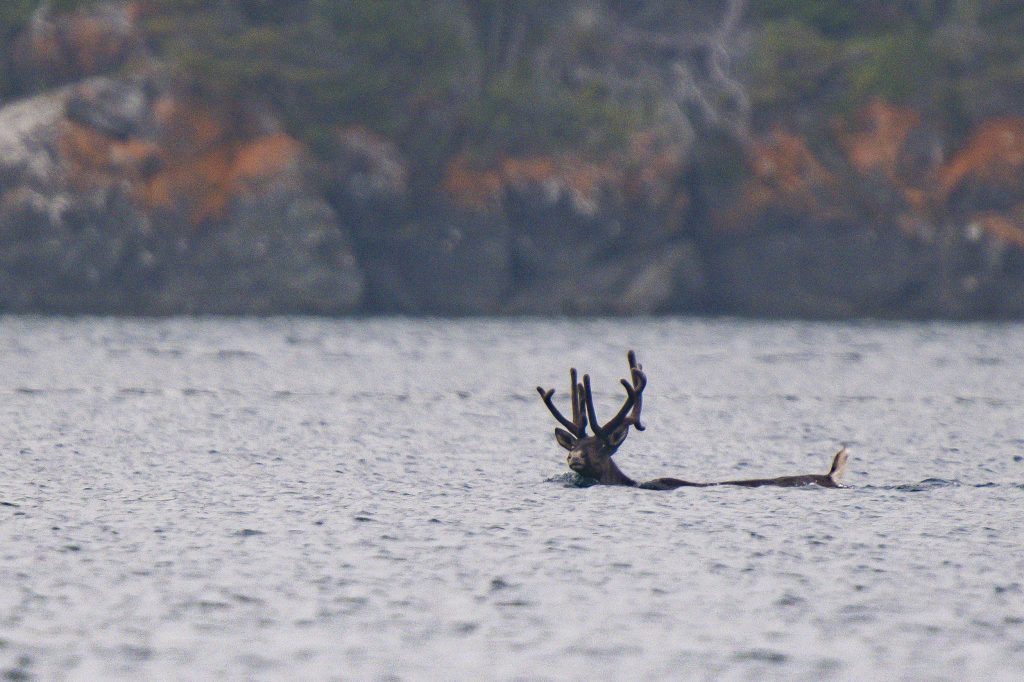
A recent scoop from The Narwhal revealed the Ontario government faced widespread opposition to its plan to weaken protections for at-risk species, such as the caribou.
Photo: Christopher Katsarov Luna / The Narwhal
When governments won’t talk, here’s how we get the story
It’s increasingly difficult to tell well-informed stories across Canada. But a recent Narwhal investigation shows patience and persistence still pay off
Fatima Syed has been reporting on energy issues and more from Mississauga, Ont., since 2019, digging into documents obtained through freedom of information requests and speaking regularly with industry sources.
It has become increasingly difficult to tell well-informed stories across Canada.
In Ontario, where I live, that’s in part because of a weakened freedom of information law — which now allows Premier Doug Ford and his ministers to keep their communications secret. There’s also a widespread, crippling fear of speaking out among political staff and public servants.
But, thankfully, it’s not impossible. Just today, I published an exclusive story about an internal analysis of pushback to the Ford government’s plan to weaken endangered species protections.
Back in May, I asked you to get in touch if you could help me understand the inner workings of big Ontario environmental policy changes (we’ve got a huge list going).
“I’m still working out how much I’m comfortable sharing and in what form, but I wanted to make contact and learn more about how you work with sources,” read a part of an email I got in response to my callout.
So I had several off-the-record calls with this source and another, whose names The Narwhal is keeping confidential to protect them from repercussions. I explained exactly what would happen with any information they gave me: everything from who would view it (just my editor and I) to how we would make sense of it for our readers in a published story. In the span of two months, I spoke to them six times. I would have talked to them as many times as they needed to feel comfortable. And if they weren’t comfortable, I wouldn’t have published the story.
That’s the most important (and arguably the least glamorous) part of being a journalist: building trust with sources.
The resulting piece, which relies on internal ministry analysis, shows the Ford government weakened endangered species laws despite receiving more than 17,000 comments about it — 98.98 per cent of which were unsupportive of the change. The analysis confirmed what we’d been hearing for a long time: there was widespread “confusion” and “frustration” about why this change would be made, who was making it and which species were no longer being protected.
And I’ll note, once again, that government officials did not respond to questions from me that would have provided deeper insight into how all of this went down. They rarely do.
Speaking of internal government documents and confidential sources: this week, freelance reporters Matt Simmons and Wil Crisp (who runs the U.K.-based publication Point Source) published their latest investigation into LNG Canada’s massive liquefied natural gas export facility in Kitimat, B.C. The story reveals that for years, LNG Canada pledged to operate “without routine flaring,” (burning excess methane gas) in documents submitted to B.C.’s energy regulator. But before the facility launched, those commitments disappeared — and then the flaring started.
It’s an eye-opening story — one made more real because it features a Kitimat local speaking candidly about what he allegedly saw on the job when the facility was being constructed (LNG Canada didn’t respond to questions about it). Fearing backlash in a small community where the industry is a major employer, he asked to keep his name private, too.
Journalism isn’t done in a vacuum; it relies on an ecosystem made up of both you and us. That includes our members and donors who support our journalism — but also the sources who come forward, balancing fear with faith that journalism can deliver truth and accountability.
Thank you to the sources who strengthen this kind of investigative reporting every day for all the reporters at The Narwhal. You know who you are.
For anyone else who has information to share: get in touch. We’ll take it slow.
Take care and trust the process,
Fatima Syed
Ontario reporter
P.S. If you’re in the mood for following more investigative reporting, Ontario and climate investigations reporter Carl Meyer appeared on CBC’s Front Burner podcast today, talking about his big story detailing two decades of Canadian political promises on the controversial carbon capture technology.
Across B.C., people are celebrating the August long weekend by exploring our province’s famously beautiful parks, campsites and hiking trails. In Carmanah Walbran Park, which BC Parks calls “one of the most remarkable wild places on Vancouver Island,” trails wend through ancient groves of Sitka spruce trees, some of the tallest in the world. Sound appealing? Here’s the catch: it’s been almost totally inaccessible for months.
Many of B.C.’s outdoor recreation areas are accessed through resource roads, which means getting there is often contingent on the decisions of a logging or mining company. As freelance journalist Cameron Fenton reported this week, the two main roads into Carmanah Walbran Park have been blocked for months: one by landslides, the other by metal gates. According to the province, the same company — Tsawak-qin Forestry — is responsible for both the gates and clearing the landslides.
Cameron explored the fallout and complexities of that arrangement in his story this week. Check it out!
— Michelle Cyca, bureau chief, conservation and fellowships
‘When the lights come on at 2 a.m. and you’re bearly keeping it together.’ — Damien
And the winner is …
Congrats to our caption contest winner, Damien, a longtime Narwhal reader (and member!). Stay tuned for your Narwhal swag pack!
We were so chuffed by the strong enthusiasm: more than 200 of you sent in captions that brought some good chuckles to our Caption Committee.
There were plenty of fun captions, so we thought we’d also share a few of our runner-up selections.
I shouldn’t have had that last salmon. — Jeff
Fermented berries … What was it Mom always said about fermented berries? — Don
Solo starlight performance “Grizzly Double Bass” Mozart’s Requiem in D Minor. — Veronica
Thanks for participating — and watch this space for more fun photo plans!
This week in The Narwhal
For residents of Nain, permafrost thaw is shifting the ground beneath their feet By Frey Blake-Pijogge
In the rapidly warming Arctic, permafrost thaw is transforming the landscape in unpredictable and challenging ways.
Rebuilding a northern Ontario forest with climate change in mind By Leah Borts-Kuperman
Samuel de Champlain Provincial Park was nearly leveled in a 2025 storm. Now thousands of new trees have been planted to build a new forest for the future.
Reporters at The Narwhal making sure you’re comfortable sharing a tip for the greater public good. Know someone who should leak us information so we can hold power to account? Forward this email to them so they can subscribe to our newsletter!