



 16 min. read
Norm Lamothe soiled his undies twice. The second time, he was much happier with the result.
Soiled them — in a manner of speaking that is. After two months, buried in the ground, the cotton fabric of a once-pristine set of white men’s briefs had largely disappeared, and mostly just the elastic waistband remained. It was a sign changes in farming techniques were paying off.
Lamothe runs the family-owned Woodleigh Farms outside Peterborough, Ont. Far from the realm of bodily functions, the brief burial experiment — dubbed a “Soil Your Undies” test — is popular in farm country. It’s a simple, albeit cheekily named, way of measuring just how active the tiny organisms like bacteria and fungi are in soil — and by extension, how healthy the soil is. Just bury a plain cotton undergarment, wait a couple months and dig it back up. The organisms chew up the natural cotton fabric, so more microbial activity means a more degraded undergarment. Dig up a fully intact set of tighty-whiteys, and you know the soil in that area needs some TLC.
Lamothe first diagnosed his poor soil by doing a Soil Your Undies test in 2015.
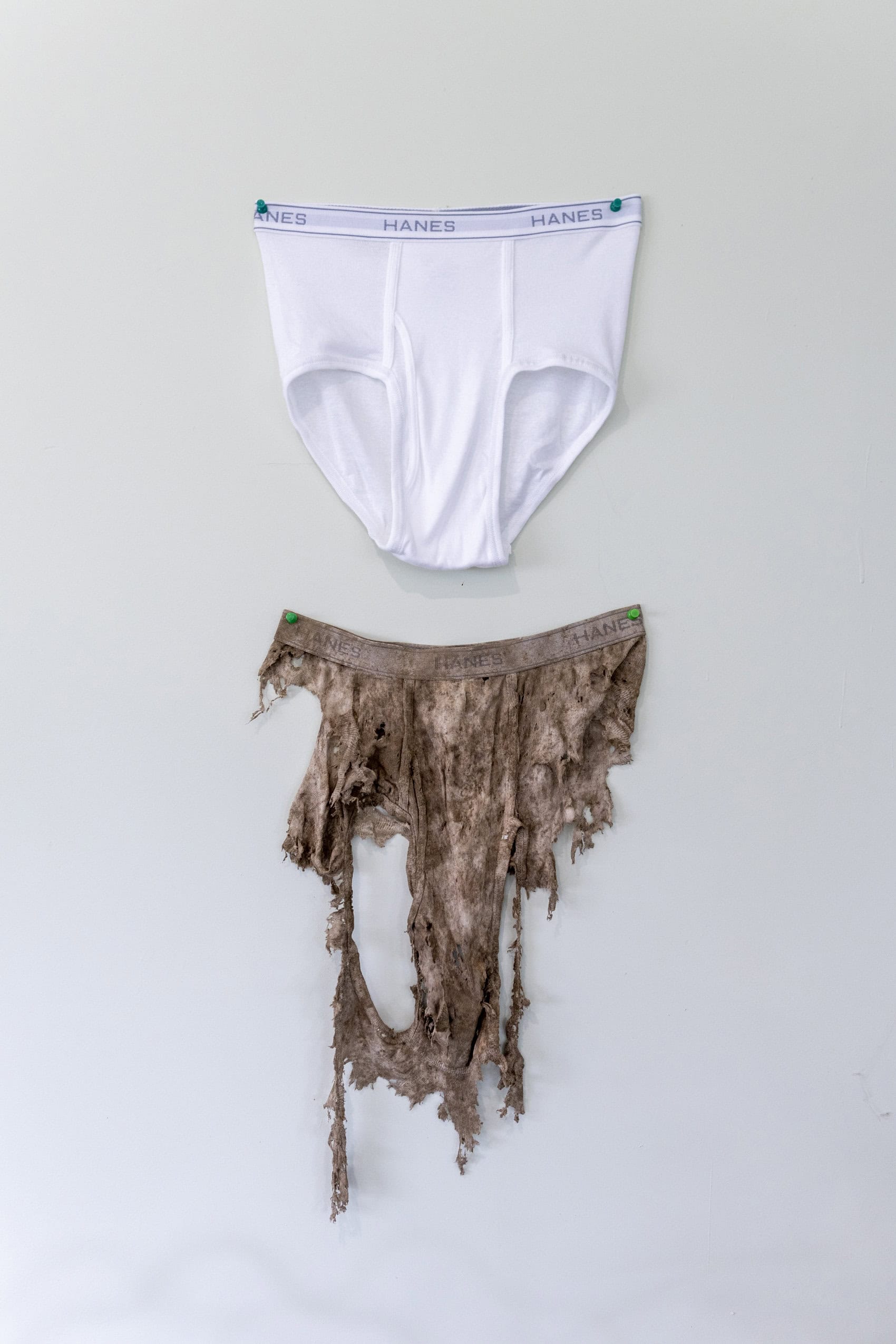
“That’s really what started my journey down the soil health path,” Lamothe says, standing in front of one full pair of Hanes and the tattered remains of another, lovingly displayed on his office wall. “Much to our chagrin, they were completely intact.”
It was a self-described “wake-up call” to improve his farm’s practices for the climate, biodiversity and his own business resilience.
The environmental impact of farming is an extraordinarily complicated subject, and the footprint agriculture leaves is suitably quite varied. In terms of emissions, agriculture accounts for about eight per cent of our national total, or 10 per cent if you include emissions from energy use on farms. The culprits are many: nitrous oxide, a greenhouse gas, can escape to the atmosphere from soil. Cattle, sheep and other ruminant livestock create methane — another greenhouse gas — through their digestive processes and release it into the atmosphere, mostly by way of belching. And carbon dioxide is released by decaying plant matter.
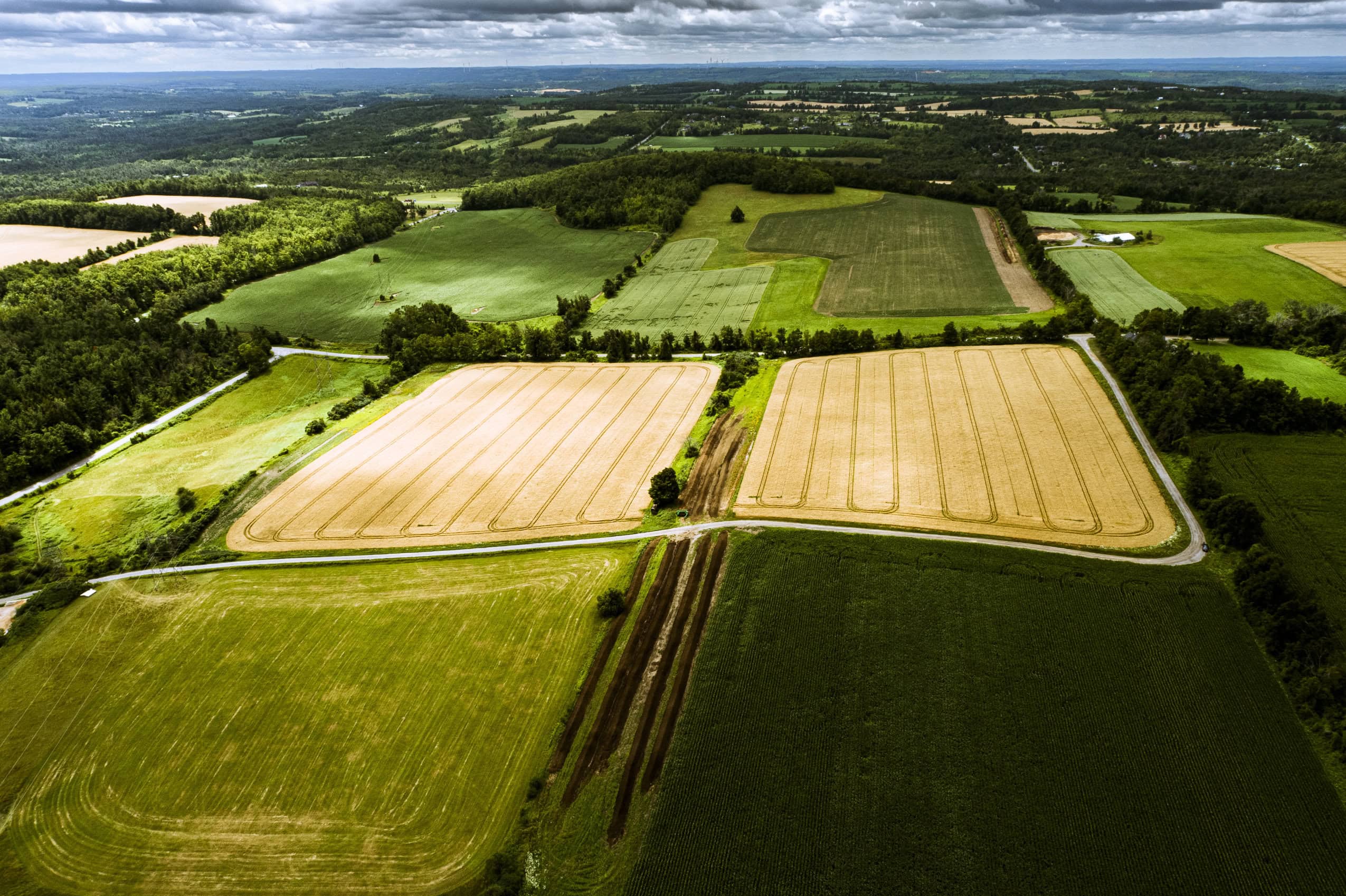
Another major source of emissions is fossil fuels. Diesel, made from crude oil, is the main fuel source for the vast majority of tractors and other farm equipment, and fossil fuels — used on and off farms — are the single greatest contributor to climate change globally.
On the flip side, some farming methods can also be a real boon for ecology. Grazing cattle on native grasslands or in pastures with a diverse array of plants (called forage crops in farming circles) can benefit soil health and bird communities, while sequestering enormous amounts of carbon. On the other hand, regular ploughing and excessive fertilizer use can be harmful to soil and waterways. When it comes to environmental impact, the reality on the ground often necessitates doing things that are both better and worse for the environment.
Lamothe isn’t unique in his drive to find climate solutions on his farm. He joined peer groups like the Ontario Soil Network and Farmers for Climate Solutions for guidance, and to support others looking to make positive change. There are farmers and ranchers across Canada — and across the globe — doing this work. I’ve had the good fortune to meet many of them, as a farmer myself, as well as a journalist. They are doing their best to produce the food and commodities we all rely on, in a way that leaves the land in a better place. Some are motivated by water quality and biodiversity, others by profitability and resiliency in the face of extreme weather conditions like heat waves, floods and drought. Some have their eye on trade disruptions and other business challenges forcing them to rethink the status quo.
Each has a compelling story. And not every one involves undies.
Energy
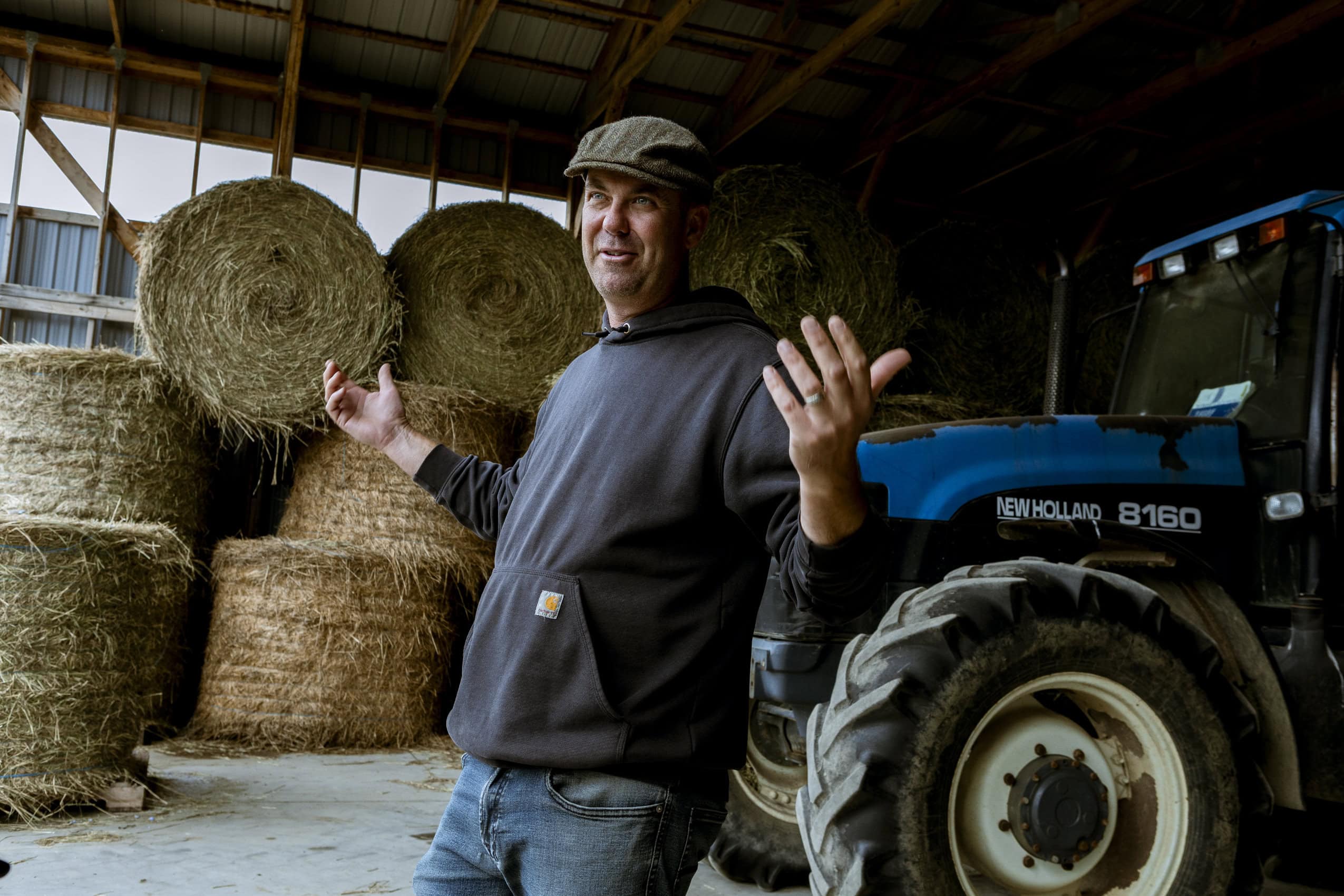
Lamothe’s farmyard sits at the end of a meandering tree-flanked driveway, eventually opening to buildings set partway up a gentle slope. The landscape here is a mix of rolling pasture, cropland and woodland — all things a flat-lander like myself can appreciate; from the centre of the county where my family farms in southwestern Ontario, it’s so flat you can see the skyscrapers of metropolitan Detroit, about 33 kilometres away as the crow flies, on a clear day. From Lamothe’s driveway, I can’t even see the extent of his property.
Photographer Bryan Dickie and I arrive to find Lamothe in the greenhouse near a cluster of outbuildings and then a pasture where a flock of sheep graze at the far end. Past the outbuildings, we can see the beginnings of his crop fields.
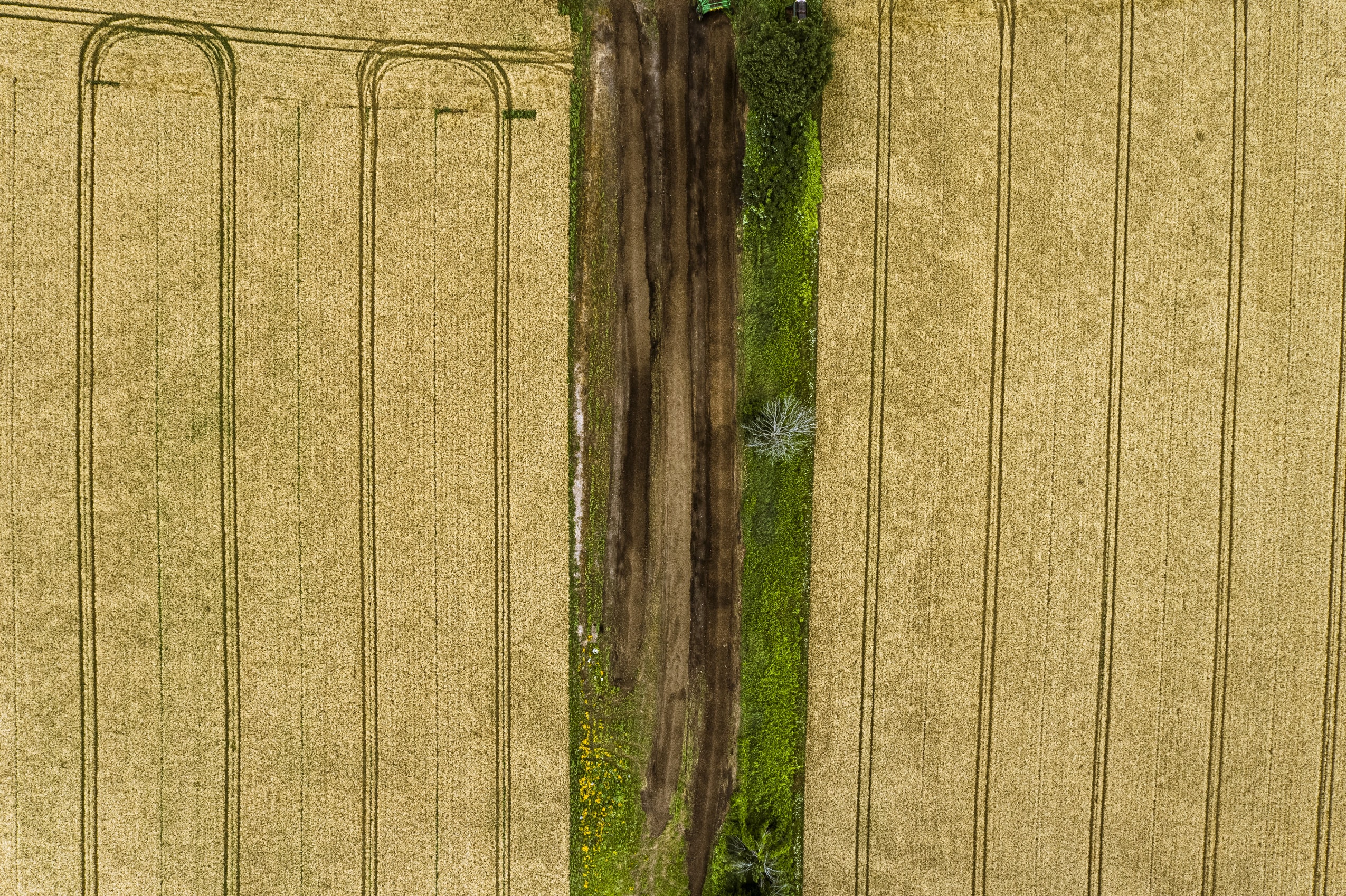
As is typical on farms, there is a little bit of everything everywhere at Woodleigh. Not messy, but clearly busy.
Lamothe is rinsing a pile of plastic flower pots used in the greenhouse — a structure he calls a “passive solar” facility. It’s built with a sloped roof to capture ambient heat at the peak. That heat gets pulled down into the ground where it’s stored in ducts during the hottest parts of the day. That heat can then be recovered in the cooler months, and at night when the temperature drops, keeping the greenhouse above freezing, even when it is -25 C outside. No additional heating is needed.
Reducing fossil fuel use, as it turns out, is just one of Lamothe’s many proclivities. Norm assures me he “absolutely loves” his fully electric pickup truck, not least because it saves him about $6,500 a year in fuel.
Another is soil health, ever since that fateful and telling first untarnished pair of Hanes.
Soil
The two most common field crops in Ontario are seed corn — the kind used for animal feed, ethanol and myriad other purposes — and soybeans, both for human and livestock consumption. Winter wheat, which is planted in autumn, typically into recently harvested soybean fields, takes third place. A typical yearly crop rotation for farmers in much of Ontario will involve at least a couple of these. What farmers plant ultimately comes down to economics. Corn and soybeans tend to pay better than winter grains, meaning the latter can sometimes fall out of favour.
Soil health, however, thrives on diversity.
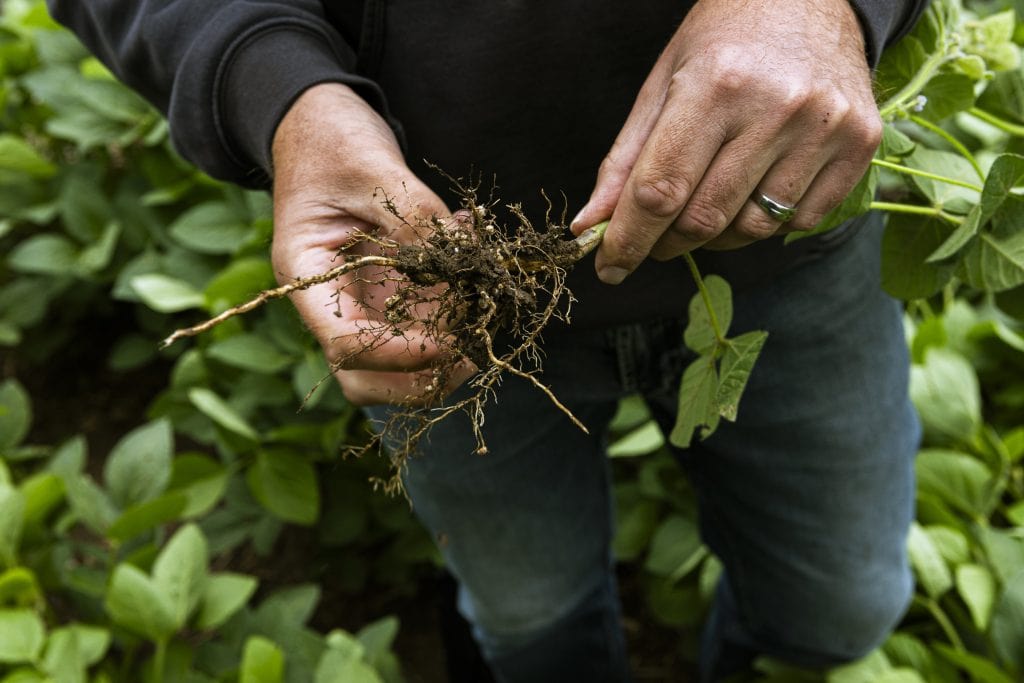
Keeping different crops in the rotation adds different root structures, helping to break up hard soil to create better water retention and provide a more biodiverse environment that, in turn, supports a wider (read: healthier) variety of soil organisms. Long-term research trials from the University of Guelph have shown more diversity helps build soil health, as well as crop yields.
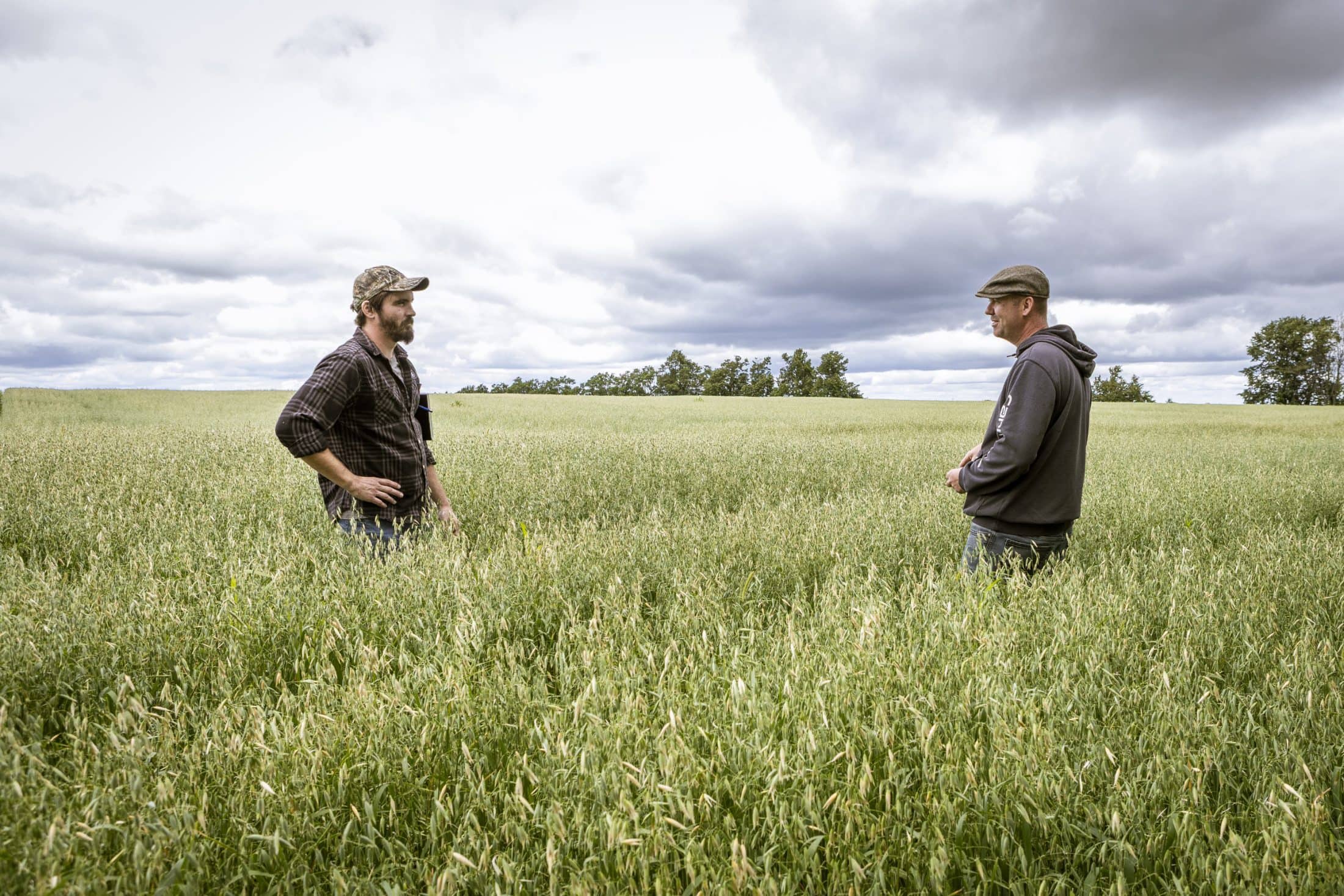
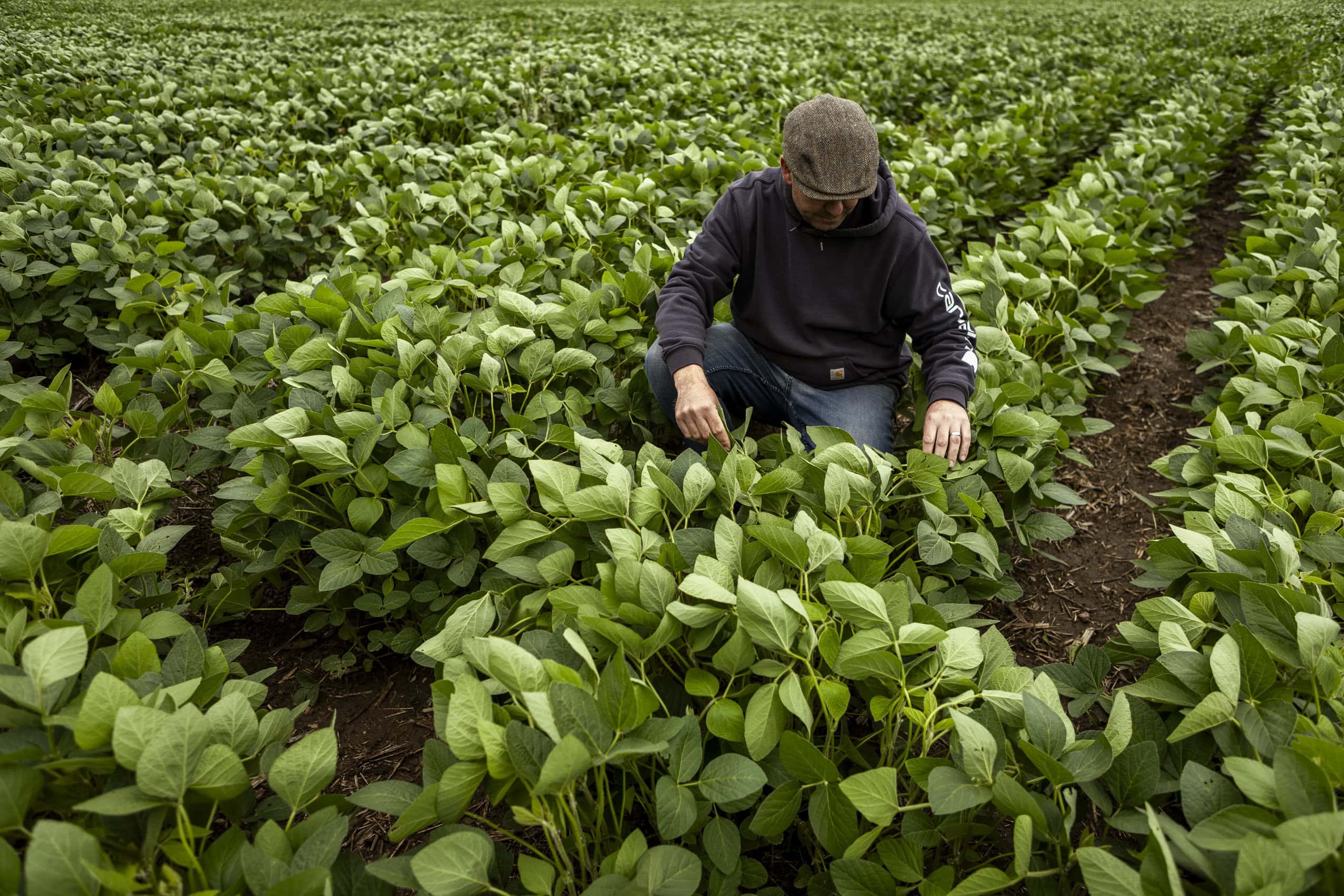
Lamothe’s crop rotation was once dominated by corn and soybeans. Adding wheat and oats was one of the first things he did after failing that undies test. When I visit in July, Lamothe’s fields are flush with corn, soybeans and oats. He’ll sow winter wheat on some of his soybean acres later in the year. On areas of the farm that have historically been less productive, he planted trees and native grasses. Cover crops — planted to improve soil, rather than for harvest and sale — will go on his winter wheat fields after they’re harvested.
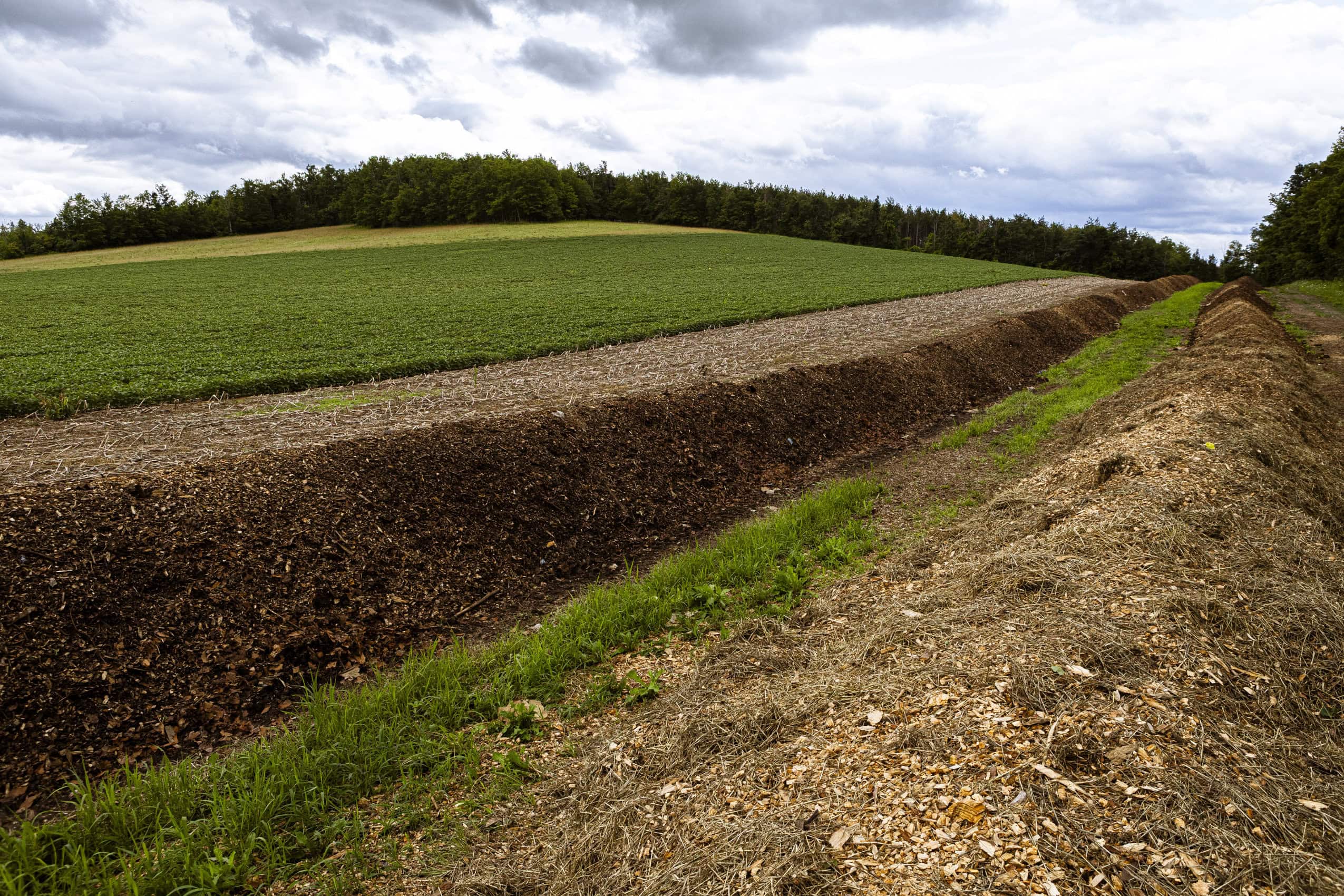
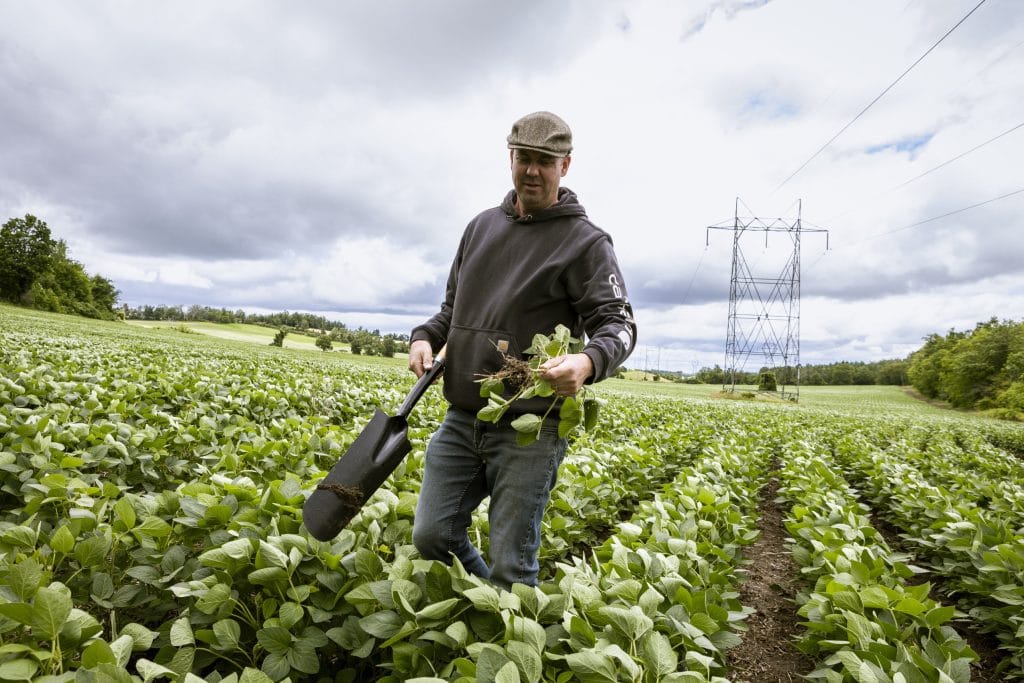
He also started growing hay on areas prone to erosion, so there would always be roots present to anchor the soil.
Then came the sheep.
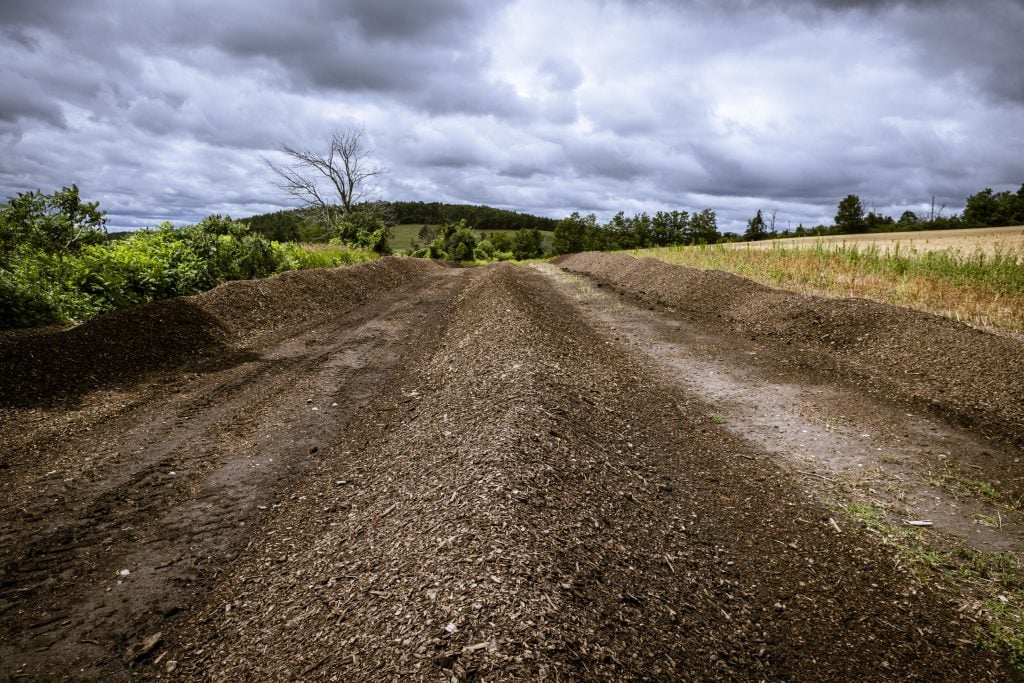
In 2022, Lamothe brought in the flock to graze the hay. The manure from the sheep flock also reintroduces nutrients to the fields — alongside compost Lamothe makes from wood chips, crop residue and other organic waste.
Ten years after burying his first pair of britches, Lamothe tried soiling his undies again. The results were much better.
“Whether the change came from our practices or differing weather conditions is up for debate, but certainly we saw we had microbial activity,” he says, adding the physical remains, framed in his office, “make a nice conversation piece with people in here wondering why there is underwear on the wall.”
Carbon
A common challenge for farmers — myself included — is ensuring crops get the nutrients they need at the right time. Sometimes there might not be enough of a given nutrient in the soil, like phosphorus or boron. In other cases, the amount is fine, but they timing is off.
Fertilizers help, which brings us to another outbuilding on Lamothe’s farm. This one is rich with the smell of barbecue smoke.
It was the main farm workshop in a past life, a large steel shed that’s more steampunk than down-in-the-country. Conveyor belts and hay bale elevators connect two large trailers with steel sifters, feeding into a cylindrical dryer the size of a bus. It’s all part of Lamothe’s latest venture: a biochar production system.
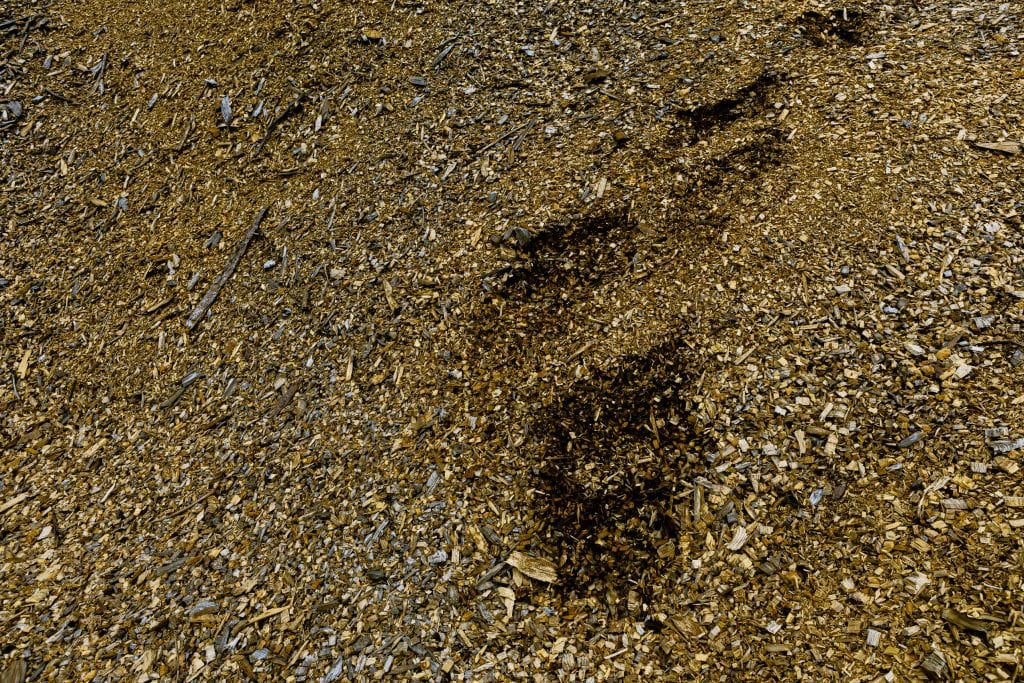
Biochar is a black, charcoal-like substance created by heating organic material, like wood, in an oxygen-free environment (known as pyrolysis, if you’re technically inclined). The process starts with wood chips from the farm’s forestry business — as I said, there’s a little bit of everything here — which are loaded from old trailers, previously used for hauling potatoes, onto the conveyors and sifters, where they’re sorted by size. Chips that are too big or small are removed for composting, while what remains is put through the dryer, then into a burner.
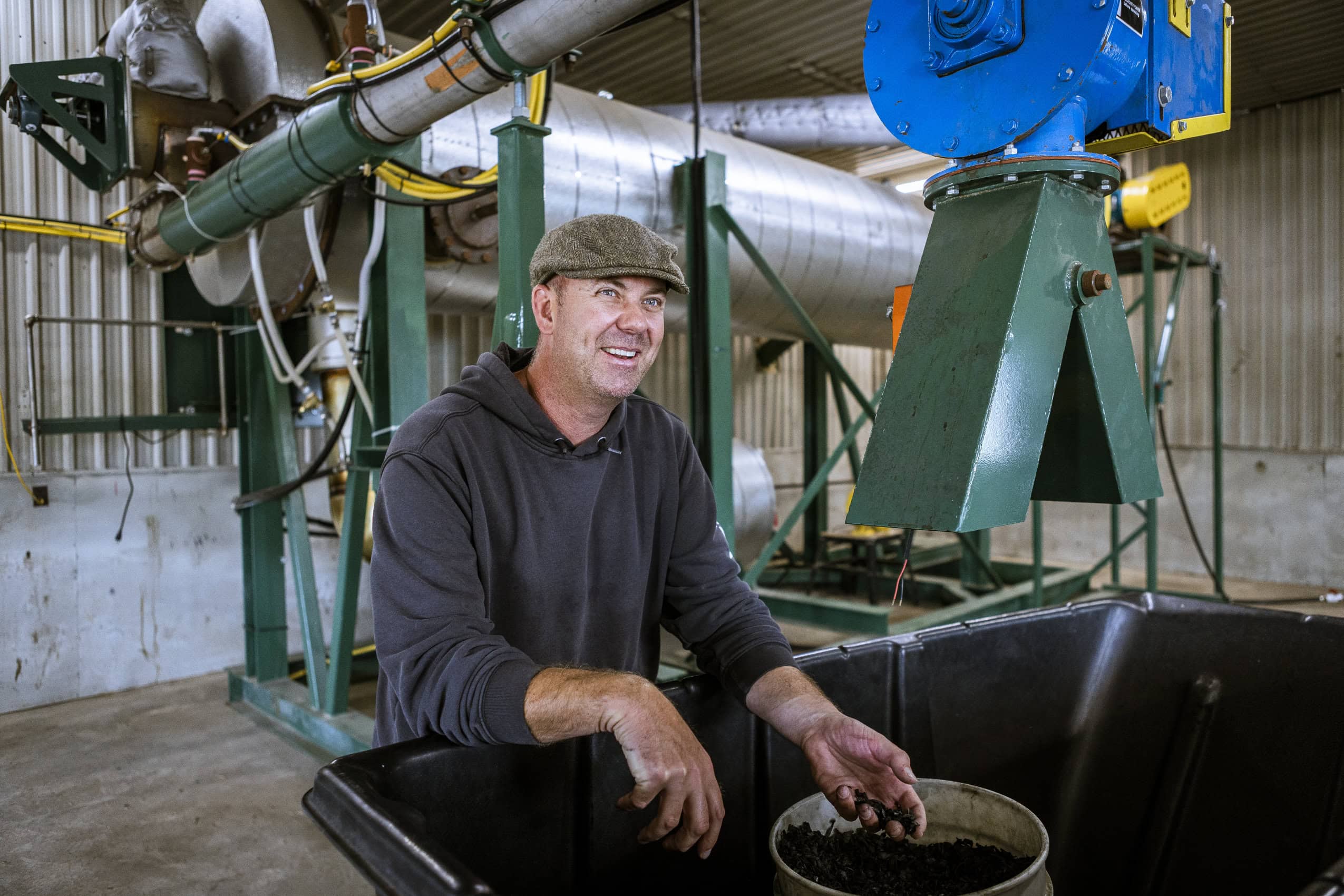
“Ecologically speaking, this plant is very efficient because we’re using the energy it’s creating to run the whole system,” Lamothe says. And even the acidic byproduct of this process, known as “wood vinegar” — a product similar to the liquid smoke you might use in barbecue sauce — has valuable properties for soil. It helps with plant growth and acts as a natural pesticide.
Biochar is full of carbon, which when added to soil, becomes soil organic carbon — an indicator of good soil health. It helps to regulate nutrients in the soil, microbial activity and moisture. Combined with compost and manure, that can translate to more nutrients slowly released to crops over a long period.
“We’re taking all that carbon that would otherwise go up in the atmosphere and sequestering it in these particles that are going into the soil forever,” Lamothe says. On an annual basis, running at full capacity, the system will sequester 1,000 tonnes of carbon dioxide a year, making approximately 500 tonnes of biochar.
“That’s net — after all the trucking, the forestry activities, moving of materials,” Lamothe says. “That’s pretty remarkable, and it says something about what could be done at scale for the environment in this country.”
Biodiversity
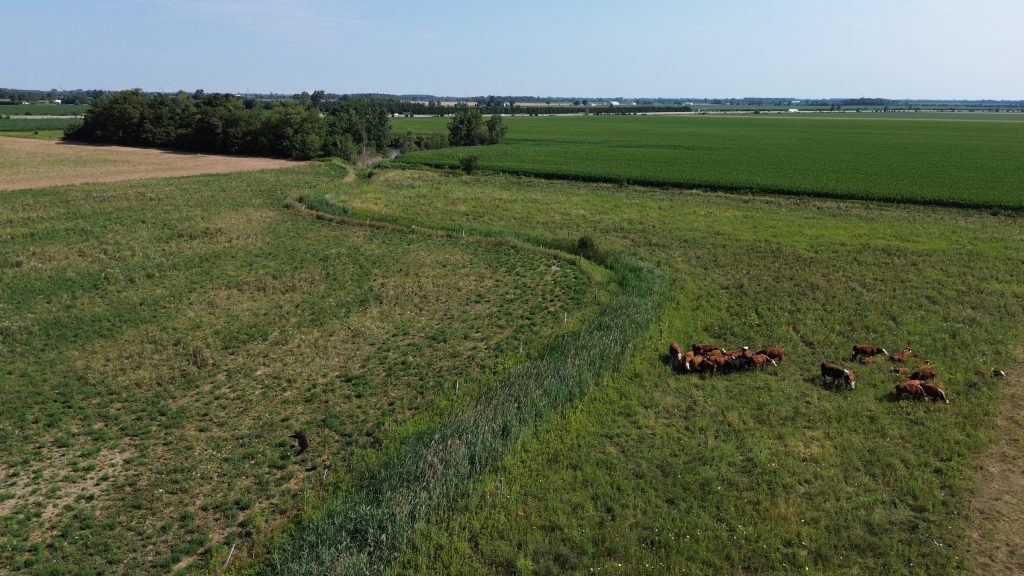
On the other side of the urban hive that is the Greater Toronto Area, and closer to my own family’s farm, I find myself looking at a beautiful herd of Hereford cattle. They’re grazing, rather lazily, in what to the untrained eye might look like a pasture overrun by weeds.
It’s actually a 19-acre tallgrass prairie, established by farmer Blake Vince in 2018. Here, outside Chatham, Ont., we’re in what’s known as the Carolinian forest zone that covers the southernmost part of Ontario, and peters out just north of Toronto. Vince is cultivating grasses like big bluestem, flowers like black-eyed Susan, prairie dock and much more. My favourite might be the compass plant, with its weird leathery leaves that look almost tropical. The prairie has become Vince’s self-described “happy place,” and is the result of years spent trying to improve his farm’s ecology.
Vince planted the tallgrass prairie as part of a federal government initiative to bring at-risk species back to agricultural lands. Insects, birds — and the birders that come with them — have arrived from near and far. One memorable birding visitor, Boris from Bulgaria, encouraged Vince to sell coffee at the roadside. “He said ‘Charge $10 a cup. People will pay. You’ll make money,’ ” Vince says with a chuckle. As of this writing, he’s opted to not pursue that particular revenue stream.
Most recently, the cattle brought the prairie pasture to another level.
Despite their reputation as a source of methane — a potent greenhouse gas that breaks down into carbon dioxide over about a decade — Vince says livestock can complete the proverbial circle on farms. Among rows of crops and cover crops, or on pastures, cattle add nutrients to the soil (via manure) and encourage nutrient cycling as they eat the plants, which regrow, pulling more carbon into the soil. He introduced the small herd of Herefords to his fields, where they graze in different areas on a rotating basis, including the prairie.
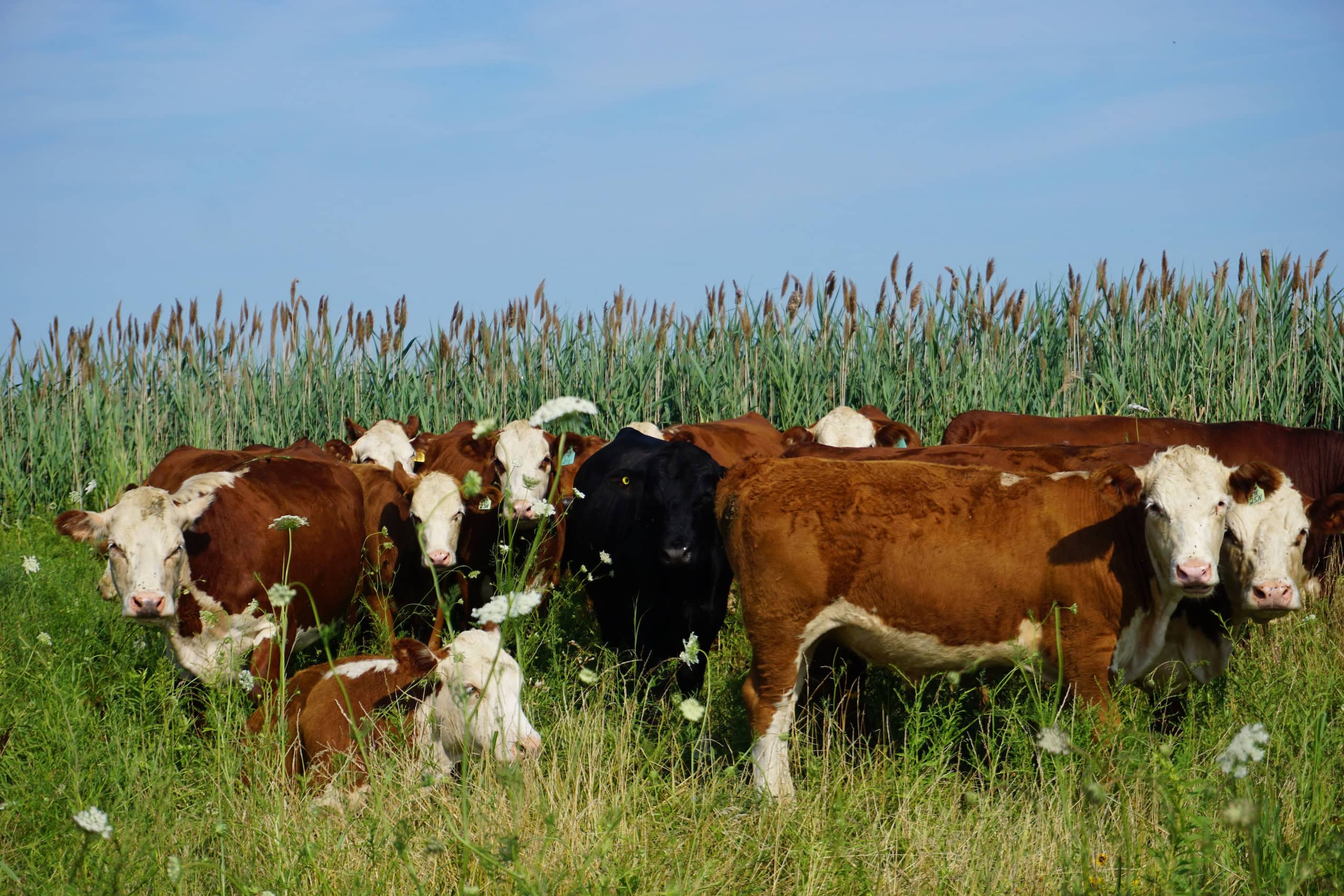
The side benefit was yet more insects — including dung beetles, highly valued for their ability to transfer nutrients from manure into the soil — and more birds to eat those insects.
He encourages me to “just listen” as I go by the prairie. The chirping, buzzing and other sounds of life are distinctly loud compared to the adjacent corn and soybean fields, and get louder the closer you get.
“I wanted to do something for nature,” Vince says. “And realized the only person stopping me was the guy looking back in the mirror.”
Water
Like myself, Vince farms a landscape that is very flat, relatively void of trees and intersected everywhere by roads and drainage infrastructure like culverts. In 2011, when nearby Lake Erie endured a particularly severe summer of algae blooms and attention focused on the farms sprawling across that flat land, Vince started thinking more about the impact his own farm had on the surrounding environment.
Generally speaking, algae are organisms found in water that can rapidly expand into large blooms if they encounter excess nutrients like nitrogen and phosphorus — two elements used extensively on farms. In turn, large algae blooms can create toxins and low-oxygen “dead zones” in the water. Lake Erie is particularly prone to algae blooms because of its warm, shallow waters that encourage growth.
Excess nutrients come from many sources, including municipal and industrial wastewater. On the farm, nutrient runoff can spike when fields are hit with heavy rain shortly after fertilizer is applied. Because nutrients bind to soil particles, soil loss from wind or water erosion can also contribute to algae blooms. The nutrient losses from individual farms might be small, but because agriculture dominates the landscape here, repeated small losses add up.
While he can’t control municipal water systems or the weather, Vince recognized he could exert more control over how much water and nutrients his soil was capable of holding. In 2013, he enrolled in an agricultural scholarship program — the same one I completed earlier this year in biodiversity and climate solutions — to investigate methods of keeping soil, and soil nutrients, in the field where they belong.
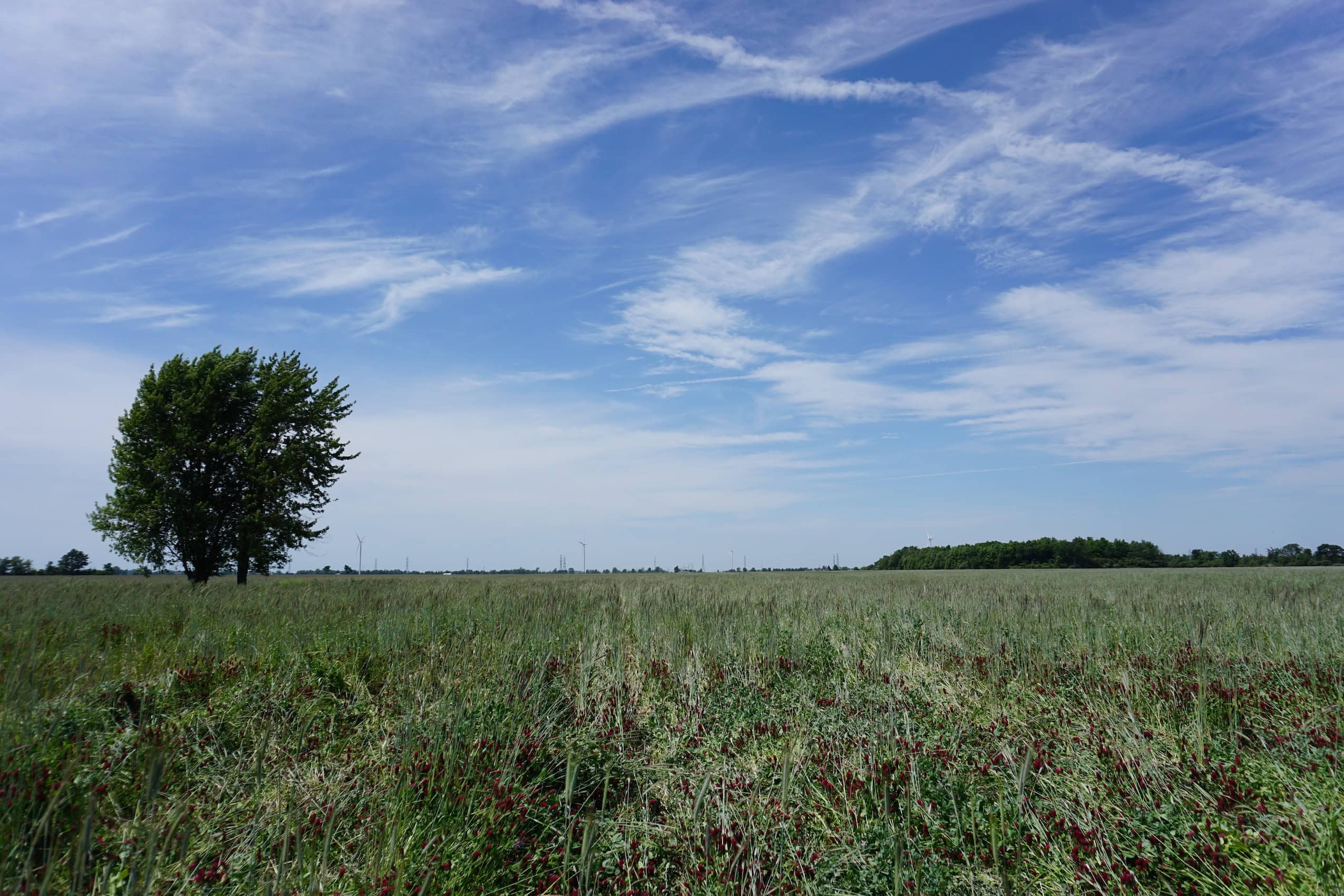
By the end of the two-year program, Vince had adopted a new mantra: “roots, not iron.” It means using plant roots to manage the soil, rather than metal tillage equipment. As Lamothe saw, living roots improve the soil’s ability to hold water like a sponge, whereas a hard surface lets it run off. All of it helps keep soil and soil nutrients in the field, and out of local waterways.
And these days, with up to 18 different cover crops potentially growing in his fields during parts of the year, there is almost never bare soil left to potentially wash or blow away.
As the soil holds the water better, it helps insulate crops from drier conditions. That’s key, as more severe swings in weather conditions are being seen by farmers as the climate changes. With so many nutrients inherent and available in his soils, Vince’s fertilizer bill is also substantially lower. He estimates saving “a minimum of 10 per cent” each year for nitrogen fertilizer, which “is a huge cost savings” for nitrogen-hungry crops like corn and wheat. Nutrients can still leave his fields after a heavy rain, but data he collected in partnership with his local conservation authority indicate he’s losing less overall.
And remember that Soil Your Undies test that kicked off Lamothe’s journey into underground health? Vince is one of the originators. He buried his first pair of briefs in 2015, and helped kick off a trend that, just this year, won an Ig Nobel Prize — a parody of the prestigious awards — for soil science.
“Soil is a collection of living, breathing organisms,” Vince says. “We need to learn to appreciate and respect them.”
Economics and the environment
Across Canada, farms operate on slim margins. Land and equipment are horrendously expensive, and for most, the price they earn for their crops and livestock is beyond their control.
I like to say farming, just the biology of farming, is inherently complex. Then add to that the complexity of weather — with climate change bringing on even more variability, and the occasional introduction of new crop and livestock diseases — along with economics, politics, family and social dynamics, even what it takes to keep machinery running. Most of the time, farmers and ranchers want to do whatever they can to reduce the number and size of variables they face. Trying something new more often adds uncertainty, rather than reducing it.
I know this firsthand. On our farm, for example, we have been trying to introduce more cover crops after we harvest soybeans. The first year, our cover crop of oats hardly grew because we planted it too late. Another year, the spring was so wet we couldn’t drive machinery into the field to knock back the cereal rye cover crop, meaning it was chest-high and a pain to deal with come spring planting.
Still, we want to try new things. A lot of farmers do.
There’s the Bernard family, from Prince Edward Island, who are rebuilding their soils and local biodiversity by incorporating cattle into their organic cereal crop business. In Manitoba, the Nerbas family have adopted a grazing system that maximizes the time their pastures have to regrow, supporting their farm’s biodiversity and carbon sequestration potential. Sean Smith, another Manitoban, has partnered with local conservation groups to turn a low-lying and unprofitable part of his family’s farm into a naturalized wetland.
I could go on.
Lamothe and Vince are the first to tell you they don’t have everything figured out — and likely never will. Investing in ecology on the farm can be complicated, frustrating and require constant troubleshooting. It took time for them to get where they are, and whatever they try next will necessitate the same learning process. But it can be fun, and rewarding as well.
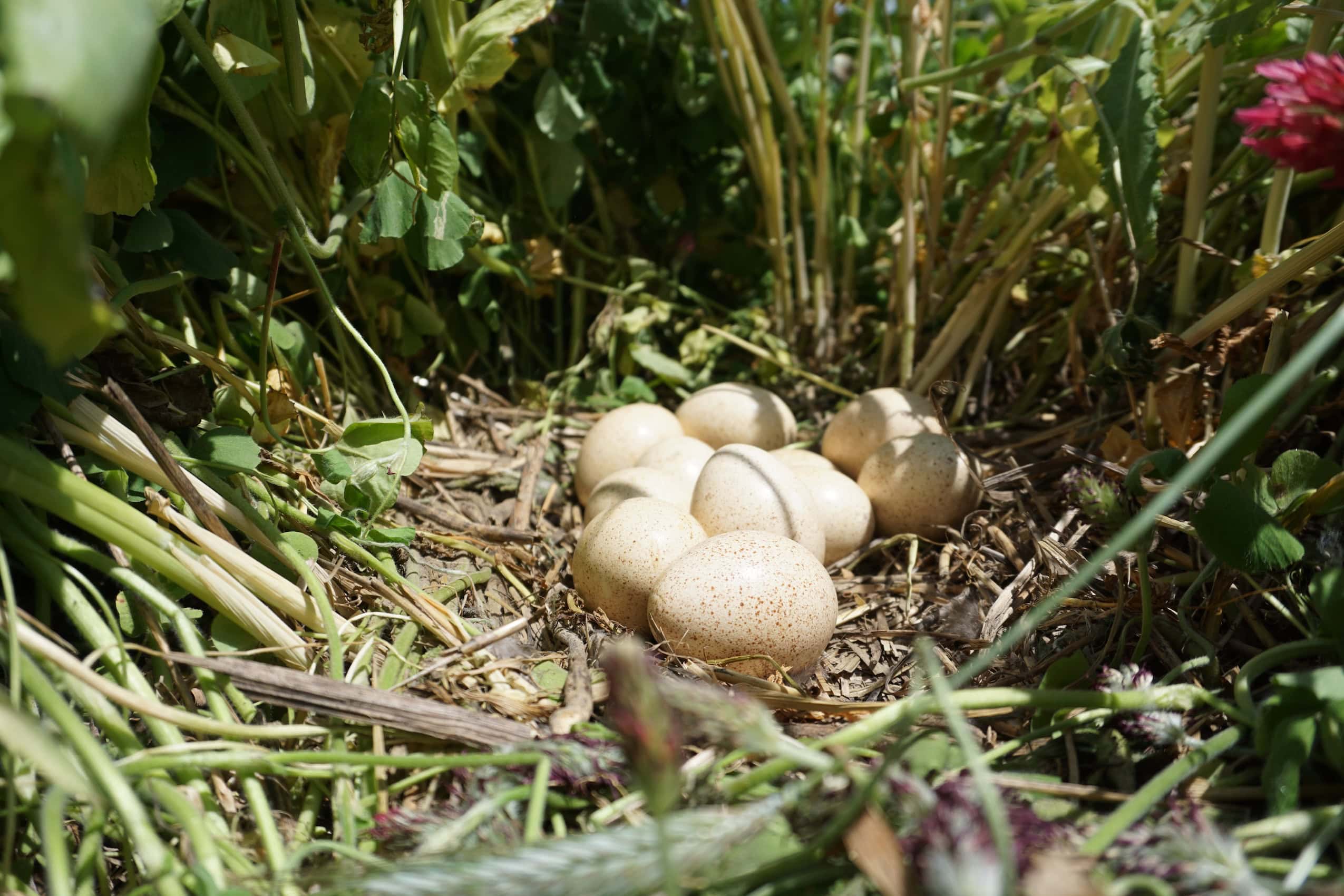
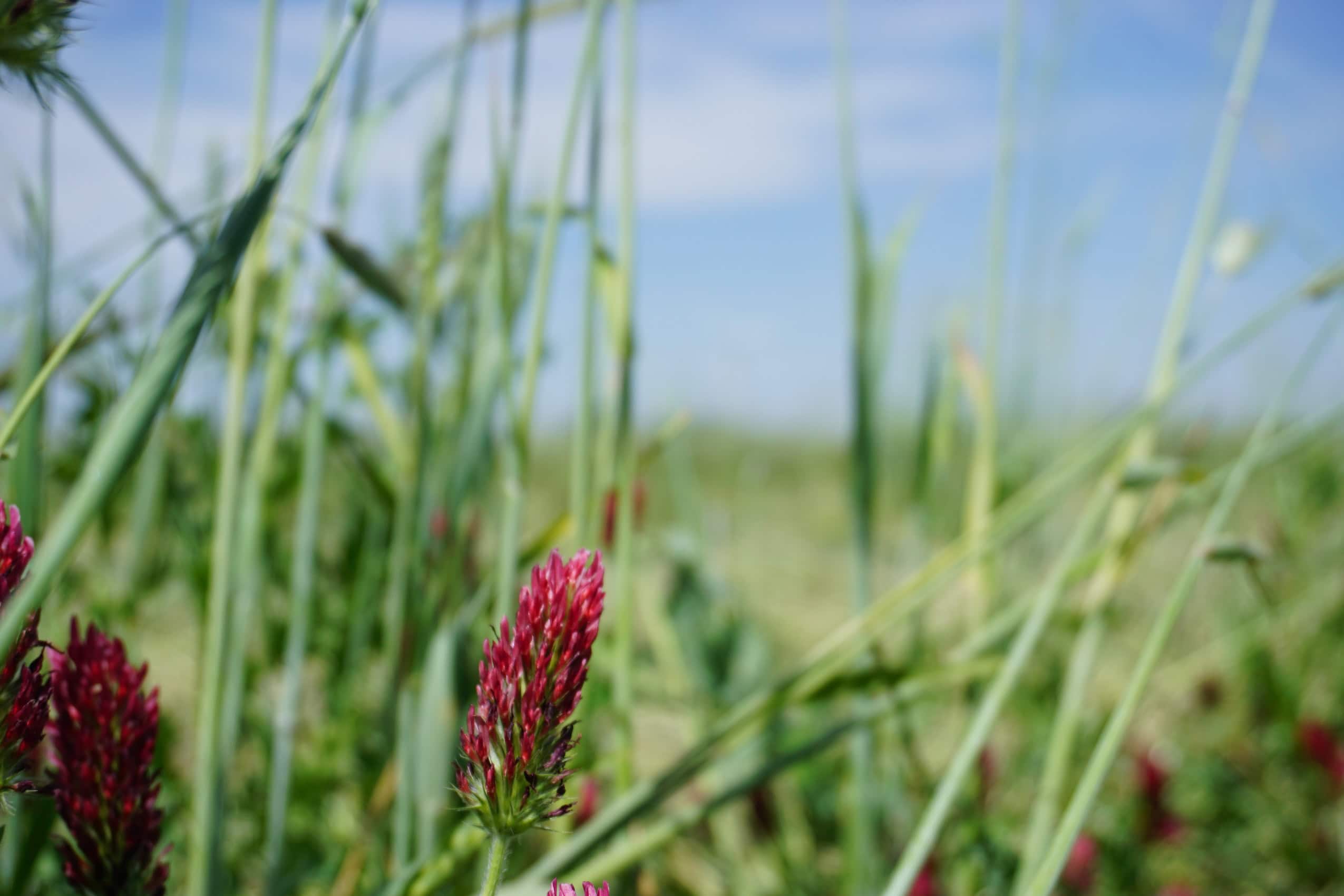
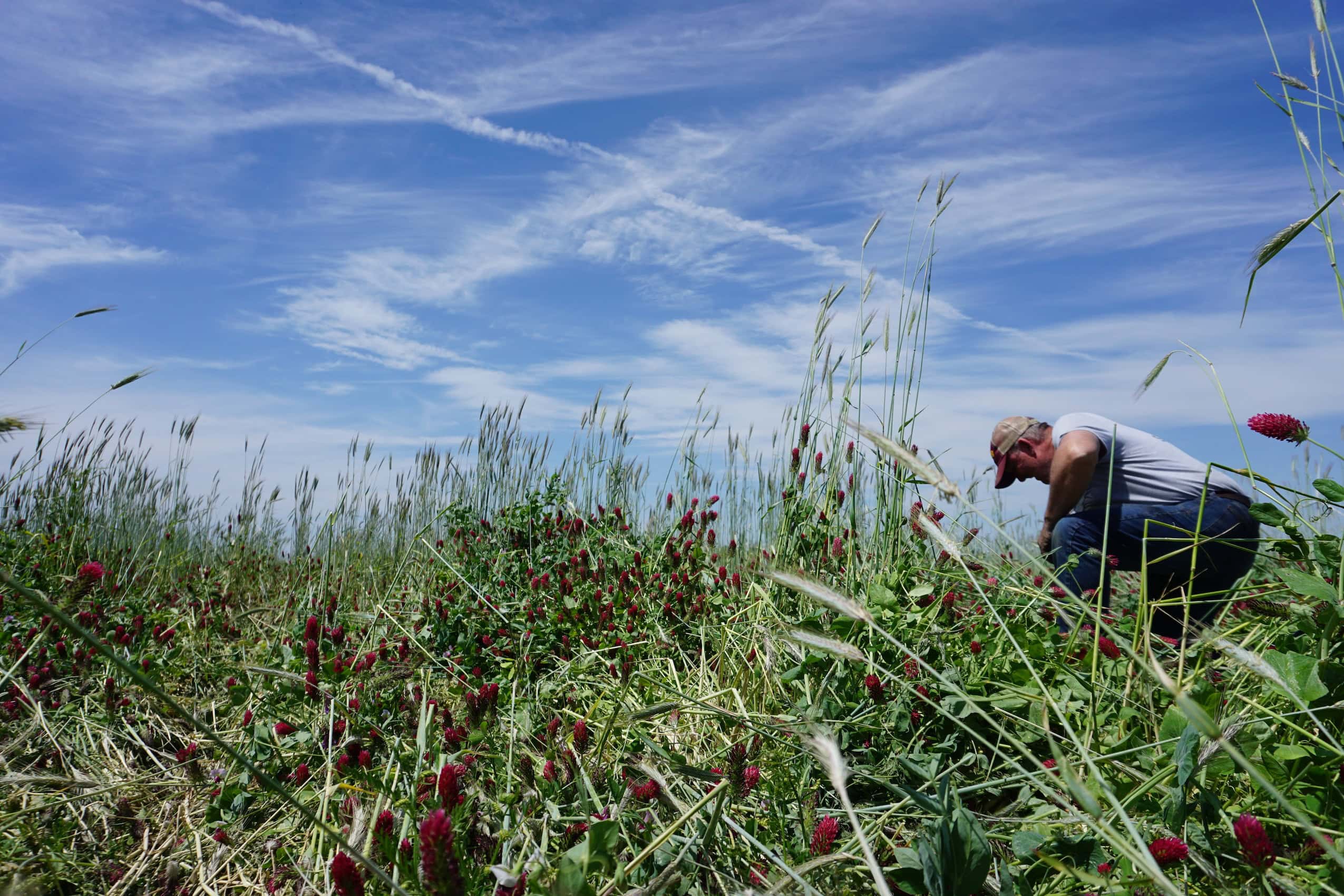
Back in July, as we walked through one of Vince’s fields, some parts waist- or knee-high with a cover crop of crimson clover and cereal rye, I nearly stepped on a wild turkey hen. She was minding her clutch of eggs and I could barely make out her brown-feathered form among the greenery. It’s a sign that I should watch where I’m walking, but also that Vince’s efforts have done a lot for above-ground ecology. White-tailed deer also like to bed down in the thick green cover.
Just the day before, Vince had planted corn directly into that cover crop. In a little more than four months, he’ll harvest it. In spring, the cycle will start again.