




 11 min. read
Canada is the world’s fourth-largest oil producer. Yet it imported about 500,000 barrels of crude a day in 2025, three-quarters of it from the U.S., according to the Canada Energy Regulator. And much of the western Canadian oil that reaches Ontario and Quebec travels through pipelines that cross the U.S. before coming back north. As diesel prices have skyrocketed, politicians across the spectrum have pointed to a solution they say is simple: build more Canadian refineries.
Case in point: in September, Conservative Leader Pierre Poilievre pushed Prime Minister Mark Carney to invest in new refineries, saying, “Canadian workers should be turning Canadian oil into Canadian fuel.” In July, Ontario Minister of Energy and Mines Stephen Lecce said Canada needs to “expand domestic refinery capacity.” Departing B.C. premier David Eby said in January that if governments have “tens of billions of dollars to spend,” they should spend it on a refinery rather than a pipeline.
Table of contents
Why now? “Energy security” has become a powerful political argument as the trade war with Washington has made relying on the U.S. feel riskier, and war in Iran and attacks on Russian refineries squeeze global diesel supplies. As Poilievre put it, “the current diesel price crisis will … expose our overreliance on the U.S. to refine our own oil.”
But despite current geopolitics, the idea isn’t new. “It’s like the seasons,” said Pierre-Olivier Pineau, an energy economist at HEC Montréal who has watched refinery fervour come and go for years.
The idea returns just as, in Pineau’s words, “there has never been a better time in human history to run a refinery,” profit-wise. Imperial Oil’s refining division, for example, earned $787 million in the second quarter of 2026, more than double a year earlier. The industry, meanwhile, has been busy bending the ear of the federal government. The Canadian Fuels Association, a lobby group for refineries, reported 51 communications with federal officials in the first nine months of 2026 — more than in any full calendar year since at least 2021. Most of those contacts came in the spring, when diesel prices soared.
In the face of all that, seemingly simple solutions can look like a silver bullet. The thing is, everyone The Narwhal interviewed, from the refiners’ lobby group to its critics, agreed on one thing: Canada isn’t short of refineries.
Here’s what you need to know.
What exactly is a refinery, and what does it produce?
A refinery is an industrial plant that turns crude oil into products people can use. In Canada, more than 80 per cent of what refineries produce is gasoline, diesel and jet fuel, according to a 2024 analysis by oil market analyst Rory Johnston.
The rest includes heating oil, asphalt, propane and the base oils used to make lubricants for engines. Refineries are different from Alberta’s upgraders, which turn thick bitumen from the oilsands into lighter “synthetic” crude that refineries can then process.
How many refineries does Canada have?
Canada has 16 oil refineries, including two that make asphalt. They have room to process about two million barrels of crude a day. In 2025, Canadian refineries ran, on average, at 90 per cent of that capacity, according to the Canada Energy Regulator.
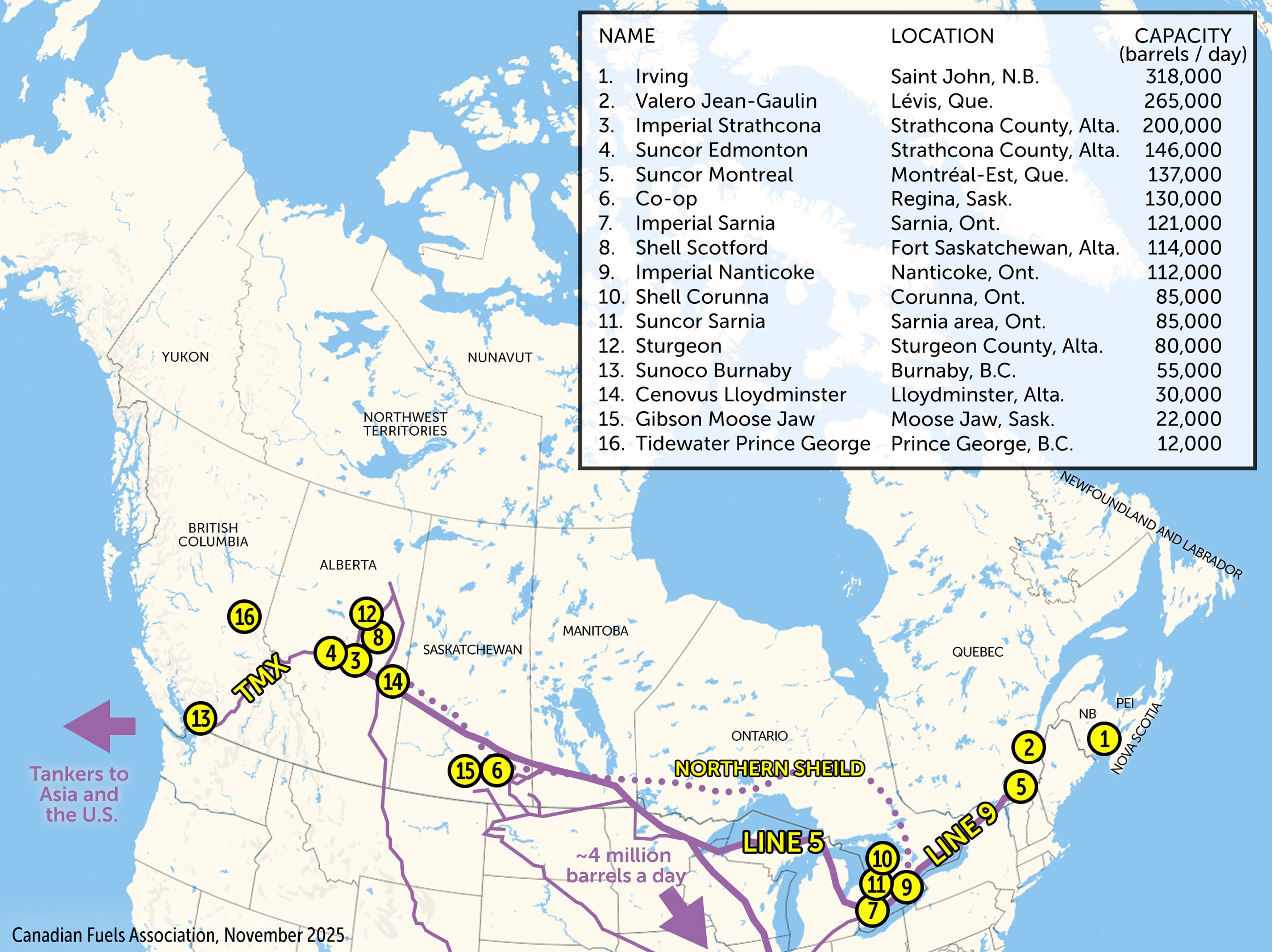
That’s enough for the country’s needs. “The Canadian market is essentially in balance,” said Carol Montreuil, vice-president for Eastern Canada at the Canadian Fuels Association. Pineau, a frequent critic of the industry, agrees. So does Ottawa. “Canada does not need more refining capacity to meet current domestic needs,” the Prime Minister’s Office said in a statement to The Narwhal. In 2025, Canada exported a net 200,000 barrels a day of refined products, it added.
The real issue is that Canadian refineries don’t process much of the oil this country is best known for: thick, heavy bitumen from Alberta’s oilsands. Heavy crude is only about a quarter of what Canadian refineries process, according to Johnston’s 2024 analysis.
For that reason, most of Canada’s heavy oil goes south, via pipelines, to refineries in the U.S. Midwest and Gulf Coast that can handle heavy crude.
How do refineries affect the people next door?
Refineries support more than 18,000 jobs in Canada, according to the industry. For their neighbours, they can be both a paycheque and a burden.
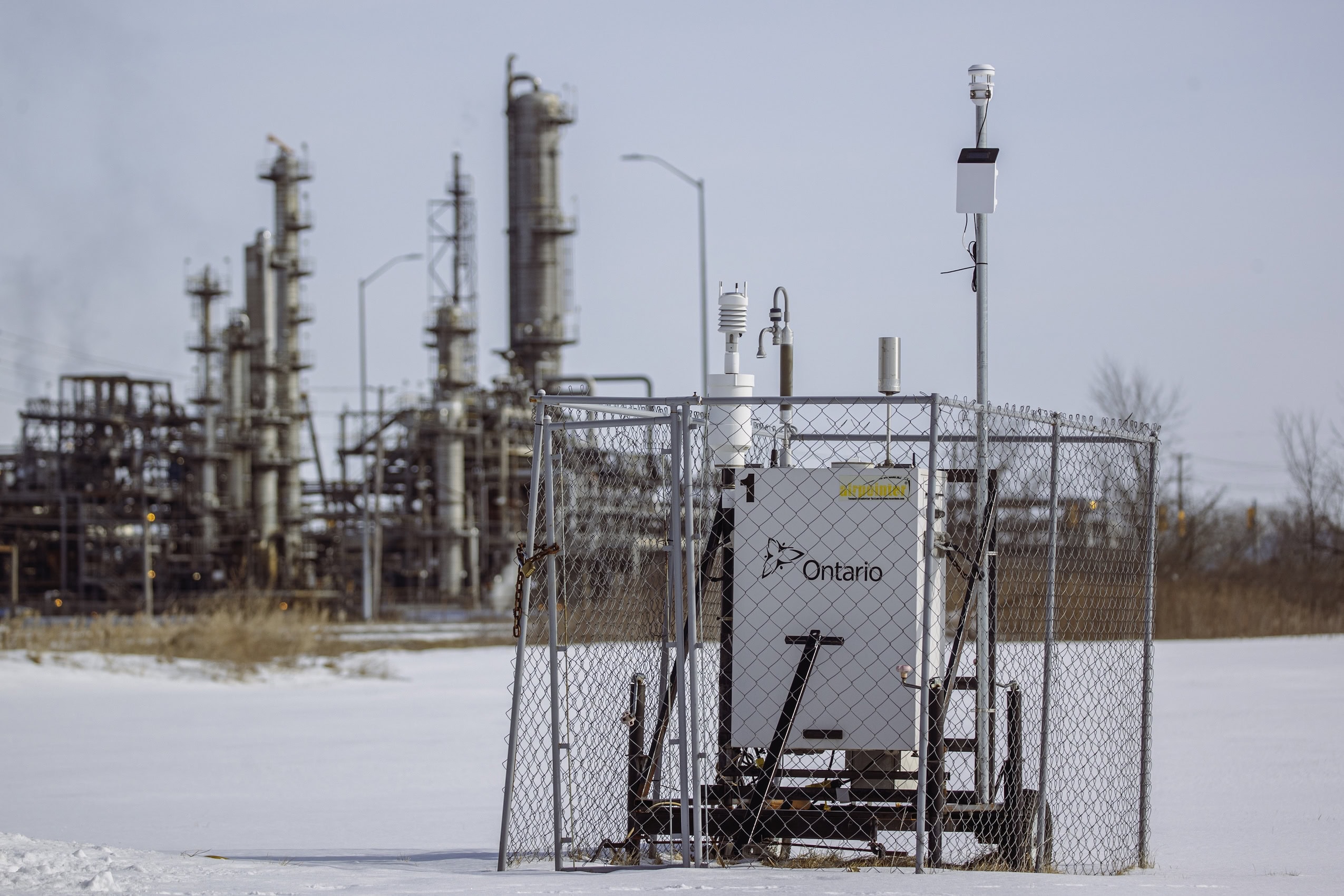
Near Edmonton, the Imperial and Suncor refineries release benzene and sulphur dioxide, among other pollutants. Limited monitoring makes it hard to pin down how much of the region’s air pollution they are responsible for, The Narwhal has reported.

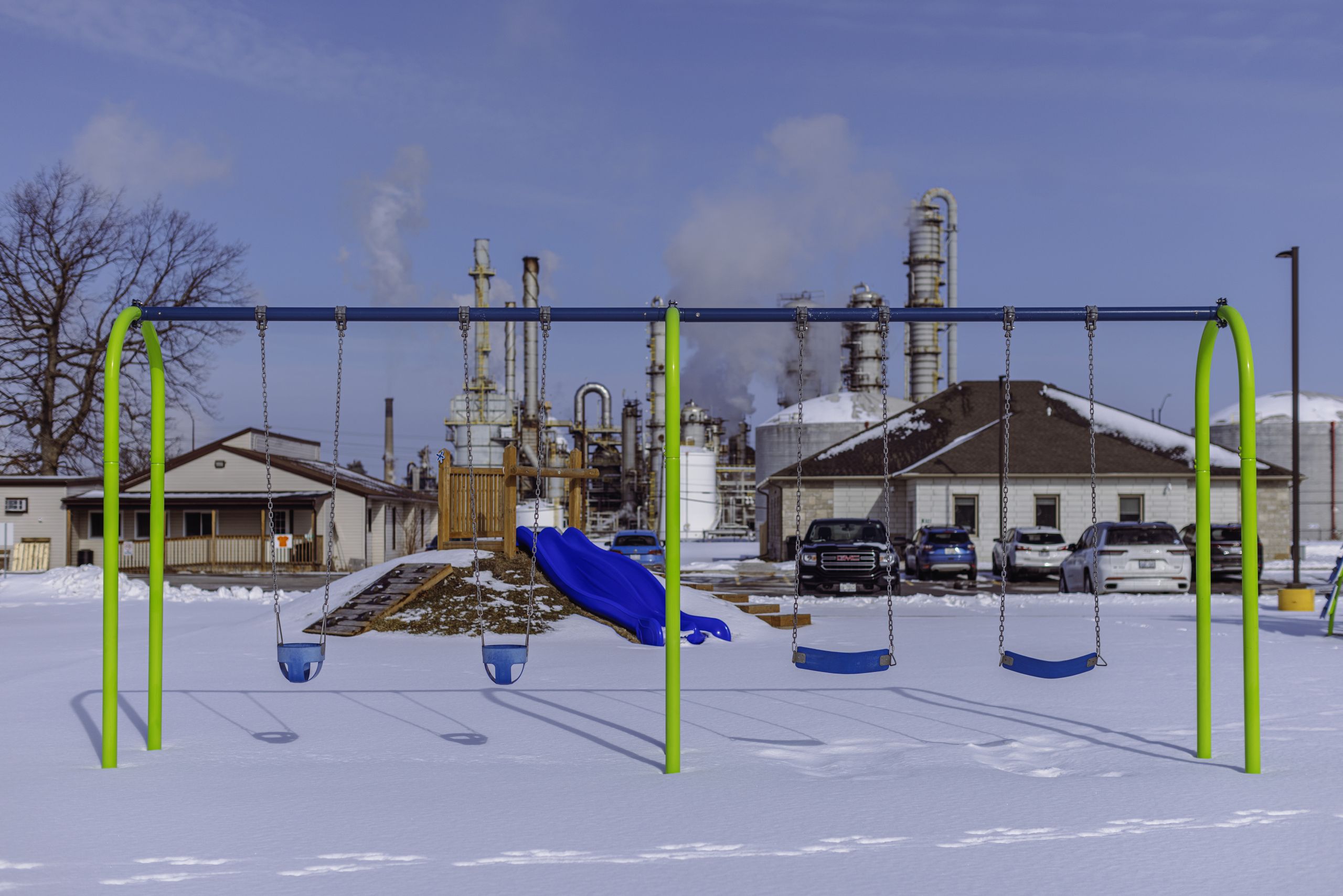
Sarnia, Ont., is home to Chemical Valley, a cluster of roughly 60 industrial facilities, including three oil refineries. Residents of neighbouring Aamjiwnaang First Nation are exposed to about 30 times more benzene than people in Toronto and Ottawa. Sarnia would be the destination if Ontario and Alberta are able to make Northern Shield happen: that proposed pipeline would carry Alberta crude north of the Great Lakes.
And when the industry leaves, the impact isn’t over. Montréal-Est was a hub of refining activity by companies such as Imperial Oil, which opened the island of Montreal’s first refinery in 1916, and Shell, which closed its last in 2010. Decades after most refineries closed in the 1980s, the area has about 270 hectares of industrial brownfields, roughly the size of 330 football fields, awaiting cleanup and redevelopment.
What are the arguments in favour of a new Canadian refinery?
Gasoline and diesel prices are high, but experts say a new Canadian refinery wouldn’t necessarily ease prices at the pump. Even Montreuil concedes that local refineries offer consumers limited protection from price spikes, since fuel prices are set on global markets.
For Montreuil, it’s more about fuel supply security, which the industry has also raised in recent months, according to the federal lobbyist registry.
Canada’s refineries ensure the country has enough fuel, and without them, we’d be rationing fuel right now, according to Montreuil, who pointed to recent examples around the world. Indonesia and Russia both rationed fuel this year. While some argue refining more oil at home would mean independence from an increasingly unpredictable neighbour, Montreuil and Johnston say that isn’t our only exposure.
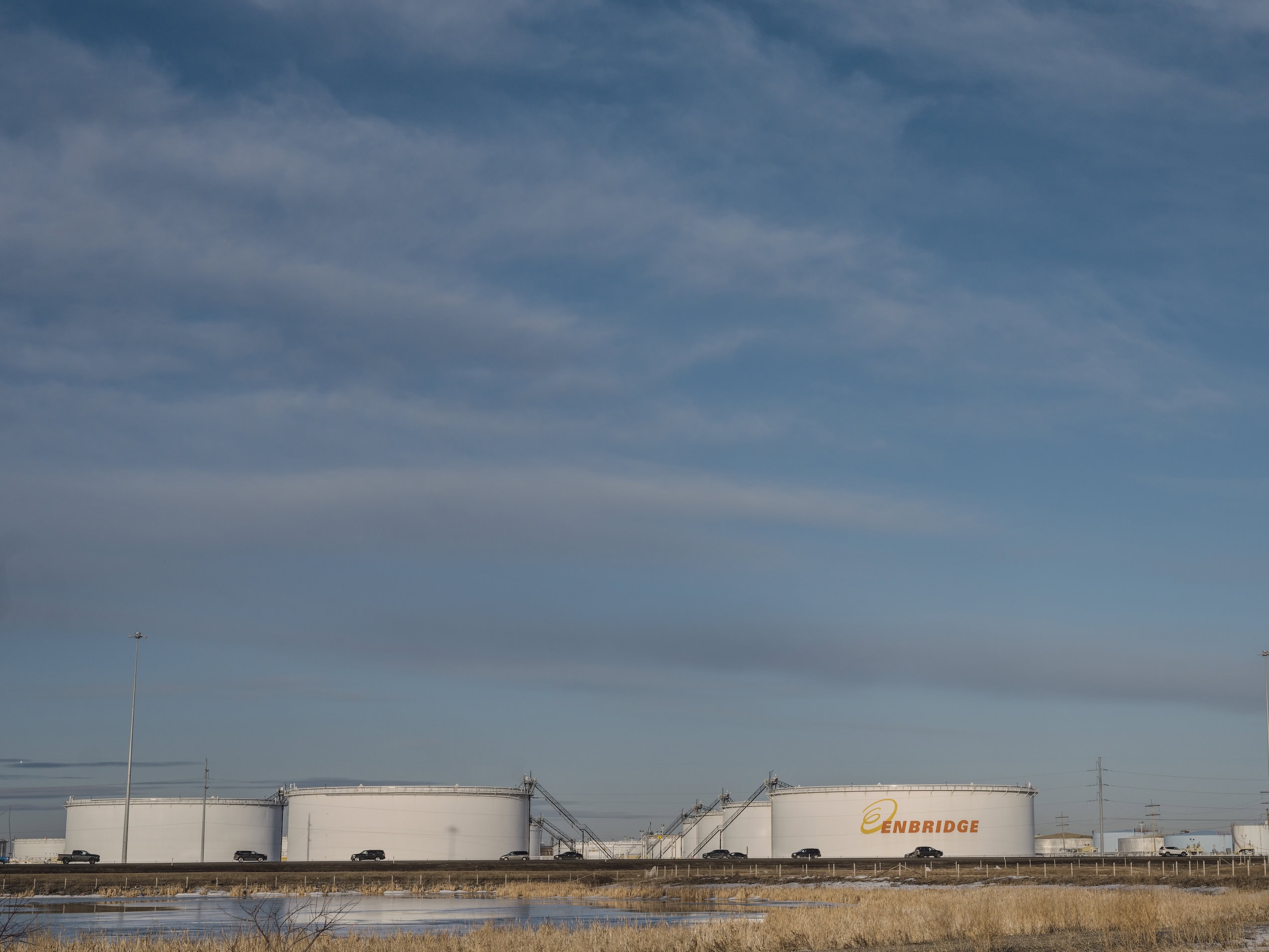
Another vulnerability is pipelines that carry Canadian oil back and forth across the border, such as Enbridge’s Line 5. Political skirmishes with Michigan over that pipeline are one reason Ontario Premier Doug Ford is pushing the Northern Shield Energy Corridor. Much of Atlantic Canada relies on crude, much of it American, delivered by tanker to the country’s largest refinery, Irving’s in Saint John. No pipeline exists to bring Alberta oil to the Atlantic provinces, meaning a U.S. export restriction would leave them scrambling for other fuel sources.
Heather Exner-Pirot, a senior fellow at the Macdonald-Laurier Institute, said federal clean fuel rules are another weakness, because in order to meet emissions reduction targets, suppliers blend in biofuels largely imported from the U.S. “We are artificially making ourselves dependent on an American product,” she said. She argues the rules should be redesigned, and they’ve been a constant topic in the industry’s communications with federal officials, according to the lobbyists registry.
Carney’s government announced tweaks to the clean fuel rules last week, saying it would “make it easier and cheaper for companies to comply.” Transportation is one of Canadian households’ biggest costs, according to Statistics Canada, but Pineau thinks that addressing that by scrapping clean fuel rules would “chain Canadians even more tightly to an extremely expensive way of life,” one built around the car.
On its own, experts say, a new refinery fixes none of that.
How much would it cost to build a new refinery, and who would pay?
Companies are not lining up to build a refinery in Canada, and Ottawa isn’t offering to pay for one. In a statement, the Prime Minister’s Office said the government supports “additional refining capacity where supported by market conditions.”
A large new refinery would cost $10 to $15 billion, take at least five years to build and need 20 to 25 years to pay off, according to Montreuil and Exner-Pirot. Alberta’s last attempt, the Sturgeon refinery near Edmonton, saw its original projected cost double to about $10 billion, with much of the risk carried by taxpayers, though high diesel prices have since improved its profitability.

A new refinery would also struggle to compete on a global market. India’s newest are so big that two of them could supply all of Canada, from gasoline to jet fuel and more, Montreuil said.
With the domestic market already balanced, the purpose of a new plant would mostly be exports. But there is no real export route for refined products to Europe, Ian Sanderson, a senior oil and gas analyst at the Pembina Institute, said in an interview, adding the biggest markets are in Asia and “have substantial refinery capacity to refine Canadian [crude] at a lower price.”
There’s also the issue of decreased global demand for fossil fuels. Global demand for refined oil products could peak as early as 2027, according to the International Energy Agency. “It really is an act of faith,” Montreuil said, to bet that export markets will still want Canadian fuel by 2030 or 2035.
Sanderson points to the coal phase-out in Alberta, which hit mining towns very hard. The lesson, he said, is to “get ahead of the transition” and support oil workers into new jobs.
So far, though, Canadians aren’t using less fuel.
What part of Canada faces the highest risk when it comes to U.S. energy threats?
The most immediate risk is to Ontario, whose refineries run mostly on western crude carried by Line 5 through Wisconsin and Michigan.
Michigan’s governor has tried for years to shut it down over environmental concerns. In late August, the line was offline for more than two weeks after being struck by a truck at a work site in Wisconsin. The episode offered a glimpse of the crisis Canada would face if the Americans shut Line 5 down for good, Montreuil said.
Northern Shield would carry Alberta crude to Sarnia north of the Great Lakes, bypassing Line 5. It wouldn’t add any refining capacity, though: “Same refinery, same oil, just a different route to get it there,” Exner-Pirot said. The open question is how much this new pipeline would cost, and who would pay.
Quebec has more options, but not more independence. The Valero refinery in Lévis gets its oil by tanker through the St. Lawrence River, though much of what Quebec imports comes from the U.S. And Suncor’s Montreal-East refinery gets much of its western crude through Line 9, which runs from Sarnia, so it too depends on oil that crosses the U.S. to reach Sarnia.
What would make Canada’s fuel supply more secure?
Without building a new refinery, there are other ways to shore up supply.
Canada is the only G7 country without a strategic petroleum reserve. Despite being a member of the International Energy Agency, we’re formally exempt from its mandate to hold emergency oil stocks equivalent to at least 90 days of the previous year’s net imports because we produce more oil than we import.
Consequently, when the G7 agreed in early October to release 100 million barrels of oil from emergency stocks to lower prices at the pump, Ottawa’s contribution was to stagger maintenance at its refineries so as not to affect supply. Poilievre has proposed a reserve of refined fuels, though someone would have to pay to fill and maintain it.
Another option is to expand what already exists. Adding 10 to 20 per cent to an existing refinery may be more realistic than building a new one, Montreuil said.
But “the solution isn’t necessarily to cut taxes or to produce more,” Pineau said, noting that new oil and gas infrastructure would run counter to Canada’s climate targets. Unlike past oil shocks, “there are a lot of options to move away from oil,” Sanderson added.
Whichever path Canada takes, the big decisions will largely belong to companies, as HF Sinclair showed this summer by announcing it will stop making base oils in Mississauga, Ont., at Canada’s only such plant. Base oils, used to make motor oil, were already at the centre of a global shortage.
While politicians may bring up building new refineries as an easy solution to a very complicated problem, right now at least, even the industry itself isn’t pushing for it.