




 7 min. read
When a Michigan court shot down Enbridge’s plan to bury a section of its aging Line 5 pipeline in a concrete tunnel under two Great Lakes, Ontario Premier Doug Ford responded with a pipeline pitch of his own.
“The fuel that powers Ontario’s economy should never be put at risk because of decisions made in another country,” Ford wrote in a post on X (formerly Twitter) on Aug. 1. “That’s why we’re building the Northern Shield Energy Corridor — a new Canadian pipeline, made with Canadian steel, by Canadian workers, exclusively within Canada’s borders.”
Summary
- The Michigan Supreme Court cancelled the state regulator’s approval of Enbridge’s Line 5 tunnel project, telling it to reassess potential harm to two Great Lakes regions.
- Ontario Premier Doug Ford said the decision highlighted a need to build a new all-Canadian pipeline from Alberta to Ontario.
- Ford’s warnings about relying on energy “decisions made in another country” come as his government continues to push natural gas expansion, and the province increasingly relies on American supply.
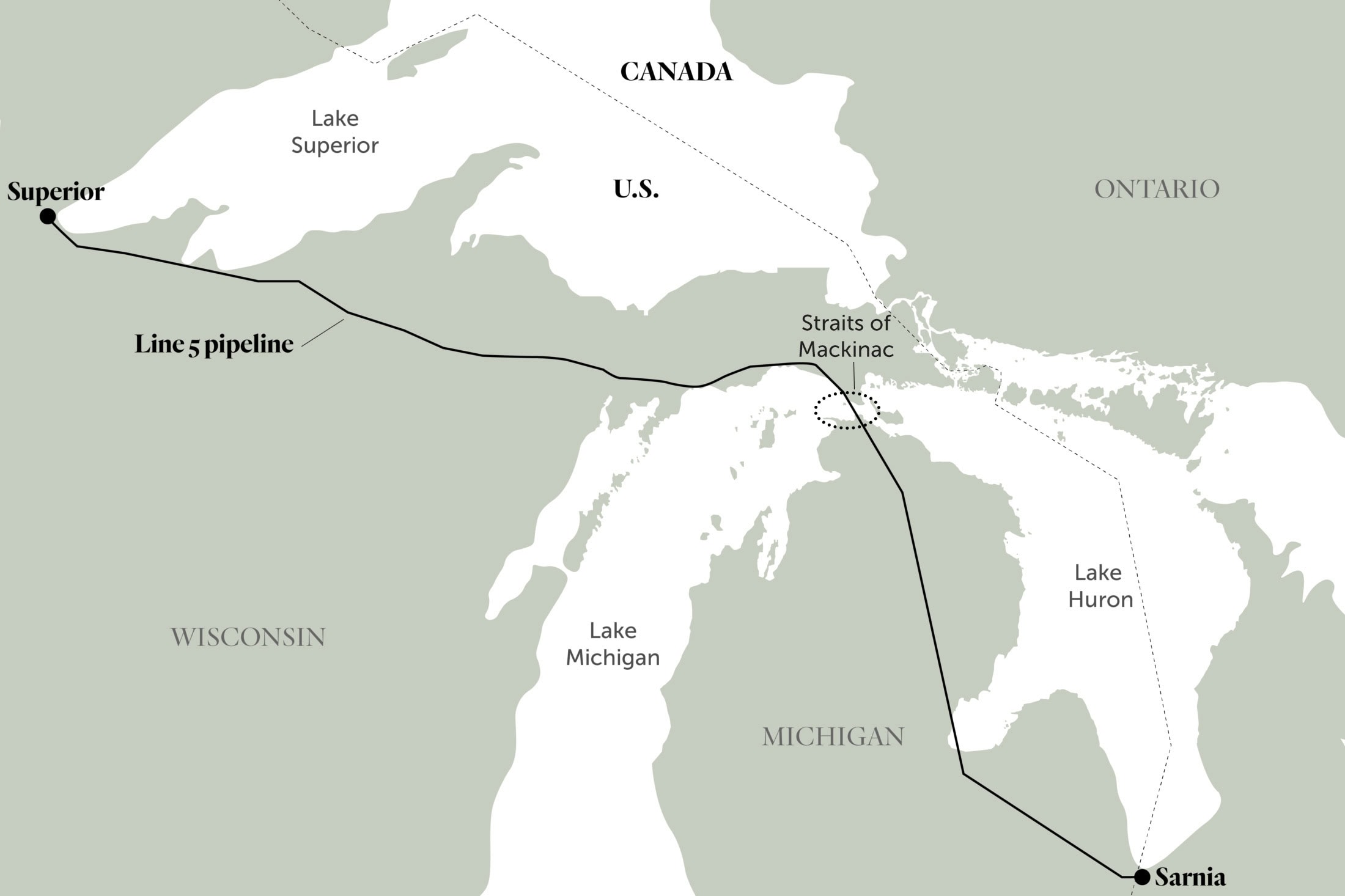
His comment came a day after the Michigan Supreme Court ruled in a 6-1 decision against the state commission’s approval of Enbridge’s plan to build a tunnel under the Straits of Mackinac, a narrow, fast-moving waterway that joins Lake Michigan and Lake Huron. The purpose would be to bury a portion of the 73-year-old pipeline, which is currently exposed on the lakebed.
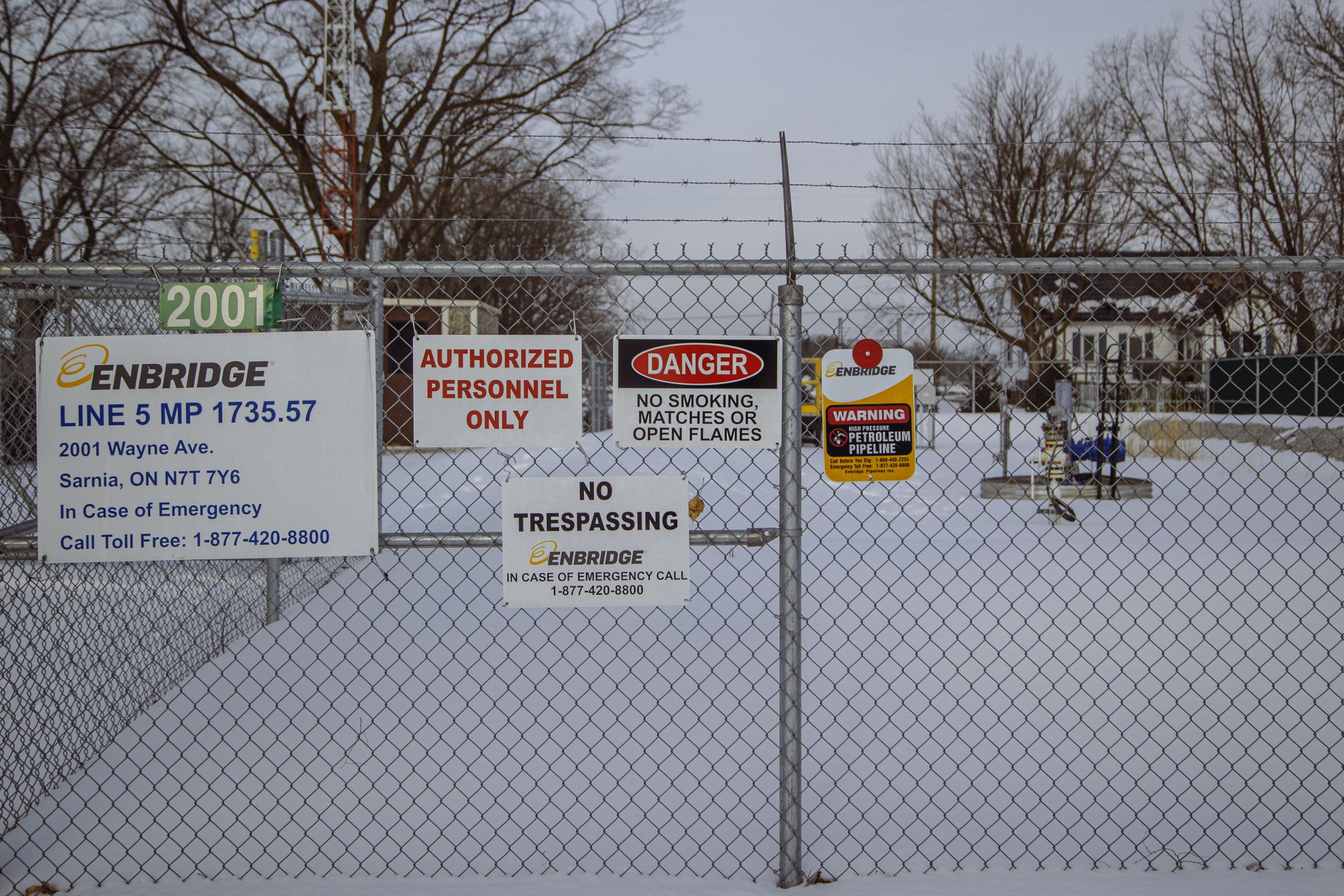
The pipeline is 1,038 kilometres long, roughly the driving distance between Windsor and Timmins, Ont. It carries crude oil and natural gas liquids (such as propane and butane) from Superior, Wisconsin, passing through Michigan on its way to refineries in Sarnia, Ont.
The court found regulators hadn’t properly studied the environmental harm the project could cause to the lakes before approving it in 2023. Justices said the regulator must study not just the environmental impact of the underwater tunnel, but also how the tunnel would extend the lifespan of the pipeline and what the environmental consequences of that may be. Indigenous nations have said it will increase the risk of oil spills and increase greenhouse gas emissions from the fossil fuels it transports.
“It is impossible to prevent or mitigate an environmental risk without understanding the nature of that risk,” the justices wrote.
As a result, the project’s approval is now cancelled, with the court ordering the commission to redo its review. The ruling doesn’t shut Line 5 down, but delays efforts to repair it and keep it in commission.
Enbridge spokesperson Ryan Duffy called the decision disappointing in a statement to Bridge Michigan, saying the company remains committed to “the safe and responsible operation of Line 5,” while it reviews its legal options.
Michigan Gov. Gretchen Whitmer, who has long fought to shut the pipeline down altogether, said “the pipeline is a ticking time bomb,” pointing to Enbridge’s 2010 spill in the state’s Kalamazoo River, the worst inland oil spill in U.S. history.
Indigenous communities and environmental groups that brought the case to court celebrated it as a win for the Great Lakes.

Ford took a different route, using the court decision to re-up a pipeline concept he announced with Alberta Premier Danielle Smith in July. The Northern Shield Energy Corridor is a proposed 3,300-kilometre line to carry crude oil from Hardisty, Alta., through Saskatchewan and Manitoba to Sarnia.
If built, Northern Shield would retrace some of the route of the long-dead Energy East proposal from TransCanada, before the company scrapped it in 2017, citing regulatory delays and falling oil prices. That proposal also met significant Indigenous opposition.
Ford has framed it as an all-Canadian pipeline that would be immune to the kind of cross-border legal fights now delaying updates to Line 5. Northern Shield is undergoing a feasibility study, due by the end of the year, with no confirmed cost, timeline or construction approval.
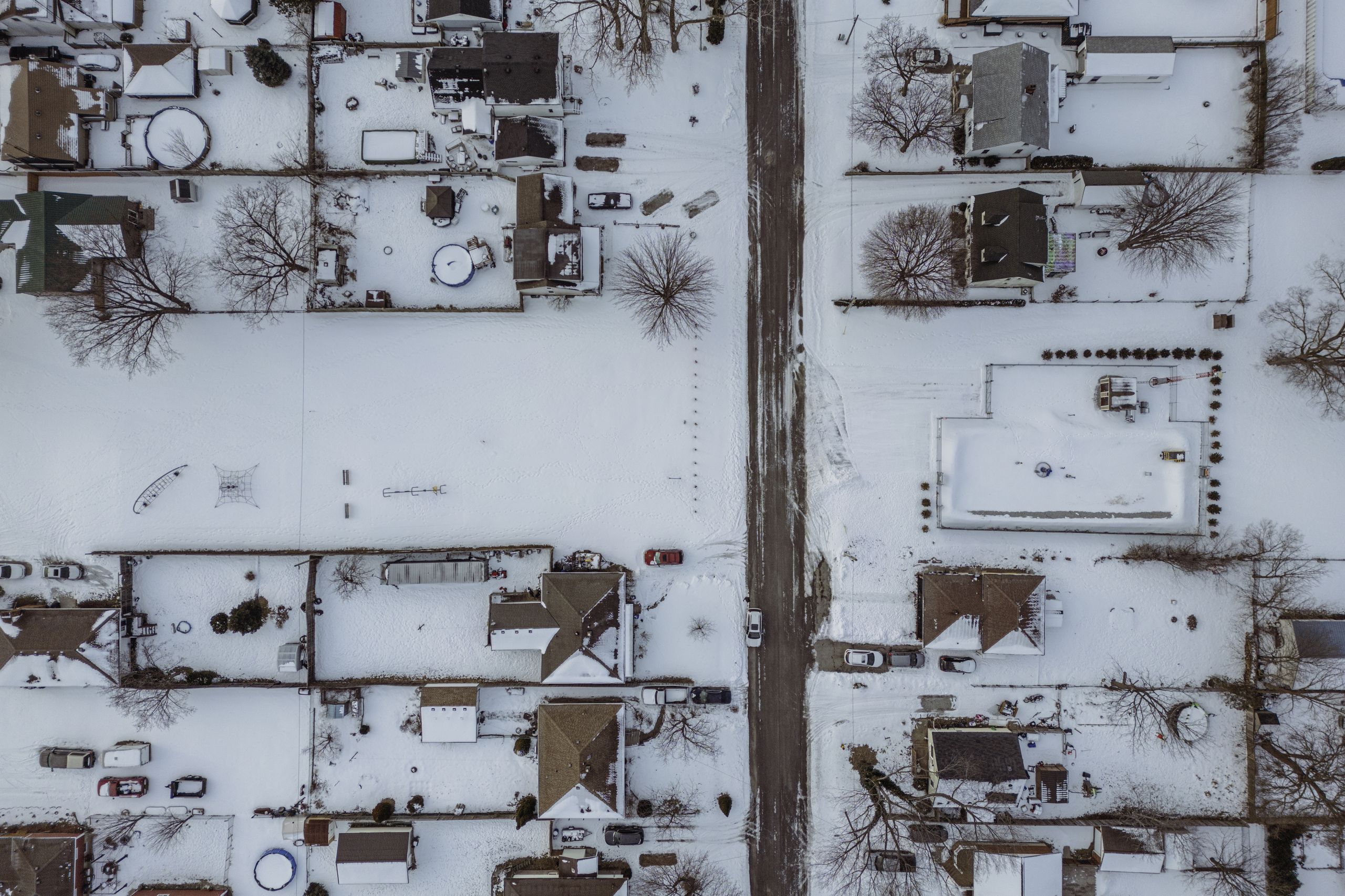
That proposed route of Ford’s new pipeline ends in the same place Line 5 does: Sarnia, next to Aamjiwnaang First Nation. Chief Janelle Nahmabin told The Narwhal her community is “closely following” the discussions around Line 5 and the Michigan court decision.
“While governments continue to debate energy security and future infrastructure, it is important that First Nation rights, environmental protection and community health remain at the centre of those discussions,” she wrote in an email.
She pointed to an unresolved crisis in her community over benzene air pollution from industry, and a pipeline spill near Aamjiwnaang’s land into the St. Clair River in March 2026 as issues that need to be addressed before a new pipeline is considered. She said that these “cumulative impacts of industrial development” were the result of “decisions being made elsewhere.”
“Communities that have carried disproportionate environmental burdens for decades should not be asked to shoulder even more,” she said.
Ford’s pitch for domestic supply comes amid growing reliance on U.S. gas
Ford’s warnings about relying on energy “decisions made in another country” come as his government continues its longstanding push to expand natural gas use, which increasingly relies on American supply.
Natural gas is largely made up of methane, a potent greenhouse gas that traps heat in the atmosphere. It is the primary source of heating for three-quarters of homes in Ontario.
According to Ontario’s Independent Electricity System Operator, natural gas accounts for nearly 30 per cent of the province’s total generating capacity, up from 28 per cent in 2020. The operator attributes that growth largely to nuclear facilities being taken offline for refurbishments as well as rising electricity demand.
Ontario is underlaid with a network of pipelines supplying natural gas for heating. According to the province, 3.6 million homes and 160,000 businesses rely on natural gas.
Per analysis by the Canada Energy Regulator, Ontario’s historical reliance on natural gas from Alberta has declined as western producers focus on western U.S. markets. Meanwhile, production in the U.S. northeast has increased, making importing gas cheaper for eastern provinces. As a result, as of 2009, Ontario has become a net importer of gas from the U.S.
Between 2015 and 2020, the most recent data available, imports at three key crossings into Ontario increased by 31 per cent, with most coming through Niagara.
Ontario’s ties to natural gas have deepened under the Ford government
This increase in U.S. natural gas imports is compounded by recent provincial decisions that ensure natural gas remains a key part of Ontario’s energy mix.
In December 2023, the government took the unprecedented step of overruling the independent Ontario Energy Board after it ordered Enbridge Gas to stop passing the cost of new gas hookups on to homeowners’ monthly bills. Documents obtained by The Narwhal through freedom of information requests showed Enbridge staff in frequent contact with officials in the premier’s office in the lead-up to that decision, and Ford personally called Enbridge to discuss a stalled gas connection.

Meanwhile, a growing number of Ontario municipalities, including Guelph and Waterloo Region, have pushed back against a long-standing provincial rule that lets Enbridge Gas build pipelines under municipal roads and other public land for free. Enbridge Gas has these decades-long free-access agreements with more than 340 municipalities across the province.
When Guelph and Waterloo Region refused to renew their agreements last year, the dispute went to the Ontario Energy Board, where it is still being deliberated. Energy Minister Stephen Lecce said the province isn’t considering changing the rule despite the municipalities’ calls to do so.
As all of this plays out, including the Line 5 saga, Enbridge has told investors it expects to return tens of billions of dollars to shareholders over the coming years, in part because of the strength of continued gas demand growth in Ontario.
Updated on Aug. 7, 2026 at 2:026 p.m. ET: This story was updated to include a statement from Aamjiwnaang First Nation Chief Janelle Nahmabin sent to The Narwhal after publication.