




 6 min. read
Months of planning. Weeks of wrangling the right clothes and gear. Daily checks of fire smoke maps. Reading through the fine print of the cancellation policy for our canoe rental — and discussing what Plan B might look like if conditions became too stifling.
We had cleared all the hurdles and things looked alright; our canoe trip would forge ahead. And yet as we dipped our paddles in and set out on a classically Canadian adventure — this one on the largest lake in North America without motorized boats — we were greeted by a light smoky haze hanging over us.
A good trip in the backcountry is the best way I know to reset: a digital detox where my biggest preoccupation is (literally) boiled down to what dehydrated food I’ll throw in the pot for dinner. Maybe I fret about how much longer until I reach the summit or where to set up camp. But not much else.
These days, though, it’s impossible to separate the joys of our natural world from the grief of seeing the destruction wrought upon it, often by our own doing. I know this because it’s what I hear from my friends, and also because it’s how I felt, swaying between emotions during our trip to Murtle Lake in the British Columbia Interior this August.
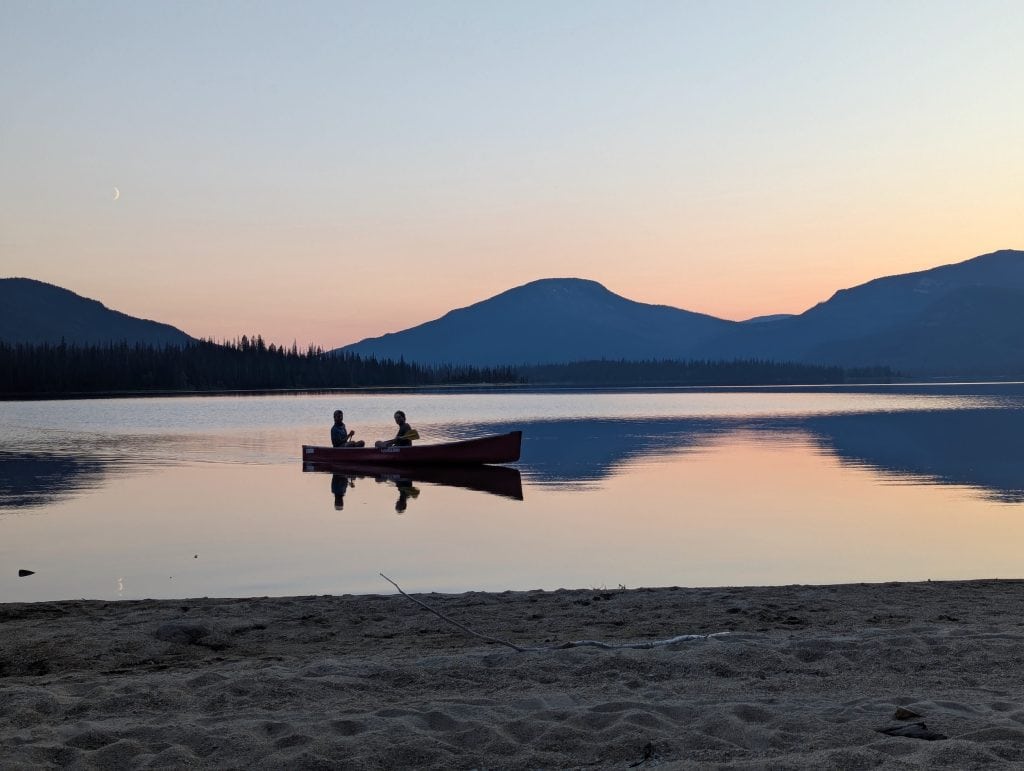
Throughout the trip, the highs easily revealed themselves: in the white-sand beaches, the moon hanging perfectly between two peaks during sunset, the panoramic awe as we reached the summit. There was a familiar low — the ache in my hamstrings on a brutal hike. But there was also a new kind of gloom: looking out at the swaths of burn scars that screamed: “Hey, remember those record-breaking headlines?”
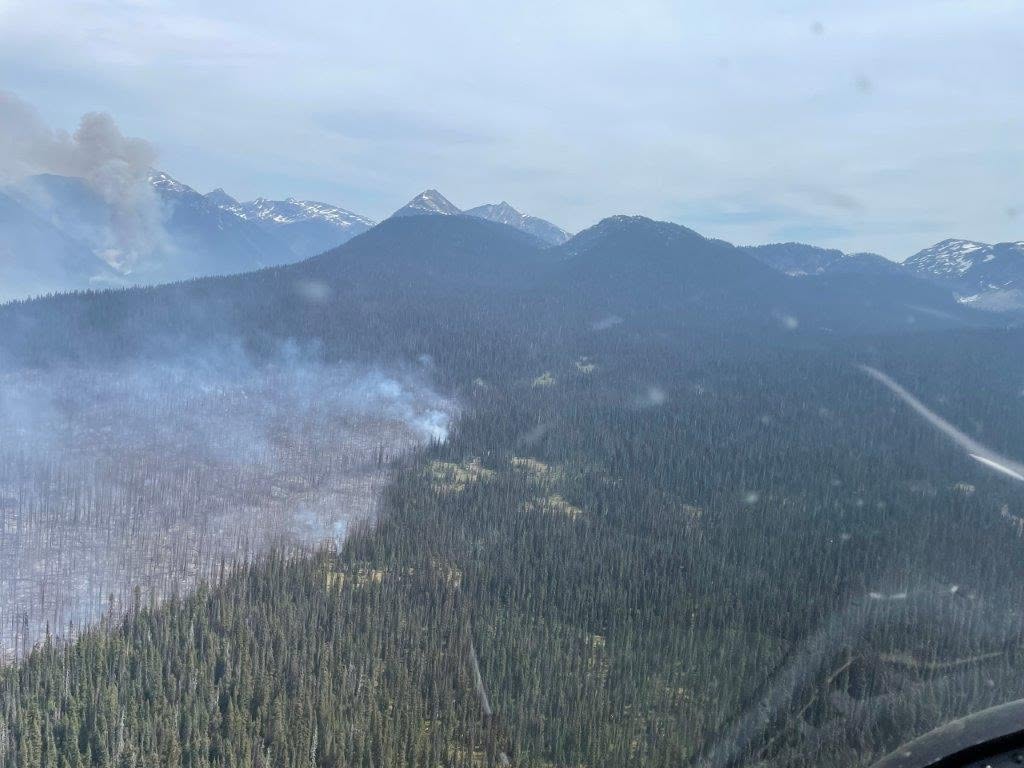
There were no fires nearby on our trip, but this area is no stranger to them: the 2023 Murtle Lake fire left its mark as it burned 1,711 hectares, or more than four Stanley Parks of territory. And that was just a tiny fraction of the 17 million hectares burned that year — more than 43,000 Stanley Parks! — in the worst fire season in Canadian history.
While it’s far from the most devastating impacts, I can’t help but long for the trips that don’t require planning around the worsening climate. My biggest worry a decade ago was whether we’d be able to squeeze on as a walk-up group on the West Coast Trail.
Almost everyone in Canada has a story about how a summer trip was altered or cancelled due to wildfires or smoke; a recent study found more than 60 per cent of Canadians have been personally affected by climate change this year. It’s not surprising, considering the horrors we’ve all watched unfold in places like Summerland, B.C., where 20,000 area residents were forced to evacuate, 150 structures were torched, dozens of pets went missing and an 80-year-old woman died. The impacts are also often disproportionate: despite representing five per cent of the population in Canada, Indigenous communities account for 42 per cent of wildfire evacuations. Or even across the globe in Nepal last week, where a glacier collapse and seismic event caused flooding that killed at least 1,200 people, with 29 Canadians and permanent residents still unaccounted for.
The scale of the grief varies enormously but the underlying reality is the same: climate change is not only transforming the places we love, but what it feels like to love them.
On the road to Jasper, amid the smoke and rebuilding
Ten years ago, a friend and I drove the Icefields Parkway that leads to Jasper. This time — en route to Murtle Lake — I hit the same road again and was quickly reminded of the jaw-dropping scenery. Everything was familiarly beautiful, until it wasn’t.
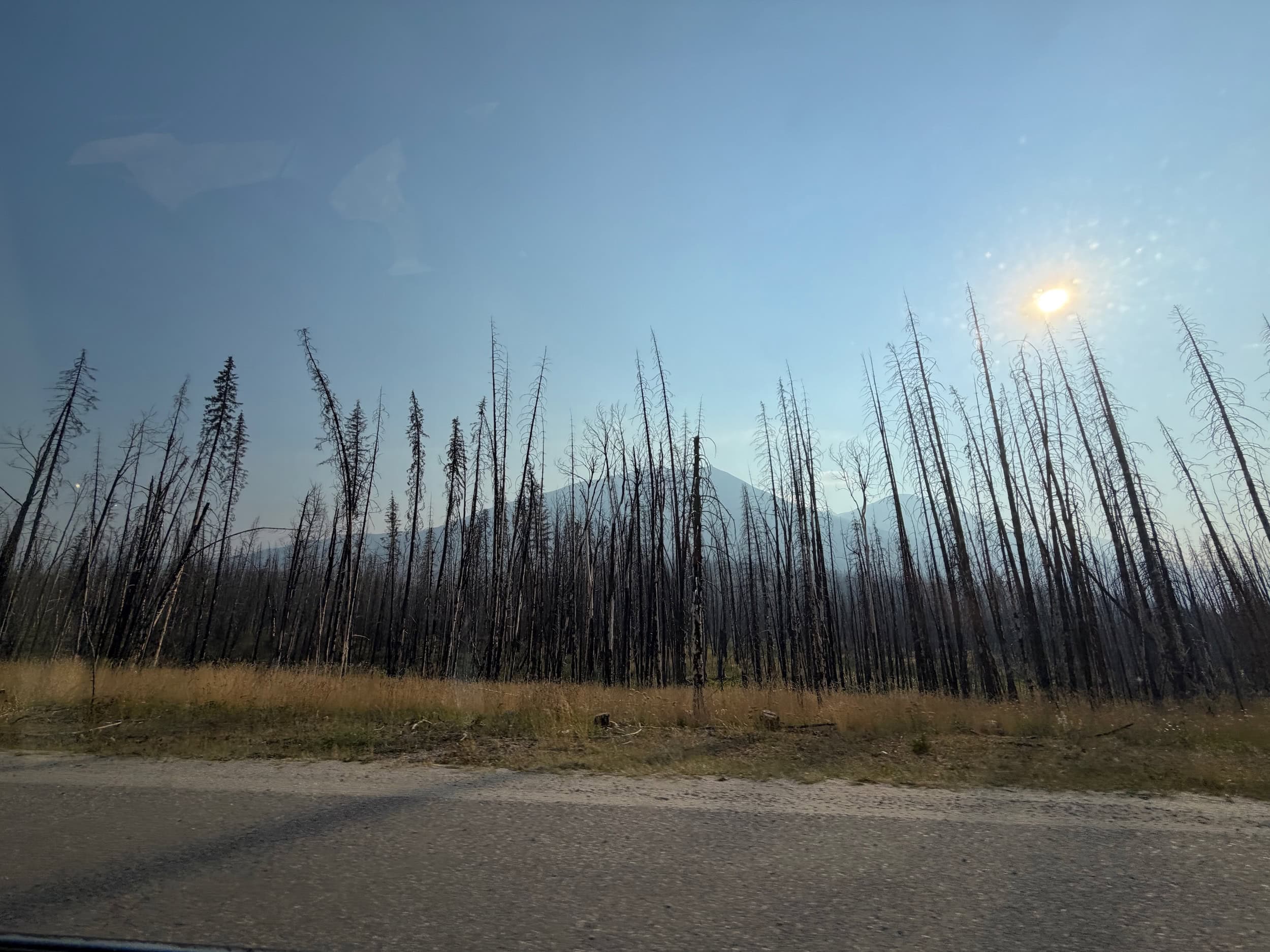
While the 2024 Jasper fires captured Canadians’ hearts and minds, no number of photos or video clips compared to the experience of seeing it with my own two eyes. Rows upon rows of charred trees, stretching dozens of kilometres, campers visible from the highway where forest had once provided cover. Making my way toward the town, where 33 per cent of structures burned, the rebuild in progress made me feel hopeful.
Every night on Murtle we sat around — under the red glow of our … headlamps, thanks to a campfire ban on account of the wildfire risk — and shared our highs, lows and heroes: floating in the water on a sunny day; a couple who brought us warm, homemade brownies; seeing the fire scars that dotted parts of the landscape.
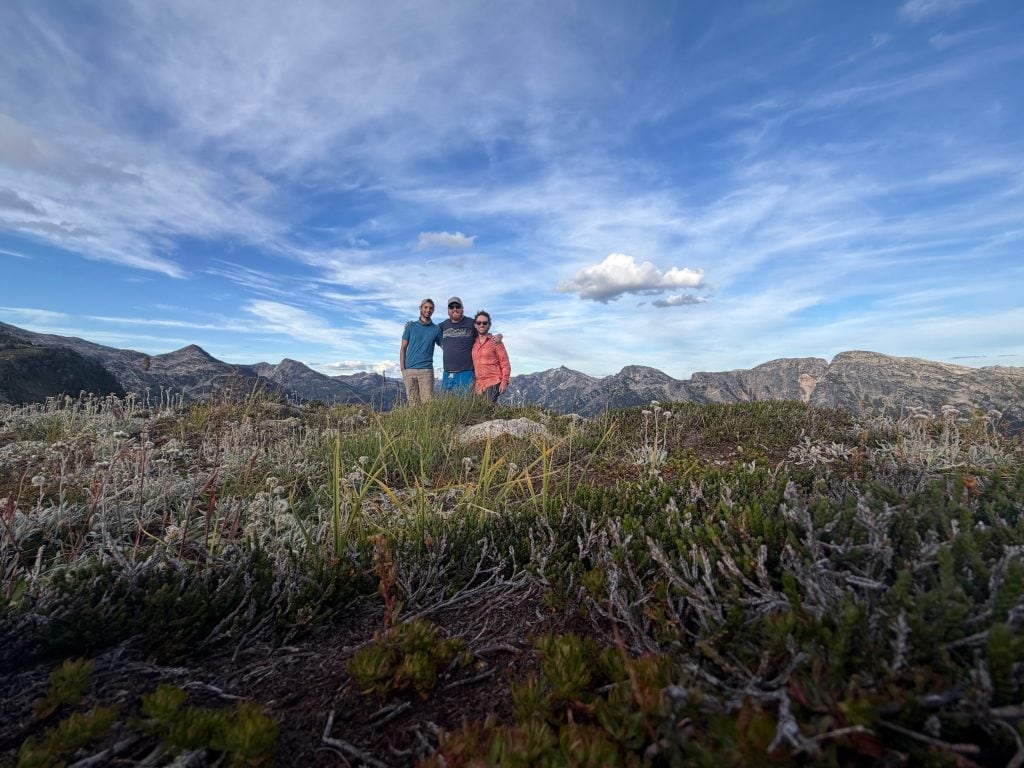
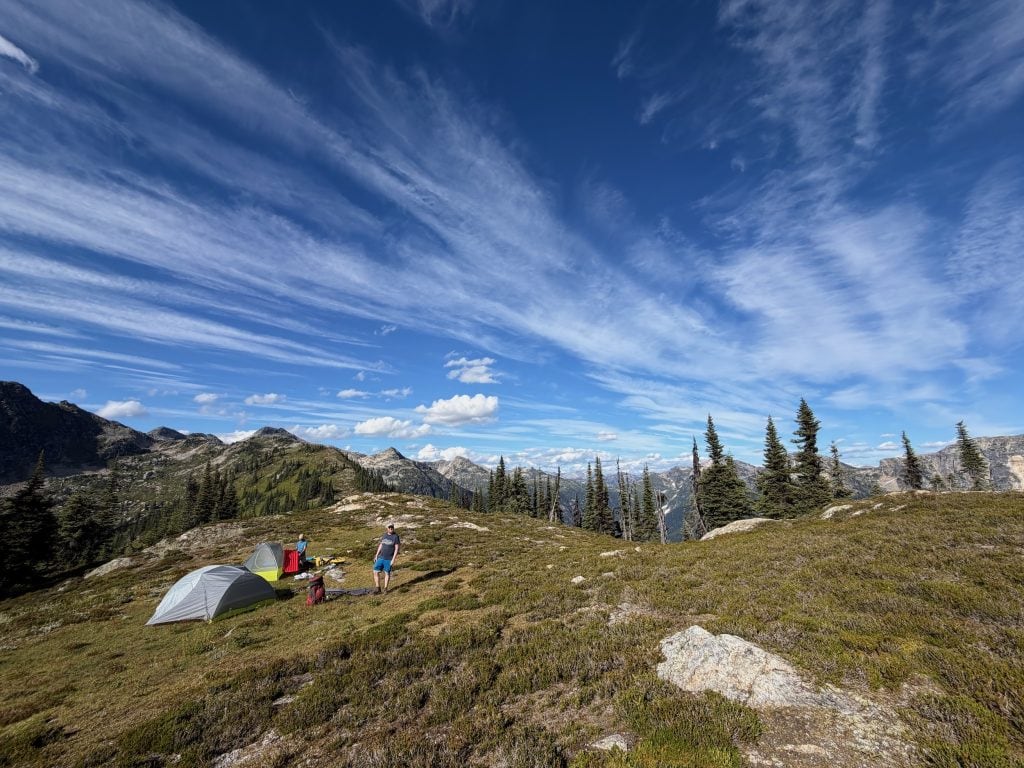
The days were filled with magical moments served up by the natural world: a trip to a waterfall, spotting a barred owl, loon calls, fish that leap out of the water, a meteor shower.
We hiked five hours up a mountain and camped in the alpine, surrounded by 360-degree mountain scenery unlike anything I’d seen in my life. The jagged rock. The patches of sparse trees amid a grassy ridge. A sunset, a sunrise and a total state of zen.
Falling in love repeatedly with the natural world, while also witnessing the scars being inflicted upon it, feels like an awful impossibility. How can you not be sanguine looking out at mountains that have made it through millions of years? And yet, reality kept smacking me in the face.
‘At one with the world’
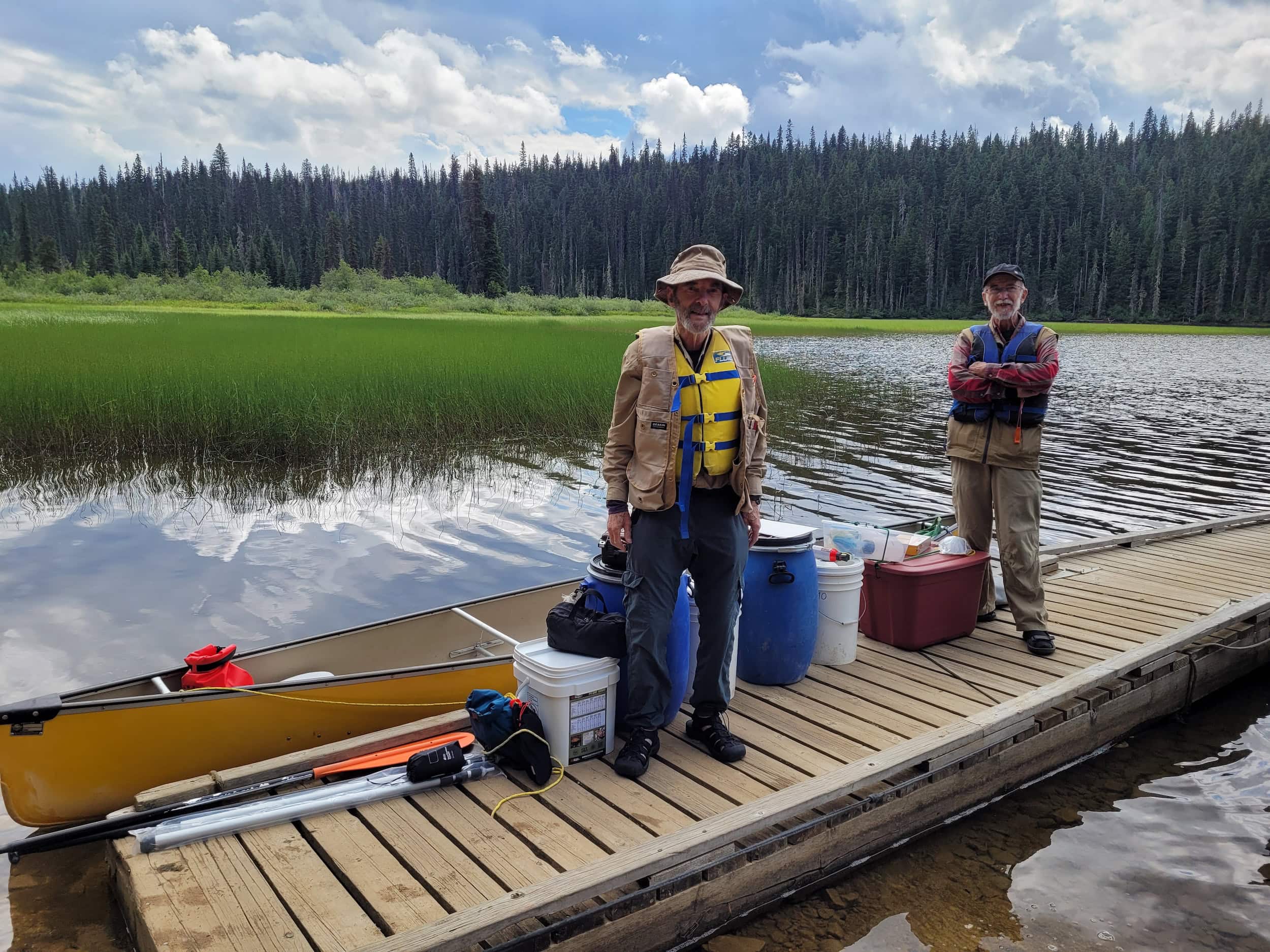
On our final night, we camped next to two brothers — David and Peter Hatto, 83 and 79 years young. They were nine days into their trip, at their fourth campsite, and reminding us that, in our 30s, we hopefully have many more decades doing these adventures. David lived in Jasper until the fires tore through and destroyed his home. He’s waiting for it to be rebuilt.
When I connected with him a week later, I asked David what keeps drawing him to the backcountry. “Once I’m there, inevitably I’m all by myself, and to be able to just sit and absorb the relaxation and beauty of the area is definitely psychologically healing,” he told me, reflecting on hikes along Athabasca Pass trail in Jasper National Park. “You feel more or less at one with the world in a place like that, and it makes you realize how small and insignificant you are at the same time.”
As we left the brothers back at Murtle, we drove back through Jasper and its own ongoing reality. Smoke lingered in the air and got heavier on the way down toward Banff, the mountains at times barely visible.
“Well it was nice to forget about the climate apocalypse for at least a week,” one friend remarked.
But that’s the thing: it’s hard to truly forget. To be a human in nature is to be reminded of the impacts of a warming world and the human actions that are causing it.
The beauty and the destruction follows us everywhere. Sometimes, all we can do is feel grateful for those flashes of awe — and remind ourselves, and the people around us, that it wasn’t always this way, that it’s worth fighting for, that there’s still a path to making things a little bit better.