




 9 min. read
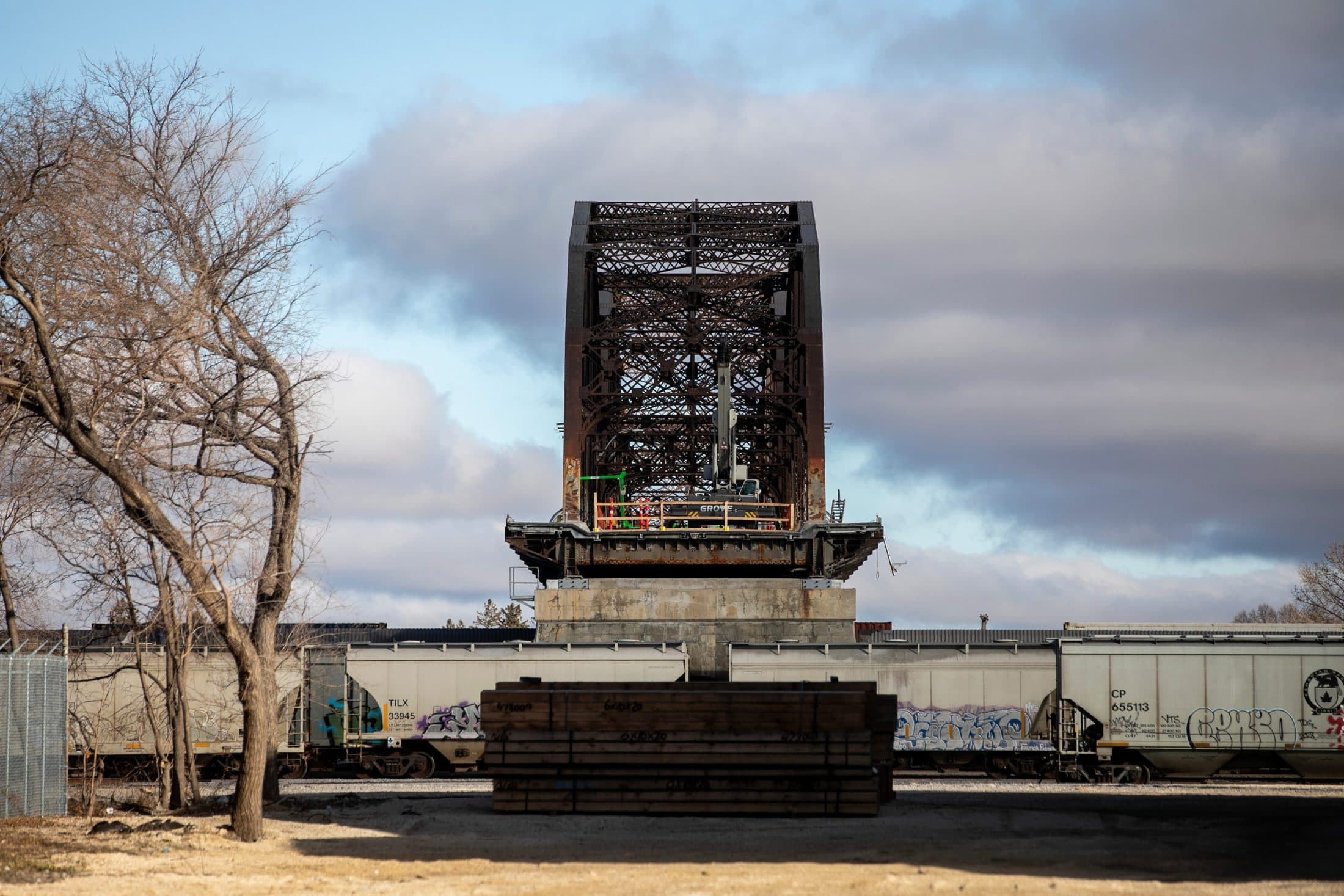
It’s no secret Winnipeg’s Arlington Bridge is coming down. The 114-year-old steel truss structure reached the end of its life several years ago as a well-worn corridor connecting the city’s north and central neighbourhoods.
Structurally unsound, too much corrosion and other age-related ailments sealed its demolition fate. Yet, surprisingly, its bones will live on.
Bridges, it turns out, are highly recyclable.
Summary
Unlike buildings made from myriad construction materials, bridges typically have three main components: concrete, steel and wood — all of which can be repurposed for future construction projects under the right circumstances.
“It’s hard when you’ve got mixed construction, like a house, where you’ve got so many materials and it’s hard to separate them,” Bob Molter says.
Molter is the general manager of Rakowski Group, a Winnipeg demolition and recycling company responsible for processing the tonnes of debris produced during the decommissioning of the Arlington Bridge, which began this summer.
“Over 99 per cent of that whole structure [has been] recycled, including the concrete, steel, wood and asphalt,” he says.
Rather, 99.61 per cent has been recycled, to be exact.
The recycling and reuse of construction materials has become a growing climate concern in recent decades, especially when it comes to concrete — the second-most consumed commodity on Earth after water. Its core component, cement, accounts for roughly eight per cent of greenhouse gas emissions globally.
In Manitoba, work is underway to improve the diversion of construction waste from local landfills, but some argue better policies are needed both municipally and federally to encourage the use of those reclaimed materials.
In the meantime, work will continue through next year to bring down the Arlington Bridge and put its components back to work. While $5 million has been set aside to design a replacement, council has not yet approved funding for the construction of a new bridge, leaving the fate of a critical link to Winnipeg’s North End up in the air.
How do you recycle a century-old bridge?
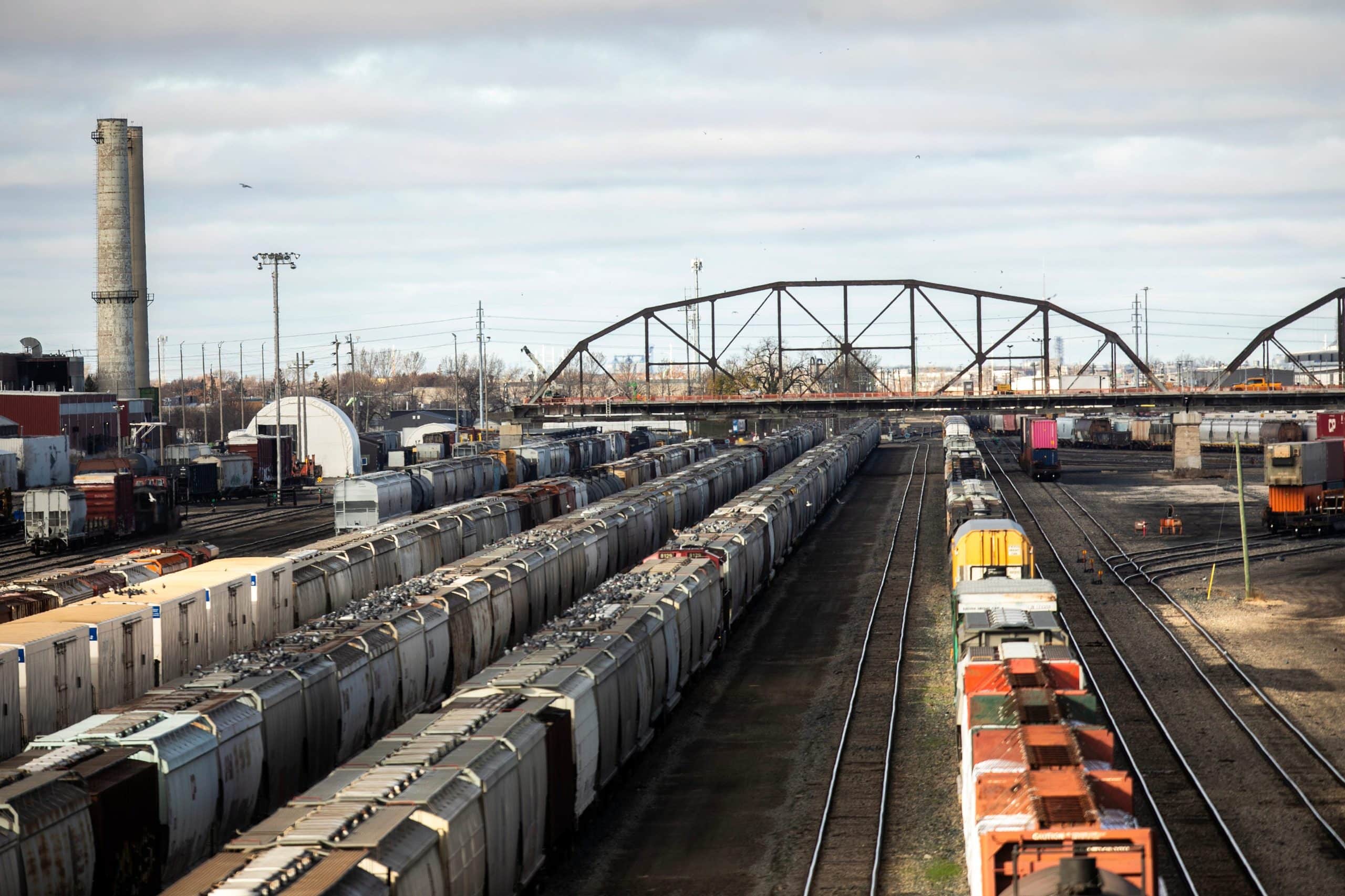
The longest bridge in the city and a defining feature of Winnipeg’s skyline, the Arlington Bridge was closed suddenly in 2023 due to structural issues. The demolition process is expected to take two years as crews work around the busy Canadian Pacific Kansas City railyard below. At the moment, the project is six weeks ahead of schedule — a timeline City of Winnipeg bridge engineer and project manager Damir Muhurdarevic calls “unexpected, but very welcome.”
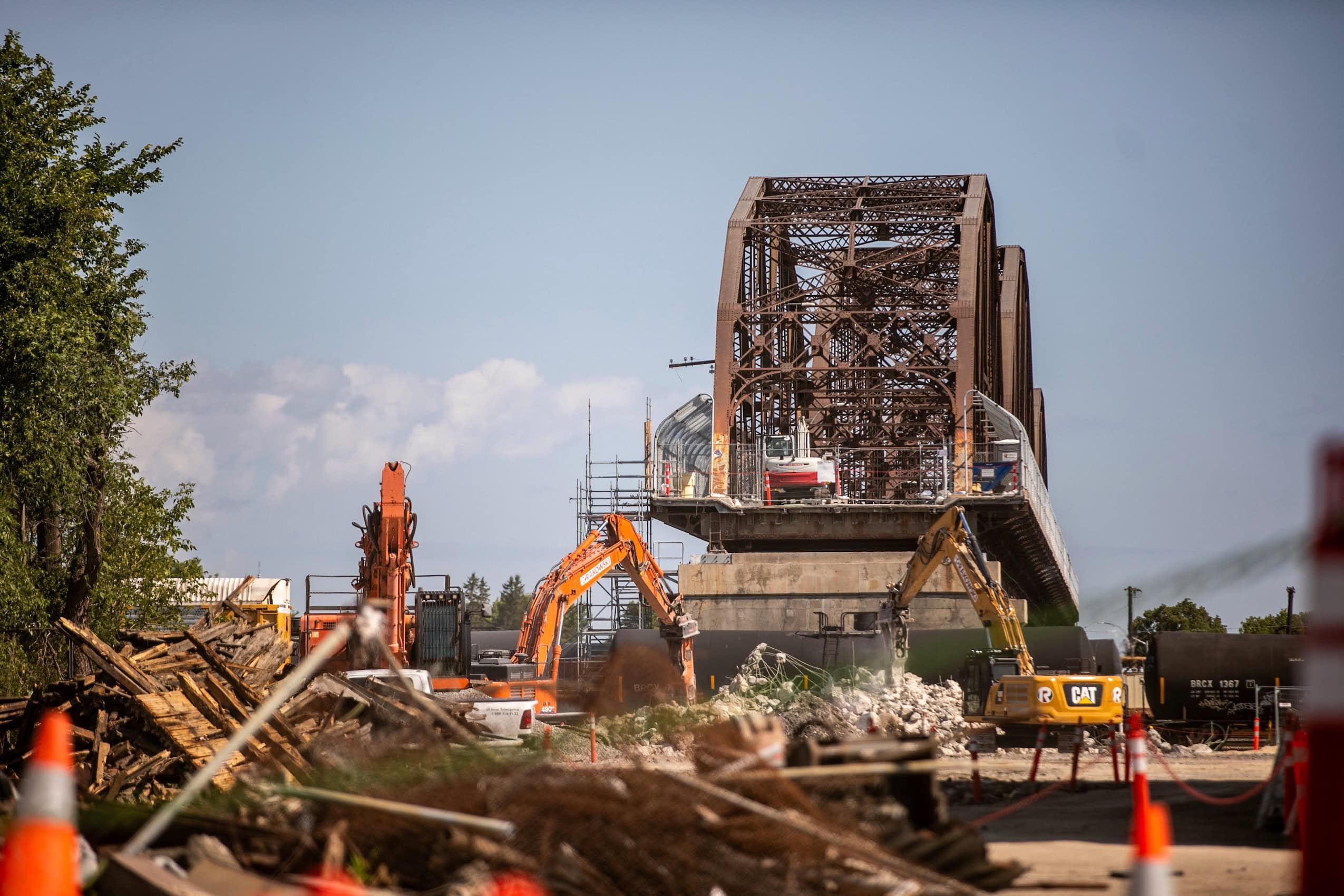
The first piece of the southern span of the bridge was shimmied out of place in July and lowered to a staging area, where “excavators with large shears cut it up and then loaded it onto trucks and it was shipped out of here,” Muhurdarevic says during a recent interview near the construction site.
But the loads didn’t go far. The steel from the trusses, most of which was contaminated with lead, was taken to the Gerdau Manitoba Steel Mill in Selkirk, Man.; the concrete, wood and asphalt from the bridge’s deck, piers, sidewalks and roadway were trucked to the Rakowski recycling yard in north Transcona. The city has also saved the bridge’s metal guardrails for future road projects, Muhurdarevic adds.
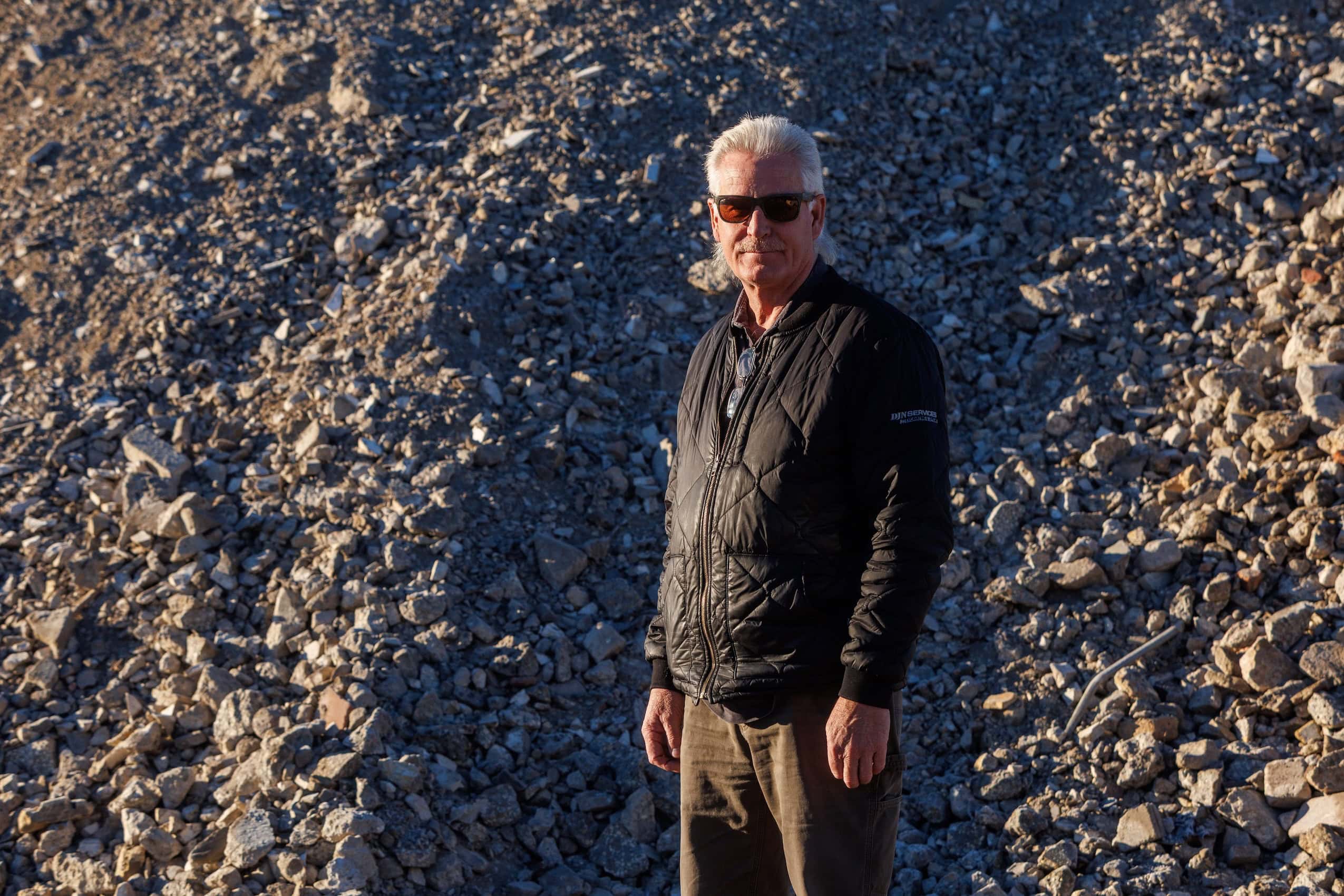
The Rakowski recycling yard is loud and busy, with trucks, excavators and crushing machines rumbling away between piles of detritus as tall as single-storey buildings.
Staff at the depot track the weight of raw and recycled materials from every demolition job.
Reading off a spreadsheet on his computer, Molter says the southern section of the Arlington Bridge brought in 8,975 tonnes of concrete, 265 tonnes of asphalt, 85 tonnes of wood, 671 tonnes of steel and 13 tonnes of garbage. Everything aside from the garbage has been reclaimed through Rakowski’s recycling process, he adds.
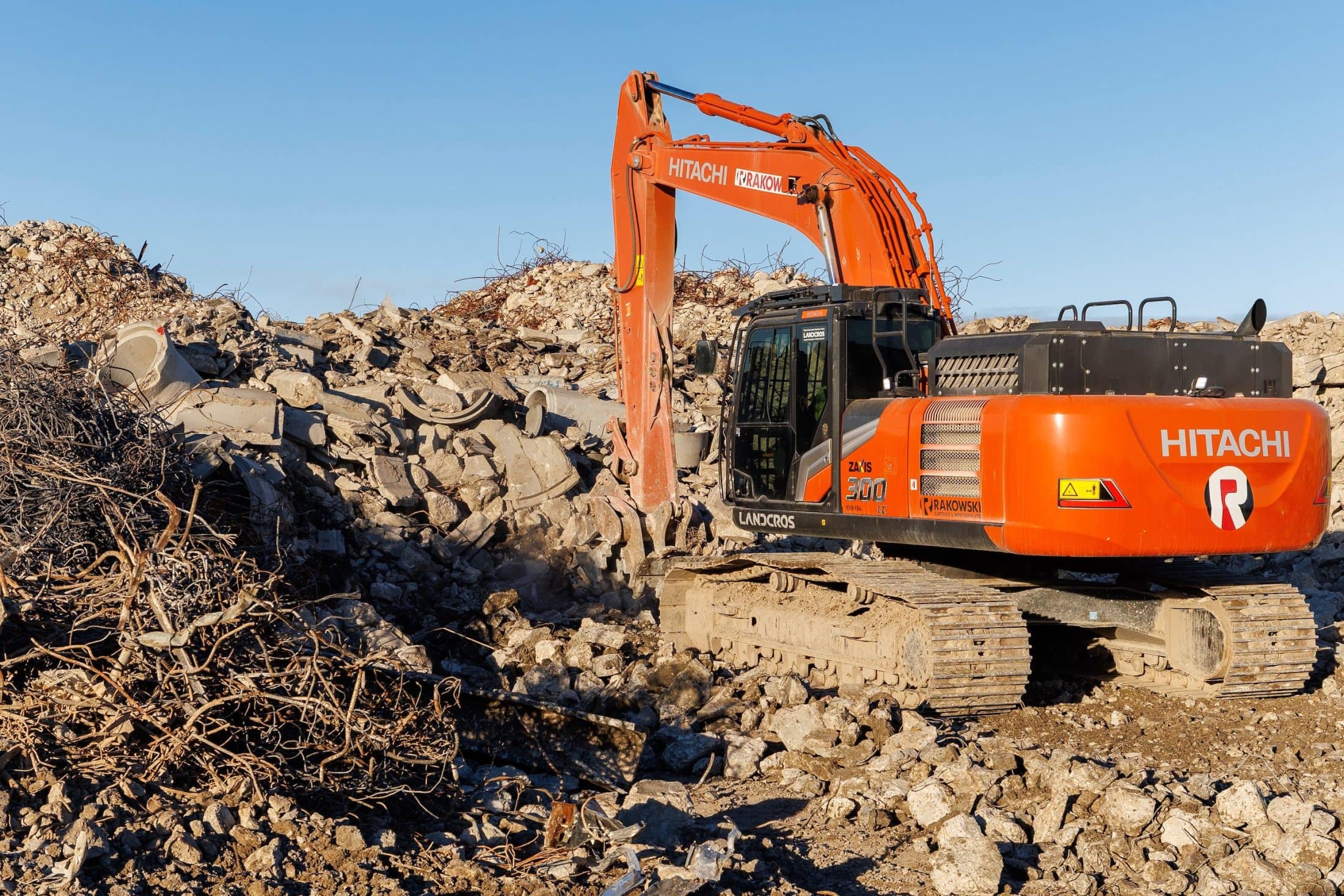
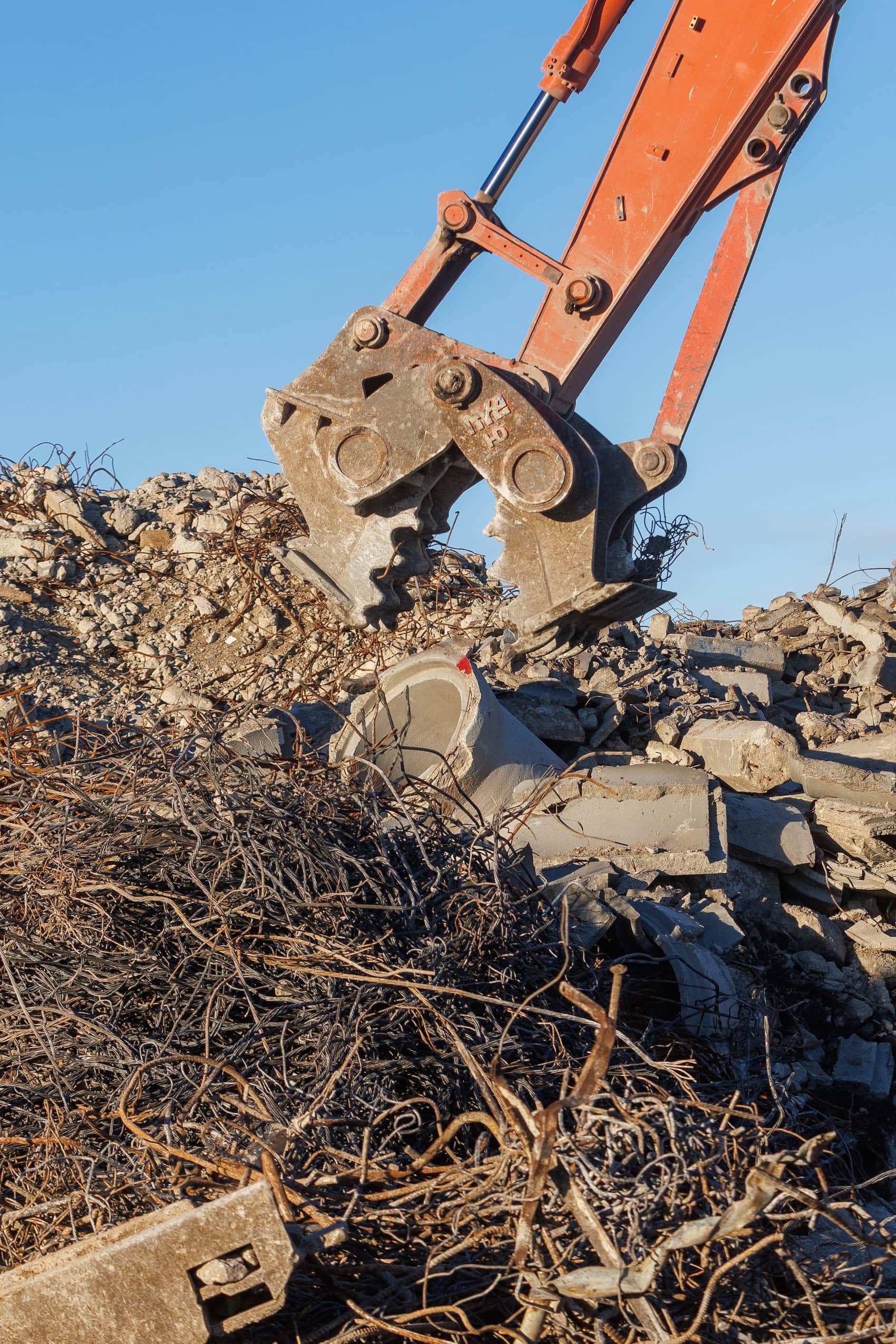
First, large pieces of concrete are broken down into manageable chunks by an excavator with a special pulverizing attachment that looks something like the toothy head of a Tyrannosaurus rex. Despite its size, the machine is able to pick out individual pieces of rebar with precision.
Those smaller concrete chunks are then sent through the jaw and impact crushers, which chew and slam the rock into various sizes. Metal remnants are caught by a magnet before the rock is sent up a conveyor belt and piled high.
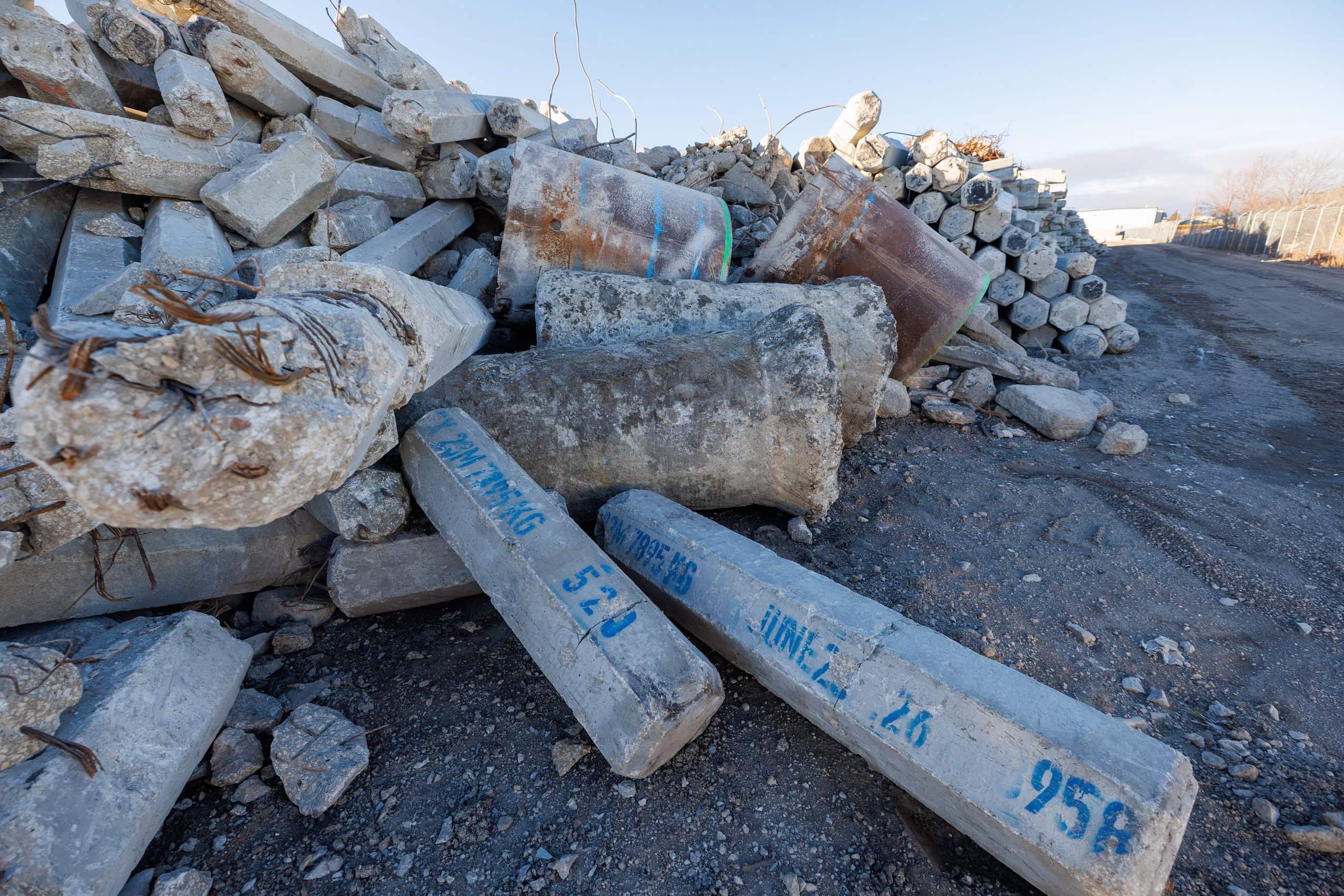
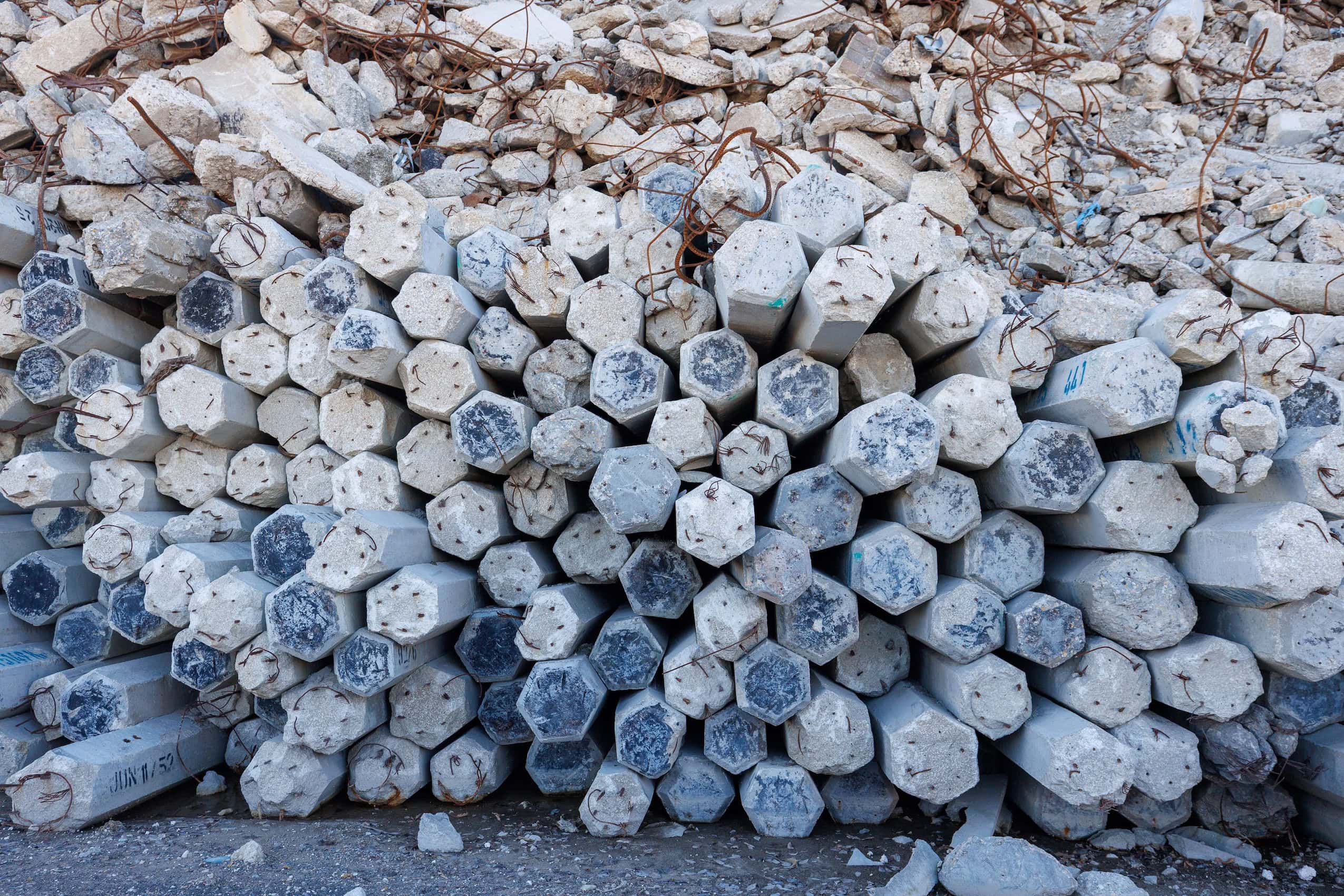
While foundation piles are a headache to recycle because the concrete is extremely hard and reinforced with long pieces of rebar, older concrete, like the century-old stuff from the Arlington Bridge, “usually breaks up quite a bit easier,” Molter says.
The recycled concrete is often purchased by private and commercial customers as a base for parking lots and driveways, he says. Asphalt undergoes a similar process and can be used as top dressing and new pavement, while untreated wood is chipped, dyed and sold as landscaping mulch.
“Years ago that wouldn’t happen. You would’ve recycled the steel, but would’ve done nothing with the concrete or the wood or the asphalt. It would’ve all gone to the landfill or to a farmer who wanted to fill in a swamp or something,” Molter says, adding Rakowski got into the construction recycling game about 30 years ago when it was becoming harder to dispose of debris locally.
In the 1990s, building material accounted for 25 per cent of all the garbage entering Winnipeg landfills, creating space and waste concerns and prompting the city to explore recycling requirements for demolition and development projects. No formal policy exists today and contractors for city-owned infrastructure projects are not required to recycle material.
Those numbers haven’t budged much, with construction and demolition debris still making up an estimated 20 to 30 per cent of Manitoba’s total landfill waste as of 2021.
The city’s last waste management review identified construction material diversion as a priority, especially as Winnipeg’s population continues to grow and new housing is needed. Recent discussions at City Hall have mulled mandatory recycling and material reuse incentives for contractors. The public service is currently awaiting the final report from a 2023 provincial task force on construction, renovation and demolition waste diversion for policy guidance.
A new life for old construction material
Most of the materials from the Arlington Bridge will likely be used in private or commercial applications. At the moment, recycled concrete and asphalt are only used as a sub-base and paving components in certain city construction projects like medians, sidewalks or walking and biking trails, Muhurdarevic says. “They’re not underneath major roadways, just because of the strength requirements.”
The public works department updated its road-building specifications several years ago, recommending the use of new, or virgin, limestone instead of recycled concrete as a base for high-traffic roads due to better long-term strength and performance.
The Manitoba Heavy Construction Association — a member of the provincial construction waste task force — disagreed with this change and wants the city to expand its use of recycled material for road and construction projects.
“We should be supporting practices that allow the recycling of construction waste material as renewable resources,” association president and CEO Chris Lorenc says over the phone. “These materials have served a useful life, but they can be resurrected and put to continued use to support new construction.”
Most of the aggregate used in construction locally comes from quarries north of Winnipeg. Once those resources are depleted, Lorenc says, the construction industry will have to haul products from farther away, thereby increasing transportation costs and greenhouse gas emissions.
“The approach to how we design and build our bridges, structures, roads, regional streets, et cetera, should be driven by a recognition that these assets are finite,” Lorenc says. “As we progress forward, the recycled concrete aggregate or asphalts are a better product because they are continuously improved.”
More opportunity for recycled concrete and cement
The federal government under former prime minister Justin Trudeau laid out a roadmap for decarbonizing the Canadian cement and concrete industry by building a circular economy — or system of recycling and reusing — for concrete nationally and supporting new manufacturing processes. It remains to be seen how Prime Minister Mark Carney’s Build Canada Strong agenda will mesh with those priorities.
Concrete is made of coarse aggregate, such as gravel or sand, chemical additives, water and cement. The latter acts as a binding agent and is, by far, the most carbon-intensive ingredient. In 2019, cement accounted for 1.5 per cent of Canada’s total greenhouse gas emissions due, in large part, to the fossil fuels burned during the high-heat production process. Calcination — the chemical process of turning raw materials into clinker, the foundation of cement — also releases large quantities of carbon dioxide.
Shahria Alam is a professor of civil engineering and director of the Green Construction Research and Training Centre at the University of British Columbia Okanagan in Kelowna, B.C., where he and his students are studying ways to make cement and concrete production more sustainable — such as using mine tailings and wood ash to make cement, and 3D-printing with recycled concrete. The centre also works with local construction companies on real-world applications of its novel products.
Reusing recycled concrete is low-hanging fruit, Alam says.
“Gradually, we are adopting the practice, but there’s still lots of potential,” he says in a phone interview. “A large volume of [recycled concrete] is diverted toward road construction and we are trying to propose that we can do more.”
However, not all concrete is created equal. Alam says that while some has the potential to be recycled multiple times, the source material or “mother concrete” has to be of high quality to match its intended future use. The mix also has to be able to withstand pressures, such as traffic and freeze-thaw cycles.
“You have to make sure all kinds of durability issues are considered and tested and then you can really bring these products into the market. It is possible and we have done it,” Alam says, pointing to the positive results of a multi-year study comparing the performance of recycled and conventional concrete along a stretch of municipal sidewalk in Kelowna.
“Our 100-per-cent-recycled concrete performed better,” he says.
Eva Wasney is a reporter covering environmental issues in Manitoba. Her position is part of a partnership between The Narwhal and the Winnipeg Free Press.