




 10 min. read
The Alberta government announced a sweeping piece of legislation on Nov. 23, giving it new authority to control natural gas pipelines within the province.
The move represents a dramatic change in the way private gas businesses operate in Alberta and places significant power into the hands of the energy minister and cabinet. The legislation also opens the door to the creation of two Crown corporations which would direct and potentially compete with private energy companies.
So what exactly did the government announce, what is the logic behind the legislation and what are the potential impacts?
Let’s break it down.
table of contents
So what happened, exactly?
The United Conservative government unveiled Bill 45, the Natural Gas Infrastructure Act, on Nov. 23. The legislation allows the government to direct companies to build pipelines and facilities that the government deems a priority.
It also enables the creation of those two Crown corporations — one to oversee and plan the gas transmission system and one to potentially finance or build new infrastructure — but establishing them would require new legislation and new funding.
Consider it a first step in the process.
In essence: private companies can enter into agreements to build new infrastructure, like pipelines, based on government desires. If they don’t, another company — and maybe the government itself — could do the building.
What’s the big deal with natural gas?
Natural gas is a big business in Alberta. Just over three-quarters of electricity generation in the province is from natural gas plants. In 2021, 82 per cent of Albertan homes used forced air furnaces to heat their homes, which typically burn natural gas.
And that’s not to mention the power-hungry AI data centres that are lining up to build in the province — some of which would use as much electricity as the entire city of Calgary. The government is pushing to see at least $100 billion of investment from the sector in the next four years. Those data centres have to bring their own power, and that power has to come from natural gas generation, at least for now.

In addition to data centres, the government has set a goal to double oil production, which requires a significant increase in natural gas production to power oilsands operations and help ship oil through pipelines.
The Alberta government has made it clear it sees natural gas as a very key part of the puzzle. The premier’s press secretary did not respond to a request for comment by publication time.
A little recap, please? How did we get here?
The first rumblings about the changes came in September, when The Narwhal obtained a leaked cabinet document outlining the plans, along with analysis from bureaucrats about the possible risks and rewards.
That document warned of increasing costs for Albertans’ utility bills, potentially expensive legal actions from affected companies and First Nations and the potential to spend billions of taxpayer dollars building gas pipelines should private companies not volunteer to do so.
But it also highlighted bottlenecks in the gas pipeline system that were impacting government plans for more AI data centres and a mandated doubling of oil production.
The document said talks about expanding pipeline capacity with TC Energy, which owns and operates Alberta’s main natural gas pipeline system, fell apart. According to the document, the company wanted to increase the price it charges producers to transport gas — and was reluctant to make business decisions based on “speculative demand.”
The government was quick to distance itself from those plans.
Minister of Energy and Minerals Brian Jean told The Narwhal “internal materials do not represent government decisions.”
And Premier Danielle Smith made it the first topic on her weekly radio show after The Narwhal broke the news.
When asked if the government would consider creating Crown corporations as outlined, she said: “Short answer: No, we don’t do that in our province.”
Two and a half months later, the bill was unveiled, creating the power to do exactly that.
What does Bill 45 mean for Albertans?
The leaked document prepared in advance of the legislation warned of increasing costs for Albertans and Alberta businesses as natural gas prices are driven up. “Increased natural gas demand could contribute to higher costs for households, businesses and gas-intensive industries, which could deflect stakeholder support,” the leaked document read.
That increase, by extension, could raise electricity costs.
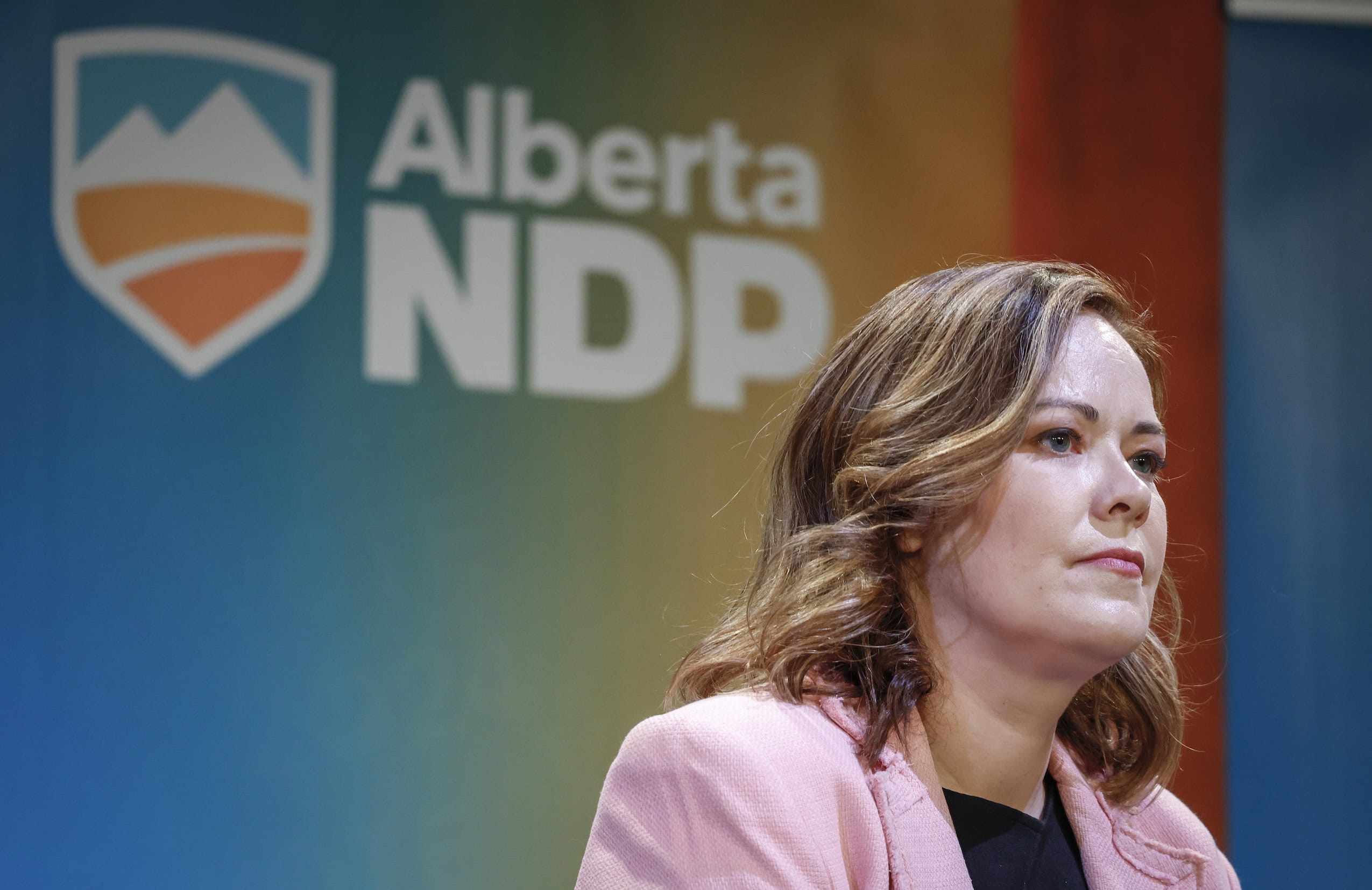
“Danielle Smith and the United Conservative Party are once again proving they have the wrong priorities,” Kathleen Ganley, the Alberta NDP shadow minister for affordability and utilities, said following the tabling of the bill. “Many Albertans are already struggling to pay their utility bills, and now the United Conservative Party is opening the door to even higher energy costs.”
If costs balloon for financing or building new infrastructure, Albertans could also be on the hook.
Is the United Conservative Party of Alberta nationalizing natural gas!?
Sort of. Maybe. Kind of.
The government was eager to emphasize that this legislation does not create the much-discussed Crown corporations when it unveiled the bill, even if this is the first step toward doing just that.
Even without those government-owned corporations, however, the legislation gives enormous power to elected officials — the energy minister and cabinet, to be specific — to dictate when, how and where new gas infrastructure is built, as opposed to private companies following the market.
Cabinet can direct what it sees as priorities and make agreements that not only direct a willing company to build infrastructure, but also to restrict where companies can build, operate and expand.
New pipes could also carry government gas, acquired through its Natural Gas Royalty-in-kind program, where companies give gas to the province in lieu of paying royalties (something it might also do with oil for the proposed Pacific Link pipeline to the West Coast).
Energy Minister Jean stressed these agreements would be voluntary, but the legislation presents a significant “or else.”
“I’m not tabling an ultimatum,” he said, pushing back on that characterization in a news conference on Monday. “I’m tabling a piece of legislation.”
That’s not how everyone saw it, however.
How have oil and gas companies, like TC Energy, responded?
As mentioned in the leaked document, the government — and some in industry — say there isn’t enough gas infrastructure in place to feed growing demand, and expansion of the system is moving too slow.
The government accuses TC Energy of behaving like a monopoly. TC Energy declined to comment for this article, pointing to its earlier statement. “TC Energy is reviewing the legislation introduced today and assessing its potential implications for customers, investment and future growth of the integrated NGTL System,” it reads, referencing the pipeline network it operates known as the NOVA Gas Transmission Ltd. or NGTL. “We will provide further comment once that review is complete.”
TC Energy is certainly the biggest stakeholder in this debate. The company is the parent company of Nova Gas Transmission Ltd., the 25,000-kilometre pipeline system commonly known as NGTL. That’s the central nervous system of gas transmission in the province.
It has an existing agreement with another company, ATCO, which is also a significant player in the gas transmission business and operates on the main pipeline system.
While the government tried to put a happy face on its interactions with business, TC Energy appears less than impressed.
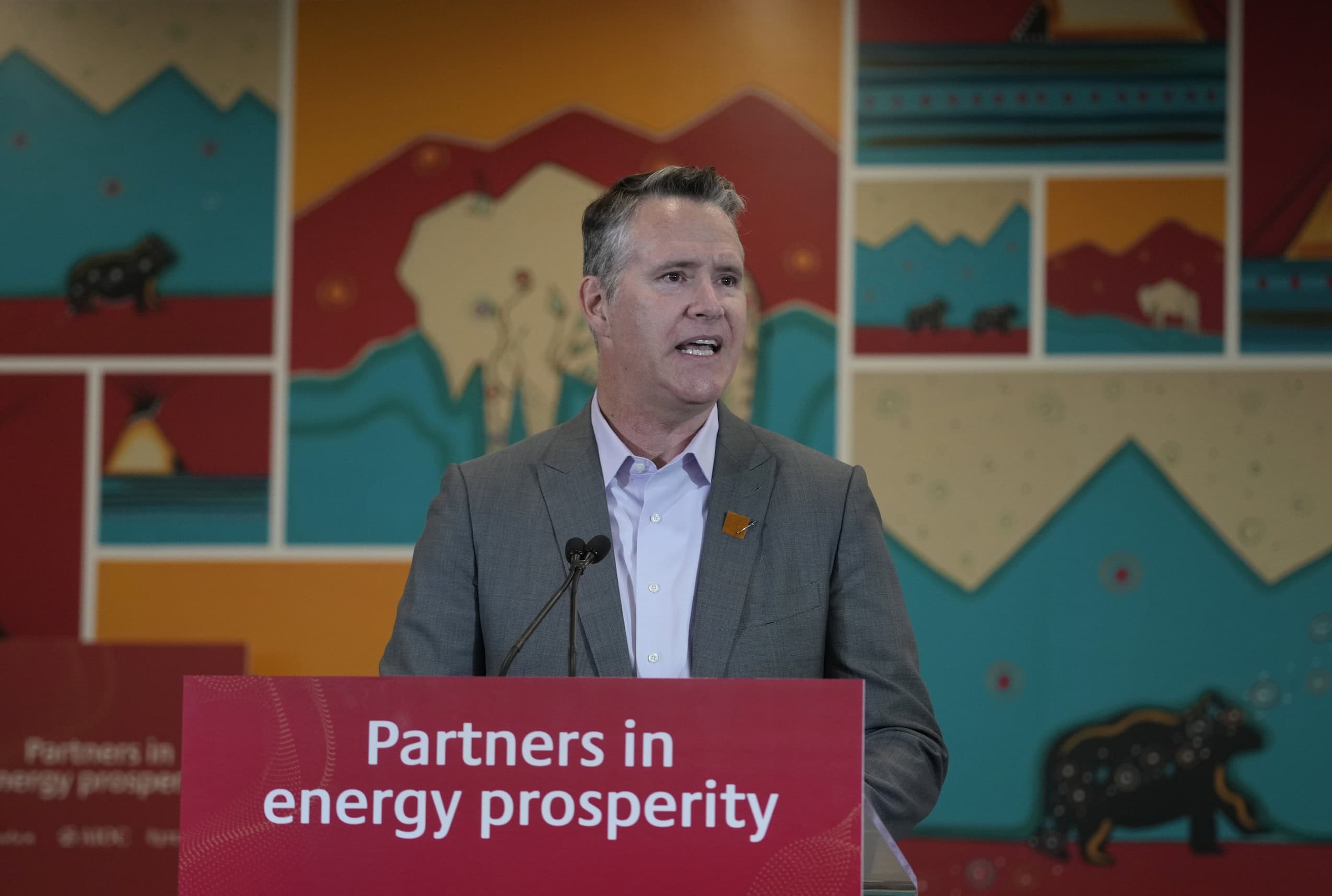
A letter from its CEO, François Poirier, to the premier was obtained by The Narwhal on the day of the government’s announcement. In it, Poirier said his company might have to shelve its plans for expansion and warned the moves could have a significant detrimental effect on market confidence.
Poirier also copied ATCO’s CEO, Nancy Southern, on the letter.
ATCO has been quiet on the legislation and did not respond to a request for an interview or statement by publication time.
Others are supportive.
“The bold vision of the Alberta government to grow oil and gas production, foster new economic development opportunities within Alberta and support new export opportunities requires the timely and cost-effective development of natural gas infrastructure,” Lisa Baiton, the head of the Canadian Association of Petroleum Producers, an industry advocacy group, wrote in a government news release on the legislation.
Is it common for governments to take charge of energy projects?
Dipping the public toe into the private market, or submerging the whole leg, is becoming more common in North America. Think Pacific Link pipeline and the Pathways project, and federal support for other major projects.
So this move fits into a larger pattern.
“The majority of countries have a pretty strong government hand in energy markets, not just on the regulatory side, but in terms of ownership and strategic policy and industrial policy,” Robert Johnston, director of energy and natural resources policy at the University of Calgary’s School of Public Policy, said in an interview.
“This isn’t by any means a one-off dynamic about TC and [the Nova Gas Transmission Ltd. pipeline].”
He said there is a difference, however, in the way companies will respond based on the circumstances.
“I think if you look at Pacific Link, that’s a project that the companies themselves said was too big and too risky for them to put their shareholder capital to work,” Johnston said. “Whereas in this case, I think TC seems to be arguing that the market’s working well.”
In short, there’s a disconnect between what the government and the company wants.
“Neither goal is wrong,” he says. “It’s just that they’re different. There’s just a potential conflict between them.”
Could TC Energy … sue Alberta? It’s a possibility
It’s not out of the question.
The leaked document from September showed the government was planning for lawsuits that could cost millions of dollars, particularly from TC Energy.
Those costs were in addition to almost $200 million to get the hypothetical Crown corporations up and running and then as much as $6 billion to build new infrastructure.
Beyond the legal risks, the legislation could put considerable financial risk on Albertans through either financing or owning natural gas pipelines and facilities.
Nagwan Al-Guneid, the Alberta NDP’s shadow critic for energy and minerals, said the moves are a costly gamble.
“If there was a strong business case for these projects, companies would be lining up to build them. Instead, this government is centralizing power, picking fights with the private sector and putting taxpayers on the hook for costly legal battles,” she said following the government’s announcement.
With talk of an AI bubble bursting, that risk could increase if pipelines are built to feed data centre growth.
Johnston, however, said while there are risks being taken with public dollars, there are also potential upsides.
“This is an equity investment,” he said. “So the question is whether or not those dollars are better in the hands of someone like TC Energy that’s been operating pipelines for 60 or 70 years and knows this system inside-out, or if the dollars need to be shifted to a new government-owned entity that would have different goals and maybe different risk appetite.”
In the end, he says, it might even be more about negotiation and positioning than creating a new Crown corporation or two.