



 11 min. read
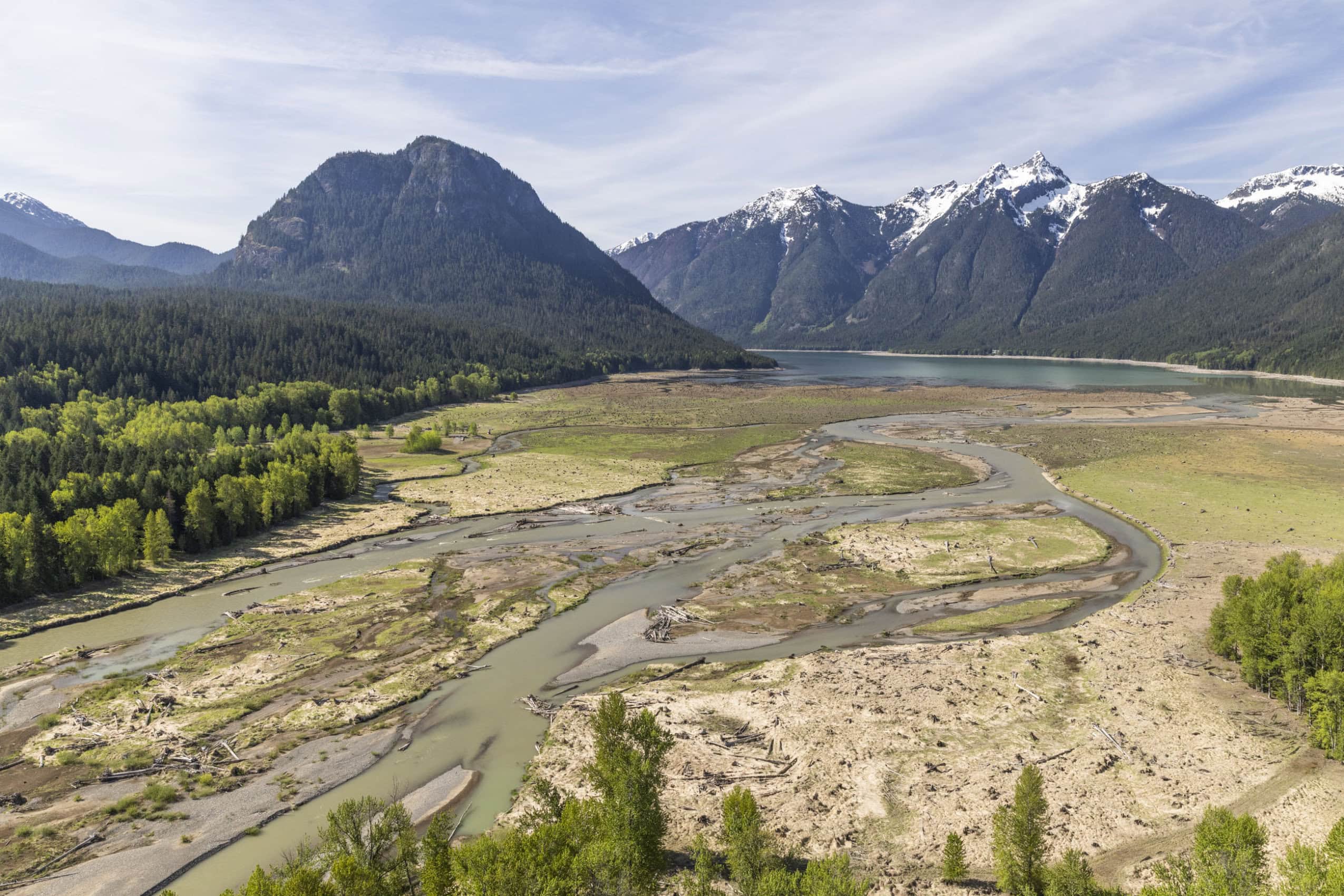
“Look at the size of that logjam,” Richard Bussanich exclaims with excitement as we fly low over one of the upper reaches of the Skagit River just north of the U.S.-Canada border. Bussanich, a senior biologist for the Okanagan Nation Alliance, and two of his colleagues are surveying the upper Skagit River and its main tributaries north of the border. They want to understand if salmon could survive here — after more than a century of absence.
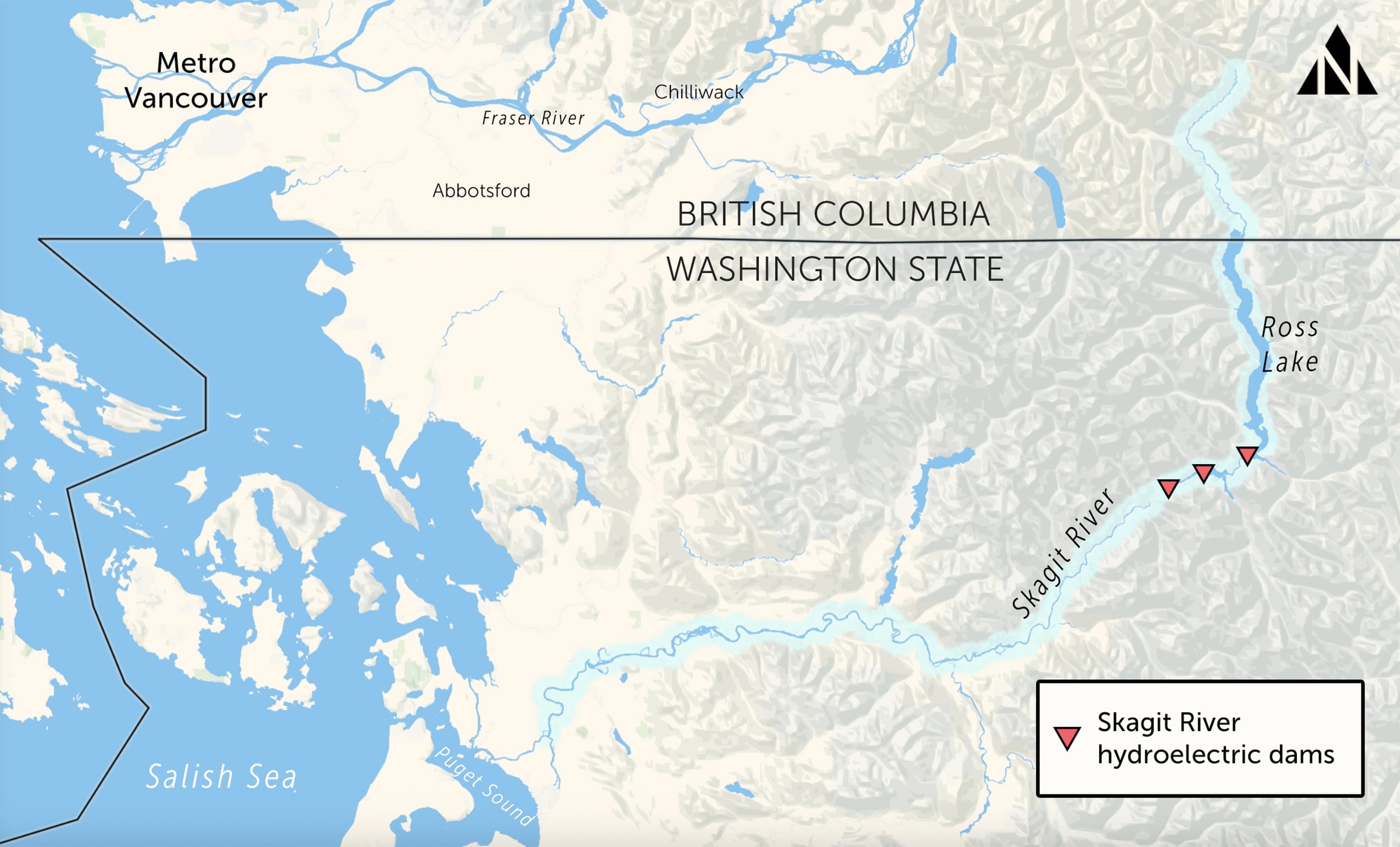
The Skagit originates in the B.C. Cascades, following the mountain range south into Washington state before flowing west to the Puget Sound. But ever since the 1920’s construction of the Gorge Dam in Washington state, the Canadian waters of the Skagit have been devoid of salmon. It was the first of three dams built on the river south of the border by Seattle City Light, Seattle’s public electricity provider, which today supply about 20 per cent of the utility’s power. None of these dams’ construction included fish passage. But that might finally be about to change.
After decades of pressure from tribes and conservation groups, the publicly owned utility is now committing to design and implement a plan to allow salmon to once again reach the upper river.
A landmark multilateral legal settlement between Seattle City Light, several tribes and non-governmental organizations, as well as various federal, state and county governments, was reached in March 2026. It commits the utility to funding nearly US$1 billion over the next 24 years to restore salmon runs and create fish passage. The agreement by the utility represents a reversal of its long-held claim that salmon never reached the upper Skagit before the dams — a position contradicted by historical records, archaeological evidence and Indigenous Knowledge.
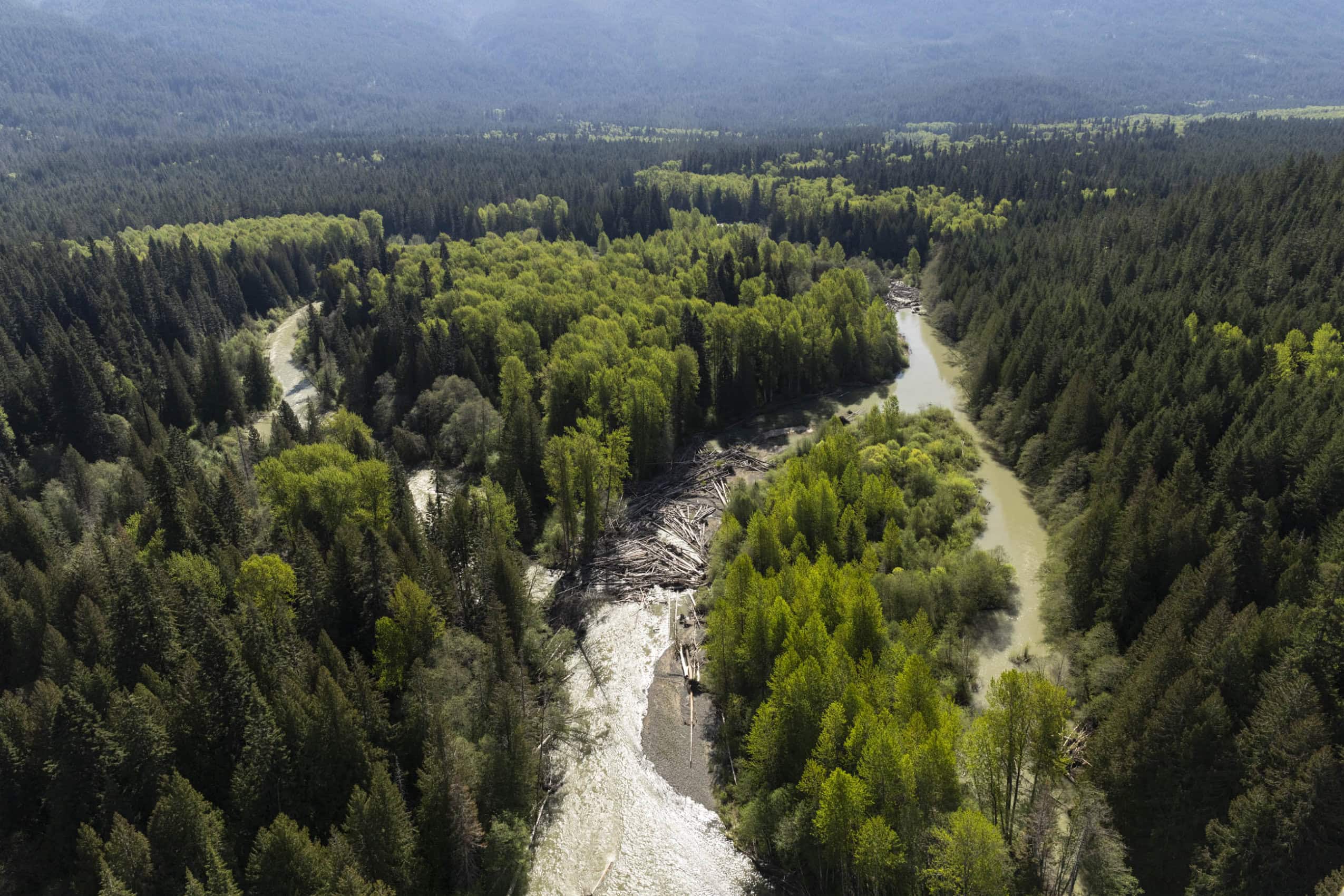
The agreement is prompting First Nations in British Columbia to consider what the return of salmon could mean on their side of the border. Bussanich is excited by the chance to witness and support the return of salmon on this stretch of river. “If you provide them the opportunity, the fish will find a way,” he says.
Assessing salmon habitat from the sky
Every 30 to 50 years, the three dams on the Skagit have required an updated permit from the U.S. Federal Energy Regulatory Commission to legally continue operations.
The project’s recent permit expired in 2025. Since then, the dams have been operating on annual licenses as negotiations for the terms of the new permit are settled. As part of the relicencing process, the public utility is required to carry out numerous studies to look at how the dams affect a variety of environmental, economic and social considerations and how to mitigate harmful impacts. This created the window for action by U.S. tribes to push the utility to deal with their role in depressing salmon runs across the entire Skagit River system.
The March legal settlement dictating the terms of the future management of these dams followed an ambitious lobbying campaign and legal action spearheaded by the Upper Skagit Indian Tribe in Washington state, along with pressure from the neighbouring Sauk-Suiattle Indian Tribe, conservation organizations and the public spurred by regional and national investigative journalism.
At the signing ceremony for the legal agreement in May 2026, Scott Schuyler, a member of the Upper Skagit Tribe and its cultural and policy representative for natural resources, shared some hope and history.
“Today is a day of reflection for the Upper Skagit People,” he said. “We do appreciate everything that has occurred over the last eight years [of negotiations] but this journey actually began 124 years ago for the Upper Skagit when we were not allowed a voice or a choice.”
The day after the settlement was signed, an engineering firm was hired to start work on designing fish passage, Schuyler later told The Narwhal. With the public utility committing to create a pathway for salmon to access areas above each of its three dams, and thereby potentially unlocking spawning habitat in Canada, the Okanagan Nation Alliance is interested in how this effort will interface with the lands and waters it is part of stewarding north of the international border.
“Our mandate is ‘kł cp̓əlk̓ stim̓, ’causing to bring back’ water and salmon,” Bussanich says during the field trip to the Skagit. “Salmon reintroduction … and restoring habitat and protecting it is the core of everything, that the Okanagan and its members in the nation adhere to and guide us.”
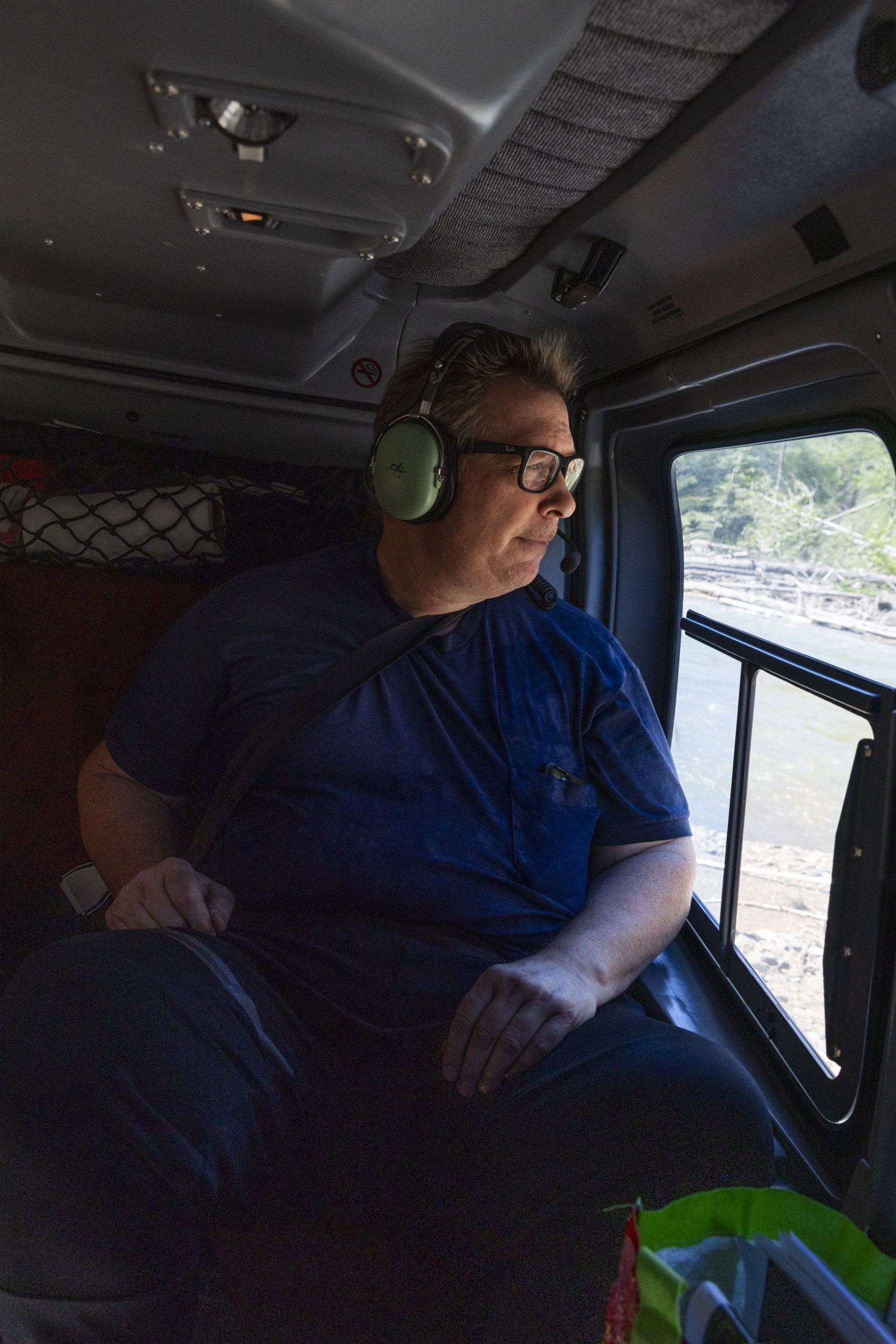
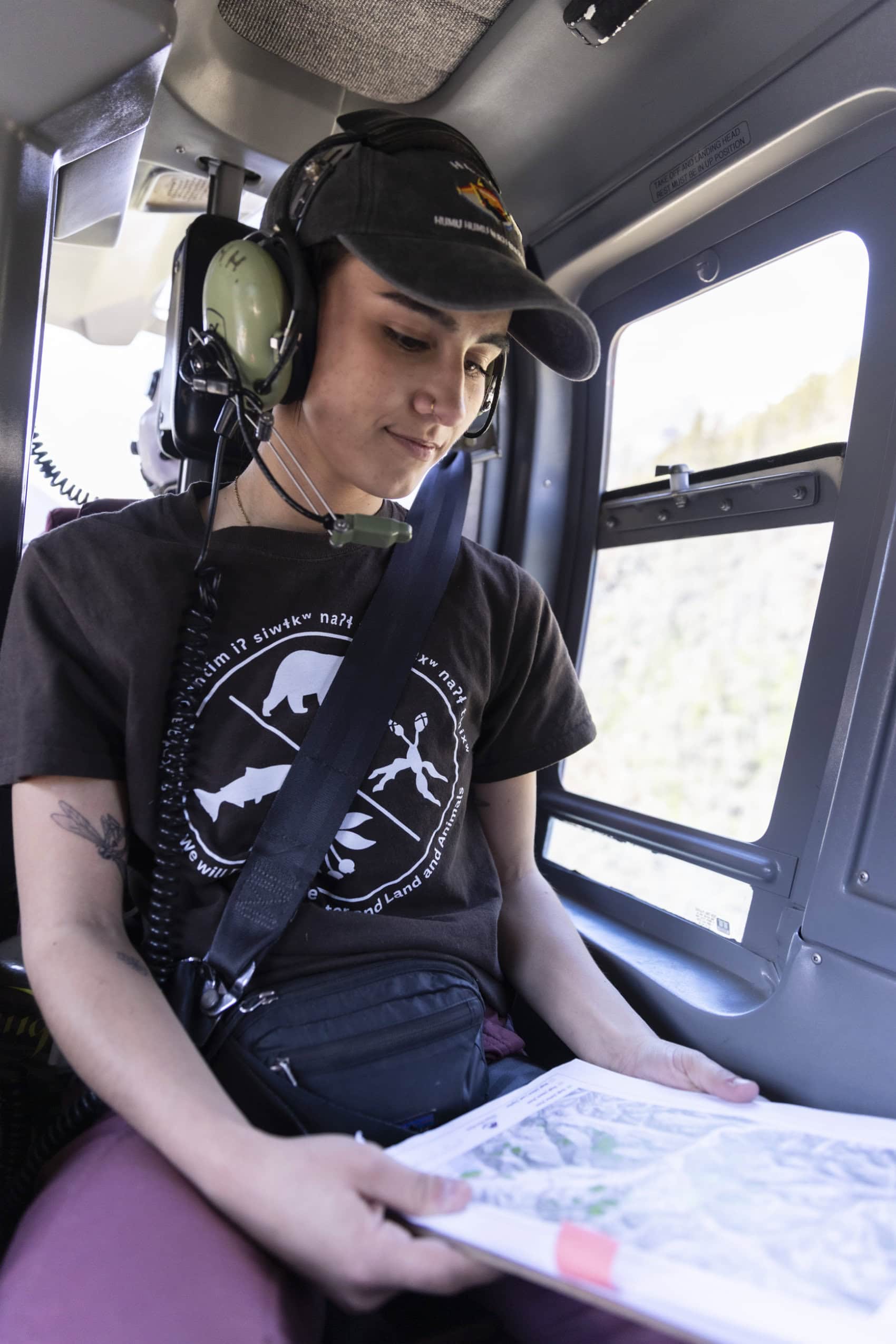
The goal of the upper watershed’s aerial survey Bussanich and his team are doing is to better understand conditions on the ground for returning salmon. According to Bussanich, the flight is part of ongoing work being carried out collaboratively by the Okanagan Nation Alliance (representing the Upper Similkameen Indian Band), Stó:lō Nation, Parks Canada, the Washington-based organization Conservation Northwest and a consulting company called Biodiversity Pathways. Their collective goal is to protect the area and its sensitive species through Indigenous-led conservation efforts.
We touch down briefly on a sandbar on the river on the Canadian side of the border to survey conditions more closely at the location. Bussanich carefully photographs and notes the structure of another impressive logjam and the side channel it helped create.
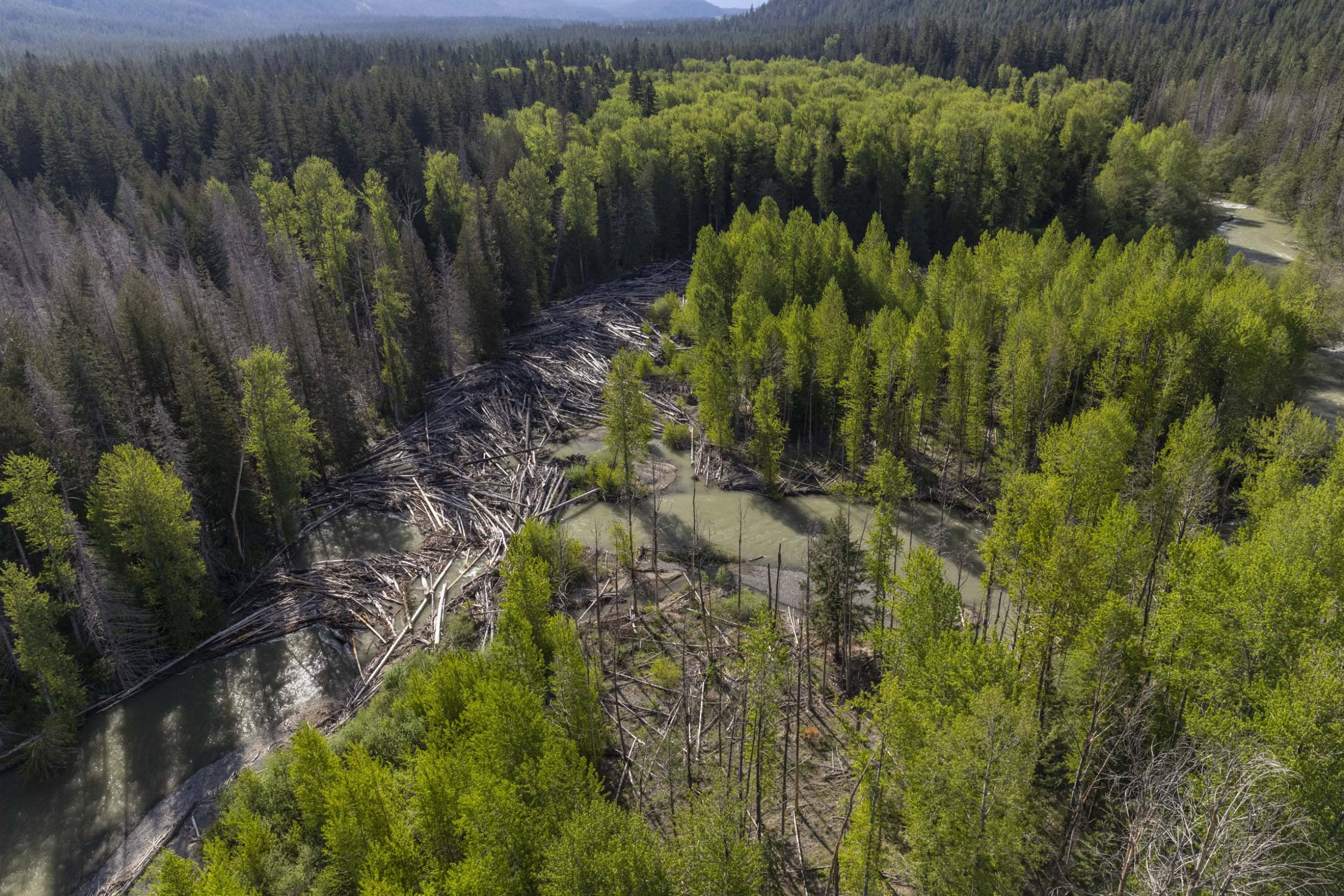
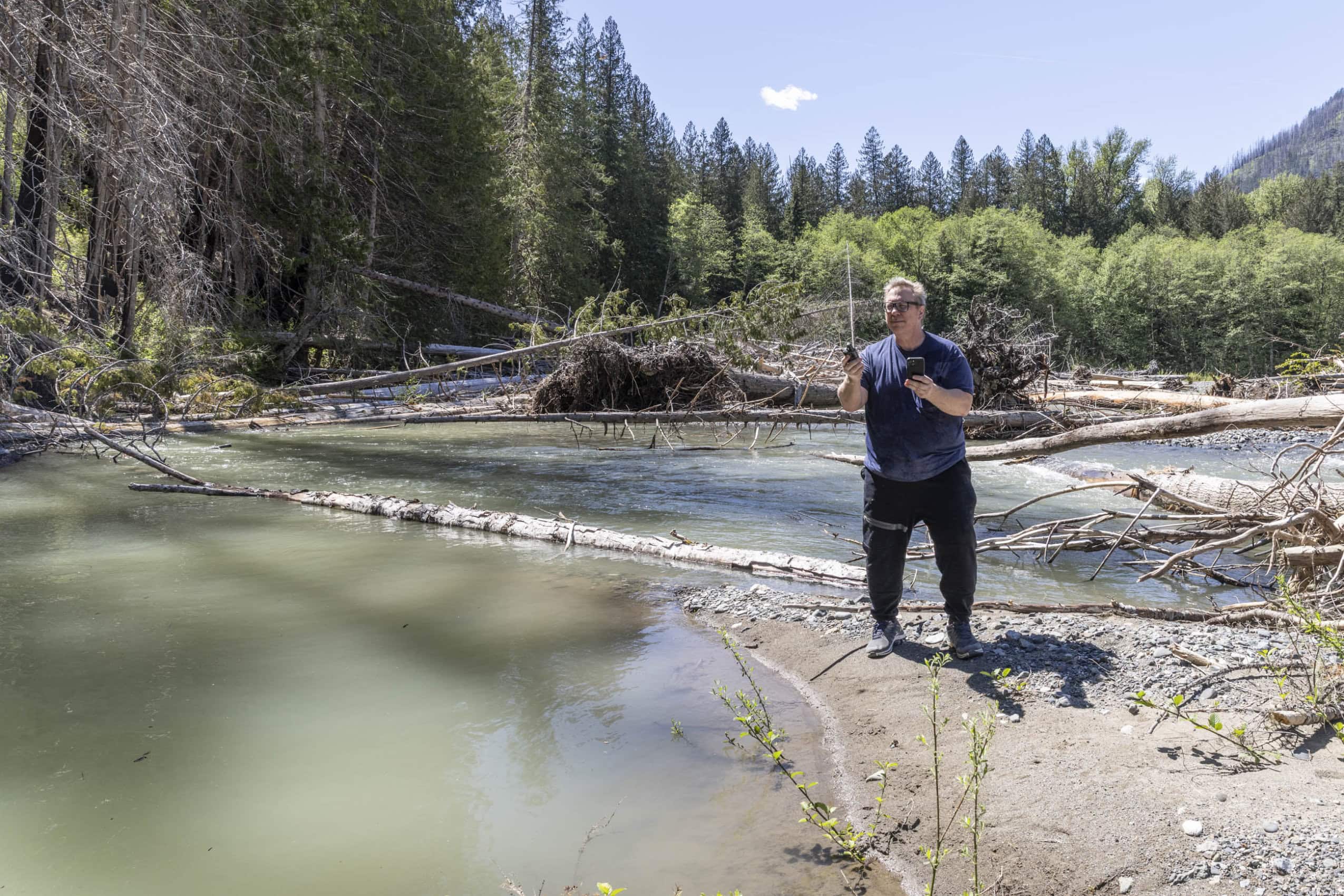
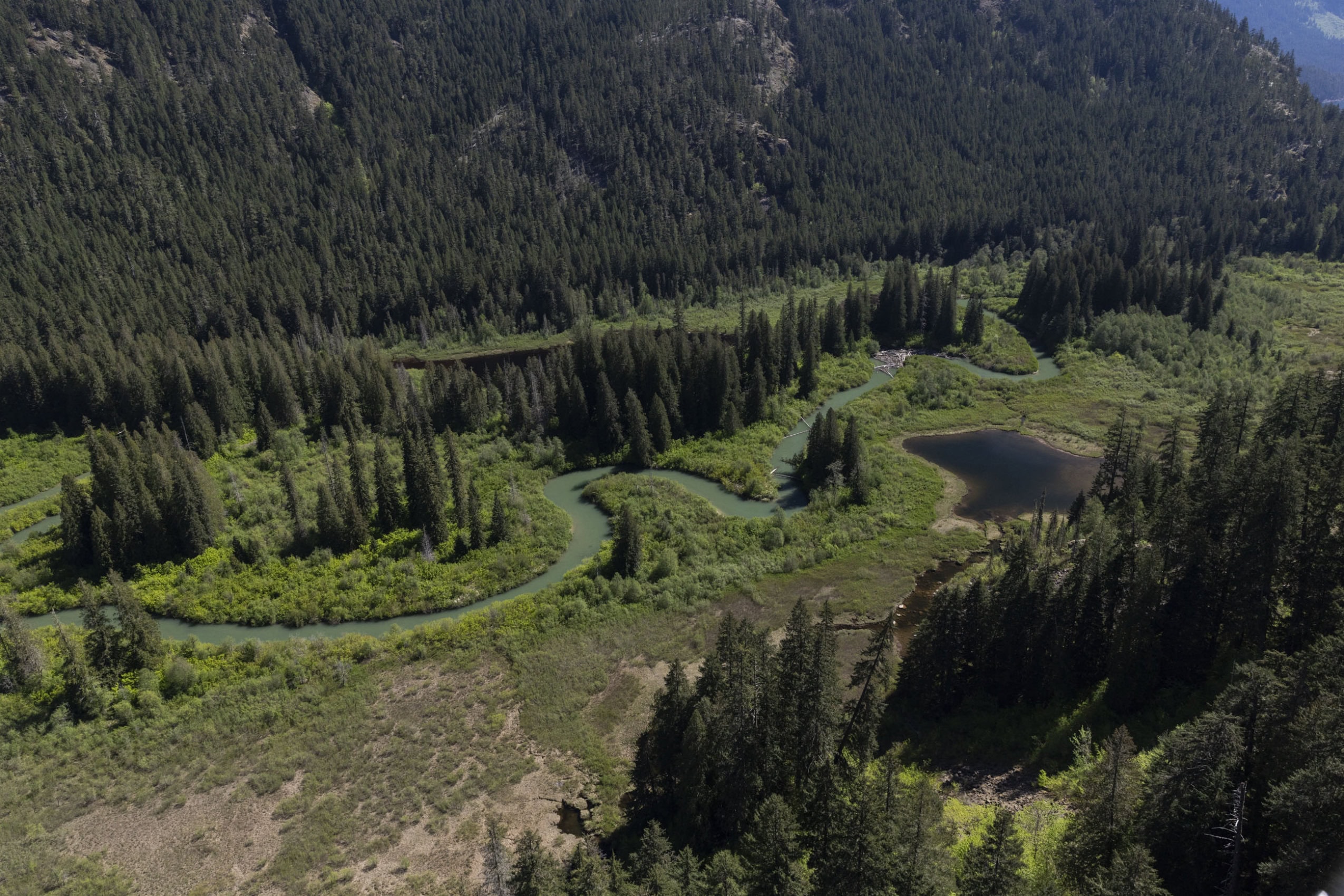
“Coho will spawn in side channels like this,” he says. In the Okanagan River east of here, the Okanagan Nation Alliance and its partners have been creating artificial logjams to restore streams where the wood was removed and the streambed was straightened for flood control and agriculture. Here, on the upper reaches of the Skagit, the braided channel and natural woody structure provide a template for what they aim to create elsewhere for salmon habitat. Through Bussanich’s eyes, this part of the river appears in excellent condition for the return of anadromous (fish that are born in freshwater, migrate to the sea and return to freshwater to spawn) salmon. Now they just need a path to reach it.
As we cross the border into the U.S., we fly over the massive reservoir backed up behind the Ross Dam, the northernmost of the three Skagit dams. Around us, the high peaks of North Cascades National Park rise up from the reservoir shores. Bussanich is impressed with the quality of the spawning habitat in several of the tributaries entering the reservoir we fly over. Some locations look better for sockeye, others for Chinook and coho, according to Bussanich’s keen eye.
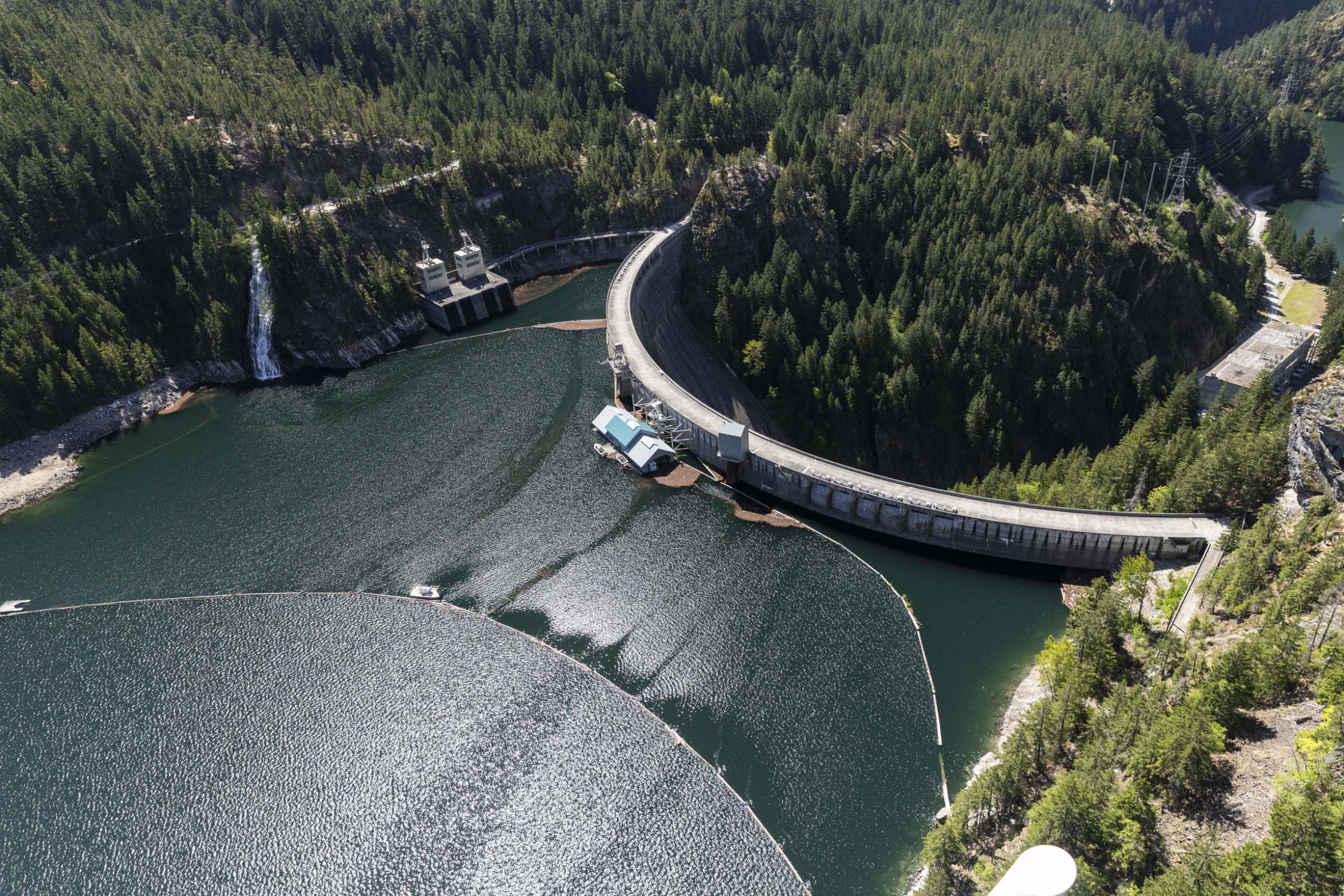
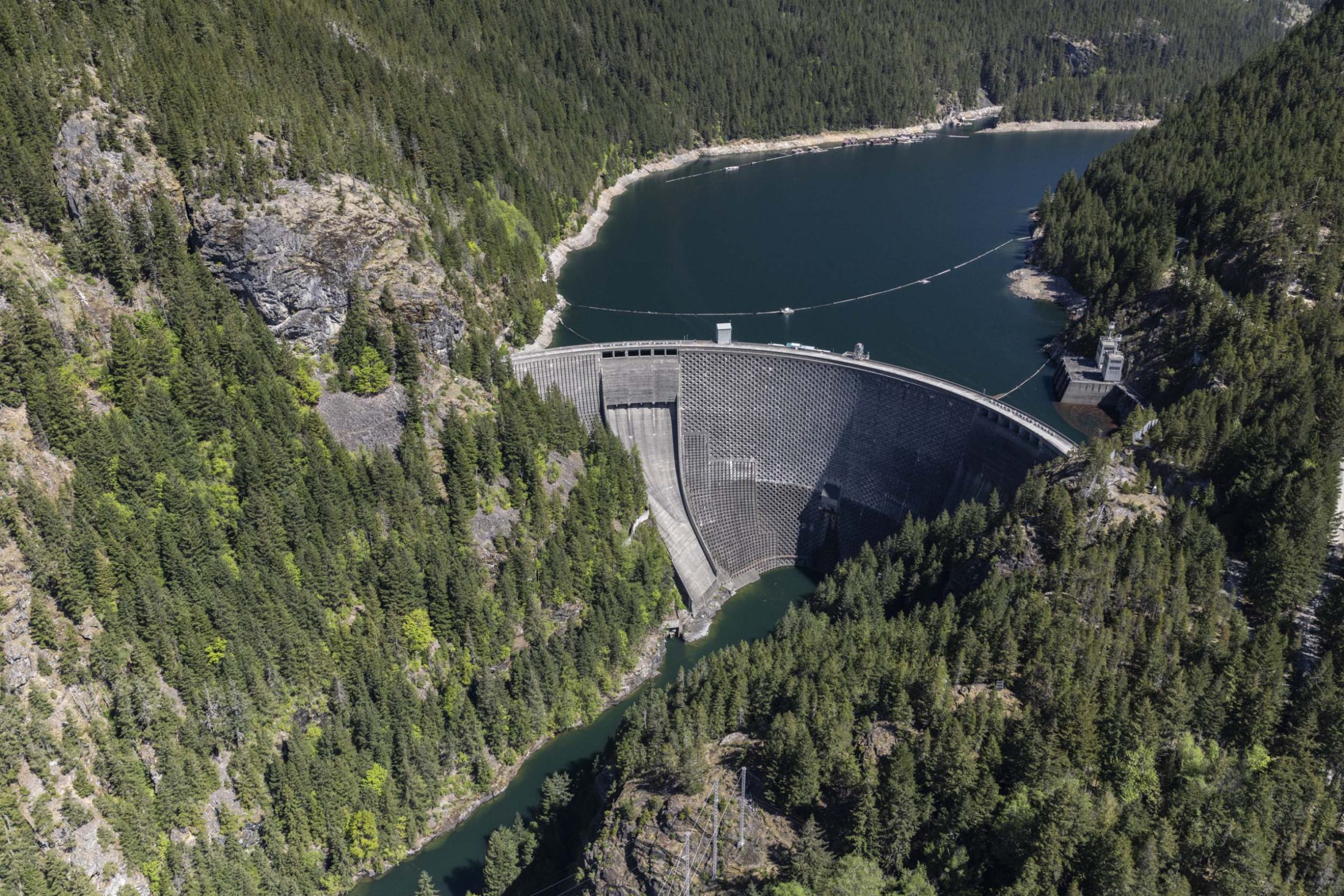
Then we see the Ross Dam. At 160 metres tall, it is the largest of the three hydroelectric dams on the river. The height of the dam itself is still a formidable challenge for engineers to figure out how to get migratory fish around. In the first half of the 20th century, it was considered insurmountable.
The long road to salmon recovery
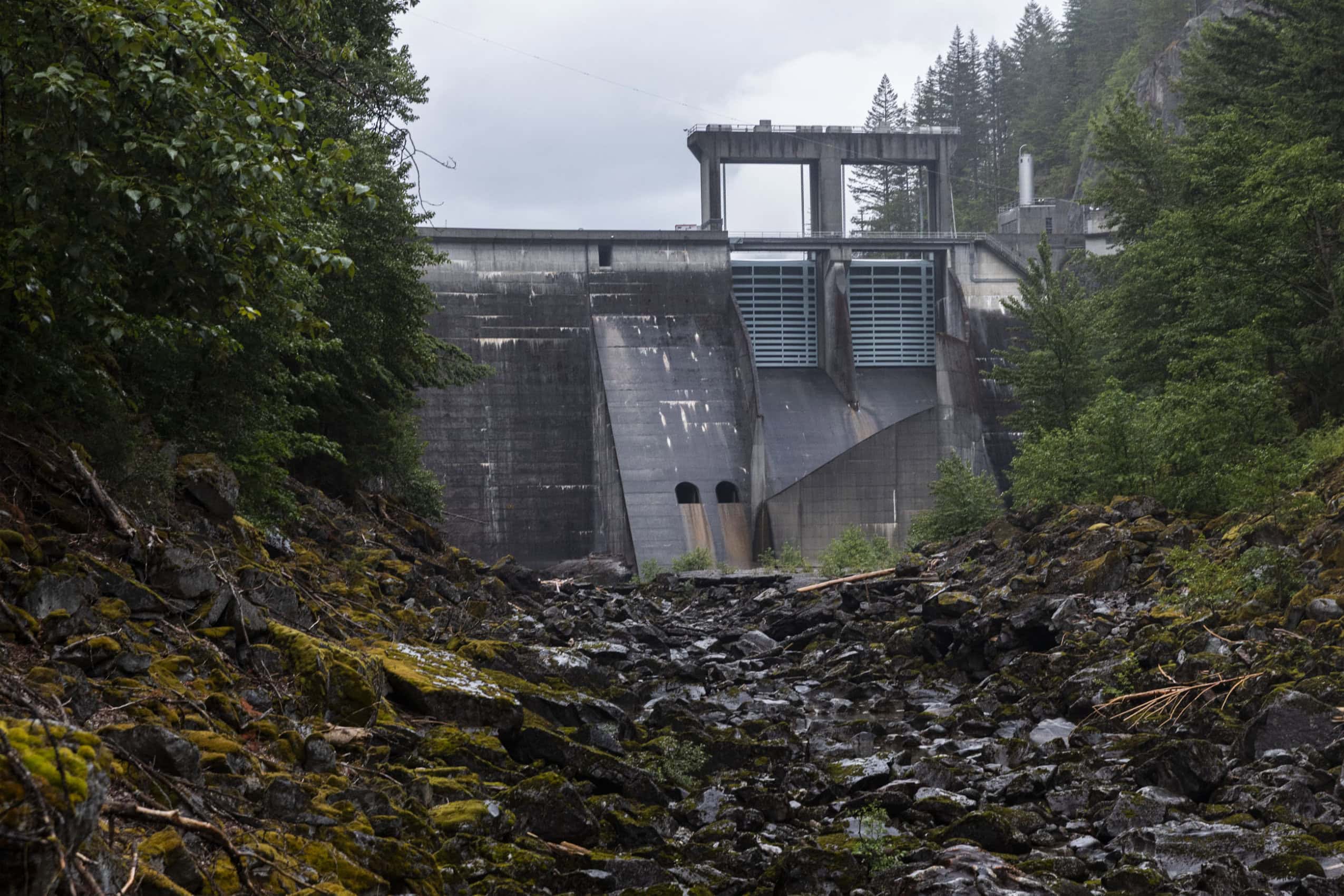
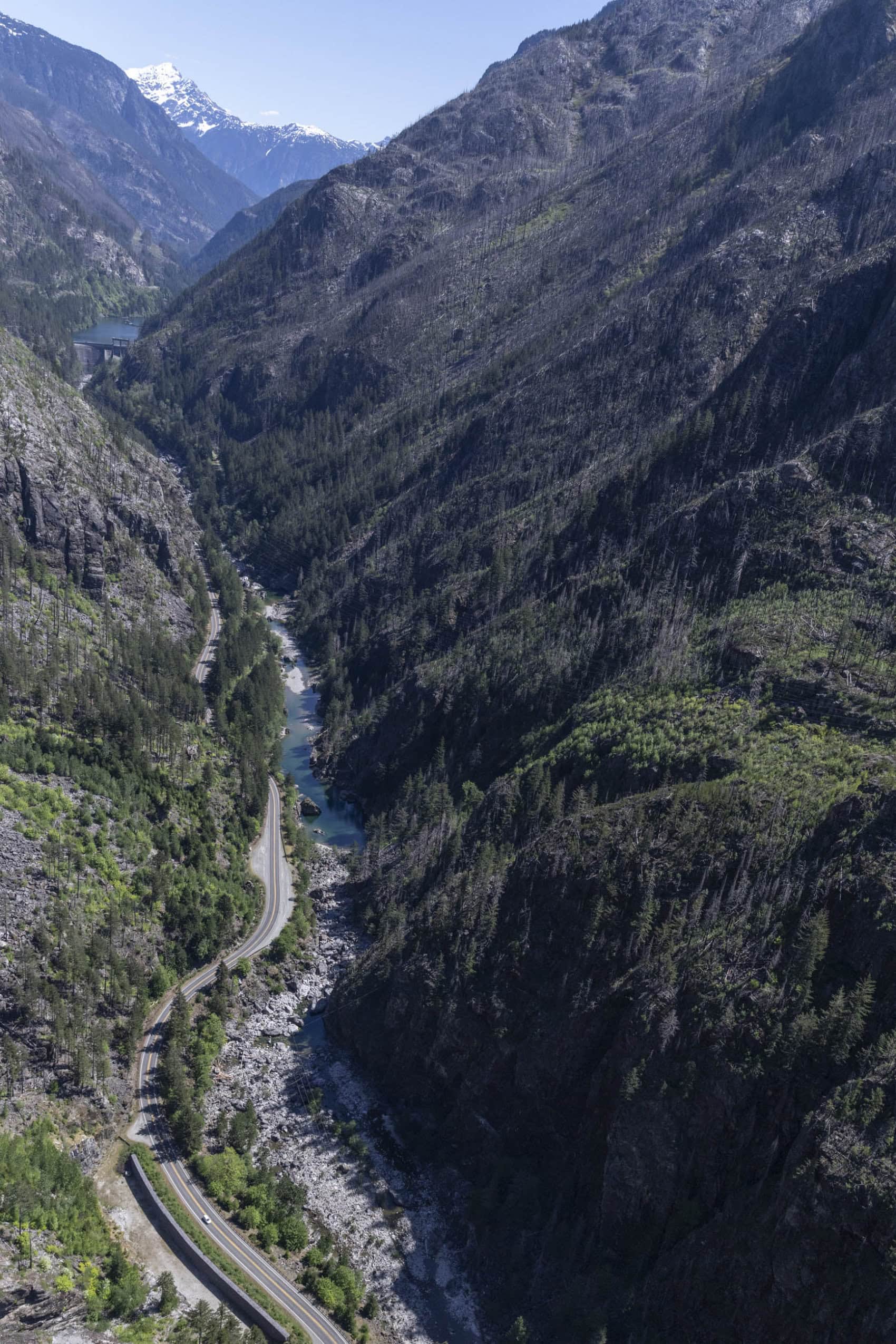
From the Ross Dam, we fly downstream over the Diablo and then the Gorge dams. Immediately below the Gorge lies a stretch of the river that is completely dewatered by Seattle City Light, with the entire river’s flow diverted into a tunnel leading to a power-generating station about three miles downstream in the town of Newhalem, Washington, a former village site of the Upper Skagit Tribe. After passing through the power station’s turbines, the water is returned to the Skagit, which continues unimpeded the rest of the way to the sea, meeting the completely undammed Sauk River, its largest tributary, along the way.
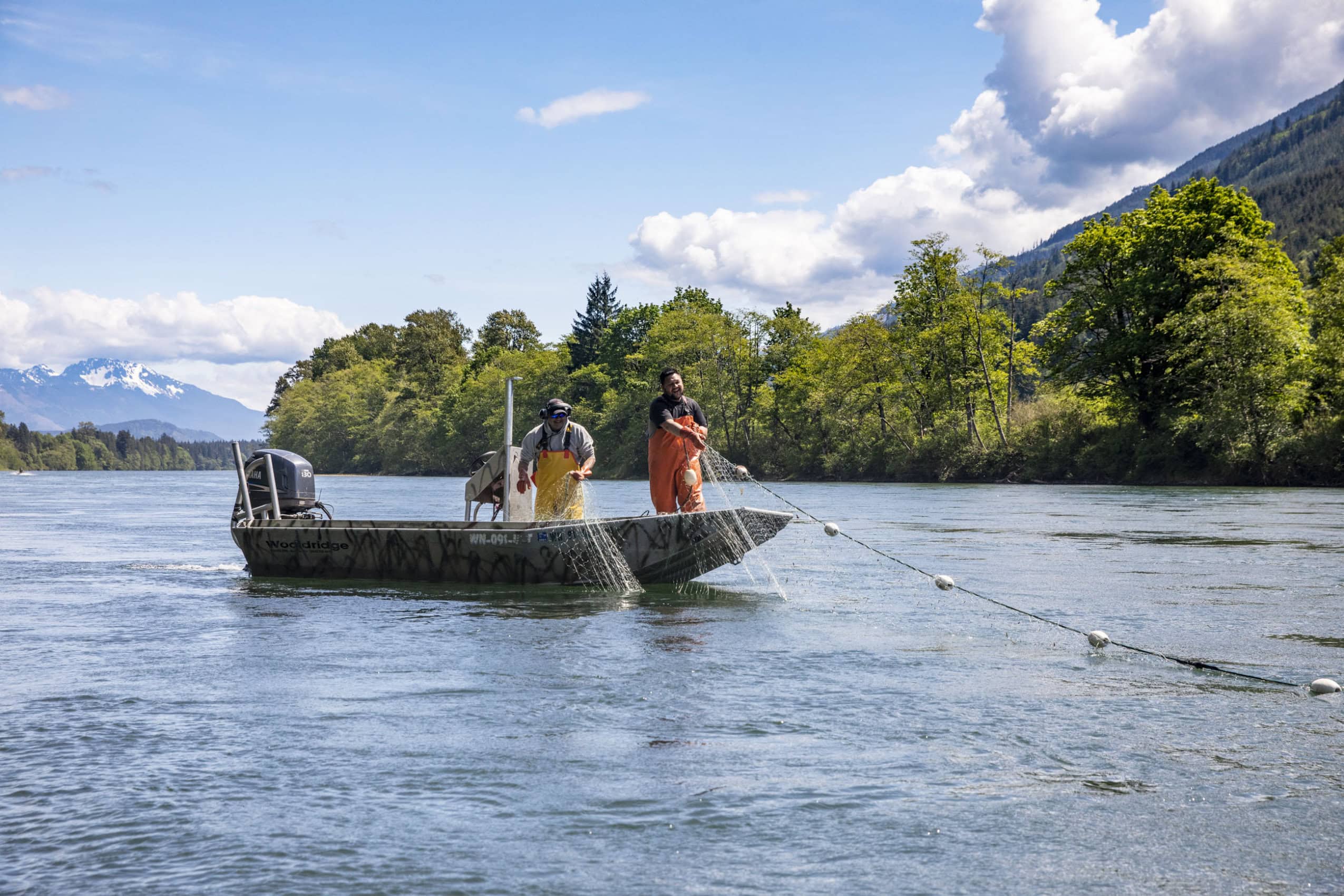
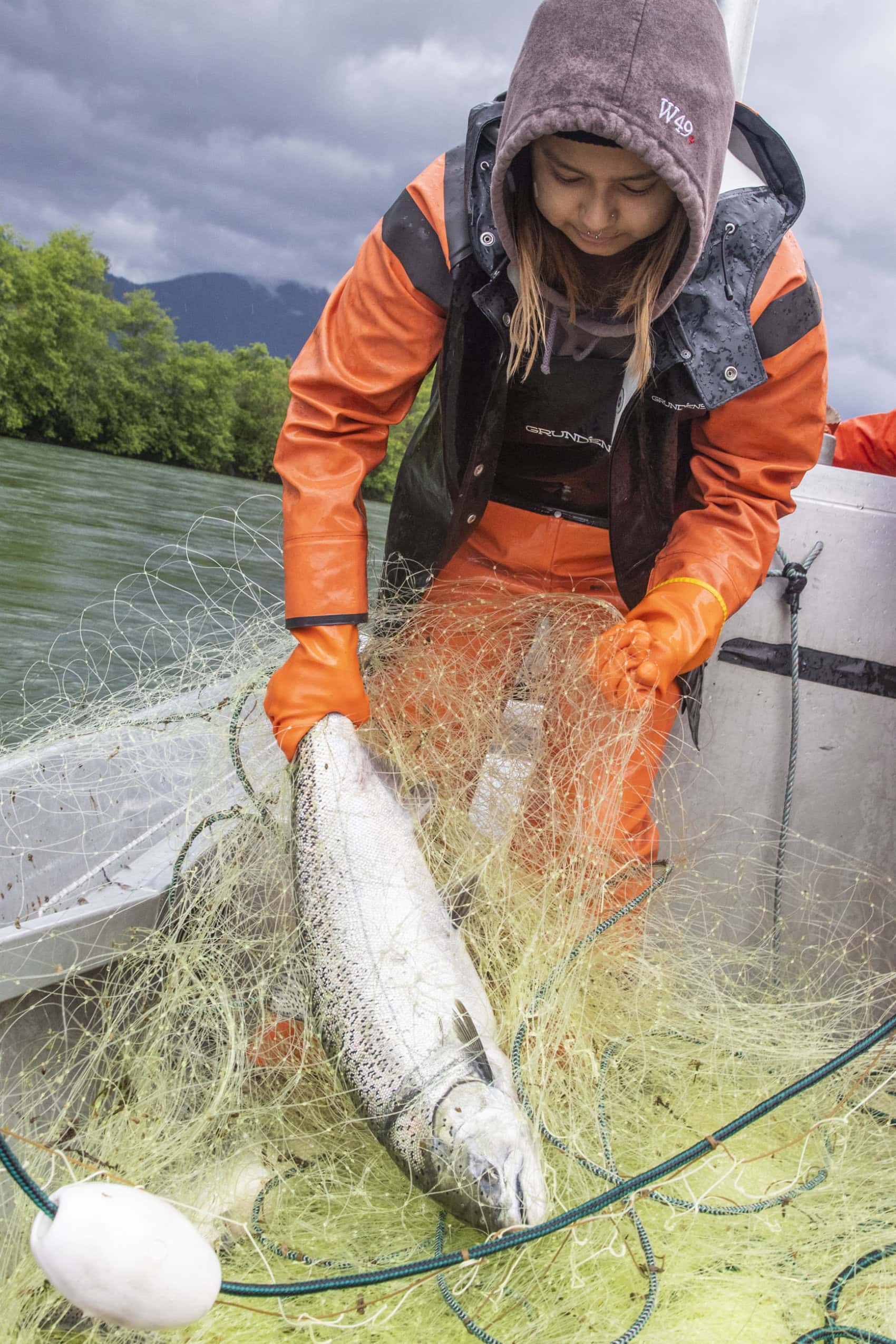
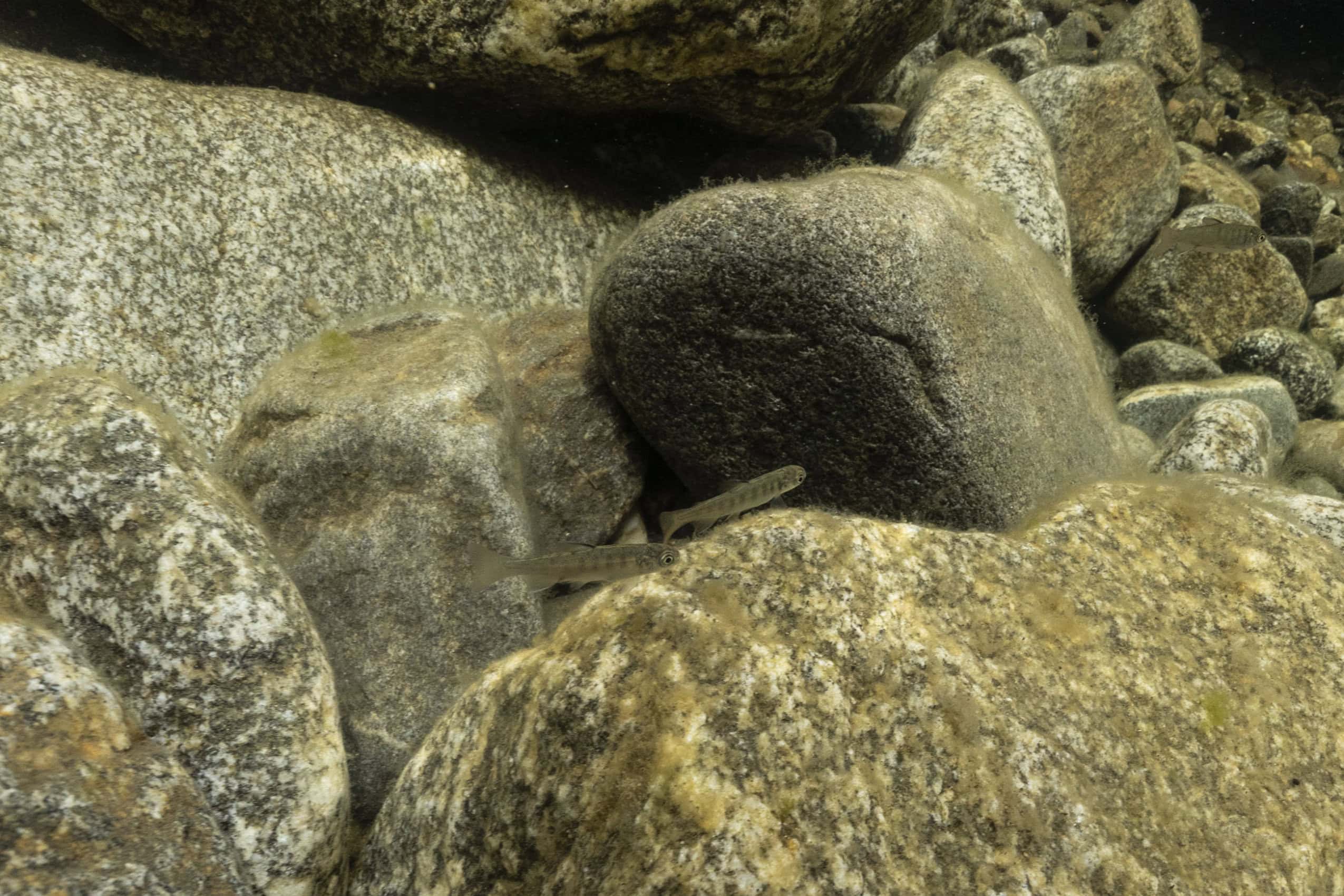
Below the dams, the Skagit River is home to runs of Chinook, coho, pink, sockeye and chum salmon, as well as steelhead trout. The Chinook and steelhead populations are both listed as threatened under the United States Endangered Species Act and noted as a species of greatest conservation need in Washington state. In the U.S., the Upper Skagit Indian Tribe, the Sauk-Suiattle Indian Tribe and the Swinomish Tribe all retained their right to fish these runs— a right that has been deeply impacted by the steep declines in fish returns in the river. These declines also affect other species that depend on salmon such as the endangered population of resident orcas in the Salish Sea.
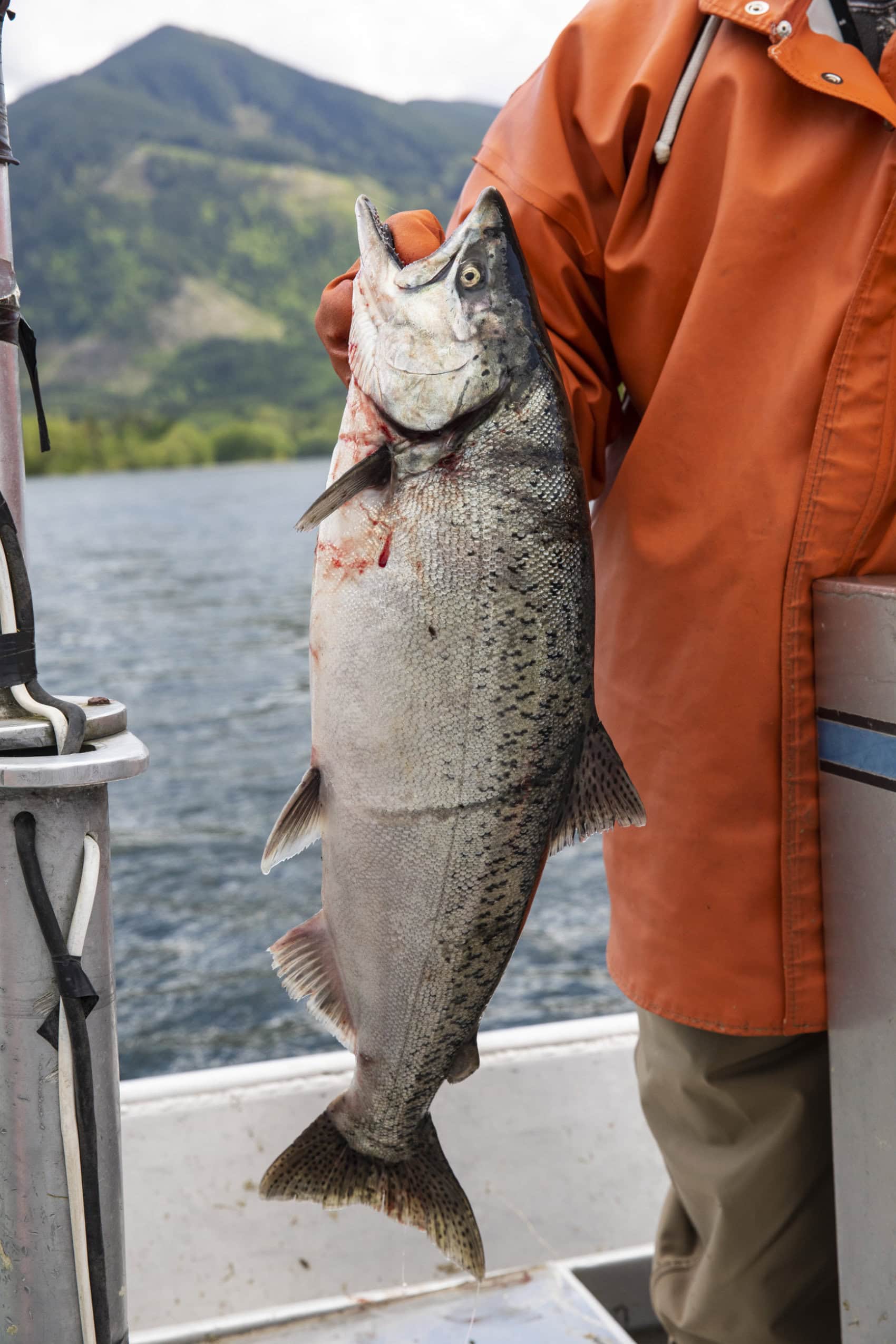
The construction of the Gorge Dam cut off about 40 per cent of the watershed from anadromous fish, while also depriving the river downstream of sediments critical for refreshing fish habitat and the estuary downstream. The subsequent construction of Diablo and Ross dams upstream went forward also without fish passage.
In the legal settlement agreed to in March, Seattle City Light committed to returning water to the reach of the river downstream of the Gorge Dam, a culturally significant stretch of the river for the Upper Skagit Tribe, and a vital step toward connecting the lower and upper rivers for anadromous fish. The utility also committed to funding studies of the technology needed to move fish back and forth over each of its three dams and to work on this collaboratively with the other stakeholders in the settlement, including the U.S. tribes whose territory includes the Skagit River.
The utility lists 38 different participants in the licensing agreement for the three dams, including conservation organizations and county, state and U.S. federal agencies, as well as 10 U.S. tribes and two First Nations in Canada, the Nlaka’pamux Nation and the Stó:lō Nation.
Tribes that signed the Treaty of Point Elliot in 1855 explicitly retained their right to harvest salmon in their usual and accustomed locations. This right was upheld in court in 1974. This fact provides a large portion of the legal leverage that tribes are using to pressure Seattle City Light to do more to protect and restore salmon, including creating access above the dams.
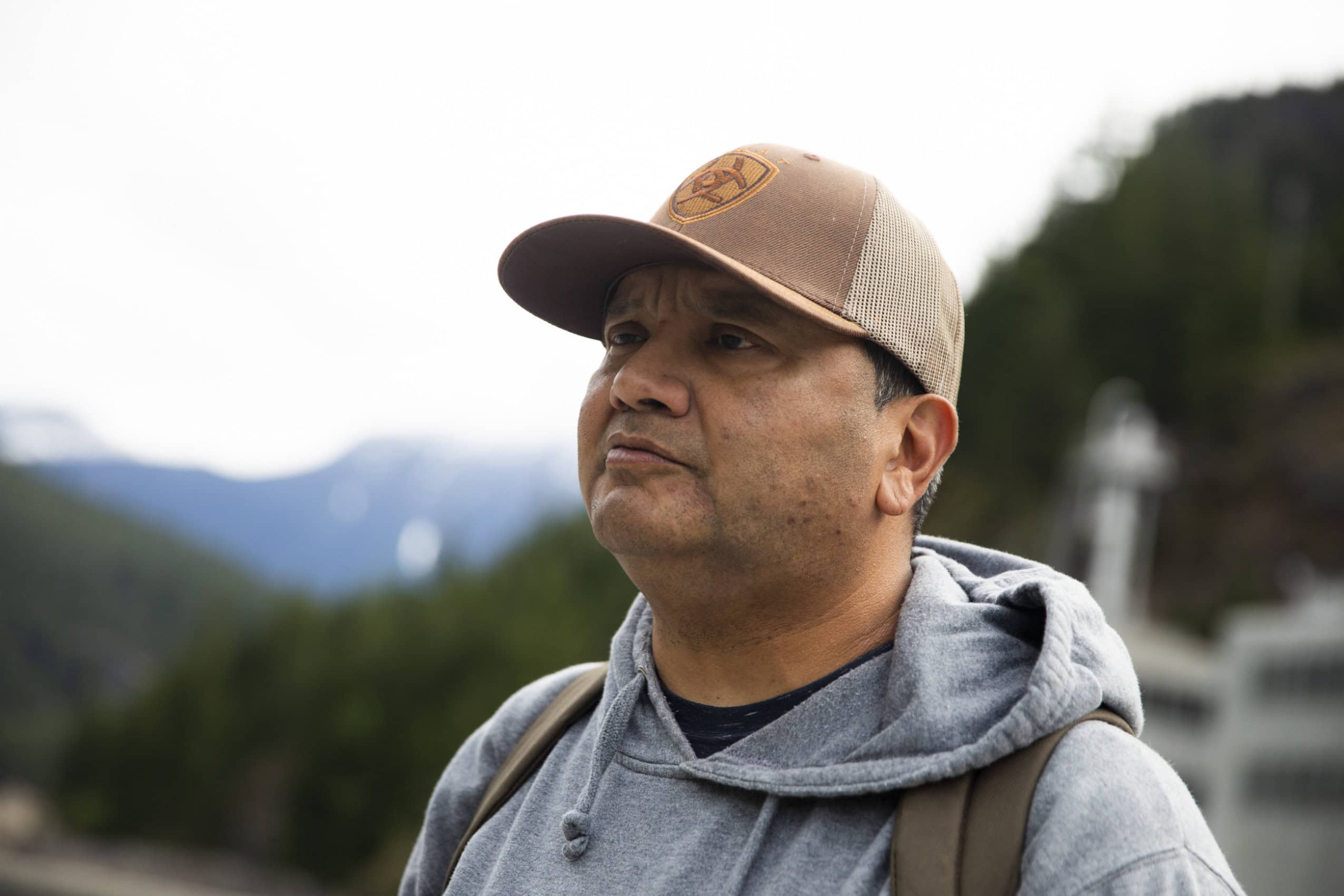
On May 12, the Mayor of Seattle formally signed the settlement agreement for the Skagit River dams. At the signing ceremony, Scott Schuyler, who led the Upper Skagit Tribe’s efforts, reflected on the moment. “We were not allowed a voice or a choice when the first dam was built,” he shared. “We see redemption today by signing this agreement. We do have that voice from now on.”
However, he also noted the signing of the agreement is not the same as real action on the ground. “Today is not the day to celebrate for the Upper Skagit. The celebration will come in the future. When we see the river return to its banks, the Upper Skagit people will rejoice and celebrate. When we see the first salmon pass over the dams and the dams start contributing to these depressed runs, then the Upper Skagit will celebrate.”
Schuyler tells The Narwhal that while design work for fish passage above the dams has already begun, it could be years before we see water flowing again in the bypass reach of the river, or salmon moving back and forth over the dams, due to permitting and engineering. “I would like to see it done in my lifetime, but you never know.”
Editor’s note: David Moskowitz is involved in long-term documentary work of the Okanagan Nation Alliance and grizzly bears.