
 20 min. read
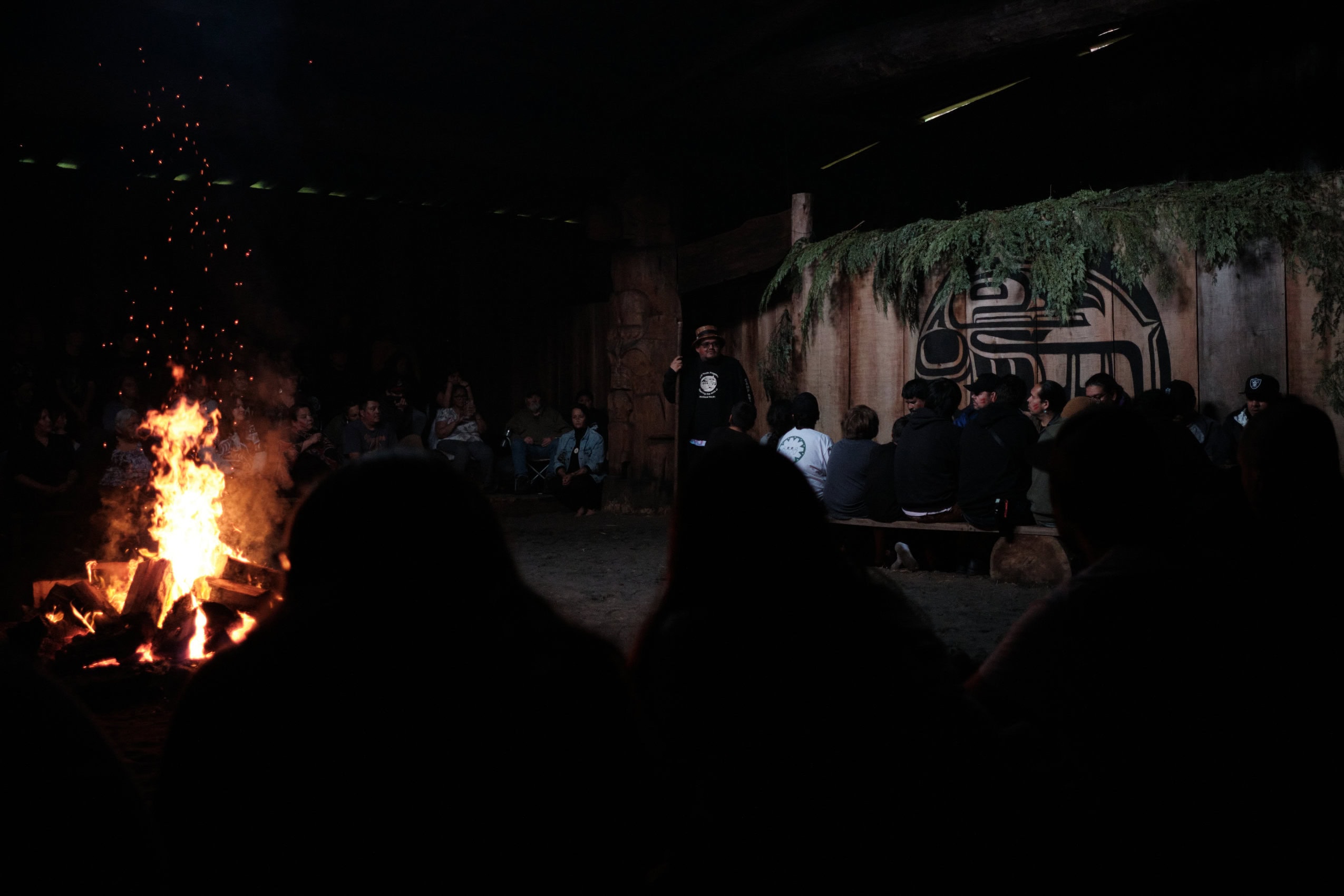
As smoke rises from the fire at the centre of a Haíɫzaqv Big House raised two decades ago on a beach crowded with cedar, the song begins.
The dancers emerge and circle the floor, their feet tracing stories in the sand. Drummers seated at the log drum hold the beat and their voices carry the song. Around the room, from among all the people here to witness the ceremony, women stand. Swaying like kelp in tidal currents, their movements and hand gestures mirror those of the dancers, protecting them.
Hear Erin Wilson pronounce Haíɫzaqv in Haíɫzaqvḷa.
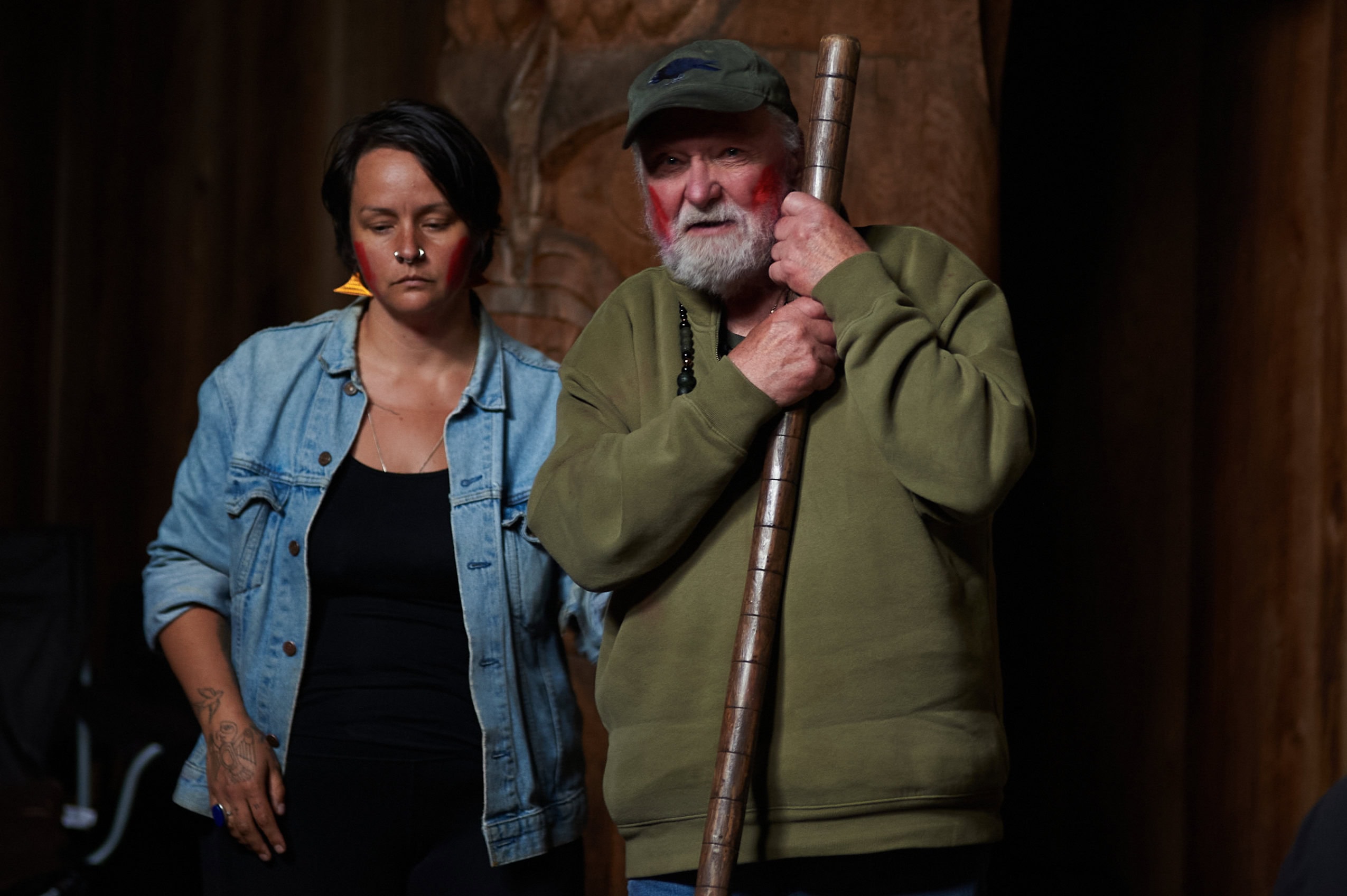
Standing next to the log drum, leaning on the talking stick, Thomas Dixon extends a welcome.
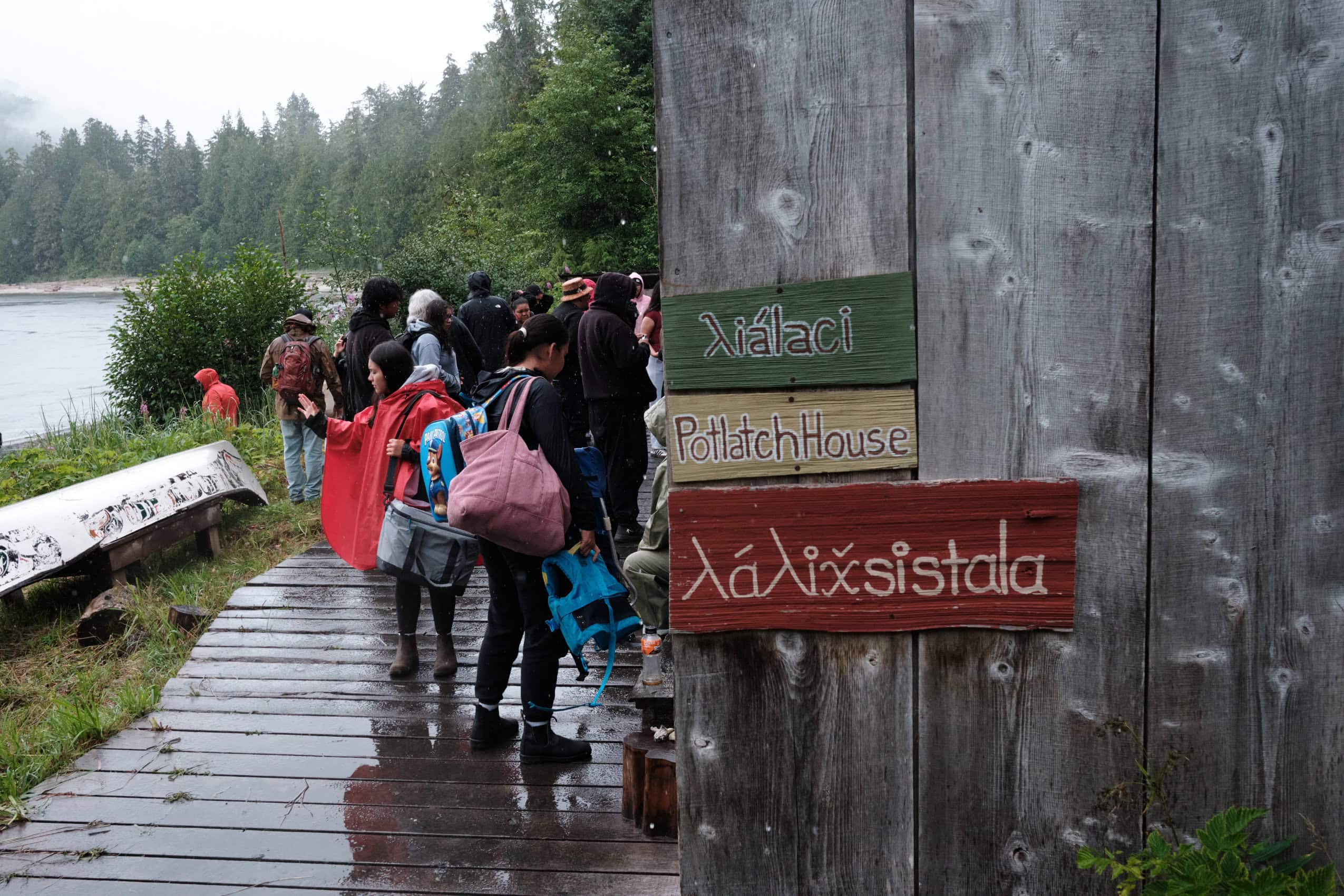
“The name of this Big House is λáλix̌sístala,” he says. “λáλix̌sístala in our language translates to ‘complete the circle’ — and the circle we’re referring to is the circle of knowledge, because of the amount of knowledge that gets passed on here, from generation to generation.”
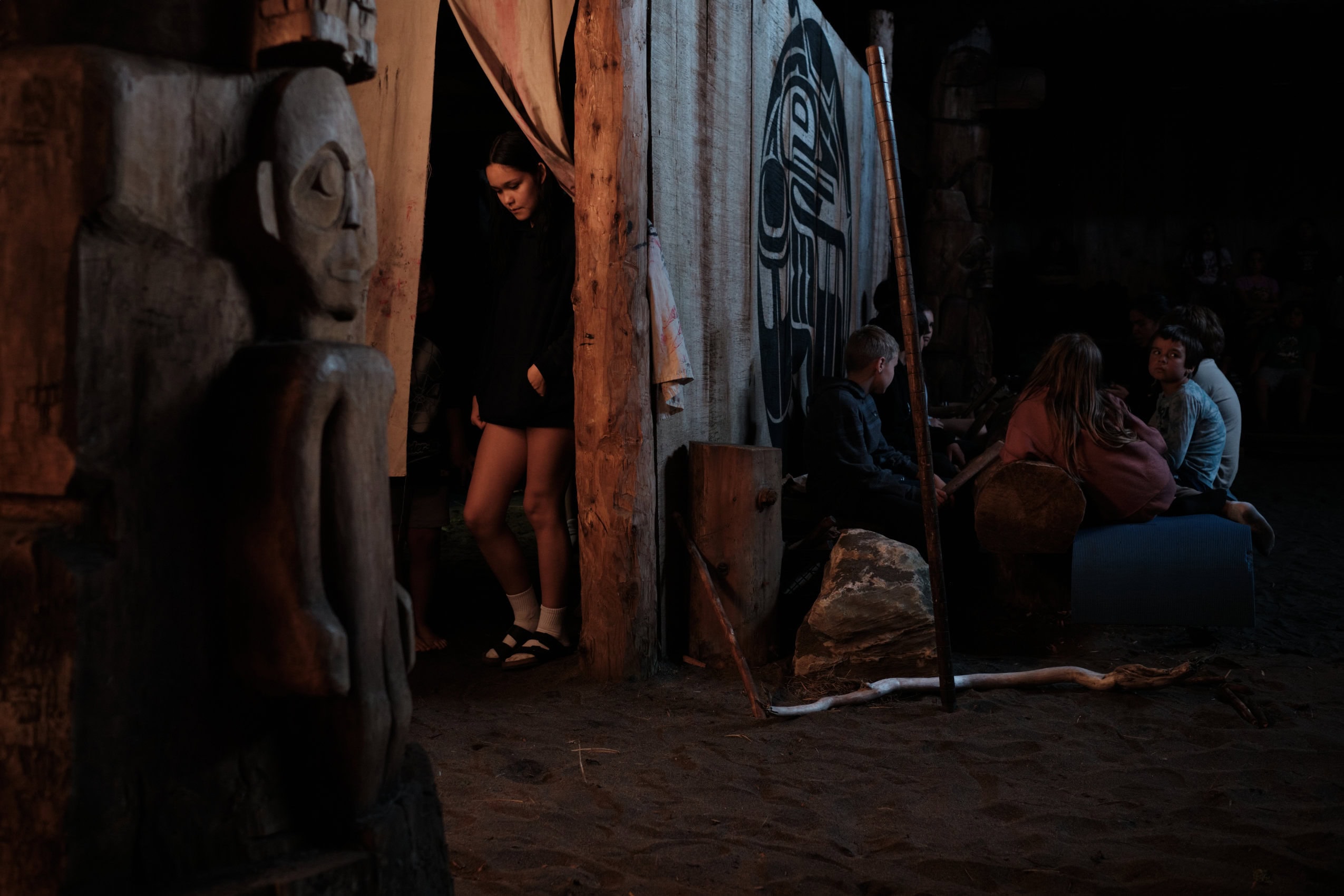
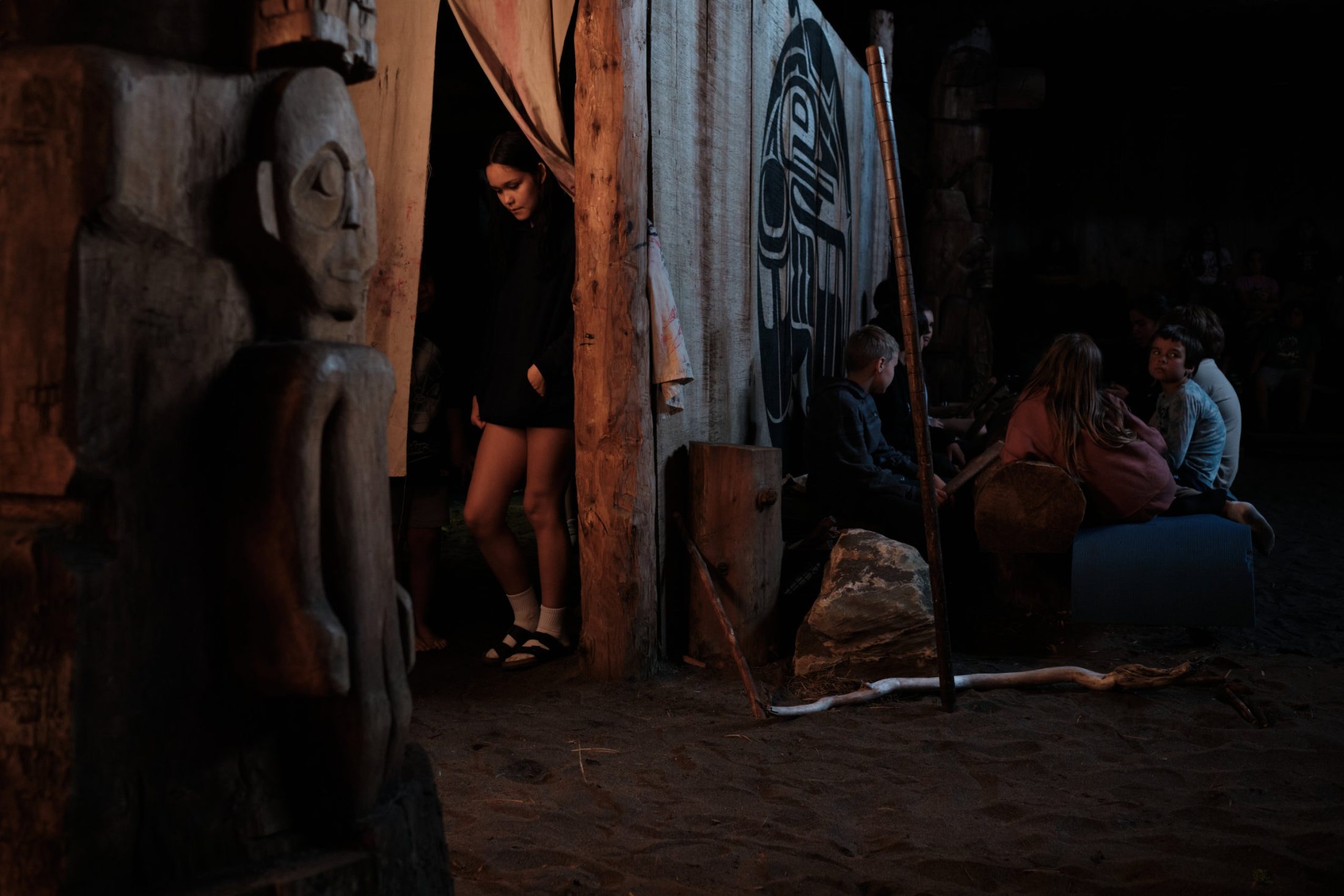
Like many of his peers, Dixon came here as a youth and learned from the land and from the stories. Now, as a cultural leader, he’s passing on the teachings he received, completing the circle.
“These songs and dances are very sacred,” he says, asking guests not to share photos or videos on social media. “When we were given permission to teach these songs and dances, we promised the Chiefs and Elders we wouldn’t put it out publicly like that.”
He pauses. In the space between his words, the snapping of the fire.
Hear Shirley Windsor pronounce W̓álas ǧiáxsix̌a in Haíɫzaqvḷa. The phrase means “thank you very much.”
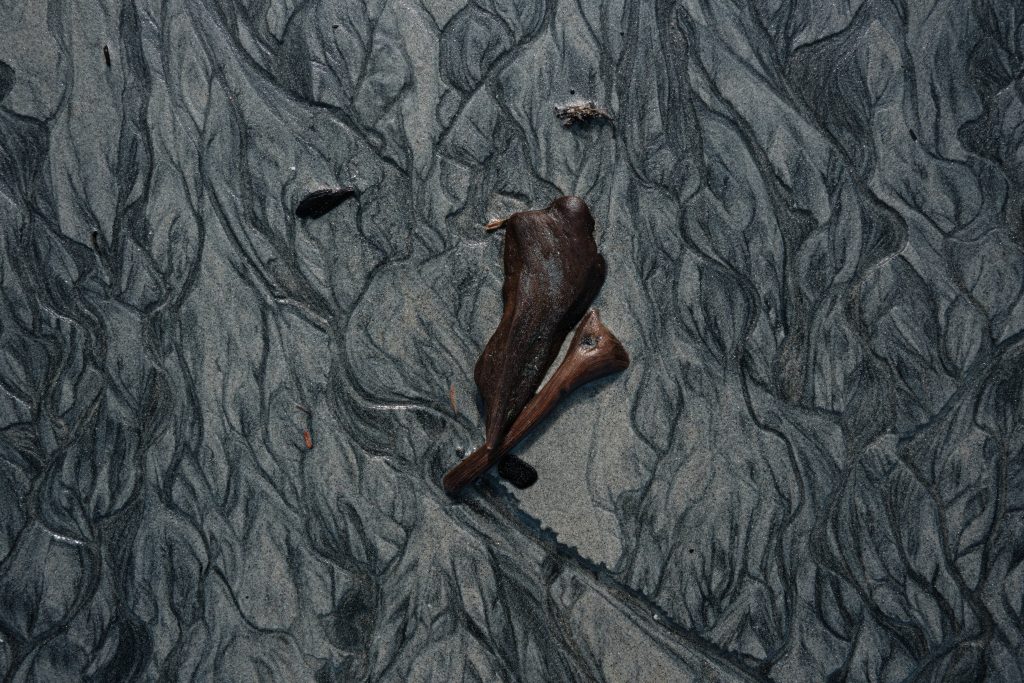
In 2008, Opaskwayak Cree scholar Shawn Wilson said: “When listeners know where the storyteller is coming from and how the story fits into the storyteller’s life, it makes the absorption of the knowledge that much easier.”
These are not my stories — but I am part of it because I was there. ’Cúagilákv Jess Housty invited me, extending the welcome to my seven-year-old daughter. I was invited to witness, given permission to share a story of this place and what it means to many Haíɫzaqv. This place also holds deep meaning for Wuìk̓inux̌v people and the watershed is an area of shared importance. Gently warned about past harms done by well-meaning journalists, I am walking lightly, honouring the trust.
I listen to my recordings while I write: the sound of the waves, ravens squawking, an eagle chittering. A light wind.
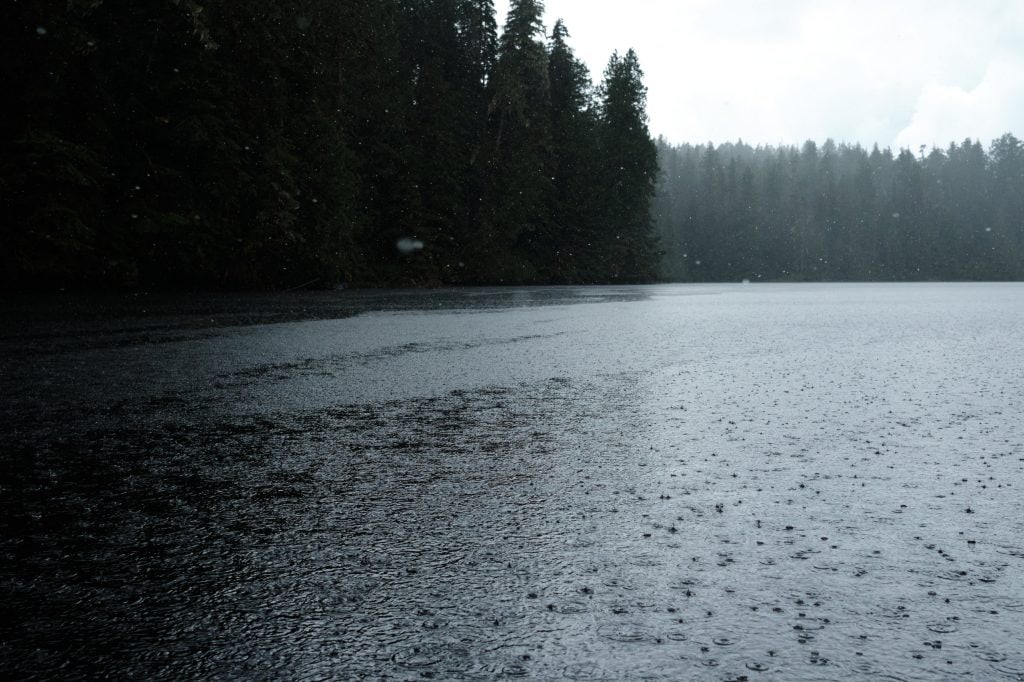
Inside, a couple of teenagers add logs to the flames, sending a burst of sparks through the hole in the roof. Outside, a grizzly bear walks the beach with her cubs under sheets of rain while salmon jump from the bay, their silver backs glistening against a grey ocean.
Dixon stands, again holding the talking stick, and speaks in Haíɫzaqvḷa: “Yáu sásṃ, sas húmíɫṇƛa?”
As one, the kids respond with an affirming ‘mm-hmm.’
“I want to explain what I just asked the kids,” he says. “I asked the kids: ‘Sas húmíɫṇƛa?’ — ‘Did you hear me?’ [Are you listening?] I asked them that because I want to make sure that they’re listening before we tell the story. At every practice, after every dance, I would ask them that before I tell them the story. I would tell the story behind each dance so the stories get told over and over and over again and hopefully it gets embedded in their heads.”
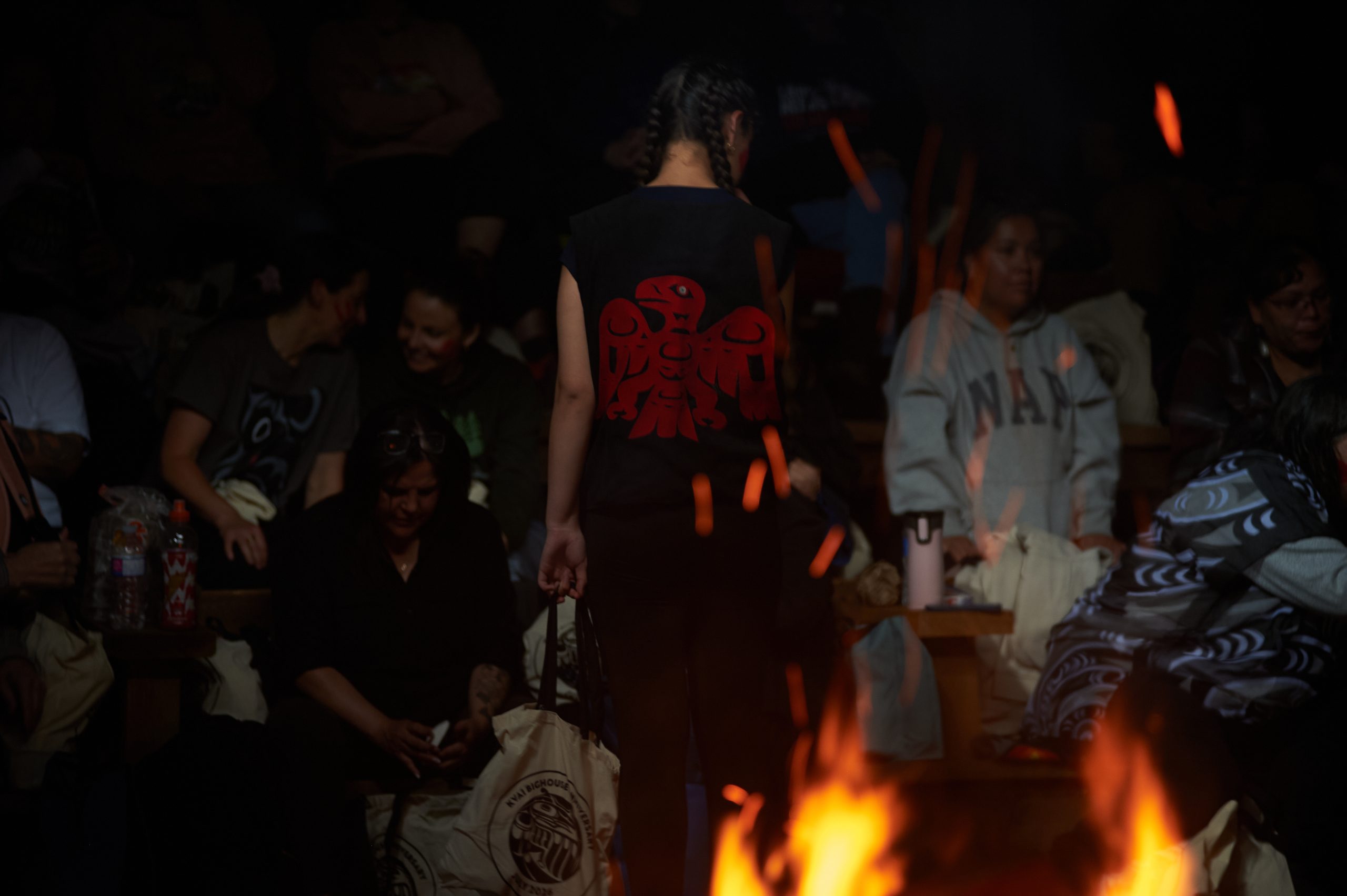
“This was an old teaching we got from Thistalalh Ed Martin, when he was our camp Elder out here,” he continues. “When I was a camper, that’s what he used to say to us. So when I say, ‘Sas húmíɫṇƛa?’ you guys can say ‘mm-hmm,’ to make sure you are all paying attention.”
The sounds of the rain and the fire are one and the song begins again.
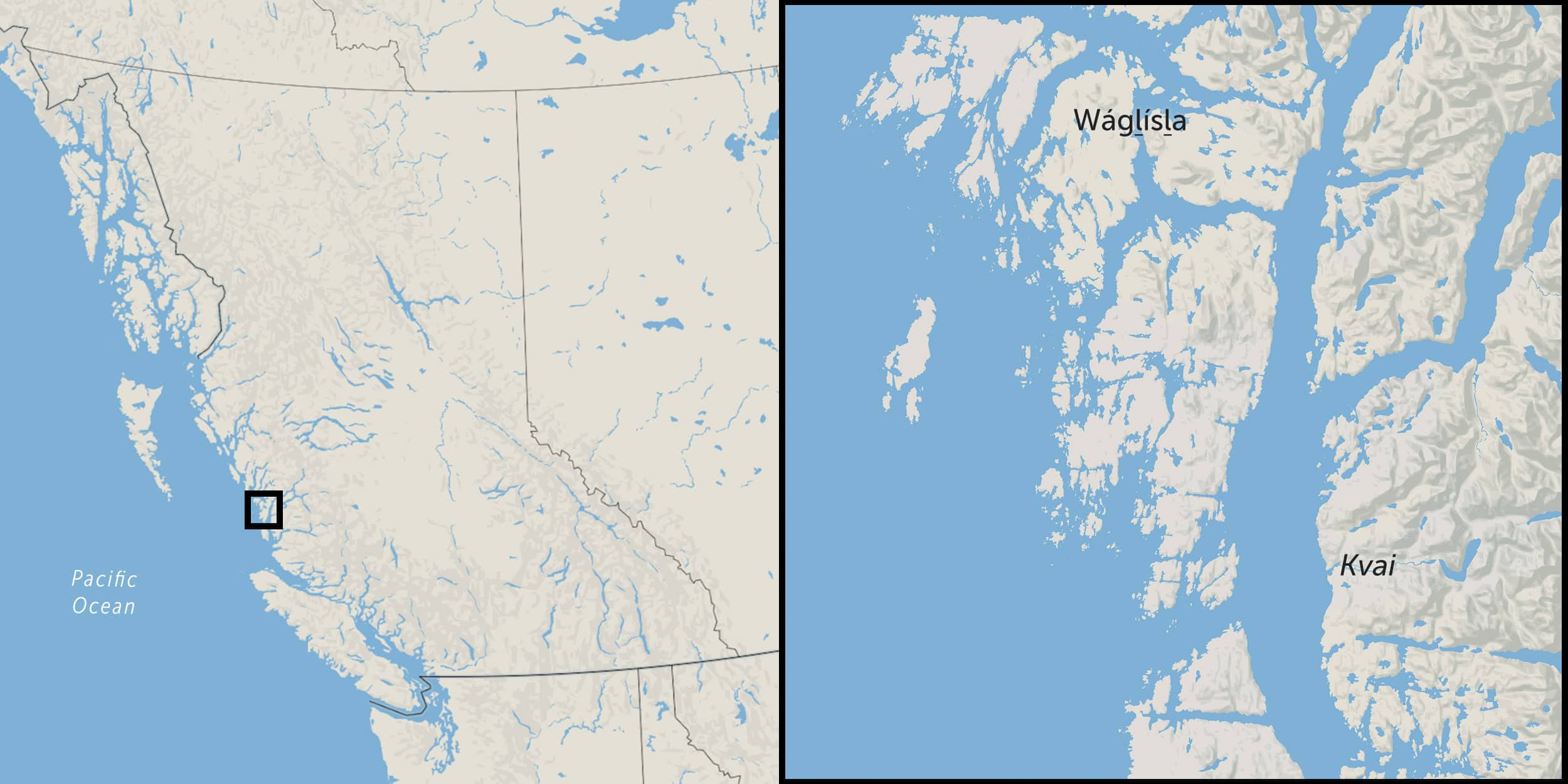
Haíɫzaqv have always been here, caring for w̓áxv:w̓uísax̌v. W̓áxv:w̓uísax̌v is the land, ocean, submerged land, surface water, groundwater, subsurface and air space as defined by the boundaries of the five tribes which make up the Haíɫzaqv Nation: Ẁúyalitx̌v, ’Qvúqvay̓áitx̌v, W̓u̓íƛ̓itx̌v, Y̓ísdáitx̌v and X̌íx̌ís. On colonial maps, Haíɫzaqv w̓áxv:w̓uísax̌v is on B.C.’s central coast.
As affirmed by the nation’s constitution, ratified in 2025, the “relationship of the Haíɫzaqv people to the w̓áxv:w̓uí sax̌v is ancient, sacred and complex,” and the nation’s “ancient rights, inherent jurisdiction and responsibility for the w̓áxv:w̓uí sax̌v, which have never been surrendered, flow from our relationship to it.”
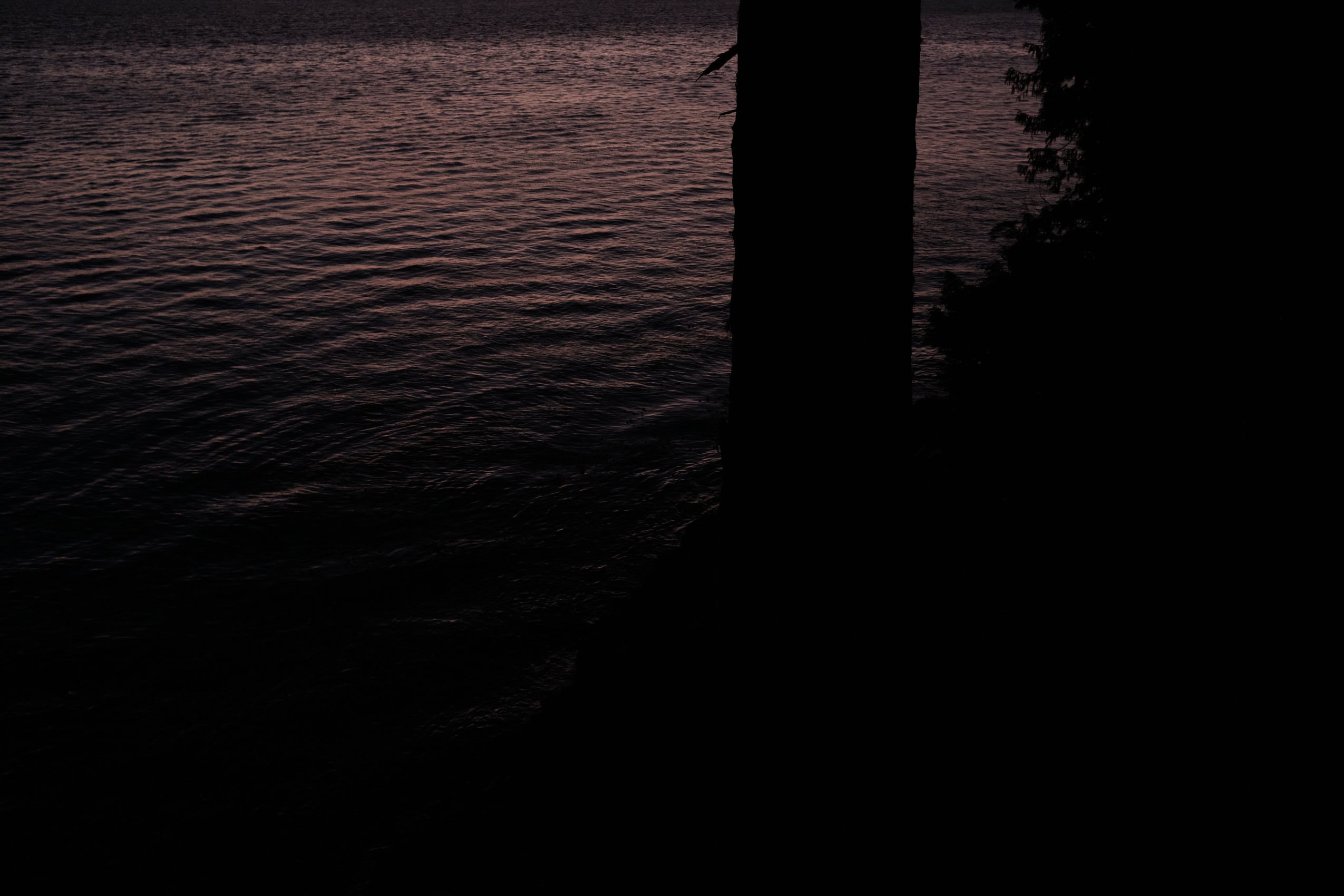
The sun rises every morning, even when it can’t be seen in all the clouds. The moon completes its cycles, waning and waxing, inexorably tugging our bodies and the waters we come from. The seasons shift like slow stretching tides, bringing herring and salmon and berries.
These are the places where the stories are from, the stories that get told over and over and over again. Story, song, ceremony, place: same thing, different forms. Sas húmíɫṇƛa?
Ten years after λáλix̌sístala was raised, a tugboat called the Nathan E. Stewart ran aground near the village of Q’vúqvai in Gale Passage. Eight hours later, it sank, spilling more than 100,000 litres of diesel and other pollutants into Haíɫzaqv waters.
Everything is connected, of course, and all the threads matter — but this is not a story about the legacy of pollution and trauma, of diesel spills and shipping lanes. This is a story of knowledge, ceremony and the future of stewardship. This is a story about λáλix̌sístala.
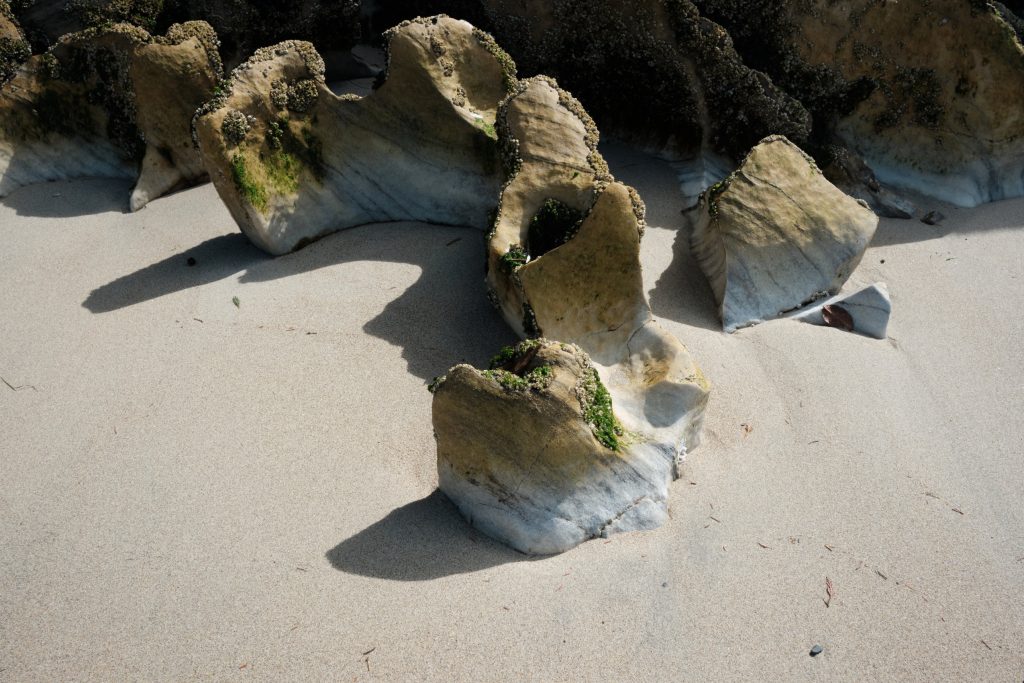
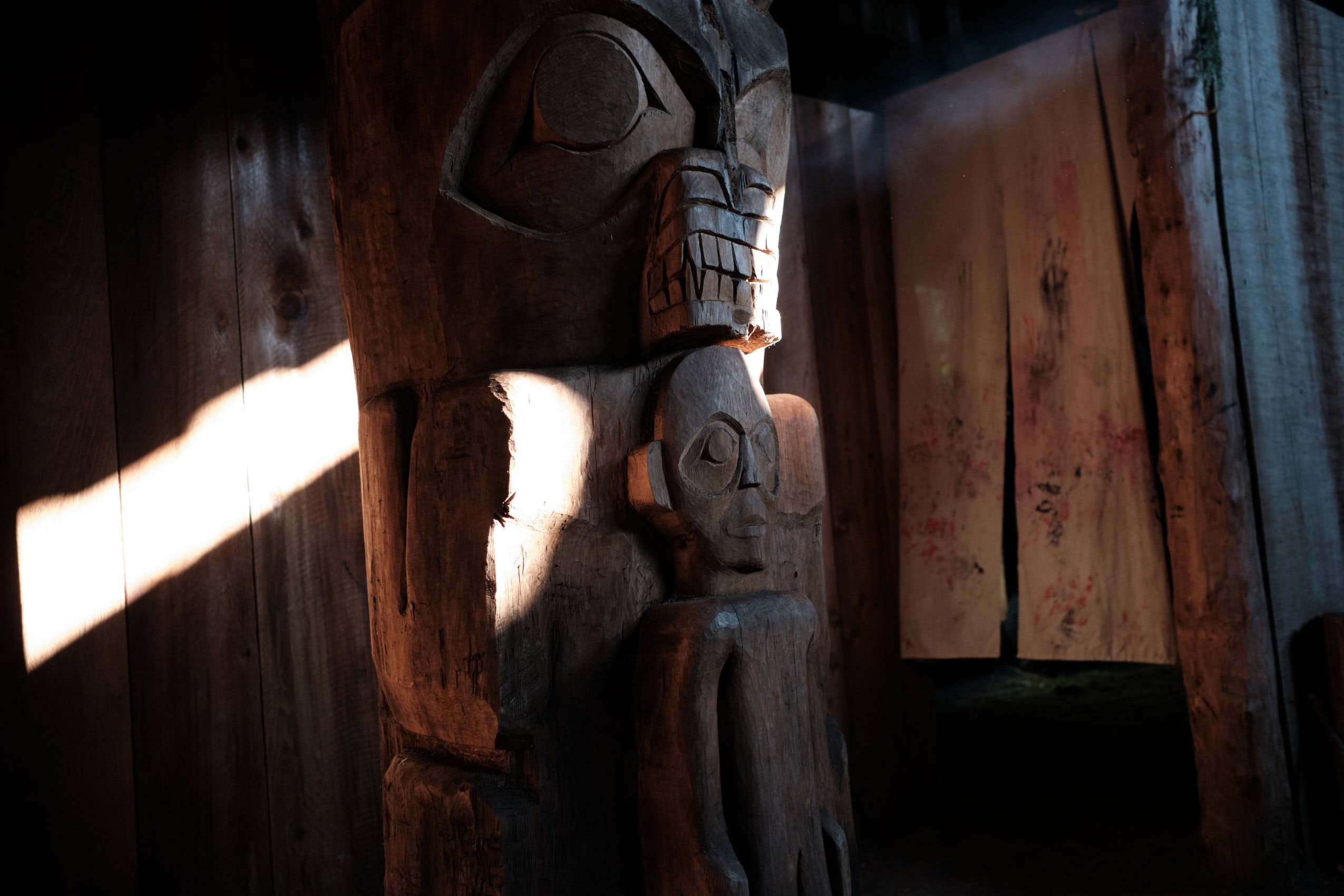
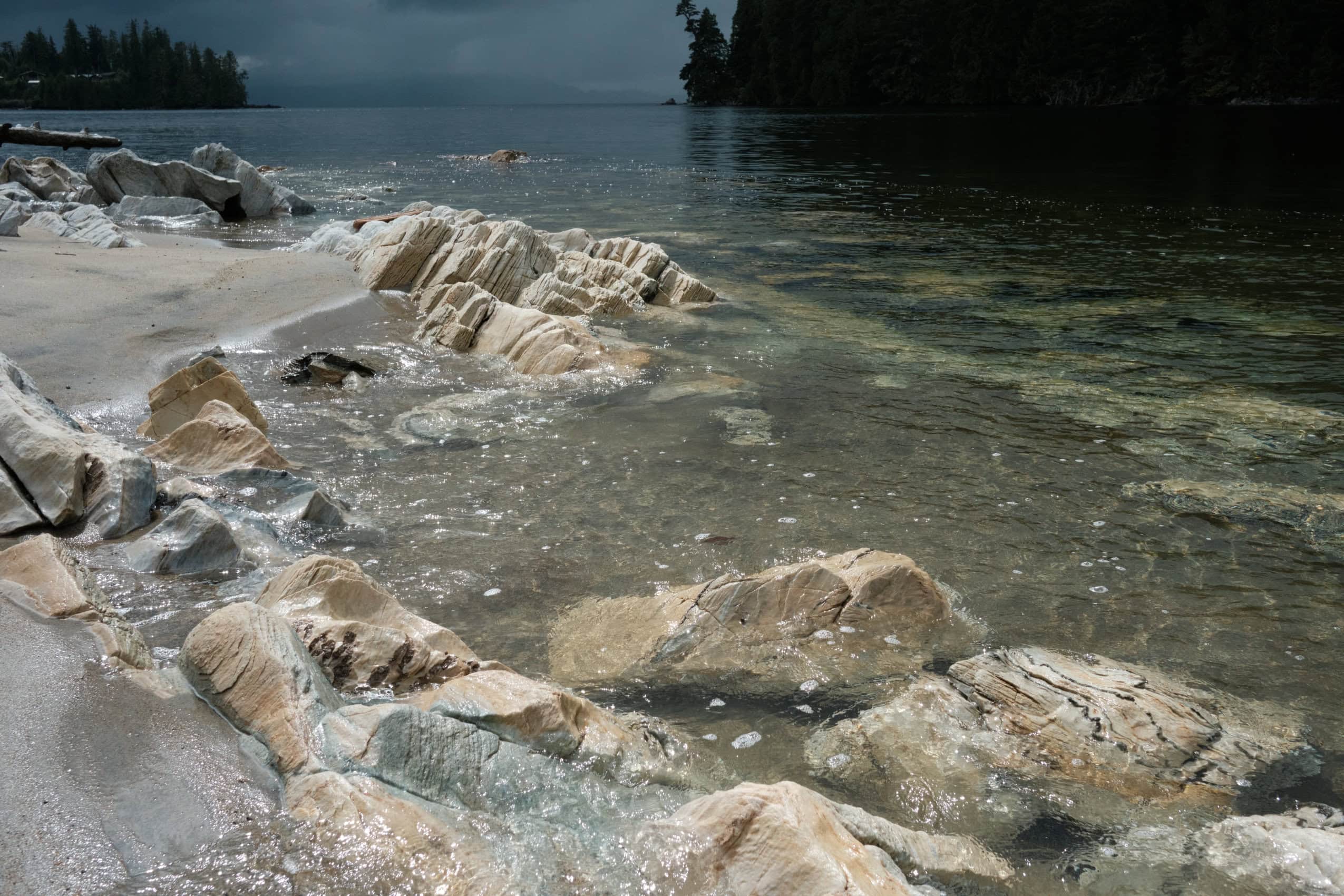
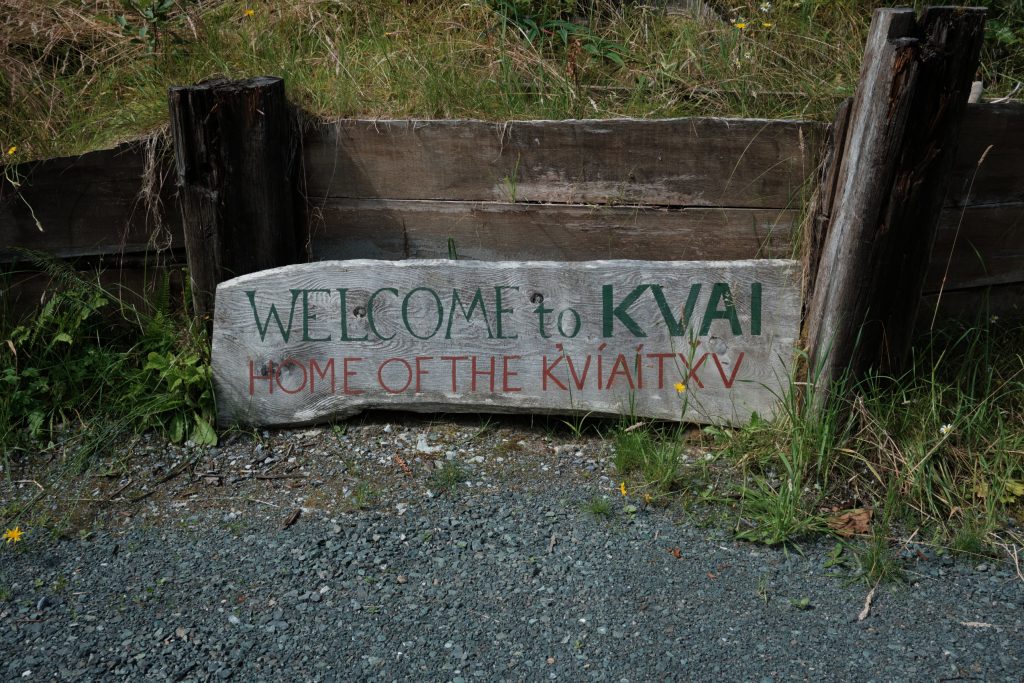
Kvai, sometimes spelled Koeye, is pronounced kway.
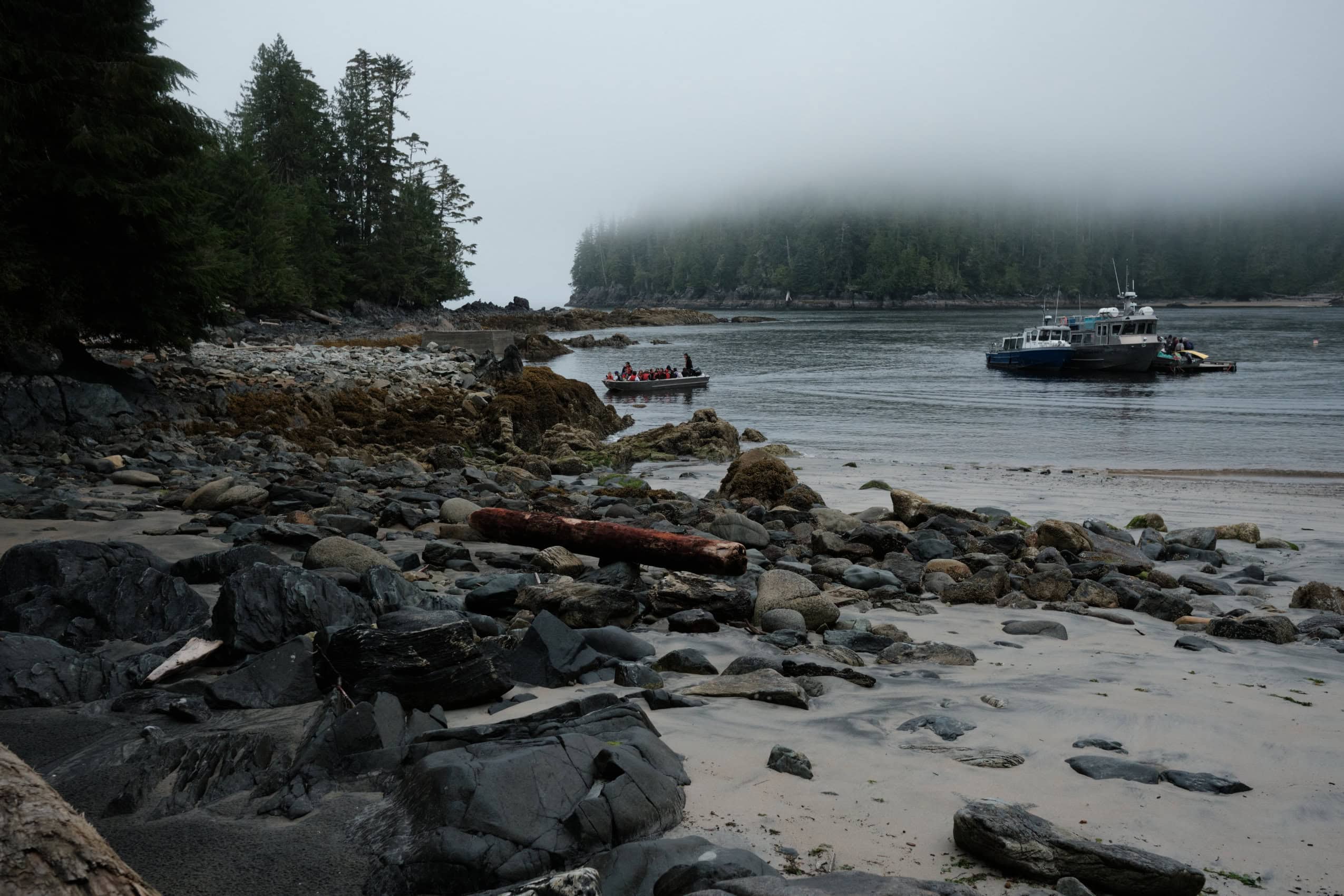
Depending on the boat and weather, it takes around an hour-and-a-half to two hours to get here from Wágḷísḷa (Bella Bella, B.C.)
On the way down, you might see whales — humpbacks or orcas, probably — and in the summer you’ll likely see fishing boats, a smattering of pleasure craft of various types and sizes, maybe a coast guard vessel and perhaps a BC Ferries vessel on its regular run between Port Hardy and Prince Rupert.
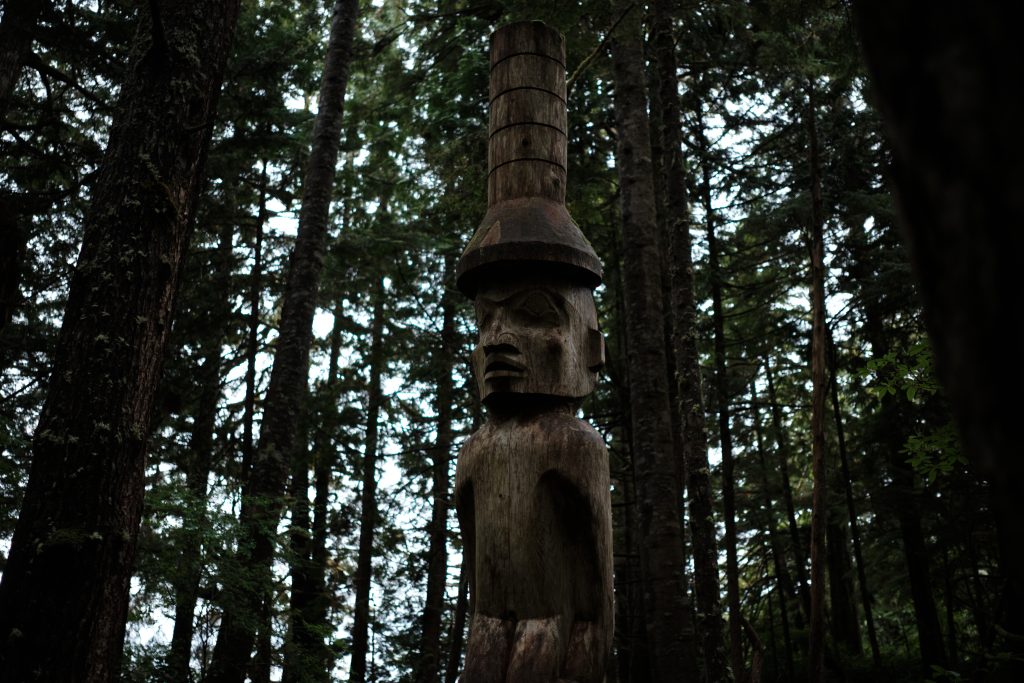
When you get here, you’ll see a flash of white sand against the dark green of the coastal rainforest. λáλix̌sístala will greet you as you enter the bay. Atop a bluff, you’ll see the lodge and other buildings, tucked into the trees. It’s welcoming, protective.
Before all this, the Kvai watershed was home to several Haíɫzaqv villages and fishing sites. For thousands of years, this place was a vital part of culture, ceremony, harvesting and stewardship. Then came the colonizers.
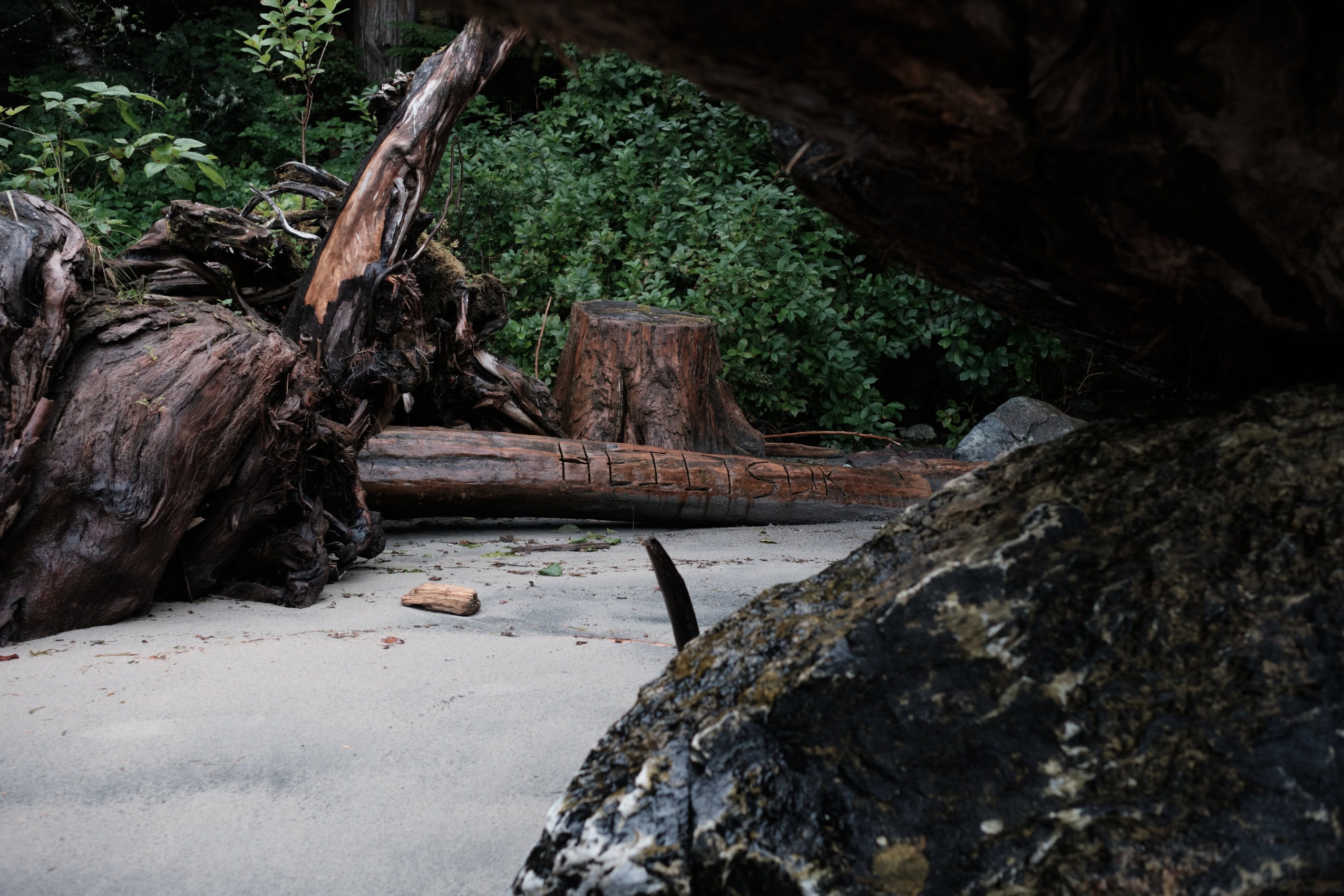
In 1884, the federal government amended the Indian Act to prohibit Potlatches: “Every Indian or other person who engages in or assists in celebrating the Indian festival known as the ‘Potlatch’ or in the Indian dance ‘tamananawas’ is guilty of a misdemeanor, and shall be liable to imprisonment,” the amendment stated.
Gilbert M. Sproat, a Scottish-born businessman and government agent at the time, described the Potlatch ceremony to then-prime minister John A. MacDonald as “the parent of numerous vices which eat out the heart of the [native] people.”
Israel Wood Powell, the provincial government’s first superintendent of Indian Affairs, went further, advocating for the federal government to “adopt every practicable means to put a stop to the custom.” Powell went on to champion and oversee the residential “school” system in B.C., forcibly removing Indigenous children from their homes, cultures and languages. (Powell’s name continues to be used in geographic place names, including the community of Powell River. Tla’amin Nation leadership has been petitioning to have the name changed for several years.)
MacDonald agreed with Sproat and Powell and their contemporaries.
“The great aim of our legislation has been to do away with the tribal system and assimilate the Indian people in all respects … as speedily as they are fit to change,” he said in 1887.
In the years that followed, widespread persecution of any expression of Indigeneity or ceremony was severe, sanctioned and often enforced by government agents, including the newly formed federal police force that is now the RCMP. Around this time, with the nation’s communities already devastated by the spread of smallpox, including attempts to exterminate entire communities with disease-ridden blankets, the only remaining Haíɫzaqv λiác̓ilacx̌i (Big House) was destroyed, likely by missionaries.
More than a century would pass before the next was built.
Hear Elizabeth Brown pronounce Kvai in Haíɫzaqvḷa.
The importance of the Potlatch cannot be overstated. In Potlatch, songs and dances breathe life into the world. Within them are stories that span generations, past, present and future, and speak of place, lineage, spirit and so much more. These stories, as they are shared in all their shapes and forms, preserve the circle of knowledge.
In Indigenous Storywork, Sto:lo scholar Q’um Q’um Xiiem Jo-ann Archibald said that “storytellers not only learned stories from master storytellers but also by being connected to land” and explained how “stories can become a teacher, and … we can live life through stories.” She also said the oral tradition challenges the listener to “make meaning and gain understanding from the storyteller/teacher’s words and stories, which is an empowering process.”
Remember: “The stories get told over and over and over again and hopefully it gets embedded in their heads.”
In coming together, at places like Kvai, or in the Big House in Wágḷísḷa, or anywhere else where knowledge is passed on through story, time takes on a new shape, layers and threads where there is no beginning and no end, just a continuous unfolding. As Haida and Tlingit artist Robert Davidson said in Potlatch as Pedagogy, we are “all connected to the past by a thin thread. And when we come together as a group, then these threads form quite a thick rope.”
In Haíɫzaqvḷa: m̓ṇukvs w̓úwax̌di; one mind, one heart.
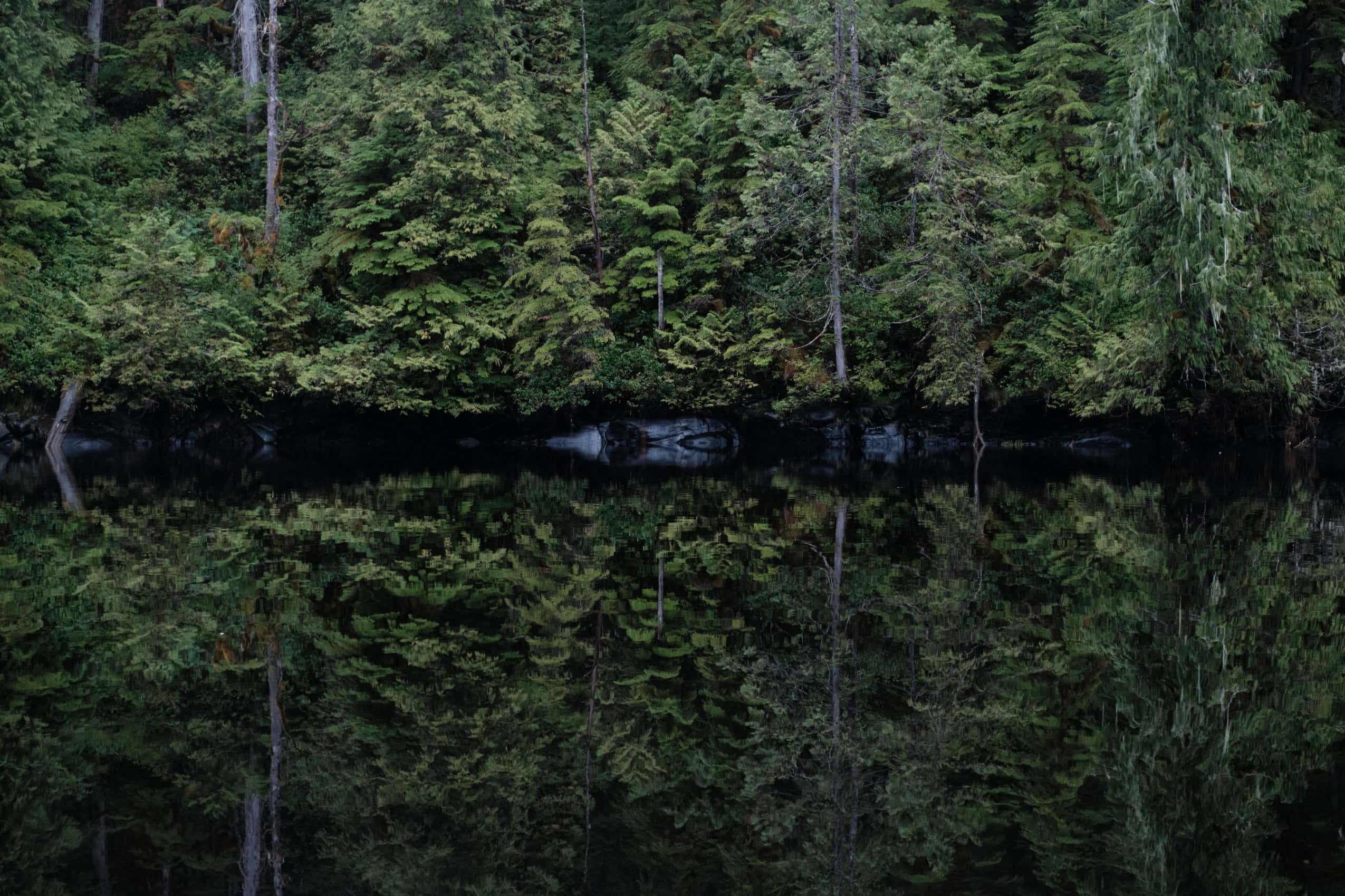
The river feels eternal, its banks renewed time and time and time again. The beach is washed by the tides and the rain. The old spruce tree absorbs a cloud of swallows; their symphony of chirps dying abruptly, swallowed by the endless riffling river. Sas húmíɫṇƛa? (Are you listening?)
From ‘Cúagilákv’s newest collection of poems:
Cup sea water in your hands.

Bring it gently above the highest tide line.

Wait for the precious sun;
wait in your posture of petition
for the gift of salt.

When you have enough
to make a little mountain on your palm,
pinch it between your fingers
and use it to spell the words

closest to your heart.

Lick your fingers clean
and know that the ocean
is the holder, now,
of your prayers.
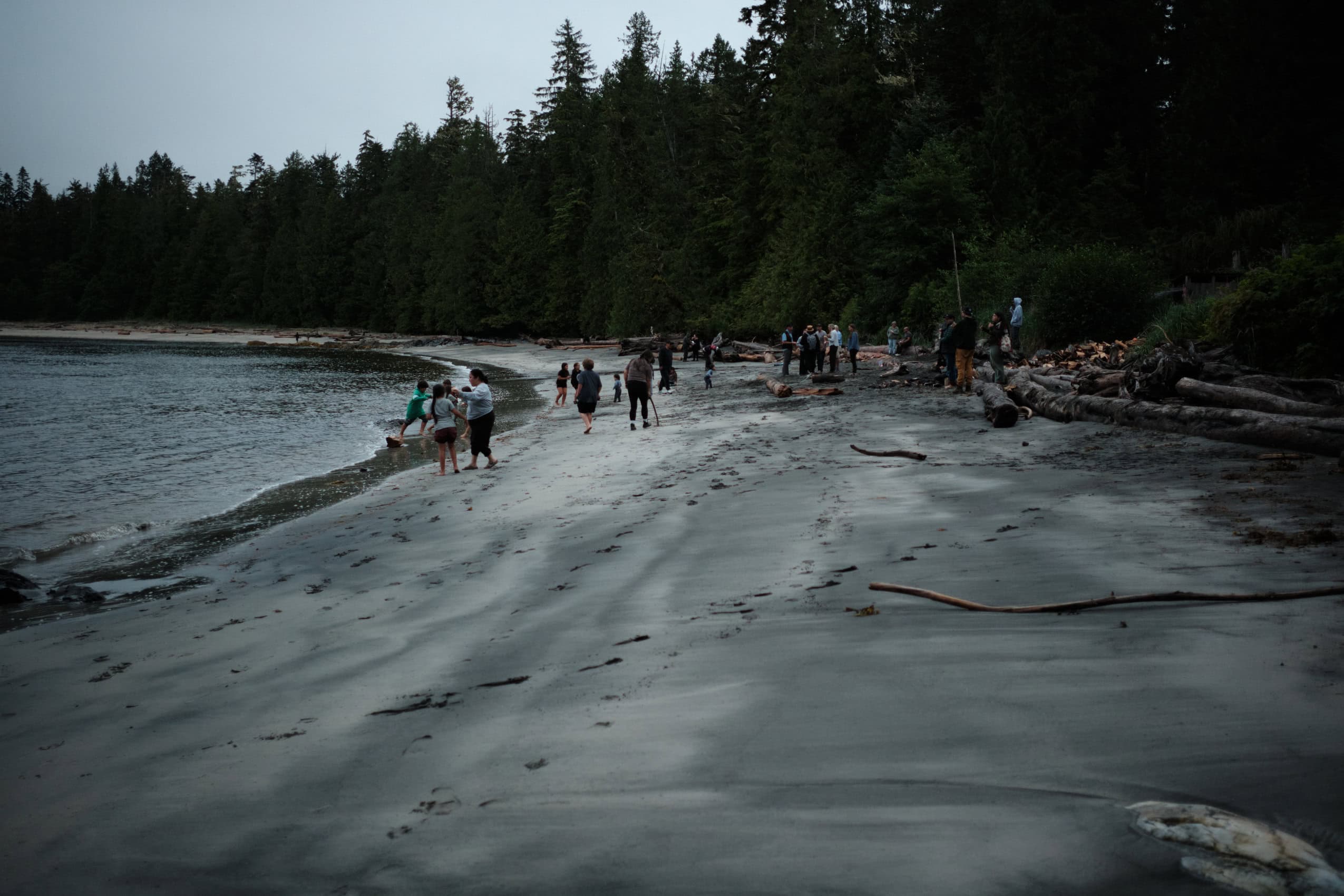
After ceremony, and after all the guests have been gifted the salmon and seaweed the kids harvested and processed, most community members head back to Bella Bella on a handful of boats and the kids move their things into λáλix̌sístala to sleep. For some, it’s their final night here before returning home. Others will be back next week, and maybe again the week after that.
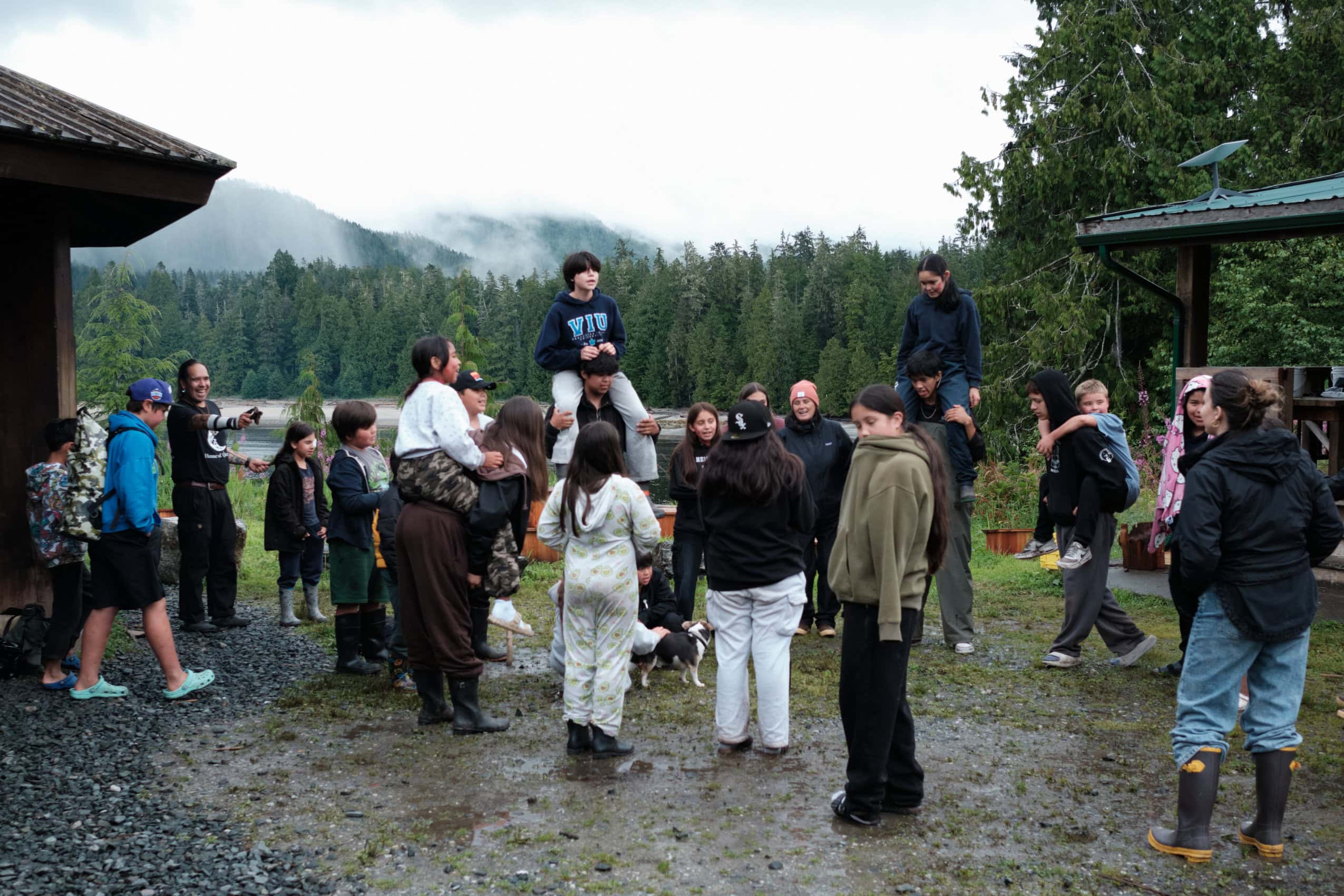
Singing and drumming and practicing dances, cooking hot dogs on the fire, the big kids guide the little ones and there’s a comfortable, controlled chaos to it all. A few of the boys swim in the ocean, laughing and splashing as the rain continues falling and the sun slowly dips down to the western horizon behind the clouds.
Before λáλix̌sístala and before all the infrastructure that exists today, kids camped on the beach in a handful of tents from Canadian Tire. ’Cúagilákv was once one of those kids, and today they’re a camp leader.
“I had some moments this summer around the celebration where I would be talking to campers about what my experience was like as a camper in the first years of camp, when it was tents on the beach and on feast day we literally used to rake a flat spot on the beach to light a fire and dance around the fire, and they were just like, ‘What dark times are you from?’ ”
’Cúagilákv laughs, their eyes twinkling.
During the more recent chapters of colonization, the site where the current lodge, cabins, garden and other infrastructure sits was once logged and later sold to settlers who built a sport fishing lodge there. Haíɫzaqv leaders stood firm in upholding their sovereign rights and established the youth science and culture camp, first on the beach and later buying back the land in 2001.
Those original buildings were burned in an arson fire in 2011. With the insurance money, the organization bought a sawmill, rebuilding everything from the ground up. Working with timbers harvested on the land, milled by Haíɫzaqv workers, they created a beautiful new lodge and cabins.
“It’s really cool that kids who attend camp today don’t ever remember not having a Big House down there,” ’Cúagilákv says. “They don’t remember a time when there wasn’t a lodge providing safety and support and hosting their families. They don’t remember a time when there weren’t comfortable cabins to sleep in. They just totally take for granted that that’s always been there and it will always be there — and I love it.”
Central to all this safety and support is Qqs.
Qqs (pronounced kucks) is the non-profit organization that oversees programs including the youth science and culture camps at Kvai, as well as a variety of programming in Haíɫzaqv communities in support of health, culture, food security and more. ’Cúagilákv is the executive director, a position they took on after their dad, Larry Jorgensen, stepped back from his leadership role. Qqs means ‘eyes’ in Haíɫzaqvḷa.
Keeping the camp running isn’t always easy, nor is it cheap. Transport alone is a huge expense: running boats back and forth accounts for about a third of the entire annual budget. For eight weeks every summer, Kvai is home to kids, youth and staff, with groups of anywhere from 15 to 30 people rotating in and out weekly. Some kids come for multiple weeks, others just for one. A lot of the staff are youth themselves, former campers who are stepping into leadership roles or getting experience and earning a wage in their first jobs, cooking and cleaning or otherwise supporting the programs. At the end of each week is feast day, when the kids are responsible for leading the ceremonies in front of community members who come down for the day.
“Programs like this are beautiful, but the reality of running them in a remote location is that certain aspects are astronomically more expensive and complicated,” ’Cúagilákv says.
Yet, somehow, for the past 28 years, Haíɫzaqv youth have gathered here every summer to learn from the land. When I ask some of the staff how long they’ve been coming out to Kvai, most say their connections thread through their whole lives. It’s as if they’ve always been here.
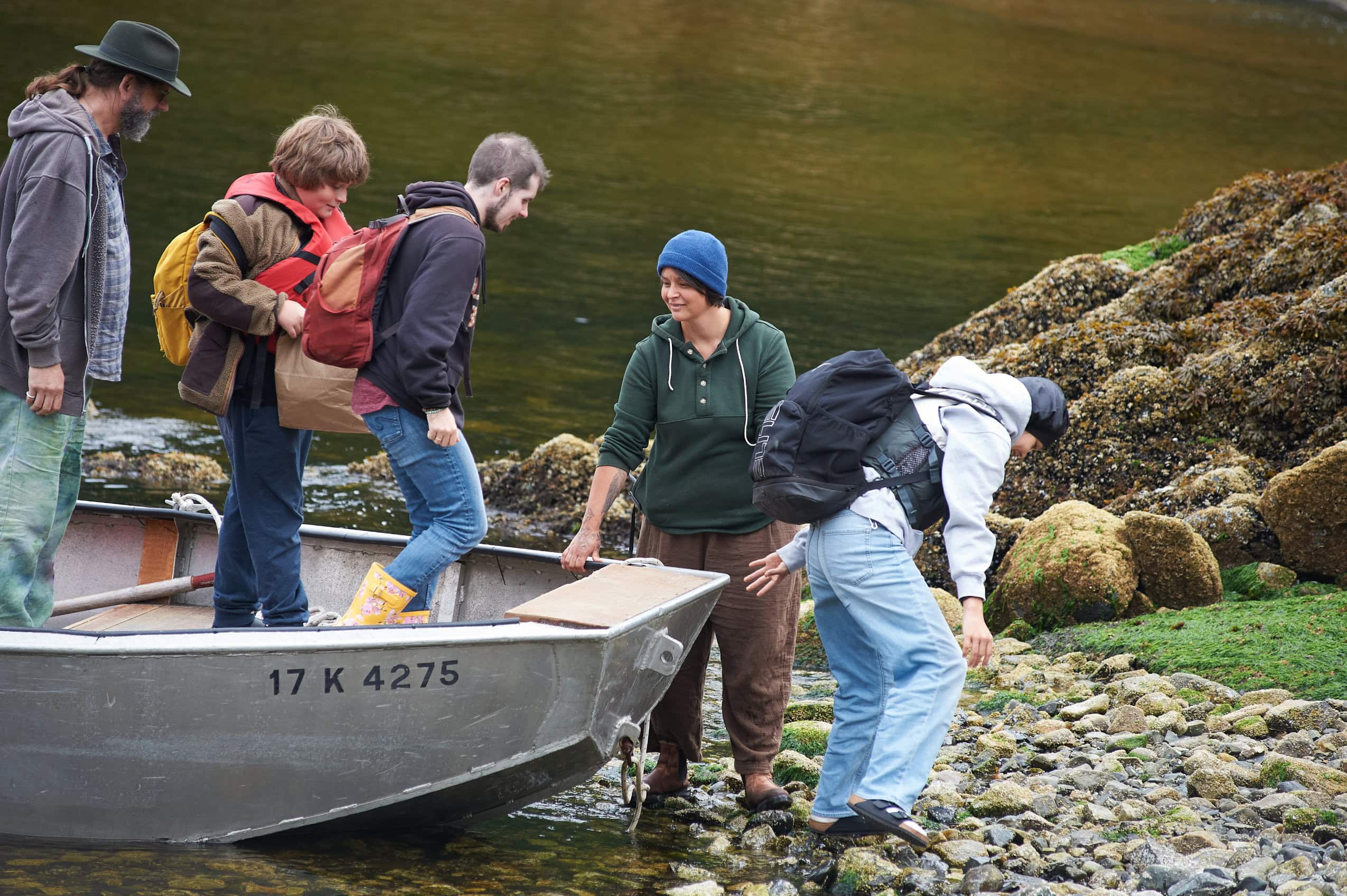
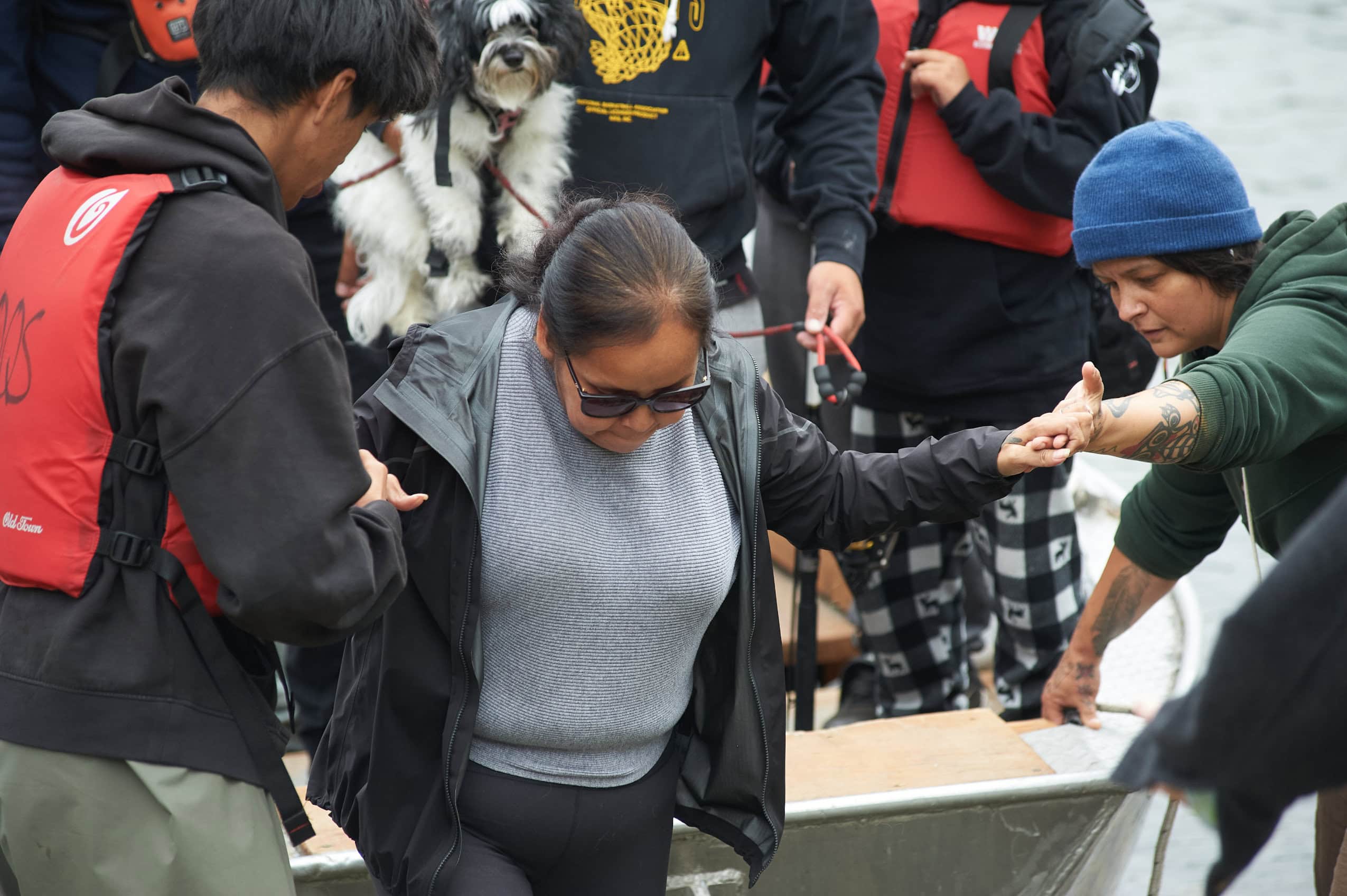
Allie, a staff member, puts it simply: “Since I was a baby. I grew up out here.”
“I think back to that really early wisdom that guided the creation of Qqs and it was this idea that people protect what they love,” ’Cúagilákv says. “So you want to teach them to love themselves, so they’re protecting themselves. You want to teach them to love each other and their community, so there’s a strong, cohesive community mind. You want to teach them to love the land and the waters so that they are standing up as stewards. And you want to teach them to love language and culture, so they are stewarding that as well.”
“I mean, it’s stupidly simple, but I really believe it is the most important thing we do.”
Both ‘Cúagilákv and their brother Dúqva̓ísḷa William Housty now have their own kids among the campers. Faye, William’s wife, is one of the camp leaders, and his teenager is also on staff. Across the fire one night, Faye tells me their youngest, George, listened to the songs while in the womb. William is there singing and drumming with the kids in the Big House on feast day.
“I think one of the really beautiful things about having done this work for as long as we have, is that we can see what Kvai kids do when they grow up,” ’Cúagilákv says. “Stewardship is a really obvious one.”
William was one of the earliest camp leaders and is now director of the nation’s stewardship department, which manages policy and planning in support of ecosystem health, jurisdiction and protection of Haíɫzaqv lands, waters and resources. Gíƛa Elroy White was similarly an early leader out at Kvai and is now the department’s in-house archaeologist.
“Many of the Guardian Watchmen and people who work at all levels in that office were Kvai campers or Kvai staff at one point over the years,” ’Cúagilákv says. “By no means would we ever take all the credit for that — they are extraordinary in their own right and we’re really lucky that we got to support them for portions of that formative time in their lives.”
For Louisa Housty-Jones, Kvai not only shaped her — it saved her life.
“I was the victim of domestic violence,” she tells me. When she was around nineteen, drinking heavily and spiraling from the trauma of an abusive relationship, Larry took her down to Kvai and left her there, alone. “Larry had this vision of helping our young people in their healing journeys through the land, guiding them to finding their identity.”
At first, she was angry with him. Slowly, yielding to the lands and waters, her anger subsided. This was before λáλix̌sístala and the current trail which links the lodge to the beach. Somewhere near where the Big House now stands she found a rock to sit at.
“Every day, rain or shine, I would make it a daily thing to go and sit on that rock,” she says. “I wailed, I cried, I screamed — I did a lot of healing at that rock. And then I would go in the ocean and I did that pretty much every day.”
Among the many roles she now holds, Louisa works with the W̓úm̓aqs du M̓ṇúyaqs, the council of high-ranking Matriarchs and Knowledge Keepers, supporting “their responsibility to pass on knowledge, teachings and wisdom from one generation to the next.”
“We are Haíɫzaqv women. We are as strong as cedar trees,” the M̓ṇúyaqs affirm in the Heiltsuk Women’s Declaration. “We are the mothers who give birth to nations. We are the mothers who bring future generations into being. We are the lifeblood of our people.”
When she was alone at Kvai, Louisa once heard women singing the Haíɫzaqv songs. And near her rock, she kept hearing a lady crying. It scared her: it was fall, cold, and there was no one else out there. A couple of months later, back in Bella Bella, she told her grandmother the story.
“She grabbed my hand and she said: ‘That lady crying was you. That was you, your spirit.’ Everything just totally came together. It’s what our Elders talk about. It was the way she explained it to me, that it was a part of me that was leaving, that was fighting not to leave.”
She started taking the canoe out in the bay, to harvest crabs, and up the river. It was there she found the most peace, she says.
“There’s so much healing in our land.”
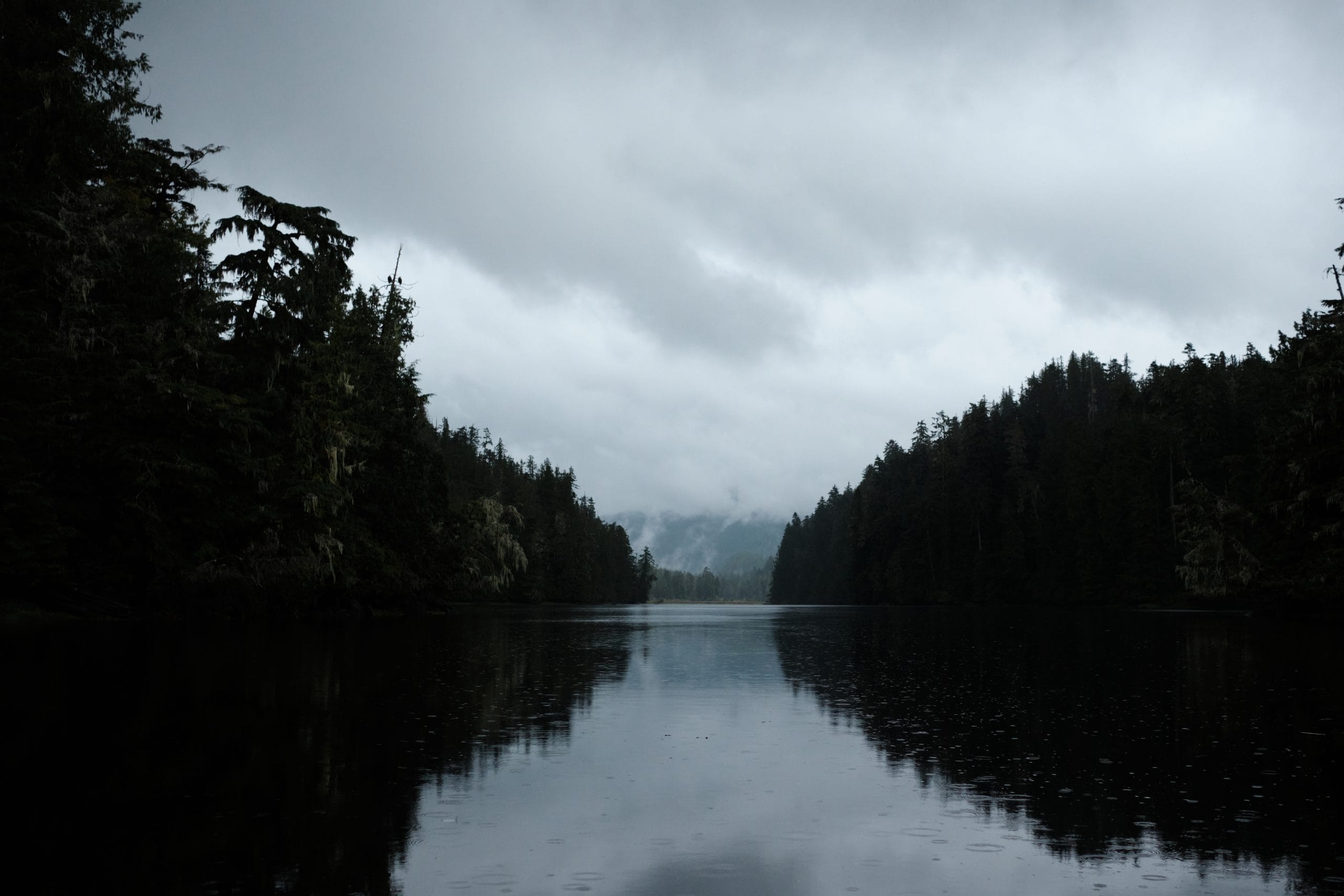
After the kids leave and staff head back to Wágḷísḷa for the weekend, it’s quiet and the bears come back. The sand is white and golden and the story of their morning walk along the beach is fresh and new, even as it reflects one that has been told here for thousands of years. Little birds dart around the shallow waves that lap at the shore. A few gulls congregate by the kelp and barnacle encrusted rocks.
The river is tea-coloured, rich with tannins. A flotilla of canoes leans against an old cedar tree. In the deep stillness away from the beach, the land opens to receive you. The light plays on the waters, creeks tumble from the forest. Later, the tide is so high it stretches into the tangle of trees that line the long beaches. In the mornings, the clouds sit so low it’s hard to tell where the fog ends and the ocean begins.
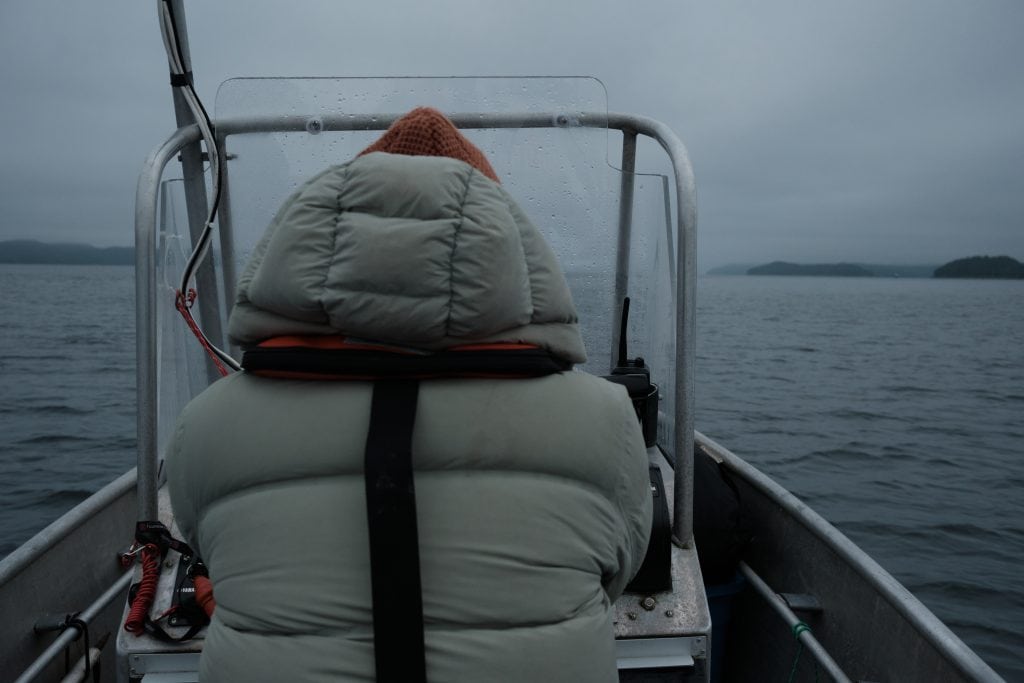
’Cúagilákv skims the little boat expertly along the water. In the hum of the engine, the slap of the waves and the cool salt spray, their words are offerings.
When I was small,
I loved the stories of people who—
with unhurried gestures—
lifted the edges of the sea
and walked into other worlds.

Of course water is a portal,
the pathway between us
and some magnificent other space
beyond our imagining.

What else could we expect
of a substance that,
even in this heavy world,
lets us float?
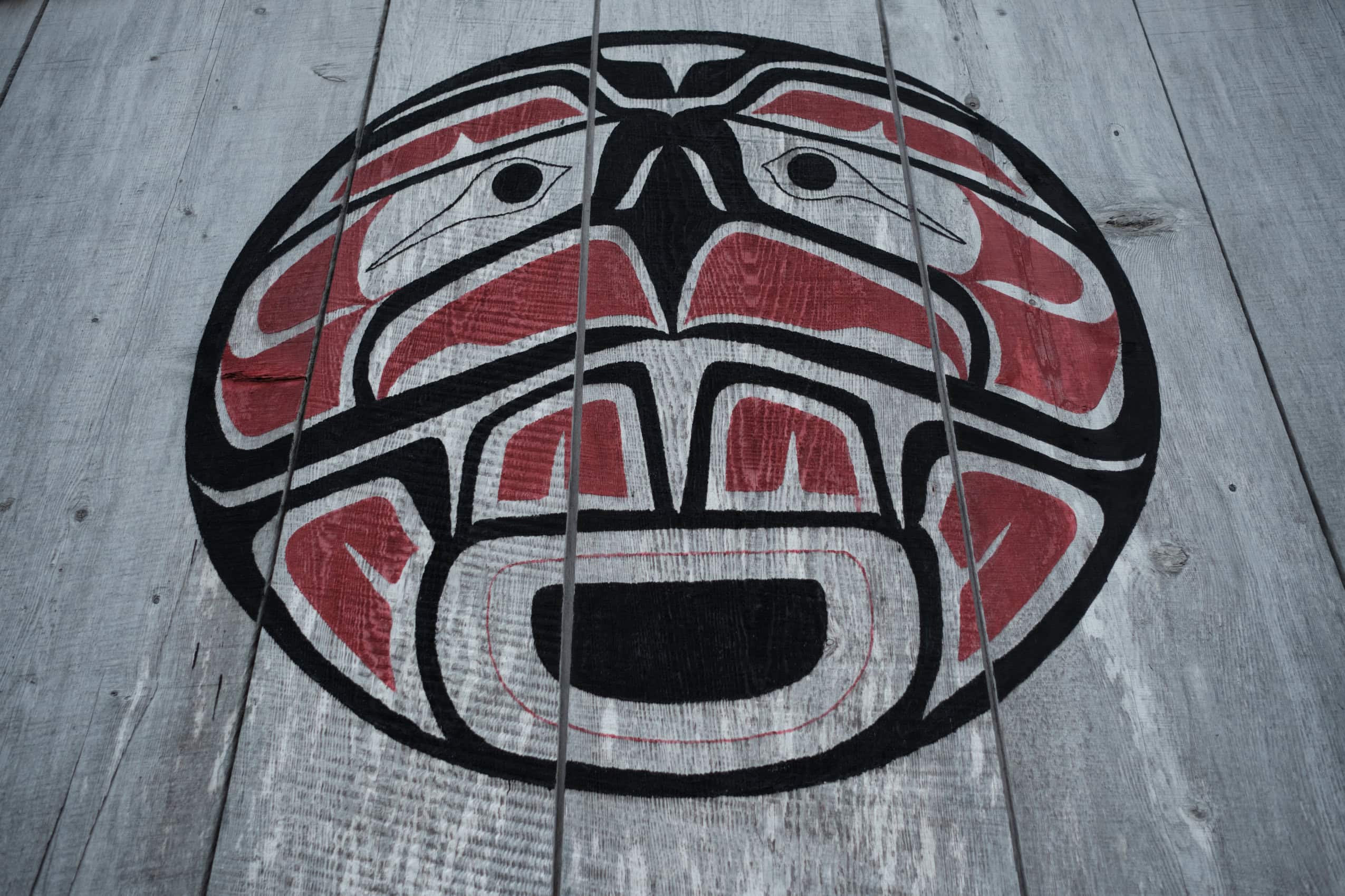
In his living room overlooking the bay at Wágḷísḷa, ‘Nusi Ian Reid, a Haíɫzaqv artist and carver, puts a book of oral histories on the table.
Gusgai’in William Beynon, a hereditary chief whose mixed lineage includes Nisga’a, Ts’msyen and the Allied Tribes of Lax Kw’alaams, spent decades listening to and carefully recording oral histories, starting in 1914 and continuing until the 1950s. His great-granddaughter, Samantha Beynon, recently wrote a children’s book about Potlatches based on his work.
These stories, ‘Nusi says, and all the stories we haven’t lost are part of the fabric of everything that matters.
‘Nusi shares old stories about the animals and people and new stories about the times we’re living in. He talks about Pops, Ed Martin, about mosquitoes and grizzlies. He talks about being on the water, being away from community and coming home, carving poles, receiving his chief name. He explains how the songs and dances the kids learn at Kvai are connected to stewardship because they come from specific places and lineage. Those places and lineages belong to the children and the kids belong to the stories. They are held through time, shared on a continuum.
More than a hundred years ago, as the federal government prohibited Potlatches and set about taking up the lands, Haíɫzaqv Chief Bob Anderson spoke of that continuum:
“The government have not bought any land from us so far as we know and we are simply lending this land to the government. We own it all. We will never change our minds in that respect, and after we are dead our children will still hold on to the same ideas.” Anderson’s words, spoken to representatives of the colonial government in 1913, form part of the preamble of Q̓áikasas Ǧvi̓ḷás: The great laws of the Haíɫzaqv. “It does not matter how long the government takes to determine this question, we will remain the same in our ideas about this matter … We consider that the government is stealing that land from us, and we also understand that it is unlawful for the government to take this land.”
A moment stretches and becomes endless, unfurling like a spring fiddlehead. The stories are a presence. Through time, an echo: “… Our children will still hold on to the same ideas.”
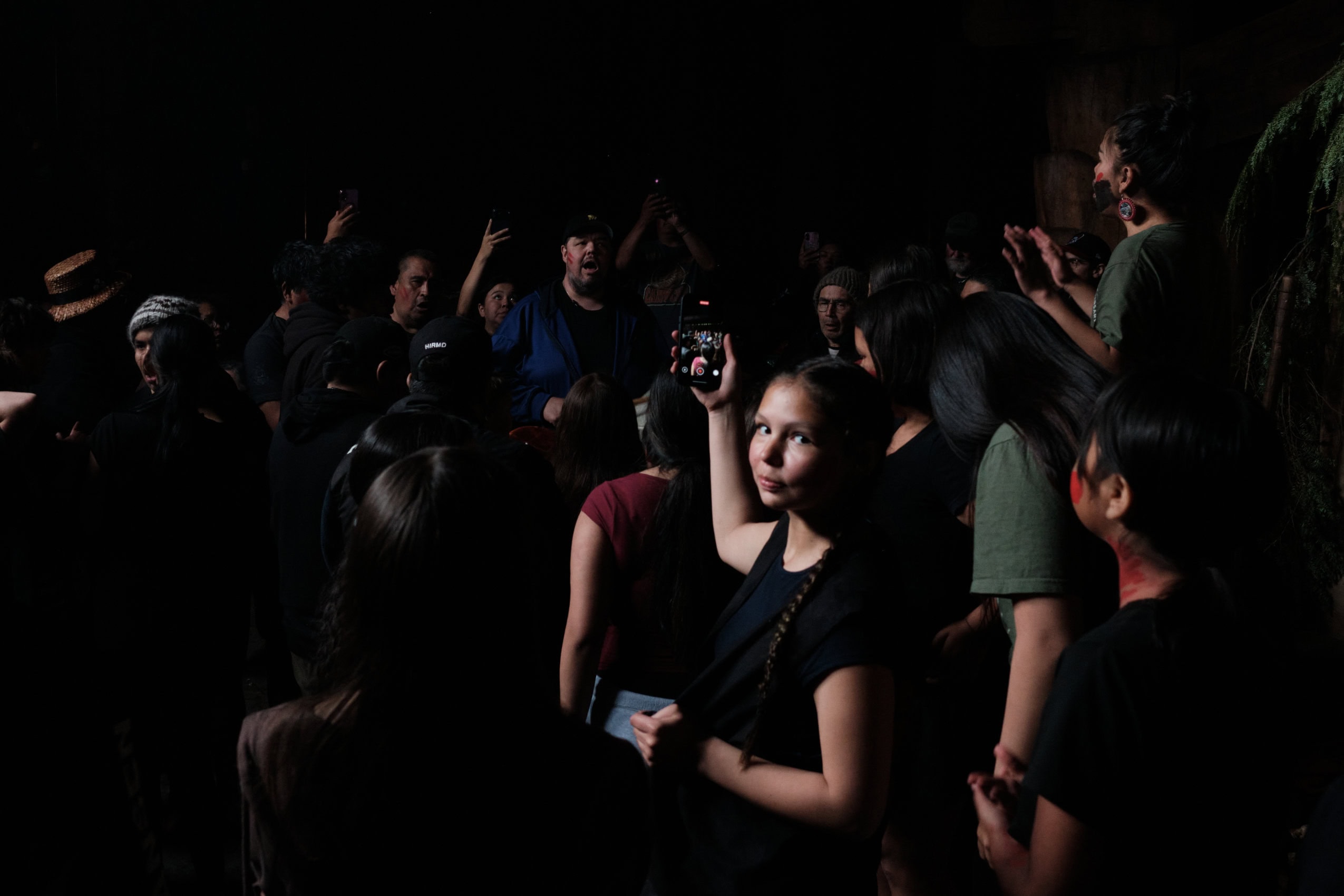
And through time, I’m in λáλix̌sístala, listening. Above the crackling of the fire and the murmur of twin babies, ƛ̓istalaɫ Maria Martin’s voice rings out:
“Kvai has become the place where our children, youth and community come for wellness, healing, guidance and, most importantly, learning our Haíɫzaqv culture,” she says. ƛ̓istalaɫ is one of Ed Martin’s daughters. “This Great House has been here for 20 years and that’s what we are here to acknowledge and celebrate today. It strengthens our identity and gives us much hope for our future generations. Our children that have been here are the strongest and the greatest little leaders on the ground. This is exactly what my late dad envisioned. … This place was our dad’s home.”
“I am proud to have watched our children and youth grow confidence, respect and pride,” ƛ̓istalaɫ continues. “They have learned not only our songs, dances and our protocols, but also kindness and what it means to listen and be accountable — and they will become strong leaders for our nation.”
“We continue to find healing here. We remember who we are here.”
The twins are brought onto the floor and danced around the fire in the arms of their relatives.
Sas húmíɫṇƛa?
In reporting this story, Matt Simmons leaned into participatory, community-driven storytelling as part of a decolonized approach to journalism. He wrote about why this is important in a story you can read here.