





 8 min. read
Amid worsening U.S.-Canada relations, Ontario Premier Doug Ford is once again threatening to cut off electricity to 1.5 million homes and businesses across three neighbouring American states: Minnesota, Michigan and New York.
The move comes as Canada tries to stave off the impact of U.S. President Donald Trump’s decision to charge “far WORSE” tariffs after the federal government decided to walk away from trade negotiations on Aug. 21. Prime Minister Mark Carney has announced a “dollar-for-dollar” retaliation beginning September.
But Ford is pitching a more aggressive approach. “Everything’s on the table,” he told reporters on Aug. 24. “I’ll do whatever it takes.”
On Ford’s table are critical minerals, uranium, potash, oil and, significantly, electricity.
“We power 1.5 million homes and businesses,” Ford said. “What I find ironic about this is we’re actually giving electricity to companies that make products that compete against us. That needs to stop, and we’re going to address that.”
Ford emphasized that Ontario isn’t the only province that sends electricity to the U.S. Others include New Brunswick, Quebec and British Columbia. “So we need to get together and decide if we’re going to put surcharges on the electricity,” he said. “How can we let them take really inexpensive electricity to make goods to compete and take jobs from Canadians? You can’t square that circle.”
Ford’s plan wouldn’t just affect Ontario or its bordering states; it could have repercussions for affordable, reliable electricity across both countries.
Ontario has been trying to stave off these effects by proposing new and massive energy projects across the province — investments that Energy Minister Stephen Lecce deems “tariff-proof, recession-proof.” But these projects are far from being operational.
Here’s everything you need to know about this developing situation.
How did we get here?
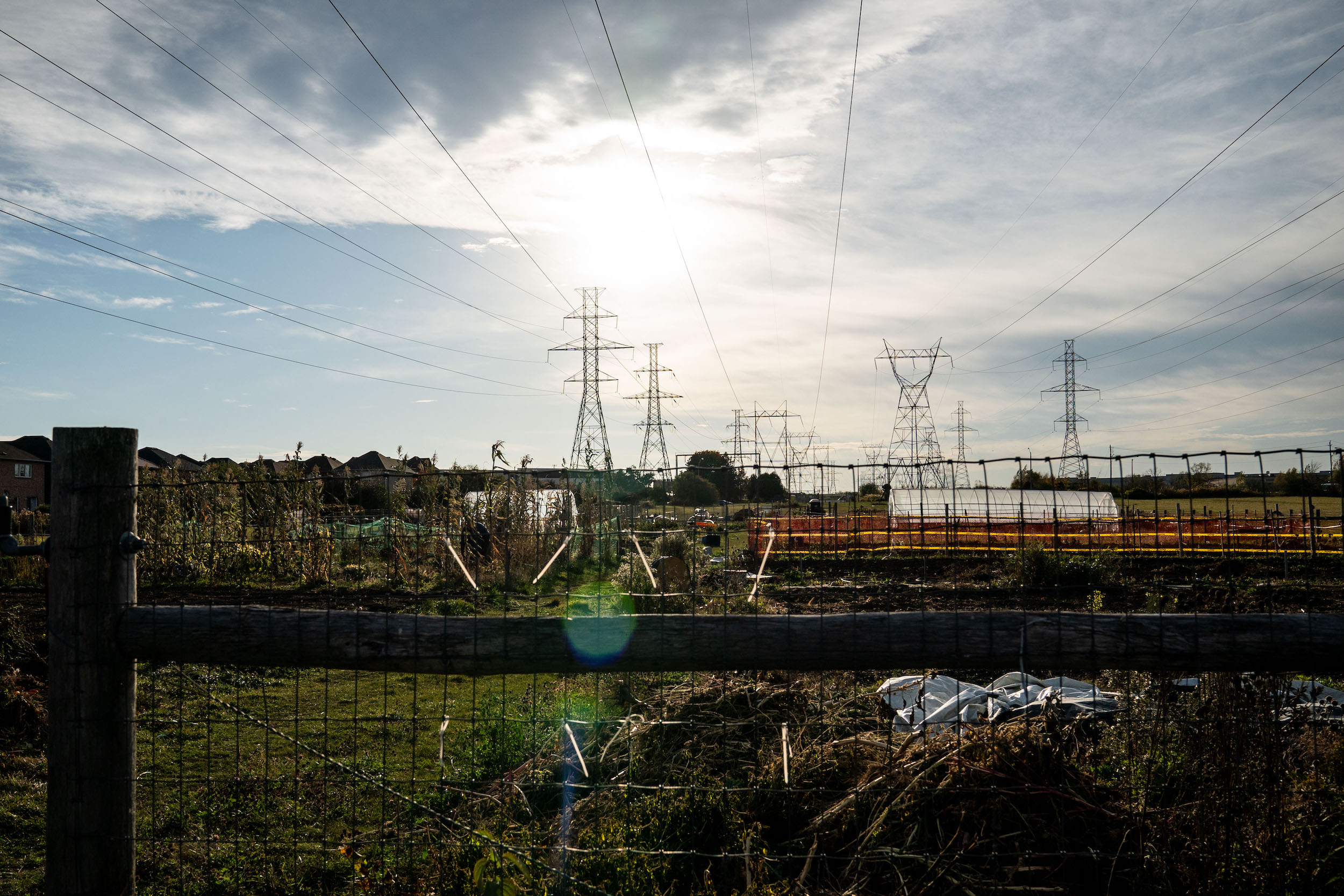
For more than a century, America and Canada have bought and sold power between provinces and states. At any given moment, electricity is flowing in either direction across a shared and massive transmission grid, with the goal of keeping electricity affordable and available, especially when it’s most needed. Both countries have helped the other during cold snaps, heat waves, droughts and floods.
While our shared systems have made us susceptible to each other’s energy failures — 50 million people lost power when overgrown trees in Cleveland caused North America’s largest blackout ever, in 2003 — for the most part, this relationship has been seamless.
But for the second time in almost two years, all of this is under threat.
The first major threat to the two countries’ shared electricity grid came in November 2024, when Trump threatened to impose a 25 per cent tariff on all Canadian and Mexican imports — unless the two countries improve security along their borders.
In response, Ford imposed a 25 per cent tax on electricity exports and threatened to shut down electricity exports entirely should the tariffs remain on the table. The surcharge was in effect for one day last year and made the province $260,000.
Both options — which Ford once described as options of “last resort”— are being pitched once more.
The federal government has not officially weighed in on Ford’s proposal yet. Neither have other provinces that send electricity south of the border.
Which Canadian provinces send America electricity?
Canada began sending electricity to the U.S. in 1909, when the first transmission line was built connecting the two countries. Today — 117 years later — every Canadian province along the border is electrically interconnected with at least one U.S. state. There are more than 31 cross-border transmission lines across both countries.
That means the countries can easily work together to balance out fluctuations in energy needs. For example, during extreme winter weather in the U.S. in 2021, Canadian electricity companies sent increased electricity to those that needed it — an act that wasn’t just friendly, but kept the heat on as temperatures plummeted to less than -20 C in most parts of the central and southern U.S. (That’s less than -4 F for any Americans reading this.)
Ontario is the largest electricity-exporting province, followed by Quebec, while Michigan, New York and Minnesota are the largest electricity importers.
Why has Canada integrated its electricity system with America’s?
Simply put: we produce too much! And the U.S. population is much, much bigger.
Ontario’s very large nuclear supply, hydro plants and renewable energy sources collectively produce more electricity than the province of less than 17 million people uses on a regular basis. Nuclear facilities aren’t easily turned on and off, so Ontario sells largely emissions-free electricity to the U.S. overnight for cheap. (The alternative is letting that surplus electricity go to waste.)
Quebec also produces more hydroelectric power than it uses. That’s why it has long-term export contracts to supply electricity to New York state — home to 20 million people. It’s also a major source of revenue for the provincial government.
In total, Canada exports enough electricity to power 4.5 million U.S. homes.

Does America sell electricity to Canada?
Yes, and we might need more of it soon.
Ontario’s nuclear production has shrunk as aging plants are shut down or refurbished, while drought conditions have made hydroelectricity less reliable in British Columbia and Quebec. Meanwhile, a growing population and energy-hungry technology has put greater demands on Canada’s supply.
The Independent Electricity System Operator, which manages supply and demand in Ontario, reported in 2024 the province may have to consider increasing the amount of electricity it imports from the U.S., even as it rushes to build new power plants and find new sources of power.
The balance is already shifting: by fall 2023, monthly average U.S. electricity exports to Canada increased by 70 per cent, and imports decreased by 36 per cent.
British Columbia has been a net importer of electricity for three years in a row; 25 per cent of the province’s electricity came from America.
In the Prairies, imports and exports are minimal, and the one line connecting Alberta to Montana has been at the centre of a legal battle with Warren Buffet’s Berkshire Hathaway.
How has politics affected the Canada-U.S. electricity relationship before?
On the whole, the shared grid has operated with relatively few discussions of tariffs or trade barriers. The disputes have more frequently been between jurisdictions or electricity producers and utilities. Communities have sometimes opposed electricity projects on the other side of the border when they fear it might affect their local environments.
Premier Doug Ford has been threatening to cut American states like New York and Michigan off from Ontario’s power. Could he do that?
He could.
The Ontario government has the power to instruct the Independent Electricity System Operator to limit electricity exports, which would theoretically impact the amount of energy neighbouring American states can access.
There’s one snag. To both increase the price of electricity exports and shut them down, the government would need to table legislation directing Ontario’s electricity utilities and operators. The government is currently on an extended summer break until Oct. 27. Ford is resisting the Ontario NDP’s call to return sooner to pass emergency relief measures for workers in tariff-exposed sectors and business.
If Ontario reduced or eliminated electricity sales to American states, what would be the impact there and at home?
The electricity grid really is one big machine, so it won’t function nearly as well if we cut it in half.
Two energy experts previously told The Narwhal the immediate impact would likely be marginal in American states, which could make up for lost Ontario electricity by tapping into local sources of power kept in reserve, mostly fossil fuels. The result would be a grid that was more expensive to operate, much dirtier and less reliable on both sides of the border. Plus, Ontario’s electricity producers would see a financial loss, which might increase costs for domestic users.
If Ontario was in an emergency situation during a charged political battle, like a winter storm, it wouldn’t be able to rely immediately on U.S. electricity, as it can now. It would have to work more closely with Manitoba and Quebec.
All of this is hypothetical, though. Ford has yet to provide details of his plan.
How will Ontario mitigate the impacts of the trade war on electricity?
By building big, new energy projects — or so they say.
On Aug. 25, Energy Minister Stephen Lecce was in St. Clair Township, at the border between the U.S. and Canada, to announce his government is planning to revive the long-shuttered Lambton coal-generating station into either a new nuclear or gas facility. This proposal joins a long list of massive energy projects — including new generating facilities in Nanticoke and Port Hope — the Ford government believes will make the province and the country energy-independent.
“Energy independence has always been vital,” Lecce said. “Today, it’s more than just keeping the lights on. It is about our national security and sovereignty. It’s about making power and having the power to make our own decisions, build our own industries and fuel our economy right here at home.”
But these projects are far away from being built, let alone being operational. In the short term, a trade war with electricity caught in the centre will have some impact on residents across both countries.
—With files from Drew Anderson