




 8 min. read
Starting next month, Ontario hunters will have a shot at sandhill cranes — for the first time in a century.
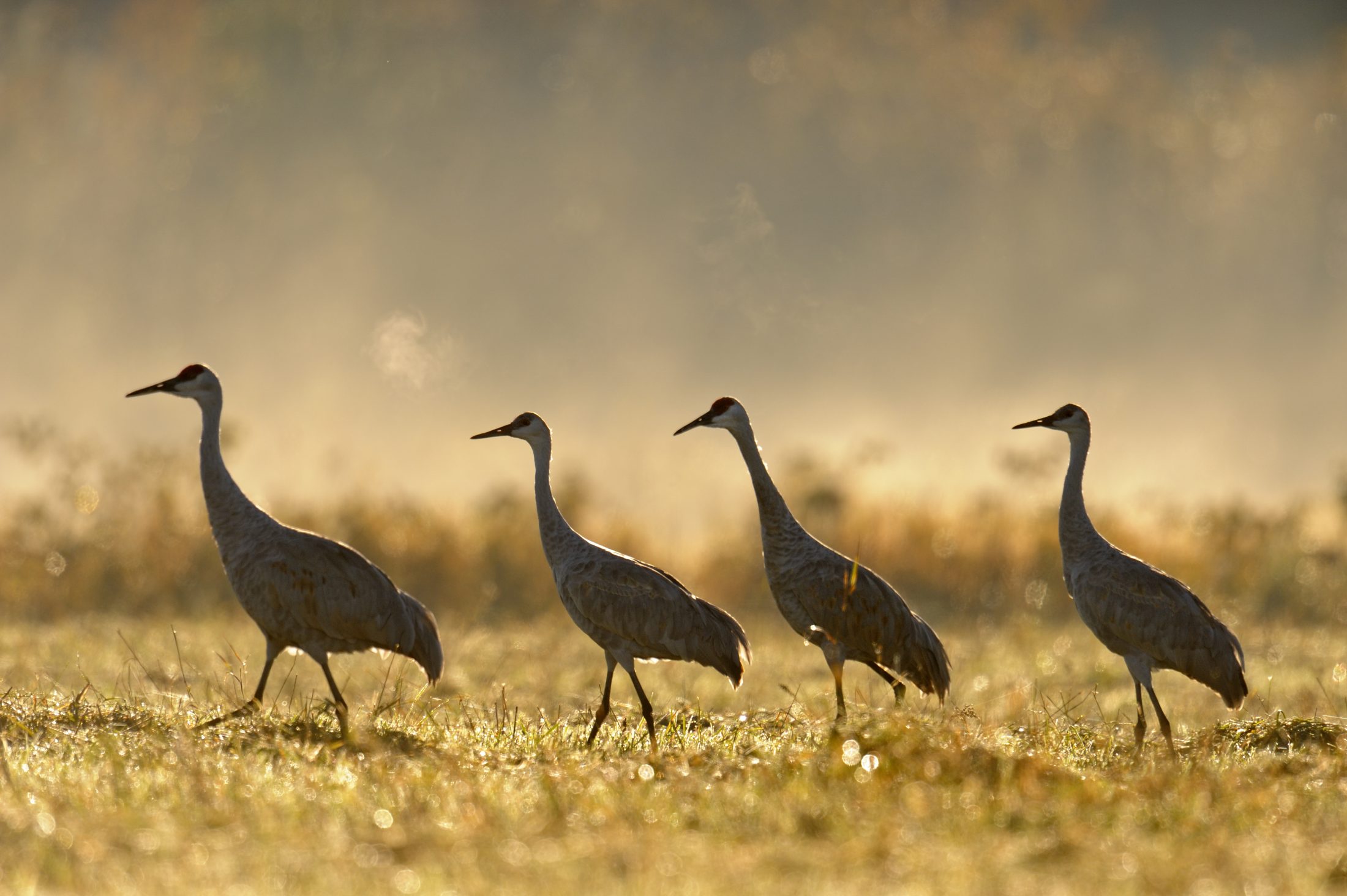
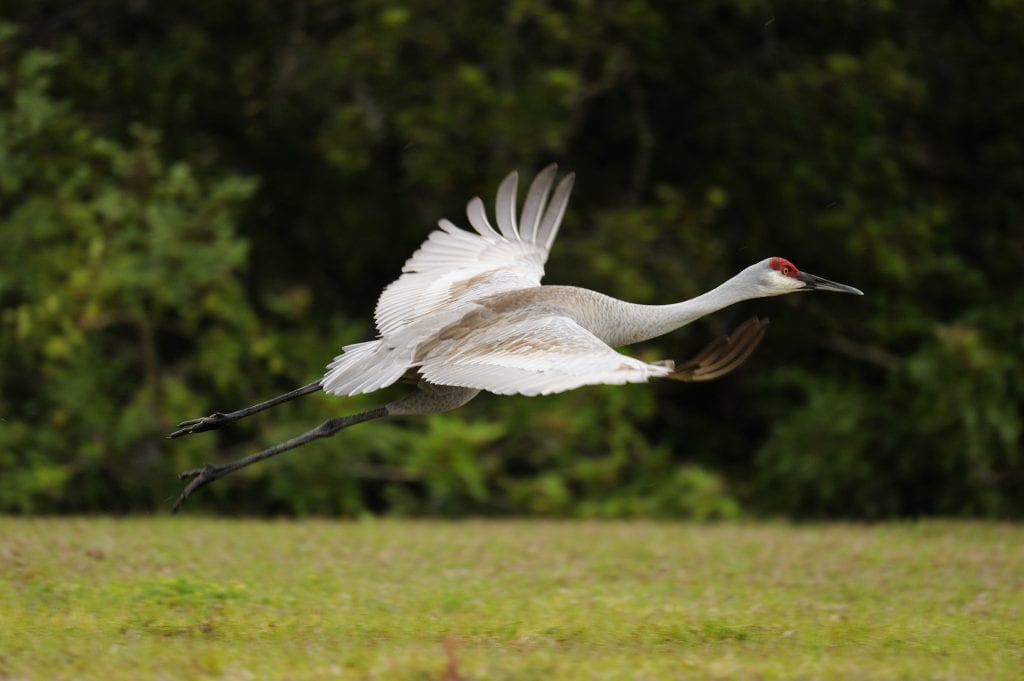
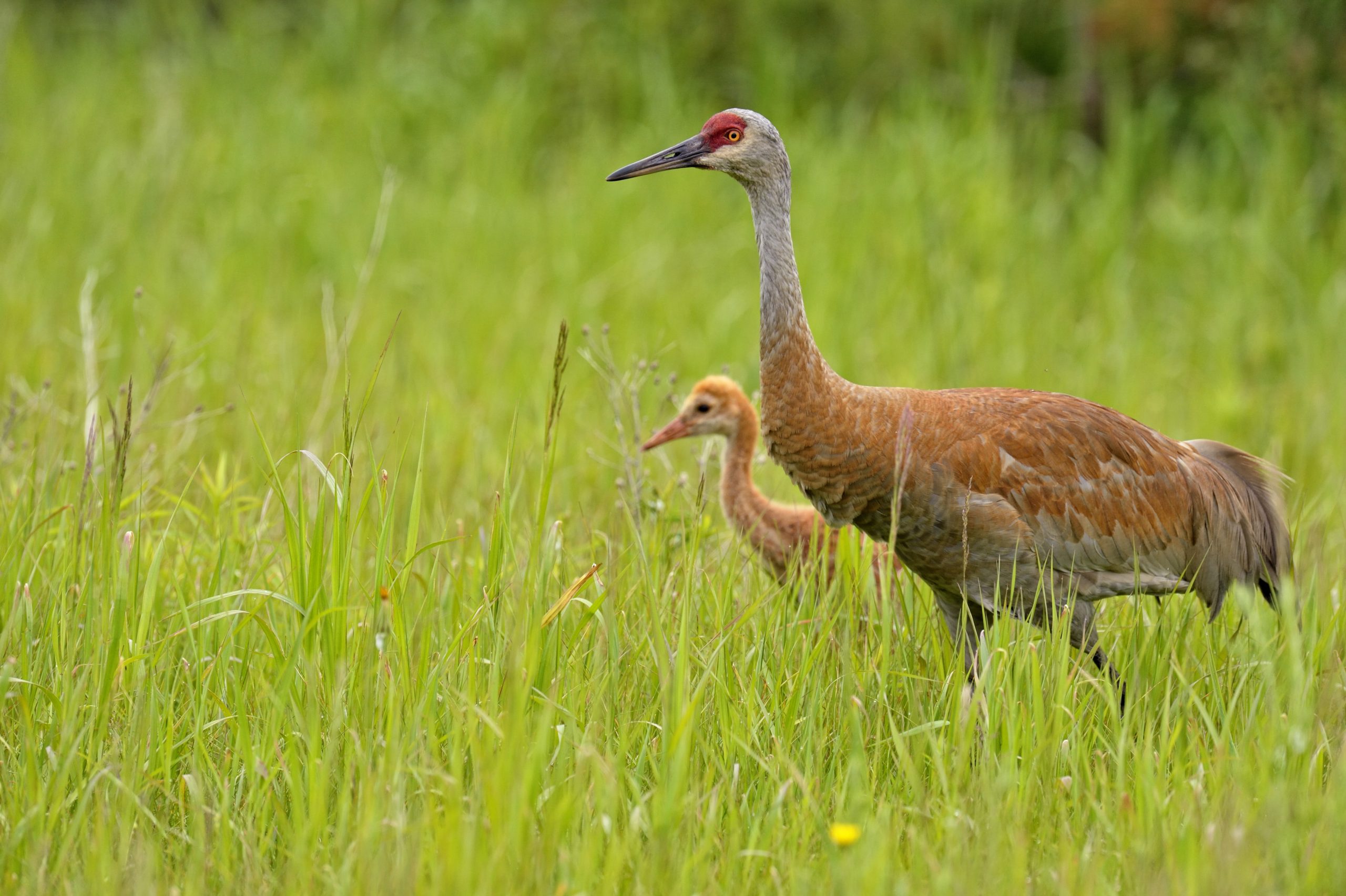
The long-legged, grey birds with a nearly two-metre wingspan are widespread across Ontario from the Great Lakes as far north as southern James Bay — nesting in wetlands and swampy areas after migrating up from the southern United States and Mexico in the spring.
Summary
Mark Peck recalls waking up at 4 a.m. to see thousands of sandhill cranes fly over the banks of the Platte River in Nebraska, where 80 per cent of the species migrate to rest and eat before flying back south for the winter.
Like Peck, many of them travel from Canada, while others make the journey from Alaska and Siberia.
“It was an incredible experience. … There were about 10,000 sandhill cranes, all on the river,” Peck, president of Ontario Field Ornithologists, said. “As the sun was coming up, the birds were slowly leaving, but they were dancing and bugling, and it was just an awesome experience. … I think it would be hard to hunt after witnessing that.”
Sandhill cranes have a distinct, rattling bugle call that can be heard up to four kilometres away. To Peck, it’s akin to the call of a common loon or the howl of a wolf, a “beautiful sound of nature.” Their distinctive mating dance — wings flapping, beak pecking and legs strutting — have been widely captured and shared online.
While birders love them, sandhill cranes have a long and complex history in Ontario.
In the early 20th century, the species was hunted to near-extirpation in the province, meaning they were almost locally extinct. In the last few decades, thanks to increased protection from unregulated hunting and more sources of food from agriculture, they have surpassed population expectations. To some, this is a huge success.
“It really is a wonderful, good news story,” Peck said. “They’ve made a remarkable comeback. I’m 67. When I was growing up, it was unusual to see a sandhill crane in southern Ontario. Now, they breed across the province.”
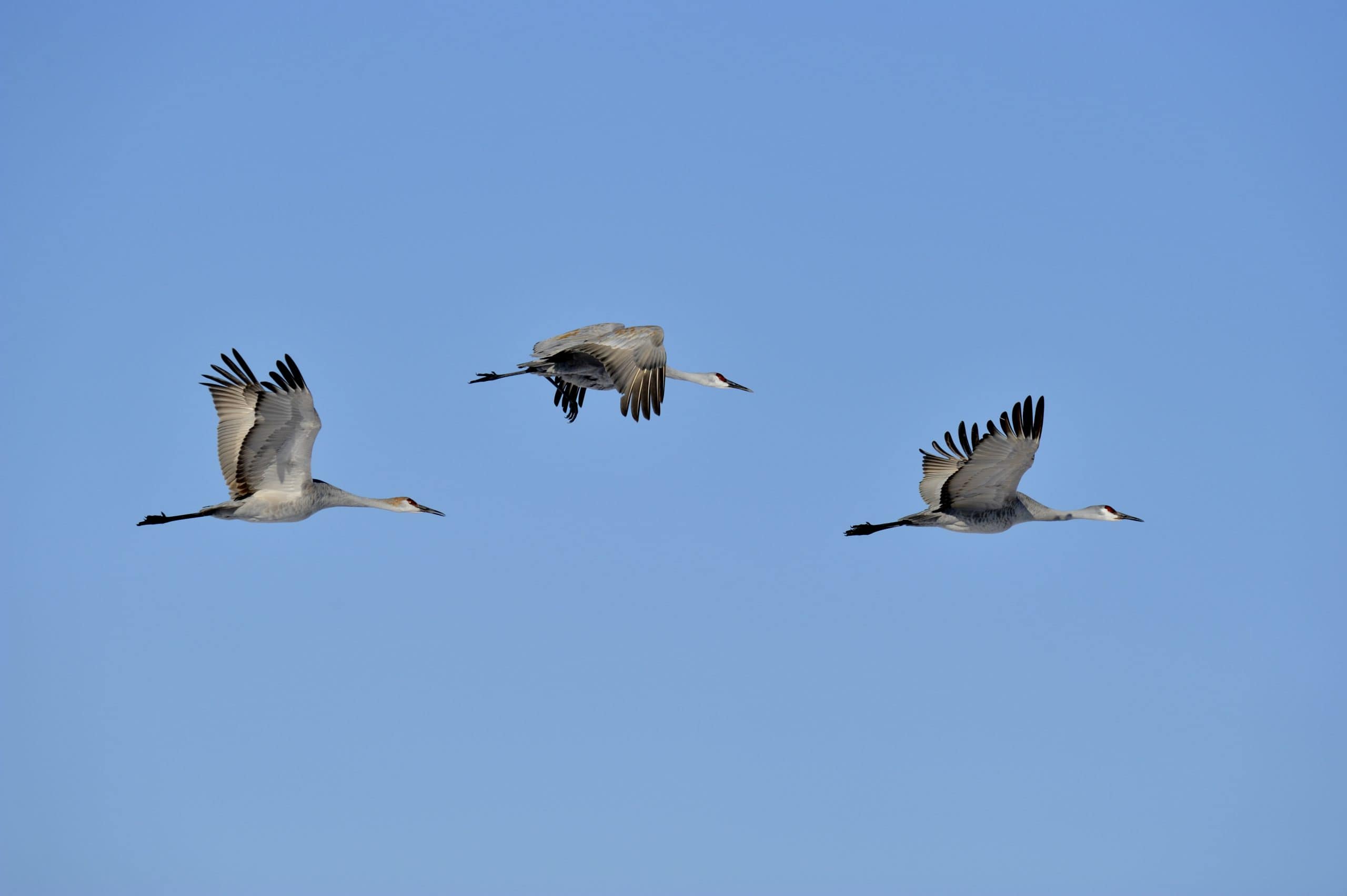
Not everyone sees it as good news, though. Farmers in Algoma, Timmins and as far as Thunder Bay have advocated for an open hunting season in northern Ontario. They say sandhill cranes have caused extensive damage to their crops, wreaking havoc in the spring by pulling up freshly planted seedlings, and again in the fall before harvest.
“It is very discouraging to certain farmers that they’re planting their spring crops, and these birds are coming in and just annihilating it,” Bill Groenheide, Northern Ontario director of the Ontario Federation of Agriculture, said. “Farmers are having an increase of up to 30 per cent loss in their crops.”
Birgit Martin, who farms on Manitoulin Island, told Ontario Grain Farmer Magazine she has had to replant 25 per cent of her corn acres due to sandhill crane damage.
Sandhill cranes are omnivores and eat a wide variety of food including insects, plant roots, small animals like rodents and frogs, berries, seeds and even other small birds. But when they find themselves in agricultural areas during the fall migration, the crops hit the hardest are corn, soybeans and potatoes, Groenheide said — some of the most common, and profitable, crops for Ontario farmers.
“When so many birds come into one area and totally destroy your livelihood, there’s got to be compensation somewhere,” Groenheide said. The province’s wildlife damage compensation program focuses on livestock, and doesn’t cover crop losses to migratory birds. “There’s got to be something done about it.”
Ontario sandhill crane hunt allows for one bird per hunter per day
Ontario farmers have been asking the government to open a hunt for years. Environment and Climate Change Canada assessed the status of sandhill cranes earlier this year and found that a “conservative” hunt would have a “minimal impact” on the population of sandhill cranes — which is currently more than 103,000 strong, and considered to have a large, increasing population size. It proposed a hunt running for 14 days, with a “small bag limit” of one bird per day that will allow the federal government to carefully monitor the harvest in the first four years of implementation.
While Ontario’s Ministry of Natural Resources determines harvesting regulations for most wildlife in the province, the federal environment department oversees migratory birds, like sandhill cranes.
Environment and Climate Change Canada’s population objective for the cranes sits between 30,000 and 60,000, and explains on its website that a “managed harvest” could slow or stabilize population growth and potentially minimize crop damage.
The federal agency told The Narwhal in an email that the primary goal of this open season is to provide additional hunting opportunity, adding that “while the intent of the season is not to significantly decrease the sandhill crane population in Ontario and Quebec,” the season may also provide “some direct relief of conflicts.” They also said there may be some indirect reduction of conflicts as hunted sandhill cranes may respond better to scare techniques used by farmers to protect their crops, such as propane cannons that make loud noises.
“Obviously that’s great from a recovery perspective … that this population was able to rebound to that extent,” Matthew Robbins, a fish and wildlife biologist at Ontario Federation of Anglers and Hunters, said. “It also means that, based on the modelling that exists, they can certainly handle some sustainable use.”
The current hunt will allow Canadian residents to hunt one sandhill crane per person per day in the area around Hudson and James Bay, from Sept. 1 through 14, and on farmland only in other parts of northern and central Ontario including Algoma, Nipissing and Temiskaming, on Sept. 12 through 25. A similarly limited hunt is being opened in Quebec this September as well.
This new season creates opportunity for hunters and gourmets — sandhill cranes are known to some as “ribeye of the sky” for their rich, red meat — that the Ontario Federation of Anglers and Hunters says is appropriately limited to start.
“The proposal is a very conservative approach,” Robbins said. He doesn’t anticipate a significant hit to the population as a result of the hunt, but says slowing the population growth by some amount may help those farm conflicts.
“It would be worth exploring expanding it in some capacity as long as we can ensure that that’s going to be sustainable,” Robbins said. “From a conservation perspective, it definitely makes sense to start this off from a fairly cautious position, and then go from there.”
Peck is also optimistic about the conservative nature of the hunt’s parameters. But conservation organizations like Ontario Nature have argued reinstating a sandhill crane hunt is a “controversial and concerning proposal.” The birds can live up to 30 years in the wild, meaning they take a long time to mature, while very few of their young survive to adulthood. This makes it more difficult for populations to replenish quickly if adults are killed off.
The federal government said it received opposing comments from an animal welfare organization, ornithology and naturalist groups, birdwatchers, an unnamed First Nation and individuals during the public comment period last winter.
Environment and Climate Change Canada says on its website that the current strategy accounts for sandhill crane life history and low productivity by allowing only a very limited harvest. It argues the “daily bag limit is intentionally set below” the level the population can sustainably support, and that the population is still expected to grow, though more slowly than if there were no hunt.
At the same time, Groenheide from the Ontario Federation of Agriculture worries the plan for the hunt is not enough to protect farmers, but Environment and Climate Change Canada told The Narwhal it does not anticipate making changes to the proposed harvest framework until the end of the 2029-30 hunting season.
“In Canada, they want to regulate it because they want to drop the amount of birds [killed], and I do understand that,” Groenheide said. “But on the flip side, how do we protect the farmers?”
Farmers organization wants higher sandhill crane harvest and in more areas
In early 2024, the Ontario Federation of Agriculture released a statement recommending Environment and Climate Change Canada alter its plans. The organization wants farmers to be allowed to defend their crops from sandhill cranes at any point during the year, as well as increased hunting limits, more hunting areas and an earlier season.
While changes have not been reflected in the final regulations, Groenheide said this year’s hunt is a good first step.
“It’s great to see these birds in great numbers. Don’t get me wrong,” Groenheide said. “But there has to be a playing field. Farmers are out there and the value of their crops is in big demand. There’s a lot of money put into this. They’re losing it all. They’re getting nothing for it. So there has to be a trade-off somewhere.”
He said the way this species is managed represents part of a larger picture related to expanding agriculture in northern Ontario, proposed by the Ministry of Agriculture, Food and Agribusiness in April 2026.
“We have ministers now wanting to expand the north, wanting the great clay belt to be opened up and all that,” Groenheide said. “I always call it the great frontier of the north.”
“It’s great land,” Groenheide said, but farming new areas comes with new challenges. Wildlife like deer, bear, moose and elk can conflict with agriculture as farming expands northward, he said.
“It’s their territory, so how do we work around it? How do we compensate farmers if we are inviting them out there?” Groenheide said. “There’s got to be a plan.”