






 24 min. read
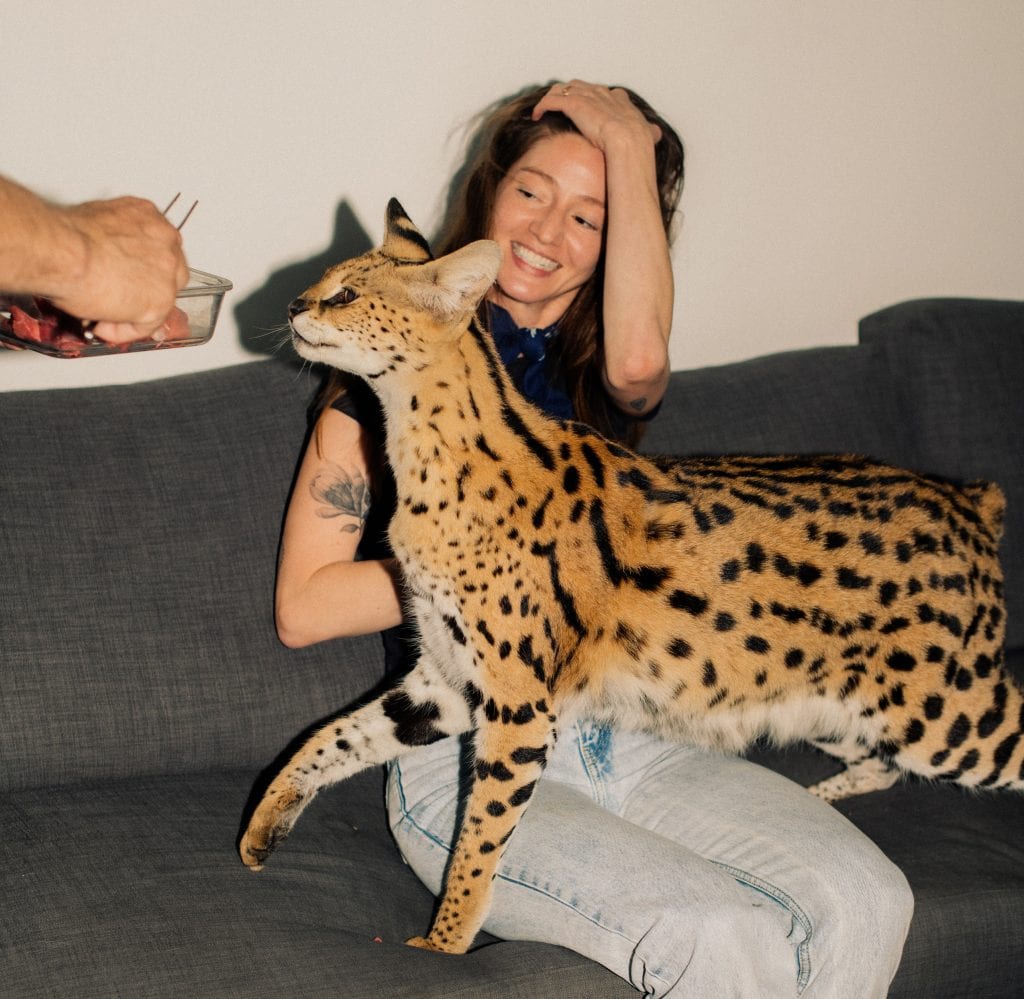
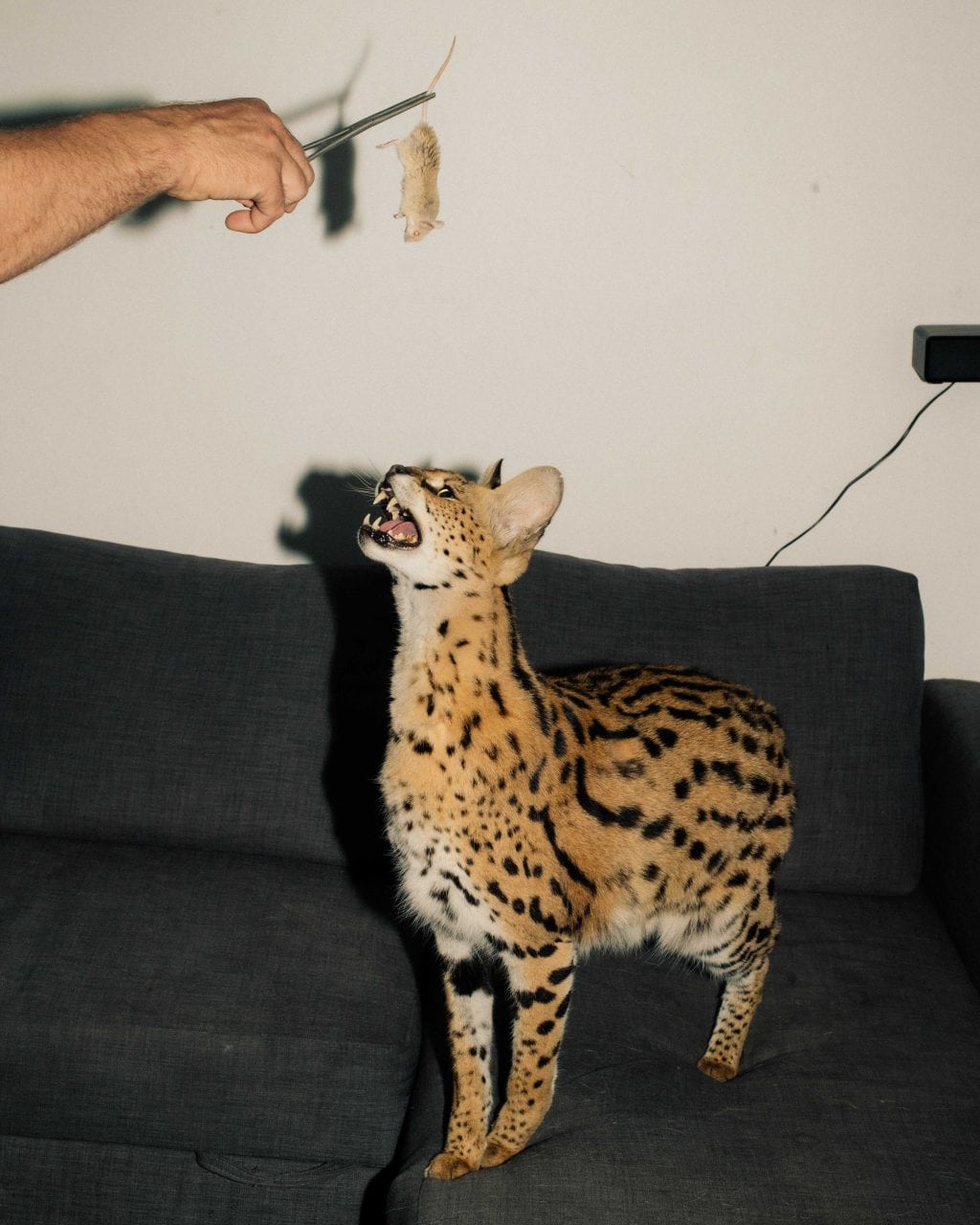
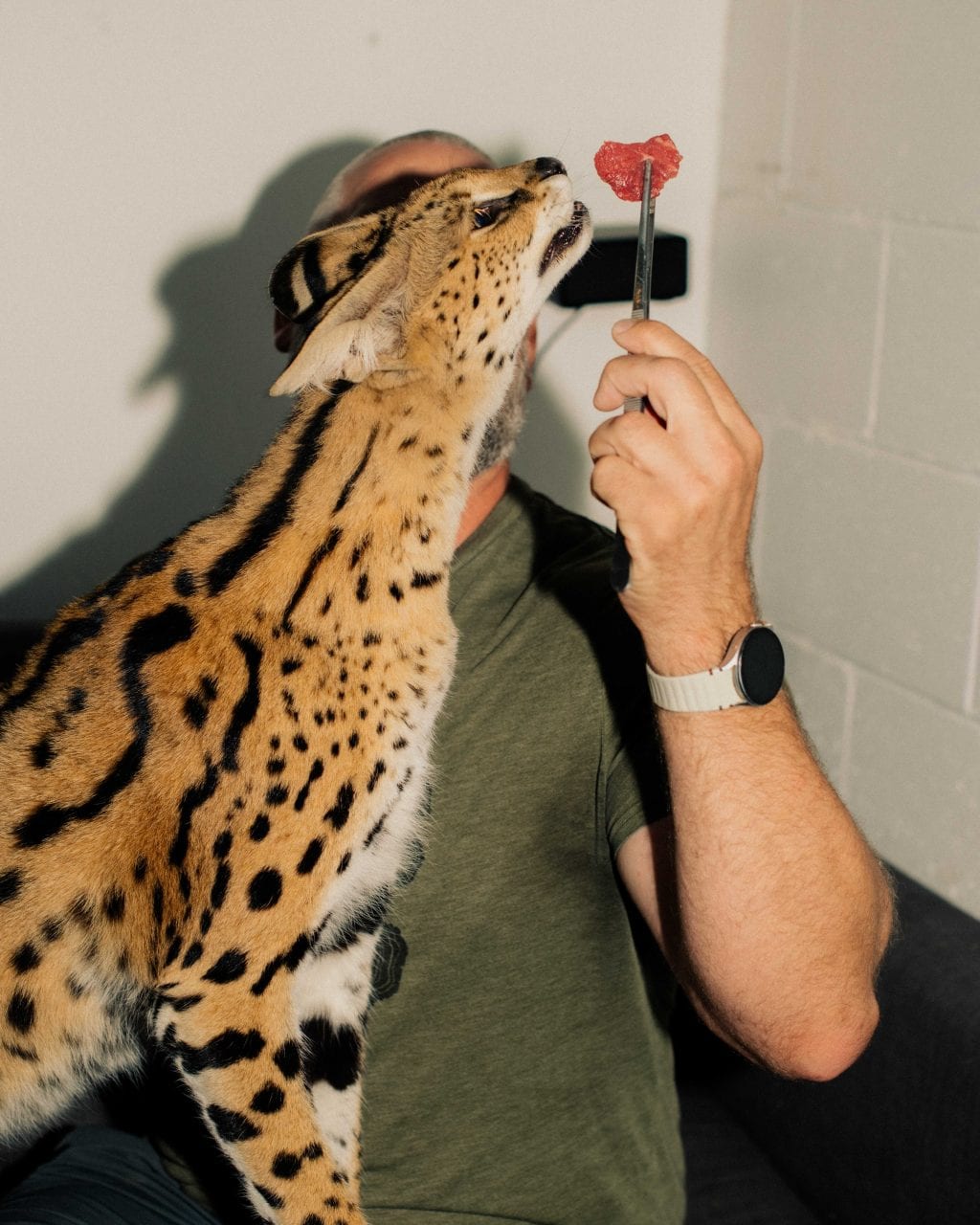
On an hour-long drive from Vancouver to the heart of B.C.’s Fraser Valley, I contemplate the most professional way to ask if I can pet this cat I’m about to meet. There’s journalistic value to being able to describe its fur, I imagine arguing, as I drive past bucolic fields and cheerless industrial parks. In the end, I don’t need to ask at all. “Do you want to feed him?” Mike Hopcraft says, holding out a dish of raw chunks of beef and a pair of long metal tweezers, as the cat glowers beside me.
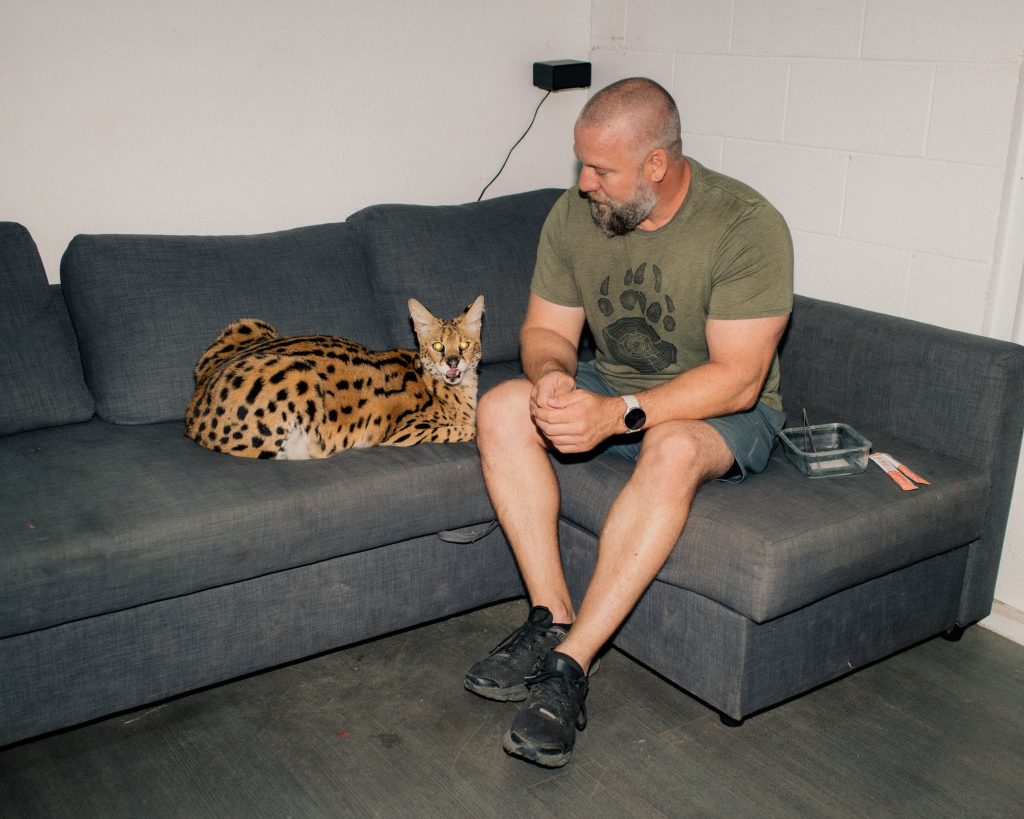
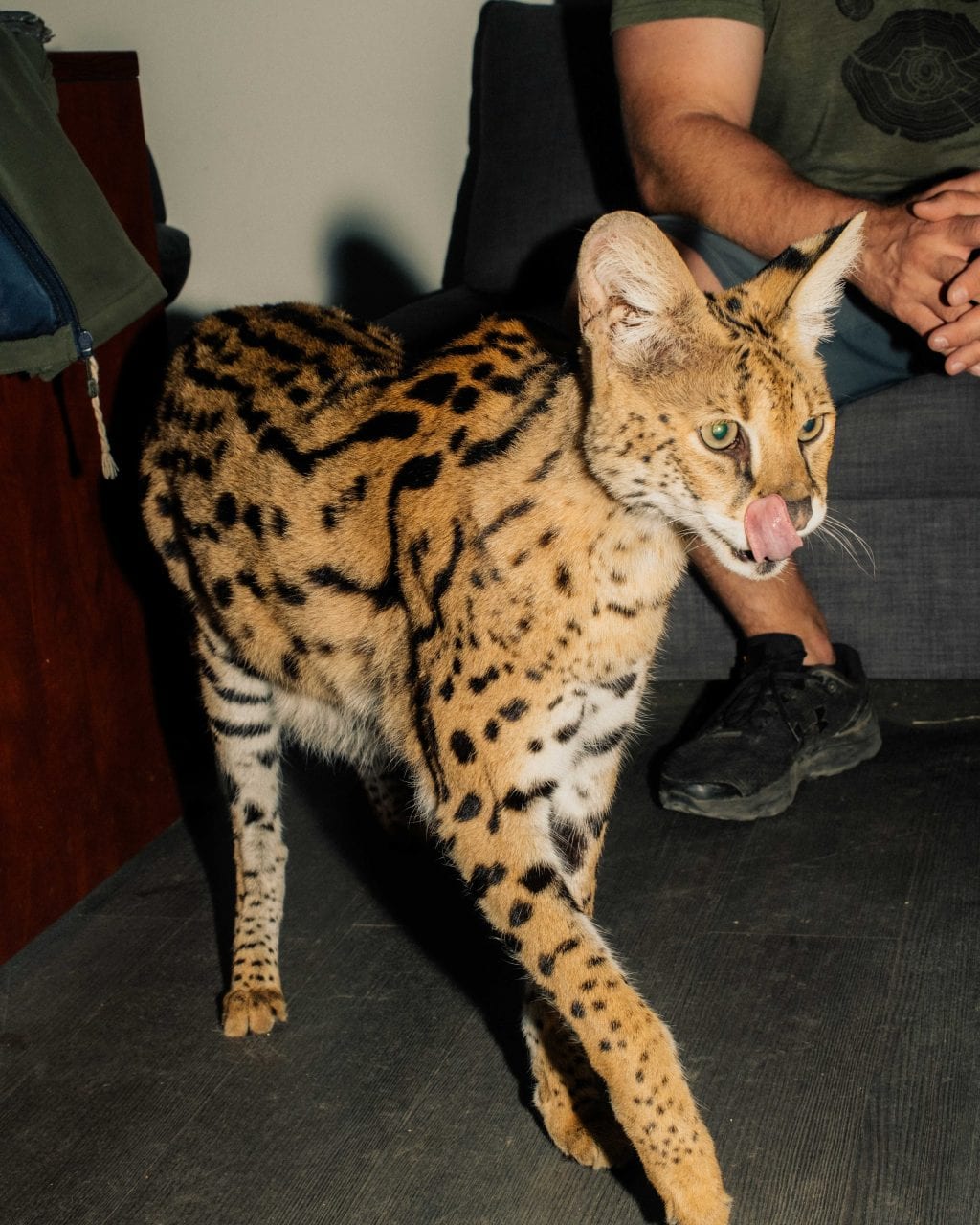
My commitment to gonzo cat journalism is wavering at the sight of my subject, who isn’t a typical pet. He’s a serval: a wild cat native to Africa who is, improbably, lounging on a grey couch in the nondescript warehouse that houses an animal rescue centre in Abbotsford. His name, even more improbably, is Gary. He growls and hisses impatiently as I tentatively extend a cube of meat before lunging across my lap to reach it. While Gary eats, I stroke him gently; his tawny fur, streaked and spotted with black, is as plush as I imagined.
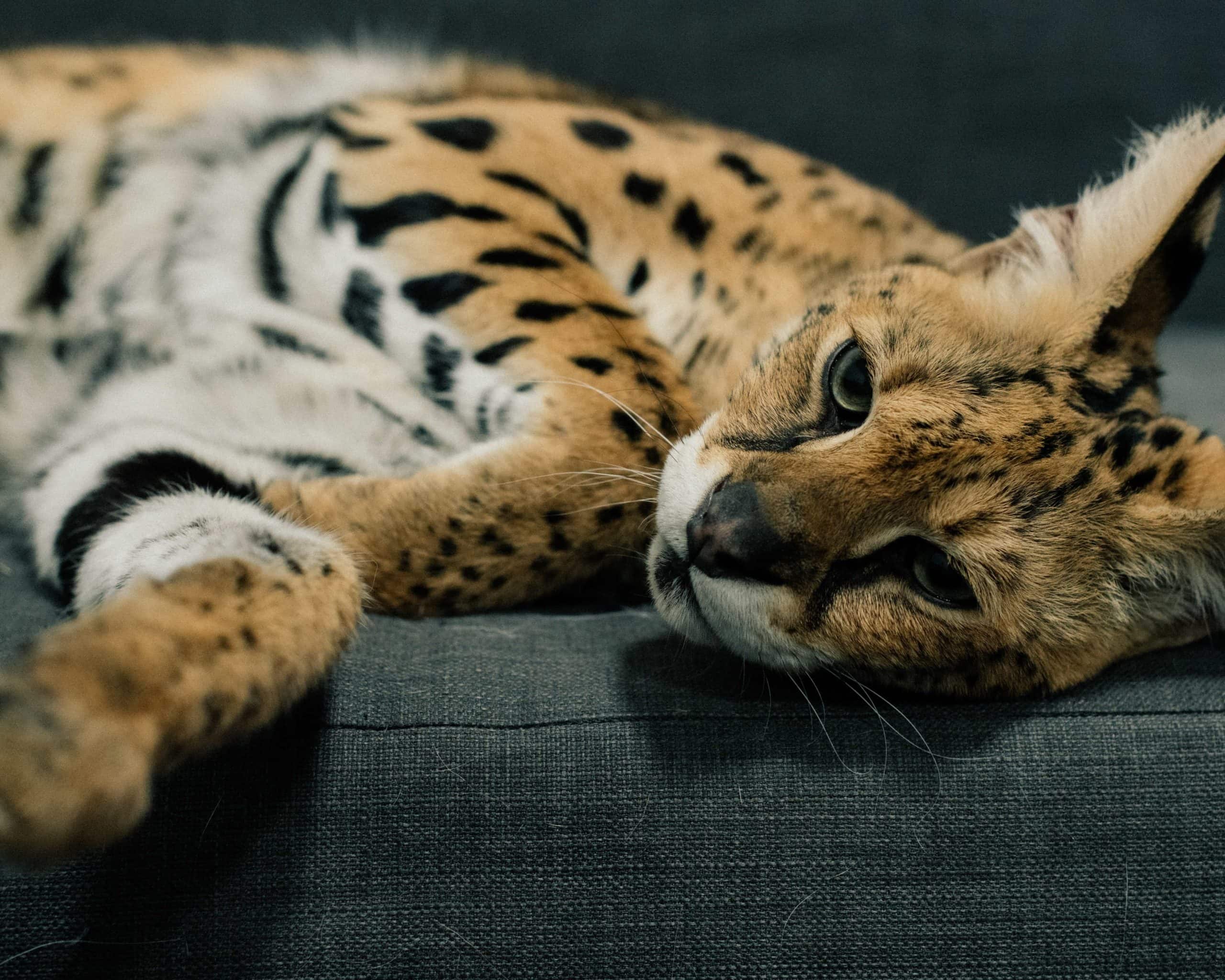
In the wild, servals are sinuous, slender and long-legged, like deadly feline supermodels with huge, pointed ears. At a sprint, they can reach speeds of 80 kilometres per hour. They leap two metres to snatch birds out of the air, and pounce on rodents or snakes with deadly accuracy; an individual serval is more likely to catch its prey than a pride of lions hunting together. An adult serval weighs up to 40 pounds, roughly the same size as a coyote or a six-year-old child. If Gary were to sit on my lap like a regular cat, I would have to look up at him — a terrifying prospect, now that I’ve seen him demolish a beef cube. For some people, I can imagine, this is the appeal. “It’s basically the biggest cat you can get that looks like a cheetah, without being a fucking cheetah,” Hopcraft says.
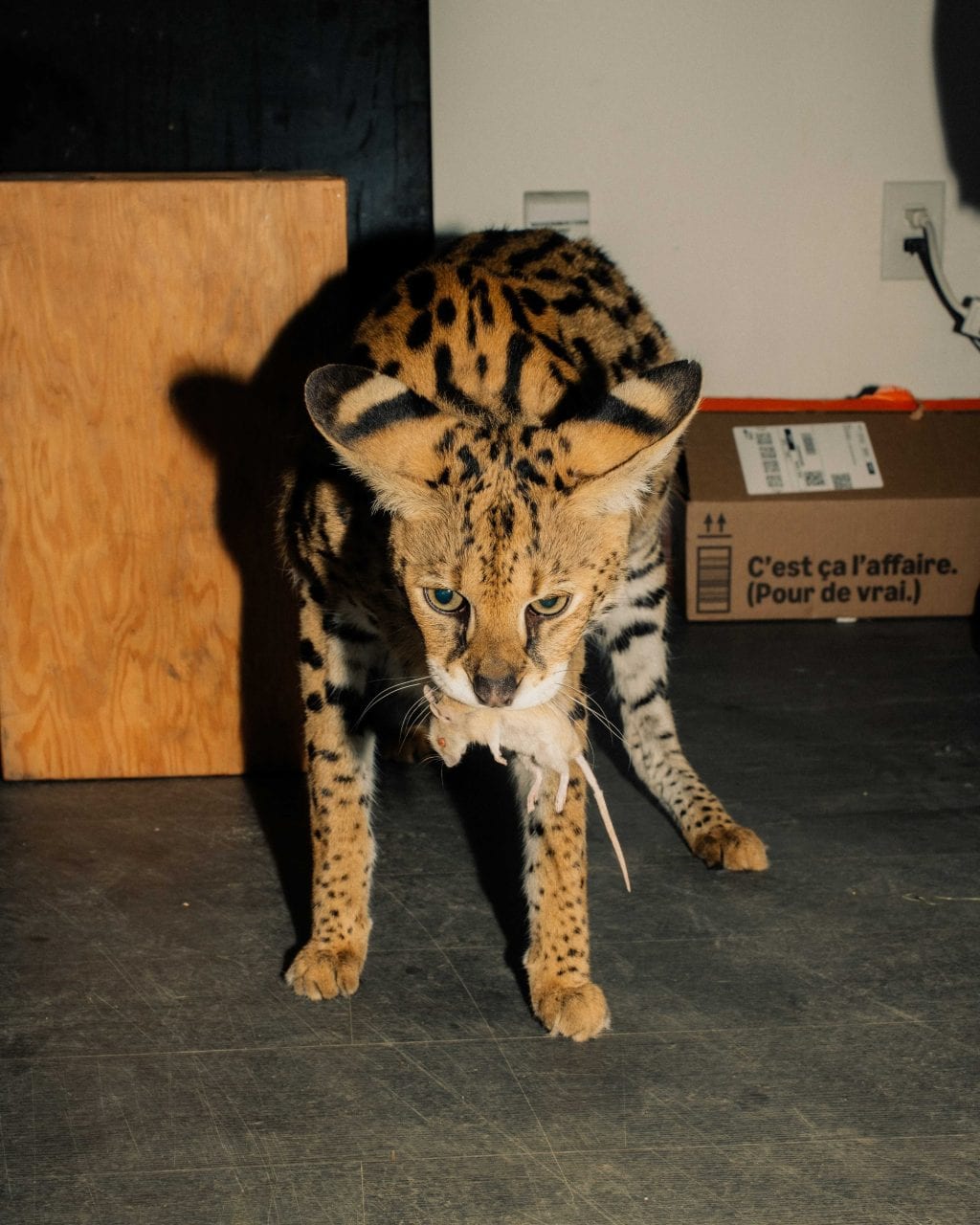
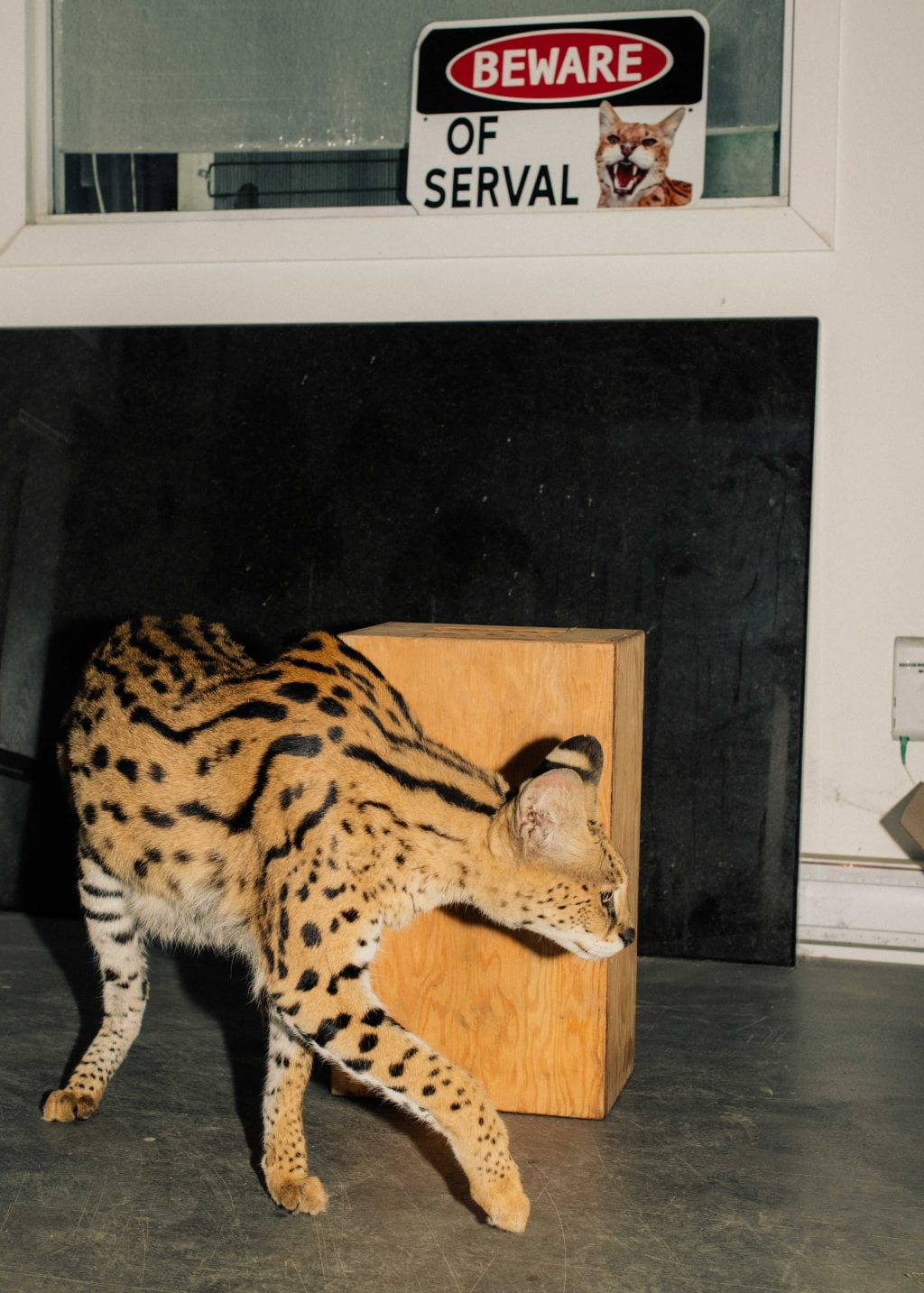
Gary, however, does not look like a cheetah, or his wild cousins in Africa. He is pear-shaped and shamboling, his gait hindered by degenerative disc disease, a common affliction among servals in captivity. He also suffers from feline hyperesthesia syndrome, which causes cats extreme sensitivity to touch around their back and tail and can lead to self-mutilation. Shortly after Hopcraft rescued him in January 2025, Gary chewed his tail off while confined. Hopcraft has avoided caging him since, and lets him roam free, like the world’s biggest barn cat.
He now takes Prozac, stuffed surreptitiously into one of his daily beef cubes, for anxiety. He was declawed as a kitten — a brutal, previously common elective surgery, outlawed in B.C. in 2018, in which the claw and last bone of each toe is amputated — which means if he escaped, as pet servals often do, he would be helpless.
Gary spent the first nine years of his life on Vancouver Island, until his owners divorced and surrendered him; Hopcraft, who runs an exotic animal rescue called Wild Education, took him in him after some hesitation. “I’ve worked with servals in the past on film sets and they’re crazy,” Hopcraft says. But it became clear that nobody else wanted him, so Hopcraft couldn’t say no. “In the end, we took him in, and he’s been doing amazing.”
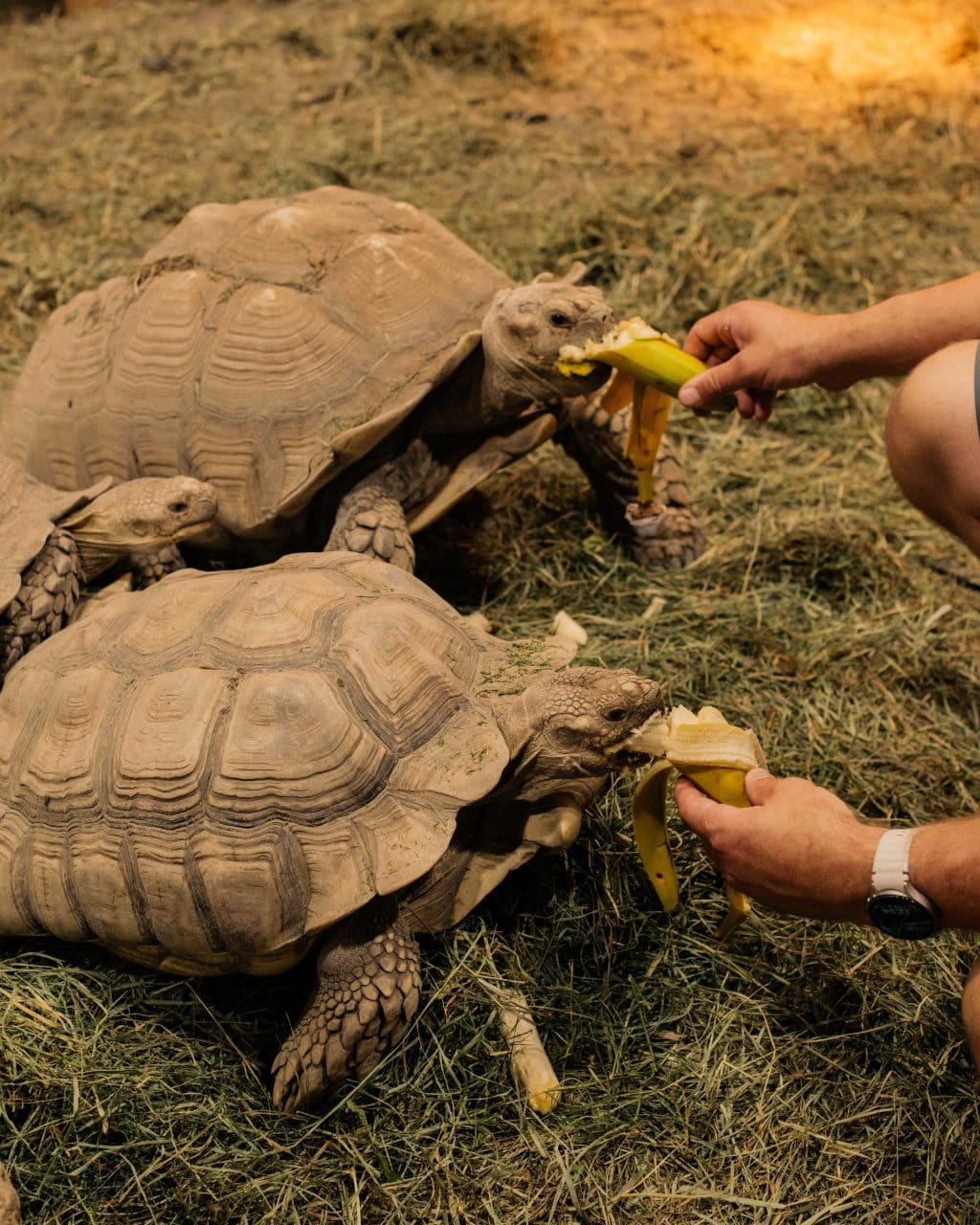
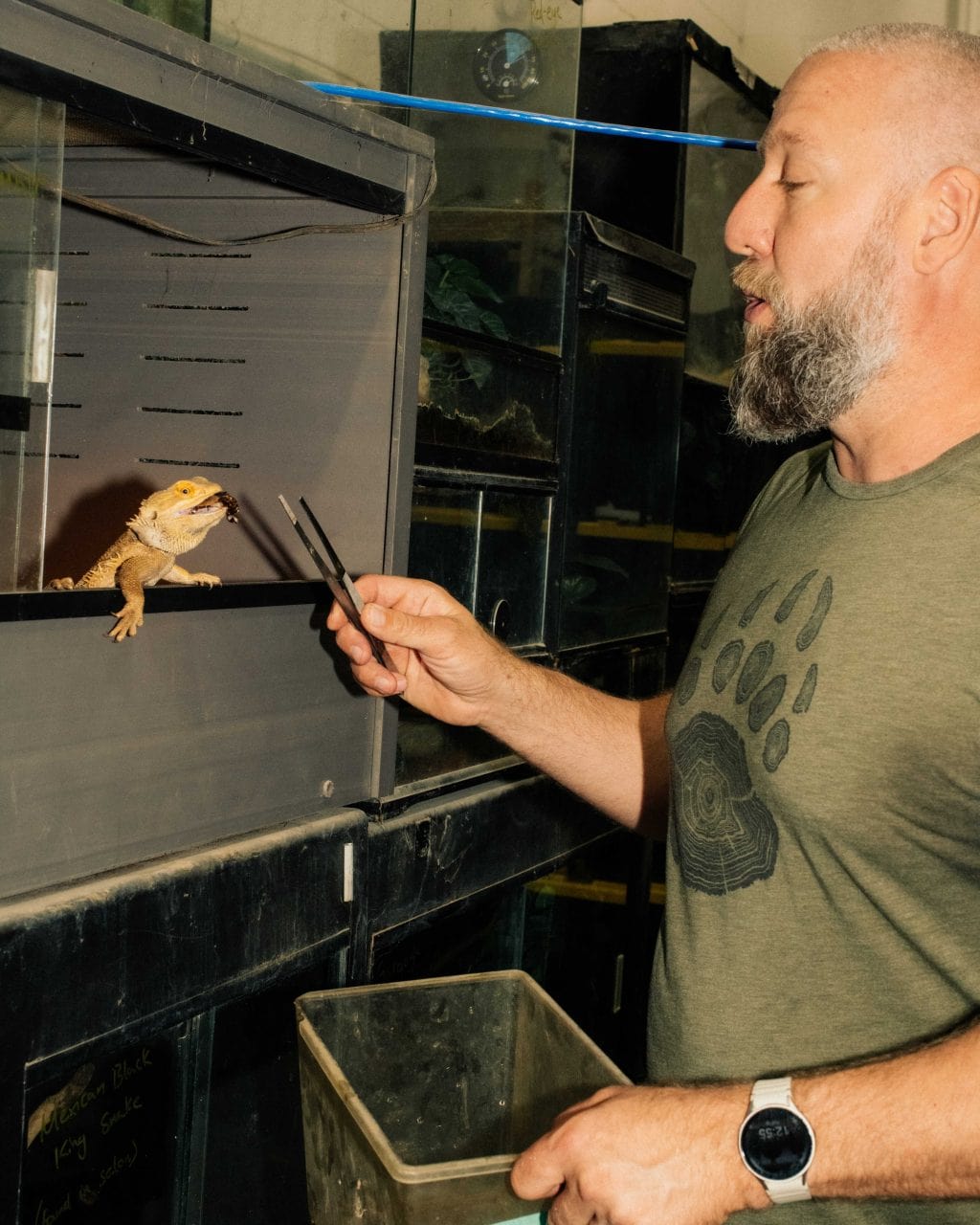
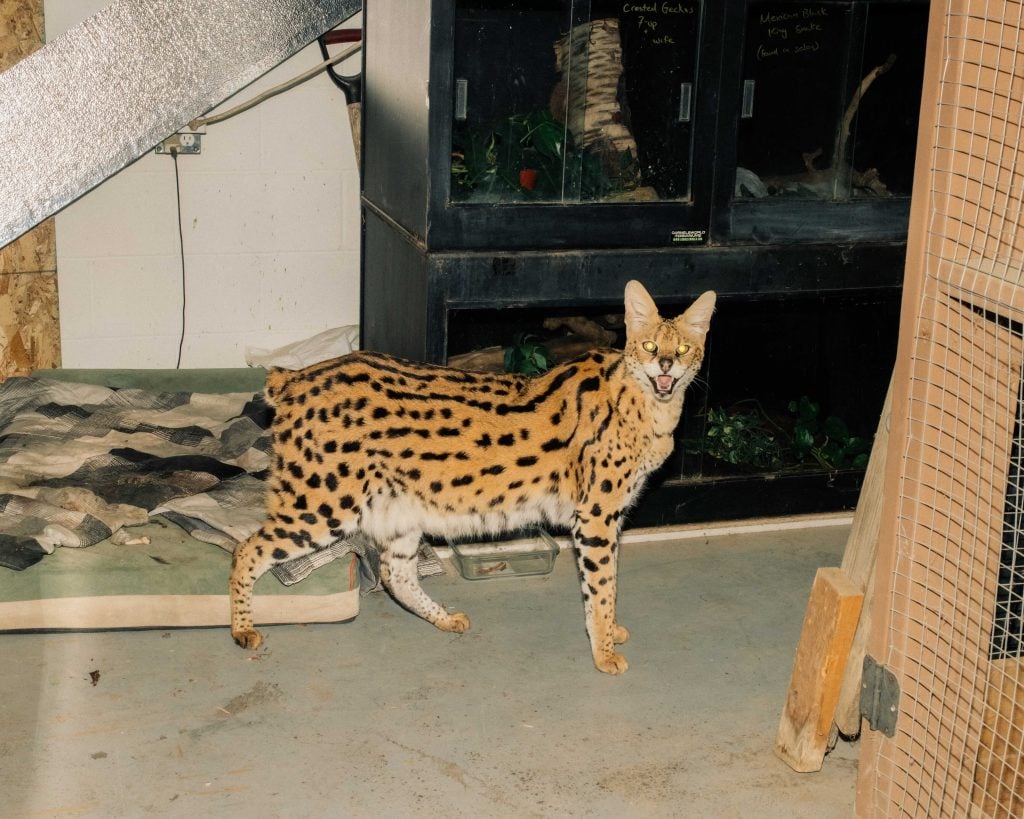
When he’s not on the couch, he wanders among the aquariums and enclosures in the back of the rescue centre, full of Hopcraft’s other rescues: ferrets and chinchillas, tortoises and iguanas, scorpions and tarantulas, an inquisitive blue-and-gold macaw. There are hundreds of animals here, but only one of them is now illegal to buy or sell in B.C.: Gary.
In May, the province amended its Controlled Alien Species Regulation to prohibit the “breeding, transport and future ownership” of non-domestic, non-native cat species, a category that includes servals, caracals, ocelots and a number of other species. (Large exotic cats, like tigers and lions, have been illegal to possess in B.C. since 2010.) Hopcraft and other exotic cat lovers can keep their pets, provided they apply for a permit by May 2027. Doing so requires signing away their rights to visitors. These cats can only interact with members of their households; in other words, my visit with Gary will soon be prohibited by provincial law. Violating the law could mean a fine of up to $250,000, a two-year prison sentence or both.
A deadly history of exotic cats in B.C.
It’s impossible to say how many non-native wild cats are kept as pets in this province, because their breeding and ownership has always been unregulated. By email, the B.C. government admitted they “do not have this information.” But among the uncountable exotic cats, servals — which are often crossed with domestic cats to produce a hybrid species called a savannah — seem to be the most popular species.
It’s equally hard to pinpoint when they entered the Canadian pet trade, but by the early 2000s there were ads in B.C. newspapers offering serval cubs for sale. But pet servals were in North America before that; the Long Island Ocelot Club, an association of exotic cat owners and enthusiasts, was founded in 1956. In 1986, the club issued an exciting announcement in their newsletter: a female Siamese cat and male serval had fathered a kitten in Pennsylvania.
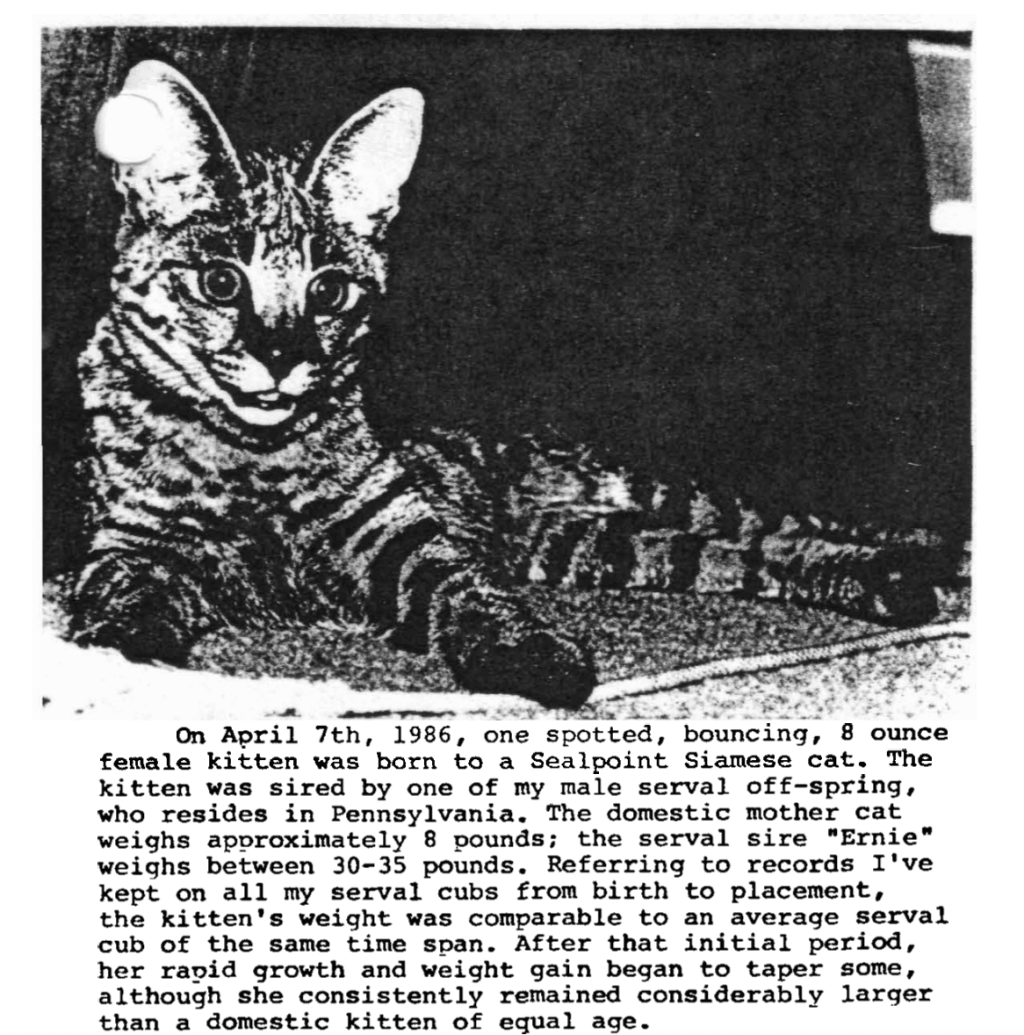
The new hybrid was called a savannah, the first of the eponymous breed, and soon took off in popularity. (Intriguingly, 1986 was also the year Savannah took off as a popular name for baby girls, according to the U.S. Social Security Administration.) Savannahs are categorized by how recently descended they are from servals: a filial 1, or F1, has a serval parent, while an F2 is bred from an F1 savannah and another domestic cat. (The same genetic terminology is applied in botany; peppermint, for instance, is an F1 descendant of spearmint and watermint.) Under the updated legislation, savannah cats remain legal — provided they’re at least four generations away from a serval. The trouble is, many people want a lot of serval in the mix. This is evident on breeder websites, in which prices descend along with generations: a savannah breeder in Quebec tells me first-generation savannah cats are priced between $15,000 and $22,000, while one in Kelowna, B.C., gives a range of $18,000 to $30,000.
Much of the time, these servals and near-serval hybrids fly under the radar — except when they escape, which they’re pretty good at. Just last month, a pet serval was spotted under a porch in Vancouver, prompting a call to police. Sara Dubois, the senior director of animal welfare science and standards at the BC SPCA, tells me she knows of at least four other pet servals currently on the loose in B.C.: two reported on Vancouver Island and another two in the Lower Mainland.
Restricting all exotic wild cats — those that are neither domesticated nor native to Canada — has been a long time coming, Dubois says. In May 2007, one of three pet tigers kept on a rural property near 100 Mile House, B.C., by a man named Kim Carlton, reached through the bars of its cage and clawed the leg of Carlton’s fiancée, Tanya Dumstrey-Soos; she bled to death in front of her teenage son. The incident prompted the B.C. ministers of environment and agriculture to meet with the SPCA to “prevent similar tragedies,” though at the time they declined to comment on any outright bans. Still, the province developed the controlled species regulation in 2009, restricting ownership of certain exotic animals. By the time this new law came into force, Carlton had procured two new lion cubs to replace his tigers. “I still cry every day because I miss [Tanya],” he told The Province, but “life has to go on.”
After the incident, the SPCA asked for all exotic species to be listed in the regulation, but the government was just focused on “public safety,” Dubois says. Animals like tigers, monkeys and cobras were banned, but one could — and can still — procure a kangaroo or a zebra. And until recently, smaller exotic cats like servals — basically anything bigger than a tabby, but smaller than a cheetah — were unregulated.
But more than a decade later in July 2019, 10 adult servals and three kittens were seized from a breeder in Little Fort, B.C., about an hour north of Kamloops, after numerous complaints of sick and injured animals being sold. The investigation revealed “horrific” conditions, attracting enough attention to push the issue forward, but Dubois says there wasn’t sufficient support from the government until the 2024 election of Randene Neill as MLA for Powell River-Sunshine Coast. A former journalist, she had covered BC SPCA stories and was now the minister of water, land and resource stewardship. According to Dubois, Neill supported updating the regulation. (The minister and her staff declined to speak with The Narwhal for this story, but provided written answers to questions, as is typical when we reach out for an interview.)
The challenge with changing cat laws
A basic challenge for the updated legislation, which allows existing owners to keep their exotic pets as long as they register them by next May, is that no one knows how many of those exotic pets there are, or even how many breeders. “Unless you have neighbours reporting that there’s something suspicious happening, we might never know,” Dubois says. And of course, not everyone wants to be a snitch. One resident of Sooke, B.C. — a hotbed of serval breeding and ownership based on the number of escaped animals reported in recent years — messaged me on Facebook to say a serval had been killing pets in her neighbourhood, but asked that I not mention her name in this article. “I don’t want my neighbours to hate me,” she wrote.
For owners like Hopcraft, the new laws are “a disaster.” He will have to submit an application detailing evidence of a secure enclosure where Gary will be kept, as well as a public safety plan in the event of escape. He also needs to demonstrate Gary’s welfare is taken into account, describing his diet, comfort, veterinary care and “freedom to express behaviours that promote well-being.” Gary, who currently has free rein in his warehouse, will have to be confined to a ministry-approved enclosure and will no longer be able to socialize with anyone outside of Hopcraft’s immediate family, including his staff.
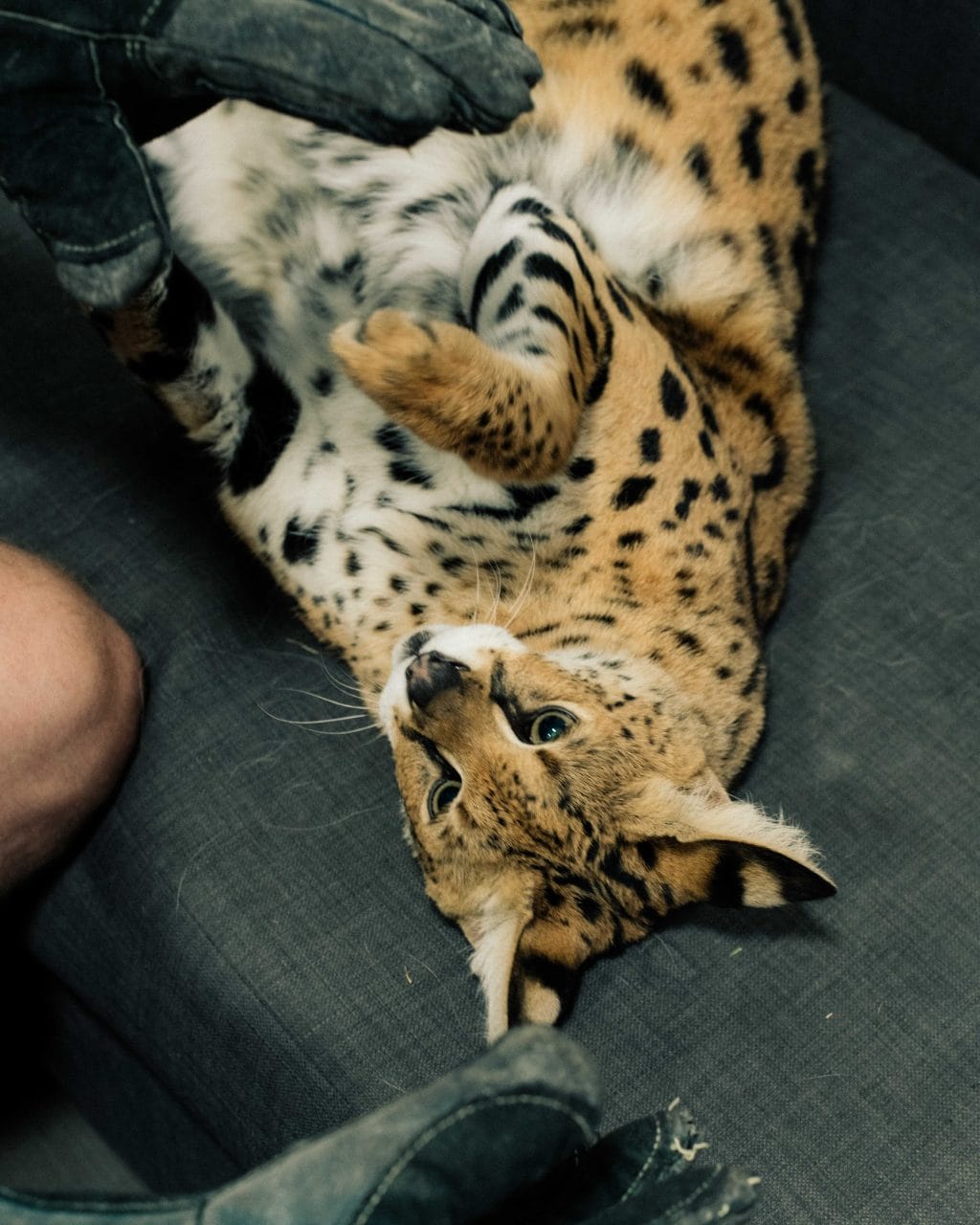
Hopcraft worries about Gary’s quality of life. In its announcement, the ministry wrote exotic cats “can pose risks to public safety, pets and wildlife,” though Hopcraft is skeptical of this justification. “When is the last time you heard of a serval attacking someone?” he asks. “Never, because they’re not that kind of animal.”
The Narwhal asked the B.C. government if they had identified any known attacks on humans by servals. It did not directly answer the question; instead, it wrote public safety was “one of several factors considered” when updating the legislation. The tendency of escaped servals to kill other pets, however, is well-documented.
For the BC SPCA, Dubois says, the priority is animal welfare. “But you know, that argument hasn’t been enough for the government to be concerned as well. They need to see some other reasons why this might be important for their policy agenda.” (By email, the government told The Narwhal, “The amendments reflect a precautionary and proportionate approach that accounts for the full range of potential risks to people, animals and ecosystems, while recognizing that existing animals can continue to be safely and humanely cared for under permit.”)
The only thing more challenging than keeping a serval might be giving one up. Zoos won’t take exotic cats from the province’s unregulated pet trade, Dubois says, because there’s no way to determine the animal’s lineage, which means they can’t be used for breeding. The BC SPCA won’t take them either because “they’re not safe to have in our facilities,” Dubois says. Last year, during the forest fires on Vancouver Island, one owner reached out to ask if the BC SPCA could shelter his two servals. “We said, sorry, but no. Our enclosures are not set up, our staff are not trained. This is something you have to think about as an owner.”
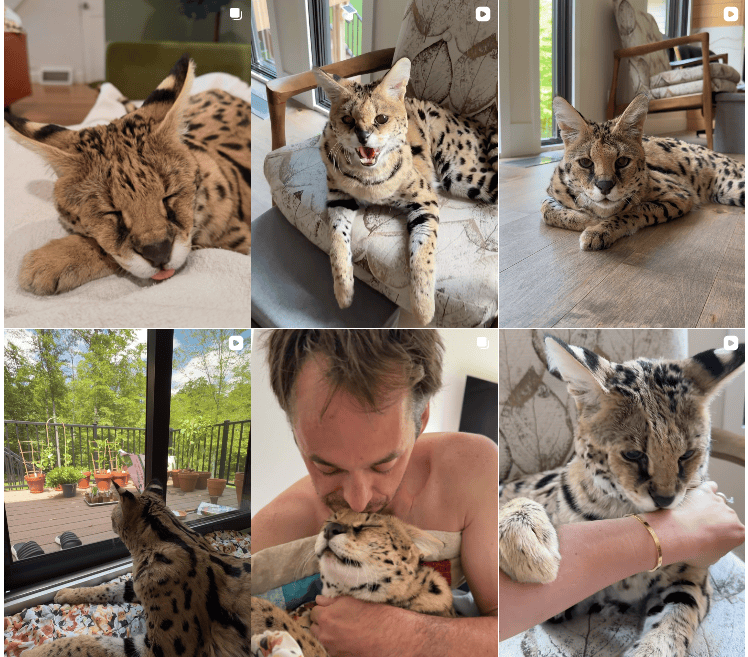
But people are probably not thinking about natural disasters or rehoming plans when they get a serval. They’re probably thinking: how cute! “It doesn’t help that social media is just exploding with these,” Dubois says; one Instagram account, Chloe the Serval, has more than 817,000 followers. “People do not know what they are getting into with these exotic cats.”
“Servals should not be available for pets,” Hopcraft says. “But when they put blanket laws in place, they screw over the rescues as well. The animals suffer in the end — because there is nowhere for them to go. There is nowhere for a serval in B.C. to go.”
There is, in fact, nowhere at all in Canada for an unwanted serval to go. To surrender a pet serval, owners must look south of the border.
The reality of purchasing a wild animal
The first exotic cat in Ian Ford’s life arrived in 1996, from a classified ad in an Oregon newspaper that caught his mother Cheryl’s eye: a “hybrid bobcat kitten.” It soon became apparent that BoBo was pure bobcat and not well-suited to living in a house. For one thing, he couldn’t be litter box-trained. (Neither can servals, according to everyone interviewed for this story, most of whom brought it up without being asked.) Cheryl was advised to euthanize BoBo or release him into the woods, but instead she transformed their eight-acre property in the Portland, Oregon, suburbs into a registered nonprofit cat sanctuary.
Soon, Ford says, more cats arrived: a Canadian lynx. Two servals. A mountain lion. In 2010, their first tigers. “It just kind of snowballed from there.” Today, Ford is the administration director of WildCat Ridge Sanctuary, an 80-acre property an hour south of Portland. It’s home to around 85 exotic cats — or, as Ford calls them, residents. “We consider ourselves a retirement home,” he says. “They’re here to live out their life in as much comfort and dignity as possible.”
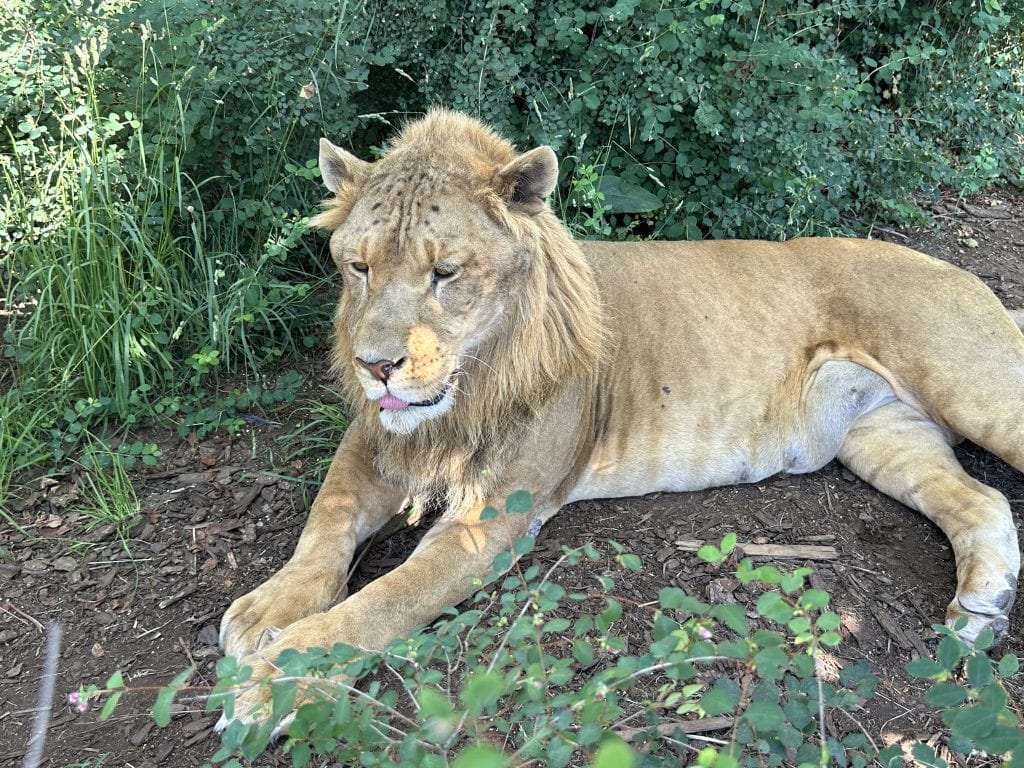
It might also be fair to call it a palliative care ward. “The premise of everything we’re doing is to make it so that these animals — who didn’t need to be born, and certainly didn’t need to be born in captivity, who will essentially be in prison their entire lives — will at least have grass,” he says.
WildCat Ridge is a no-contact facility — even the staff don’t get to pet the cats — and closed to the public. But from his couch, Ford can hear lions calling to one another while he plays video games. They have cats of all sizes: caracals, which look a bit like cougars with huge tufted ears, and Asian leopard cats, which are housecat-sized and deceptively adorable, and tigers, which everyone can already picture. And servals. Lots of servals.
“We have probably 30 servals,” Ford says, and six or seven have come from Canada. Each week, the sanctuary fields calls from more people who have exotic cats or hybrid offspring. Often, Ford says, they don’t even know what they really have on their hands, thanks to an unregulated market and unscrupulous breeders.
Many animals arrive with injuries or disabilities. Often they’re declawed or missing teeth; one cat arrived with a pierced ear, Ford recalls, because its owners “thought it was cool.” Then there’s metabolic bone disease, where the animal’s skeleton weakens and decays because of a poor diet, leading to broken bones, arthritis and chronic pain. It’s primarily caused by nutritional deficiencies, as animals that should be catching and eating whole prey are given ground beef and dry cat food instead. Six of the servals at WildCat Ridge, Ford says, suffer from metabolic bone disease.
I think about Gary, lumbering painfully around his warehouse; his former owners, Hopcraft told me, used to feed him hot dogs. (In addition to beef cubes, Gary is now fed whole rats native to Africa, which Hopcraft breeds himself.)
The neglect and suffering Ford witnesses among his feline residents has made him jaded, he says, but he tries to have compassion for the owners who call him pleading for help.
“I try to remember the human side of it too — people have just exhausted every possible thing. And, just like my mom, despite the fact that they made a horrible decision at first, they are trying to do the right thing.”
A guardian angel for regretful exotic cat owners
Kelly Brook Allen is one of the people who tried to do the right thing. Fifteen years ago, she received a serval kitten from a breeder in Coquitlam, B.C., in exchange for designing a website. She named him Tigger. But in 2012, he escaped her Langley home during a storm; despite a blitz of attention from news outlets and social media, as well as the services of a professional pet tracker, he was never recaptured. Allen was devastated. The breeder, in sympathy, gave her a new serval: a five-week-old female named Duma, the Swahili word for cheetah. Allen put a tracking collar on her. If she knew then what she knows now, she says, she would have never taken either cat.
To supply Duma with a healthy diet, Allen purchased rodents in bulk from a supplier in Ontario, shipping them by air to B.C. every six weeks, and a neighbour next door raised rabbits to supplement Duma’s diet. “It cost $1,100 a month to feed her properly,” she says. Duma was beloved — but wild. “She almost killed my Jack Russell [terrier] twice — she had him by the neck.”
Breeders, she says, don’t give buyers enough information about how to care for their new pets. “People, like me, get them — and then you realize, you can’t house train them,” she says. “Anything F4 and above, they piss anywhere. They poop anywhere. They don’t bury their crap anywhere. And if they get out, they’ll be gone.”
After the servals in Little Fort were seized, Allen began planning for Duma’s future. “I had her for 10 years, I was committed to her, I wanted to keep her,” she says. “But they were really pushing for a ban in B.C., so I started looking for sanctuaries.” She found WildCat Ridge, and obtained a permit to transport Duma across the border. But it was the summer of 2021 — the border was still closed to non-essential travel due to COVID-19, and much of the province was on fire. Allen was evacuated, and Duma spent three weeks in the back of a horse trailer. “Finally, I phoned down to the border and said, ‘Listen, my husband has a commercial licence. Can he drive this cat down to Oregon, and come back without getting a fine?’ And they said, ‘Absolutely.’ ”
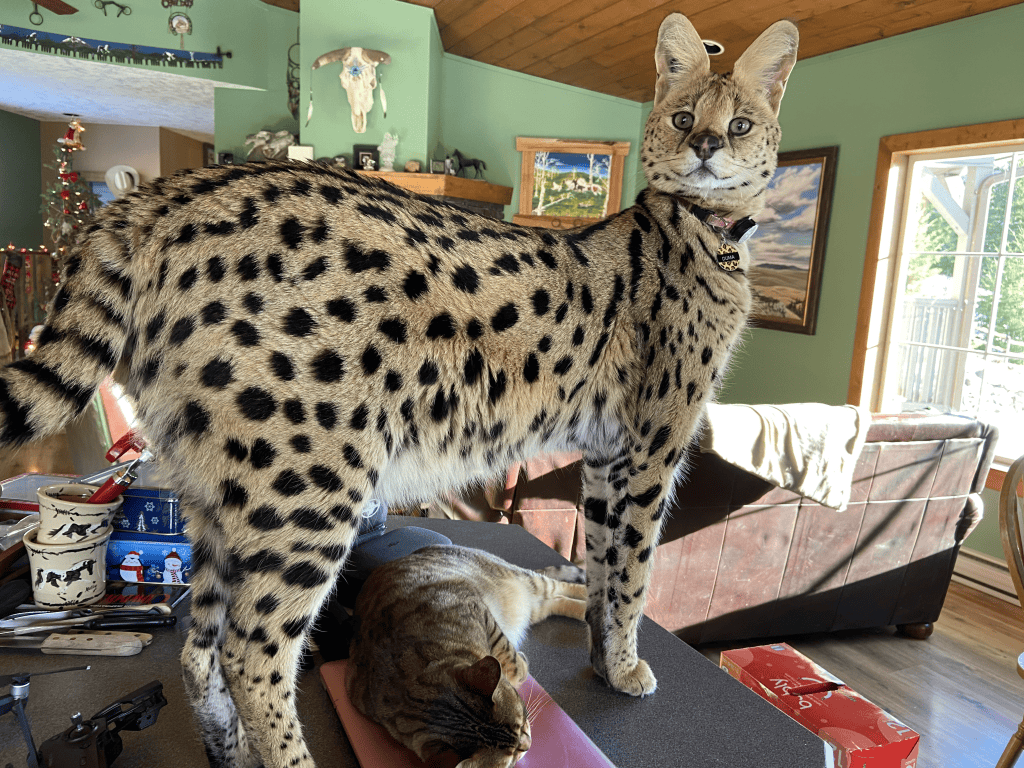
For two years, Allen was unable to visit Duma. Then she got a call about a doctor on Vancouver Island with an F1 savannah who had prompted complaints from the neighbours. Allen called him, picked up the cat, had her spayed and drove her down to WildCat Ridge. Finally, she got to see Duma, who approached the edge of her enclosure and gazed at Allen for a long moment. Then she was gone.
Allen has transported other servals and savannahs to WildCat Ridge, becoming a kind of guardian angel for regretful owners trying to finally do the right thing. She’s glad to see the updated legislation, but she doesn’t think enforcing it will be easy for anyone.
“It’s going to be really tough for people to surrender their pets,” she says. “And how are they going to find half of them? They don’t know where they are.”
Behind the walls of an exotic cat breeding den: ‘It was horrendous’
Carla Edge has more experience with servals than most people. Formerly a special provincial constable with the BC SPCA — tasked with enforcing laws around pet ownership and animal cruelty — Edge was responsible for the North Thompson and Cariboo regions. “I covered over 50,000 square kilometres on my own,” she says, a region that included Little Fort. “It was a huge area.” She knew of caracal owners in the province, but servals were the exotic cat species she became most familiar with. “Maybe they’re less aggressive than others, but they can cause a lot of damage,” she says.
In her role, Edge could execute search warrants in cases of reported animal cruelty and had received reports from veterinarians of breeders in Little Fort who were selling servals with “serious metabolic disease.” That breeder, Edge adds, would put kittens in her bag to sneak them over the border for buyers in the United States.
When Edge searched the Little Fort property, she and her fellow officers found 13 cats in total in a home and two RVs, confined to small spaces with the windows blacked out. The rooms, Edge says, reeked of urine and were caked with old, dried feces.
“It was very dark in the rooms as well. The trailers had windows that had been painted black, but over time that paint had worn off and you could see inside … the level of feces and ammonia, rotting food — it was horrendous … absolutely horrible.”
The cats were removed, and transferred to sanctuaries in the United States, but the course of action was complicated by the lack of regulation. “Servals always fell in a grey zone,” Edge says, neither listed as controlled alien species nor domestic enough to treat as regular pets. Neither zoos nor the SPCA wanted to deal with them, and no single body took responsibility for them.
Now the government is taking responsibility for exotic cats. “There is going to be a ton of pushback from serval owners,” Edge says. “It’s going to be a tough go.” Everyone thinks their pet is special, and many of them love their pets enough to break the rules.
“I know of animal owners on the island, in Abbotsford — they are all over,” she says. And those owners are secretive, she adds. In 2023, Edge says, she and Allen were both contacted by someone looking for help rehoming two cats. “I was under the impression that these were the only two servals she had,” Edge says. “Turns out, she still has a couple more.”
Edge has since left the BC SPCA to become a social worker, but she has spent most of her life in law enforcement. “And there isn’t another enforcement agency out there that has to cover the amount of legislation a [conservation officer] does,” she says. “So yeah, adding this to their plate — they’re going to have to make the determination of where the priorities come.” (By email, the Ministry of Water, Land and Resource Stewardship said, “Officers receive special training to handle the variety of reptiles and exotic animals that fall under [the controlled alien species regulation].”)
Finding the animals is one challenge. But the province’s plan relies, in part, on conservation officers being able to identify the difference between a now-restricted serval and a legal savannah hybrid. In 2022, a large cat was spotted in a residential Vancouver neighbourhood, and the province’s conservation officer service was dispatched. Later, they posted triumphantly on Twitter: “It wasn’t a cougar, cheetah or 200 pound jaguar. It was a savannah cat!” But many experts disagreed with their assessment — including Dubois, who told CBC Vancouver it was likely a serval.
Edge is happy the legislation has come in but isn’t sure how it’s going to be enforced. “What’s going to happen to these animals? Should they be removed from those owners now? That I’m very curious about.” Edge has sent many servals to sanctuaries in the United States, including WildCat Ridge Sanctuary in Oregon — but she knows that most of those sanctuaries are full. There are too many of these exotic cats, and nowhere for them to go.
A confession
Why all this interest in exotic cats? From the government, from the millions of Instagram users following serval accounts, from this particular journalist writing thousands of words about obscure pets and unruly legislation? There’s a simple answer: I have one of my own.
Well, sort of: I have a savannah cat, a fact I disclosed to everyone interviewed in this story, partly for transparency and partly to see if they’d ask for a photo. (“He is stunning,” Allen texted, gratifyingly.)
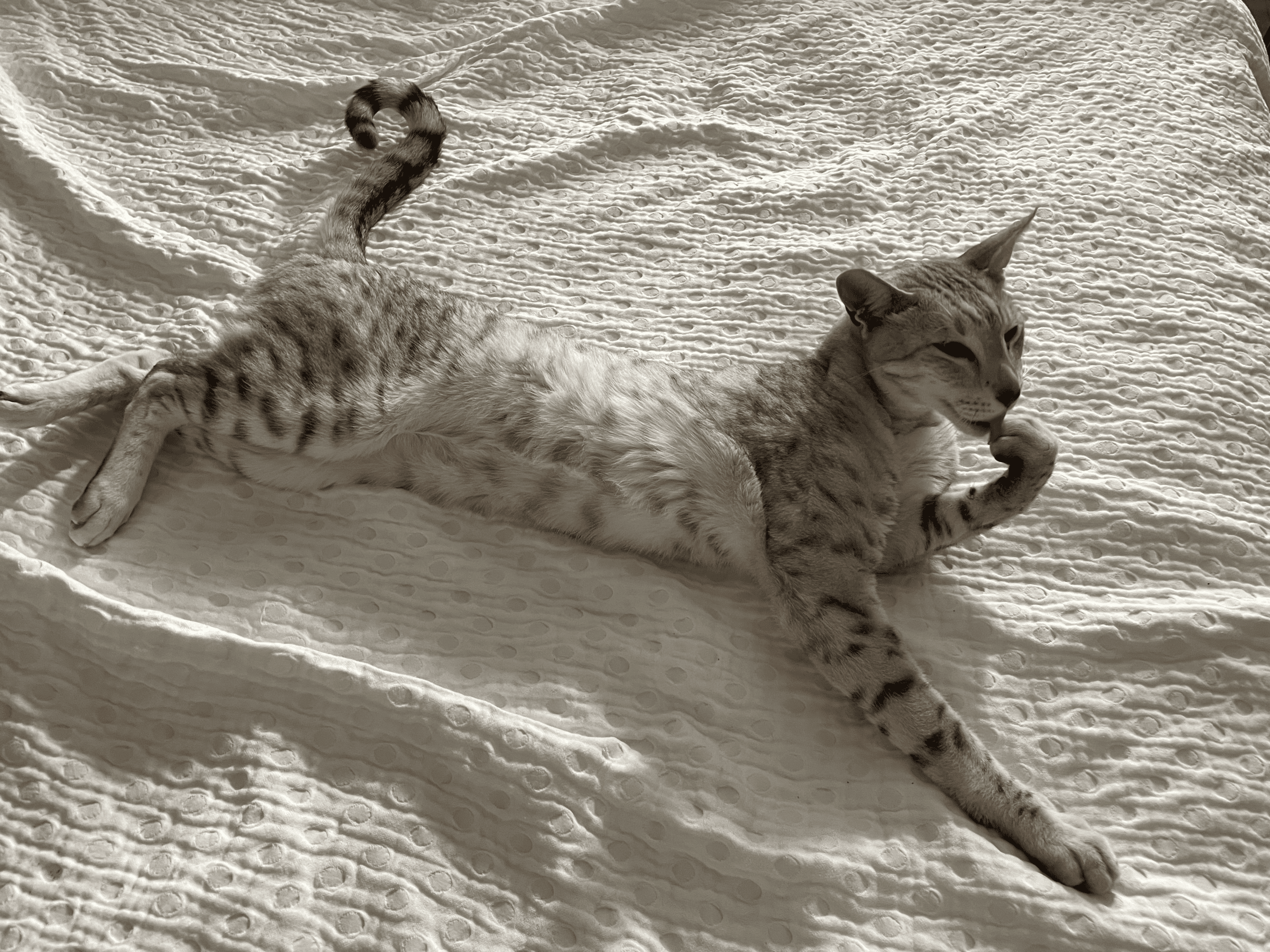
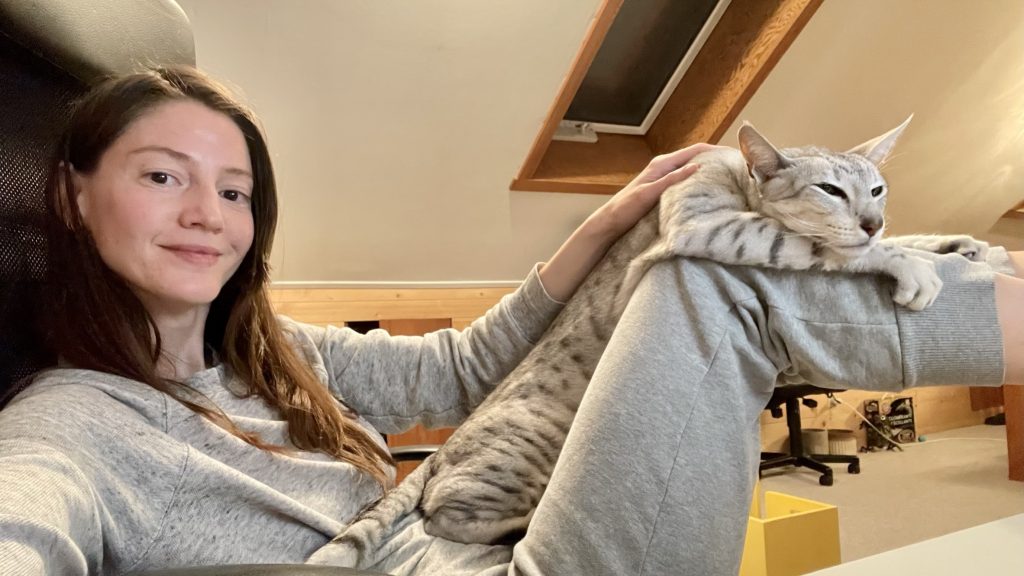
Like many owners of exotic cats, I obtained Azzy through unofficial channels. While visiting my sister in 2018, I met her new foster pet: a sinuous silver cat with huge ears, surrendered by his previous owners for being too challenging. Each night he slept on the guest bed with me, and in the morning I would wake up to find his paw in my outstretched hand. It felt like he was already mine; logic didn’t really enter into the decision. At the end of the week, I took him on a five-hour flight home, a harrowing experience I am still trying to forget. I have no access to his veterinary records, and I don’t know his pedigree. “By the look of his nose, he could be F4 or higher,” Allen texted, which is a chilling thought; any higher than F4, and Azzy too would fall under the same regulations as Gary. But then again, how could I know for sure?
Azzy, like Gary, seems ill-suited to domesticity in some ways. He’s around 12 years old now — I’ll never know his exact age — but as a younger cat, he would literally bounce off the walls. Though he weighs 11 pounds, a typical size for an ordinary house cat, his long legs enable him to scale a refrigerator in a single leap. Like Gary, he takes Prozac for anxiety, which seems to calm him down. He still sleeps in bed with me each night and spends much of the workday intruding on my Zoom calls. I love him as best I can. But should I own him? Should anyone?
“A lot of people think, why put all this time and effort into it?” says Dubois, of the BC SPCA’s seven-year campaign to restrict ownership of exotic cats. Some see it as government overreach; others think owning an exotic cat is no big deal. “But it sends a message: we should not be breeding wild animals with domestic animals, we should keep our communities safe by having appropriate animals, and we should regulate breeding in general.” After the controlled alien species regulation was first introduced, people worried big cat owners would go underground too, she says, but that didn’t happen. A decade from now, she’s optimistic fewer exotic cats will be in B.C., living lives they were never meant for.
Admittedly, it’s a regional solution to a broader problem: two breeders contacted by The Narwhal declined to be interviewed but said they were moving their cats to Ontario and Quebec where there aren’t the same restrictions. Gradually, the loopholes are closing, but not fast enough to prevent more Canadians from bringing an exotic cat home. There is still a market for them. And for tortoises, and tarantulas, and chameleons — all the hundreds of other rescues under Hopcraft’s care, still legal to breed and sell.
When I peered into Hopcraft’s enclosures, at a drowsy chameleon or a skittish hedgehog, I found myself thinking about the day I took my first child home from the hospital. I could not believe that the nurses and doctors were content to let us take her home when we so clearly had no idea what we were doing. And yet, the logic of pet ownership has always been the same: the desire alone — to be responsible for another helpless living thing — is enough to claim it as a right.
Laws are necessary, as we recognize animal neglect and cruelty as intolerable. But they are not exhaustive, and they can’t correct for our human failings: our impulses and desires, our short-sightedness, our greed. When desire outpaces reason, and owners find themselves in over their heads, it becomes everyone’s problem. Solving the riddle of human nature is beyond the reach of any law.