



 6 min. read
Summary
- Research published in the The Journal of Wildlife Management highlights an important gap in translocation mitigation practices: whether species survive their relocation is not tracked in B.C.
- Translocation mitigation is when plants and animals are moved from one location to another in advance of development. B.C. has the largest proportion of at-risk amphibians, which are frequently relocated for industry.
- As B.C. gears up for a number of major projects, scientists worry about mounting impacts on vulnerable species.
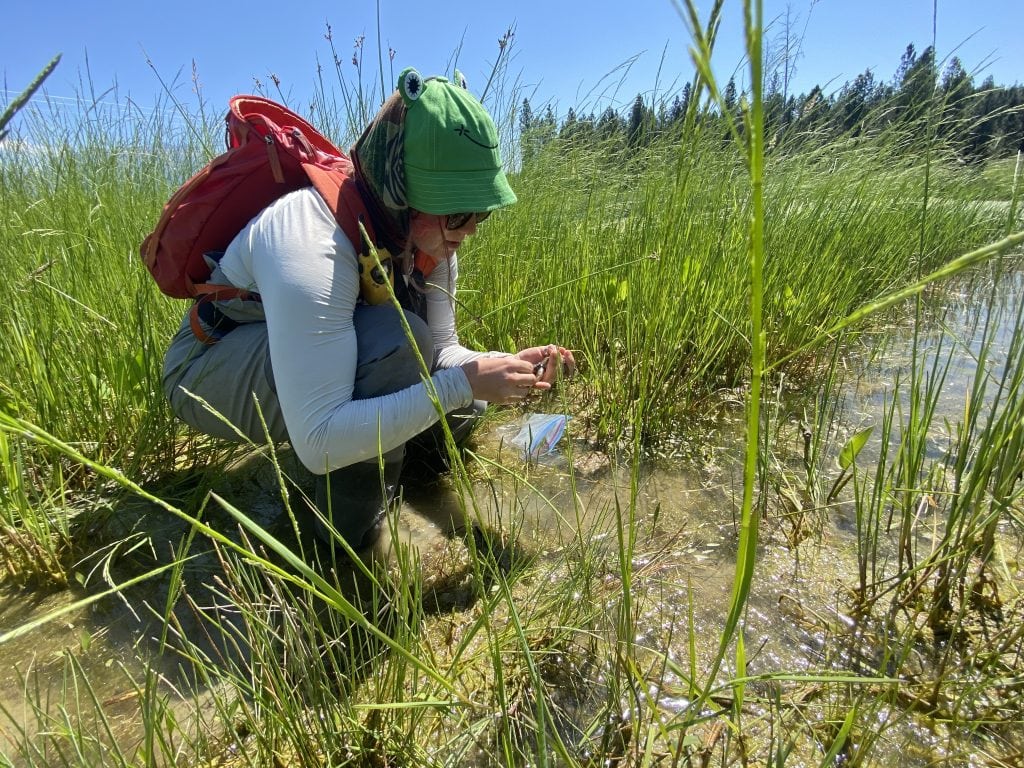
“We all loved frogs growing up, then we forgot about them,” Megan Winand says. Now, the conservation biologist is hoping to remind B.C. of their existence — and how they’re impacted by industry in the province. She contributed to a study published in The Journal of Wildlife Management earlier this year, looking into the effectiveness of translocation mitigation, or the practice of moving animals to new locations to make way for development.
Between 2019 and 2022, B.C. issued 629 translocation mitigation permits. The review found that 227 of them included reptiles and amphibians, with most of those projects happening in the South Coast region.
The review found over five million reptiles and amphibians have been relocated in B.C., most commonly for pipeline and culvert developments. Winand has worked on some of those projects.
“I spent a lot of time questioning whether what I was doing was actually effective, if I was truly saving all of these amphibians from the harm that was being caused by development,” Winand says.
Translocation can be difficult for wildlife because successfully establishing in a new environment is never guaranteed. Research has identified several risks, including stress, increased mortality, increased movement due to homing behaviour, disease transmission and genetic concerns.
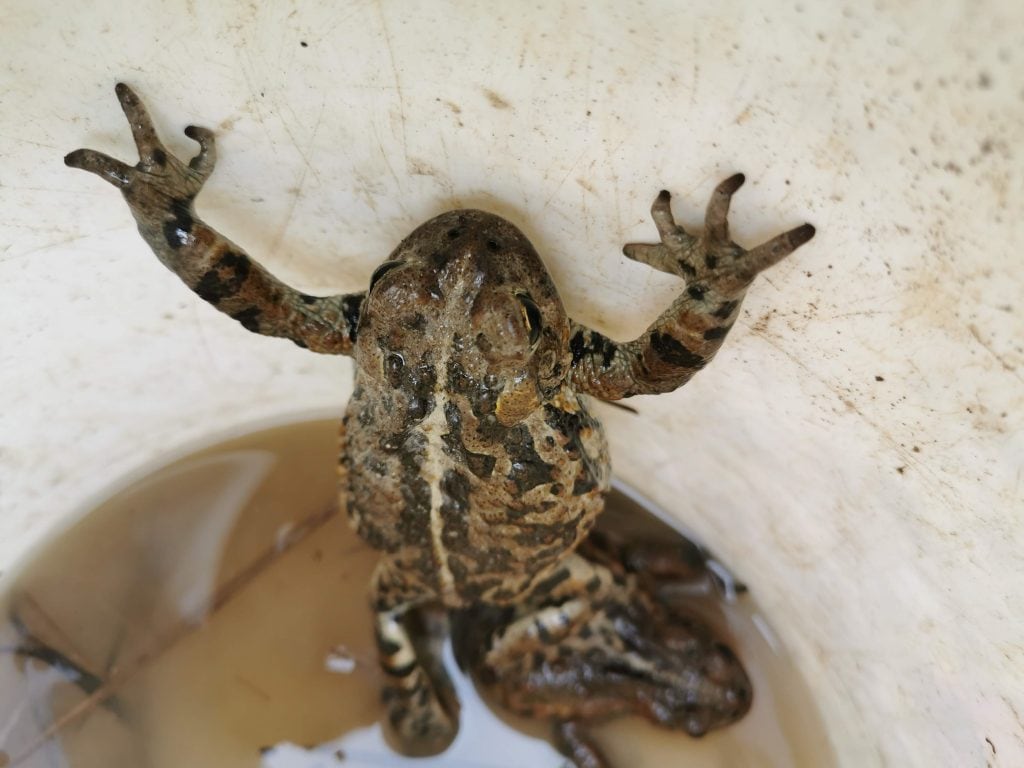
With no legal requirement to track if species survive their relocation in B.C., Winand and others decided to start tracking data themselves.
In collaboration with provincial government scientists, the Martin Conservation Decisions Lab based out of the University of British Columbia published their findings in April.
In a province like British Columbia, salmon, orcas and bears often make headlines — but amphibians are incredible indicators of the environment and health of an ecosystem.
“I truly believe amphibians are canaries of the wetland coal mine,” Winand said.
The saying “canary in the coal mine” originates in the mining industry, where early miners used canaries to detect toxic gases.
A 2023 paper from the Climate Change Resource Centre says amphibians are similarly sensitive indicators of ecological changes, due to their “moist, permeable skin” and their important position in the centre of many food webs.
“Amphibians especially, despite the fact that they are so important … they are extremely vulnerable,” Winand said.
B.C. has the largest proportion of at-risk amphibians across Canada. Around the world, 41 per cent of amphibians and reptiles are facing extinction.
One is the northern leopard frog, which declined in the 1970s. Their vulnerability to extinction prompted the province to create a specialized northern leopard frog recovery team in 2001.
Male tadpole numbers have slowly increased thanks to translocation efforts: while only 19 have been documented in recent years, that represents an improvement over the sporadic one or two male tadpoles recorded prior to 2010.
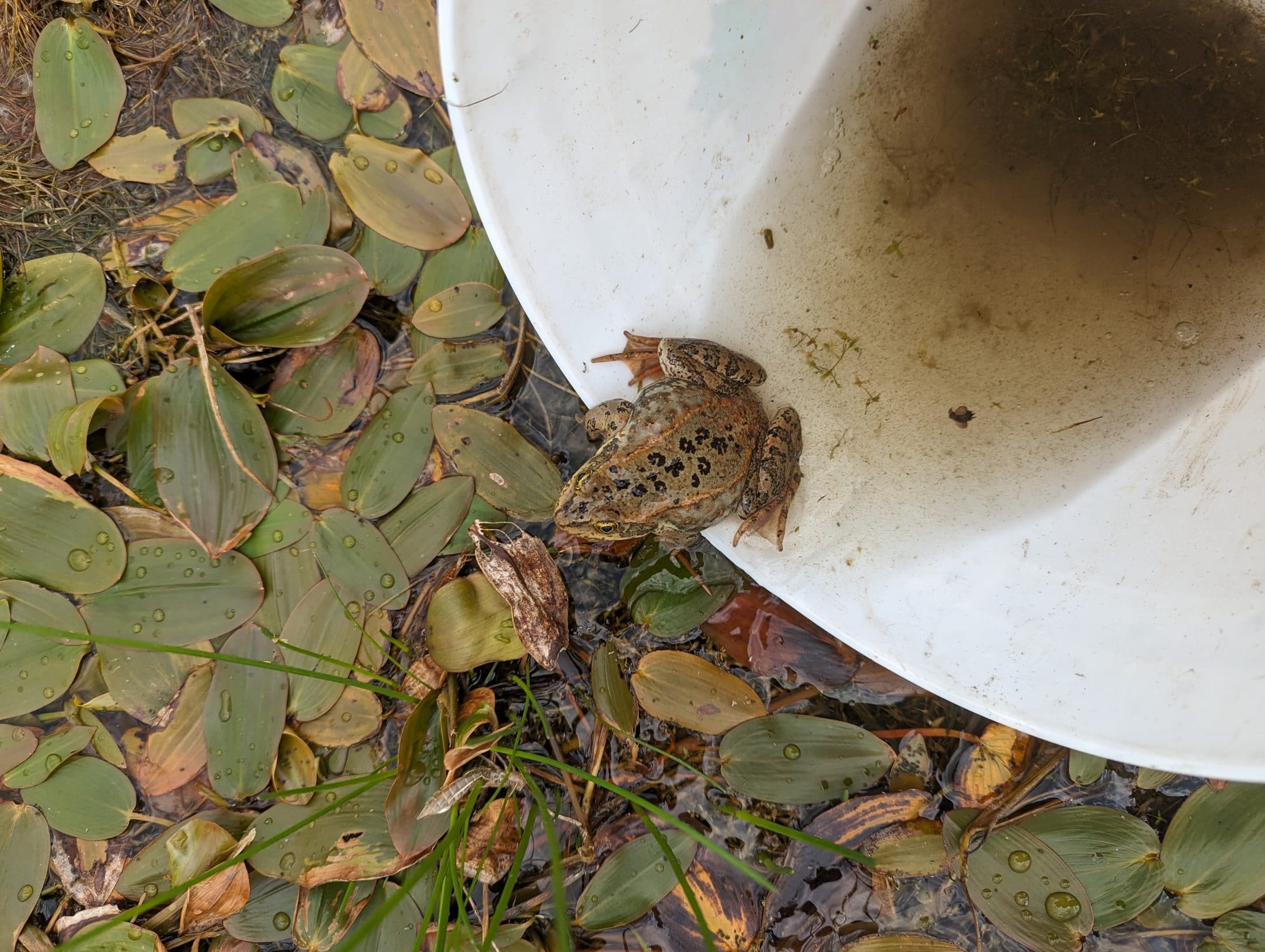
Another endangered species is the Oregon spotted frog. The long-legged friends used to roam from northern California into southwestern B.C., but have declined drastically. Only a few hundred frogs remained in 1999, prompting the Committee on the Status of Endangered Wildlife in Canada to give the amphibian its first-ever emergency listing. Populations in California have gone extinct, while an estimated 364 frogs remained in B.C. in 2025.
Climate change, habitat loss, invasive species, disease and development are all impacting these animals.
And while B.C. has taken extra measures to step up conservation during projects by relocating all species during a development, outcomes are still not monitored, making the effectiveness of these initiatives unknown.
Translocation adopted during development for 2010 Olympics, but now experts call for reversal
In a paper published in Conservation Biology, 59 translocation projects were reviewed from around the world. The paper found “mitigation translocations have not achieved their potential as an effective applied science,” because long-term impact to receipt ecosystems were not addressed in the data samples, and metapopulations were not addressed either.
Most species exist within a metapopulation, linked together by the same landscape. According to the Government of Canada, “when disturbances occur in a habitat patch, there is an effect on that particular population, and there could be effects on other populations that are linked to it through dispersal or the broad metapopulation that occurs at the landscape scale.”
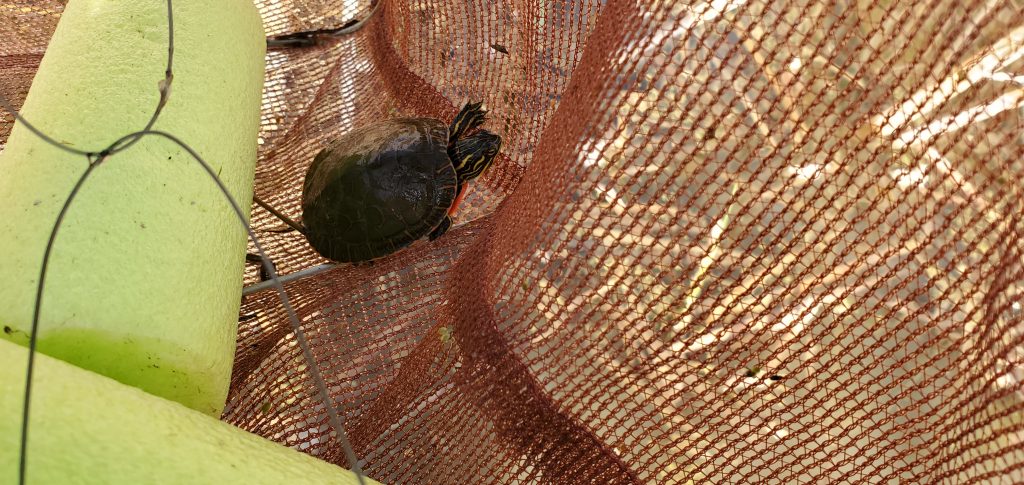
Another paper published by the Department of Fisheries and Oceans Canada, about fresh water fish and mussels, acknowledges the practice as a last resort, stating, “Ultimately, mitigation translocation is performed when no other options remain for preventing the imminent loss of individuals at their natal location.”
The push for translocation mitigation in B.C. was born out of the 2010 Winter Olympics, from public pressure to preserve wetland habitat during improvements to the Sea to Sky highway, which connects Vancouver and Whistler.
Sixteen years later, amphibian and reptile lovers are calling on the province to avoid relocating species whenever possible, to invest in habitat creation or restoration projects and to enforce transparent reporting after species are relocated.
There are several examples of habitat restoration projects that have supported amphibians in B.C. On Salt Spring Island, the Stqeeye’ Learning Society is restoring native vegetation and wetland to improve conditions for wildlife, including amphibians, at Xwaaqw’um (Burgoyne Bay).
Near Tofino, Parks Canada and the Raincoast Education Society installed amphibian crossing tunnels and fencing along Highway 4, to reduce road mortality and improve habitat connectivity.
In an email to The Narwhal, B.C.’s Ministry of Water, Land and Resource Stewardship said that “long-term survival and population outcomes following relocation would require multi-year studies, specialized monitoring methods and significant resources.”
“While it is not always feasible to employ long-term tracking, it is within this process that appropriate risk management takes place,” the ministry wrote.
“We need to have proper monitoring and research in place to better the outcomes, or at least understand the outcomes, because currently we don’t,” Winand said.
And as Canada embarks on an ambitious slate of major projects, Winand says that reptiles and amphibians face mounting risks of fragmented landscapes and loss of habitat. To her, the path forward is clear.
“We really need to push to avoid translocation,” she said.
Updated on July 15, 2026, at 8:30 a.m. PT: This story has been updated to correct the names of scientific journals. The study on translocation mitigation was published in The Journal of Wildlife Management, not in The Wildlife Society. Additionally, the paper reviewing 59 translocation projects was published in Conservation Biology, not by the National Library of Medicine.
Updated July 17, 9:45 a.m. PT: This story has been updated to correct the number of translocation mitigation permits related to amphibians and reptiles. It is 227, not 229.