




 8 min. read
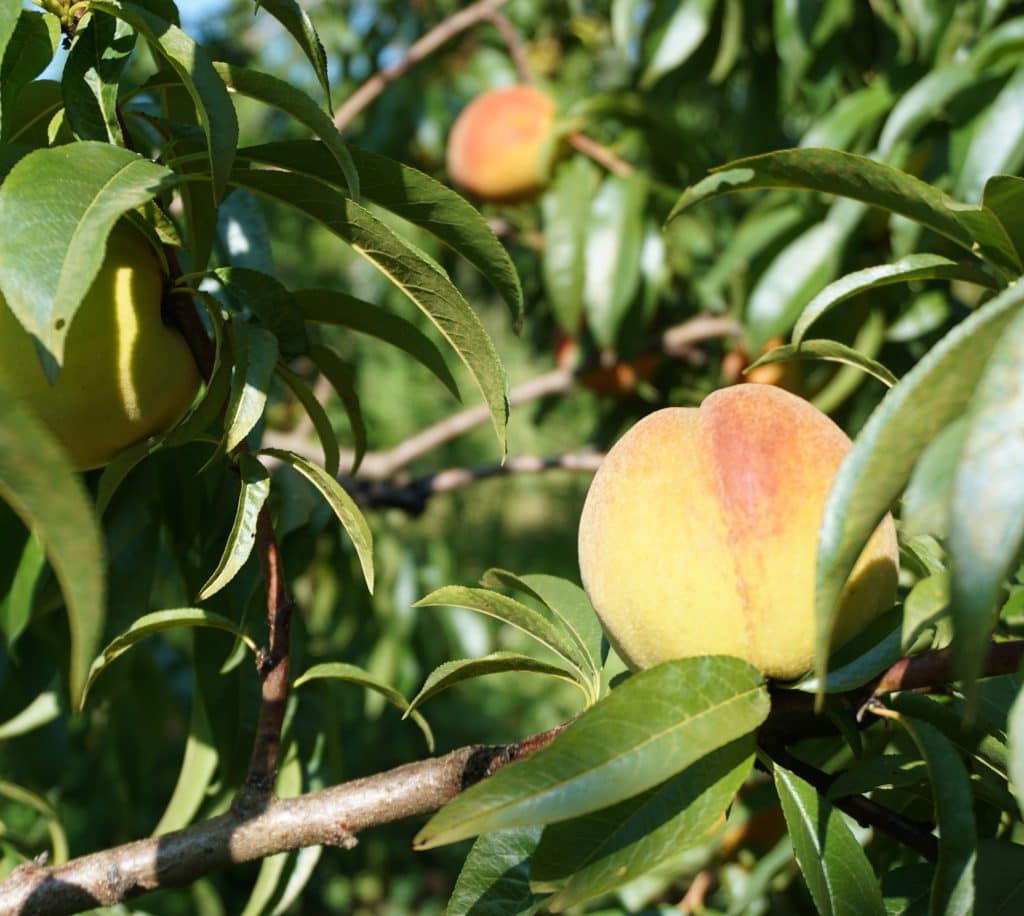
As you bite into a juicy peach this summer, thank Niagara. The southern Ontario region grows more than half of Canada’s tender fruits: more than 70 per cent of our peaches, plus many fragrant baskets of nectarines, plums, pears, cherries, grapes and apricots.
Despite the bounty, climate change is taking a toll. Sour cherries took the hit this year, the industry group Ontario Tender Fruit says, with the crop all but wiped out by a cold winter and late frost. A summer of extreme heat and smoky skies have made farm work difficult, even dangerous. As weather becomes more intense and erratic, harvests across the country become unpredictable, too.
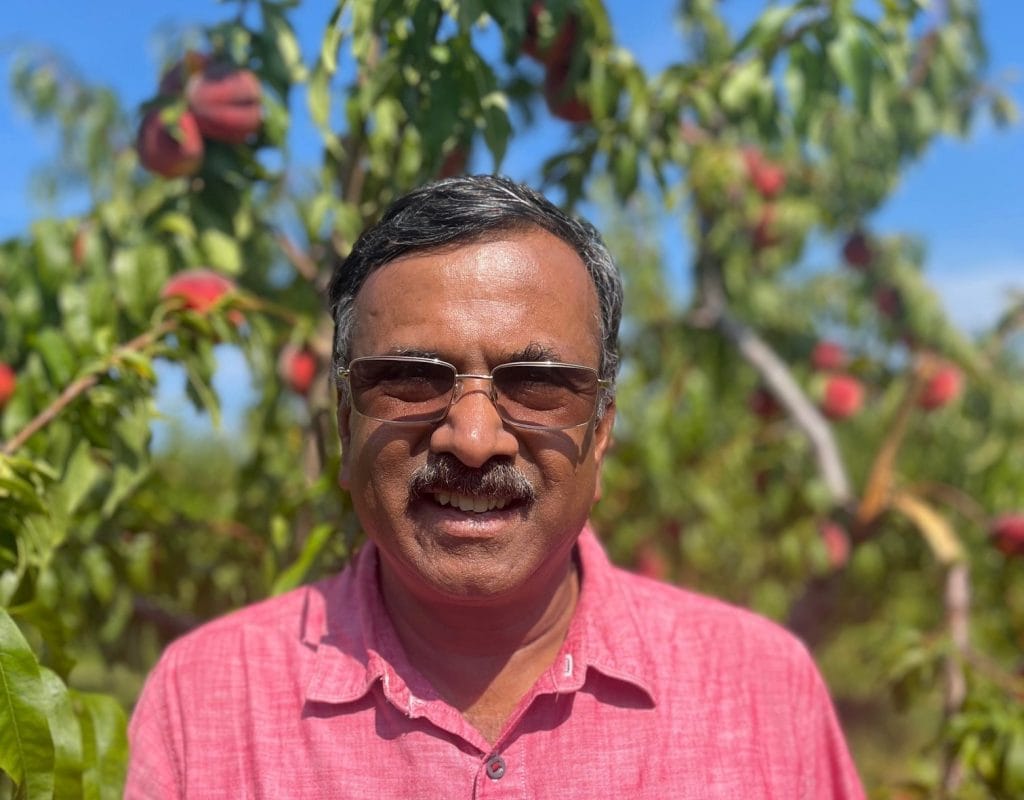
Jay Subramanian’s job is to tackle that uncertainty. The University of Guelph professor works at the Vineland Research & Innovation Centre in Niagara, combining modern genetics and age-old techniques to develop futuristic tender fruit. Right now, he’s trying to breed peaches that last longer, both before and after being picked. In the orchard, growers could spare workers a day of harvest during extreme heat. At home, we’d have an extra day to enjoy them, reducing food waste.
The process for breeding flowering plants is centuries old. First, you identify varieties with different desirable qualities. Then, you take pollen from “variety X,” as Subramanian puts it, and paste it onto the stigma — the sticky tip of the flower — of “variety Y.” Then, you see what grows. If the fruits of his labour bear the desired qualities, he consults a panel to make sure the new variety also has the right “colour, shape, taste, everything that is appealing.”
Bringing a new variety to the public takes years.
The market value of Ontario’s tender fruit was more than $94 million in 2025, and that figure doesn’t account for the wider industry around it. Yet Subramanian says finding money to protect it isn’t easy. The only recent government funding for developing climate-resilient tender fruit varieties in the province — from data collection and research to education and breeding — was slightly more than $1 million from the federal government. And that was two years ago.
This lack of support, he says, is one reason the country’s crop of fruit breeders is shrinking.
“We used to have like 10 people or 12 people in Canada when I joined,” Subramanian, who was born in India, says. “Now it has gone down to four. And if any of us retire, the writing is on the wall. That has to change. That has to come not from us, not from the university. It has to come from somewhere above.”
This conversation has been edited for length and clarity.
How are Ontario’s peach crops being affected by climate change?
Jay Subramanian: I joined this job not too long ago — 24 years, but it’s not a very long period in crop evolution and things like that. Then, the first peaches here were harvested in the last week of July. [This year], we are already starting to see peaches ripen on July 10 — almost a three-week advancement within three decades.
That tells you how alarming the situation is in terms of climate change. Neither the breeder nor the marketing people nor the consumer can put something on the calendar like our parents or grandparents used to do — ‘Okay, this week I am going to get peaches from the farmers’ market and then do canning in my home.’ That’s all out of whack.
[This July] we had temperatures crossing almost 33 C, 34 C, and that’s also not good. When you go and look at the fruits, they are all burnt, as if they were just taken out of a barbecue on the top. It is that bad.
When I say the effects of climate change, I mean unpredictable and extreme weather, such as early or late frost, extreme heat, drought or too much rain. Today in mid-July in Toronto, it’s incredibly smoky because of fires up north. Is there anything I’m missing?
Another thing is our winters are not predictable anymore. Sometimes we have enough snow on the ground so that the groundwater is all filled up and the plants kind of muscle up during the winter. Sometimes we don’t get that. We just get a smattering of snow here and there and then we don’t have enough groundwater. That is also causing decline and unpredictability to the tender fruit crops.
What does this mean for you, as a breeder and a scientist? What is your day-to-day when you’re trying to make these fruits as climate-resilient as you can?
Just to back up, tender fruit breeding is a very long process. The varieties that we release now were bred 25 years ago. So I have to have a vision or a crystal ball to know what is going to happen — 25 years from now, what is going to happen? That is just not possible.
Looking at what is going to happen, how we are going to breed, that is going to be challenging. But we are also contributing to global warming and climate change. When you have produce like tender fruits going to a landfill, they emanate quite a bit of methane and nitrous oxide when they are rotting. Nitrous oxide takes six times longer than a carbon molecule to get settled down back in the earth, so it is going to be up there in the atmosphere for much longer.
We are trying to breed varieties that would stay better so that it doesn’t go to the landfill, varieties of tender fruits that will remain on the shelf and in the consumer’s house for two or three days extra. Twenty to 30 per cent of produce is wasted by the consumer. That is the part that I can control within my career, within my lifetime.
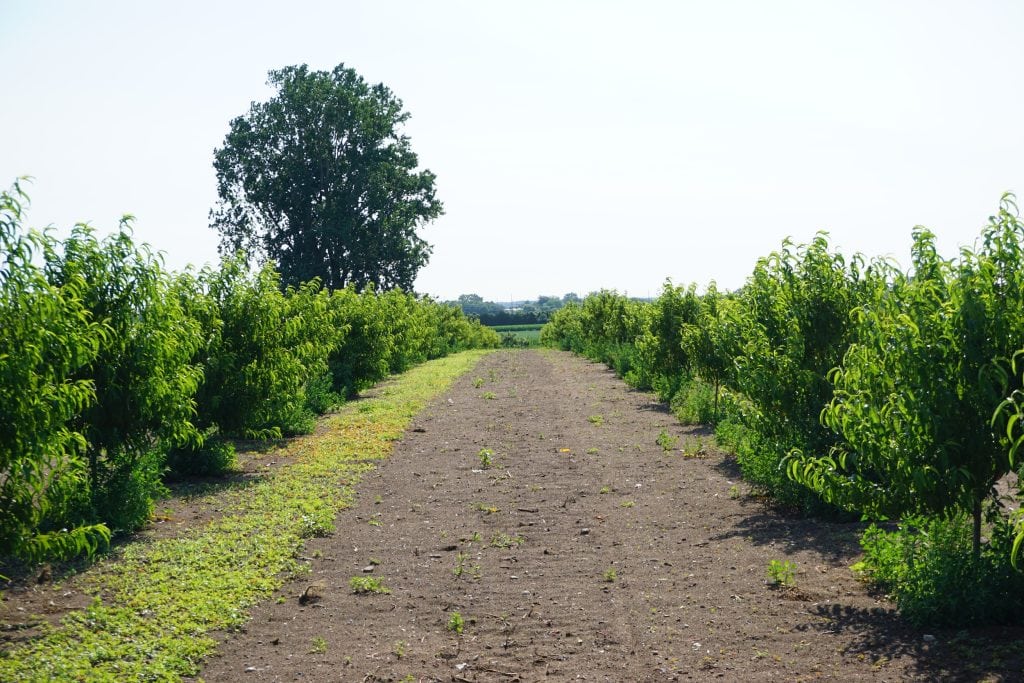
On the front end, an early peach that is ripening now, or a late peach that’s going to ripen in September, they all flower at the same time. They all flower within that two-week window in May. But then, from flowering to fruit maturity, that time for some is short. For some, it is long.
So we are trying to work on that one: if it flowers on day X, it is going to ripen 70 days after flowering. This part as a geneticist, as a breeder, we can control. It’s a long process, but that is doable by using modern genetics. It is a slow and patient study, but I’d be more than happy to take the initiative on that because I’m the only one left in Canada.
You’re the only what left in Canada?
Only tender fruit breeder, only peach breeder left in Canada. If I retire, R.I.P. for this position.
How did that happen?
That’s a good question. Almost all through the world, for any publicly funded research program, they are looking at the industry to support this breeding. If you take a place like California, yes, their industry is huge — by even getting something like five cents from an agricultural check-off fund, they can support like five scientists. Certain crops, like corn, soybean, canola, wheat, these are huge industries. It’s easy. It’s possible.
But our industry here is just very, very tiny. It is a very vital industry because we supply more than 50 per cent of tender fruits for Canada from this tiny little bowl in the south corner of Ontario. So that value is something people in power have to recognize.
In terms of the science, can you say a bit more? You want more control over the ripening process?
Well, ripening is a very long scientific process. Over the past 75 years, there’s quite a bit of study that has gone into the ripening process, how it is managed, what are all the genes involved and all those things. Using genetics, we can either accelerate it or we can delay it. That part we can do by breeding.
We know the genetics, we know what variety X can do, what variety Y can do, what we expect when we hybridize X and Y, things like that. If we take varieties that are ripening early, and if we put that pollen on the flowers that are ripening late, can we get something in-between?
Along with ripening, I assume you’re also working, for example, on trees that are more resilient if there’s too much rain, or not enough rain.
To some extent, we can control that part by genetics. Another thing that we are working on is to make sure the varieties that we develop are resistant to some of the diseases. We are in Niagara, and the place is normally rainy and humid, and this is a heaven for pathogens like fungus and bacteria to grow. Especially when they see the fruits — fruit is full of sugar — and then they just go kaboom after that.
By breeding varieties that are naturally resistant, we are also reducing the number of sprays that a farmer has to do. In that way, you can also help reduce climate change effects, because the operation of the machine, the pesticides themselves, all those things contribute to climate change.
Is there a success that you’ve had in your career worth highlighting?
It’s a little bit early, but I think I have enough conviction to say that we are now developing a new series of peaches that can stay a little longer on the tree, on the shelf, as well as on the consumer table. Significantly longer, and they still taste very much like the normal peach. In fact, some of them are much sweeter.
Probably in the next five, six years, we will be releasing varieties belonging to that particular group. Some of the press people call them the ‘neat peach.’
I personally really love a messy peach, though. I feel like that’s part of the peach experience.
That is because we are here [in southern Ontario]. We are spoiled with the good stuff.