





 16 min. read
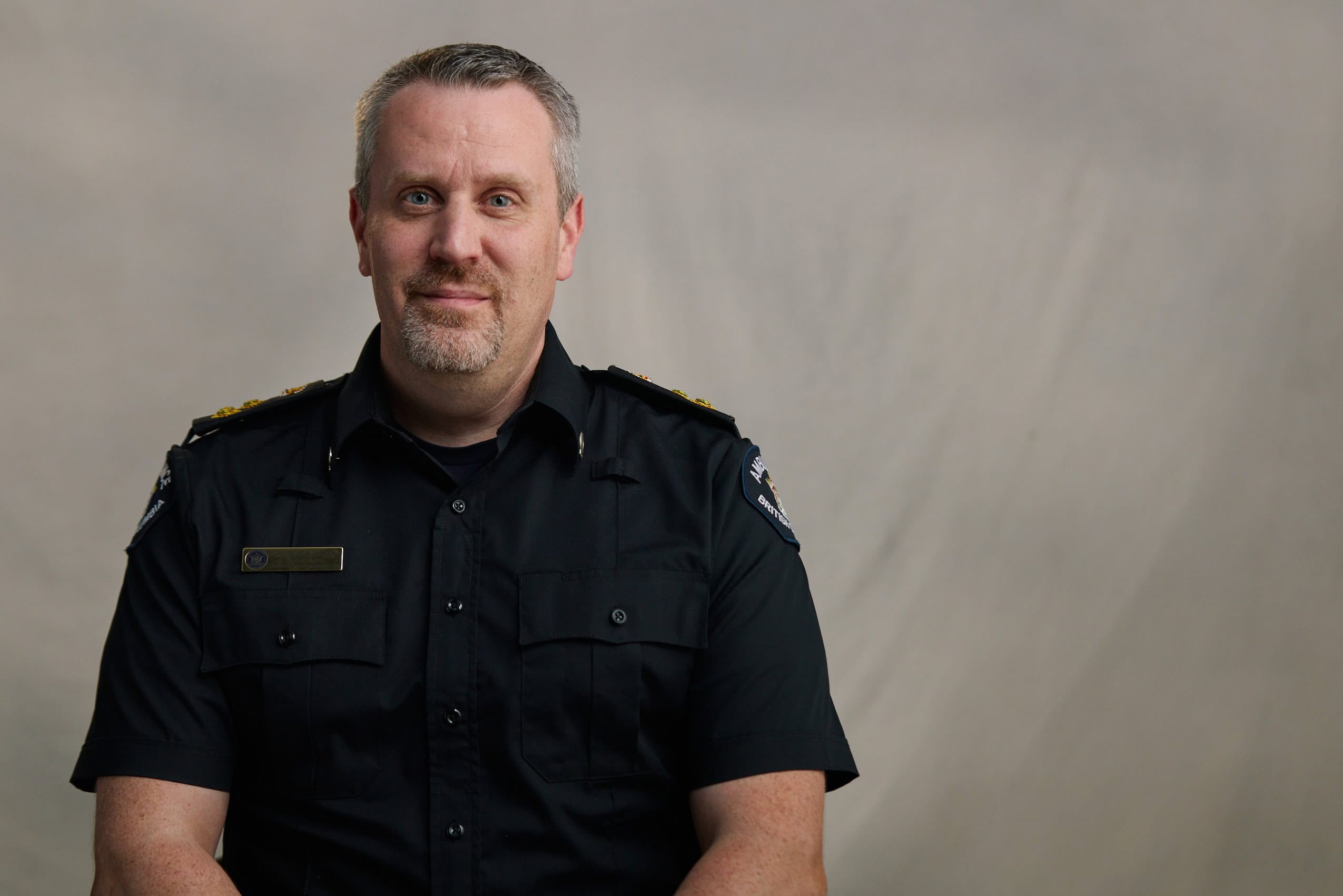
At 7:30 a.m. on June 28, 2021, Ryan Ackerman sat down for a daily meeting. A paramedic and manager with BC Emergency Health Services, Ackerman had attended these meetings nearly every day since the start of the COVID-19 pandemic. They had become routine. This one was different.
“A manager in the dispatch centre popped in very briefly and just said, ‘I’m sorry I can’t stay, things really got out of control overnight,’ ” Ackerman says.
Extreme heat was blanketing the province, and the vast majority of B.C.’s population was under public health heat warnings.
Overnight, calls flooded into 911. By morning, dispatchers were already backed up. Ackerman’s colleague told him there were hundreds of genuine emergencies, without enough teams to respond.
“They need all hands on deck,” he remembers the colleague saying. So Ackerman decided to leave his desk and jump into an ambulance.
“I don’t think the scale of what we were walking into was really clear until we hit the button to go on the air to make ourselves available,” he says. “Immediately, a call came in, I listened to the radio and I heard all of the other units that were also on their way to cardiac arrest calls. It suddenly sank in: this is different, this is reaching natural disaster levels.”
The call Ackerman received was one of 11,970 emergency calls made by people in British Columbia that day, more than double the average number.
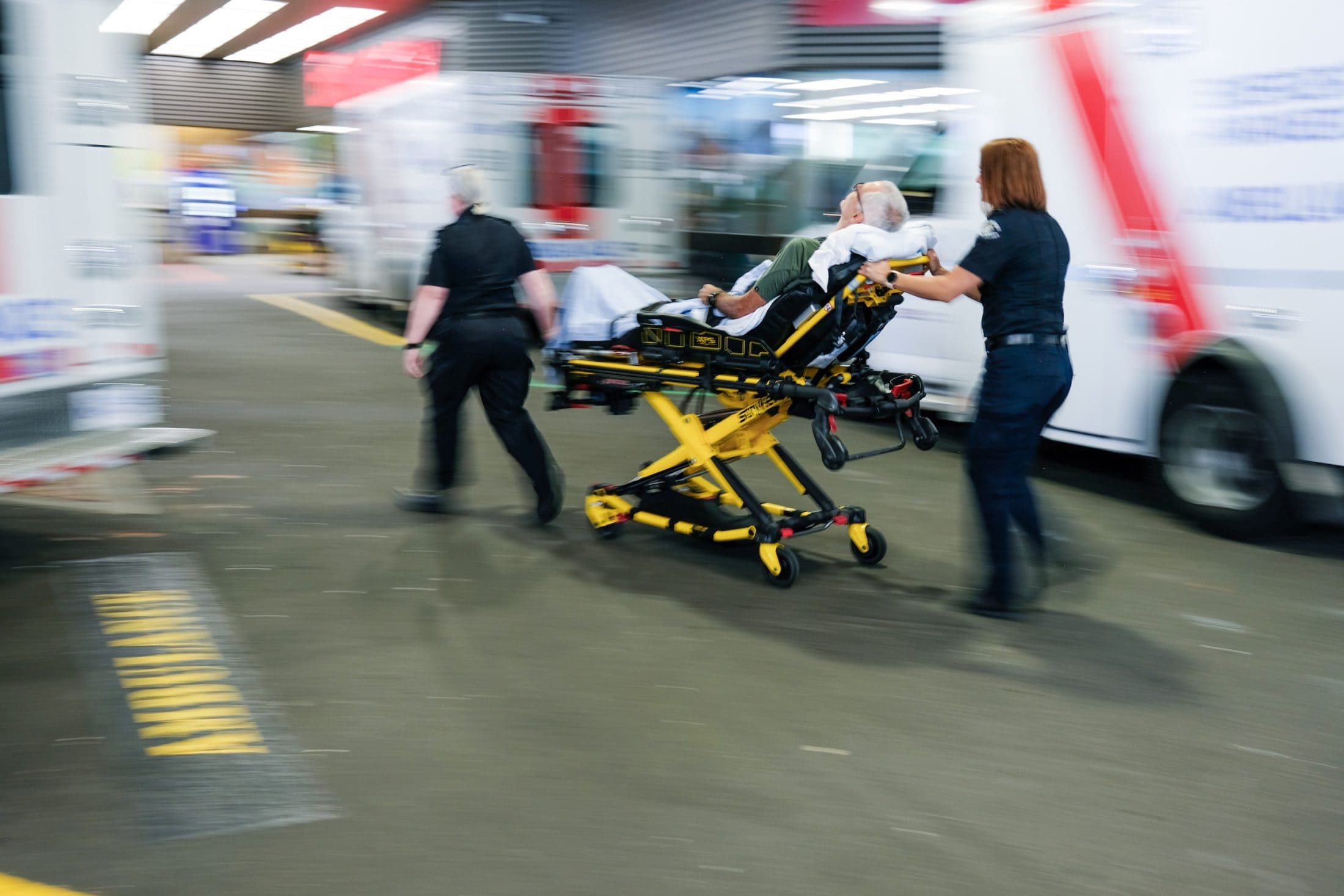
Ackerman saw the strain on his colleagues, as he watched them coming and going from the hospital. “They were exhausted, they were hot, they’d been through the heat themselves and they just kept going back out and doing more calls.”
The heat dome lasted eight days and claimed 619 lives in the province. Sarah Henderson, scientific director of Environmental Health Service at the BC Centre for Disease Control, called it “the most deadly weather event in Canadian history.”
It pushed the ambulance service to the brink, but it also sparked action. In the five years since the heat dome, the province has invested millions to increase the number of paramedics and ambulances. They’ve built new departments and procedures for responding to extreme weather and even increased the scope of medications and treatments that first responders can use to save lives.
According to Ackerman, it’s a reflection of how the heat dome “fundamentally changed how we look at disaster and emergency management.”
But those changes have yet to be tested by another heat dome of that scale. And as B.C. braces for another summer of extreme temperatures and dry conditions, some are wondering if we’ve gone far enough.
An ‘endless avalanche’ of cardiac arrests
For most paramedics in Vancouver, shift change happens around 6:00 am, as the night crew leaves and the day shift takes over. It’s usually cool, especially in Vancouver, where the ocean breeze helps moderate the temperatures. But on June 28, 2021, it was already 22 C and rising when Jayne Hamilton started her shift.
“I knew it was going to be hot, I knew it was going to be miserable,” she explains. “I didn’t, even with that, have an understanding of how hot it was going to be.”
Like Ackerman, Hamilton was immediately dispatched to a cardiac arrest. By the time she cleared from that one, she was sent to another.
“Somewhere between the second and third one, we started commenting out loud that ‘this is not normal,’ ” she says. “When you’ve made it to three cardiac arrests before 10 o’clock in the morning, it’s odd.”
Hamilton is an advanced care paramedic. A specialist dispatched to the most serious emergencies, she has more training than the primary care paramedics who make up the bulk of the ambulance service. But even with that focus, Hamilton says “a heavy week of cardiac arrests” would be three in a four-day work block. But on June 28, she says she responded to 11 of the 27 that came across her dispatch computer.
“It seemed endless, like just an endless avalanche,” she says.
When bodies heat up, they normally cool down by sweating and dilating the blood vessels near our skin. But extreme heat and exertion can stress these systems. When someone is exposed to these stressors for too long, their body gets overwhelmed. Heat cramps show up, then heat exhaustion, with profuse sweating, nausea and dizziness. Those can be stopped by cooling someone down, but if that doesn’t happen the condition can progress to heat-stroke, a life-threatening problem where organs start to shut down. Heat can also impact how medications work and compound existing health problems, especially related to the heart and kidneys.
These are all things that paramedics like Hamilton learn in school. But outside of the classroom, heat emergencies are rare.
“[Extreme heat] wasn’t something that organizations or the paramedics at large were really focused on,” she says, explaining that most heat emergencies happened at worksites or events, like races and summer festivals.

And it wasn’t just paramedics seeing a massive uptick in heat-related illnesses.
“I was working during the heat dome and I saw more cases of heat illness than I ever had in my entire career,” Vancouver-based family physician and president of the Canadian Association of Physicians for the Environment, Melissa Lem says.
“It affected so many people … If you didn’t have indoor cooling, you could not escape from the heat; it was everywhere.”
Unhoused and low-income communities impacted more by extreme heat, heat dome
The heat dome was experienced by people throughout B.C., but it didn’t impact everyone equally. In 2022, the BC Coroners Service released a report about this period which found “the elderly, persons with chronic health conditions, persons living alone, those with no access to cooling and those in particular geographic areas were more impacted by the heat.”
It was a reality explored by the Union Gospel Mission in their 2024 report Unhoused Under Pressure, looking at how climate change is impacting unhoused people in the Downtown Eastside. It looked at flooding, cold, wildfire smoke and extreme heat, with a focus on how the heat dome hit the community.
“Vancouver’s 2021 heat dome lives vividly in the collective memory of Downtown Eastside residents,” the report explained. While the BC Coroners Service’s report didn’t break down deaths by neighbourhood, it did find that “material deprivation” and “social deprivation” were major contributors to heat-related deaths. So too was the lack of access to air conditioning or indoor cooling spaces, all problems, Wells explains, common in the Downtown Eastside.
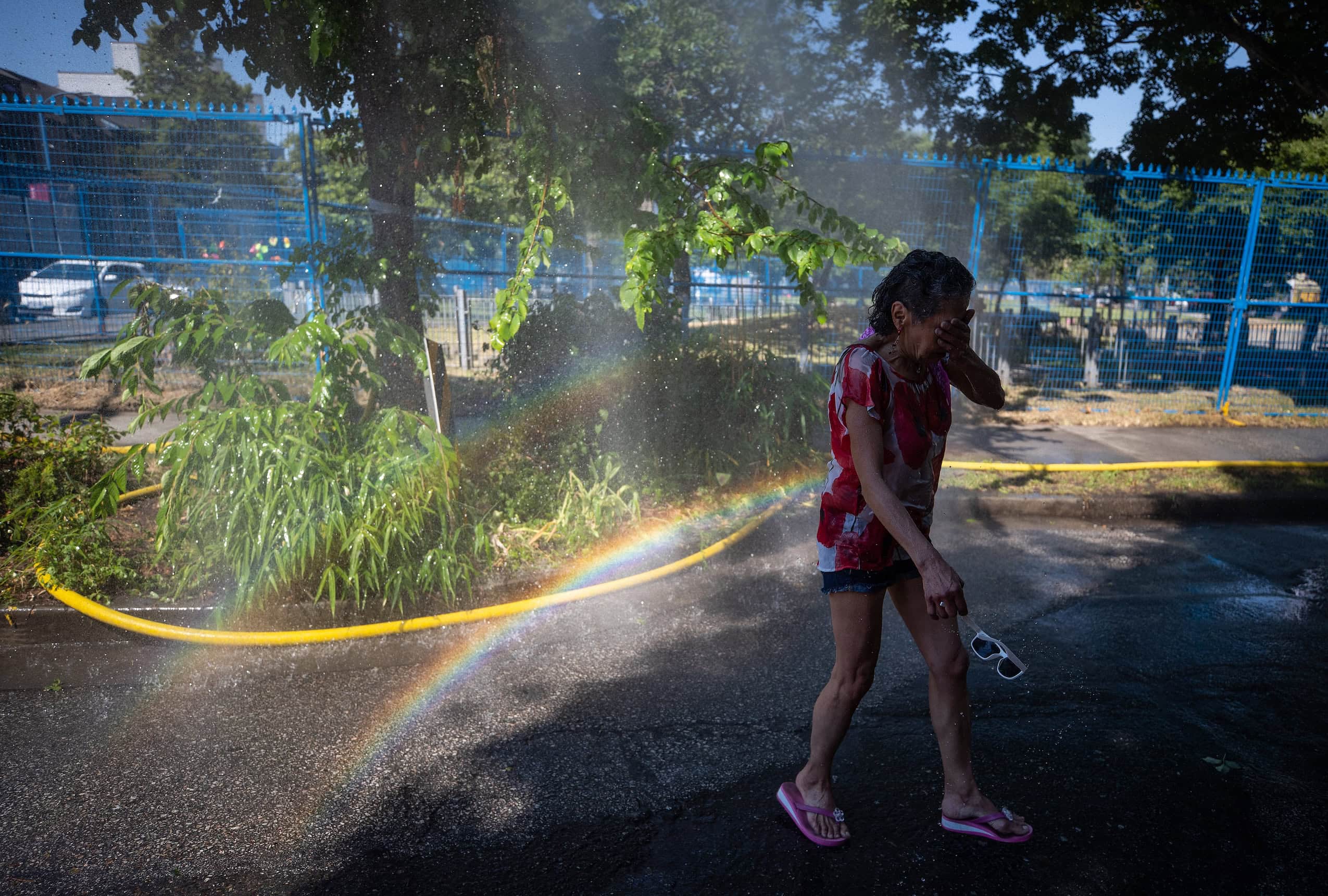
“Heat is more harmful and prevalent in the Downtown Eastside because there are fewer plants, less shade and little to no access to air conditioning,” Nick Wells, a spokesperson with Union Gospel Mission, explains.
“The Downtown Eastside can get as hot as 49 degrees Celsius, and that’s incredibly dangerous,” Wells adds. “While you’re dealing with this heat, you’re also dealing with other kinds of comorbidities or issues, such as entrenched homelessness, systemic poverty, mental health issues, substance use and addiction. All these factors play in.”
‘You were in a natural disaster’
First responders train for natural disasters. They call them mass-casualty incidents and have systems to manage staff, triage patients and ensure resources get where they’re needed. But extreme heat doesn’t look like other disasters.
“What we worked through during the heat dome, in the truest sense of the word, was a natural disaster — no different than floods, earthquakes, that kind of thing,” Hamilton says. In addition to her work as a paramedic, Hamilton serves on Canada Task Force 1, a Vancouver-based search-and-rescue team deployed to natural disasters across Canada. “It was that scale of a disaster, [but] at the time, I don’t think, when we were in it, that we recognized it.”
Ackerman remembers “feeling just awful about the way the day had gone.” So much so that he brought it up with his supervisor.
“He told me, ‘You were in a natural disaster, we just didn’t tell you [that] you were,” Ackerman says.
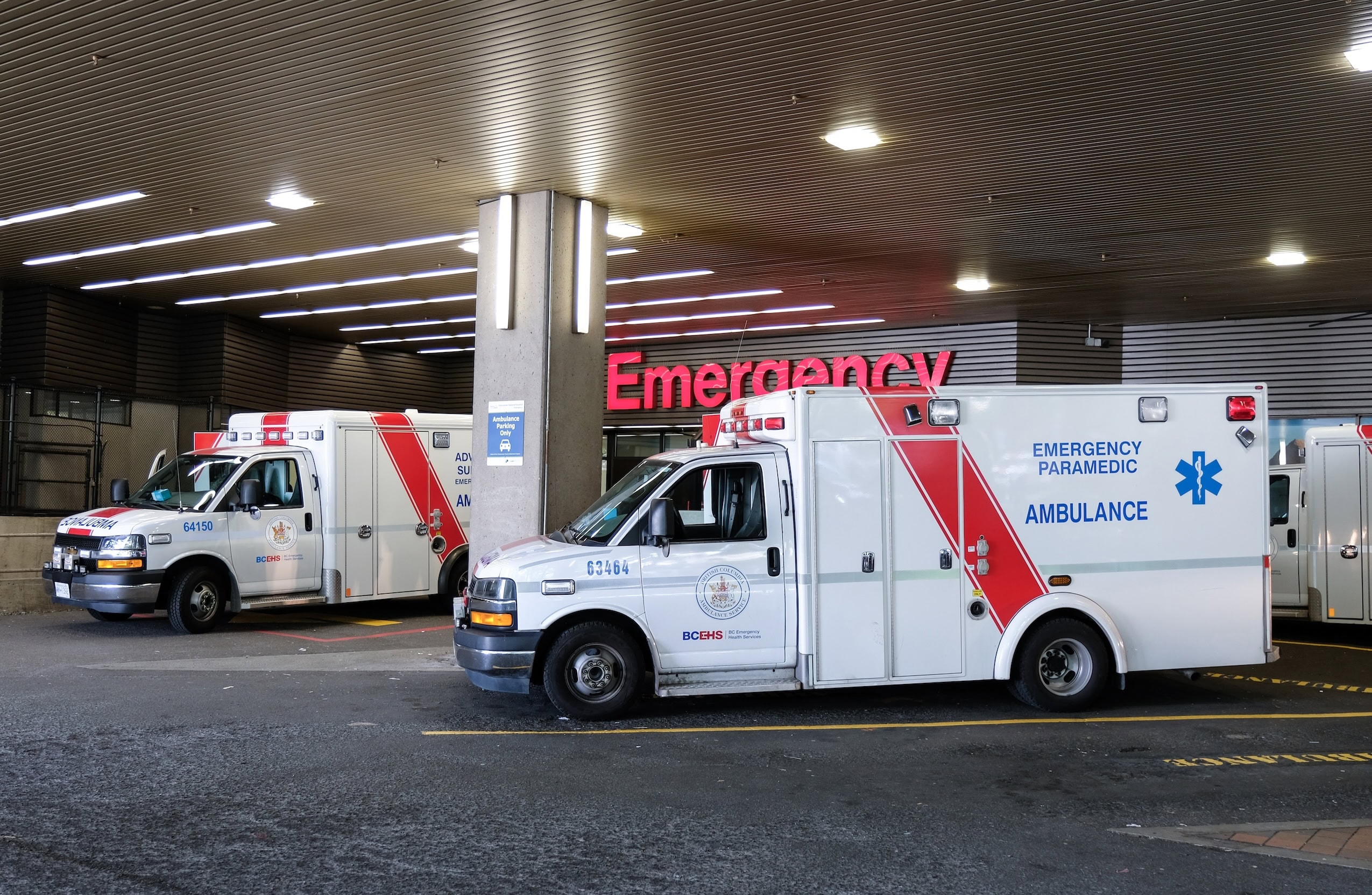
For some, that feelings of grief, exhaustion and frustration turned into anger when Darlene Mackinnon, then BC Emergency Health Services’ chief operating officer, told Global News that, in her eyes, the service had done “a really good job” responding to the heat dome.
A petition calling for Mackinnon’s firing was initiated, calling out BC Emergency Health Services for failing to prepare for the heat dome by staffing ambulances or dispatch centres appropriately, leaving some patients to wait hours for help.
“I have never seen paramedics and dispatchers as angry as they are right now,” one paramedic, speaking anonymously to Global News, said in reply. “Everyone is absolutely livid and disgusted with the response.”
The petition calling for Mackinnon’s firing gathered thousands of signatures in a matter of days. The Ambulance Paramedics of British Columbia, the union representing paramedics and emergency dispatchers, later learned that Mackinnon was placed on leave. By December 2021, she moved on to a new role within the provincial health authority.
On July 14, Adrian Dix, then the province’s health minister, held a press conference announcing the hiring of Leanne Heppell to the new post of chief ambulance officer, and pledged millions of dollars to hire 85 new full-time paramedics and 30 full-time dispatchers. There was also money to buy 22 new ambulances and convert 22 rural ambulance stations from part-time, on-call service to full-time.
A year later, in 2022, the province announced $148 million in new funding to expand the ambulance service and hire new paramedics. They budgeted $2.1 billion for climate disaster preparedness, including funding for the Disaster Risk Reduction and Resilience team. According to the government, by 2024, the BC Emergency Health Services budget was nearly $1 billion, an increase of more than $475 million since 2017.
“It’s one of those events where we recognize, as an organization, that it shouldn’t have taken a tragedy like that to lead to improvements,” Ackerman says. But it has led to improvements. After the heat dome, Ackerman became a director of the disaster risk reduction and resilience department, a team he says he oversaw grow from two staff to more than 30.
“The immediate response was [that] we need to have an early warning system, we need to have proper preparation, we need to have a proper response [and] we need to have a proper recovery phase,” he explains. “That was the impetus for five years of iterative improvement to try and make sure that we are prepared well in advance of any event.”
Those preparations include what Ackerman calls an “operational readiness team” of paramedics who monitor forecasts from organizations such as Environment Canada and BC Wildfire Service. Ackerman says they use this data to produce daily risk scores for the service for categories of environmental issues, such as floods, wildfires and extreme temperatures.
These scores trigger a range of responses. It could be increasing staffing levels or moving ambulance crews to high-risk areas. There might be staff-wide warnings about travel conditions or how temperature extremes impact medications. Sometimes it requires out-of-the-box thinking, like when dozens of ambulances were deployed to the Vancouver airport to meet planes evacuating critically ill patients during the 2023 wildfires in the Northwest Territories.
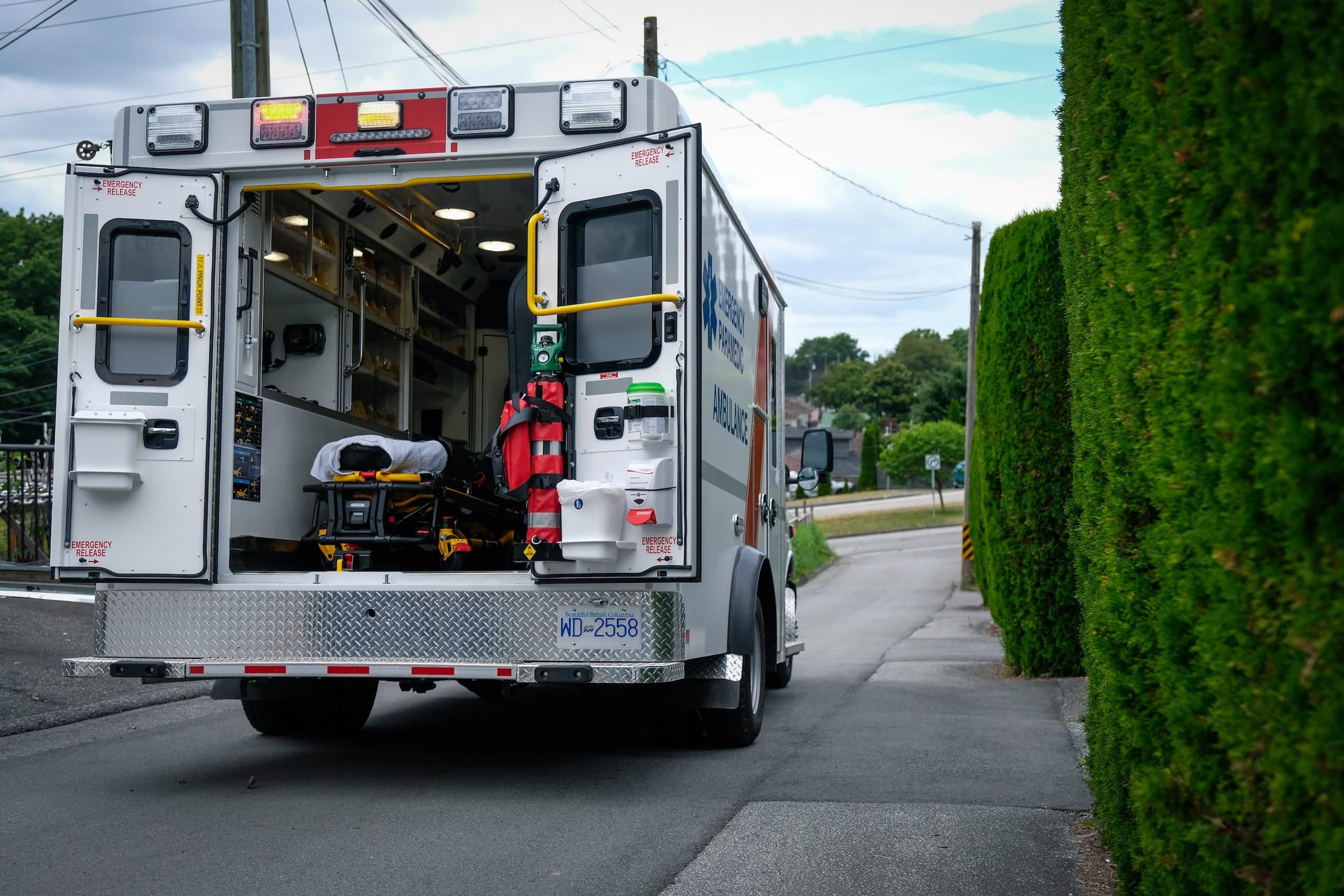
The province also created something called the BC HEAT Committee after the heat dome. A multi-agency coordinating body housed in the BC Centre for Disease Control, Ackerman describes it as a heat alert and response system “that just didn’t exist before the heat dome.”
“We’re able to respond well in advance and be prepared for these things and not get caught after it’s already escalated,” he says.
There are also efforts to reduce the strain that heat events put on emergency services. For example, specialized paramedics will respond to non-life-threatening emergencies, helping move people to cooling centres and freeing up ambulances for Code 3 responses.
Climate change is a ‘prominent source of occupational stress’ for paramedics
Getting the ambulance service to understand the connections between climate change and medical emergencies was a focus for David Hollingworth before the heat dome ever hit. A primary care paramedic and the director of the Ambulance Paramedics of BC’s environment and climate change committee, he had spent years trying to make the link. While some supervisors supported him, he says that the higher ranks of the service didn’t seem interested.
“Seeing these [natural disaster] events and not seeing the link to climate change being made was infuriating,” he says.
But something changed after the heat dome. The death toll was one part, but so was the strain of working under extreme temperatures.
“I was making little bags of ice from the ice machine in the hospital,” Hollingworth recalls. “I was putting them in my breast pockets and moving them around to different pockets in my body, just to try to cool down.”
After the heat dome, he had a moment where he felt “a sense of this is what I’ve been talking about.”
“Health-care professionals now recognize that human health is interdependent on planetary health and the environment,” he explains. “By not doing anything about it, we’re just making our work more difficult and more dangerous, so it’s in all of our self-interest to do it.”
It’s an argument that resonates with Shannon Sherk. Now a paramedic, Sherk was a student at the University of Victoria when the heat dome hit. She was broadly interested in the connections between human health, the environment and health-care, but the events of 2021 sharpened that focus onto climate change and paramedics.
“I realized that no one had really looked into the relationship between paramedicine and environmental hazards,” she says. “Which seems a little bit ironic to me, considering it’s the facet of health-care that interacts the most [with people] outside of clinical settings.”
Sherk dug in, surveying over 100 paramedics from across the province about how climate change was impacting their work for a paper that was published in the June 2026 issue of the Journal of Disaster and Emergency Medicine.
“The big overarching conclusion is that paramedics are seeing environmental hazards impact both their patients and themselves,” she explains. “Patient outcomes are worse when you have extreme hazards, transport times or your time to get to patients is longer, and call volumes are higher.”
But while Sherk says that those are all pretty well understood realities, there’s less clarity around how paramedics are affected by events like extreme heat, wildfire smoke and atmospheric rivers — particularly when they’re already at their limit.
“If you have a workforce that is operating at over 100 per cent capacity on a good day, what plans are there when you do have those additional stressors and there’s not really any extra resources or staff you can pull upon?” she asks.
Her research found that climate impacts are a “prominent source of occupational stress” among paramedics.
“The combination of a high call volume, higher acuity calls and an overstretched workforce creates optimal conditions for critical incident stress,” the report explains.
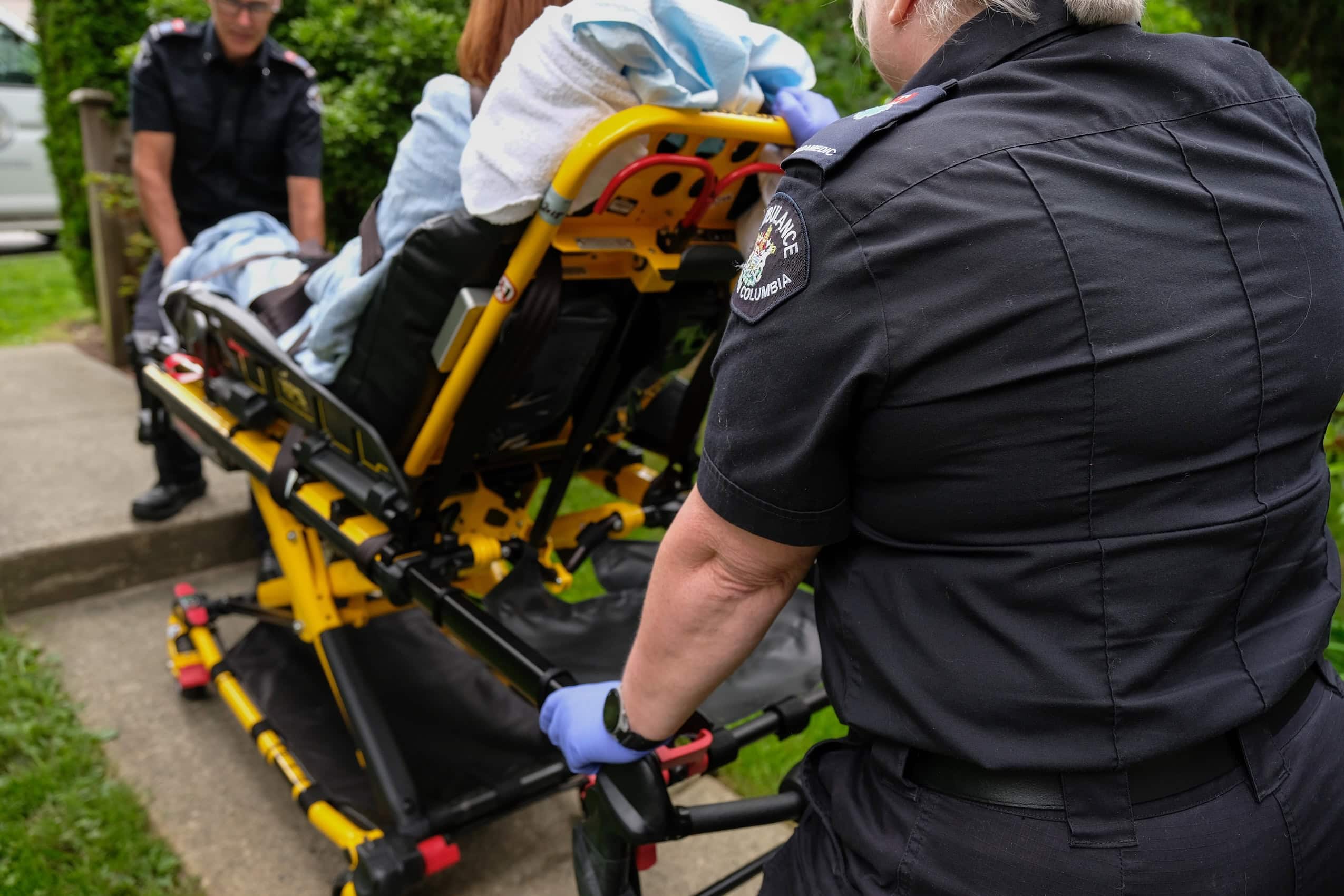
In August 2025, the Ambulance Paramedics of BC published a press release raising the alarm over a simmering mental health crisis within the service. Nine paramedics had already died in seven months prior to the release of the statement.
“While a majority of these deaths were due to health issues or accidents, many of these members died by suicide,” the statement explained. “Deaths that are very likely connected to the immense stressors of their jobs.”
It noted 30 per cent of the 6,000-plus paramedics in the province were either off work for mental health reasons or working while dealing with a mental health issue.
When the CBC asked Nicki Ropp, a mental health and wellness coordinator for the union about why they were seeing this spike, she cited multiple factors, including impacts from climate change and extreme weather.
“With the ongoing opioid crisis that continues to take up a lot of our call volume, the pandemic, the flooding, the heat dome, our staffing shortages, wildfires, everything. This is all compounding things,” she says.
Sherk worries that these issues are only going to worsen with the climate crisis.
“You have all of these overlapping factors,” she says. “It’s hard to rally folks around figuring out what you do when there’s another really bad heat event, because we’re so focused on how to deal with how bad things are now.”
It’s a question of when, not if, we’ll experience another heat event. And it might not even take something as extreme as the heat dome. According to research published by Sarah Henderson in June 2025, “the risk of death spikes when people are exposed to both elevated levels of fine particulate matter from wildfire smoke and temperatures above 26 C.”
That’s something we could easily see this summer. Environment Canada is forecasting a hot, dry summer for British Columbia. In late May, Weather Network meteorologists doubled down on that, predicting that the arrival of an El Niño pattern would lock in warmer summer temperatures for the province and contribute to elevated wildfire risk.
That could mean increased strain on health-care and emergency services, because while heat and smoke are both dangerous on their own, they’re even more deadly together. That worries Lem, not only because of the health implications, but because she thinks that both the provincial and federal governments are rolling back climate action and forgetting the lessons of the heat dome.
“It’s recency bias. … Our brains are wired to focus on what’s in front of us right now,” she says. “This summer is projected to be one of the hottest in history. If we have another deadly heat wave, they’re going to be talking about climate investments again. It’s unfortunately our short-term views that prevent us from acting longer-term.”
Still, Ackerman thinks that the ambulance service is much better prepared to respond to future climate events than it was back in 2021. He points to the increased staffing, better pay, the preparation from his disaster readiness team and even the expanding scope of practice as examples.
But Sherk isn’t as confident. She’s had conversations with Ackerman’s department and thinks they’re doing “amazing” work in preparing for disaster events. And while she agrees that conditions within the ambulance service have improved through things like better pay and increased staffing levels, many of the external factors driving increased call volumes haven’t.
“So much of the workforce is putting out fires and dealing with ongoing crises,” Sherk explains. “You have all of these overlapping factors — like the opioid crisis, the housing crisis, the impact of COVID-19 and terrible responder well-being — that it’s hard to rally folks around figuring out what you do when there’s another really bad heat event. We’re so focused on how we deal with how bad things are now.”
For Sherk, it raises questions about whether disaster response plans will work when they depend on having excess resources. Her research suggests that many paramedics are still overworked and burned out, and if they’re already stretched to the limit, she’s worried that even the best- laid plans won’t be enough.
“If you’re trying to identify what resources you can pull in during a heat event, it’s hard to imagine what that looks like when all available resources are being used all the time.”