





 10 min. read
Summary
- Under the Clean Water Act, community-led groups called source protection committees write plans and oversee the protection of drinking water sources in Ontario.
- The jurisdiction of the committees is aligned with the boundaries of conservation authorities, and experts say the recent amalgamation of authorities could also affect the committees.
- The province has not appointed 15 of the 19 source protection committee chairs, leaving some experts questioning whether change is afoot.
As the Doug Ford government moves to consolidate conservation authorities from 36 to nine, many are concerned about the impact on Ontario’s drinking water.
Conservation authorities have long been tasked with protecting Ontario watersheds by safeguarding local drinking water sources and reducing the risks from natural hazards like flooding, erosion and drought. But the government’s legislation for their amalgamation — the biggest disruption to the agencies in 80 years — indicates there may be changes coming to the way they help preserve access to fresh water for more than 80 per cent of Ontario residents.
Since 2006, municipal drinking water has been governed by 19 source protection committees, community-led groups with directors from industries like agriculture, manufacturing and tourism that hold conservation authorities and municipalities accountable for properly managing drinking water. Within each conservation authority, designated staff serve as liaisons to these committees, providing necessary data and carrying out any suggested protective actions.
“Source protection committees are purposefully local. They’re the people that drink the water they are protecting,” Katie Stammler, water quality scientist and project manager for the source water protection committee at the Essex Region Conservation Authority, told The Narwhal.
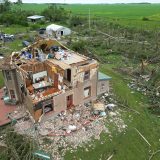
The committees were created on the heels of the water contamination crisis in Walkerton, Ont. In May 2000, seven people died and some 2,300 people became ill when manure from a nearby farm leached into a well due to a failure of safety checks in the local water treatment system.
An inquiry into the crisis resulted in dozens of recommendations, including creating source protection committees. These groups were officially enacted by the passage of the Clean Water Act. Each one was designed with the boundaries of conservation authorities in mind and tasked with writing a plan to protect the sources of drinking water in that region from threats such as fuel, sewage, road salt and agricultural runoff.
In the years since they were formed, source protection committees seemed to be “untouchable,” Lynn Dollin, once long-time chair of the South Georgian Bay-Lake Simcoe Source Protection Committee, told The Narwhal. Successive Ontario governments didn’t want to change anything “because no one wants to risk another Walkerton.”
But things might be changing now.
The Ontario government’s move to reduce the number of conservation authorities has meant that each authority now covers a much larger area. The Narwhal obtained a government slide deck presented to conservation authorities leaders earlier this month that shows drinking water source protection “remains a core mandated responsibility” for the nine proposed regional authorities, and that source protection plans “will continue to be carried out.”
But in the same slide deck, the government also notes “changes may be needed under the Clean Water Act and associated regulations” to “clarify” how source protection committees would operate under the new structure.
“We’re not making any fundamental changes [to source protection committees],” Ontario Environment Minister Todd McCarthy said in an interview with The Narwhal: the 19 committees will remain as they are and work with the nine newly proposed regional conservation authorities, though he said their jurisdictions are “a work in progress.”
“Clean water is absolutely essential, and Ontario’s is best protected in the world. That’s going to continue,” he said. “The idea is to make sure it doesn’t change by better resourcing and better supporting [them] equally across Ontario.”
McCarthy added that there may be some legislative “housekeeping” in the fall to ensure “alignment” between the new regional conservation authorities and source protection committees.
The absence of details raises red flags for experts.
“They cut. Now they cut and tinker,” one central Ontario conservation authority official said. “They’re saying nothing is going to change, but in practice, that remains to be seen. … All the changes they’ve made so far have delayed work operations. They like to pretend otherwise.”
The Narwhal spoke to 12 people, including lawyers, members of three source protection committees and several conservation authority staff, many of whom spoke anonymously for fear of retribution. As conservation authorities get bigger, these experts worry about the loss of local input, knowledge and protections.
Already, the chair positions at 15 of the 19 committees are vacant. To many, this quiet erosion of leadership and a loosening of water laws in the province are indicators that a system put in place to prevent another drinking water crisis is now in flux.
Most source protection committees still don’t have government-appointed leaders
Nearly 20 years ago, Dollin, now mayor of Innisfill, Ont., was one of 19 source protection committee chairs appointed by the Ontario government to help take care of the province’s complex system of local drinking water sources.
Back then, her committee’s first task was “a little unnerving,” she said. “I was shocked how there was no good, complete list of where our municipal drinking water systems were.” So they created one, along with guidelines on how to protect them to ensure local drinking water sources don’t become contaminated or overused.
Dollin’s term as head of South Georgian Bay-Lake Simcoe Source Protection Committee ended in August 2025; she was told by a ministry official she would not be reappointed, though she said no reason was given. Her position hasn’t been filled since.
As of April 14, the government had not appointed several chairs — something it is legally required to do under the Clean Water Act — since summer 2025.
“The absence of appointed chairs over the past year has created some uncertainty at the committee level, particularly around governance, leadership continuity and decision-making authority,” John Mesman, managing director of property, conservation, lands and community outreach for South Nation Conservation, told The Narwhal.
A lack of chair appointments, others say, may indicate source protection committees are a low priority amidst the amalgamation of Ontario’s conservation authorities. Many told The Narwhal communication between conservation authorities and ministry staff have been eroding since the government under former premier Mike Harris first cut funding in 1995.
“It seems the ministry doesn’t understand the source protection program, so it doesn’t bother to think about it,” the central Ontario conservation authority staff member said. “We started getting alarmed by ministry decisions a while ago on a number of issues. It’s been consistent, our comments are not being heard.”
That’s especially challenging as water supply gets more complicated. In recent weeks, the government has proposed permitting communal wells for private development. That would mean a new subdivision, for example, could draw from its own well instead of tapping into municipal water services. Sources who spoke to The Narwhal were concerned about this because communal wells aren’t currently overseen by source protection committees.
“We need source protection leaders now more than ever to be present at the table,” a conservation authority official in western Ontario said. “As this government pushes approvals for development, we need to make sure water is not an afterthought.”
A Ministry of Environment official told The Narwhal, “a competitive process will soon be underway” for source protection committee chair appointments.
New boundaries of conservation authorities could affect source protection committees
Not only do many source protection committees not have leaders right now, but they also don’t know what their jurisdictions will be post-conservation authority amalgamation.
“I don’t think [the government] contemplated a whole scale change like this,” Theresa McClenaghan, executive director of the Canadian Environmental Law Association, said. “A lot of people don’t realize that most local drinking water sources are protected by plans that were created by these committees over many years.”
Per the requirements of the Clean Water Act, the government has two options, McLenaghan said: realign source protection boundaries and governance to reflect the new larger regional conservation authorities or maintain the current structure within the new regional authorities.
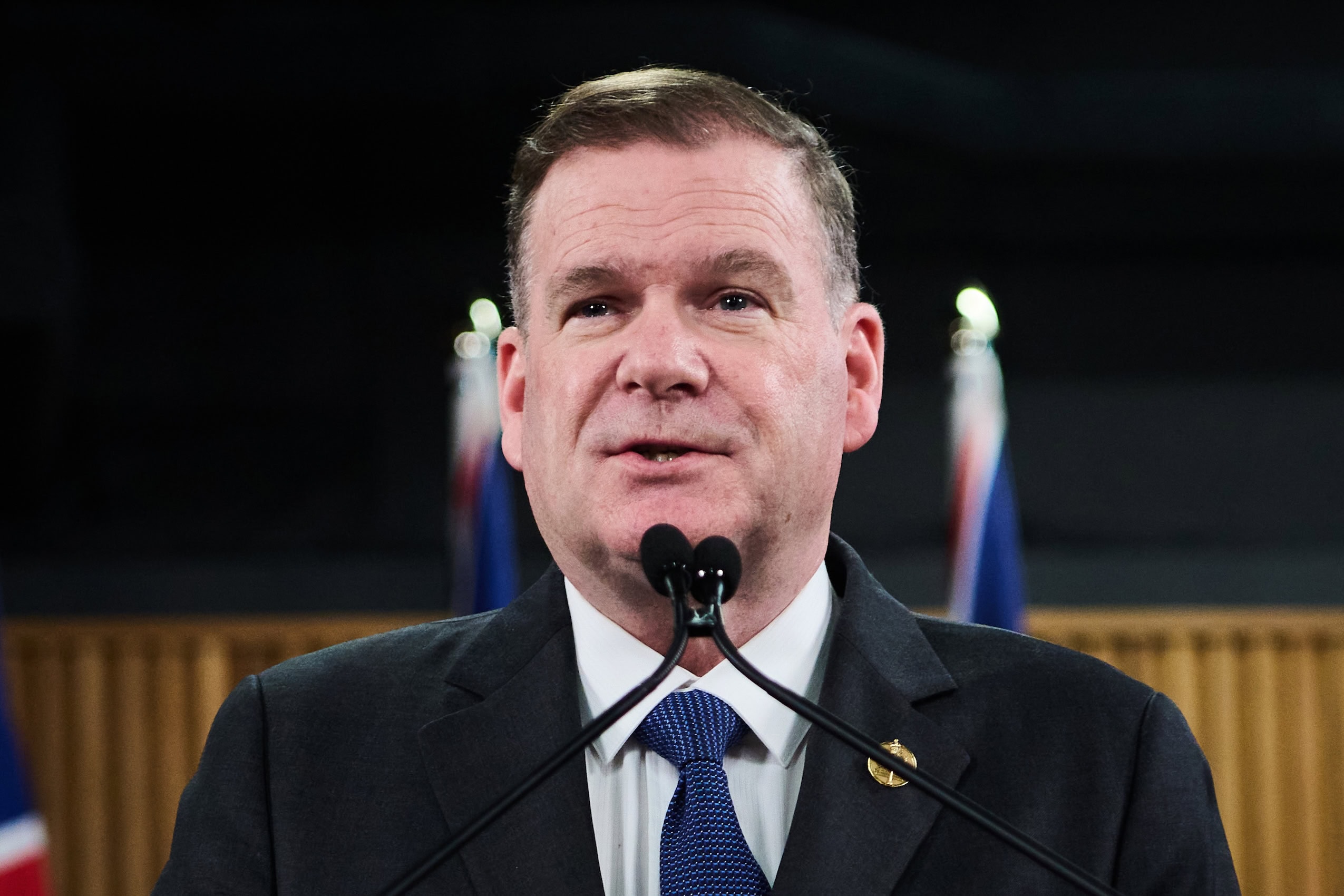
Minister McCarthy told The Narwhal the boundaries “are not changing at this time,” but the exact boundaries will be finalized in the fall, informed by consultations with new local watershed councils the ministry is creating to facilitate the transition.
“We’ll have to see how this works out,” he said. “Right now, the reality is nine watershed-based regional conservation authorities are what we proposed … and with those 19 [source protection committees], we’ll have to see how their boundaries match up or align.”
McLenaghan said if the committees stay as they are, “that’s good news,” but “there will still be some potential disruptions” as several source protection regions combine under a single conservation authority.
Right now, some source protection areas, such as Essex County, stand alone, while others like the Thames-Sydenham Source Protection Region, combine several conservation authority jurisdictions. Per a preliminary analysis by the Canadian Environmental Law Association, the amalgamation would see the inverse of this, where one regional conservation authority has several source protection regions within it. For example, both the Lake Huron and Western Lake authorities would each incorporate three source protection agencies.
The new regional conservation authorities will be “very, very busy” managing so many source protection committees under the new system, the central Ontario conservation authority official said.
| PROPOSED REGIONAL CONSERVATION AUTHORITY | SOURCE PROTECTION COMMITTEES | WHAT’S CHANGED? |
|---|---|---|
| Lake Huron Regional Conservation Authority Combines Ausable Bayfield, Maitland Valley, Saugeen Valley, Grey Sauble, Nottawasaga Valley and Lake Simcoe | 1. Ausable Bayfield Maitland Valley 2. Saugeen, Grey Sauble, Northern Bruce Peninsula 3. South Georgian Bay-Lake Simcoe | Three source protection committees will be served by one regional conservation authority. |
| Western Lake Ontario Regional Conservation Authority Combines Niagara Peninsula, Hamilton, Credit Valley and Halton | 1. Halton-Hamilton 2. Niagara Peninsula 3. Credit Valley – Toronto and Region – Central Lake Ontario (CTC) | Three source protection committees will be served by one regional conservation authority. Also, the CTC Source Protection Committee would no longer be supported by Credit Valley Conservation. |
| St. Lawrence River Regional Conservation Authority Combines Mississippi Valley, Rideau Valley, South Nation and Raisin Region | 1. Mississippi-Rideau 2. Raisin Region-South Nation | Two source protection committees will be served by one regional conservation authority. |
Under the amalgamation plan, Stammler’s Essex County Conservation Authority now falls under the Western Lake Erie regional authority, which has boundaries spanning from Niagara through Halton and Peel Region.
She, and others, said they’re concerned this will result in a reduction in the hyper-localized focus on water that conservation authorities provide.
“I think it’s going to undermine Ontario’s ability to protect drinking water,” Ontario Greens Leader Mike Schreiner said. “I think the amalgamation of [conservation authorities] is going to contravene the recommendations of the Walkerton inquiry around source water protection.”
“I mean, how can you have 19 source water protection committees across the province and nine [conservation authorities]? And how is that going to work together, especially when you’re undermining local decision-making expertise?”
It’s something local industry representatives are similarly concerned with.
Chris Snip, an independent agronomist and water protection advocate from Essex County, has built a career helping farmers grow better crops with less impact on the environment from fertilizer use. He joined the Essex region’s source water protection committee six years ago to support the group’s understanding of agriculture and the sector’s role in maintaining water quality.
As with many in Ontario’s farming community, the Walkerton tragedy casts a long shadow for Snip. With the Ford government’s changes to water protection, in favour of easing development, Snip wonders if the province is forgetting lessons of the past.
“People died, and the policies around source water protection were based on recommendations from those deaths and injuries, and this provincial government is basically, you know, turning its nose up to it, not caring about what happened then,” he said.
“History is bound to repeat itself, especially if we don’t remember.”