


 14 min. read
This story is part of Generating Futures, a series from The Narwhal exploring clean energy sovereignty among B.C. First Nations.
Summary
- Haida Gwaii is one of 44 remote communities in B.C. that are not connected to the provincial electrical grid. For power, most rely on diesel, which has heavy environmental and human health costs.
- Solar North, a two-megawatt solar project by Haida-owned Tll Yahda, came online in December — the first project of its kind to be built on a remote grid in B.C., and a big step forward in the First Nation’s plans to transition off diesel.
- Whether operating independently or with BC Hydro, remote projects require funding to get off the ground. However, a key federal grant program by Natural Resources Canada to fund diesel reduction will end next year.
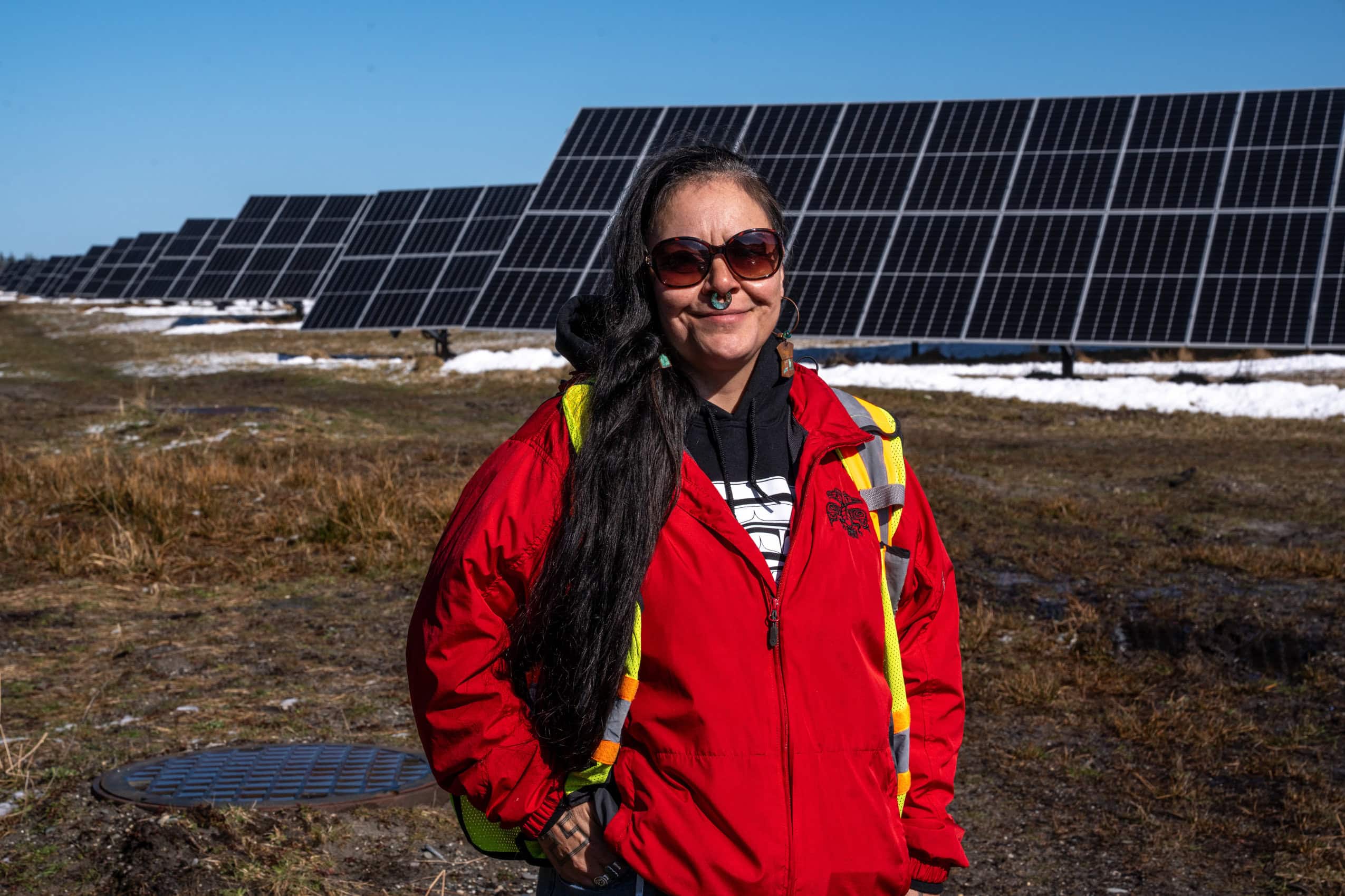
On a hot, sunny day in 2023, a flatbed truck sidled up to the flat patch of grass at the Masset airport on Haida Gwaii. Kevin Brown, Patrika McEvoy and Sean Brennan had rushed to the site when they heard the solar panels had arrived. After decades of advocating, planning and waiting, the Haida Nation’s first utility-scale solar energy project — the first of its kind on a remote grid in B.C. — was ready to be built.
All three remember the moment when Brown, energy coordinator for Old Massett Village Band Council, reached out his finger to touch one.
“Shit just got real,” he says.
Across much of the province, B.C.’s mostly hydropowered centralized electricity system blurs into the background, delivering easily accessible, relatively affordable power at the flick of a switch.
But Haida Gwaii’s archipelago off the Pacific Coast is truncated from B.C.’s grid, making it one of around 44 remote communities in B.C. most of which rely on diesel for their power. There, diesel is delivered perilously by trucks and tankers, and leaves toxins lingering in the air. It remains a problem that the province has promised, but so far failed, to fix. In 2017, B.C. announced a target to reduce diesel on remote grids by 80 per cent by 2030, a goal that currently appears far out of reach.
But this past December, Tll Yahda Energy, an independent power producer and a partnership between the Council of the Haida Nation, Skidegate Band Council and Old Massett Village Council, made a sizable leap when their two-megawatt solar project, Solar North, officially came online. It marks the first time in B.C. that an intermittent energy source like solar has made a sizable dent in a diesel-driven remote grid.
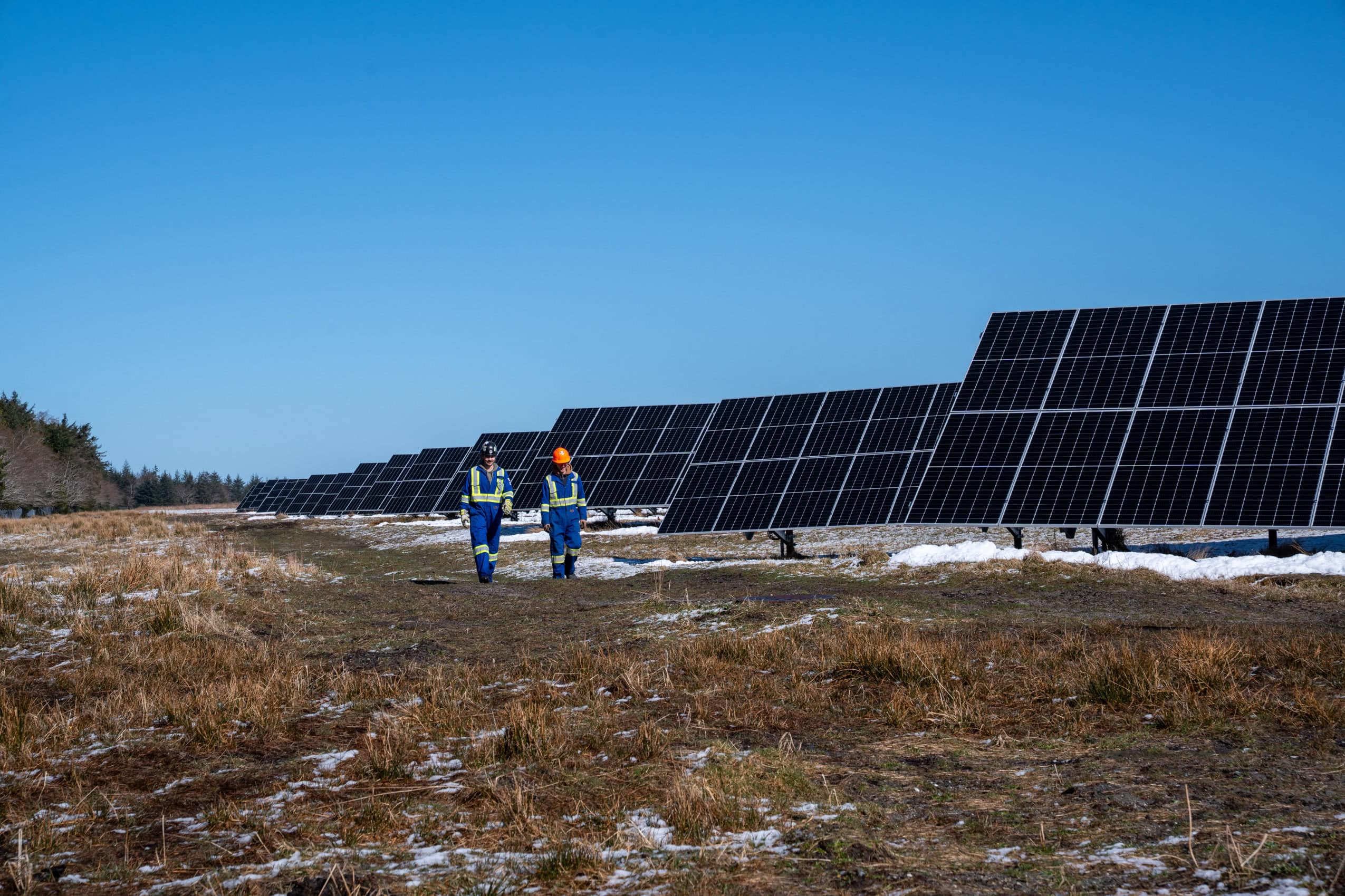
“We expected to have to do some trailblazing,” Brennan, manager at Tll Yahda and a lead on the project, says. “But it was basically reinventing that entire trail.”
If all goes as planned, Haida Gwaii’s project will soon be joined by a stream of others, including the Ulkatcho First Nation’s completed four-megawatt solar farm in the Chilcotin Plateau, the Nuxalk Nation’s run-of-river hydroelectric project on the Central Coast and the Uchucklesaht Tribe’s efforts on western Vancouver Island to build a 750-kilowatt solar and battery-storage project, among many others. Many are in development and partially funded, but require more support to move forward.
But as federal and provincial governments’ priorities shift, there are signs the window could begin to close again. That could spell trouble for communities with in-between projects, and for Haida Gwaii, whose journey to displace diesel still has a long way to go.
‘This is not something we want to risk anymore.’
Since the first electric light in the Pacific Northwest beamed out over a harbour near Victoria almost 150 years ago, power and access to it have developed asymmetrically. Wires and transmission lines quickly fanned out across the province, etching their way across Indigenous territories, targeting congregations of settler populations and the bursts of resource extraction they tended to follow.
Elsewhere, and in many First Nations communities, electric power was scarce until it came by way of diesel generators, which use diesel-fueled pistons to produce a magnetic field, generating electricity. But diesel power comes at a high cost for ecosystems and communities.
In the early hours of October 13, 2016, the Nathan E. Stewart tugboat ran into one of the many rocks tracing the shoreline in Heiltsuk territory. By around 10 a.m. the next morning, the tug had sunk, spilling more than 100,000 litres of diesel fuel and other pollutants into nearby Gale Pass, leaving a rainbow-coloured sheen across the water.
The tug was among many that haul diesel to generators along the coast, including to Haida Gwaii.
It was yet another alarm bell that propelled the nation’s resolve to get off diesel, Brennan says. “That was really what led to us saying ‘This is not something we want to risk anymore.’”
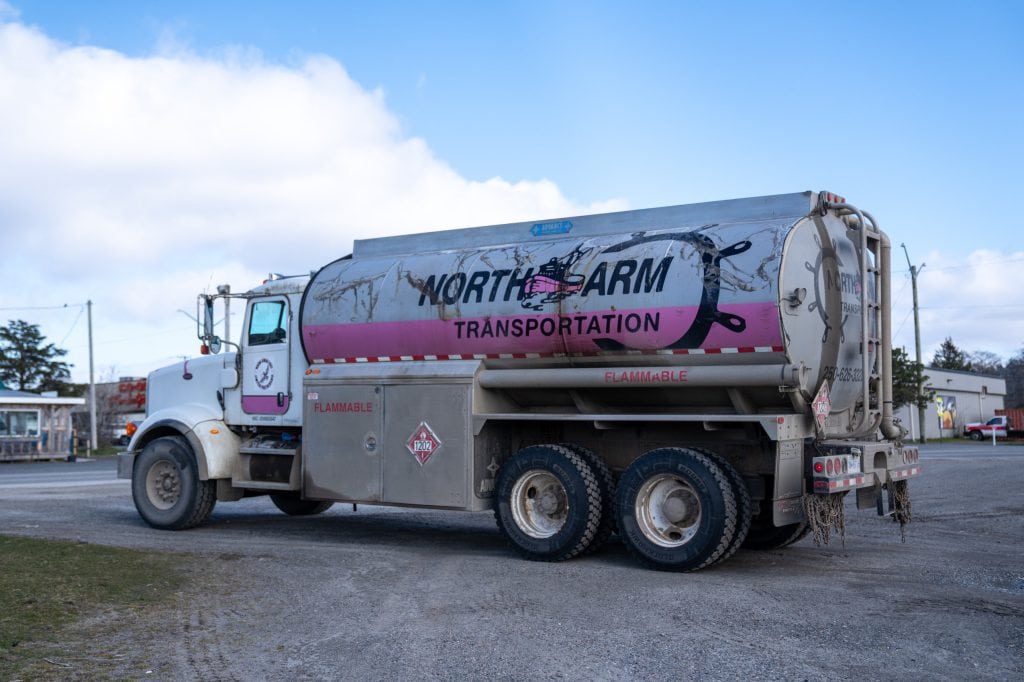
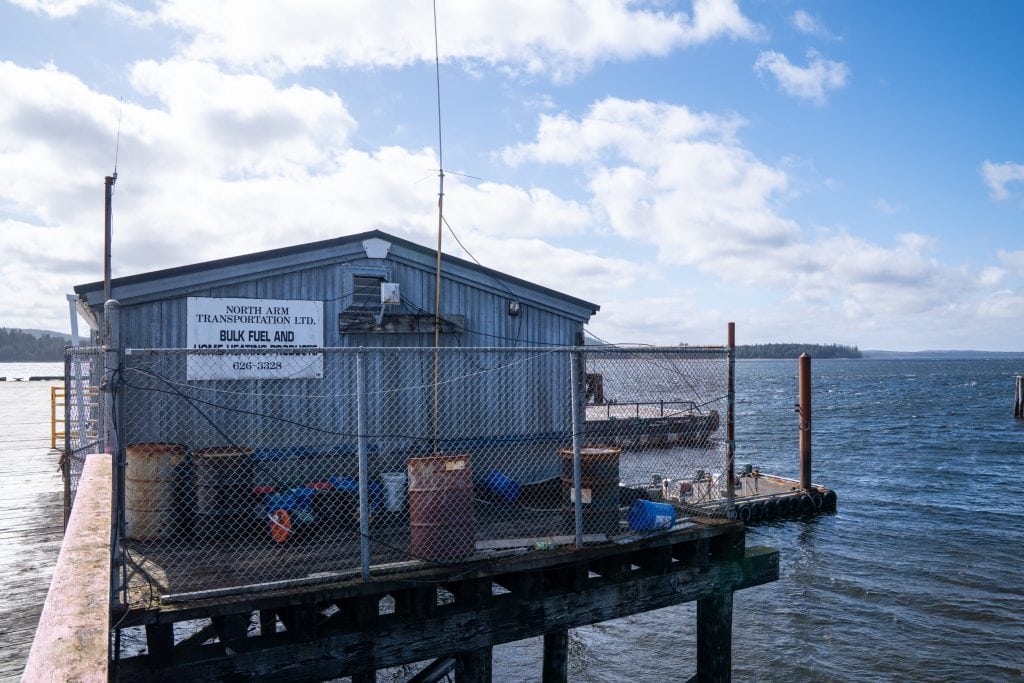
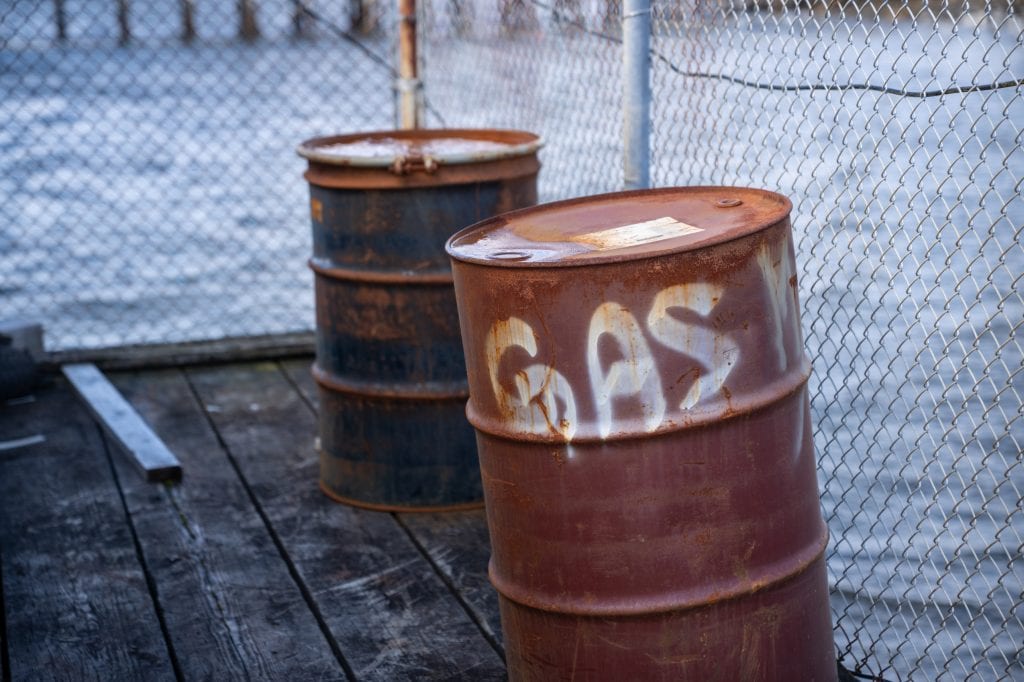
On a regular basis, Haida Gwaii is visited by barges carrying diesel up through the Inside Passage and then through the Hecate Strait, which has been called the most dangerous water body on Canada’s coast, threatening ocean ecosystems and the nation’s coastal economy that depends on them. Even on land, diesel fuel tends to splatter and spill despite its handlers’ best efforts, leaving contaminated soil at loading docks and generating stations.
In the air, combusted diesel fumes produce pollutants like nitrogen dioxide and fine particulates, known to exacerbate asthma, cancer and risk of premature death. It also releases copious amounts of carbon dioxide. Haida Gwaii represents around three per cent of the province’s electrical emissions.
The Haida Nation’s work to shift from diesel galvanized in the mid-2000s, Brown explains. Community members tallied data across communities and realized the true scale of their diesel demand.
Inertia, political will posed challenges for transition away from diesel in B.C.
In theory, the province was also concerned about the amount of diesel being burned in remote communities.
Gordon Campbell’s Liberal government made the first move, directing BC Hydro to take over energy provision in additional remote communities, including some remote First Nations that had been operating their own energy systems with federal funding. Ideally, BC Hydro would help communities bring more clean energy to their grids.
But that’s not what happened.
The utility housed some deep-rooted inertia, according to Nick Hawley, a former manager on remote community electrification for BC Hydro at the time.
“They had diesel mechanics and diesel electricians,” Hawley, now an energy consultant, says. He describes an institution that was risk-averse and reticent to change. “They knew diesel.”
As a monopoly utility, BC Hydro decides where and when it buys power, and from whom in the regions it services. It held prospective renewable projects to a strict test: It would only consider those that could beat the price of diesel fuel, not including the substantial costs of maintenance and replacing things like generators. They also required that projects cover the often sizable cost of connecting to the remote grid. Under those circumstances, says Hawley, it was difficult to get new renewable projects through.
In 2012, BC Hydro put a call out for energy projects on Haida Gwaii. Old Massett Band Council was one of many renewable projects that applied with a proposal for a 5.6 megawatt wind project. None were accepted.
The Haida Nation had begun moving forward anyway.
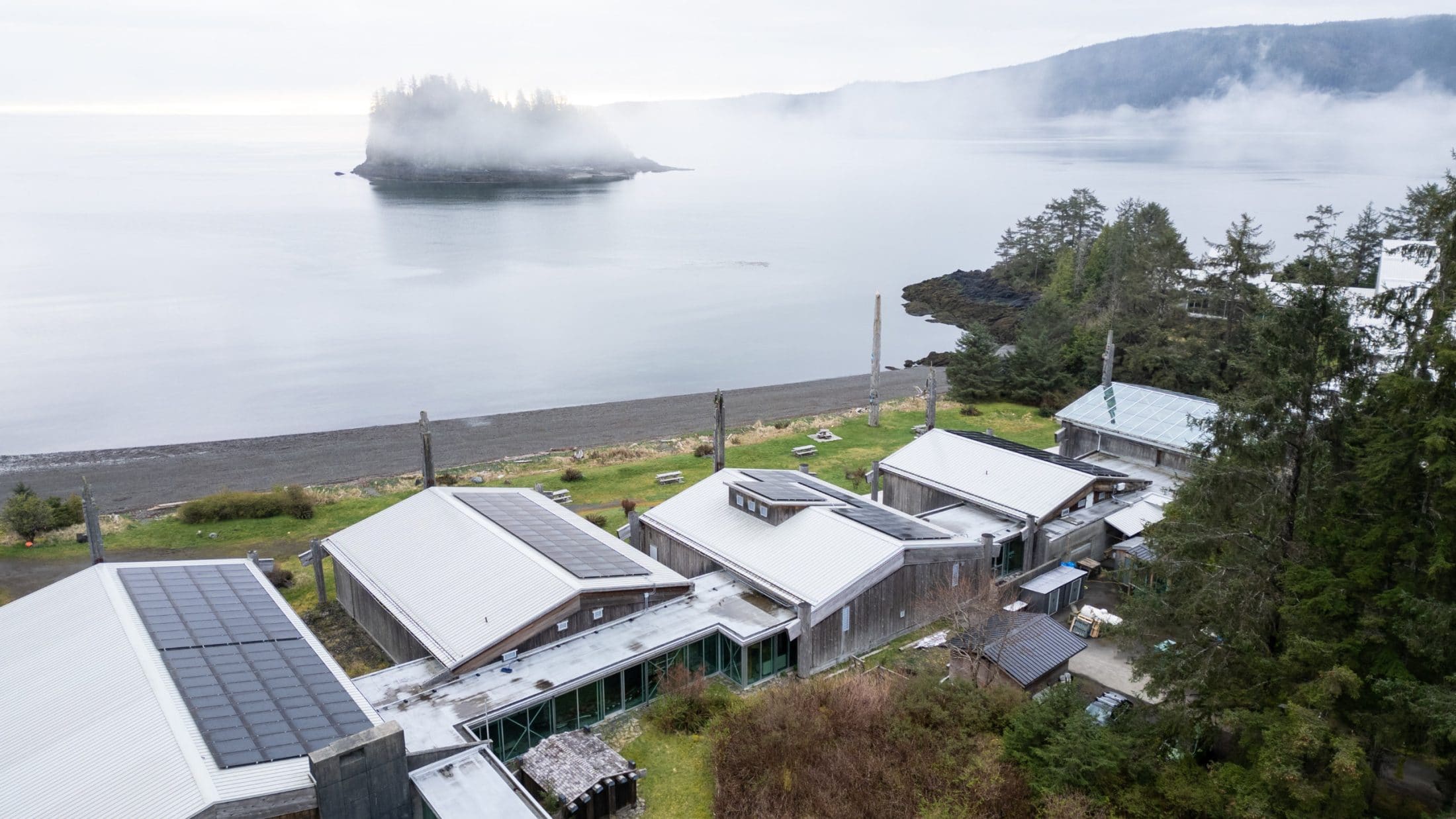
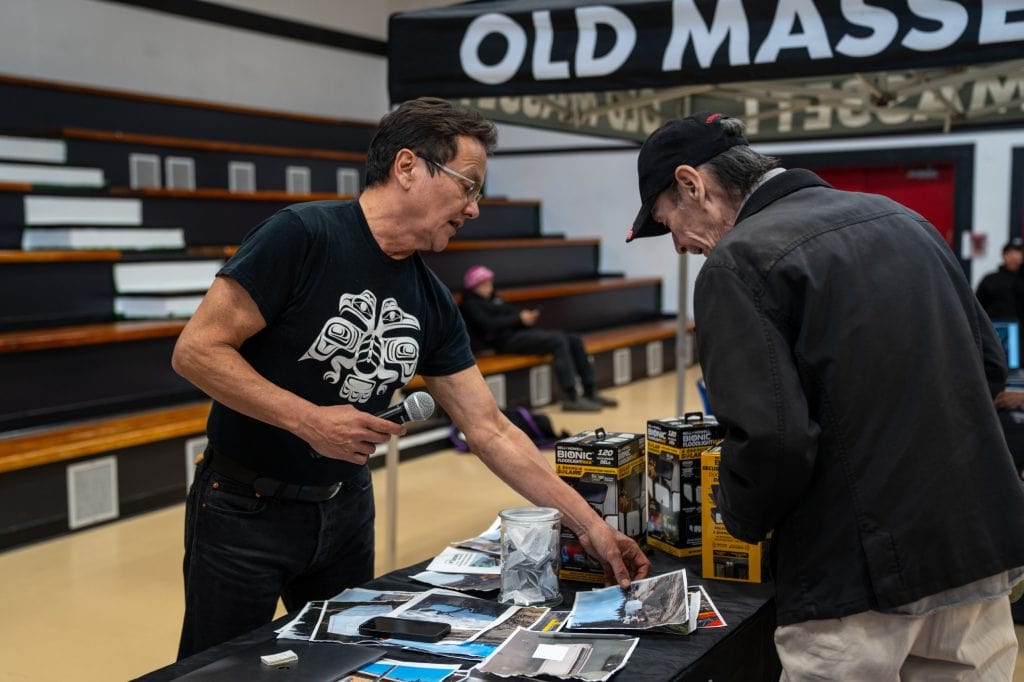
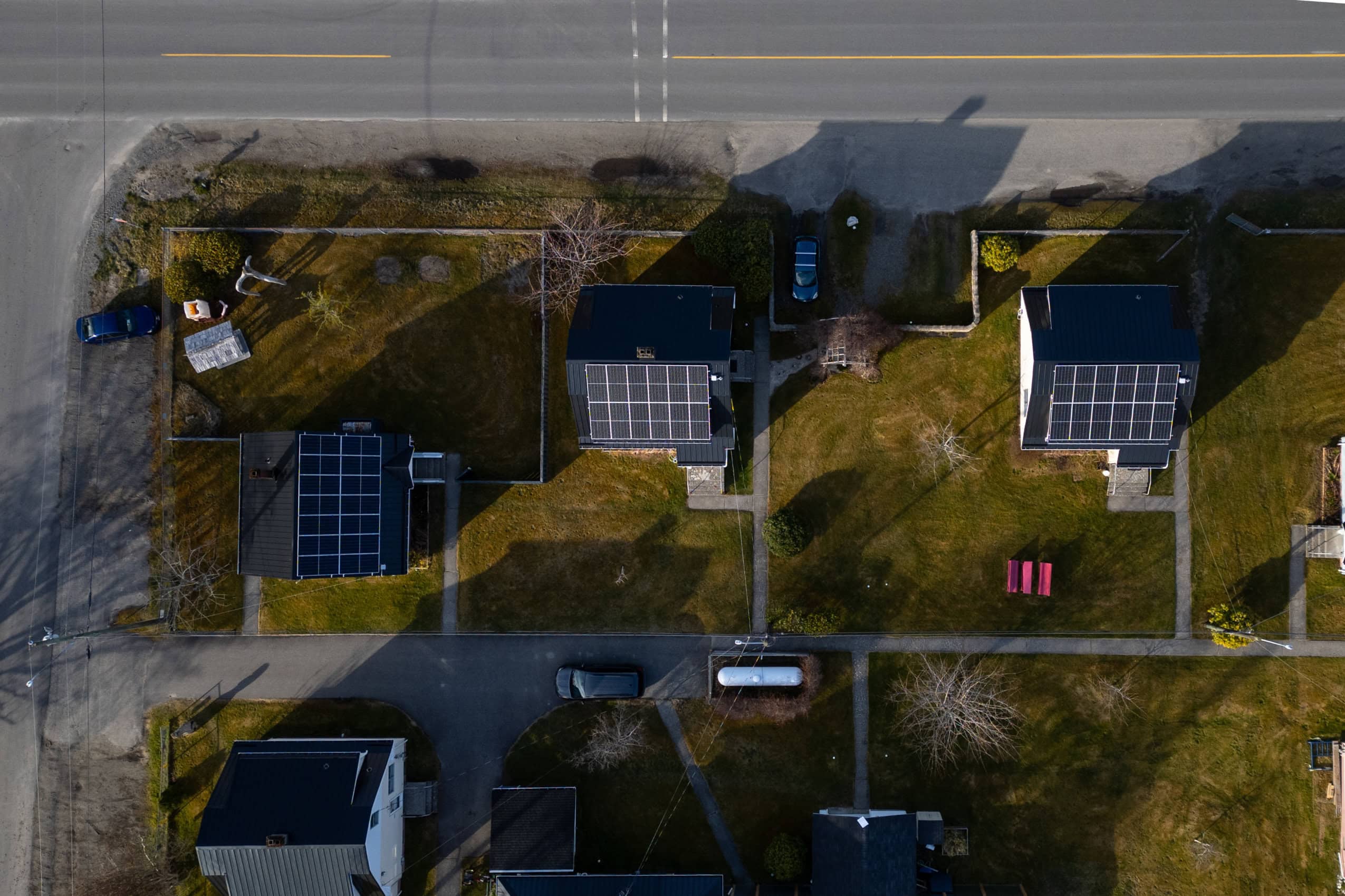
“We’ve been on a long journey,” Nangkilslas Trent Moraes, deputy chief councillor of the Skidegate First Nation, says. Communities started out working on smaller changes, beginning with things like solar water heaters and heat pumps. Soon, solar panels popped up on roofs across the islands, including the Haida Heritage Centre built in 2017 — B.C.’s largest community-owned renewable energy installation at the time.
“That was the beginning of how we got into the power field,” he says.
Still, the communities’ long-held goal of owning and operating a larger-scale renewable project remained out of reach.
That changed when, beginning in 2019, Haida Gwaii’s southern band council, Skidegate, and northern council, Old Massett, began meeting to discuss energy issues with the Council of the Haida Nation.
Together, the bands and nation pooled their efforts and resources, enabling them to pursue a project that wouldn’t have been possible in isolation. This allowed the nation to remain the project’s sole owner and decision-maker, absent the influence of investors or other companies.
“I was thankful that we were able to acquire ownership for this project and not have third parties involved,” McEvoy, former chair of energy on the Tll Yahda board of directors and energy consultant for the Council of the Haida Nation, says.
BC Hydro had long argued that its ability to spend more on remote grids was constrained by the utility regulator’s legal requirement that new projects not unduly impact other ratepayers, a challenge for some renewable energy projects. As the plans for Solar North came together, McEvoy worked with a group of remote First Nations communities advocating for legal change, designing an amendment to remove that potential obstruction: for a temporary period, cabinet could now direct the utility regulator to accept these projects, even if they came at a higher cost than diesel.
“That was a lot of blood, sweat and tears,” McEvoy says. The regulatory amendment was finally passed in 2024, and will remain until the end of 2029.
BC Hydro now had a clear legal runway to support renewable projects in the 14 remote grids — called “non-integrated areas” — it services. But the clock was ticking: the amendment was passed six years after B.C. set a target to reduce 80 per cent of its diesel emissions by 2030, and no projects in BC Hydro’s service regions had been achieved. Last December, Haida’s project became the first, soon to be followed by a solar farm in Anahim Lake led by the Ulkatcho First Nation, which is set to come online this year. Meanwhile, remote communities who had operated their energy systems independently had collectively reduced their diesel use by 84 percent since 2019, mostly through small hydroelectric projects.
In an emailed statement, BC Hydro said that it “took time” for the utility to incorporate new communities into its operating practices, to “ensure that the levels of reliability are brought to utility standards” adding that the remote grids they service tend to be larger and more complex to decarbonize than independently operated remote energy systems. It also added that since 2018 BC Hydro has been working with new sources of federal and provincial funding “to support a more cost-effective transition from diesel to renewable energy.” It also added that the province’s 2030 diesel reduction target is “not BC Hydro’s target.”
But by the time the legal amendment came in 2024, Tll Yahda’s work on Solar North was already well underway, having decided on a utility-scale solar farm on the north grid in an already-disturbed area near the airport. They ensured training opportunities were available for members, and hired 16 solar installers on the island, says Brennan.
Then they began to build.
The invisible wall
Even as the panels were placed and the wires hooked up, there was another problem to solve before Solar North’s diesel-replacing potential could be fully realized: it needed a place to store its energy.
Electricity is notoriously finicky, requiring a steady stream of electrons delivered through conductive wires at all times to work well. When these electrons falter or pile up, lights flicker, clocks fall out of date, or, in more severe cases, the power can drop or surge, frying appliances.
Remote grids like Haida Gwaii’s are particularly hard-pressed to avoid such swings.
Imagine a concert-goer attempting to crowd-surf in a room of just three people: if one person trips or someone else decides to pile on, the effort could easily collapse. Similarly, a remote grid with just a few power sources can fail if one of its inputs suddenly drops out or an entire community turns on their dishwashers at once. On the other hand, B.C.’s large, interconnected grid has the resilience of a packed concert hall — disruptions like these are almost imperceptible.
On-again, off-again renewables like solar and wind are particularly unpredictable, whereas the on-demand qualities of diesel fuel are more likely to hold weight when needed.
Luckily, solutions have arrived. “The technologies have evolved very rapidly,” Mark Mitchell, global lead of distribution and smart grid at the consulting firm Hatch, says. Mitchell adds that, in remote communities, storage systems like lithium-ion batteries and microgrid controllers are newly equipped to smooth out such dips and surges.
“It’s really been one of the main enablers for bringing more renewables online.”
For BC Hydro and for the Haida Nation, grappling with these cutting-edge storage systems was new: they had to decide who would own the battery and control systems — BC Hydro would in the end — and who to buy it from, a challenge thanks to limited supply chains for systems scaled to the needs of small, remote communities.
“BC Hydro had never done a project where it’s connecting a renewable energy project to a diesel grid before,” Brennan says.
“We didn’t realize all the implications that went with that.”
Today, Solar North is still waiting for its battery system to be installed. In the meantime, it’s displacing around 70 per cent of the diesel it is capable of.
And when it’s expanded to match the size of its battery and grid upgrades, Solar North has the potential to displace around six per cent of the island’s electrical diesel consumption. The Nation is currently working with BC Hydro to determine the sizing for an expansion of Solar North that could push that displacement higher still.
In many remote regions, displacing 100 per cent of the diesel brings challenges that batteries alone still can’t fix, Mitchell says. Today’s batteries are ideal for short-term storage, which can help even out daily dips and lows in solar power, but not longer seasonal shifts like Haida Gwaii’s stormy winters, when the sun is in short supply.
“Essentially, what we’re going to do here is run into an invisible wall with solar,” Brennan says. At that point, solar energy will produce diminishing returns.
Tll Yahda is studying ways to make solar work better for their communities, including a pilot project to test how solar panels matched with small-scale batteries could make the system run more efficiently. It’s also conducting analyses to test out how hybrid combinations of renewables behave on the grid.
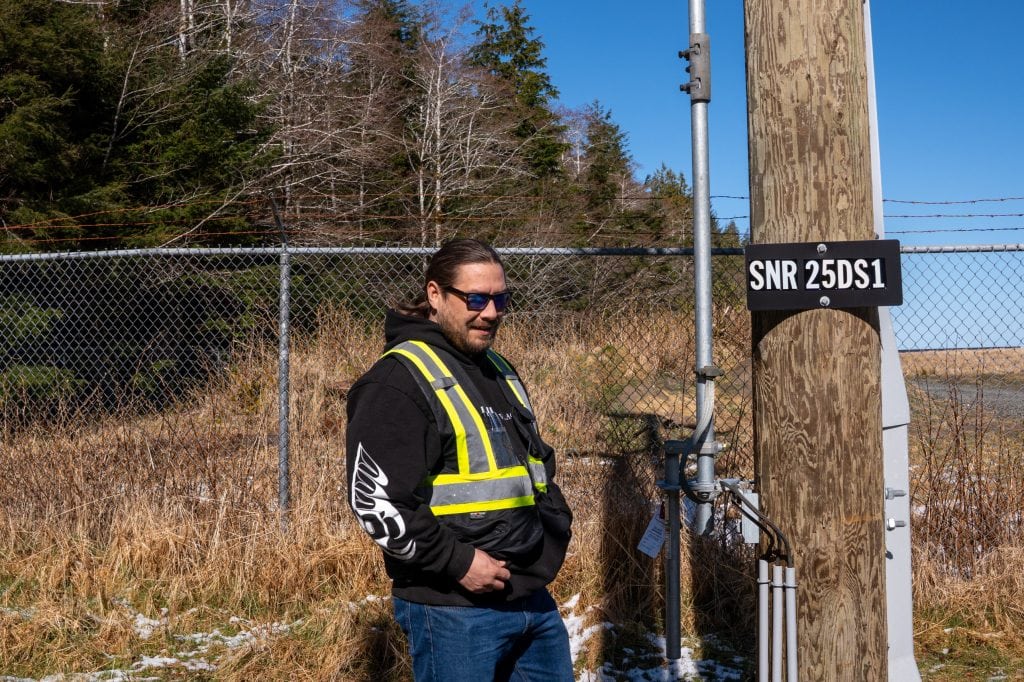
In renewable electricity, the right kind of complexity is key, Garrett Russ, climate action coordinator with the Skidegate Band Council, says. “I’m looking at this whole system as a whole complete project.”
He’s seen the consequences of siloed efforts, including the nearly 50 heat pumps in his workshop that need fixing — thanks in part to a lack of trained workers on the island to keep them in good repair. Russ has since launched a training program, teaching Haida and other remote community members in B.C. how to maintain the systems while providing needed employment.
A birds-eye view is a challenge because of project-by-project funding cycles and governments that tend to move in slow, incremental steps, Russ says. But he’s making the most of the opportunities he can create, and studying how wind and solar could work together.
Whether operating independently or with BC Hydro, remote projects require funding, and Russ worries that the door may be about to close. Already, a key federal program has not had its funding renewed. In an emailed statement, Natural Resources Canada confirmed that funding through a key diesel-reduction grant program will end next year, but added that there are other “ongoing programs” that will continue to support the effort.
“I believe there’s going to be a very significant cut possibly coming up,” Russ says. In preparation, he is working on as many projects as he can “in a very short time.”
“If that does happen, then at least I changed as much as I could.”
‘We have to keep going.’
A ten-minute walk from the arrow-shaped panels of Solar North sits B.C. Hydro’s diesel generating station, ringed in the spring by salal and salmonberries that McEvoy makes sure to avoid.
Diesel still helps power Haida Gwaii’s grid, but the work to reduce it continues.
McEvoy and others across the islands have been asking their community members what kind of energy transition they’d like to see. Meanwhile, BC Hydro has begun to do energy planning with remote communities — for the first time in its history. The process design for those plans fell short of what many nations had hoped for: it doesn’t have legal standing, and remains, in many ways, on the utility’s terms. McEvoy says it remains an important step.
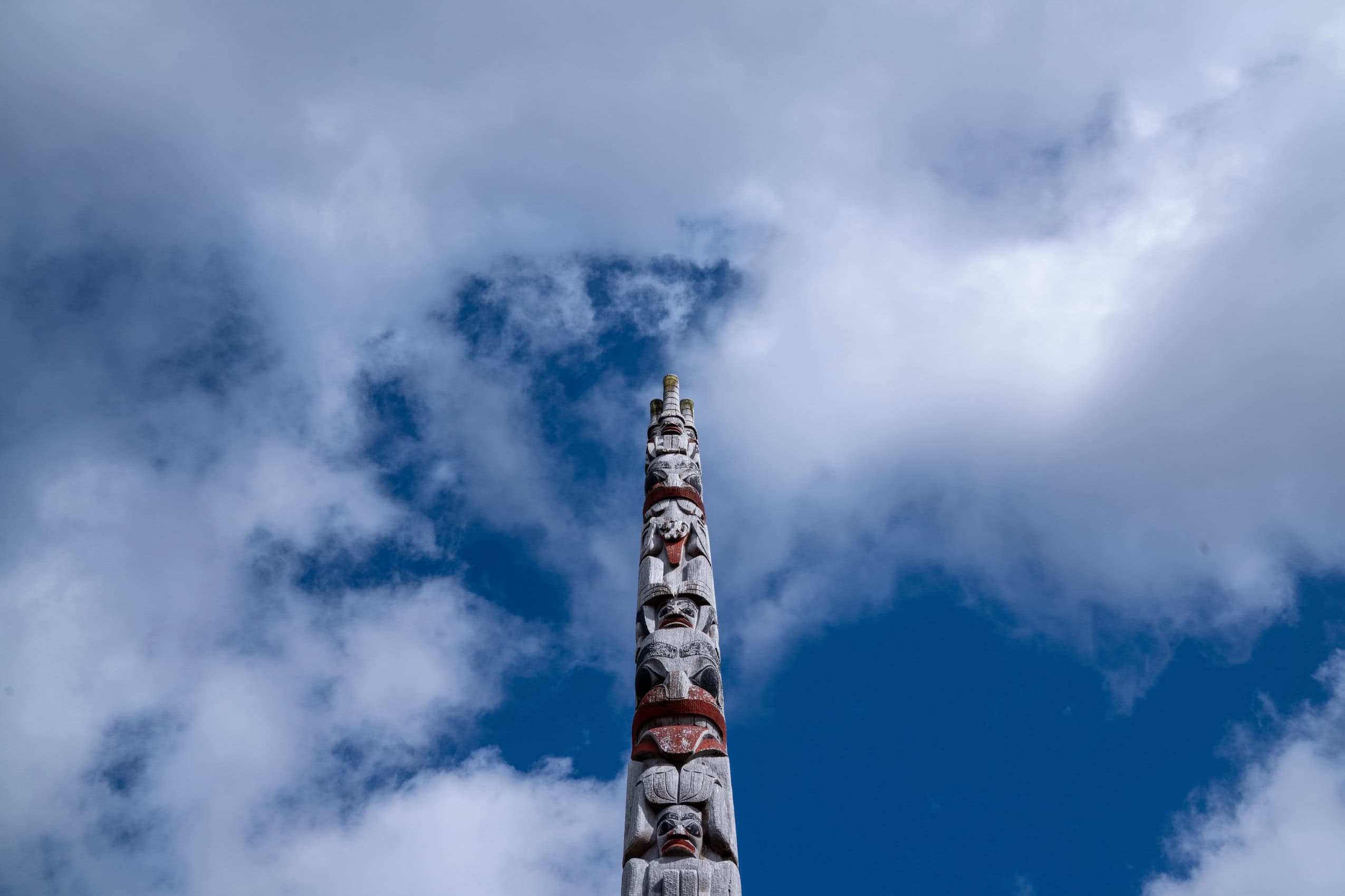
McEvoy likens the process to paddling a canoe in a stormy ocean. “All we can see is dark, black clouds ahead,” she says. “We have to keep going.”
At some point, she says, the clouds will break.
“That’s us, and the work we’re putting in.”