
 6 min. read




Summary
- The Alberta government has tabled its budget for 2026-27, and it projects a $9.4-billion deficit.
- Falling oil prices are one big reason for the province’s worsening economic forecasts.
- One mitigation strategy the government is pursuing is wooing AI data centres to locate in the province.
We’re trying out staff-written summaries. Did you find this useful?
With rumours of a significant budget deficit everywhere, Alberta Premier Danielle Smith took to the airwaves on Feb. 19 to prepare the province for a shock. Rather than a frank discussion about geopolitics and the price of oil, however, the premier chose to put the blame on immigration.
With the release of the budget on Feb. 26, the real impacts on government revenue are more clear, and it’s not immigration. In fact, reduced population growth — expected to be 1.1 per cent this year, compared to a peak of 4.7 per cent in 2024 when the province grew by 204,209 new residents — is outlined as a drag on provincial growth.
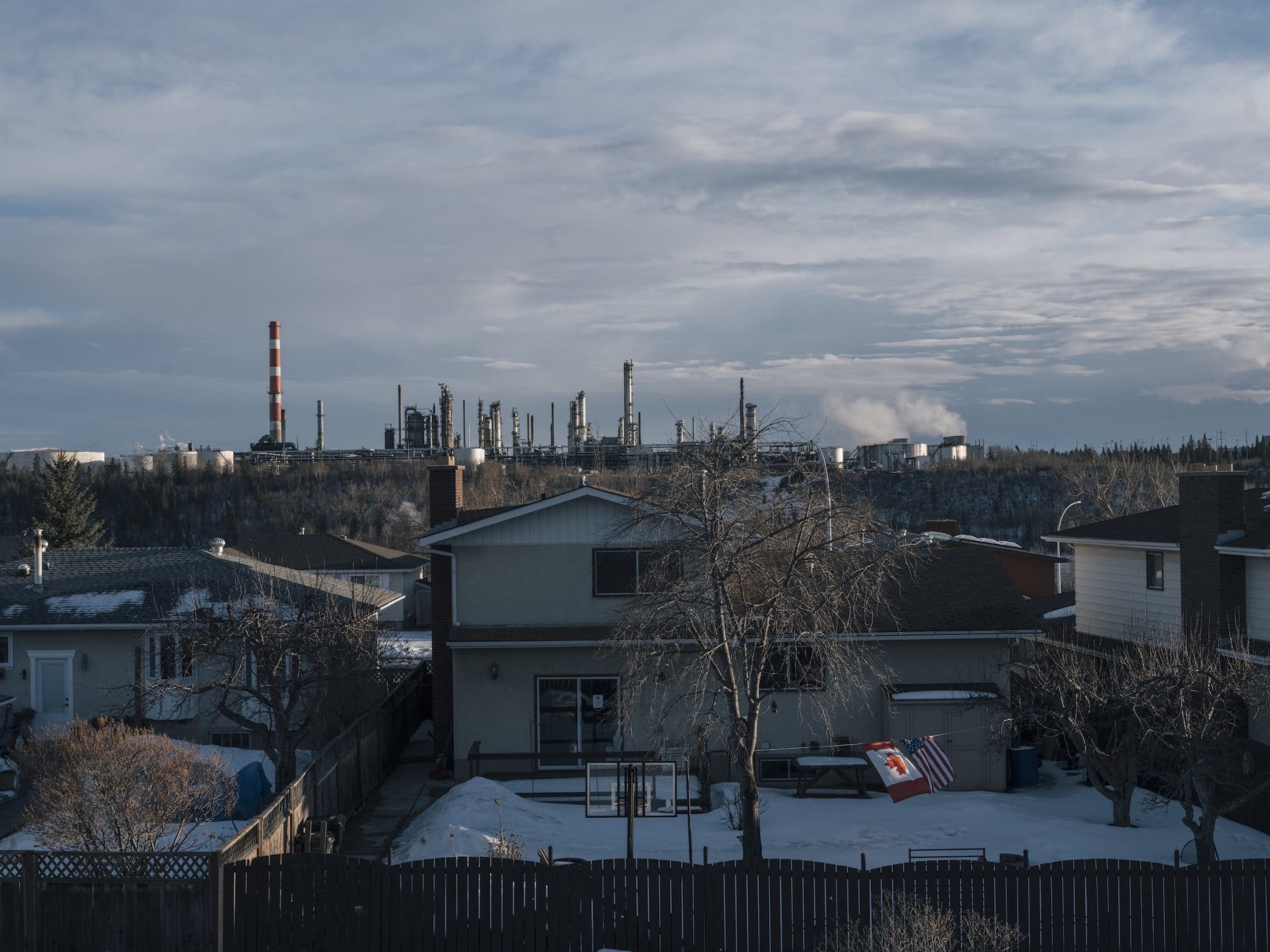
The major factor impacting Alberta’s finances is a continued over-reliance on oil and gas revenues to shore up government spending, with significant reductions in royalties from the oilsands and from the production of conventional oil and natural gas.
Let’s dive into five factors that are having an impact on Alberta, and what the budget says about the government’s priorities and plans.
1. Dependence on oil and gas revenue has led to a massive deficit
Alberta’s budget is grim. The government predicts a deficit of almost $10 billion this coming year, followed by two more years of significant losses. Specifically, it forecasts deficits of $9.4 billion, $7.6 billion and $6.9 billion over the next three years.
That’s $23.9 billion if you’re not close to a calculator.
The provincial debt is expected to be $137 billion by the end of 2028-29.
The biggest factor in that plunge stems from declining revenue from oil and gas in the province, one of the largest contributors to provincial coffers.
Royalties from oilsands are down $7.5 billion from a whopping $17.2 billion in 2024-25, and about $3 billion from last year’s forecast. Other royalties took less of a hit, down approximately $1.4 billion from 2024-25.
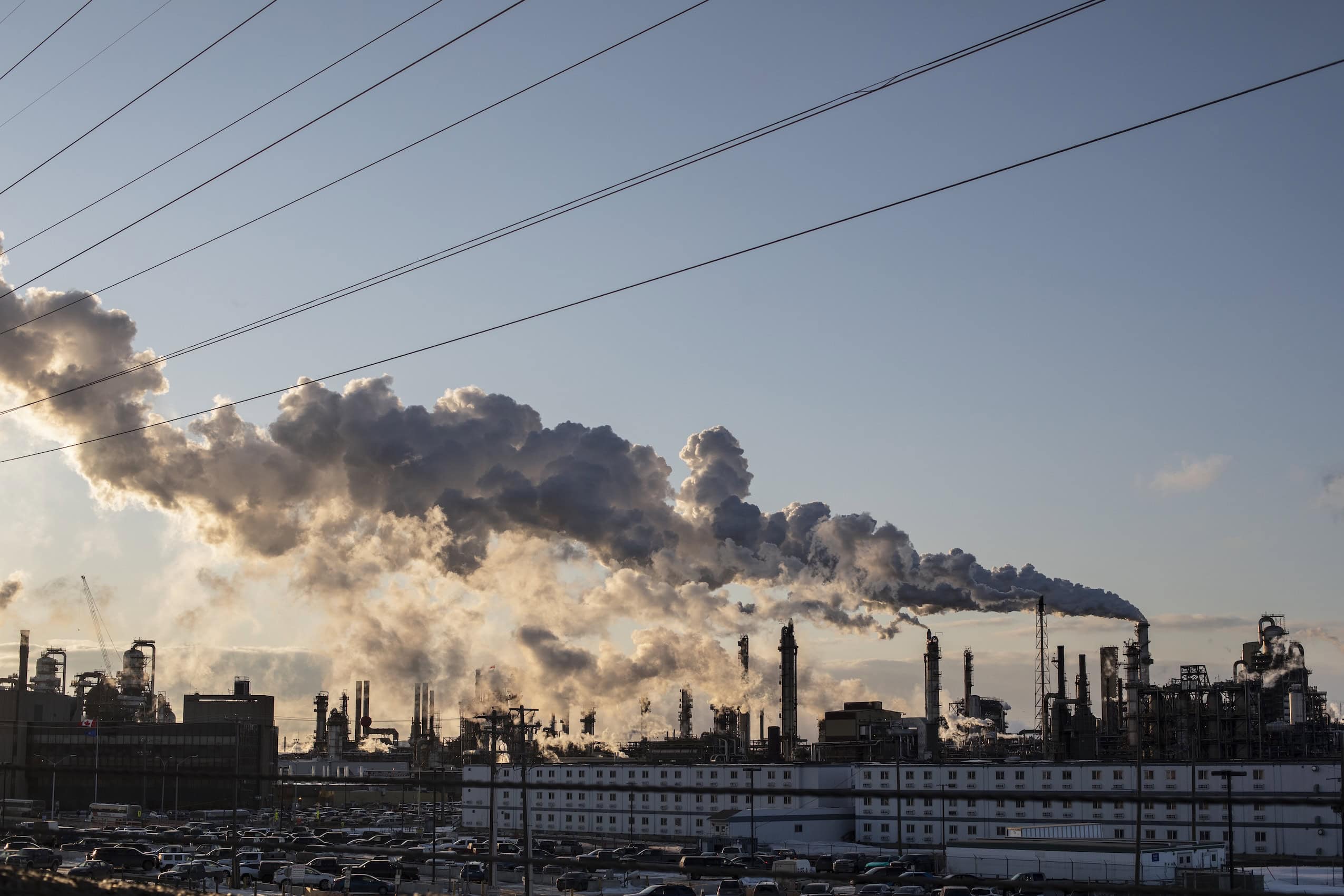
The risk to Alberta’s bottom line from dependence on non-renewable resource revenue likely won’t go away anytime soon, and neither will the uncertainty that has beset the global industry, with a glut of supply and weak demand that could ease by next year — or not.
Natural gas prices, however, are expected to rise, alongside increased domestic demand.
Despite the risks, the government continues to focus on increasing production, particularly in the oilsands, and pushing for more pipeline capacity to ship that anticipated increase.
“Rising output will drive strong gains in oil exports and contribute to roughly a third of Alberta’s real GDP growth in 2027,” according to the budget.
2. Expect more data centres and maybe some nuclear reactors
The provincial government is eager to attract data centres, seeking $100 billion in investments.
It’s one part diversification strategy, one part fossil-fuel focused.
The budget anticipates the construction boom could lead to an increase in domestic natural gas demand that it hopes could drive up depressed prices.
It is restricting development unless proponents bring their own power supply, rather than connecting to the provincial electricity grid.
The government will impose a levy on data centres that it anticipates could bring in more than $100 million in revenues, but says it will introduce legislation “to clarify that a data centre’s levy rate will be calculated based on actual power consumption and that power not drawn from the broader grid will be eligible for a zero per cent rate.”
In terms of increased demand for electricity, the budget confirms the government’s commitment to nuclear power development. Just over $500,000 has been set aside “to support nuclear energy engagement activities and education initiatives to advance broader public engagement and awareness.”
3. Revenue from the industrial carbon price is way down
Revenue from Alberta’s industrial carbon price, the first system of its kind in North America, is down significantly, impacted by changes introduced by the provincial government.
Last year, the province’s forecast revenue was $280 million, while anticipating revenue of $157 million this year. That money is used to invest in emissions reduction projects and technologies.
The budget says more companies are relying on carbon credits to avoid payments, a trend that could reverse as credits dry up.
That follows a freeze on the industrial carbon price last year, plus weakening compliance rules. The number of facilities covered by the industrial price is down, and the new changes allow companies to invest directly in projects to avoid paying the tax — a move critics say won’t necessarily lead to emissions reductions.

4. Alberta’s financial health is tied to geopolitical risk
The budget touts the fact Alberta is less exposed to U.S. tariffs than other provinces, but that doesn’t mean it’s not impacted by geopolitical forces beyond its control.
Those forces include the aforementioned global energy market, where prices can fluctuate wildly based on security risks, including war, Chinese demand and stockpiling of reserves, Venezuelan supply, U.S. policy and the pace of transition away from fossil fuels.
“Nationally, the dual impact of the oil price shock and slowing global economic growth is projected to weaken the Canadian dollar and prompt the Bank of Canada to lower interest rates,” according to the budget.
“In Alberta, these conditions are expected to dampen investment and production within the conventional oil sector, leading to softer employment, stagnant wage growth and reduced consumer spending.”
But it’s not just oil and gas markets that have an impact.
The province’s push for artificial intelligence (AI) data centres in the province also exposes Alberta to a risk, as they are vulnerable to a slowdown in investments from large tech firms, or the feared bursting of the artificial intelligence bubble.
The whims of international governments when it comes to tariffs can also have a significant impact, and not just from the U.S. A recent deal between China and Canada significantly reduced tariffs on canola, but risks to agriculture remain.
5. Climate change is costing us, but the government doesn’t name it
Costs associated with drought conditions totalled more than $3 billion last year, a significant part of the $4.1 billion spent on disaster relief — although the budget does not mention climate change.
The budget says spending tied to hot and dry conditions included firefighting, reforestation, public safety, social services and support for agricultural producers impacted by drought. It notes drought impacted the agricultural sector for the fourth time in four years in 2025.
Despite ongoing costs related to drought and wildfire, the budget for the Ministry of Forestry and Parks is down 64 per cent in the latest budget.
“The decrease is primarily due to $756 million in 2025-26 disaster and emergency expense which does not continue in 2026-27,” according to the budget.
It’s a similar story in agriculture and irrigation, where total expenses are down $741 million “primarily due to $705 million in disaster and emergency expense that does not continue in 2026-27.”
The agriculture and irrigation budget section notes agricultural “disaster and emergency assistance has averaged $978 million per year over the last ten years, reaching as high as $2.9 billion in 2021-22.”
The overall budget does include $2 billion set aside for disaster response — half of what it was in 2025.