




 7 min. read
It’s just after 9 a.m. on an overcast May morning and I’m standing in the Argenta fire shed, clipboard in hand, when my radio crackles.
“Alex from Hans, Alex from Hans, it looks like the fire is less than an acre at this point,” the voice says. “I tracked my path on Avenza from the pump site to the fire and it’s about 800 feet, so I think 1,200 feet of hose should do it.”

I nod at Alex to indicate I heard the message and begin digging through rubber totes for inch-and-a-half hose, ticking off the number of lengths as I pass them through the doorway. Our first aid attendant asks for a hardhat and a radio. The crew lead for the fire guard crew wants eight polaskis — axes used for digging the fire line — and four shovels. I hand them out and write it down.
The energy in the fire shed is jovial and calm, largely because the fire isn’t real. It’s just a flagging-taped plot of forest in the heart of Argenta, the small community where I was born in the West Kootenay region of B.C.
For more than 20 years a group within the community has gathered annually on a spring weekend to build relationships and practice fighting wildfires. Last summer this preparation was put to the test when the Argenta Creek wildfire, which burned about 20,000 hectares of forest directly above the community, prompted a midnight evacuation of its 150 residents.
While you can recertify your S-100 and S-185 wildfire training with a 15 minute online exam, the 20 or so returning volunteers on our fire crew almost always partake in this exercise. A full day of working along side one another is key to building relationships with our neighbours — and offers the benefit of hands-on experience with equipment and possible fire situations.

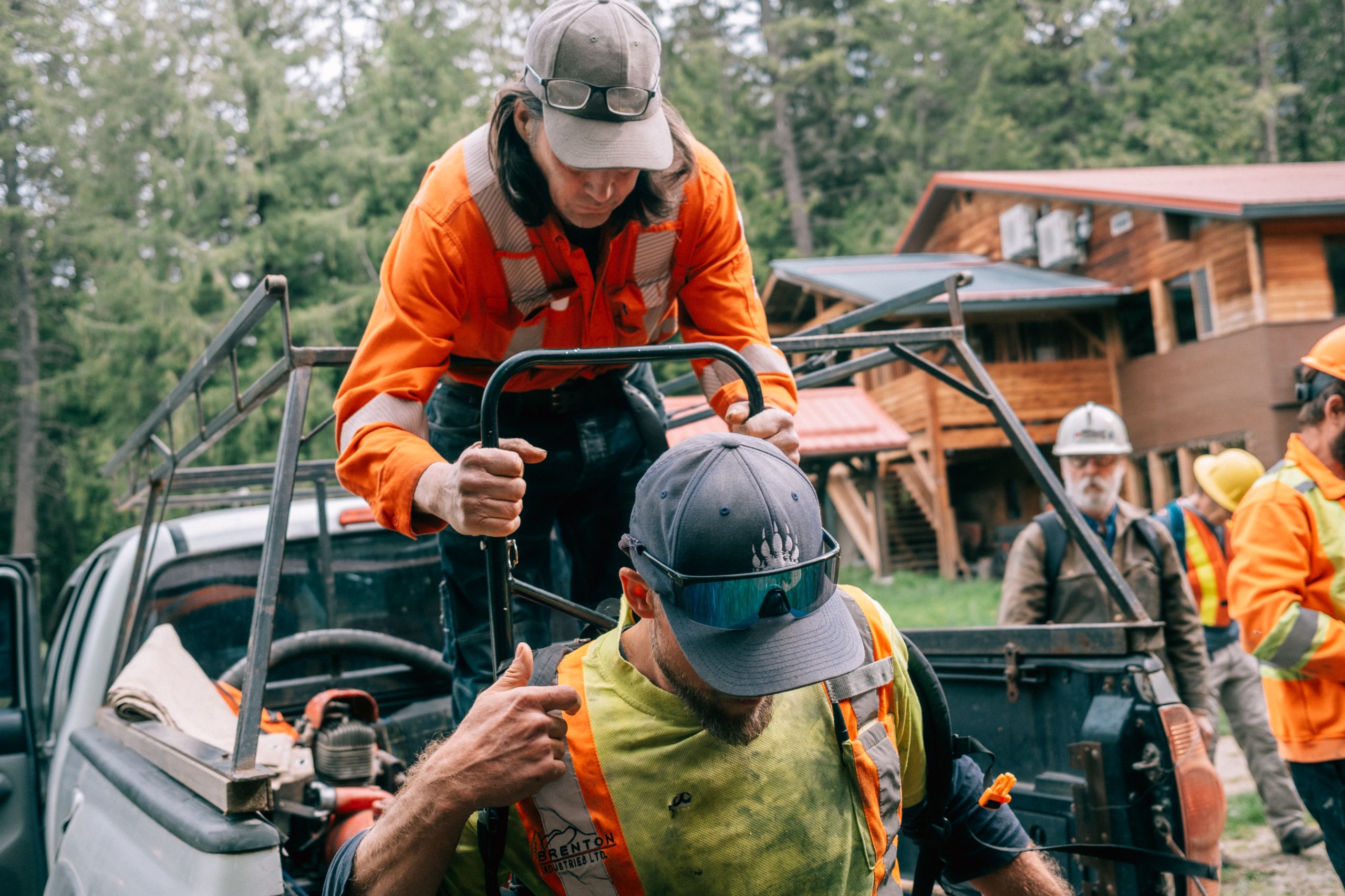
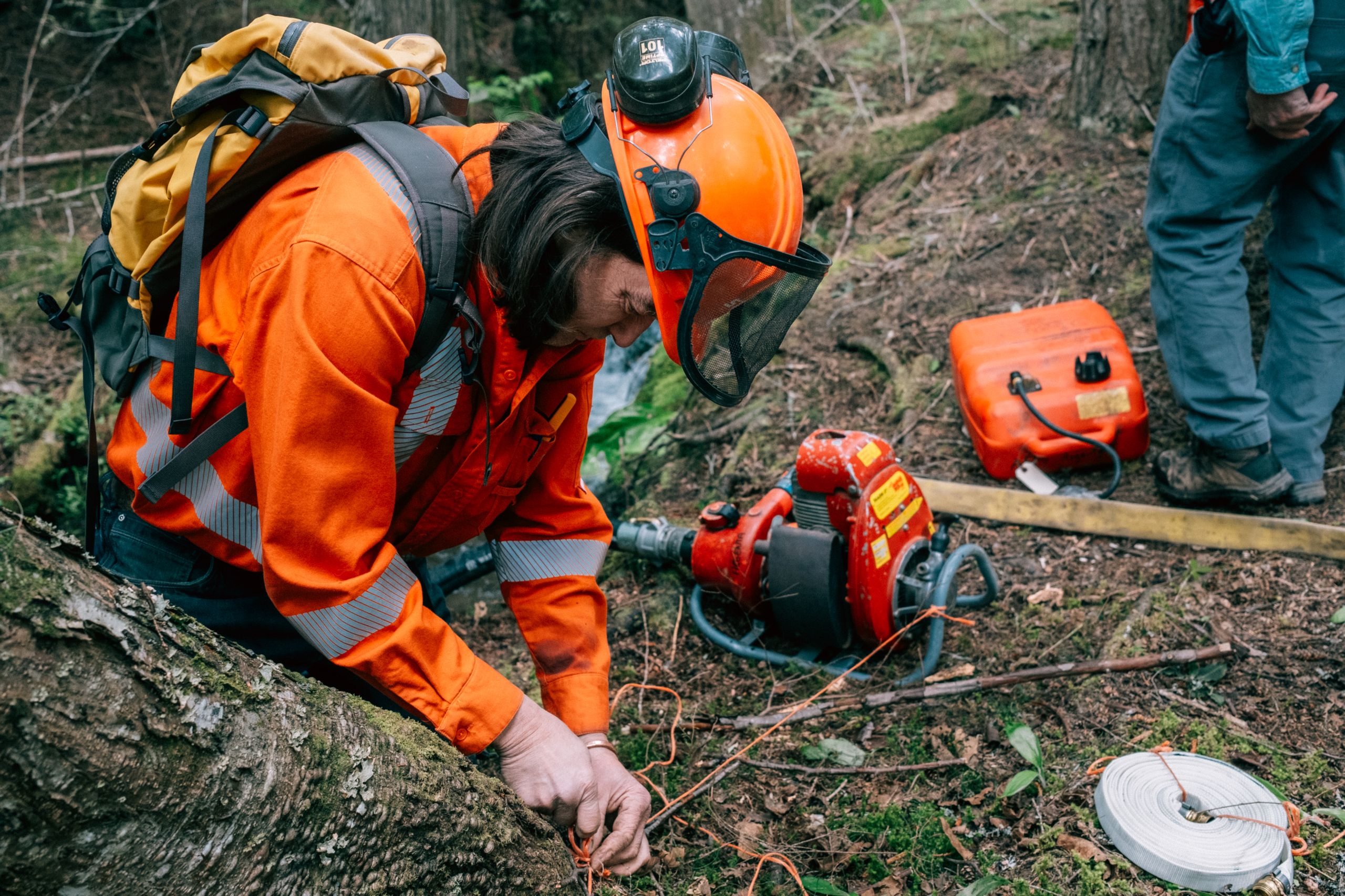
“We emphasize practicality in the recertification,” Rik Valentine, the teacher and architect behind the training days and leader of the fire crew explains. “We actually get out pumps and hoses and respond to an invented scenario that’s all realistic except for the flames.”
In remote communities, response is a measure of resilience
Valentine is one of Argenta’s longest-standing residents, having moved to the community in the 1950s as a child.
Since then he has seen the way rural areas respond to wildfire change, from locally organized crews that would be ready to fight fires nearby, to a 1980s shift towards government-run crews that respond from fire zones farther away. Recognizing the resulting delay, sometimes days-long, between a fire start and a boots-on-the-ground response, Valentine and others started Argenta’s volunteer fire crew with the aim of being able to respond quickly and competently to fires in and around the area.

Since its inception, the crew has responded to several fires, always with the goal of holding or knocking back the flames until a crew from the BC Wildfire Service arrives and can take over. In a time of increased fire activity across the province, where government resources are stretched thin, this stop-gap measure feels increasingly important.
In 2024, the provincial government partnered with the Fraser Basin Council to create a pilot program called the Cooperative Community Wildfire Response (CCWR) program, which aimed to equip rural and Indigenous fire crews with training and equipment so they can be hired on and deployed similarly to a contract fire crew.
To join the program, prospective groups had to be part of a registered society, have required personal protective equipment and be trained in three courses: the S-100 and S-185, which cover basic wildfire suppression and entrapment avoidance, and ICS-100, which outlines the Incident Command System (ICS) used in wildfire and other emergency situations.
After some debate, our crew decided to opt into the program in June 2024, forming the Argenta Safety and Preparedness Society (ASAP). We were in the process of acquiring our incident command courses when a massive dry lightning storm ignited over 100 fires region, including the Argenta Creek wildfire.
Thanks to decades of practice and preparation our crew was able to respond to one of three fires directly above town. Then the provincial service arrived and took over operations, integrating us into the large mobilization of people and equipment that would go on to fight the fire for the following three weeks. For the most part, our role was to fireproof properties and maintain the complex gravity feed water systems that feed homes across the mountainside.


In the end, no homes were lost thanks to an incredible response from hundreds of people, nearly nine kilometres of fireguard and, of course, luck with the weather.
As the smoke left our valley and word spread about our efforts, dozens of people from other communities reached out. They wanted to know how they could be prepared for similar situations.
So this winter myself and other members of our fire response team travelled to rural communities who were interested in starting volunteer wildfire crews. What we found was a lot of interest in rural resiliency as an antidote to the growing risk of natural disasters exacerbated by climate change.
This interest from other communities spilled over into the spring and, as a result, we invited some people from outside Argenta and the surrounding area to participate in our wildfire training, doubling it from one weekend with 20 or so participants to two weekends with more than 40.

Over the 10 or so years that I’ve participated in the training, I’ve been on the hose lay team, the guard digging team more than once and, in more recent years, seem to have taken on the official role of fire shed equipment sign-out guy.
On this particular day, the fake fire is small with relatively easy access. It’s a reprieve from some of the more elaborate scenarios Valentine often puts together which can involve multiple relay tanks, hauling water in the back of pickup trucks and even surprise “accidents” that require us to call in a search and rescue team from the village of Kaslo approximately 45 minutes away — another of his strategies to create realistic wildfire environments and build relationships with other key groups outside the community.
By 1 p.m. the fire is deemed under control and we break for lunch and a debrief before packing up hoses and equipment. Our dispatchers — the people on the other end of the radio keeping tabs on everyone and, in the event of a real fire, communicating with the outside world — join us to sit and talk about how it went for everyone. Important bits of information, like remembering to bring more nozzles than what are in the pump kits, are sprinkled in with laughter and storytelling.
In many ways it feels like it always has: a gathering of people who care about this small corner of the earth, getting ready for a wildfire event that will almost certainly happen. Only now we intimately know the terrifying reality of when it does.