





 11 min. read
Federal Minister of Indigenous Services Mandy Gull-Masty has unveiled a new and long-awaited bill to provide safe drinking water to First Nations, which she says was written to ensure “we have provincial partners at the table.” Ontario chiefs say they were shut out and their right to clean water was not recognized.
Gull-Masty denied her government caved to provincial pressure in Bill C-37, or An Act respecting water, source water, drinking water, wastewater and related infrastructure on First Nation lands, that sets out principles to provide safe drinking water and disposal of wastewater for First Nations.
“My conversations with leadership and the chiefs that have spoken to me understand that we are trying to pass a bill that is going to be protected and stand the test of time,” the minister said at a press conference on Parliament Hill on June 16.
“I’m not trying to put a bill forward that is going to be challenged,” she said. “I’m trying to put a bill forward that partners, provinces and territories feel can advance, that they can work with us.”
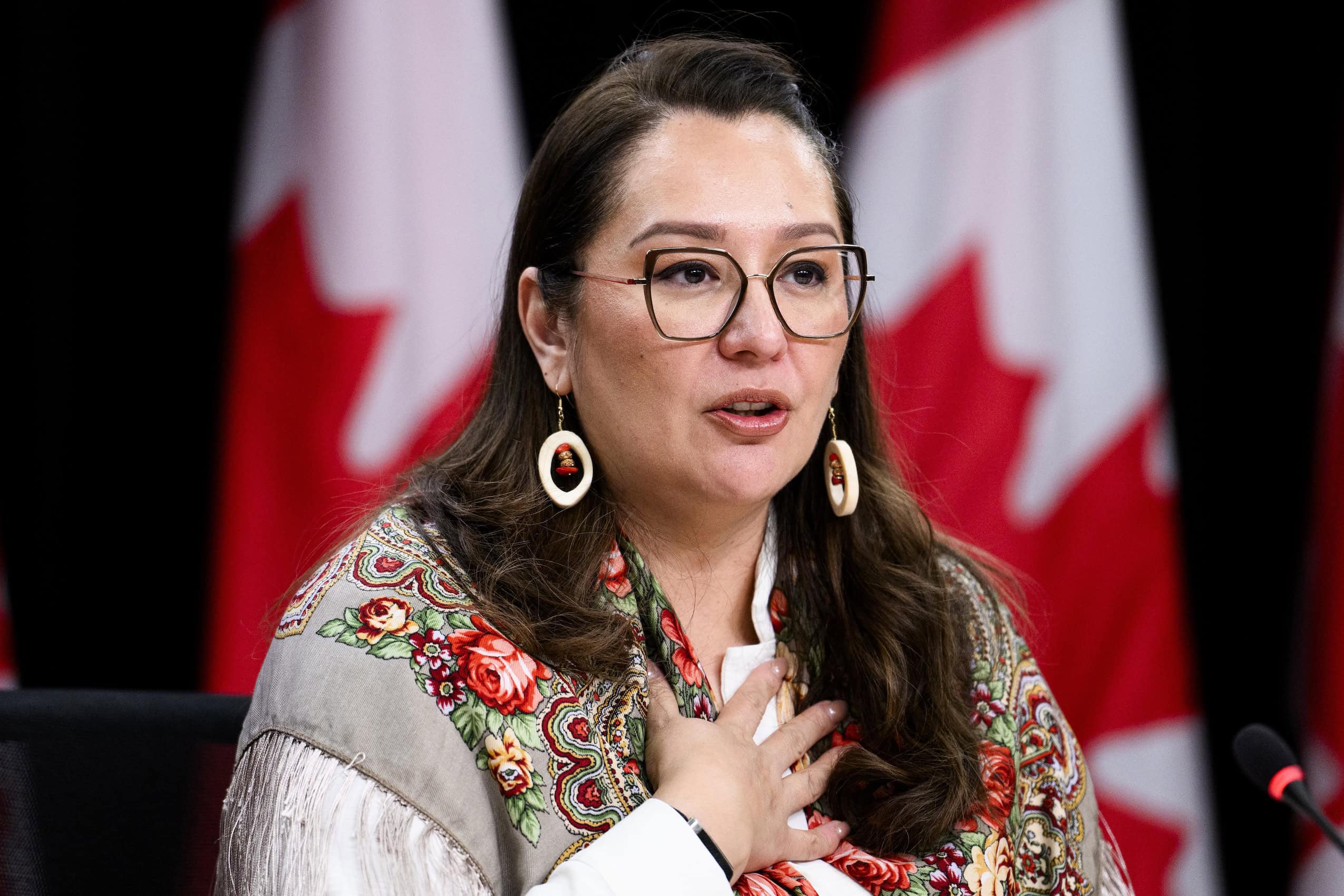
The Chiefs of Ontario, however, say First Nations were not consulted in the process. The group is “cautiously optimistic” but remains concerned about the approach to this issue by the government of Prime Minister Mark Carney.
“Unlike previous legislative efforts, which were developed through meaningful dialogue and partnerships with First Nations Knowledge Keepers [and] technicians, Bill C-37 was introduced without broad or meaningful input from First Nations,” Linda Debassige, Anishinabek Nation Grand Council Chief, and a member of the Chiefs of Ontario leadership council, said in a Tuesday press conference in Rama, Ont.
“Our letters of advocacy have been met with a deafening silence, to be honest. We do not have access to parliamentary privileged dialogue or cabinet discussions in relation to this.”
It’s been over a year since the Liberal Party promised in their election platform to “immediately introduce and pass legislation affirming that First Nations have a human right to clean drinking water.” In the last six months, two First Nations in northern Ontario have declared severely worsening water crises due to failed infrastructure; one of the communities, Kashechewan, remains entirely evacuated.
The bill released this week states that the quality of water on First Nations lands must at minimum meet either federal guidelines for Canadian drinking water quality and for wastewater, or the standards in place in the province or territory where the lands are located. It’s backed by $4.6 billion for First Nations communities to build, operate and maintain water and wastewater systems, according to the press release, which adds to the $9.4 billion committed to these projects over the past decade.
The minister will still have to come out with regulations for a “protection zone,” which the bill leaves undefined. The use of these zones would hand First Nations jurisdiction over water sources adjacent to their lands — that is, if the nation and the federal and provincial governments have all agreed on the rules in force.
“We have to acknowledge that [water] is not stagnant, it moves around,” Gull-Masty said. “For water that is adjacent or flowing in and out, I think that the important part of the work that we’re undertaking is that partners and territories understand that they also have a role to play.”
In addition to defining “protection zones,” the bill empowers the minister to come out with regulations on a dozen different aspects of water services, including source water protections, training and certification, occupational health and safety, monitoring and inspections, emergency planning, permitting and more. The government can even design regulations to govern the disclosure of information.
But the bill doesn’t commit to the same kind of rights language that the Liberals promised in their platform. Instead, it declares that the government’s policy is to “further the progressive realization, for individuals on First Nation lands, of the human right to safe drinking water as protected by the International Covenant on Economic, Social and Cultural Rights.” That covenant is a multilateral treaty adopted by the United Nations that came into force in the 1970s.
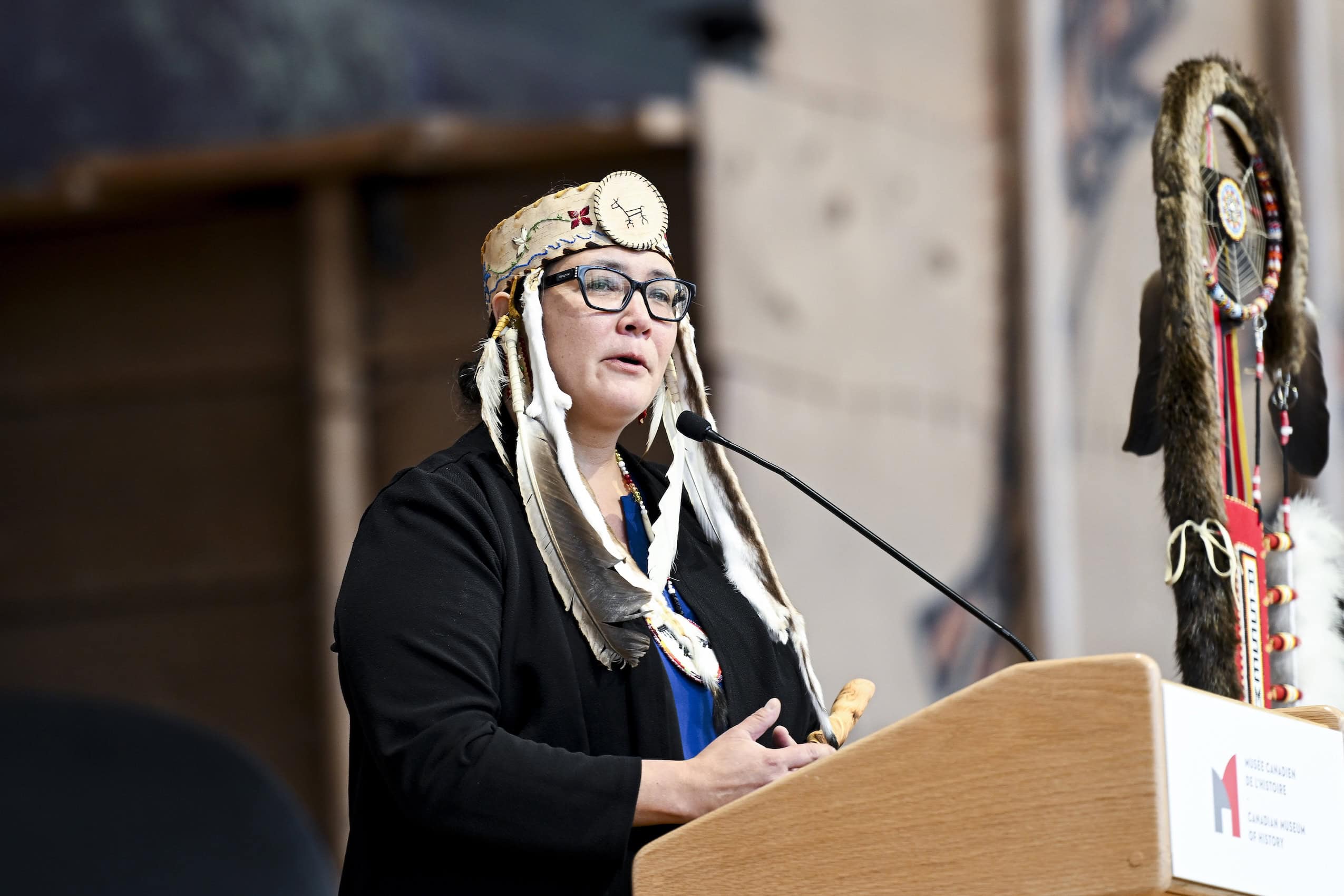
“To me, [this] is insane,” Debassige told reporters. “It’s been a progressive realization for many of our nations for decades.”
Debassige has been working on First Nations water issues for more than a decade and has been involved in negotiations over previous federal bills on the matter. She said that by excluding language like “in collaboration with First Nations” in Gull-Masty’s new legislation, the Carney government is “hiding from their obligations.”
“We must remember that most of the drafters of Bill C-37 have never spent time in our community,” she said, citing the speedy passage of the federal Bill C-5 and the provincial Bill 5, both of which aim to “fast-track” infrastructure and mining approvals and construction. “And we’ve seen the pushback on the previous iteration of this bill. And now we see the results of that weakening of our inherent rights to pave way for economic development.”
“I think it’s a deflection of responsibility, a fear of provinces, a fear of nation-building projects not coming through because our nations want to protect water.”
The bill comes as tensions grow over these issues between the federal government, provincial governments and First Nations.
Some chiefs, particularly in Treaty 8 territory, which spans northern B.C., Alberta and parts of Saskatchewan and the Northwest Territories, asked the federal government to rethink its approach. Sturgeon Lake Cree Nation’s chief said the bill didn’t meaningfully incorporate inherent and Treaty Rights to water while Mikisew Cree First Nation’s chief said the bill didn’t do enough to deal with the potential release of oilsands wastewater into rivers.
Last July, the environment ministers from Ontario and Alberta asked the federal government to “refrain” from introducing a new First Nations water bill, claiming it would “undermine competitiveness, delay project development and disproportionately harm specific provinces and territories without any quantifiable benefits to the natural environment.”
Ontario’s Environment Minister Todd McCarthy apologized for any “confusion” the request may have caused First Nations. But First Nations have not been convinced by the apology. The Ontario government has skirted meaningful consultation with First Nations in its push to open the Ring of Fire region in northern Ontario, with significant implications for water use and sources, and broadly speed up mining approvals and development. It has also signalled its own plans to make broad changes to provincial clean water rules.
As Canada and Ontario rush to expedite major projects, including in the mining sector, First Nations have long been asking for the same expediency to pass laws to protect drinking water before shovels hit the ground. With a few days left before MPs are scheduled to rise for the summer, this bill is unlikely to become law before the fall.
“I wish one of Canada’s major projects were to provide us clean drinking water,” Knowledge Keeper Sally Gaikezheyongai said, as she offered a prayer to begin the Tuesday press conference by the Chiefs of Ontario. “I ask the Creator to make sure that happens hopefully within my lifetime.”
Why does Canada need a law to protect access to clean drinking water on First Nations?
Indigenous Services Canada reports that there are 36 Indigenous communities that have been under orders for more than a year to boil their drinking water for one minute. Most of these communities are in Ontario. The longest-standing boil water advisory is for Neskantaga First Nation in northern Ontario, just south of the Ring of Fire region. It hasn’t had clean drinking water since 1995. (The federal count is not comprehensive, as some jurisdictions, such as B.C., track their own boil-water advisories in Indigenous communities.)
Prime Minister Justin Trudeau promised to end all these boil-water advisories by March 31, 2021, but did not succeed. Post-colonization, and as stated in the Indian Act, the federal government has a fiduciary obligation to ensure safe, potable drinking water for First Nations. Instead, there is a regulatory black hole for and chronic underinvestment in on-reserve water and wastewater services.
A month before Trudeau’s deadline, a government audit found that Indigenous Services Canada “did not provide the support necessary to ensure that First Nations communities have ongoing access to safe drinking water,” thus prolonging boil water advisories.
The impacts of these failures are severe, including preventable illnesses, costly reliance on bottled water and long-term evacuations.
Kashechewan First Nation, a community of 2,000 residents, has been entirely evacuated since January due to a catastrophic sewage pump failure. There is still no access to safe drinking water on their reserve.
In May, Pikangikum First Nation declared a second state of emergency, a year after the original declaration, due to collapsing water and wastewater systems. The community’s only water treatment plant is operating beyond capacity, even as more than 300 homes remain without direct water service. The community’s reservoir is also at critically low levels and is losing water at a rate roughly four times greater than it can be filled.
As a result, the nearly 4,000 on-reserve residents are dealing with daily water rationing and forced evening shutdowns. As wildfire season looms, Pikangikum is now suing the federal government.
“It’s so important that we take action as a country, as First Nations leadership, to ensure that there are no more Kashechewans, that there are no more Pikangikums,” Grand Chief Alvin Fiddler of Nishnawbe Aski Nation, told reporters.
“It’s unacceptable that this is a reality that many of our communities are being put in: to try to negotiate on big, major nation-building projects while they’re trying to make sure that their children and their youth can have access to water to drink.”
Why is the federal law to protect clean drinking water on First Nations so delayed?
There have been different iterations of this legislation, Kathleen Padulo, director of environment for the Chiefs of Ontario, told The Narwhal in a conversation before Bill C-37 was released, but none have proved durable.
Since the 1970s, the federal government has been promising to provide Indigenous communities with water and wastewater systems equal to those enjoyed by most Canadians, but no matter which party is in power, it has continuously fallen short of that goal.
In 2013, the Stephen Harper government passed the Safe Drinking Water for First Nations Act. This law created a regulatory regime to govern water infrastructure on First Nations lands, but without any financial backing or centring Indigenous decision-making or rights. It also didn’t protect the sources of water flowing onto First Nation lands.
“It had no teeth, and it was really watered down,” Padulo said. “It was a piece of paper just floating around for years.”
As a result, this law was met with widespread disapproval from First Nations. Several, including Neskantaga, launched a class action lawsuit in 2019, claiming “Canada has been negligent, breached its fiduciary duties, breached the honour of the Crown and breached various rights under the Canadian Charter of Rights and Freedoms.”
Ottawa settled that lawsuit in 2021, agreeing to provide $1.8 billion in compensation and spend $6 billion on water infrastructure over nine years. The federal government also promised to repeal and replace the Conservative law.
That didn’t happen until 2023 when the Trudeau government introduced Bill C-61, or the First Nations Clean Drinking Water Act. The landmark bill involved First Nations in its creation, doing so over a two-year-long consultation and co-development process. This bill established clean drinking water as a human right, set minimum standards for drinking water and wastewater on reserves and pledged funding for water-related infrastructure. This bill also created an Indigenous-led First Nations Water Commission to help implement the law and monitor its impact.
After weeks of consultation with First Nations, the bill did not pass before Parliament was prorogued in January 2025. Then-Indigenous services minister Patty Hajdu said the delay was the fault of opposition parties.
Padulo said they’ve been waiting for this bill to re-emerge and be passed “with the speed of light like Bill C-5” and then put it in place in communities right away.
“What is happening here is colonization at the end of the day, that’s what it is,” Padulo said. “And Canadians not understanding that not everybody has basic human rights.”
What happens next?
Anishinabek Nation Grand Council Chief Debassige is asking the government to ensure “sufficient engagement” with First Nations as this bill goes through the parliamentary process, urging the government to move quickly from legislation to action.
“We’re cautiously optimistic,” she said, but with the Liberals holding a majority government, “It’s going to be a difficult process.”
“Water is a human right. Full stop,” Debassige said. “We are looking to Canada to help us champion a shift from the outdated and colonial perspectives of First Nations being viewed as second-class citizens to ensuring our people can enjoy the same clean and safe drinking water guaranteed to non-First Nations across this country.”
Gull-Masty said the government supports consultations with First Nations governing bodies to develop the many regulations that the bill authorizes.
Ontario Regional Chief Abram Benedict told reporters that the government needs to focus on accountability to ensure First Nations communities have “confidence in the drinking water.”
“We are calling on the federal government to move swiftly from legislation to action. The goal must not only be to eliminate advisories, but to prevent new ones from coming on,” he continued. “Legislation is only the beginning of ending these challenges.”
“Our communities have waited long enough.”
Updated on June 16, 2026, at 8:40 p.m. ET: This story has been updated to include the amount of federal funding dedicated to building, maintaining and operating water and wastewater infrastructure in First Nations communities as part of Bill C-37.